Alanine.
Research-backed amino acid with potential health benefits. Helps your body move energy between muscles and the liver. It's a building block for proteins and plays a key role in converting sugar to usable fuel.
Reviewed March 2026
- Category
- Amino acid
What Alanine is, and what it does.
- Does it work
- Suits people covering amino acid building blocks around a lower protein intake or long fasted efforts. Your body also builds it from pyruvate, so most eaters run on a steady supply already.
- How much to take
- There's no standard dose for general health. Some specific studies use 1-5 grams, but this isn't a daily-driver supplement.
- Time to feel it
- Nobody has measured a felt timeline for L-alanine. Its work is metabolic and continuous, so it registers in how fuel is handled rather than in a sensation.
- The first dose
- Nothing. You will feel zero difference. It doesn't work that way.
- With regular use
- For most people, nothing noticeable. Its role is metabolic and behind the scenes. You won't see or feel a change.
- How well tolerated
- Well tolerated. It's in every piece of chicken or steak you eat. Your body handles it just fine.
- How it feels
- Like nothing. It's a building block, not a psychoactive compound. You don't 'feel' it.
- The overlooked benefit
- Most sports research using the word alanine means beta-alanine, a different isomer. L-alanine is the nitrogen shuttle from muscle to liver, and it needs vitamin B6 to make that hand-off.
1,000 to 3,000mg a day is where Alanine works.
Source: General amino acid physiology; not commonly supplemented alone
The proof, claim by claim.
These words describe the research, not the molecule's worth. Research strength is how much work stands behind one claim, and it is never a product score.
Alanine is documented in the library. The clinical read is in the queue. Nothing about the strength of the research prints until the read is done.
- Nitrogen transport from muscle to liver through the glucose-alanine cycleNarrative review
- Carbon substrate for liver glucose synthesisNarrative review
- Building block for body protein as a proteinogenic amino acidNarrative review
- Blood glucose already in the normal range during prolonged exerciseRandomised trial
- Sodium-coupled intestinal absorption shared with glycine, serine and prolineIn vitro study
Questions people ask about Alanine.
- Is this the one that gives you tingles?
- Nope. You're thinking of beta-alanine. L-alanine causes zero tingles.
- Will this help my workouts?
- Not directly. It supports energy metabolism, but for actual performance boosts, look at creatine or beta-alanine.
- Do I need this if I eat enough protein?
- Almost certainly not. If you eat meat, fish, dairy, or eggs, you're getting plenty.
- Can I take it every day?
- Yes, it's safe. Just likely unnecessary for most people.
- What's the difference between L-alanine and beta-alanine?
- They have different structures and jobs. L-alanine builds proteins. Beta-alanine combines with histidine to form carnosine, which buffers acid in your muscles during exercise.
Why these belong in the same formula. Each row says what the basis is, from settled biochemistry through to a trial that measured the pair.
Alanine enters and leaves the amino acid pool through transamination with pyruvate, and the enzyme that runs that step, alanine aminotransferase, requires pyridoxal-5-phosphate as its cofactor. Adequate B6 status is what lets supplemental alanine be handled through normal nitrogen and glucose metabolism.
When branched-chain amino acids such as leucine are transaminated in working muscle, the amino group released is transferred onto pyruvate to form alanine, which carries that nitrogen to the liver. Leucine supplies the nitrogen and alanine is the vehicle that moves it, so the two sit on one pathway.
Alanine and glutamine are the two amino acids muscle exports in the largest amounts to move nitrogen and carbon between tissues, alanine mainly to the liver for glucose synthesis and glutamine to the gut and kidney. Supplying both covers the two normal routes rather than loading one.
Alanine and glycine are both small neutral amino acids carried by the same sodium-coupled system A and ASC transporters, so a large dose of one competes with uptake of the other at the brush border.
Serine is deaminated to pyruvate, the same three-carbon keto acid that transaminates with glutamate to form alanine, so the two amino acids move into and out of one carbon pool.
Branched-chain aminotransferase strips nitrogen from valine onto glutamate, and alanine aminotransferase then passes it to pyruvate, which is how muscle exports amino nitrogen as alanine.
Alanine reaches glucose only after its carbon skeleton passes through pyruvate carboxylase, a biotin-dependent enzyme, so biotin status sits on the gluconeogenic use of alanine.
Cysteine catabolism releases its sulfur and yields pyruvate, the same intermediate alanine transaminates with, so the two amino acids feed one three-carbon node.
Alanine gives up its amino group to alpha-ketoglutarate and becomes pyruvate. Whether that pyruvate is oxidised depends on the pyruvate dehydrogenase complex, whose E1 subunit needs thiamine pyrophosphate. This is settled biochemistry rather than a combination trial, so it describes a dependency in normal energy metabolism, not an added effect from taking the two together.
Riboflavin becomes FAD, and FAD is the electron carrier bound to dihydrolipoamide dehydrogenase inside the pyruvate dehydrogenase complex. Alanine-derived pyruvate cannot move into the citric acid cycle without that step turning over. The relationship is a cofactor dependency in normal metabolism.
Every oxidative step that pyruvate from alanine passes through hands electrons to NAD+. Niacin and its amide are the dietary precursors of that dinucleotide. Described here as a cofactor relationship in normal energy metabolism, not as an effect measured from co-supplementation.
Pyruvate dehydrogenase transfers a two-carbon acetyl unit onto coenzyme A. Pantothenic acid is the backbone of that carrier. Without it the acetyl group has nowhere to go, which is why the two nutrients sit on one pathway in normal metabolism.
Lipoic acid is bound covalently as lipoamide inside the complex that oxidises alanine-derived pyruvate, shuttling the acetyl group between subunits. Supplemental alpha-lipoic acid is not the source of that bound cofactor, so the connection describes the shared pathway rather than a dosing effect.
When the liver rebuilds glucose from alanine, pyruvate carboxylase spends ATP and PEPCK spends GTP, and both nucleotides act as magnesium complexes. Magnesium is therefore part of the machinery that lets alanine serve as a glucose precursor. A cofactor relationship, not a measured combination.
Muscle packages surplus amino nitrogen onto pyruvate as alanine and ships it to the liver. There the nitrogen enters the urea cycle, and arginine is the immediate precursor of urea in that cycle. The two amino acids meet at nitrogen handling in normal metabolism.
Alanine and proline are both substrates for sodium-dependent neutral amino acid carriers, so a large single dose of either can occupy shared transport capacity. The overlap is documented at the transporter level rather than as a measured drop in human absorption. Anyone spacing free amino acids apart is acting on that transporter logic, not on an outcome trial.
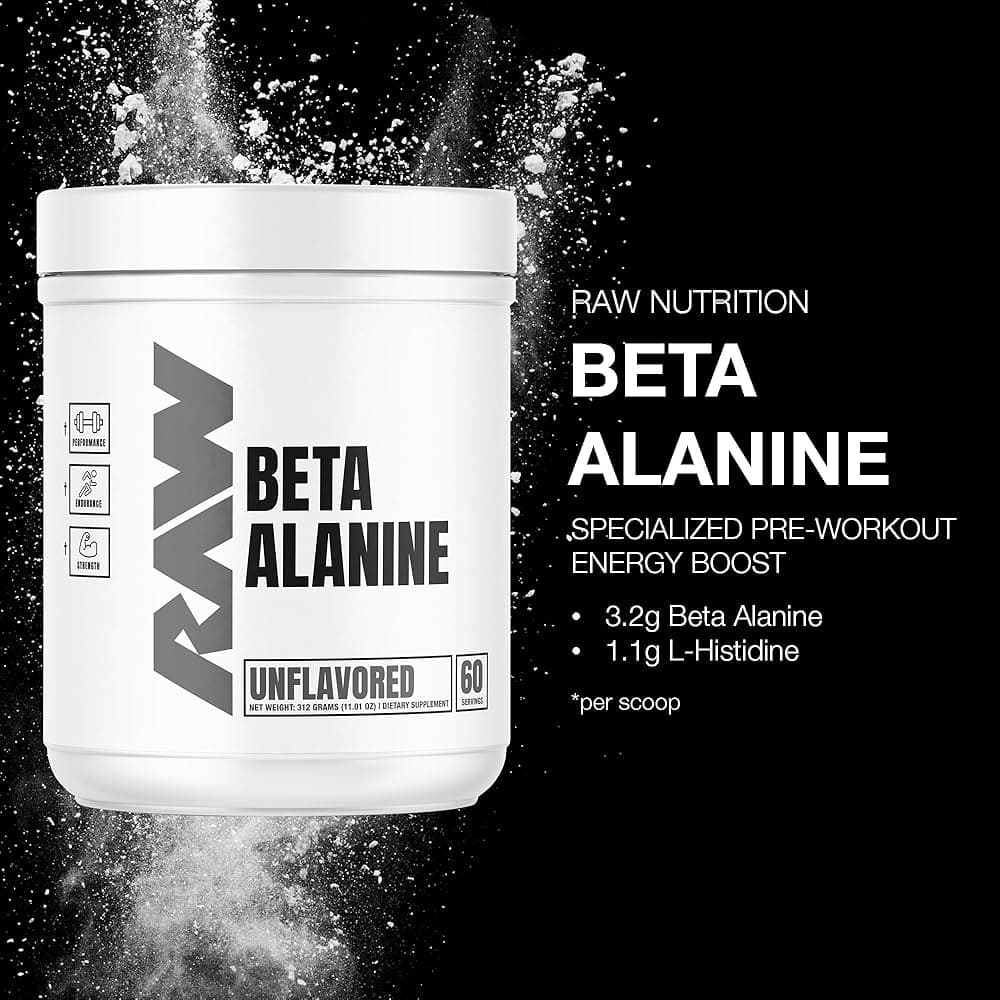
Carnosine is a dipeptide of histidine and beta-alanine, and carnosine synthase joins the two. The relevant partner here is beta-alanine, a structural isomer of L-alanine and a different molecule, so this row describes the isomer rather than L-alanine itself. Flagged because product labels often blur the two names.
The review pooled trials that gave creatine and beta-alanine together against each one alone across aerobic and anaerobic performance tests. The supplement studied was beta-alanine, the beta isomer, not L-alanine, and the two should not be read as interchangeable. Creatine loads the phosphagen system while beta-alanine raises muscle carnosine, which is why they get tested as a pair.
Beta-alanine, the beta isomer of alanine, competes with taurine for the sodium and chloride dependent taurine transporter, which is why the pairing is discussed in the sports literature. The competition is characterised at the transporter, not as a measured taurine deficit in people taking supplements. L-alanine is not the molecule in this relationship.
The two are combined in performance research because they buffer hydrogen ions in different compartments, intracellular for carnosine and extracellular for bicarbonate. Again the supplement in question is beta-alanine rather than L-alanine. Treated here as a mechanistic pairing, not as a pooled effect size.
Nothing specific on file for Alanine. Match the label to the daily amount above, and tell your doctor what you take.
Not medical advice. Show the label to your pharmacist.What Alanine actually does.
An enzyme moves alanine's amino group onto another molecule, producing two other compounds your body uses, and this enzyme needs vitamin B6 to work.
The glucose-alanine cycle uses alanine to carry nitrogen from muscle to the liver, where the leftover carbon can be turned into blood sugar and the nitrogen gets processed for excretion.
Alanine is a non-essential amino acid, meaning your body can make it itself, so getting it from food isn't required for normal protein-building.
Alanine is one of the smallest amino acids and crosses gut and kidney cell membranes using transport systems it shares with a few other similar amino acids.
Getting Alanine from food.
The whole-food sources on file. A supplement closes the gap, it does not replace dinner.
A gram-for-gram figure (how much of each you would eat to match a dose) will appear here once it is sourced and reviewed. This page will not print a number it cannot cite.
The forms it comes in.
The essence, in one line each.
- Pooling 55 human studies, oral ingestion of most individual amino acids including L-alanine produced an insulin response without altering blood glucose concentrations in healthy adults.Systematic review. van Sloun et al., 2020 (Nutrients). PMID 33096658 ↗
- In a crossover study of 10 fasted healthy adults, adding 2 g of oral L-alanine to a ketone ester drink reduced the drink's fall in blood glucose from about 28 percent to about 16 percent, consistent with alanine supplying substrate for the liver's own glucose production.Randomised trial. Soto-Mota et al., 2021 (Endocrinology, Diabetes & Metabolism). PMID 34787952 ↗
- In 10 cyclists, an alanine drink raised plasma alanine about tenfold and lifted concentrations of most other glucose-forming amino acids, but no effect on cycling performance was detected.Randomised trial. Klein et al., 2008 (Amino Acids). PMID 18850309 ↗
- The review examined how dose and loading pattern of beta-alanine relate to strength and power outcomes, and reported that total intake over time rather than any single daily amount tracked with the observed changes.Systematic review. Ong et al., 2025 (Journal of the International Society of Sports Nutrition). PMID 40995761 ↗
- Pooled trials of beta-alanine in trained young men reported improvement in maximal intensity exercise measures, with the authors noting heterogeneity across test protocols.Systematic review. Georgiou et al., 2024 (International Journal of Sport Nutrition and Exercise Metabolism). PMID 39032921 ↗
- Meta-analysis of beta-alanine supplementation reported better Yo-Yo intermittent test performance versus placebo.Meta-analysis. Grgic et al., 2021 (Clinical Nutrition ESPEN). PMID 34024507 ↗
- A GRADE-assessed meta-analysis found no detectable difference in body composition measures with beta-alanine supplementation, which is a failure to detect a change rather than a demonstration that none occurs.Meta-analysis. Ashtary-Larky et al., 2022 (Journal of the International Society of Sports Nutrition). PMID 35813845 ↗
- The review gathered beta-alanine trials conducted in women specifically and reported that the female evidence base is small relative to the male one.Systematic review. Gu et al., 2026 (Frontiers in Nutrition). PMID 42370349 ↗
- Two weeks of high-dose beta-alanine did not produce a detectable improvement in intermittent endurance or sprint performance, a null result at that duration rather than evidence of no effect at any duration.Randomised trial. Miraftabi et al., 2025 (Journal of the International Society of Sports Nutrition). PMID 40981477 ↗
- Beta-alanine lengthened time to exhaustion in competitive middle and long distance runners while aerobic capacity showed no detectable change.Randomised trial. Marko et al., 2025 (Journal of the International Society of Sports Nutrition). PMID 40528157 ↗
- The review pooled carnosine or beta-alanine supplementation studies in adults with raised blood sugar and reported changes in glycaemic markers. Markers of glucose handling, not clinical outcomes.Systematic review. Li et al., 2025 (BMC Endocrine Disorders). PMID 40999397 ↗
- This is a published protocol for a pilot randomised trial of d-alanine in adults with reduced kidney function. It sets out design and endpoints and reports no outcome data.Randomised trial. Oshima et al., 2025 (Chemistry and Biodiversity). PMID 40690436 ↗
- Upper-body plyometric training with beta-alanine was compared against training alone across selected immune and endocrine markers plus performance measures. The immune and endocrine readouts are markers, not health outcomes.Randomised trial. Gao et al., 2026 (Journal of the International Society of Sports Nutrition). PMID 42218755 ↗
- Beta-alanine was tested against placebo on kickboxing-specific anaerobic performance, neuromuscular power and strength measures.Randomised trial. Kucuk et al., 2026 (PLoS One). PMID 42127019 ↗
These are the studies our verdict leans on, chosen from the 3,917 we read for Alanine. The full linked list is below.
The studies, linked.
8 sources behind our Alanine verdict: peer-reviewed studies and registered clinical trials. Every one links straight to PubMed, the journal, or ClinicalTrials.gov. Read them yourself.
- Clinical trialImmunotherapy With Ex Vivo-Expanded Cord Blood-Derived NK Cells Combined With Rituximab High-Dose Chemotherapy and Autologous Stem Cell Transplant for B-Cell Non-Hodgkin's LymphomaClinicalTrials.gov ↗Phase 2, 22 participants, Completed
- Clinical trialGlutamine Supplementation and Immunity in Adults With Cystic FibrosisClinicalTrials.gov ↗Phase 2, 17 participants, Completed
- Clinical trialA Randomised Double-blind Clinical Trial to Analyse the Efficacy of Short-term β-Alanine Supplementation in Performance Outcomes of Road Professional Endurance CyclistsClinicalTrials.gov ↗12 participants, Completed
- Clinical trialA Phase 3 Study of Dinutuximab Added to Intensive Multimodal Therapy for Children With Newly Diagnosed High-Risk NeuroblastomaClinicalTrials.gov ↗Phase 3, 478 participants, Recruiting
- Clinical trialA Phase III Randomized, Double-Blind Study of Maintenance Therapy With CC-5013 (NSC # 703813) or Placebo Following Autologous Stem Cell Transplantation for Multiple MyelomaClinicalTrials.gov ↗Phase 3, 460 participants, Active not recruiting
- Clinical trialNeurovascular Regulation During Exercise in Humans With Chronic Kidney DiseaseClinicalTrials.gov ↗Phase 2, 150 participants, Recruiting
- Clinical trialQuadruplet Induction Followed by Teclistamab Consolidation and Doublet Maintenance in Patients With Primary Plasma Cell Leukemia: The QUANTUM TrialClinicalTrials.gov ↗Phase 2, 74 participants, Recruiting
- Clinical trialInvestigation of Supplemental L-alanine in the Management of Dietary Fructose Intolerance: a Double-blind, Randomized StudyClinicalTrials.gov ↗65 participants, Unknown
Evidence surfaced via Semantic Scholar (Allen Institute for AI) and ClinicalTrials.gov. Ranked by study type and citation weight, not cherry-picked.
Problems people have reported.
Read this carefully. These are 1,626 voluntary, unverified reactions reported to the FDA (openFDA). The number mostly reflects how popular Alanine is, not how risky it is. A report is not proof Alanine caused anything. It is a signal of what to watch for, nothing more.
Source: openFDA adverse-event reports. Voluntary reporting, not an incidence rate.
FDA Disclaimer: These statements have not been evaluated by the Food and Drug Administration. This information is for educational purposes only and is not intended to diagnose, treat, cure, or prevent any disease. Consult your healthcare provider before starting any supplement regimen.