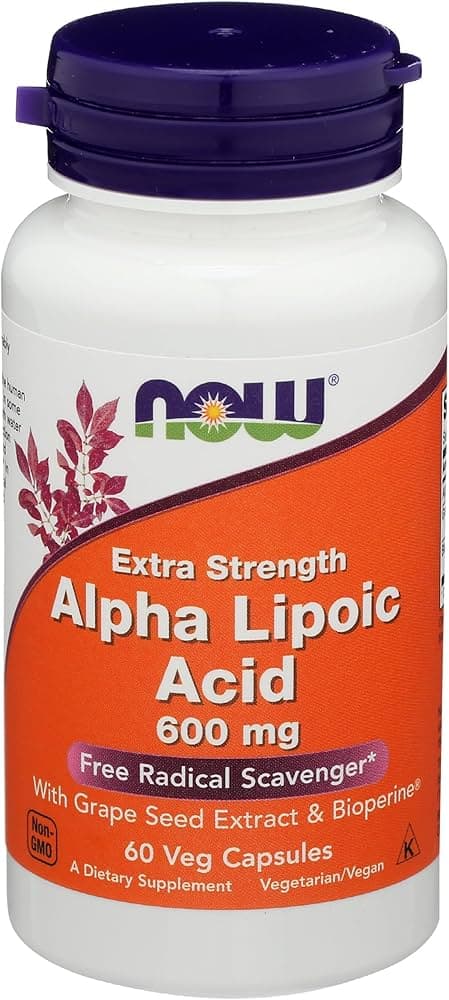
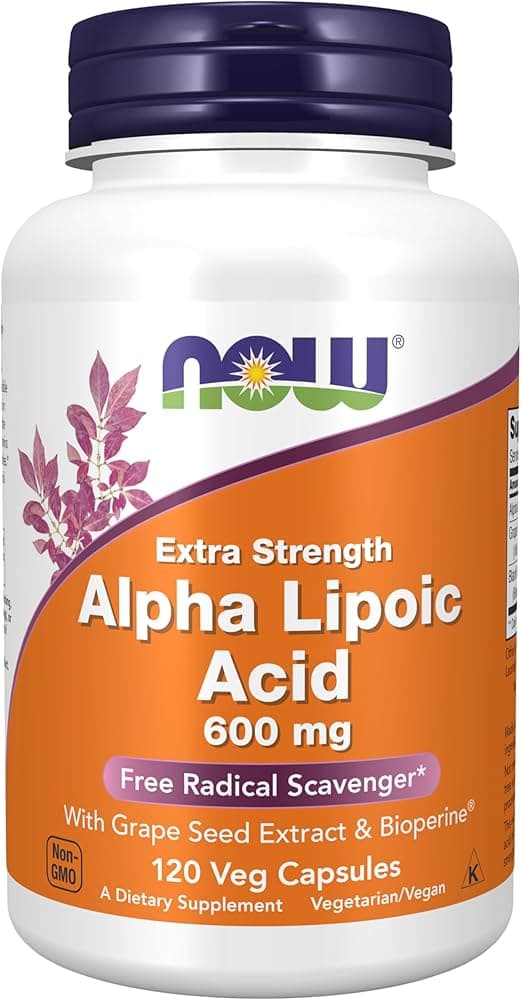
Alpha Lipoic Acid.
May support healthy aging and blood sugar levels. A versatile antioxidant.
Reviewed March 2026
- Category
- Antioxidant
- Also filed under
- Antioxidant supportMay help with blood sugar controlSupports nerve health
What Alpha Lipoic Acid is, and what it does.
- Does it work
- Maybe. As a general anti-aging antioxidant? The jury's still out. There are better things to spend your money on.
- How much to take
- 600mg daily, often split into two 300mg doses. The studies for nerve pain use this amount. Lower doses are likely underpowered.
- Time to feel it
- About five weeks of daily use.
- The first dose
- Nothing. Don't expect any changes. This is a long-term player that needs to build up.
- With regular use
- For others, the benefits are cellular and not something you'd 'feel'.
- How well tolerated
- Generally well tolerated. Talk to your doctor if either of those apply.
- How it feels
- Subtle to nonexistent for most. It's an internal mechanic, not a stimulant.
- The overlooked benefit
- It shares an intestinal transporter with biotin and pantothenate, so a large dose competes with them for uptake. Spacing it away from a B-complex keeps all three absorbing cleanly.
200 to 600mg a day is where Alpha Lipoic Acid works.
Source: Ziegler et al. 2006 Diabetes Care (NATHAN 1 trial); Agathos et al. 2018 meta-analysis
In a multicentre, randomised, double-blind, placebo-controlled trial, 181 adults with diabetic distal symmetric polyneuropathy took oral alpha-lipoic acid at 600, 1,200 or 1,800 mg once daily or placebo for 5 weeks. The Total Symptom Score for stabbing pain, burning pain, paraesthesia and numbness of the feet fell by 51%, 48% and 52% across the three doses against 32% on placebo. The measure was a rated symptom score, not a laboratory marker. Nausea, vomiting and vertigo rose with dose. No washout period was measured.
The proof, claim by claim.
These words describe the research, not the molecule's worth. Research strength is how much work stands behind one claim, and it is never a product score.
While ALA's mechanisms are well understood, its efficacy as a supplement at typical doses is debated. Clinical trials show promise for specific conditions, but the results aren't universally applicable, and more research is needed on general populations at common supplement dosages.
- healthy glucose metabolismMeta-analysis
- oxidative stress markersMeta-analysis
- nerve comfort in hands and feetMeta-analysis
- inflammatory markersMeta-analysis
- body weight and waist measuresMeta-analysis
- regeneration of vitamin C, vitamin E and glutathioneNarrative review
- cofactor role in pyruvate dehydrogenaseNarrative review
Questions people ask about Alpha Lipoic Acid.
- What's the deal with R-ALA vs plain ALA?
- R-ALA is the natural, more active form your body uses. Plain ALA is a 50/50 mix of R-ALA and the less active S-ALA. If you can, get R-ALA. It's more efficient.
- Empty stomach or with food?
- Take it with food. It can cause some stomach upset otherwise and absorption is fine with a meal.
- Can't I just get this from food?
- No. Technically it's in spinach and organ meats, but the amounts are microscopic. You'd need a ridiculous amount of food. Supplementation is the only practical way.
- Is it good for skin or anti-aging?
- It's an antioxidant, so theoretically it protects cells. Some creams use it topically. But taking it orally for wrinkles? The evidence isn't strong. Better options exist.
Why these belong in the same formula. Each row says what the basis is, from settled biochemistry through to a trial that measured the pair.
Alpha-lipoic acid's reduced form, dihydrolipoic acid, hands electrons back to spent vitamin C, returning it to the active form that neutralizes free radicals in the watery parts of the cell. This shared recycling keeps the antioxidant pool replenished, so the two support the body's normal redox balance together.
Vitamin E guards cell membranes from lipid oxidation and is consumed as it works. Alpha-lipoic acid feeds the chain that restores it, regenerating vitamin C, which in turn regenerates vitamin E, so the two function as part of one antioxidant network rather than lipoic acid acting on vitamin E directly.
Both are fat-soluble antioxidants that work inside mitochondria, and alpha-lipoic acid's reduced form can return oxidized CoQ10 to ubiquinol, its active electron-carrying form. This recycling is shown in laboratory studies and modest in pace, so the two act as complementary antioxidants supporting normal cellular redox cycling.
Dihydrolipoic acid, the reduced form of lipoic acid, hands electrons to oxidised glutathione and returns it to its active reduced state, so lipoic acid sits upstream in the same antioxidant network.
NAC supplies the cysteine that limits glutathione synthesis while lipoic acid regenerates the glutathione already present, so one builds the pool and the other keeps it reduced.
ALCAR carries fatty acids into the mitochondrion while lipoic acid is the cofactor of the pyruvate and alpha-ketoglutarate dehydrogenase complexes inside it, so the pair covers fuel delivery and fuel processing.
Carnitine moves long-chain fatty acids across the mitochondrial membrane and lipoic acid works as the lipoamide cofactor of the dehydrogenase complexes that oxidise the resulting substrate.
Lipoic acid and biotin both enter cells through the sodium-dependent multivitamin transporter, so a sustained high lipoic acid dose lowers biotin uptake. Formulas that carry a large lipoic dose usually add biotin for this reason.
Pyruvate dehydrogenase needs thiamine pyrophosphate at its first subunit and lipoamide at its second, so both cofactors have to be present for the complex to turn over.
Dihydrolipoamide dehydrogenase, the subunit that re-oxidises lipoamide so the complex can run again, is an FAD enzyme built from riboflavin.
Thioredoxin reductase, a selenium-containing enzyme, is one of the main routes that reduces lipoic acid to its active dithiol form, so selenium status shapes how much of a dose becomes useful.
The thiamine-dependent first step of pyruvate dehydrogenase requires magnesium bound to the cofactor, so magnesium status affects the same complex lipoic acid serves.
The enzyme that re-oxidises lipoamide passes its electrons to NAD, which is built from niacin, so the NAD pool sets how fast lipoic acid can cycle.
Lipoic acid chelates divalent and trivalent metals including iron, so a dose taken with an iron supplement can hold some of that iron in a less absorbable complex. Spacing them apart avoids the overlap.
Lipoic acid and its reduced form dihydrolipoic acid both bind divalent transition metals, copper among them. In a single capsule or a single dose window that binding can lower how much free copper is available for absorption. Spacing the two by a few hours keeps the interaction from mattering. This is chemistry, not a trial finding.
The dithiolane ring gives lipoic acid two sulphur atoms that coordinate divalent metals, and zinc is one of them. Taken together in the same dose, some zinc can end up bound rather than absorbed. Formulators either separate the two or accept that the binding is partial and dose dependent.
Manganese is another divalent cation that dihydrolipoic acid can coordinate. The interaction is weaker than with copper and iron and has not been quantified in a human dosing study, so it is worth flagging rather than designing around. Separate timing removes the question entirely.
Lipoate, biotin and pantothenate all cross the intestinal wall on the sodium-dependent multivitamin transporter, so a large lipoic acid dose competes for the same carrier. The two nutrients also meet again inside the mitochondrion, where pantothenate becomes coenzyme A and lipoate sits on the pyruvate dehydrogenase complex. Competition at the gut and cooperation in the matrix are both real and neither cancels the other.
Cysteine availability is the rate-limiting step in glutathione synthesis. Dihydrolipoic acid regenerates oxidised glutathione back to its reduced form, which only helps while there is enough substrate to keep the pool full. The pairing is a supply plus recycling relationship rather than two overlapping antioxidants.
Glutathione is a tripeptide of glutamate, cysteine and glycine, so glycine is one of the three raw materials lipoic acid recycling depends on. Recycling an existing pool and building a new one are different jobs. Formulas that pair them are covering both ends of the same pathway.
Glutamine supplies the glutamate arm of glutathione and is the amino acid enterocytes draw on most heavily. Lipoic acid keeps the existing glutathione pool in its reduced state. Together they address supply and redox status, which are separate constraints.
Taurine sits downstream of cysteine metabolism and contributes to cellular osmotic and redox stability by a route different from the glutathione cycle lipoic acid feeds. The two are commonly formulated together for that non-overlap. Human combination data is thin, so this is a mechanistic pairing rather than a tested one.
Carnosine binds reactive carbonyl compounds, a chemistry lipoic acid does not perform. Lipoic acid works on the thiol redox couples instead. The pairing is plausible on mechanism and has not been measured as a combination in people.
Astaxanthin sits in the lipid membrane and quenches singlet oxygen. Lipoic acid moves between water-soluble and lipid-soluble compartments and regenerates other antioxidants once they are spent. The pairing covers two phases rather than doubling one. No combination trial in humans is cited here.
Both compounds are described as activating the Nrf2 transcription programme that raises cellular antioxidant enzyme output. That is a signalling effect rather than direct radical scavenging. Where two agents hit the same transcription factor the combined effect is not automatically larger, so the pairing is reasonable and unquantified.
Sulforaphane is one of the strongest characterised Nrf2 activators and lipoic acid reaches the same pathway. Their effects on glutathione status arrive from different directions, one by transcription and one by direct recycling. The overlap is mechanistic and no combination trial is cited.
Chromium is discussed in relation to normal insulin signalling and lipoic acid in relation to glucose uptake by muscle. The two are frequently combined and may act in the same direction. Direction of effect is the point here, not magnitude, which has not been established for the pair.
Cinnamon extracts and lipoic acid are both marketed for normal glucose metabolism support and appear together in metabolic formulas. Each has its own literature and neither has been measured alongside the other in a combination trial cited here. Additive direction is assumed from the separate bodies of work, which is an assumption and not a measurement.
Berberine acts largely through AMPK activation and lipoic acid is also described as raising AMPK signalling and glucose uptake. Two agents described as pushing the same direction may add up. No combination trial is cited, so the size of any combined effect is unknown.
Gymnema is a traditional pairing in glucose-support formulas and lipoic acid is often the second active. The evidence for each is separate and the combination has not been studied in the papers cited here. Flagged because direction matters more than magnitude for anyone stacking them.
Dihydrolipoamide dehydrogenase, the E3 subunit of the pyruvate and alpha-ketoglutarate dehydrogenase complexes, uses NAD as the electron acceptor that returns lipoamide to its oxidised working state. NAD precursors feed that pool. The cofactor relationship is textbook. Whether supplemental NR changes it in a person taking lipoic acid has not been measured.
Silymarin is described as supporting hepatic glutathione status, and lipoic acid recycles glutathione directly. Liver-support formulas routinely put the two together for that reason. The pairing rests on separate mechanisms landing on the same pool, not on a combination study.
Quercetin is itself a metal chelator and a flavonoid radical scavenger, so the two overlap partly and diverge partly. Both bind iron, which means a formula carrying them and an iron salt has two competing binders in it. Worth noting for formulation order rather than for an expected combined effect.
Talk to a doctor before taking Alpha Lipoic Acid if any of these apply to you: May interact with certain medications (e.g., thyroid medications), Possible blood sugar lowering effects. Monitor if diabetic, Consult a doctor if pregnant or breastfeeding. These are flags to check first, not effects Alpha Lipoic Acid is known to cause.
Not medical advice. Show the label to your pharmacist.What Alpha Lipoic Acid actually does.
Lipoic acid is built into two enzyme teams that turn food into energy. Its little arm passes pieces between working sites. Without it, those teams don't run.
Lipoic acid flips between two states, carrying two electrons at a time. Your cells load it up using NADH or NADPH, and the loaded form passes electrons on.
The loaded form can hand electrons back to used-up glutathione, vitamin C and vitamin E. That's why it gets called a recycler rather than only a direct scavenger.
Both forms grab metals like iron and copper through their two sulphur atoms, so a dose can bind mineral ions sitting in the same gut contents.
Where Alpha Lipoic Acid comes from.
It is made in a chemical plant, not pressed from a plant. The ordinary process produces a mixture of two mirror-image versions of the molecule, and an extra manufacturing step separates out the single version the body makes itself. Which one a product contains is a labelling and cost decision.
Chemically synthesised. The molecule is identical to the one a plant or an animal makes, and building it deliberately means a known purity, a fixed dose and no crop contaminants. For several nutrients this is the only route that reaches a usable amount.
Commercial production starts from petrochemical-derived building blocks such as a substituted octanoic acid chain, not from a plant or animal source. Dietary lipoic acid in food is protein bound and is not the commercial feedstock.
A multi-step organic synthesis installs the two sulphur atoms and closes the 1,2-dithiolane ring on the octanoic backbone. Run without a chiral controller this produces roughly equal amounts of the R and S forms.
Producers who want the single R form either resolve the mixture through a chiral salt or run an asymmetric synthesis from a chiral starting material. Both add steps and cost. The racemic route skips them.
Material is assayed by HPLC for content and enantiomeric ratio. Because free lipoic acid is heat sensitive and hygroscopic, some producers convert it to a sodium or other salt at this stage for handling reasons.
The finished acid is a pale yellow crystalline powder with a low melting point, milled and blended for tablets or capsules, sometimes dispersed in a carrier because it softens and clumps under warmth.
Getting Alpha Lipoic Acid from food.
The whole-food sources on file. A supplement closes the gap, it does not replace dinner.
A gram-for-gram figure (how much of each you would eat to match a dose) will appear here once it is sourced and reviewed. This page will not print a number it cannot cite.
The forms it comes in.
The essence, in one line each.
- Pooling 18 randomized placebo-controlled trials, alpha-lipoic acid supplementation lowered body weight by about 2.3 kg, and across 21 trials it lowered BMI by about 0.5 kg/m2.Meta-analysis. Vajdi & Abbasalizad Farhangi, 2020 (International Journal of Clinical Practice). PMID 32091656 ↗
- Across 24 randomized controlled trials in people with metabolic conditions, alpha-lipoic acid supplementation was associated with lower fasting glucose (standardized mean difference -0.54) along with lower insulin resistance, triglycerides and LDL cholesterol.Meta-analysis. Akbari et al., 2018 (Metabolism). PMID 29990473 ↗
- Pooling 18 randomized controlled trials in adults with metabolic conditions, alpha-lipoic acid supplementation was associated with lower C-reactive protein (standardized mean difference -1.52), interleukin-6 and TNF-alpha.Meta-analysis. Akbari et al., 2018 (Nutrition & Metabolism). PMID 29930690 ↗
- Across 63 randomised trials, alpha-lipoic acid lowered fasting blood glucose by about 5.3 mg/dL, waist circumference by about 1.1 cm and body weight by about 0.6 kg, with no detectable change in blood pressure or LDL cholesterol.Meta-analysis. Mohammadi et al., 2026 (Nutrition, Metabolism and Cardiovascular Diseases). PMID 41077538 ↗
- Pooling five randomised trials in 250 men, alpha-lipoic acid raised total sperm motility by about 13 percentage points and progressive motility by about 12, while sperm concentration and semen volume showed no detectable change.Meta-analysis. Pires et al., 2025 (International Brazilian Journal of Urology). PMID 40327515 ↗
- Across 10 trials in 529 participants, alpha-lipoic acid showed no detectable effect on the blood markers ferritin, serum iron, haemoglobin or total iron binding capacity, with a higher haemoglobin reading only in longer trials and selected subgroups.Meta-analysis. Sharifi-Zahabi and Abdollahzad, 2024 (International Journal for Vitamin and Nutrition Research). PMID 40134249 ↗
- In seven randomised trials with 414 adults who had elevated liver fat, alpha-lipoic acid showed no detectable difference from placebo in liver enzymes, blood lipids, glucose measures or body size.Meta-analysis. Li et al., 2026 (BMC Endocrine Disorders). PMID 41917882 ↗
- Across the pooled trials the authors report effects on body weight, inflammatory and lipid measures in adults receiving dialysis, with heterogeneity across studies.Systematic review. Rezaei H et al., 2025 (Journal of Renal Nutrition). PMID 39413860 ↗
- Supplementation was reported to raise antioxidant enzyme activity measurements compared with control.Randomised trial. Mahdavi R et al., 2019 (International Journal for Vitamin and Nutrition Research). PMID 30987551 ↗
- Serum oxidative stress biomarkers shifted with supplementation. These are laboratory markers and not clinical outcomes.Randomised trial. Mandani M et al., 2021 (Gynecological Endocrinology). PMID 34369837 ↗
- Semen function measurements were reported to change with supplementation in the treated arm.Randomised trial. Hodeeb YM et al., 2023 (Human Fertility). PMID 35023797 ↗
- A post hoc analysis of a randomised trial reporting semen parameter changes in the supplemented male partners. Post hoc analyses generate hypotheses rather than confirm them.Randomised trial. Habibi M et al., 2023 (International Journal of Fertility and Sterility). PMID 36617206 ↗
- The authors report reductions in circulating inflammatory markers alongside self-reported headache diary measures in the supplemented arm.Randomised trial. Kelishadi MR et al., 2022 (Scientific Reports). PMID 34997178 ↗
- Vascular function measurements and inflammatory markers were reported to change with supplementation. Both are markers.Randomised trial. Mohammadi V et al., 2025 (Journal of Research in Medical Sciences). PMID 41623448 ↗
- Supplementation combined with an isotonic contraction protocol was reported to change anthropometric and metabolic measures relative to either alone.Randomised trial. Mohammadshahi M et al., 2022 (Archives of Physiology and Biochemistry). PMID 32407179 ↗
- A pooled analysis of animal experiments reporting that supplementation altered markers of nanomaterial-induced tissue stress. Animal data does not transfer directly to people.Meta-analysis, in animals. Luo X et al., 2022 (Frontiers in Nutrition). PMID 36147302 ↗
- Dietary supplementation was reported to change semen quality measures in ageing breeder roosters.Animal study. Behnamifar A et al., 2021 (Poultry Science). PMID 33518080 ↗
- Supplementation was reported to preserve oocyte quality measures under heat stress in a porcine model.Animal study. Feng WX et al., 2026 (Ecotoxicology and Environmental Safety). PMID 41500860 ↗
- Supplementation around lambing was reported to change ewe antioxidant status, colostrum composition and lamb growth measures.Animal study. Eldawy MH et al., 2026 (Tropical Animal Health and Production). PMID 41524807 ↗
These are the studies our verdict leans on, chosen from the 6,954 we read for Alpha Lipoic Acid. The full linked list is below.
The studies, linked.
9 sources behind our Alpha Lipoic Acid verdict: peer-reviewed studies and registered clinical trials. Every one links straight to PubMed, the journal, or ClinicalTrials.gov. Read them yourself.
- Clinical trialProvision of Antioxidant Therapy in Hemodialysis (PATH) StudyClinicalTrials.gov ↗Phase 2, 385 participants, Completed
- Clinical trialEffect of Alpha Lipoic Acid on Non-alcoholic Fatty Liver Diseases: A Randomized Placebo-controlled Clinical TrialClinicalTrials.gov ↗Phase 4, 120 participants, Completed
- Clinical trialAlpha Lipoic Acid and Diabetes Mellitus: Potential Effects on Peripheral Neuropathy and Different Metabolic ParametersClinicalTrials.gov ↗90 participants, Completed
- Clinical trialThe Association of Alpha Lipoic Acid to the Median Nerve Decompression in the Carpal Tunnel Syndrome: a Randomized Controlled Trial.ClinicalTrials.gov ↗Phase 4, 64 participants, Completed
- Clinical trialClinical Study Evaluating the Safety and Efficacy of Roflumilast in Type 2 Diabetic Patients With Diabetic NeuropathyClinicalTrials.gov ↗Phase 3, 60 participants, Completed
- Clinical trialEffect of Systemic Administration of ALA (Alpha Lipoic Acid) as an Adjunct to Scaling and Rootplaning on Serum Resistin Levels in Patients With Chronic Periodontitis and Type 2 Diabetes MellitusClinicalTrials.gov ↗40 participants, Completed
- Clinical trialNutrition, Neuromuscular Electrical Stimulation (NMES) and Secondary Progressive Multiple Sclerosis (SPMS)ClinicalTrials.gov ↗Phase 1, 38 participants, Completed
- Clinical trialEvaluation of the Protective Effect of Alpha-Lipoic Acid Against 5-Fluorouracil-Induced Oral Mucositis in Colorectal Cancer PatientsClinicalTrials.gov ↗Phase 2, 50 participants, Recruiting
- Clinical trialEvaluation of the Effect of Alpha Lipoic Acid on Radiation Induced Dermatitis in Breast Cancer PatientsClinicalTrials.gov ↗40 participants, Recruiting
Evidence surfaced via Semantic Scholar (Allen Institute for AI) and ClinicalTrials.gov. Ranked by study type and citation weight, not cherry-picked.
Problems people have reported.
Read this carefully. These are 12,921 voluntary, unverified reactions reported to the FDA (openFDA). The number mostly reflects how popular Alpha Lipoic Acid is, not how risky it is. A report is not proof Alpha Lipoic Acid caused anything. It is a signal of what to watch for, nothing more.
Source: openFDA adverse-event reports. Voluntary reporting, not an incidence rate.
FDA Disclaimer: These statements have not been evaluated by the Food and Drug Administration. This information is for educational purposes only and is not intended to diagnose, treat, cure, or prevent any disease. Consult your healthcare provider before starting any supplement regimen.