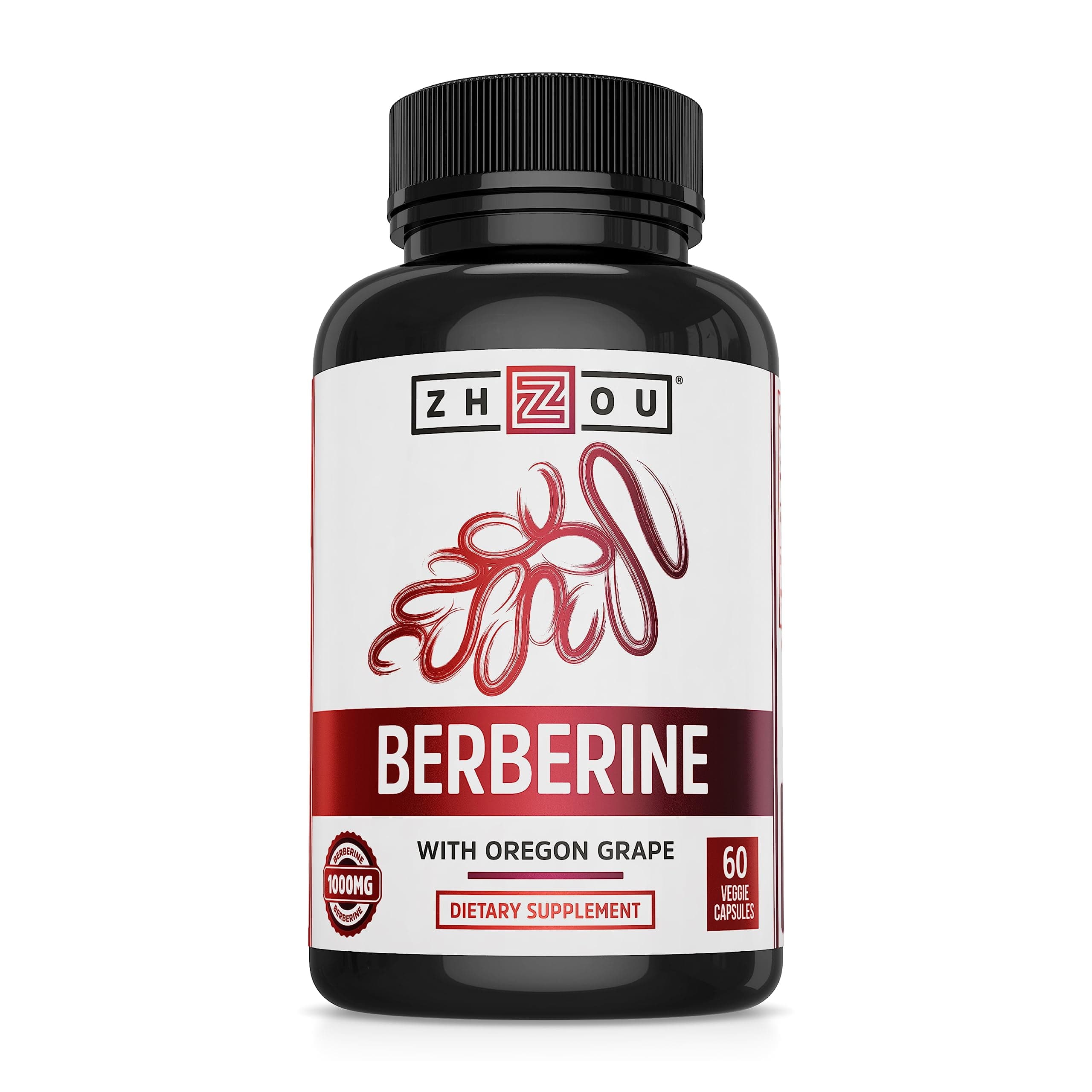
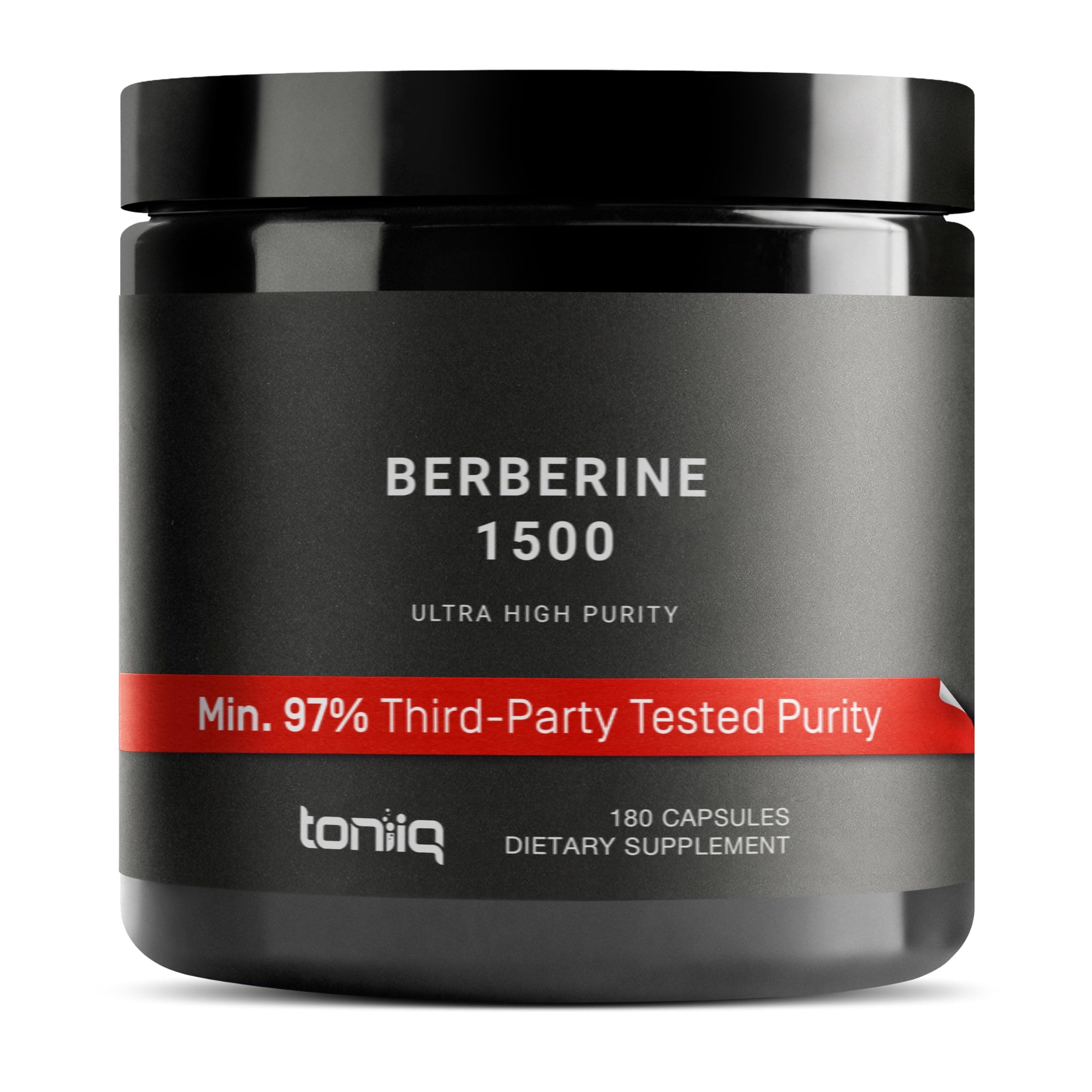
HbA1cMean difference
Average change in the trialsAbout 0.73 percentage points lower HbA1c.
Confidence interval0.51 to 0.97 points lower
People with type 2 diabetes, berberine alone or added to standard therapy.
Nature's metabolic switch. Lowers blood sugar, improves cholesterol, and can help with weight management. It activates an enzyme called AMPK, which is like a master metabolic switch for your body.
Reviewed March 2026
Source: Yin 2008 meta + Dong 2012 glucose study
In a 3-month open-label trial, 48 adults with poorly controlled type 2 diabetes took berberine alongside existing treatment. Fasting and postprandial blood glucose were lower from week 1 through the end of the trial, and HbA1c fell from 8.1% to 7.3%. In a separate 3-month double-blind trial, 116 adults with type 2 diabetes and dyslipidaemia took 1.0 g daily and HbA1c fell from 7.5% to 6.6% against placebo. No washout period was measured in either trial.
Where a trial measured an actual number, we show it next to the claim. It is the average across the trials, never a promise about one person.
About 0.73 percentage points lower HbA1c.
People with type 2 diabetes, berberine alone or added to standard therapy.
Read at the source. The magnitude sits beside the same trial the claim already cites. It describes what the trials measured, never what any one person will feel.
These words describe the research, not the molecule's worth. Research strength is how much work stands behind one claim, and it is never a product score.
Clinically proven to rival Metformin for blood sugar.
About 0.73 percentage points lower HbA1c.
People with type 2 diabetes, berberine alone or added to standard therapy. Confidence interval 0.51 to 0.97 points lower.
Why these belong in the same formula. Each row says what the basis is, from settled biochemistry through to a trial that measured the pair.
Most of an oral berberine dose is pumped straight back into the gut by the P-glycoprotein efflux transporter in the intestinal wall, which is why so little reaches the bloodstream. Silymarin from milk thistle inhibits that pump, and pairing the two is a long-standing way to raise how much berberine is actually absorbed.
Piperine, the active compound in black pepper extract, inhibits the same P-glycoprotein efflux and first-pass metabolism that clear berberine before it can be absorbed. Taken together, more of each berberine dose stays available to the body.
Barberry root is a botanical source of berberine itself, so its alkaloid adds to any isolated berberine in the formula. Total alkaloid intake is the figure that matters.
Oregon grape root carries berberine and related protoberberine alkaloids, so pairing it with isolated berberine raises the combined alkaloid load rather than adding a mechanism.
Goldenseal supplies berberine and hydrastine, so it stacks on the same alkaloid exposure and the same efflux and metabolic routes as isolated berberine.
Silymarin flavonolignans inhibit P-glycoprotein efflux and the enzymes that clear berberine, which raises how much berberine stays in circulation from the same dose.
Berberine inhibits complex I and raises the AMP to ATP ratio, activating AMP-activated protein kinase, while lipoic acid works as a cofactor for mitochondrial dehydrogenases in the same fuel-handling machinery.
Chromium supports insulin receptor signalling while berberine acts downstream through AMPK and glucose transporter trafficking, so the two touch different steps of normal glucose metabolism.
Inositol phosphoglycans act as second messengers in insulin signalling, a different point from the AMPK activation and glucose transporter movement berberine drives.
Cinnamon polyphenols slow carbohydrate digestion at the brush border, while berberine acts inside the cell on AMPK and glucose uptake.
Gymnemic acids act at the gut on sweet taste receptors and intestinal glucose uptake, while berberine acts intracellularly through AMPK.
Monacolin K inhibits HMG-CoA reductase, the rate-limiting step of cholesterol synthesis, while berberine raises LDL receptor expression that clears lipoprotein from blood. The two act on supply and clearance of one pathway.
Bergamot polyphenols are reported to act on cholesterol synthesis and absorption, while berberine raises LDL receptor expression, so the two touch different points of lipid handling.
Berberine is an antimicrobial alkaloid that shifts gut flora, and gut bacteria are also what reduce berberine to its more absorbable dihydro form. Taken together it can lower live culture viability and its own bacterial activation, so dosing is usually separated.
Activated charcoal adsorbs alkaloids and other small organic molecules in the gut, so berberine taken with it is bound and largely not absorbed. Doses must be hours apart.
Psyllium forms a viscous gel that traps small molecules and slows gastric emptying, which reduces how much of an already poorly absorbed alkaloid reaches circulation.
Quercetin inhibits P-glycoprotein, the efflux pump that pushes berberine back into the gut lumen, so co-dosing raises the fraction that stays absorbed.
A 2025 randomised trial dosed berberine together with cinnamon in adults with high blood sugar and reported changes in glycaemic markers against a control arm. These are markers, not clinical outcomes. Because both act on glucose handling, the combination is additive rather than complementary, so anyone already tracking glucose has two active levers at once.
Berberine mildly restrains mitochondrial complex I, which raises the AMP to ATP ratio and is part of how it activates AMPK. Coenzyme Q10 shuttles electrons from complexes I and II onward to complex III. The pairing is mechanistically coherent for supporting normal mitochondrial electron transport alongside berberine, and it has not been measured as a combination in people.
Berberine is a P-glycoprotein substrate, which is a large part of why so little of an oral dose reaches circulation. Curcumin inhibits P-glycoprotein in cell work, so co-dosing would be expected to raise berberine exposure. The direction is established transporter pharmacology. The size of the effect in people has not been quantified here.
Both compounds converge on AMPK activation and on sirtuin signalling downstream of a shifted energy charge. Stacking them is additive on the same node rather than two independent routes. No combination trial grounds a size for the overlap.
Berberine acts on hepatic LDL receptor expression and lipid handling. Catechins act partly on intestinal lipid absorption. The two sit at different points of the same lipid pathway, so the pairing is plausible and additive. Reported effects on lipid panels are markers, not clinical events.
Marine omega-3s lower hepatic triglyceride output. Berberine's reported lipid effects include triglycerides. Combining them stacks two mechanisms on the same marker. Note that both have been described as mildly affecting platelet function, so the combination is worth mentioning to anyone on blood thinning medication.
Gut bacteria reduce berberine to dihydroberberine, which crosses the intestinal wall more readily and is then reoxidised, and this microbial step is described as one part of the absorption route for an oral dose. A fermentable fibre shifts the community that performs it. The direction is mechanistic. No human trial has measured inulin changing berberine exposure.
Berberine is a quaternary alkaloid cation and dissolves poorly at intestinal pH. A medium-chain triglyceride vehicle is a common way to carry poorly soluble actives into the absorptive phase. This is formulation reasoning, not a measured exposure gain.
Phospholipid complexes of berberine are already a marketed form, which is the same chemistry as co-dosing phosphatidylcholine: the alkaloid associates with the phospholipid head group and travels in a lipid phase. That is why the pairing is mechanistically sensible. A loose blend is not the same thing as a manufactured complex, and only the complex has formulation data behind it.
St John's wort induces CYP3A4 and P-glycoprotein. Berberine is handled by both, so co-dosing would be expected to push berberine exposure down rather than up. This is textbook induction pharmacology and it is a reason to separate the two rather than stack them.
Both are used for glucose handling and both act on it. Taken together the glycaemic effect is additive, which is a flag rather than a benefit for anyone already on glucose lowering medication. No combination trial supports a size.
Mulberry's iminosugar slows intestinal carbohydrate breakdown while berberine acts after absorption. The two mechanisms differ but the direction on blood glucose is the same, so the pairing is additive and should be counted as one combined effect, not two independent ones.
Part of berberine's cell signalling in laboratory work runs through a mild pro-oxidant shift in the energy charge, and strong thiol antioxidants blunt that kind of signal in vitro. The co-occurrence index for berberine flags reactive oxygen species and glutathione as antagonistic pairings. Whether this matters at supplement doses in people has not been measured.
Berberine's absorption involves a bacterial reduction step in the gut that converts it to dihydroberberine, and berberine in turn shifts the composition of that community. A defined bifidobacterium is a plausible partner in that loop. Species-level evidence for the exchange is not available, and the enzymes responsible are not pinned down here.
Berberine raises the AMP to ATP ratio and activates AMPK. NAD precursors feed the sirtuin arm that AMPK signals into. The overlap is real at the pathway level and untested as a combination in people.
Talk to a doctor before taking Berberine if any of these apply to you: Pregnancy / Hypoglycemia. These are flags to check first, not effects Berberine is known to cause.
Not medical advice. Show the label to your pharmacist.Berberine is an isoquinoline alkaloid that carries a permanent positive charge as a quaternary ammonium cation, so it is drawn to water and dissolves poorly in fat at the pH inside your intestine.
How much gets into your bloodstream from an oral dose is very low. Two things drive that: a pump called P-glycoprotein pushes berberine back into the gut, and what does cross is heavily metabolised on first pass through the liver.
Berberine mildly inhibits complex I of the mitochondrial respiratory chain, which lifts the AMP to ATP ratio and switches on AMP-activated protein kinase. Most of its downstream metabolic signalling follows from that single energy-sensing switch.
Gut bacteria reduce berberine to dihydroberberine, which crosses the intestinal wall more readily and is then turned back into berberine in your tissue. That microbial step is part of the normal absorption route.
It starts as yellow-cored root and bark. Those are dried, ground and washed with an acidic solvent that pulls the yellow compound out, the extract is cleaned of close chemical relatives, and berberine crystallises as a bright yellow powder. Some makers stop there. Others attach it to a fat-like carrier or supply the reduced version.
Made from a plant. What ends up in the capsule tracks the harvest, so batch testing and a stated marker matter more here than with a made molecule.
Commercial berberine comes from the root, rhizome or stem bark of plants such as Berberis species, Coptis chinensis and Phellodendron amurense. Species and plant part set the starting alkaloid content, and the same botanical genus also carries related alkaloids that have to be separated later.
The dried, milled material is extracted with acidified water or an alcohol and water mixture. Acid keeps the alkaloid in its charged, water attracted salt form so it partitions into the aqueous phase and leaves most of the plant lipids behind.
The crude extract is cleaned on resin or by repeated solvent partition to strip out palmatine, jatrorrhizine and other co-occurring alkaloids, then berberine is crystallised out. The crystalline chloride is the bright yellow powder.
Berberine is isolated and sold as a salt rather than a free base. Hydrochloride is the usual one. Sulfate is also used. The counter-ion changes solubility and hygroscopicity in the blend, not the alkaloid itself.
Batches are assayed by HPLC against a berberine reference standard, commonly to 97 percent or higher for the isolated salt. A botanical extract standardised to a lower percentage is a different material from an isolated salt at the same label dose.
The powder can be encapsulated as is, complexed with phospholipids for a lipid-associated delivery route, or supplied as the reduced dihydroberberine. Each of these is a different chemistry with a different exposure profile and a different cost of goods.
Labels rarely name the plant species or the plant part, and they rarely say whether the material is an isolated salt at high purity or a standardised botanical extract. Those two can carry the same milligram number and are not the same material.
These are the studies our verdict leans on, chosen from the 276 we read for Berberine. The full linked list is below.
12 sources behind our Berberine verdict: peer-reviewed studies and registered clinical trials. Every one links straight to PubMed, the journal, or ClinicalTrials.gov. Read them yourself.
Evidence surfaced via Semantic Scholar (Allen Institute for AI) and ClinicalTrials.gov. Ranked by study type and citation weight, not cherry-picked.
Read this carefully. These are 2,662 voluntary, unverified reactions reported to the FDA (openFDA). The number mostly reflects how popular Berberine is, not how risky it is. A report is not proof Berberine caused anything. It is a signal of what to watch for, nothing more.
Source: openFDA adverse-event reports. Voluntary reporting, not an incidence rate.
FDA Disclaimer: These statements have not been evaluated by the Food and Drug Administration. This information is for educational purposes only and is not intended to diagnose, treat, cure, or prevent any disease. Consult your healthcare provider before starting any supplement regimen.