Carob Extract.
A chocolate-like bean extract that provides fiber, polyphenols, and natural sweetness in supplement formulas. Provides fiber, polyphenols, and a chocolate-like flavor to supplement formulas
Reviewed March 2026
- Category
- Herb
- Also filed under
- Natural chocolate alternative flavoringFiber contentPolyphenol antioxidantsMay support cholesterol levels
What Carob Extract is, and what it does.
- Does it work
- Mostly a flavoring agent in supplements.
- How much to take
- 500-2000 mg for digestive benefits. In supplements, usually present in sub-therapeutic amounts.
- Time to feel it
- Where the fibre is dosed in grams, stool consistency and after-meal comfort shift within a few days. Blood lipid markers move over several weeks.
- The first dose
- Maybe a slight chocolatey taste. No health effects at supplement doses.
- With regular use
- At therapeutic doses, some digestive improvements. At supplement flavoring doses, nothing.
- How well tolerated
- Well tolerated. Its tannins bind non-heme iron in the gut, so keep it away from an iron serving, and step the fibre amount up slowly to keep gas down.
- How it feels
- A faint roasted cocoa flavour with no stimulant behind it. Where the fibre is dosed in grams, meals sit fuller for longer and after-meal comfort is where you notice it.
- The overlooked benefit
- It carries the roasted flavour of cocoa with no caffeine and no theobromine in it, so that taste can go into an evening formula without a stimulant.
500 to 2,000mg a day is where Carob Extract works.
Source: Ruiz-Roso et al. (2010) Plant Foods Hum Nutr
The proof, claim by claim.
These words describe the research, not the molecule's worth. Research strength is how much work stands behind one claim, and it is never a product score.
- Supports digestive health via fiberRuiz-Roso et al. (2010) Plant Foods Hum Nutr
- May reduce cholesterolLimited clinical data
Questions people ask about Carob Extract.
- Is carob a good chocolate substitute?
- Depends on your expectations. It's naturally sweet and similar in color, but the flavor is distinctly different from cocoa. Think 'similar vibes, different taste.'
- Does carob have caffeine?
- No. Unlike cocoa, carob is completely caffeine-free. That's its main selling point as a chocolate alternative.
- Can carob help with diarrhea?
- Carob pod fiber has some evidence for anti-diarrheal effects, especially in children. But you need real doses, not supplement flavoring amounts.
- Is locust bean gum the same as carob?
- Same plant, different part. Locust bean gum comes from the seeds. Carob powder comes from the pods. Different chemistry and uses.
- Is it safe for people with nut allergies?
- Carob is a legume, not a tree nut. But cross-reactivity is possible in rare cases. Check with your allergist if concerned.
- Does the carob in my supplement do anything?
- At the amounts typically used in supplements, it's a flavoring agent. For real benefits, you'd need tablespoon-sized portions.
Why these belong in the same formula. Each row says what the basis is, from settled biochemistry through to a trial that measured the pair.
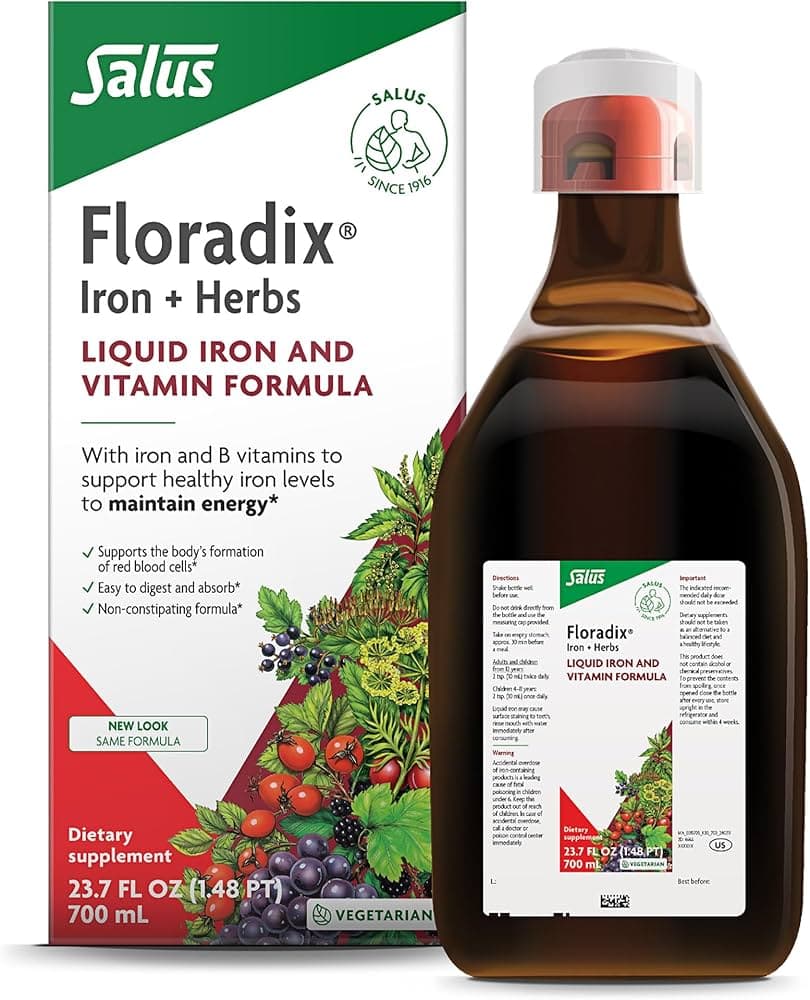
Carob is rich in condensed tannins, which bind non-heme iron in the gut lumen and form complexes the intestine cannot take up. Taken in the same sitting, carob lowers how much of an iron dose is absorbed, so formulators space the two by a couple of hours.
Ascorbate reduces ferric iron to the ferrous state and holds it soluble, which counteracts much of the binding carob polyphenols cause. Where a formula pairs carob with an iron source, vitamin C is the standard way to keep absorption workable.
Carob (locust bean) gum and guar gum are both galactomannans, and their differing galactose substitution lets the chains associate so the blend thickens more than either alone at the same total load. In a supplement matrix that means more viscosity and a smoother texture for less gum.
Carob galactomannan and pectin gel by different chemistry, one through mannose-galactose chains and the other through calcium-bridged galacturonic acid. Blending them gives a more stable gel across gut pH than either alone.
Psyllium arabinoxylan holds water and adds stool bulk while carob galactomannan mainly raises viscosity. Fibre blends combine the two to cover both effects at a lower dose of each.
Inulin is fermented quickly in the proximal colon while galactomannan ferments more slowly and further along. Together they spread fermentation across the length of the colon rather than concentrating it.
Carob galactomannan is fermented by colonic bacteria into short-chain fatty acids including butyrate. The fibre raises endogenous production while an oral butyrate dose supplies it directly.
Galactomannan and its galacto-oligosaccharide fragments are fermentable by lactobacilli and bifidobacteria. Pairing substrate with strains is standard synbiotic practice.
Carob pod is rich in condensed tannins, which bind divalent metals in the gut lumen and lower how much zinc is absorbed. Taking the mineral several hours apart from a tannin-dense fibre avoids the loss.
Galactomannan viscosity traps minerals in the gel and carob tannins bind calcium directly, both reducing the fraction available for uptake. This is the general fibre-mineral interaction rather than something specific to carob's polyphenols alone.
Condensed tannins precipitate proteins, including the amylases, proteases and lipases in an enzyme blend, which lowers their measured activity. Dosing a tannin-rich fibre in the same capsule as enzymes works against the enzymes.
The galactomannan and soluble fibre fractions of carob reach the colon largely intact, where saccharolytic bifidobacteria ferment them to short-chain fatty acids. Pairing the fibre with the organism supplies substrate and fermenter together. Human data on this specific pairing are limited, so the confidence sits on the substrate chemistry rather than a combination trial.
Carob seed galactomannan is a galactose-substituted mannan. GOS are shorter galactose chains. Both are fermented in the proximal colon, and combining a viscous long-chain fibre with a rapidly fermented oligosaccharide spreads fermentation along the bowel rather than concentrating it. Higher combined doses raise the chance of gas and bloating in the first days.
Resistant starch is fermented more distally and favours butyrate production, while carob fibre works earlier and adds viscosity. Using both gives a broader fermentation profile than either alone. This is fibre physiology rather than a tested carob combination.
Glucomannan is another mannose-backbone viscous fibre, so combining it with carob galactomannan increases total viscosity and the slowing of gastric emptying that comes with it. That supports a sense of fullness after a meal. Both need adequate fluid, and taken dry they can swell in the oesophagus.
Partially hydrolysed guar gum is a galactomannan cut to low viscosity so it ferments without thickening. Paired with carob it gives fermentable substrate without adding much more viscosity, which is a useful way to raise fibre intake in people who do not tolerate thick fibres. The rationale is compositional, not from a combination trial.
Carob is rich in condensed tannins and other polyphenols, which form insoluble complexes with ferrous and ferric iron in the gut lumen and reduce how much non-heme iron is absorbed. Taken in the same sitting as an iron salt, carob works against the iron rather than with it. Separating them by a couple of hours is the usual way this is handled.
Iron already bound in a glycine chelate is less available for tannin complexation than free iron from a simple salt, so polyphenol-rich material interferes with it less. Less interference is not no interference, and timing still matters either way.
Plant sterols compete with cholesterol for space in intestinal micelles, while carob fibre acts on bile-acid reabsorption and transit. Two different points in the same loop, so their effects on lipid markers can add. These are blood markers measured over weeks, not a clinical endpoint.
Carotenoids need dietary fat and bile-salt micelles to be absorbed, and viscous fibres reduce micellar transfer to the enterocyte. A large fibre dose taken with a carotenoid supplement can therefore lower how much is taken up. Dosing the carotenoid at a different meal avoids the overlap.
Polyphenol-rich plant materials bind divalent minerals in the gut lumen, and magnesium is subject to the same chemistry that affects iron and zinc, though less strongly. Co-dosing a mineral with a high fibre and tannin load is a timing question rather than a reason to avoid either. The magnitude for magnesium specifically is not well quantified.
Slippery elm mucilage and carob galactomannan both thicken gut contents and coat mucosa, and traditional practice has used both for stool consistency and gut comfort. The two are combined in digestive powders on that basis. Controlled human evidence for the combination has not been located.
Lactobacillus plantarum carries the enzymes to ferment plant polysaccharides and to transform dietary polyphenols into smaller phenolic metabolites. Carob supplies both classes of substrate. The pairing rests on microbial capability described in the literature rather than on a trial of the two together.
Talk to a doctor before taking Carob Extract if any of these apply to you: Primarily a flavoring agent in supplements, Limited clinical evidence for extract form. These are flags to check first, not effects Carob Extract is known to cause.
Not medical advice. Show the label to your pharmacist.What Carob Extract actually does.
The seed fibre thickens in water, which slows how fast a meal leaves the stomach.
Thick fibre carries bile acids out, and the liver uses cholesterol to replace them.
The tannins in carob grip minerals and proteins in the gut, iron especially.
It has two kinds of fibre, one that bulks stool and one the gut bacteria feed on.
Where Carob Extract comes from.
Carob comes from the pods of a Mediterranean tree. The pulp is dried and ground into powder, and the seeds are processed separately into a thickening fibre.
Made from a plant. What ends up in the capsule tracks the harvest, so batch testing and a stated marker matter more here than with a made molecule.
Pods are harvested from the carob tree, an evergreen legume of the Mediterranean basin, typically once mature and partly dried on the tree.
Pods are cracked and the seeds separated from the pulp. The two streams then diverge completely, which is why pod powder and locust bean gum are different ingredients from the same tree.
Pulp is dried, roasted where a cocoa-like flavour is wanted, and milled to powder. Roasting develops colour and flavour and alters the polyphenol profile.
Seeds are dehulled by acid or thermal treatment, then the protein germ is split from the endosperm. The milled endosperm is locust bean gum.
Where an extract is made, pod material is extracted in water or hydroalcohol, concentrated and standardised to a stated polyphenol or tannin figure. Gum grades are specified on viscosity instead.
The finished materials are a brown pod powder, an off-white galactomannan gum, or a concentrated pod extract.
Labels often say only carob, without stating whether the material is pod powder, seed gum or a standardised extract, and those behave differently.
Getting Carob Extract from food.
The whole-food sources on file. A supplement closes the gap, it does not replace dinner.
A gram-for-gram figure (how much of each you would eat to match a dose) will appear here once it is sourced and reviewed. This page will not print a number it cannot cite.
The forms it comes in.
The essence, in one line each.
- Over 90 days, 6.66 g daily of a carob liquid concentrate rich in inositols lowered HbA1c and blood glucose more than placebo in 52 adults with elevated blood sugar (p < 0.001 for the time by group difference).Randomised trial. Pérez-Piñero et al., 2026 (Nutrients). PMID 42196981 ↗
- Over 12 weeks in 40 healthy adults, an inositol-enriched carob extract beverage taken twice daily was followed by falls in fasting insulin and the HOMA-IR insulin sensitivity index within that group, and average after-meal glucose about 14 percent lower on continuous monitoring, while the sucrose-sweetened comparison drink saw fasting glucose and BMI rise.Randomised trial. Bañuls et al., 2015 (Clinical Nutrition). PMID 26051494 ↗
- A drink made with 30 g of Imera carob powder held 30-minute glucose to 109.2 mg/dL versus 120.3 mg/dL for a sucrose drink in 15 healthy men (p = 0.003), with insulin at 9.8 versus 14.6 microIU/mL (p = 0.001).Randomised trial. Amerikanou et al., 2025 (Food Chemistry). PMID 41166808 ↗
- Pooling four randomised trials in 236 men being assessed for fertility, carob supplements were associated with sperm motility about 11.3 percentage points higher than in control groups (95% CI 5.97 to 16.64), on a body of evidence the authors say needs larger, higher-quality trials before firm conclusions.Meta-analysis. Karaahmet et al., 2024 (Reproductive Sciences). PMID 38637477 ↗
- A review of Ceratonia siliqua that sets out its traditional uses and the polyphenol and fibre chemistry behind its reported properties, and calls for controlled human work.Narrative review. Gadoum A et al., 2026 (Life). PMID 41900966 ↗
- In an animal model, carob extract added to caloric restriction and aerobic exercise was reported to change cardiometabolic markers more than the lifestyle intervention alone. Markers, and animal data.Animal study. de la Fuente-Fernandez M et al., 2022 (Antioxidants). PMID 36139877 ↗
- Ground carob seed in rabbit feed was reported to shift several serum biochemical markers.Animal study. Saadi MJA et al., 2025 (Open Veterinary Journal). PMID 40989593 ↗
- A narrative review collecting mostly preclinical reports on Ceratonia siliqua preparations and male reproductive parameters. The authors describe the human evidence as absent.Narrative review. Firouzabadi AM et al., 2024 (American Journal of Men's Health). PMID 39434540 ↗
- A review of flavonoid intake and exercise performance that names carob among flavonoid sources under study and finds the performance evidence inconsistent across compounds.Narrative review. Ruiz-Iglesias P et al., 2021 (Nutrients). PMID 33808153 ↗
- Carob and brewer's spent grain were assessed as growth substrates for insect larvae. The work is about upcycling agricultural by-products, not human nutrition.Animal study. Ferri I et al., 2025 (Animals). PMID 40564249 ↗
These are the studies our verdict leans on, chosen from the 1,604 we read for Carob Extract. The full linked list is below.
The studies, linked.
2 sources behind our Carob Extract verdict: peer-reviewed studies and registered clinical trials. Every one links straight to PubMed, the journal, or ClinicalTrials.gov. Read them yourself.
- Clinical trialRandomized Clinical Trial to Analyze the Efficacy of a Liquid Carob Extract on the Glucose Metabolism of Subjects With Prediabetes.ClinicalTrials.gov ↗70 participants, Not yet recruiting
- Clinical trialRandomized Clinical Trial on the Effect of a Nutritional Product Containing Carob Extract (NUTIFOOD) on Carbohydrate Metabolism in Glucose-intolerant SubjectsClinicalTrials.gov ↗30 participants, Recruiting
Evidence surfaced via Semantic Scholar (Allen Institute for AI) and ClinicalTrials.gov. Ranked by study type and citation weight, not cherry-picked.
FDA Disclaimer: These statements have not been evaluated by the Food and Drug Administration. This information is for educational purposes only and is not intended to diagnose, treat, cure, or prevent any disease. Consult your healthcare provider before starting any supplement regimen.