Citric Acid.
Research-backed compound with potential health benefits. Also makes minerals like magnesium easier for your body to absorb.
Reviewed March 2026
- Category
- Compound
What Citric Acid is, and what it does.
- Does it work
- If you're prone to kidney stones, yes. Your urologist might even recommend it. For everyone else, you get enough from food.
- How much to take
- For kidney stone prevention, doctors often recommend 3-6 grams daily, split into 2-3 doses with meals. There is no general use dose.
- Time to feel it
- There's no sensation to wait for. Its work shows up in urine chemistry and in how well minerals stay dissolved, changes read on a lab report over weeks.
- The first dose
- Zero.
- With regular use
- Over months, a reduced risk of forming new kidney stones. You won't notice anything day-to-day.
- How well tolerated
- Well tolerated. It's a GRAS (Generally Recognized as Safe) food additive. Too much at once can cause stomach cramps.
- How it feels
- You feel nothing. It's completely unnoticeable.
- The overlooked benefit
- It's the reason so many minerals are sold as citrates. Citrate keeps calcium, magnesium and zinc in soluble complexes at intestinal pH, right where absorption happens.
500 to 2,000mg a day is where Citric Acid works.
Source: Korean J Urol. 2010;51(7):481-484. Citric acid and kidney stone prevention.
The proof, claim by claim.
These words describe the research, not the molecule's worth. Research strength is how much work stands behind one claim, and it is never a product score.
Citric Acid is documented in the library. The clinical read is in the queue. Nothing about the strength of the research prints until the read is done.
- Urinary citrate and normal calcium saturation in urineRandomised trial
- Mineral solubility and absorption from citrate saltsRandomised trial
- Buffering and acidity control in food and supplement formatsNarrative review
- Role as the first intermediate of the tricarboxylic acid cycleNarrative review
- Softening of dental enamel with frequent acidic exposureIn vitro study
Questions people ask about Citric Acid.
- Is this the same as just drinking lemon juice?
- Kind of. Lemon juice is about 5-8% citric acid. This is just the pure, isolated stuff. You can use lemon juice, but powder is more precise and often easier.
- Will it hurt my stomach?
- Unlikely at normal doses with food. Can cause an upset stomach if you take too much on an empty stomach.
- Is it bad for my teeth?
- It's an acid. If you drink it, don't swish it around. Rinse your mouth with plain water afterwards to be safe.
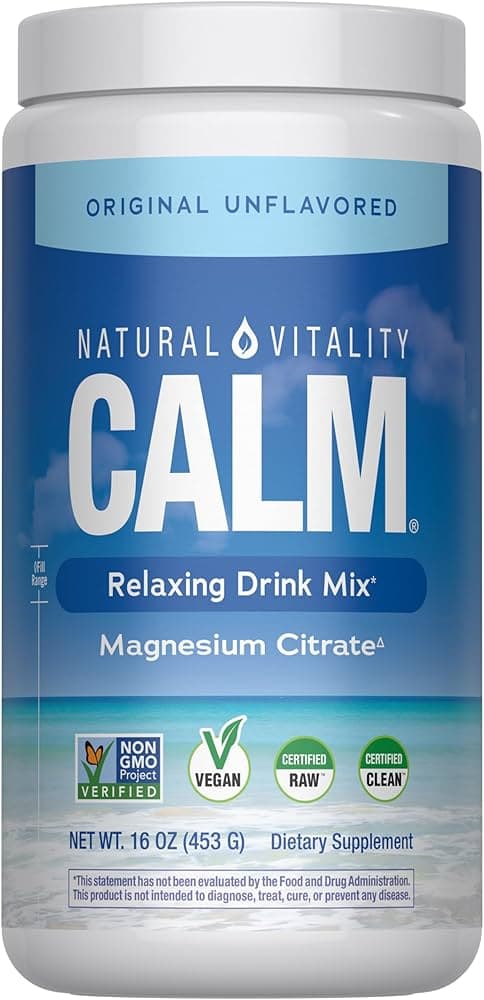
- Can I just take magnesium citrate instead?
- Yes. If you need both magnesium and the citrate for kidney stones, that's a smart two-for-one.
- Is it 'natural'?
- It's found in lemons, but the supplement version is made by fermenting sugar with a specific mold. Same molecule, different, more efficient process.
Why these belong in the same formula. Each row says what the basis is, from settled biochemistry through to a trial that measured the pair.
Citric acid and bicarbonate react on contact with water to release carbon dioxide, which is what disperses an effervescent tablet and dissolves the active load. The pair is the textbook effervescent couple.
Calcium carbonate needs an acidic environment to dissolve and release ionic calcium, and citric acid supplies that locally by forming the far more soluble citrate. This is why citrate forms absorb well when stomach acid is low.
Magnesium oxide is barely soluble and depends on gastric acid to ionise, while citric acid converts it in situ to magnesium citrate. The citrate form stays in solution across a wider pH range in the small intestine.
Iron precipitates as insoluble hydroxide when it leaves the acidic stomach, and citrate holds it in a soluble low molecular weight complex through the duodenum. That keeps more iron available at the site where the transporter sits.
Ascorbate reduces ferric iron to the ferrous form the DMT1 transporter accepts, while citrate keeps that iron in solution as the intestinal pH climbs. The two act at different points of the same absorption step.
Citrate chelation gives zinc a soluble, low molecular weight carrier that resists precipitation by phytate and phosphate in the gut lumen. This is why citrate salts are used where gastric acid output is modest.
Absorbed citrate is oxidised through the tricarboxylic acid cycle and yields bicarbonate, which raises urinary pH and citrate output. The two ingredients feed the same alkalinising route.
Calcium citrate is calcium bound to citrate, and it dissolves without needing gastric acid. Adding free citric acid to a calcium formula pushes the same chemistry in the gut.
Citrate forms a soluble complex with magnesium that stays dissolved across the pH range of the upper gut, unlike the oxide, which needs acid to break down. That solubility is why magnesium citrate is a common oral form. It describes what dissolves, which is separate from what reaches tissue.
Citrate binds zinc into a soluble complex and competes with phytate for the same cation, keeping more of it available in the lumen. The reaction is straightforward coordination chemistry. Whether the increment shows up in a status marker depends on the rest of the diet.
Calcium citrate remains soluble in the near-neutral duodenum where carbonate has already precipitated, and citrate also lowers the tendency of calcium and oxalate to crystallise in urine. That is why citrate salts are chosen when gastric acid is low. The chemistry is settled. The endpoint claim is not being made here.
Citrate holds ferric iron in a soluble complex as stomach contents move into the higher pH of the duodenum, where iron would otherwise form insoluble hydroxides. It works differently from ascorbate, which reduces the iron rather than chelating it. The two act by separate chemistries, so their effects on lumen solubility would be expected to run together. The combined magnitude is not established here.
Citrate coordinates copper into soluble complexes and is one of the plasma ligands that carries the small non-ceruloplasmin copper fraction. In a formula this keeps copper from precipitating with carbonate or phosphate. The source index also flags a competitive direction between the two, so read this as coordination rather than as an uptake claim.
Manganese binds citrate readily and circulates partly as a citrate complex, which is also how it crosses some transport interfaces. In a supplement matrix the practical effect is solubility. Manganese has a narrow useful intake range, so improving solubility is not automatically desirable.
Boron is commonly supplied as a citrate in mineral formulas, since citrate salts of trace minerals are readily prepared and dissolve well. The pairing is a manufacturing convention. There is no measured combined effect to describe.
Feed studies have combined citric acid with phytase on the reasoning that acidification suits the enzyme's pH optimum and citrate competes with phytate for mineral binding. The work reported was performed in fish, so it grounds a mechanism rather than a human effect. The direction is plausible, the human evidence is not there.
Citrate is metabolised in the tricarboxylic acid cycle to bicarbonate, so potassium citrate contributes alkali alongside the cation. That is the basis for using citrate salts where an acid load is being offset. The chemistry is settled and independent of any clinical endpoint.
Sodium citrate is used in electrolyte drinks both as a buffer and as a source of metabolisable alkali. It contributes sodium to the total in the same serving. Formulators counting sodium have to count the citrate salt as well as the added salt.
Citric acid sets the tartness and pH of most electrolyte powders while its salts carry part of the mineral load. The acid also stabilises the flavour system and slows browning. This is formulation function rather than a physiological interaction.
Catechins oxidise quickly above pH 6, and citric acid holds a beverage acidic enough to slow that degradation. Sequestering trace metals removes a second route of catechin loss. The argument is about what survives in the bottle and the stomach.
Creatine dissolves better in an acidic solution but also converts to creatinine faster the longer it sits at low pH. A citric-acid drink mix therefore trades solubility against stability once made up. Mixing at the point of use rather than in advance is the practical response.
Activated charcoal adsorbs a wide range of small organic molecules in the gut without much selectivity, so co-ingested organic acids and their mineral complexes are among the things it can bind. Separating intake by a couple of hours is standard practice with charcoal. The direction is established even where the specific pairing has not been measured.
Nothing specific on file for Citric Acid. Match the label to the daily amount above, and tell your doctor what you take.
Not medical advice. Show the label to your pharmacist.What Citric Acid actually does.
Citric acid carries three acid groups that let go of their protons at different points, near pH 3.1, 4.8 and 6.4. That's what makes it both a souring agent and a buffer across the range food and supplements use.
Citrate is the opening intermediate of the tricarboxylic acid cycle. One enzyme joins acetyl-CoA to oxaloacetate to make it, and another rearranges it into isocitrate.
Out in the cell fluid, an enzyme called ATP-citrate lyase splits citrate back into acetyl-CoA and oxaloacetate. That's how carbon from your mitochondria reaches fatty acid and cholesterol building outside them.
Citrate quietly puts the brakes on phosphofructokinase-1 and speeds up acetyl-CoA carboxylase, which is how a cell with plenty of energy on hand slows sugar burning and leans into making fat.
Where Citric Acid comes from.
Almost none of it comes from lemons now. A mould called Aspergillus niger is fed sugar from corn starch or molasses, and under the right conditions it pours out citric acid instead of using it up. The liquid is cleaned, the acid is crystallised out, and it is dried and sieved to whatever grain size the formula needs.
Built by fermentation, the same way vitamin B12 and many amino acids are made at scale. Controlled conditions, consistent output.
Hydrolysed corn or wheat starch, cane or beet molasses, or cassava-derived glucose syrup, sterilised and adjusted for nitrogen and trace metals.
Aspergillus niger is grown under deliberately manganese-deficient, low-pH conditions that stall the tricarboxylic acid cycle at citrate and drive it out of the cell. Yields of well over half the sugar carbon are routine. Surface and solid-state fermentation are older variants of the same route.
Biomass is filtered off, then citrate is recovered either by precipitation as calcium citrate followed by acidification with sulfuric acid, or by solvent extraction and ion exchange, which avoid the gypsum by-product.
Activated carbon and ion-exchange resins remove colour, residual sugars and inorganic salts from the acid liquor.
Concentrated liquor is crystallised above 36 degrees Celsius for the anhydrous form or below it for the monohydrate. The crystal chosen is set by the temperature of the crystalliser.
Crystals are centrifuged, dried and screened to a specified mesh, then released against food-grade or pharmacopoeial assay, heavy metal and residual solvent limits.
Getting Citric Acid from food.
The whole-food sources on file. A supplement closes the gap, it does not replace dinner.
A gram-for-gram figure (how much of each you would eat to match a dose) will appear here once it is sourced and reviewed. This page will not print a number it cannot cite.
The forms it comes in.
The essence, in one line each.
- Citric acid supplementation was associated with changes in hepatic lipid handling measures and body weight in the mice studied. These are animal markers, not human outcomes.Animal study. Wang et al., 2025 (Journal of Oleo Science). PMID 40307064 ↗
- Dietary citric acid was associated with differences in growth performance, intestinal morphology, microbiota composition and blood chemistry in the birds studied.Animal study. Xue et al., 2023 (Poultry Science). PMID 36476679 ↗
- Citric acid in the diet was associated with performance, plasma constituent and caecal microbiota differences in growing geese.Animal study. Zhang et al., 2024 (Animals). PMID 38473044 ↗
- Combining phytase with citric acid was associated with differences in growth and nutrient digestibility measures, consistent with acidification aiding phytate mineral release.Animal study. Arsalan et al., 2021 (Brazilian Journal of Biology). PMID 34259781 ↗
- Hydroxycitric acid alongside a calorie-restricted diet was examined against metabolic, atherogenic and inflammatory markers. The tested compound is hydroxycitric acid from Garcinia, a related but distinct molecule from citric acid, and the readouts are markers rather than outcomes.Randomised trial. Arefhosseini et al., 2022 (Food and Function). PMID 35416190 ↗
- Factors associated with falling potassium during citrate-anticoagulated apheresis were described in healthy donors. This is an association in a procedural setting, not an effect of dietary citric acid.Cohort study. Kitamura et al., 2025 (Transfusion and Apheresis Science). PMID 40561934 ↗
- Multi-omics analysis described how added citric acid shifts microbial community structure and fermentation pathways during silage. The setting is a food-fermentation model, not a body.In vitro study. Ma et al., 2025 (Bioresource Technology). PMID 40701415 ↗
- Bacterial acetic acid production under citric acid stress was traced to a specific gene and to ammonium handling, describing microbial adaptation to a low-pH citrate environment.In vitro study. Yang et al., 2026 (Bioresource Technology). PMID 42431417 ↗
These are the studies our verdict leans on, chosen from the 8 we read for Citric Acid. The full linked list is below.
Problems people have reported.
Read this carefully. These are 13,378 voluntary, unverified reactions reported to the FDA (openFDA). The number mostly reflects how popular Citric Acid is, not how risky it is. A report is not proof Citric Acid caused anything. It is a signal of what to watch for, nothing more.
Source: openFDA adverse-event reports. Voluntary reporting, not an incidence rate.
FDA Disclaimer: These statements have not been evaluated by the Food and Drug Administration. This information is for educational purposes only and is not intended to diagnose, treat, cure, or prevent any disease. Consult your healthcare provider before starting any supplement regimen.