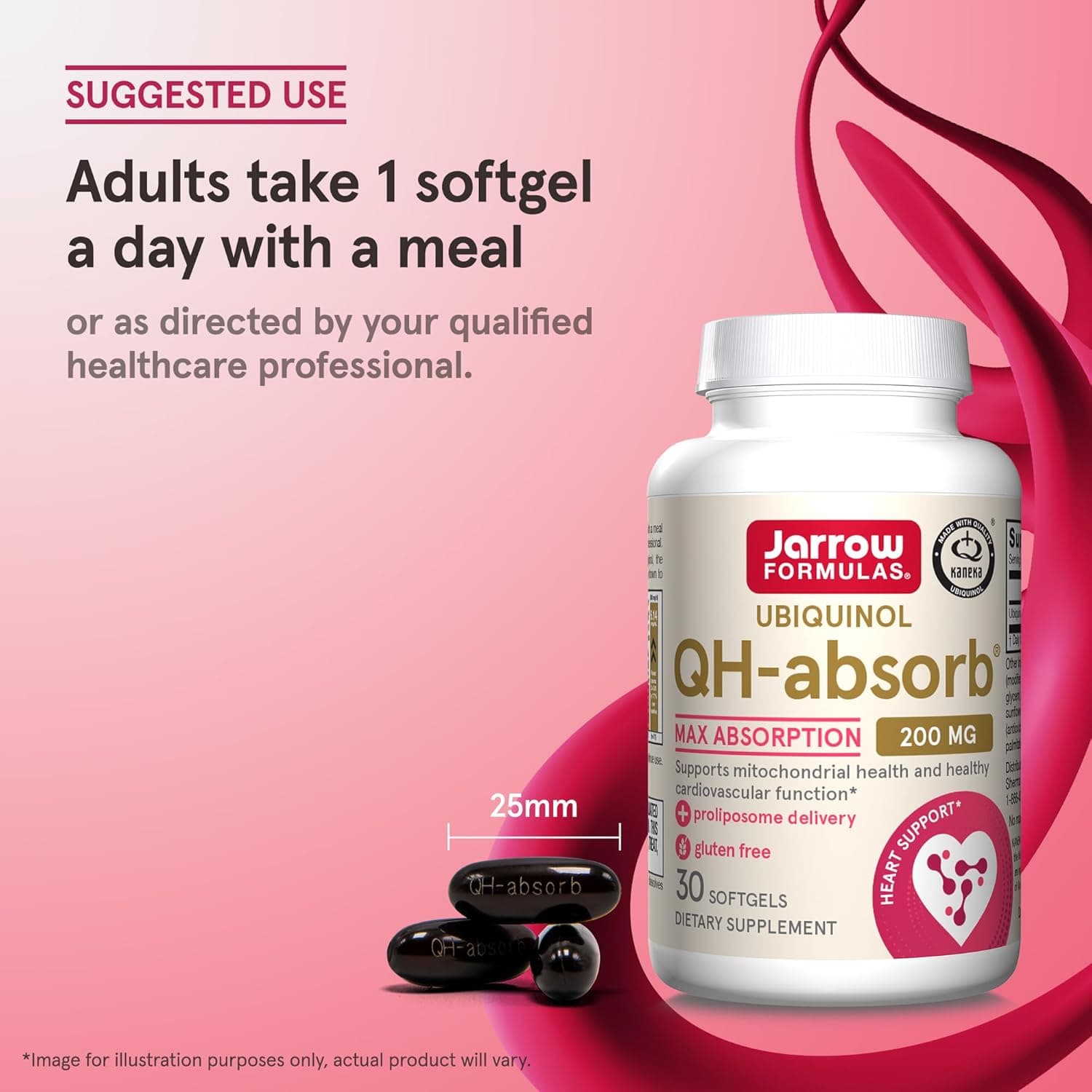
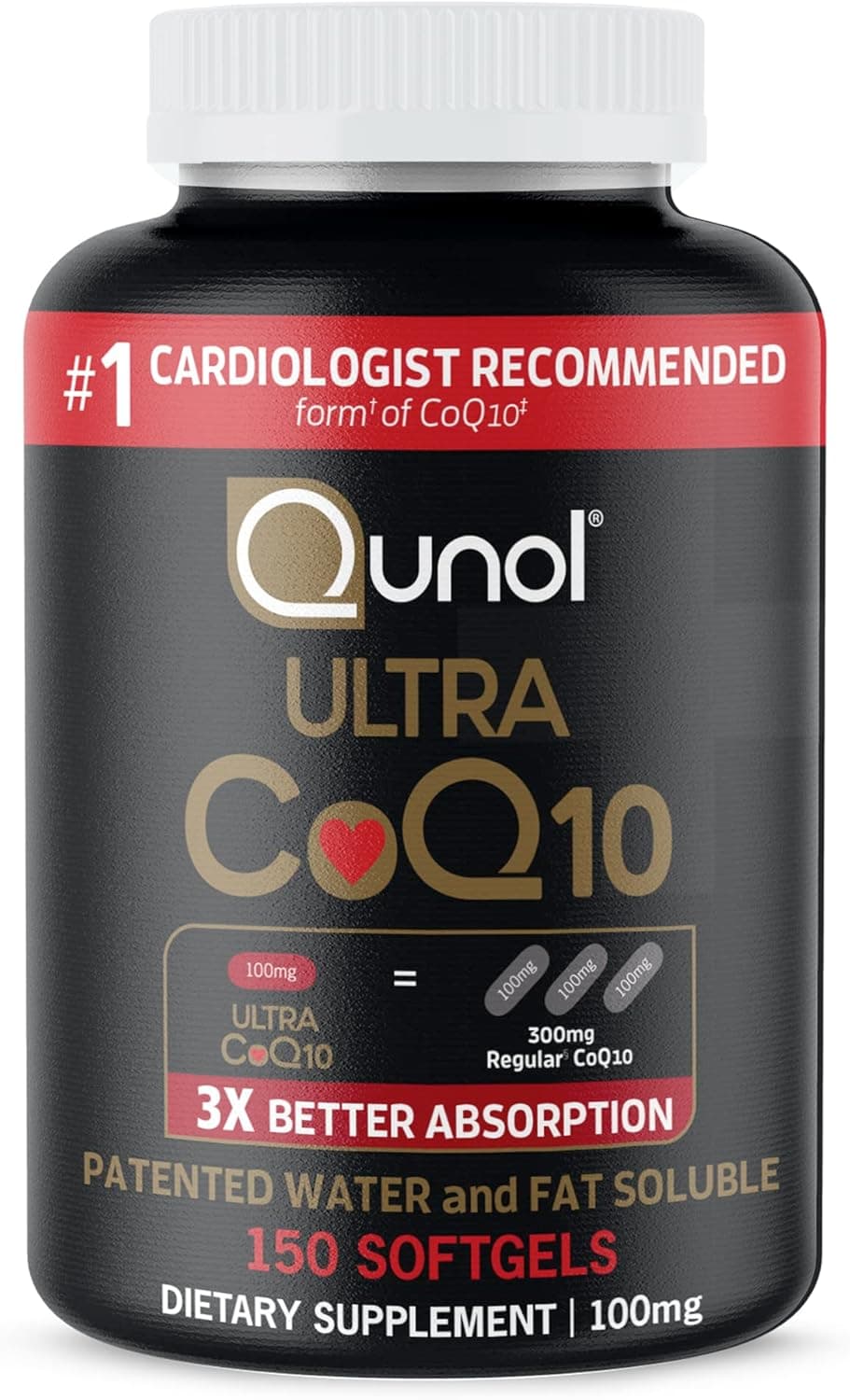
Pairs well with30 on file
Why these belong in the same formula. Each row says what the basis is, from settled biochemistry through to a trial that measured the pair.
Inside the fatty layers of cell membranes, the reduced form of CoQ10 hands an electron to vitamin E after vitamin E has neutralized a free radical, returning it to its active form. By regenerating vitamin E this way, CoQ10 helps it keep protecting membrane fats from oxidation.
L-carnitine shuttles long-chain fatty acids into the mitochondria to be broken down for energy, and CoQ10 then carries the electrons that process releases through the electron transport chain. Acting at consecutive steps of the same energy-production line, the two support the body's normal ATP production in complementary ways.
Ascorbate reduces the tocopheroxyl radical and takes part in the same redox relay that cycles ubiquinone back to ubiquinol. These sit in one chain that hands electrons along rather than acting in isolation.
PQQ is associated with PGC-1alpha signalling and the making of new mitochondria, while CoQ10 is the electron carrier those mitochondria need in their inner membrane. More mitochondria without more carrier is an incomplete pairing.
Lipoic acid is the cofactor for pyruvate and alpha-ketoglutarate dehydrogenase, feeding NADH into the chain where coenzyme Q accepts electrons, and its dihydro form regenerates other antioxidants. Substrate entry and electron carriage line up.
FAD and FMN made from riboflavin sit in complex I and complex II, which hand their electrons directly to coenzyme Q. Low riboflavin limits the flow into the pool a CoQ10 dose enlarges.
Niacin builds the NAD pool whose reducing equivalents enter the chain at complex I and pass to coenzyme Q. The carrier only moves what the dinucleotide pool delivers.
NR raises intracellular NAD+, the substrate whose reduced form feeds electrons into the respiratory chain that coenzyme Q then carries. Pairing them addresses supply and transport in the same organelle.
Thioredoxin reductase, a selenoprotein, reduces ubiquinone to the active ubiquinol form, so selenium status governs how much of a CoQ10 dose ends up in its antioxidant state. The dependency runs in one clear direction.
ATP is functional as a magnesium complex, and ATP synthase along with many matrix dehydrogenases require magnesium. CoQ10 moves the electrons. Magnesium is needed for the energy those electrons pay for to be usable.
Ribose supplies the sugar backbone for rebuilding adenine nucleotides, while CoQ10 supports the chain that phosphorylates them. One restores the pool, the other charges it.
Monacolin K inhibits HMG-CoA reductase, and the same mevalonate pathway supplies the polyprenyl tail of coenzyme Q10. Pairing them replaces what the shared upstream step gives up.
Menaquinone side chains and the CoQ10 isoprenoid tail are both built from prenyl units coming out of the mevalonate pathway. Anything that limits that pathway limits both quinones together.
CoQ10 is crystalline and poorly soluble, and its uptake depends on dissolution into a lipid vehicle and mixed micelles. An oil-based softgel gives a substantially higher plasma response than a dry powder.
Piperine slows intestinal and hepatic metabolism of several lipophilic actives and is associated with higher plasma CoQ10 over sustained dosing. It is included for uptake rather than for any activity of its own.
Endogenous CoQ10 is built from two halves, a polyprenyl tail from the mevalonate pathway and a benzoquinone ring derived from tyrosine by way of 4-hydroxybenzoate. That makes tyrosine a structural precursor rather than an accessory nutrient. Supplying CoQ10 directly bypasses the pathway, so this row explains biosynthesis rather than predicting an additive effect from taking both.
Coenzyme Q10 + SAM-eEstablished biosynthesis: the ubiquinone pathway includes S-adenosylmethionine-dependent methylation steps. Three of the terminal reactions that finish the ubiquinone head group are methyl transfers that use S-adenosylmethionine as the methyl donor. Methyl group availability is therefore part of endogenous CoQ10 synthesis. This is settled pathway biochemistry and not a claim that taking SAM-e raises anyone's CoQ10 level.
Coenzyme Q10 + TMG betaineEstablished one-carbon chemistry: betaine remethylates homocysteine to methionine, feeding SAM regeneration. Betaine donates a methyl group to homocysteine via betaine-homocysteine methyltransferase, regenerating methionine and therefore the S-adenosylmethionine pool that the ubiquinone methylation steps draw on. The link to CoQ10 is one step removed, through the shared methyl economy. No trial has measured CoQ10 status after betaine.
5-methyltetrahydrofolate supplies the methyl group for methionine synthase, which regenerates methionine and downstream S-adenosylmethionine. Since the final ubiquinone methylations are SAM-dependent, folate status sits upstream of endogenous CoQ10 assembly. The pathway link is established. An effect of folate on measured CoQ10 has not been demonstrated.
Pyridoxal 5-phosphate is the cofactor for the transamination of tyrosine to 4-hydroxyphenylpyruvate, the step that begins the route toward the 4-hydroxybenzoate ring precursor of ubiquinone. B6 status therefore touches the ring half of endogenous synthesis. This describes biosynthesis, not an additive effect of co-supplementation.
The decaprenyl tail of CoQ10 is assembled from isoprene units generated by the mevalonate pathway, which starts from acetyl-CoA. Pantothenic acid is the precursor of coenzyme A and therefore of the acetyl units that feed it. The connection is textbook and upstream. It does not predict that adding B5 changes CoQ10 status.
Ubiquinol is a lipid-phase reductant that can regenerate alpha-tocopherol from the tocopheroxyl radical, and glutathione supports the aqueous side of the same recycling network through ascorbate. The result is a chain of one-electron handoffs across the membrane boundary rather than four independent antioxidants. The chemistry is established in vitro. Net effects in a person taking both are not.
Coenzyme Q10 + NADEstablished respiratory chain biochemistry: complex I oxidises NADH and passes electrons to ubiquinone. Ubiquinone is the electron acceptor for both complex I, which oxidises NADH, and complex II, which oxidises succinate, making it the junction where those two inputs converge. NAD availability and ubiquinone availability are consecutive links in one chain. This is settled mitochondrial biochemistry and says nothing about the effect of oral dosing.
CoQ10 is a large, highly lipophilic quinone with negligible water solubility, and its absorption depends on bile-salt micelle formation and incorporation into chylomicrons. Dosing it in or with a lipid is the standard way to address that. The requirement for a lipid vehicle is established. The specific choice of carrier oil is a formulation decision, not a ranking.
Because crystalline CoQ10 dissolves so poorly, formulators disperse it with phospholipid emulsifiers to keep it in a fine dispersion rather than as undissolved crystals in the gut. Phospholipids also participate in mixed micelle formation. This addresses the solubility bottleneck and is separate from anything CoQ10 does once absorbed.
Astaxanthin spans the membrane bilayer with polar groups at both surfaces, while ubiquinol sits in the hydrophobic core. They quench radicals in different regions of the same membrane. The chemistry supports the pairing. No combination trial in people is cited here.
Resveratrol is studied as a modulator of sirtuin and PGC-1alpha signalling, which governs how many mitochondria a cell builds, whereas CoQ10 is a component those mitochondria require. In principle one changes capacity and the other supplies a part. This is a mechanistic hypothesis at the signalling level, not a tested combination.
Coenzyme Q10 + TaurineEstablished presence of taurine in mitochondrial tRNA modification and membrane stabilisation. Taurine is required for the taurinomethyluridine modification of mitochondrial tRNA, which affects translation of respiratory chain subunits, and CoQ10 is a carrier within that same chain. The two touch mitochondrial function from different angles. Human co-supplementation data is not cited here, so the row is mechanistic only.
Berberine is well characterised as a complex I inhibitor, which is the accepted explanation for its AMPK activation. Since ubiquinone is the electron acceptor immediately downstream of complex I, the two act on adjacent points in the same chain and their directions of effect are not the same. This is a genuine interaction to flag rather than a pairing to encourage, and no combination trial defines the net result.
Creatine buffers ATP in the cytosol through the phosphocreatine system, while CoQ10 works inside the mitochondrion as an electron carrier during oxidative phosphorylation. One stores energy currency and the other helps make it. The overlap is conceptual, and no combination study is cited here.