Curcumin (Turmeric).
The fire extinguisher. Reduces chronic inflammation. Think of it as a natural way to cool down aches and pains in your joints, muscles, and gut.
Reviewed March 2026
- Category
- Herb
- Also filed under
- InflammationJointsRecoveryHerb
What Curcumin (Turmeric) is, and what it does.
- Does it work
- Yes. It's as effective as some NSAIDs in dozens of human trials.
- How much to take
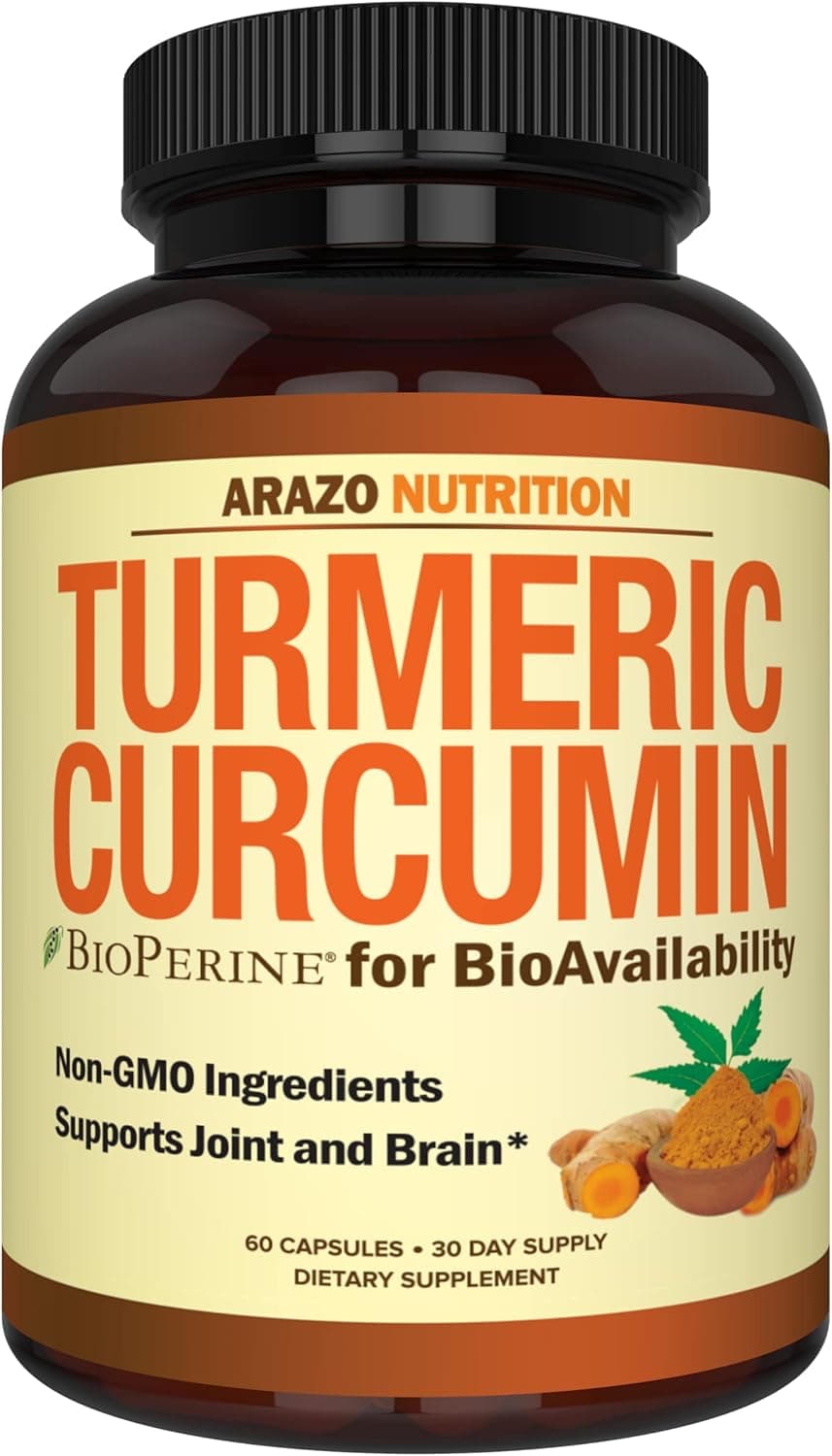
- 500-1000mg of a bioavailable formula daily. Look for 'piperine,' 'BioPerine,' or a lipid delivery system on the label. Otherwise, your body won't absorb it.
- Time to feel it
- About eight weeks of daily use.
- The first dose
- Nothing. It needs to build up in your system. Don't expect immediate relief like you would from an Advil.
- With regular use
- After 2-4 weeks, joint pain and stiffness should be noticeably better. General aches from exercise might fade faster too.
- How well tolerated
- Well tolerated for most people. The main watch-outs are for people on blood thinners or with gallbladder issues. Talk to your doc if that's you.
- How it feels
- Subtle. It's not a painkiller, it's an inflammation manager. The feeling is the *absence* of low-grade, chronic aches.
- The overlooked benefit
- Curcuminoids coordinate divalent metals like iron, so putting a couple of hours between turmeric and an iron supplement leaves both doing their own job.
500mg a day is where Curcumin (Turmeric) works.
Source: Daily 2016 meta + Amalraj 2017 bioavailability review
In an eight week randomised, double blind, placebo controlled trial, 101 adults with knee osteoarthritis took 500 mg of a standardised curcumin extract twice daily or placebo. Knee pain scores on the KOOS and on a numeric rating fell more than placebo across the eight weeks, and timed up and go and six minute walk results also moved. One author was affiliated with DolCas Biotech, which makes the extract tested. A separate 28 day open label trial in 139 adults measured pain at days 7, 14 and 28 against diclofenac rather than against placebo, and found no significant difference between the two.
The proof, claim by claim.
These words describe the research, not the molecule's worth. Research strength is how much work stands behind one claim, and it is never a product score.
Highly effective anti-inflammatory (needs black pepper).
- Reduces osteoarthritis pain and stiffnessMultiple meta-analyses (comparing to NSAIDs)
- Lowers systemic inflammatory markers (CRP, IL-6)Meta-analysis of 32 RCTs
- Improves metabolic health and lipid profilesSystemic review of 7 RCTs
Questions people ask about Curcumin (Turmeric).
- Can I just use turmeric spice from my kitchen?
- No. It has very little curcumin and your body can't absorb it. You need a concentrated extract with an enhancer like black pepper.
- Does it have to have black pepper?
- Yes, or something similar. Piperine from black pepper increases absorption by 2000%. Without it, you're not getting the benefits.
- Will it stain my teeth?
- The powder can, but capsules won't. If you're mixing powder into a drink, just rinse your mouth after.
- What's the best time to take it?
- With a meal that contains some fat. This helps your body absorb it even better.
- Can I take it for a headache?
- Not really. It's for chronic, low-grade inflammation, not acute pain relief. Stick to aspirin for that.
Why these belong in the same formula. Each row says what the basis is, from settled biochemistry through to a trial that measured the pair.
Curcumin is conjugated and cleared very quickly in the gut wall and liver through glucuronidation, so little of it reaches the blood on its own. Piperine, the active compound in black pepper, slows that conjugation step, which is why the two are formulated together so often.
Curcumin dissolves readily in fat but barely in water, so on its own most of a dose passes through unabsorbed. Taken with a lipid like MCT oil it partitions into the fat and crosses the gut lining more readily.
Curcuminoids are almost insoluble in water and are absorbed far better as a phosphatidylcholine complex, the basis of phytosome formulations. It is one of the two long-standing absorption routes alongside piperine.
Curcumin is cleared mostly by intestinal UGT and sulfotransferase, and quercetin occupies the same enzymes. Together, less curcumin is conjugated on first pass.
EPA and DHA replace arachidonic acid in membrane phospholipids while curcuminoids act on COX, lipoxygenase and NF-kB signalling. The triglyceride load also carries curcumin into the lymphatic route.
Boswellic acids act on 5-lipoxygenase and leukotriene formation, the branch curcuminoids address least. Covering both eicosanoid branches is why the two are combined in joint formulas.
Gingerols and curcuminoids are both Zingiberaceae rhizome constituents acting on prostaglandin and leukotriene formation. Ginger also speeds gastric emptying, which helps disperse a poorly soluble powder.
Both polyphenols activate Nrf2-driven antioxidant response and damp NF-kB signalling from different scaffolds. They also load the same conjugation enzymes, slowing each other's clearance.
EGCG and curcuminoids act on overlapping Nrf2 and kinase signalling and share the enterocyte glucuronidation route. Combining them broadens the signalling coverage.
Long pepper supplies the same piperine that slows curcuminoid glucuronidation and efflux. Turmeric with long pepper is a centuries-old formulation pattern.
The beta-diketone group of curcumin binds ferric iron and forms stable complexes in the gut. Dosed alongside iron it lowers the mineral available for absorption.
Curcuminoids damp thromboxane A2 formation while ginkgolides act on platelet-activating factor. Two separate steps of normal aggregation are affected at once when they are stacked.
Garlic organosulfur compounds damp platelet aggregation by their own route, and curcuminoids act on thromboxane formation. The effects on normal clotting add together.
High-dose alpha-tocopherol damps platelet adhesion and interacts with vitamin K-dependent clotting factor handling. Added to curcumin's antiplatelet action the shift in normal clotting is larger than from either alone.
Curcuminoids are practically insoluble in water and dissolve slowly in the gut lumen, so dissolution is the first bottleneck before metabolism becomes the second. Co-processing with phosphatidylcholine changes that dissolution behaviour and gives the molecule a lipophilic carrier. This is physical chemistry rather than a metabolic interaction, and the phospholipid is not itself an active here.
Where a curcumin product needs to avoid soy labelling, sunflower lecithin supplies the same phosphatidylcholine chemistry that makes a phytosome or an emulsified format work. Its acyl chain profile differs from soy, which matters for oxidation and for texture rather than for the curcuminoid itself. Read this as a sourcing choice inside a known delivery strategy.
Glutathione synthesis is rate-limited both by the ligase enzyme and by cysteine availability. NRF2 activation addresses the enzyme side. N-acetylcysteine addresses the substrate side. The two act at different points on one pathway, which is a mechanistic rationale rather than a demonstrated combined effect in people.
Part of curcumin's metabolism runs through glutathione adduct formation, and part of its cellular signalling raises glutathione synthetic capacity. Those two facts pull in opposite directions on the glutathione pool depending on dose. Calling this modulating rather than additive is deliberate, because the net direction is not settled.
Alpha-lipoic acid works in both aqueous and lipid compartments and is part of the network that keeps glutathione and ascorbate in reduced form. Curcumin acts more on the transcriptional side of the same system. Formulas combining them lean on that division of labour. The supporting work is largely cellular and the combination has not been quantified clinically here.
KEAP1 holds NRF2 for degradation until specific cysteine thiols are modified. Sulforaphane and curcumin are both described as acting at that sensor, though at different residues, which is why they are often studied side by side in the same cell systems. Same target, so expect overlap rather than a clean additive doubling, and note the evidence is mechanistic.
Curcumin partitions into membranes and lipoproteins, while ascorbate works in plasma and cytosol, and ascorbate can reduce phenoxyl radicals generated when a polyphenol scavenges. Products pair them on that basis. The compartment logic is sound. A combined clinical effect has not been shown in the sources here.
Systematic reviews of curcumin report changes in glycaemic indices in adults with high blood sugar, and berberine is studied in the same space. Stacking two compounds that both move glucose measures is worth flagging to anyone already managing blood sugar with medication, because the effects can add. Both also compete for the same intestinal metabolic and efflux machinery, so co-dosing may change either one's exposure in ways not measured here.
Meta-analyses of curcumin report changes in liver enzyme markers in adults, and silymarin is studied against the same markers. Both are also UGT substrates, so heavy co-dosing puts two competing substrates through one conjugation route. Enzyme values are markers of hepatocyte turnover, not outcomes, and no combination trial appears in the candidate set.
Most of an oral curcuminoid dose stays in the lumen, where microbial reductases generate dihydro- and tetrahydrocurcumin and other metabolites. Microbial composition therefore helps determine which metabolites are formed, and a 2026 report describes curcuma extract altering microbiota composition in adults receiving dialysis. Composition is a marker and the direction of any benefit from adding live cultures is untested.
The keto-enol moiety of curcumin binds divalent cations, and zinc complexes of curcumin are well characterised chemically. In a shared capsule or a shared meal that binding can reduce the free ion available for absorption. Separating a high-dose curcuminoid from a mineral dose is the standard practical response.
Copper-curcumin complexes are among the most studied metal complexes of the molecule, and complexation changes both the metal's availability and curcumin's own redox behaviour. As with zinc, the practical point is timing and formulation rather than any effect on a person. This is coordination chemistry, well described in vitro.
Methylsulfonylmethane is a small, highly soluble sulfur compound with a very different pharmacokinetic profile from a polyphenol, which is part of why the two are combined rather than duplicated. No combination study appears in the candidate literature for this page. The row exists so a formula containing both is described honestly rather than credited with a tested synergy.
Glucosamine supplies an amino sugar used in glycosaminoglycan synthesis, a structural role, while curcuminoids are studied for effects on inflammatory markers. Those are different mechanisms aimed at the same use case. No trial in the candidate set tested them together.
Chondroitin is a large sulfated polysaccharide with limited absorption as the intact chain, and its rationale is structural rather than signalling. Pairing it with a polyphenol covers two different rationales in one product. Stated as convention. There is no combination evidence here.
Collagen peptides deliver glycine, proline and hydroxyproline-containing di- and tripeptides that serve as substrate for connective tissue matrix. Curcuminoids are studied for inflammatory markers instead. The combination is a product decision with two separate rationales and no joint testing in the candidate set.
Hyaluronic acid is a hydrophilic glycosaminoglycan whose oral behaviour depends heavily on molecular weight, which makes it a very different kind of ingredient from a lipophilic polyphenol. Products combine them for coverage of a use case, not because either changes the other. No combination data appears here.
Both have in vitro antiplatelet activity, and stacking several such ingredients is the situation worth flagging rather than either one alone. Anyone taking an antiplatelet or anticoagulant medicine should discuss the combination with their prescriber. The underlying data is largely in vitro, so this is a caution based on mechanism, not a measured clinical effect.
These act on different parts of haemostasis, one on fibrin breakdown and one on platelet aggregation, which is exactly why combining them warrants a note. The effect direction is the same even though the mechanisms differ. Flagged as a caution to raise with a prescriber, not as a benefit.
Willow bark supplies salicin, which is converted to salicylate, and salicylate's platelet effect is well characterised. Adding a second ingredient with described antiplatelet activity points the same direction. Worth flagging for anyone on antiplatelet therapy or approaching a procedure.
Cholecalciferol needs a lipid vehicle to reach mixed micelles, and the oil or phospholipid matrix built to carry curcuminoids supplies one. That makes co-formulation practical rather than pharmacologically interesting. The absorption principle for fat-soluble vitamins is established. The pairing adds no tested benefit.
Talk to a doctor before taking Curcumin (Turmeric) if any of these apply to you: Blood thinners / Gallstones. These are flags to check first, not effects Curcumin (Turmeric) is known to cause.
Not medical advice. Show the label to your pharmacist.What Curcumin (Turmeric) actually does.
Curcumin's chemical structure lets it shift between two related forms and grab onto certain metal ions, both properties coming from the same reactive group.
Turmeric contains three related pigment compounds, and a product labeled 95 percent curcuminoids is measuring all three combined, not curcumin alone.
Curcumin barely dissolves in the gut and breaks down at higher pH, both of which limit how much intact curcumin actually gets absorbed from a plain powder.
Once absorbed, the body quickly tags curcumin with sugar and sulfate groups, so what circulates in blood is mostly these modified forms rather than free curcumin, the main reason blood levels of the pure compound stay low.
Where Curcumin (Turmeric) comes from.
Turmeric root is cooked, dried and ground. A food-grade solvent pulls out the yellow compounds, which are then crystallised and washed until they are mostly pure curcuminoids. On its own that powder barely dissolves, so the last step is usually some kind of delivery system: black pepper extract, a phospholipid, an oil, a micelle or very fine particles. Some products are left unformulated. That last step is where products differ most.
Made from a plant. What ends up in the capsule tracks the harvest, so batch testing and a stated marker matter more here than with a made molecule.
Rhizomes are lifted, cured by boiling or steaming, sun or mechanically dried to low moisture, polished and graded. Curcuminoid content in the dried rhizome varies with cultivar, growing region and season, which is why processors blend lots to hit a target before extraction.
Milled rhizome is extracted with a food-grade solvent, commonly ethanol, ethyl acetate, acetone or supercritical carbon dioxide, or a sequence of these. The concentrated extract is turmeric oleoresin, which carries the curcuminoids together with turmeric essential oils including ar-turmerone.
Curcuminoids are separated from the oleoresin by repeated crystallisation and washing, which strips out the volatile oils and most of the non-curcuminoid matter. Residual solvent is driven off and controlled to specification. Products that keep the essential oil fraction stop short of this step or add the oil back deliberately.
High performance liquid chromatography quantifies curcumin, demethoxycurcumin and bisdemethoxycurcumin, and the label figure is usually their sum. Specifications also cover residual solvent, heavy metals, pesticide residues and, because adulteration with synthetic curcumin has been documented in this supply chain, tests that distinguish plant-derived from synthetic material.
The purified curcuminoids are then built into one of several delivery systems: blended with piperine, complexed with phospholipid, held in a polysorbate micelle, milled into a colloidal submicron dispersion, formed into a cyclodextrin inclusion complex, or left unformulated. This step, not the extraction, is what most distinguishes one finished product from another.
Labels frequently omit which solvent was used, whether the turmeric essential oil fraction was retained or removed, and whether the material was tested for synthetic curcumin adulteration. They also seldom make clear that the stated milligram figure is total curcuminoids, so figures across differently formulated products are not directly comparable.
Getting Curcumin (Turmeric) from food.
The whole-food sources on file. A supplement closes the gap, it does not replace dinner.
A gram-for-gram figure (how much of each you would eat to match a dose) will appear here once it is sourced and reviewed. This page will not print a number it cannot cite.
The forms it comes in.
The essence, in one line each.
- Across 66 randomized trials, turmeric or curcumin lowered C-reactive protein, a marker of the body's inflammatory response, by about 0.58 mg/L on average.Meta-analysis. Dehzad et al., 2023 (Cytokine). PMID 36804260 ↗
- An umbrella review pooling 19 earlier meta-analyses found curcumin was linked to higher HDL cholesterol and lower LDL, total cholesterol and triglycerides.Meta-analysis. Musazadeh et al., 2022 (Nutrition, Metabolism and Cardiovascular Diseases). PMID 36058763 ↗
- Pooling 11 randomized trials, curcumin supplementation was tied to a modest average reduction in body weight of about 1.1 kg and a small drop in BMI.Meta-analysis. Mousavi et al., 2020 (Critical Reviews in Food Science and Nutrition). PMID 30373373 ↗
- Across 35 randomized trials, turmeric or curcumin lowered systolic blood pressure by about 2 mmHg and diastolic by roughly 0.8 mmHg on average.Meta-analysis. Dehzad et al., 2024 (Clinical Nutrition ESPEN). PMID 38220376 ↗
- Across the pooled trials, curcumin and turmeric lowered LDL cholesterol and triglycerides by a small amount.Meta-analysis. GRADE-assessed systematic review and dose-response meta-analysis, 2023. PMID 37230418 ↗
- In adults with raised blood sugar, curcumin and turmeric lowered systolic blood pressure by a small margin compared with placebo.Meta-analysis. Systematic review and meta-analysis, 2026. PMID 41388744 ↗
- A systematic review and meta-analysis of curcumin and turmeric supplementation and glycaemic control measures in adults with raised blood sugar.Meta-analysis. Bahari H et al., 2026 (Food Science and Nutrition). PMID 42005325 ↗
- A systematic review and meta-analysis of curcumin and turmeric supplementation and blood lipid measures in adults with raised blood sugar.Meta-analysis. Bahari H et al., 2026 (Lipids). PMID 41656101 ↗
- A pooled analysis reporting effects of curcumin and turmeric supplementation on liver enzyme values, lipid fractions, glycaemic indices and anthropometric measures.Meta-analysis. Molani-Gol R et al., 2024 (Phytotherapy Research). PMID 37918958 ↗
- A GRADE-assessed systematic review and dose-response meta-analysis of curcumin and turmeric supplementation and liver function markers in adults.Systematic review. Dehzad MJ et al., 2023 (Complementary Therapies in Medicine). PMID 37178581 ↗
- The authors report reductions in inflammatory measures including the neutrophil-to-lymphocyte ratio, alongside changes in antioxidant status, after curcumin supplementation in adults with excess body weight.Clinical study, design not confirmed from the record here. Yaikwawong M et al., 2026 (International Journal of Molecular Sciences). PMID 42123439 ↗
- A pilot randomised, double-blind, placebo-controlled study of curcuminoid supplementation for vasomotor symptoms in postmenopausal women.Randomised trial. Buntoonprayuk J et al., 2026 (BMC Complementary Medicine and Therapies). PMID 41877056 ↗
- A randomised, placebo-controlled crossover trial of a turmeric formulation and muscle-related outcomes after exercise.Randomised trial. Schonenberger KA et al., 2025 (Journal of the International Society of Sports Nutrition). PMID 41040018 ↗
- Curcuma longa extract supplementation was assessed for its effect on gut microbiota composition in adults receiving maintenance dialysis.Randomised trial. Alvarenga L et al., 2026 (Jornal Brasileiro de Nefrologia). PMID 41396280 ↗
- A trial of a multi-ingredient supplement reporting headache characteristics, oxidative stress and inflammatory markers. Curcumin appears as one component rather than as the tested variable.Randomised trial. Askari MA et al., 2026 (Nutrition Journal). PMID 42021338 ↗
These are the studies our verdict leans on, chosen from the 324 we read for Curcumin (Turmeric). The full linked list is below.
Problems people have reported.
Read this carefully. These are 119 voluntary, unverified reactions reported to the FDA (openFDA). The number mostly reflects how popular Curcumin (Turmeric) is, not how risky it is. A report is not proof Curcumin (Turmeric) caused anything. It is a signal of what to watch for, nothing more.
Source: openFDA adverse-event reports. Voluntary reporting, not an incidence rate.
FDA Disclaimer: These statements have not been evaluated by the Food and Drug Administration. This information is for educational purposes only and is not intended to diagnose, treat, cure, or prevent any disease. Consult your healthcare provider before starting any supplement regimen.