Cysteine.
Research-backed amino acid with potential health benefits. It's the main ingredient for making glutathione, your body's most powerful antioxidant. Helps protect cells from damage, supports liver detox, and can break up mucus.
Reviewed March 2026
- Category
- Amino acid
What Cysteine is, and what it does.
- Does it work
- Suits people eating low-methionine or plant-forward diets and anyone building an antioxidant base. The free and acetylated forms both supply the same sulfur, differing in stability.
- How much to take
- 500-1,200mg per day. Often split into two doses. No need to take it with food.
- Time to feel it
- Nothing on day one. Glutathione and oxidation markers in trials shifted over roughly two to four weeks of steady daily intake.
- The first dose
- Nothing. This isn't a pre-workout. It's a building block that contributes to long-term antioxidant levels.
- With regular use
- Over weeks, it supports your body's defense systems. Might help with respiratory health or reduce oxidative stress, but you won't 'feel' it happen day-to-day.
- How well tolerated
- Well tolerated in most people at standard doses. Your body makes it, so it's well-tolerated. Don't go crazy with megadoses.
- How it feels
- Imperceptible. It's like adding better oil to your car engine. You don't feel it, but it helps things run cleaner for longer.
- The overlooked benefit
- It is also the sulfur donor for taurine and for the thiol arm of coenzyme A, so its reach extends into fat metabolism well past antioxidant work.
200 to 600mg a day is where Cysteine works.
Source: Amino Acids. 2012;42(1):231-246. Cysteine and glutathione metabolism.
The proof, claim by claim.
These words describe the research, not the molecule's worth. Research strength is how much work stands behind one claim, and it is never a product score.
Cysteine is documented in the library. The clinical read is in the queue. Nothing about the strength of the research prints until the read is done.
- Glutathione synthesisNarrative review
- Antioxidant defence and oxidative stress markersRandomised trial
- Mucus consistency in the airwaysMeta-analysis
- Liver clearance pathway supportRandomised trial
- Taurine and coenzyme A productionNarrative review
- Keratin disulfide structure in hair and nailsNarrative review
- Homocysteine handling through transsulfurationNarrative review
Questions people ask about Cysteine.
- Isn't this the same as NAC?
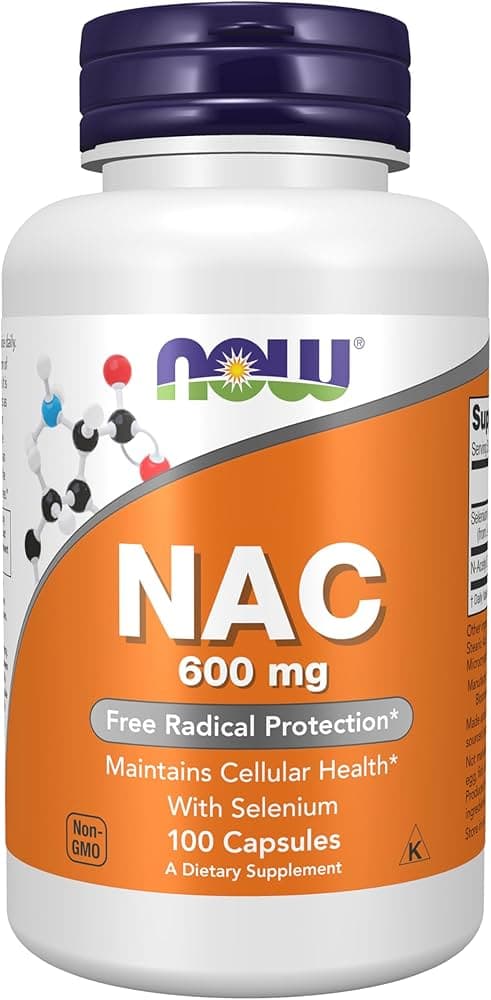
- Almost. N-Acetyl Cysteine (NAC) is a more stable form of Cysteine that your body absorbs better. Most people should just take NAC.
- Is it good for my hair and nails?
- Yes, it's a key component of keratin, the protein that makes up hair and nails. But just eating enough protein usually covers your needs.
- Can I take it for a hangover?
- You're thinking of NAC. It helps the liver process alcohol byproducts. Cysteine is the precursor, but NAC is the one with the research for this.
- Do I get enough from food?
- If you eat a high-protein diet (meat, eggs, dairy), you probably get enough. Vegans and vegetarians might benefit from a supplement.
- Can it help with a cough or cold?
- It can help break up mucus. Again, NAC is the form that's actually studied and used in clinical settings for this.
- Why does it sometimes smell like rotten eggs?
- That's the sulfur. Cysteine is a sulfur-containing amino acid. The smell is normal, but unpleasant. That's why capsules are popular.
Why these belong in the same formula. Each row says what the basis is, from settled biochemistry through to a trial that measured the pair.
Glutathione is a tripeptide of cysteine, glycine and glutamate, and cysteine supply is the rate-limiting step while glycine is required for the second ligation. Supplying both amino acids gives the synthesis pathway the substrate it needs at each step.
Glutamine is converted to glutamate, the third amino acid in the glutathione tripeptide, so it completes the substrate set alongside cysteine and glycine. Cysteine remains the limiting input, which is why the two are formulated together rather than either alone.
Glutathione peroxidase enzymes carry selenium as selenocysteine at the active site and use glutathione as their reducing substrate. Cysteine feeds the glutathione pool while selenium supplies the enzyme itself, so the two sit on opposite ends of the same normal antioxidant cycle.
Cysteine breakdown passes through sulfite, which sulfite oxidase converts to sulfate using a molybdenum cofactor. Adequate molybdenum keeps that final step of normal sulfur amino acid handling running when cysteine intake is raised.
Ascorbate holds cysteine and glutathione in their reduced thiol state rather than as disulfides. Without it a larger share of dosed cysteine oxidises to cystine before it can be used.
Pyridoxal 5-phosphate is the cofactor for cystathionine beta-synthase and cystathionine gamma-lyase, the enzymes that make cysteine, and for cysteine sulfinate decarboxylase downstream. Cysteine handling in either direction depends on B6.
Cysteine is oxidised to cysteine sulfinate and decarboxylated to hypotaurine and then taurine. Supplying taurine directly leaves more cysteine for glutathione synthesis.
Cysteine is the limiting amino acid in glutathione synthesis, with glycine and glutamate rarely short. Dosing the tripeptide and its limiting precursor together loads the same pool from both ends.
Glutathione reductase is an FAD enzyme that returns oxidised glutathione to its reduced form. Riboflavin status decides how often each cysteine-derived glutathione molecule can be reused.
Dihydrolipoate reduces extracellular cystine to cysteine, which enters cells on a different and faster transporter than cystine does. That raises the intracellular pool available for glutathione synthesis.
Betaine donates a methyl group to homocysteine through BHMT, returning it to methionine instead of committing it down transsulfuration to cysteine. Supplemental cysteine covers the branch betaine diverts from.
B12-dependent methionine synthase remethylates homocysteine, competing with the transsulfuration route that produces cysteine. The two arms of the homocysteine branch point are handled together in practice.
5-methyltetrahydrofolate supplies the methyl group for remethylating homocysteine, the alternative to committing it to cysteine synthesis. Cysteine intake and folate status pull on opposite arms of one junction.
SAM-e is the methyl donor whose demethylation produces homocysteine and, through transsulfuration, cysteine. It also allosterically activates cystathionine beta-synthase, the committing enzyme of that route.
Cysteine-containing peptides reduce ferric to ferrous iron and keep it soluble at intestinal pH, part of the long-recognised meat factor. That raises non-heme iron uptake in the same way ascorbate does.
Metallothionein binds zinc through clusters of cysteine thiols, so cysteine supply is part of how zinc is buffered inside cells. Sulfur amino acid intake and zinc handling move together.
MSM is a small organic sulfur donor that adds to the sulfate and sulfur pool used in conjugation and connective tissue. It sits alongside cysteine rather than substituting for it, since only cysteine builds glutathione.
Free cysteine thiols reduce and chelate copper, forming complexes that lower the ion's availability in solution. Dosed in the same serving, a large thiol load can hold copper back.
Cysteine is conditionally essential precisely because the body can make it from methionine through the transsulfuration route. When methionine intake is low, cysteine becomes dietarily required. When cysteine intake is adequate, it spares methionine for methylation duty. The two amino acids trade off against each other in a defined and well-characterised way.
Serine supplies the carbon skeleton that cysteine is built on, while homocysteine supplies the sulfur. Without serine that condensation cannot happen and homocysteine has only the remethylation route left. This is a direct precursor relationship rather than a general nutritional pairing.
The two enzymes that convert homocysteine into cysteine both require pyridoxal-5-phosphate. Where that cofactor is short, homocysteine accumulates and endogenous cysteine production falls. Pyridoxal-5-phosphate is the already-phosphorylated form of the cofactor, which bypasses the pyridoxal kinase step.
Phosphopantothenoylcysteine synthetase joins cysteine to phosphopantothenate, and the cysteine-derived thiol is the business end of the finished coenzyme A molecule. Every acetyl and acyl transfer in metabolism runs through that thiol. This makes cysteine a structural precursor of a central metabolic cofactor, not just a glutathione input.
Whey proteins carry a high proportion of cystine and cysteine residues compared with most dietary proteins. Digestion releases those residues into the same cysteine pool that supports glutathione synthesis. Whey is the food-first route to the same substrate a cysteine supplement provides.
Sulforaphane raises the expression of the enzyme that combines cysteine with glutamate, the first step of glutathione synthesis. Cysteine supplies the substrate for that same enzyme. Raising enzyme capacity and raising substrate availability address different limits on the same pathway.
Silymarin's flavonolignans are studied for their effect on liver redox handling, including glutathione levels. Cysteine availability is what usually limits how much glutathione the liver can make. The pairing is mechanistically coherent and rests on separate literatures rather than a combination trial.
Homocysteine sits at a branch point: it can be remethylated back to methionine or committed forward to cysteine. Choline-derived betaine pushes the remethylation branch. Ample cysteine intake relieves the pull toward transsulfuration, so the two nutrients shape opposite sides of the same junction.
Alpha-tocopherol stops lipid chain reactions in membranes and is left as a radical that must be recycled. Ascorbate does that recycling and is itself restored using glutathione-linked reducing power. Cysteine sits at the base of that chain as the input that limits glutathione synthesis.
Guanidinoacetate methyltransferase uses a large share of the body's SAM to make creatine. Supplying creatine reduces that demand and leaves more methionine cycle capacity available. Since cysteine is made from methionine sulfur, the two nutrients interact through the same one-carbon economy.
Glutathione is a tripeptide of glutamate, cysteine and glycine, assembled in that order. Glutamate is the first partner cysteine is bonded to, through an unusual gamma-carboxyl linkage that protects the peptide from ordinary peptidases. Glutamate is rarely limiting, which is precisely why cysteine is the input that matters.
Zinc fingers and many metalloenzyme active sites are built from combinations of cysteine thiolates and histidine imidazoles coordinating a metal ion. Both amino acids also form soluble complexes with dietary minerals in the gut. This is structural biochemistry rather than a supplementation interaction.
The cysteine thiolate is a soft ligand that coordinates transition metals readily. Taken alongside a mineral, that binding changes the chemical species presented to the gut wall, in either direction depending on the metal. It is a formulation timing consideration, not a documented nutritional deficit.
Glutathione is only useful in its reduced form, and glutathione reductase needs NADPH to keep it there. That NADPH is built on a niacin-derived nicotinamide nucleotide. Supplying cysteine builds the glutathione pool. Niacin-derived cofactors keep it reduced.
Nothing specific on file for Cysteine. Match the label to the daily amount above, and tell your doctor what you take.
Not medical advice. Show the label to your pharmacist.What Cysteine actually does.
Cysteine is usually the limiting ingredient for making glutathione, so how much cysteine is available, not enzyme capacity, tends to set the size of the body's glutathione supply.
The body can make cysteine from methionine, so it's only conditionally needed from the diet, and dietary need rises when methionine intake is low or that conversion pathway is limited.
Making cysteine from methionine runs through a two-step pathway that depends on vitamin B6 as a helper for both enzymes involved.
Cysteine's reactive sulfur group forms bonds that link protein chains together, giving structure to proteins like keratin and insulin.
Where Cysteine comes from.
Two routes exist. One feeds sugar from corn or wheat to engineered bacteria that make and excrete the amino acid, which is then crystallised out. The other boils keratin, historically feathers or hair, in strong acid until it breaks into its amino acids, and cystine is separated from that mixture. The finished molecule is identical either way. What differs is the starting material, which matters to anyone checking whether an ingredient is animal-free, and how much cleanup the process needs afterwards.
The same molecule is reached more than one way. Which route a given product used is a manufacturing choice, and the finished compound is the same either way.
The microbial route starts from corn or wheat glucose feeding an engineered bacterial strain. The older hydrolysis route starts from keratin, historically poultry feathers, hog bristle or human hair.
Engineered Escherichia coli or Pantoea strains overexpress the serine acetyltransferase and cysteine synthase steps and excrete cystine into the broth. The hydrolysis route uses hot concentrated hydrochloric acid to break keratin down to its constituent amino acids, releasing cystine as one of the most abundant.
Cystine's poor water solubility is used to recover it: adjusting the pH toward its isoelectric point precipitates it out of either the fermentation broth or the neutralised hydrolysate.
The disulfide bond is cleaved, commonly by electrolytic reduction, converting cystine to two molecules of cysteine. Products sold as cystine skip this step.
Cysteine is crystallised as the hydrochloride monohydrate, treated with activated carbon for colour removal and washed. Hydrolysis-route material carries a heavier purification burden for residual salts and process by-products.
Material is confirmed as the L-enantiomer by optical rotation, assayed for purity, and tested for heavy metals and residual solvents. Some markets separately require declaration of animal or non-animal origin.
Purified cysteine is either packed as the hydrochloride, air-oxidised back to cystine, or acetylated with acetic anhydride to make N-acetylcysteine.
Getting Cysteine from food.
The whole-food sources on file. A supplement closes the gap, it does not replace dinner.
A gram-for-gram figure (how much of each you would eat to match a dose) will appear here once it is sourced and reviewed. This page will not print a number it cannot cite.
The forms it comes in.
The essence, in one line each.
- In a small crossover trial in 19 healthy men given alcohol, 1,200 mg of L-cysteine taken alongside the drinking was associated with less next-day nausea and headache, and 600 mg with lower reported stress and anxiety, on correlational analysis.Randomised trial. Eriksson et al., 2020 (Alcohol and Alcoholism). PMID 32808029 ↗
- In a placebo-controlled pilot trial in 165 adults with low vitamin D status, adding 1,000 mg of L-cysteine daily to 2,000 IU of vitamin D for 6 months raised bioavailable 25-hydroxyvitamin D in both sexes and lowered C-reactive protein and the neutrophil-to-lymphocyte ratio compared with vitamin D alone.Randomised trial. Jain et al., 2024 (BMJ Nutrition, Prevention and Health). PMID 39882299 ↗
- N-acetylcysteine supplementation was associated with changes in sperm quality parameters, chromatin integrity measures and oxidative stress markers. The endpoints are laboratory semen and marker measures.Randomised trial. Jannatifar et al., 2019 (Reproductive Biology and Endocrinology). PMID 30771790 ↗
- Antioxidant supplementation with N-acetylcysteine was assessed against seminal parameters. The reported outcomes are semen analysis measures rather than clinical endpoints.Randomised trial. Syarif et al., 2025 (Archivio Italiano di Urologia e Andrologia). PMID 40126496 ↗
- Selenium, N-acetylcysteine, or both were compared against thyroid hormone marker changes in adults receiving haemodialysis. The endpoints are circulating markers, not clinical outcomes.Randomised trial. Shahreki et al., 2022 (Pharmacology). PMID 35691282 ↗
- N-acetylcysteine supplementation was associated with changes in functional connectivity measured by neuroimaging within the cingulate cortex. A brain imaging marker, not a symptom or functional outcome.Randomised trial. Mullier et al., 2019 (International Journal of Neuropsychopharmacology). PMID 31283822 ↗
- A single case report describes an individual's repetitive skin-picking behaviour after N-acetylcysteine was added. A case report describes one person and cannot establish that the supplement caused the change.Case report. Khan et al., 2024 (Cureus). PMID 38435146 ↗
- A review of parenteral cysteine in preterm infants concludes that requirements vary considerably between individuals and that a single fixed dosing approach does not suit the whole population.Narrative review. Mohamed et al., 2023 (Biomedicines). PMID 38255171 ↗
- A review discusses glutathione and cysteine status in the ageing brain and summarises the preclinical rationale for raising thiol availability. It aggregates mechanism and does not report a new human result.Narrative review. Jain et al., 2024 (Antioxidants and Redox Signaling). PMID 37756366 ↗
- A systematic review of dietary supplements and female fertility measures names N-acetylcysteine among the agents reviewed. Findings are summarised across heterogeneous studies rather than pooled into a single effect.Systematic review. Michaelsen et al., 2026 (Nutrients). PMID 42356328 ↗
- Dietary N-acetyl cysteine improved antioxidant capacity measures and attenuated induced bone loss in an animal model. An animal marker and tissue result that does not transfer to people.Animal study. Zhang et al., 2024 (Journal of Animal Science and Biotechnology). PMID 39616350 ↗
- Varying methionine to cysteine supplementation ratios altered bone quality measures in broilers, with and without a challenge model. The finding is about the ratio between the two sulfur amino acids, in birds.Animal study. Liu et al., 2024 (Poultry Science). PMID 38428354 ↗
- Adding cysteine during in vitro maturation improved bovine oocyte developmental competence measures, attributed to improved intracellular glutathione status. A laboratory culture result.In vitro study. Zhang et al., 2026 (Biology). PMID 42345829 ↗
- Ascorbic acid and cysteine supplementation were assessed against preimplantation embryo development and oxidative stress-related measures in an animal model.Animal study. Kamel et al., 2025 (BMC Veterinary Research). PMID 41408256 ↗
- Cysteine added before freezing and after thawing was associated with better membrane integrity measures and lower oxidative stress markers in cryopreserved sperm. A laboratory handling result.In vitro study. Kafi et al., 2024 (Cryobiology). PMID 38286327 ↗
- A systematic review of water-delivered additives for gut health in pigs and poultry names cysteine-related compounds among those reviewed. Livestock production endpoints throughout.Systematic review. Correa et al., 2026 (Animal). PMID 42054713 ↗
These are the studies our verdict leans on, chosen from the 1,069 we read for Cysteine. The full linked list is below.
The studies, linked.
8 sources behind our Cysteine verdict: peer-reviewed studies and registered clinical trials. Every one links straight to PubMed, the journal, or ClinicalTrials.gov. Read them yourself.
- Clinical trialClinical and Biochemical Study of the Effects of Rosuvastatin, Vitamin E, and N-Acetyl Cysteine on Patients With Non-alcoholic Steatohepatitis: a Randomized Controlled TrialClinicalTrials.gov ↗Early phase 1, 175 participants, Completed
- Clinical trialPhysiological Effects of Nutritional Support in Patients With Parkinson's DiseaseClinicalTrials.gov ↗51 participants, Completed
- Clinical trialEvaluation of Using Dienogest and N-Acetyl Cysteine on the Volume of Uterine LeiomyomaClinicalTrials.gov ↗Phase 2, 40 participants, Completed
- Clinical trialA Open Label, Multi-Dose, Multi-Period Exploratory Clinical Trial to Test Immune Diversity Response to Oral Dosing of Approved Nutritional Health Products at Approved Doses to Healthy VolunteersClinicalTrials.gov ↗32 participants, Completed
- Clinical trialPILOT: The Effects of Short Term Administration of a Novel Glutathione Precursor (FT061452), on Serum and Intracellular Glutathione LevelsClinicalTrials.gov ↗Phase 1, 24 participants, Completed
- Clinical trialEffect of N-acetyl Cysteine on Non Alcoholic Fatty Liver Disease in Obese ChildrenClinicalTrials.gov ↗Phase 1, 14 participants, Completed
- Clinical trialEffect of N-acetylcysteine as Adjunct Therapy on the Clinical Outcome of Neonatal SepsisClinicalTrials.gov ↗Phase 3, 50 participants, Not yet recruiting
- Clinical trialEmploying Smart Underwear to Measure Gut Microbial Hydrogen Sulfide ProductionClinicalTrials.gov ↗25 participants, Recruiting
Evidence surfaced via Semantic Scholar (Allen Institute for AI) and ClinicalTrials.gov. Ranked by study type and citation weight, not cherry-picked.
Problems people have reported.
Read this carefully. These are 2,668 voluntary, unverified reactions reported to the FDA (openFDA). The number mostly reflects how popular Cysteine is, not how risky it is. A report is not proof Cysteine caused anything. It is a signal of what to watch for, nothing more.
Source: openFDA adverse-event reports. Voluntary reporting, not an incidence rate.
FDA Disclaimer: These statements have not been evaluated by the Food and Drug Administration. This information is for educational purposes only and is not intended to diagnose, treat, cure, or prevent any disease. Consult your healthcare provider before starting any supplement regimen.