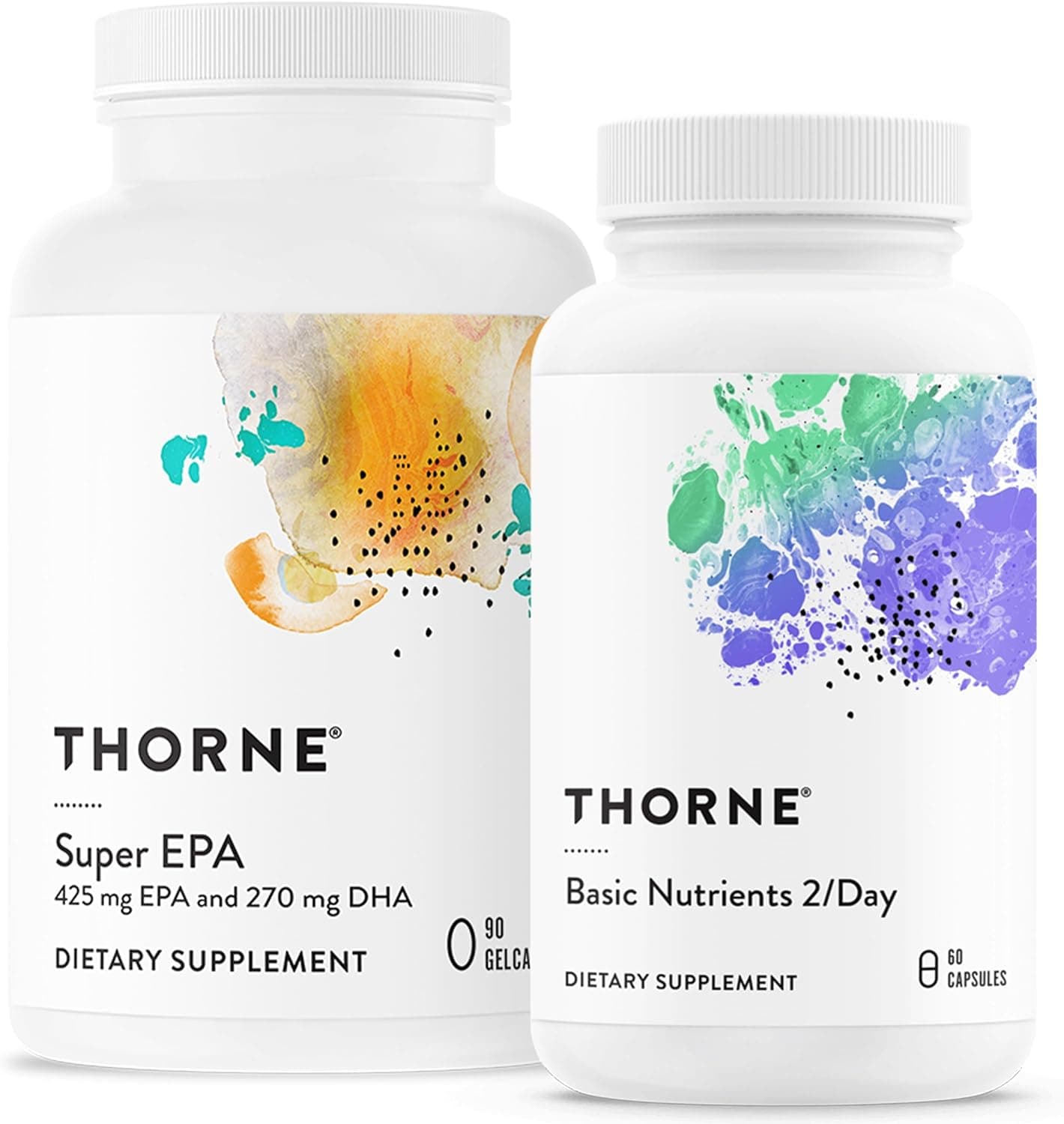
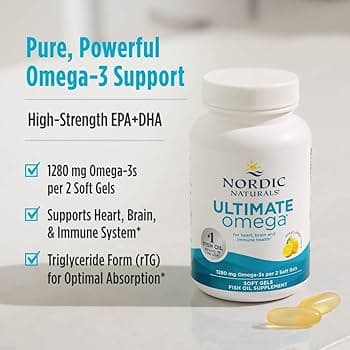
Docosahexaenoic Acid.
Research-backed compound with potential health benefits. Feeds your brain and eyes. It's a key structural part of your brain cells and retina. Think of it as essential scaffolding.
Reviewed March 2026
- Category
- Compound
What Docosahexaenoic Acid is, and what it does.
- Does it work
- Yes. Especially if you don't eat fatty fish twice a week. Critical for pregnancy and supporting brain function as you age.
- How much to take
- Aim for 500-1000mg of DHA per day. Read the label carefully. It's the specific DHA amount that counts, not the total 'fish oil' amount.
- Time to feel it
- About eight weeks of daily use.
- The first dose
- Zero. Nothing. Your cells are slowly incorporating it. Be patient.
- With regular use
- You're supporting long-term cognitive function and eye health. It's about protecting your hardware down the road, not feeling a jolt today.
- How well tolerated
- Well tolerated. Mercury risk is a non-issue in reputable, purified supplements. The main consideration is the mild blood-thinning effect at high doses.
- How it feels
- You don't 'feel' it. It's like putting quality oil in your car's engine. It just runs better in the background, for longer.
- The overlooked benefit
- It enters the brain through one specific carrier, MFSD2A, and travels as a lysophospholipid rather than a loose fatty acid, which is why the fat you take it with counts.
200 to 500mg a day is where Docosahexaenoic Acid works.
Source: Siscovick et al., Circulation, 2017; GISSI trials
In a randomised single-blind trial, 20 participants took either fish oil supplying 1,296 mg EPA and 864 mg DHA daily or flaxseed oil for eight weeks, with erythrocyte membrane and plasma samples drawn at weeks 0, 4, 8, 10, 12, 14, 16 and 24. On fish oil, erythrocyte membrane EPA rose 300 percent and DHA rose 42 percent by week eight. Levels held until about week 12 and then declined across the post-supplementation sampling, faster in plasma phospholipids than in erythrocyte membranes. Membrane fatty acid content was measured, not a symptom, and this is one trial of 20 people.
Kept, not banked. The cited trial measured a return toward baseline after the last dose, so the effect holds while it is taken daily, not stored up. That rests on the trial window above.
The proof, claim by claim.
These words describe the research, not the molecule's worth. Research strength is how much work stands behind one claim, and it is never a product score.
Docosahexaenoic Acid is documented in the library. The clinical read is in the queue. Nothing about the strength of the research prints until the read is done.
- Triglycerides already in the normal rangeMeta-analysis
- Retinal and neural membrane compositionNarrative review
- Omega-3 index and blood fatty acid statusRandomised trial
- Infant neural and visual development during pregnancyMeta-analysis
- Resolution of the inflammatory response through D-series mediatorsIn vitro study
- Memory and recall with ageRandomised trial
- Tear film comfortRandomised trial
Questions people ask about Docosahexaenoic Acid.
- Will this give me gross fish burps?
- Maybe. To avoid it, take it with a meal, freeze the capsules, or buy an enteric-coated or algae-based version.
- What's the difference between DHA and EPA?
- Simple version: DHA is for your brain and eyes (structure). EPA is more for inflammation and mood (function). Most supplements have both.
- Can I get this from chia or flax seeds?
- Nope. Those have ALA, a different omega-3. Your body is terrible at converting it to DHA. Less than 5% makes it. Eat the fish or take the pill.
- Is it safe during pregnancy?
- Yes, and it's highly recommended. It's crucial for the baby's brain and eye development. Check with your OB-GYN for the right dose.
- Should I get fish oil or algae oil?
- Algae oil is a great vegan option and where fish get their DHA in the first place. Often cleaner and no fish burps. Can be pricier.
- Does it need to be refrigerated?
- Good idea. Omega-3s can go rancid with heat and light. A cool, dark place is fine, but the fridge is better, especially for liquid forms.
Why these belong in the same formula. Each row says what the basis is, from settled biochemistry through to a trial that measured the pair.
DHA and EPA are the two long-chain marine omega-3s that enter cell membranes by the same route and both give rise to the resolvins and protectins the body uses to keep its normal inflammatory response in balance. A portion of DHA also retroconverts to EPA, so the two move through one shared fatty-acid pool.
DHA carries six double bonds, which makes it one of the most oxidation-prone fatty acids in the body, and vitamin E is the fat-soluble antioxidant that sits in the same membranes and quenches the radicals that would otherwise degrade it. This is also why a higher intake of polyunsaturated fat raises the body's vitamin E requirement.
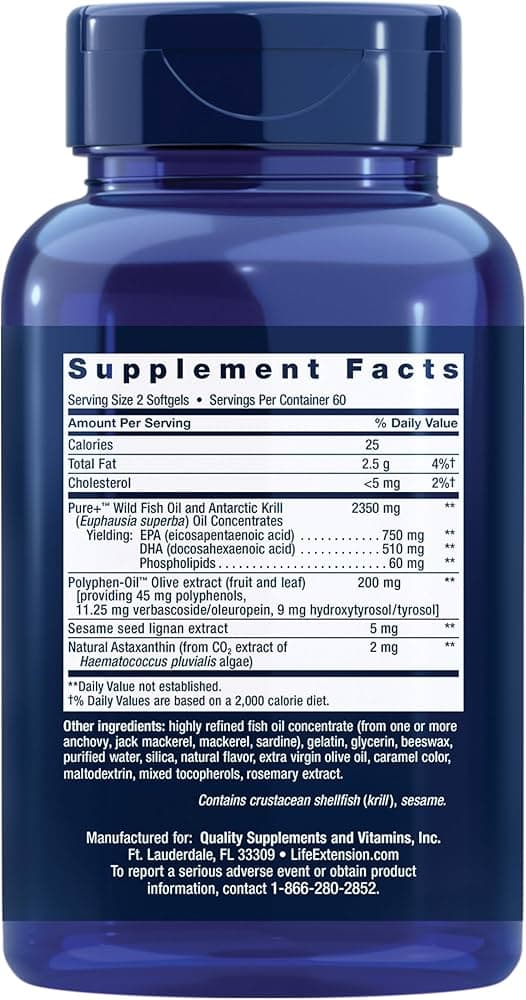
Astaxanthin is a fat-soluble carotenoid antioxidant that settles into the same lipid membranes as DHA and neutralizes the peroxyl radicals that attack polyunsaturated fats. It occurs alongside omega-3s in marine sources such as krill, and formulators add it to omega-3 oils to slow oxidation and keep the oil from turning rancid.
DHA is the most abundant fatty acid in the membranes of the retina's photoreceptors, while lutein concentrates as pigment in the macula, where it filters short-wavelength light. The two fill complementary roles in the same tissue, which is why they are so often combined to support the normal structure and function of the eye.
Most circulating and membrane DHA is esterified into phosphatidylcholine, and choline supplies that headgroup. Limited choline means fewer phospholipid carriers for the fatty acid.
With six double bonds DHA is the most peroxidation-prone fatty acid in the diet. Tocopherol is the chain-breaking antioxidant used in the oil and in the membrane to keep it intact.
Zeaxanthin fills the central macular pigment while DHA builds the photoreceptor outer segment membranes around it. Their roles in the retina are complementary.
Phosphatidylcholine is the phospholipid DHA travels in and inserts from, which changes how much reaches nervous and retinal tissue. Carrier form is not a cosmetic difference here.
Neuronal phosphatidylserine is unusually enriched in DHA at its second position, and DHA availability shapes how much accumulates. The two are structural partners in the same membrane leaflet.
Krill oil supplies DHA already bound into phospholipid, so it and a triglyceride DHA product deliver the same fatty acid. Total DHA in a formula is the sum of both.
Reduced CoQ10 sits in the lipid phase and regenerates tocopherol after it quenches a radical. That loop is what protects long polyunsaturated chains from peroxidation.
Both are fat soluble, both occur together in fish liver oil, and both need the same lipid vehicle to be absorbed. One oil base carries them, which is why they are so often combined.
Zinc is needed for the desaturases that elongate shorter omega-3s toward DHA and for retinal fatty acid handling. Low zinc status limits what the body does with the DHA supplied.
Ginkgolides antagonise platelet activating factor while DHA shifts the thromboxane balance. Both lengthen normal platelet aggregation, so the effects add at full doses.
Garlic organosulfur compounds lower normal platelet aggregation by a route separate from eicosanoid shifts. Combined with DHA the two effects stack.
Flaxseed oil supplies alpha-linolenic acid, the plant omega-3 that sits upstream of EPA and DHA. Conversion through the desaturase and elongase chain is inefficient in most adults, and the step to DHA is the weakest link. Someone relying on flaxseed alone will raise ALA far more than DHA. The pairing is useful for total omega-3 intake, not as a substitute for preformed DHA.
Triglyceride-bound DHA has to be hydrolysed at the sn-1 and sn-3 positions before the resulting monoacylglycerol and free fatty acid can enter a mixed micelle. Pancreatic lipase does that work. In people with reduced pancreatic output, supplemental lipase is a formulation-level answer to poor fat handling. The relationship is digestive, not a claim about any outcome.
Bile salts emulsify dietary fat and form the micelles that carry long-chain fatty acids to the enterocyte brush border. Without adequate bile flow, long-chain omega-3 absorption falls. Bile salt supplementation is used in that setting on straightforward physiological grounds. The interaction is about delivery of the molecule, nothing more.
Medium-chain triglycerides are absorbed by a different route than DHA, going largely portal and bile-independent. Their value alongside DHA is as a carrier fat that keeps an oil blend liquid and stimulates the same postprandial lipid handling. Co-ingested fat of any kind raises long-chain omega-3 uptake compared with taking the oil on an empty stomach. The effect is on absorption, not on any DHA-dependent function.
Lecithin phospholipids act as emulsifiers, dispersing an omega-3 oil into fine droplets with more surface area for lipase. Emulsified omega-3 preparations are absorbed more readily than a coarse oil at the same dose. Lecithin also supplies the phosphatidylcholine backbone into which DHA is esterified in tissue. This is formulation practice with a physiological rationale behind it.
Six double bonds make DHA one of the most peroxidation-prone fatty acids in the body. Alpha-tocopherol is the chain-breaking antioxidant that protects it in the membrane, and ascorbate regenerates the tocopheroxyl radical back to tocopherol at the aqueous interface. Vitamin C therefore supports the system that keeps DHA intact rather than acting on DHA directly. The chemistry is settled. The size of any effect on a person is not.
Glutathione peroxidase enzymes are selenoproteins, and they reduce lipid hydroperoxides formed from polyunsaturated fatty acids. Adequate selenium status is part of the defence that limits DHA peroxidation once it is in a membrane. The link is a cofactor requirement, not a combination trial. It matters most where polyunsaturated intake is high.
Free ferrous iron drives Fenton chemistry and initiates lipid peroxidation chains in polyunsaturated fatty acids, DHA most readily of all. Combining a high-dose iron salt and a fish or algal oil in the same capsule or the same moment is a formulation problem rather than a physiological benefit. Manufacturers separate them or add tocopherols for this reason. The concern is oxidative degradation of the oil and its by-products, not iron status.
Rosemary extract is a standard oxidation-control ingredient in omega-3 oils, working through carnosic acid and carnosol as chain-breaking antioxidants. It protects the oil in the bottle and the softgel, which is where most DHA loss actually happens. This is a stability pairing rather than a physiological one. It says nothing about what DHA does after absorption.
Long-chain fatty acids enter mitochondria as acylcarnitines through the carnitine shuttle. DHA that is oxidised rather than incorporated into membranes travels that route, and its retroconversion to EPA runs through peroxisomal beta-oxidation. Carnitine adequacy is part of the machinery that handles long-chain fatty acid flux. This is shared pathway biochemistry, not a demonstrated combination effect.
High-dose long-chain omega-3 shifts eicosanoid production toward less aggregatory thromboxane species and modestly lengthens bleeding time. Nattokinase acts on fibrin and has its own effect on clot handling. Stacking the two is an additive direction worth flagging to anyone already on anticoagulant or antiplatelet therapy. The caution is pharmacological and does not require a combination trial.
Gingerols inhibit thromboxane synthesis in platelets, the same broad direction as high-dose omega-3. Together the effect on platelet aggregation is additive rather than opposing. For most people at culinary and ordinary supplement doses this is unremarkable. It is worth naming for anyone on medication that acts on clotting.
DHA and arachidonic acid compete for the same acyltransferases when phospholipids are remodelled and for the same cyclooxygenase and lipoxygenase enzymes once released. Raising one lowers the membrane share of the other. Neither is disposable: arachidonic acid is a required structural fatty acid in the developing brain, which is why some infant preparations supply both. This is a balance relationship rather than a benefit or a harm.
Most DHA on the market arrives inside a fish oil that also carries EPA and other fatty acids. The ratio of the two is set by the species and the concentration process, not by biology. Reading a fish oil label for milligrams of DHA rather than total oil weight is the practical point. Algal oil is the route to DHA without the EPA-heavy background.
Carotenoids and long-chain fatty acids share micellar space and the same lipid absorption route. High doses of one lipophilic compound can lower the incorporation of another into the same micelle. The direction is described for carotenoid pairs more clearly than for carotenoid with DHA. Fat in the meal generally raises both together rather than forcing a choice.
Taurine and DHA are both concentrated in retinal photoreceptors, where taurine acts as an osmolyte and membrane stabiliser and DHA sets membrane fluidity around rhodopsin. The pairing appears in eye formulations on that co-localisation. What has not been shown is that supplying both together changes a visual outcome. Read the rationale as structural rather than clinical.
Glutathione reductase is an FAD-dependent enzyme, and it regenerates the reduced glutathione that selenium-dependent peroxidases consume when they clear lipid hydroperoxides. Riboflavin status therefore sits behind the same antioxidant defence that protects membrane DHA. The connection is a cofactor chain, established and uncited. It is background biochemistry, not an effect of taking the two together.
Nothing specific on file for Docosahexaenoic Acid. Match the label to the daily amount above, and tell your doctor what you take.
Not medical advice. Show the label to your pharmacist.What Docosahexaenoic Acid actually does.
DHA is the main long-chain omega-3 in the membranes of your brain cells and retina, attached mostly at the middle position of two membrane fats called phosphatidylethanolamine and phosphatidylserine.
The membranes in the light-sensing rod cells of your eye carry an unusually high share of DHA, and that fatty acid makeup sets how fluid the membrane is around rhodopsin, the light-catching protein.
DHA gets into the brain mostly attached to a carrier fat called lysophosphatidylcholine, moving through a transporter named MFSD2A, rather than crossing as a free fatty acid.
Enzymes add oxygen to DHA to make D-series resolvins and protectins, the specialised signalling molecules that bring an inflammatory response to a close.
Where Docosahexaenoic Acid comes from.
DHA is either pressed out of oily fish and then cleaned up by vacuum distillation, or grown from scratch by feeding sugar to marine algae in a tank. The fish route gives you EPA alongside the DHA. The algae route gives you mostly DHA and suits vegan formulas. Either way the oil is concentrated, protected with vitamin E, and sealed away from air, because DHA is one of the easiest fats in the diet to oxidise.
The same molecule is reached more than one way. Which route a given product used is a manufacturing choice, and the finished compound is the same either way.
Marine DHA comes from anchovy, sardine, menhaden and tuna trimmings. The vegan route starts with heterotrophic microalgae such as Schizochytrium grown on a sugar feed in closed vessels.
Fish are cooked and pressed to separate crude oil from meal and stickwater. Algal biomass is harvested from the fermenter and the cells are lysed before the oil is recovered.
Mechanical pressing and centrifugation for fish oil. Mechanical or solvent extraction of the dried or wet algal biomass.
Degumming, alkali refining, bleaching and deodorising remove free fatty acids, pigments and odour. Short-path molecular distillation under vacuum separates the omega-3 fraction and strips environmental contaminants including mercury, dioxins and PCBs.
Transesterification, urea complexation or chromatography raise the DHA share to a declared milligram figure per gram. Mixed tocopherols and often rosemary extract are added, and peroxide and anisidine values are tested against a specification.
The oil is encapsulated under nitrogen in gelatin or plant-based softgels, bottled as a flavoured liquid, or spray-dried into a microencapsulated powder.
Getting Docosahexaenoic Acid from food.
The whole-food sources on file. A supplement closes the gap, it does not replace dinner.
A gram-for-gram figure (how much of each you would eat to match a dose) will appear here once it is sourced and reviewed. This page will not print a number it cannot cite.
The forms it comes in.
The essence, in one line each.
- Across 71 randomised trials, a combined 2 to 3 g a day of DHA plus EPA lowered systolic blood pressure by about 2.6 mmHg and diastolic by about 1.6 to 1.8 mmHg.Meta-analysis. Zhang et al., 2022 (Journal of the American Heart Association). PMID 35647665 ↗
- Pooling 33 randomised trials, DHA lowered blood triglycerides and raised HDL cholesterol by about 0.07 mmol/L, while also raising LDL cholesterol by about 0.26 mmol/L.Meta-analysis. Zhang et al., 2021 (Clinical Nutrition). PMID 34229258 ↗
- Across nine randomised trials, 450 to 800 mg a day of DHA in the second half of pregnancy was linked to infant birth weight about 102 g higher, with no difference detected in gestation length.Meta-analysis. Bilgundi et al., 2024 (Nutrition Research). PMID 39067112 ↗
- In head to head and network comparisons of 20 randomised trials, DHA and EPA moved C-reactive protein, interleukin-6 and TNF-alpha to a similar degree, with no difference detected between the two.Meta-analysis. Vors et al., 2021 (Advances in Nutrition). PMID 32790827 ↗
- Pooling trials of DHA taken during pregnancy, the review found only small and inconsistent differences in later child neurodevelopmental scores.Meta-analysis. Xie et al., 2026 (Developmental psychobiology). PMID 42494300 ↗
- Across trials in older adults, DHA supplementation was linked with better episodic memory scores in those reporting mild memory complaints. Among cognitively healthy adults no difference was detected, which is not the same as showing none exists.Meta-analysis. Balachandar et al., 2020 (European journal of clinical pharmacology). PMID 32060571 ↗
- Taking DHA through pregnancy and early lactation raised the DHA content of breast milk compared with control.Randomised trial. He et al., 2025 (Clinical nutrition (Edinburgh, Scotland)). PMID 41045839 ↗
- In mothers of infants born preterm, a high maternal DHA dose showed no detectable difference from placebo on child neurodevelopmental scores at age five. The trial did not detect a difference rather than establishing there is none.Randomised trial. Paquet et al., 2024 (Clinical nutrition ESPEN). PMID 39396702 ↗
- The review found that supplementation raised blood DHA status in people following a long-term protein-restricted diet, with the authors describing the functional outcome evidence as limited.Systematic review. Alanís-Bernal et al., 2025 (Frontiers in Nutrition). PMID 41141261 ↗
- A maternal DHA supplementation trial through pregnancy and lactation that recorded infant illness episodes against placebo. The report is the source for that comparison rather than for a benefit signal.Randomised trial. Khandelwal et al., 2025 (Indian Pediatrics). PMID 40126831 ↗
- A double-blind trial of combined arachidonic acid and DHA supplementation reporting imaging measures of brain maturation, which are markers rather than functional outcomes.Randomised trial. Moltu et al., 2024 (Clinical Nutrition). PMID 38061271 ↗
- A double-blind randomised trial reporting serum bilirubin trajectory, a laboratory marker measured over the first days of life.Randomised trial. Chi et al., 2025 (Clinical Pediatrics). PMID 38680033 ↗
- A pooled analysis of trials of combined EPA and DHA supplementation reporting change in itch severity scores, a patient-reported measure.Meta-analysis. Chou et al., 2026 (Pharmaceuticals). PMID 41599777 ↗
- A review of polyunsaturated fatty acid supplementation, DHA among them, reporting nutritional status markers such as body weight and serum protein.Systematic review. Liu et al., 2026 (PeerJ). PMID 42180603 ↗
- Oral DHA changed alveolar macrophage lipid and protein profiles, which is mechanistic evidence in animals and not evidence of an effect in people.Animal study. Cooper et al., 2026 (American Journal of Veterinary Research). PMID 42081923 ↗
- Maternal DHA supplementation altered offspring gut microbial composition in an animal model, offering a gut-brain mechanism rather than a human finding.Animal study. Lee et al., 2026 (Frontiers in Nutrition). PMID 42051340 ↗
These are the studies our verdict leans on, chosen from the 21,586 we read for Docosahexaenoic Acid. The full linked list is below.
The studies, linked.
4 sources behind our Docosahexaenoic Acid verdict: peer-reviewed studies and registered clinical trials. Every one links straight to PubMed, the journal, or ClinicalTrials.gov. Read them yourself.
- Clinical trialClinical Trial of Docosahexaenoic Acid (DHA) in Patients With Retinitis Pigmentosa Receiving Vitamin A TreatmentClinicalTrials.gov ↗Phase 3, 221 participants, Completed
- Clinical trialThe Effect of Formula Fortified With Docosahexaenoic Acid (DHA) on Infants With Cystic Fibrosis (CF)ClinicalTrials.gov ↗76 participants, Completed
- Clinical trialEffect of EPA, GLA and Antioxidants on the Immune Response - Cellular and Molecular Mechanisms of Wound Healing in Critically Ill Patients.ClinicalTrials.gov ↗40 participants, Completed
- Clinical trialStudy of Effect of Docosahexaenoic Acid (DHA) and Eicosapentaenoic Acid (EPA) Supplementation on Biomarkers of Sub-Concussion Injuries in American FootballClinicalTrials.gov ↗38 participants, Completed
Evidence surfaced via Semantic Scholar (Allen Institute for AI) and ClinicalTrials.gov. Ranked by study type and citation weight, not cherry-picked.
Problems people have reported.
Read this carefully. These are 8,249 voluntary, unverified reactions reported to the FDA (openFDA). The number mostly reflects how popular Docosahexaenoic Acid is, not how risky it is. A report is not proof Docosahexaenoic Acid caused anything. It is a signal of what to watch for, nothing more.
Source: openFDA adverse-event reports. Voluntary reporting, not an incidence rate.
FDA Disclaimer: These statements have not been evaluated by the Food and Drug Administration. This information is for educational purposes only and is not intended to diagnose, treat, cure, or prevent any disease. Consult your healthcare provider before starting any supplement regimen.