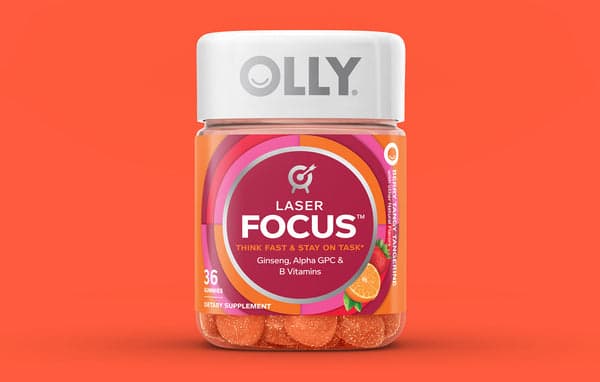
Ginseng.
Research-backed herb with potential health benefits. Helps your body adapt to stress and reduces mental fatigue. Your brain feels a bit sharper under pressure, and you get a clean, non-jittery energy lift.
Reviewed March 2026
- Category
- Herb
What Ginseng is, and what it does.
- Does it work
- Yes, for the right person. It's a classic adaptogen with real human studies to back it up. If you're feeling run down and stressed, it's worth a shot.
- How much to take
- 200-400 mg of a standardized extract once or twice a day. Look for a label that says 'standardized to X% ginsenosides.' That's the active ingredient.
- Time to feel it
- About one hour after a single dose.
- The first dose
- Nothing. This isn't a pre-workout. It's an adaptogen that needs a couple of weeks to build up and help your system rebalance.
- With regular use
- After 2-4 weeks, the effects become more noticeable. Better focus during long meetings, less irritability when stressed, and a bit more mental stamina.
- How well tolerated
- Generally well tolerated for most healthy people for short-term use (up to 3 months). The main concern is interactions with prescription meds. Stop if it makes you feel wired or anxious.
- How it feels
- It's subtle. You feel more like your normal, rested self. It's less about adding a feeling and more about removing fatigue and brain fog.
- The overlooked benefit
- How much you get from a dose depends on your gut bacteria, which strip the sugars off ginsenosides to make compound K. Two people on the same capsule absorb different amounts.
200 to 400mg a day is where Ginseng works.
Source: Reay 2005 cognitive studies + NCCIH ginseng review
Two double-blind placebo-controlled crossover trials started testing 60 minutes after a single dose of the G115 extract. In 30 healthy young adults, 200 mg improved Serial Sevens subtraction performance and reduced rated mental fatigue across repeated 10 minute demanding batteries, with blood glucose falling at all three post-treatment measurements at both 200 and 400 mg. In 27 healthy young adults, the same extract again improved a mental arithmetic task and reduced the rise in mental fatigue, and lowered blood glucose one hour after consumption when taken without glucose. Both trials measured task scores and blood glucose in young adults only.
The proof, claim by claim.
These words describe the research, not the molecule's worth. Research strength is how much work stands behind one claim, and it is never a product score.
Ginseng is documented in the library. The clinical read is in the queue. Nothing about the strength of the research prints until the read is done.
- mental fatigue and attention under loadRandomised trial
- everyday stress resilienceRandomised trial
- physical performance and enduranceMeta-analysis
- glucose handling already in the normal rangeMeta-analysis
- immune resilienceRandomised trial
- libido and sexual function in menMeta-analysis
- microbial conversion of ginsenosides to compound KIn vitro study
Questions people ask about Ginseng.
- Panax vs. American ginseng: what's the deal?
- Panax (Asian) is generally considered more stimulating and 'warming.' American ginseng is seen as more relaxing and 'cooling.' Both help with stress and fatigue.
- Can I take it instead of coffee?
- Not really. It provides calm focus, not a jolt. They work differently. Some people find it helps them cut back on caffeine, though.
- When should I take it?
- In the morning. For some people, taking it in the afternoon or evening can interfere with sleep.
- Do I need to cycle it?
- It's a good idea. Many experts recommend taking it for a few weeks or months, then taking a 1-2 week break. This helps maintain its effectiveness.
- What is 'red ginseng'?
- It's just Panax ginseng that's been steamed before drying. The process can change some of its active compounds, potentially making them more bioavailable.
- Will it help my workouts?
- Maybe. Some studies show a modest benefit for endurance and reducing muscle damage, but it's not a primary performance enhancer like creatine.
Why these belong in the same formula. Each row says what the basis is, from settled biochemistry through to a trial that measured the pair.
Ginkgo's flavonoids and terpene lactones support vascular tone and antioxidant defense in small vessels, while ginseng's ginsenosides support nitric oxide mediated circulation and neurotransmitter signaling, so together they cover complementary parts of blood flow to the brain and normal alertness. It is one of the oldest botanical pairings held together in cognitive support formulas.
Ginseng's ginsenosides raise the activity of endothelial nitric oxide synthase, the enzyme that produces nitric oxide, while arginine supplies the amino acid that same enzyme converts into it. Feeding both the enzyme and its substrate supports the nitric oxide signaling behind normal blood vessel widening and circulation.
Both are adaptogens that act on the body's stress response system (the HPA axis) and cortisol signaling, and they have long been blended in the same stamina and stress formulas. Ginseng tends toward physical energy while rhodiola targets mental fatigue, so they are commonly paired to support how the body copes with ordinary daily stress.
Caffeine blocks adenosine receptors while ginsenosides raise catecholamine tone, so the effects on heart rate and alertness add up. Combined doses need to account for that additive load rather than being set independently.
Ginsenosides and garlic organosulfur compounds each reduce normal platelet aggregation through distinct routes. Stacking them makes the effect on normal clotting additive, which matters around any procedure.
EPA shifts eicosanoid balance toward less aggregatory thromboxane while ginsenosides independently dampen platelet activation. The two effects on normal clotting add rather than cancel.
Piperine slows intestinal and hepatic glucuronidation, a main route that conjugates ginsenoside metabolites. Blends use it to raise systemic exposure from the same ginsenoside dose.
A randomised double-blind trial gave vitamin E alongside ginseng and reported changes in self-rated female sexual function scores against placebo. The two were tested as a pair, so the contribution of each one separately cannot be read out of that design. Both act on oxidative handling in vascular tissue, which is the shared rationale for combining them.
Ginseng extracts are used for alertness and perceived stress, and theanine shifts alpha-band cortical activity toward calm attention. Formulators pair them so the alerting side is smoothed rather than amplified. The pairing is mechanistic reasoning plus formulation convention, not a combination trial.
Both are used to support a normal stress response, and both have been studied against perceived stress scales as single agents. Ginseng has a randomised trial in perceived stress and emotional processing. Ashwagandha has its own separate literature. Stacking them is additive by intent, and the combined effect has not been measured directly.
Eleuthero sits beside Panax ginseng in most adaptogen blends despite being a different genus with eleutherosides rather than ginsenosides. The pairing is a long-standing formulation habit rather than a measured interaction. Read it as tradition plus overlapping intended use.
Schisandra and ginseng appear together in classical formulas aimed at stamina and stress tolerance. The lignans in schisandra and the ginsenosides in ginseng are unrelated chemistries with no described interaction between them. The basis here is formulation tradition, not a co-administration study.
Licorice is the conventional harmonising herb in the classical formulas that carry ginseng, added to round the taste and the overall effect. It also carries its own blood pressure and potassium considerations at sustained intakes, which belong to licorice and not to ginseng. Anyone combining them should count the licorice separately.
Astragalus and ginseng are the two roots most often stacked in traditional tonic formulas, and both carry immunologically active polysaccharide fractions alongside their saponins. That shared class of constituent is the mechanistic thread. No trial has measured the pair against either root alone.
Cordyceps and ginseng are routinely combined in stamina products. Ginseng has systematic-review level work on exercise endurance markers. Cordyceps has a separate and thinner literature. The combination itself is untested, and the rationale is overlapping intended use.
CoQ10 carries electrons in the respiratory chain, and ginseng has been studied against exercise endurance and post-exercise muscle damage markers. The two touch energy metabolism from different angles, one as a direct redox carrier and one through broader signalling. The pairing is mechanistic reasoning. A marker is not a performance outcome.
Citrulline raises plasma arginine and supports normal nitric oxide production, and ginsenosides have been described as increasing endothelial nitric oxide synthase activity in vessel preparations. Both therefore push the same vasodilatory step from different points. No human study has given them together.
Dietary nitrate reaches nitric oxide through the nitrate-nitrite-NO route, which is separate from the enzymatic route ginsenosides are described as touching. Two independent entries into the same pathway are the reason these appear together in pre-workout formulas. The combination has not been measured.
A systematic review of Panax ginseng looked at markers of resistance-exercise muscle damage, including creatine kinase, which is the same marker family creatine supplementation is often discussed against. The two work by unrelated mechanisms, phosphagen buffering versus saponin signalling. Creatine kinase is a marker of membrane disturbance, not a performance outcome.
A randomised crossover found that a ginseng preload taken at a set interval before a carbohydrate load changed the postprandial glucose curve, with the timing of the preload mattering. Berberine acts on glucose handling through AMPK and intestinal routes. Anyone already managing blood sugar with medical supervision should count both, since the effects can stack.
Cinnamon and ginseng have each been studied against postprandial glucose excursions in separate protocols. Combining them is plausibly additive on the same normal glucose-handling process. The pair has not been tested together, and the effect direction should be watched by anyone under supervision for blood sugar.
Ginseng root carries polyphenolic constituents, and polyphenols bind non-haem iron in the gut lumen to form poorly absorbed complexes. This is the same chemistry that lowers iron absorption from tea taken with a meal. Separating an iron dose from a ginseng dose by a couple of hours removes the question.
Ginseng is taken for daytime alertness and has been studied on perceived stress and emotional processing, while melatonin signals biological night. Taking a stimulating ginseng dose close to a melatonin dose works against the intent of the melatonin. Separating them by time of day is the simple handling.
Nothing specific on file for Ginseng. Match the label to the daily amount above, and tell your doctor what you take.
Not medical advice. Show the label to your pharmacist.What Ginseng actually does.
The signature compounds in Panax ginseng are ginsenosides, dammarane-type triterpenoid saponins built on a steroid-like backbone with sugar chains attached at set positions.
Whole ginsenosides are big, heavily sugar-coated molecules and you don't absorb them well as they are. Your gut bacteria strip the sugars off step by step, and the sugar-free product compound K is the form that reaches circulation in most people.
Steaming the root, which is what makes red ginseng, heats and partly dries the polar ginsenosides into less polar ones such as Rg3, Rg5 and Rk1. So red and white ginseng with the same total saponin content still differ in which ginsenosides they carry.
Because that conversion is done by your gut bacteria, the amount of compound K formed differs from person to person on the same dose of the same extract.
Where Ginseng comes from.
Ginseng is farmed like a slow vegetable, taking years in the ground before harvest. Dried plain it is white ginseng, steamed first it is red, and the extract percentage on a label counts the ginsenosides, the root's signature compounds.
Made from a plant. What ends up in the capsule tracks the harvest, so batch testing and a stated marker matter more here than with a made molecule.
Cultivated for four to six years before harvest, mainly in Korea and China, because the root's ginsenoside content builds slowly with age.
Washed roots are simply dried for white ginseng, or steamed before drying for red ginseng. The steaming changes the ginsenoside profile and the colour.
Dried root is extracted, and the extract carries the ginsenosides that pharmacology work on ginseng is built around.
Extracts are assayed and declared by ginsenoside percentage, the root's marker compound family.
Sold either as milled whole root or as an extract standardised to ginsenosides.
Getting Ginseng from food.
The whole-food sources on file. A supplement closes the gap, it does not replace dinner.
A gram-for-gram figure (how much of each you would eat to match a dose) will appear here once it is sourced and reviewed. This page will not print a number it cannot cite.
The forms it comes in.
The essence, in one line each.
- Across 16 randomized trials, ginseng modestly lowered fasting blood glucose by about 0.31 mmol/L compared with control.Meta-analysis. Shishtar et al., 2014 (PLoS One). PMID 25265315 ↗
- Pooling data from 19 randomized trials, ginseng produced a small reduction in general, non-disease-specific fatigue (standardized mean difference about -0.48).Systematic review and meta-analysis. Li et al., 2023 (Journal of Integrative and Complementary Medicine). PMID 36730693 ↗
- Pooling 13 randomised trials, ginseng improved flow-mediated dilation of the artery (standardised mean difference 0.57), raised endothelium-derived nitric oxide (0.30) and lowered pulse wave velocity, a measure of arterial stiffness (-0.29), while the augmentation index showed no detectable change.Meta-analysis. Esmaeili et al., 2025 (BMC Complementary Medicine and Therapies). PMID 40646515 ↗
- Across 14 trials in athletes and active adults, ginseng improved vertical jump only at doses above 300 mg a day taken for up to four weeks, with no detectable effect on perceived exertion, peak power output, VO2 max, heart rate or creatine kinase.Meta-analysis. Khan et al., 2022 (Journal of Sports Sciences). PMID 36604650 ↗
- In well-trained athletes, maximal voluntary contraction force was back to baseline 24 hours after eccentric exercise with Panax ginseng but was still reduced at 48 hours with placebo, alongside higher muscle electrical activity and lower perceived effort, while creatine kinase, LDH and soreness showed no detectable difference.Randomised trial. Cristina-Souza et al., 2022 (Journal of Strength and Conditioning Research). PMID 32379240 ↗
- Pooling 14 trials in 992 adults, ginseng left the liver enzymes ALT, AST, GGT and ALP and albumin with no detectable change, with a small rise in bilirubin seen mainly at 3 g a day or more.Meta-analysis. Ghavami et al., 2020 (Complementary Therapies in Clinical Practice). PMID 32379697 ↗
- Across 29 randomised trials, ginseng produced no detectable change in triglycerides, total cholesterol, LDL cholesterol or HDL cholesterol.Meta-analysis. Arabi et al., 2024 (Current Pharmaceutical Design). PMID 38877862 ↗
- A dose-response meta-analysis of ginseng supplementation reported changes across a panel of circulating cardiovascular risk markers, with the size of the change varying by dose.Meta-analysis. Jafari et al., 2025 (British Journal of Nutrition). PMID 40923100 ↗
- Pooled randomised trials showed modest shifts in plasma lipid concentrations with ginseng supplementation, with the authors noting heterogeneity across preparations and doses.Meta-analysis. Ziaei et al., 2020 (Complementary Therapies in Medicine). PMID 31987252 ↗
- Across the included trials, Panax ginseng supplementation was associated with lower post-exercise creatine kinase and related damage markers in some protocols and no detectable difference in others.Systematic review. Morgans et al., 2024 (Journal of Sports Medicine and Physical Fitness). PMID 38888561 ↗
- The review found that ginseng supplementation was linked to improved exercise endurance measures in several trials, with the authors describing the overall evidence base as small and varied.Systematic review. Szymanska et al., 2024 (Antioxidants). PMID 39857366 ↗
- The postprandial glucose response to a carbohydrate load depended on how long before the meal the Panax ginseng preload was taken, so timing changed the result.Randomised trial. Nilsson et al., 2026 (Frontiers in Nutrition). PMID 41798830 ↗
- Hydroponically grown red Panax ginseng was compared against placebo on perceived stress and emotional processing measures, with the authors reporting differences on some scales and not others.Randomised trial. Dormal et al., 2025 (Nutrients). PMID 40289951 ↗
- Vitamin E given alongside ginseng was compared against placebo on a self-rated female sexual function questionnaire. The two nutrients were tested as one combined arm.Randomised trial. Ghamari et al., 2020 (Women and Health). PMID 32893745 ↗
- In animal models of reduced bone density, Panax ginseng extract was associated with changes in bone microarchitecture and turnover markers. These are preclinical findings and do not carry to people.Animal study. Tang et al., 2026 (Frontiers in Nutrition). PMID 42317874 ↗
- Combining regular exercise with Panax ginseng lessened arsenic-induced muscular weakness and neurobehavioural changes in the animals studied. This is a toxicology model, not a human finding.Animal study. Beauty et al., 2025 (Neurotoxicity Research). PMID 40974434 ↗
- A registered protocol setting out the planned GRADE-assessed systematic review and dose-response meta-analysis of ginseng and cardiovascular risk factors. It reports methods rather than results.Systematic review. Jafari et al., 2024 (BMJ Open). PMID 38969369 ↗
These are the studies our verdict leans on, chosen from the 576 we read for Ginseng. The full linked list is below.
The studies, linked.
12 sources behind our Ginseng verdict: peer-reviewed studies and registered clinical trials. Every one links straight to PubMed, the journal, or ClinicalTrials.gov. Read them yourself.
- Clinical trialSafety Evaluation for 24 Weeks Intake of Korean Red Ginseng in Adults: A Randomized, Double-blind, Placebo-controlled, Parallel, Multi-center, Exploratory TrialClinicalTrials.gov ↗1,000 participants, Completed
- Clinical trialAn RCT Study to Investigate the Effect of Korean Red Ginseng for Middle-aged and Elderly Sub-health Population on Anti-oxidationClinicalTrials.gov ↗Phase 2, 900 participants, Completed
- ClinicalTrials.gov ↗
- Clinical trialStudy of the Efficacy of Panax Ginseng Herbal Preparation HRG80 for Prevention and Mitigation of the Symptoms of Stress in Healthy SubjectsClinicalTrials.gov ↗Phase 1, 50 participants, Completed
- Clinical trialAcute Effect of Rg3-enriched Korean Red Ginseng (Steamed Panax Ginseng C.A. Meyer) Standardized Extract on Arterial Stiffness and Aortic and Brachial Blood Pressure in Healthy IndividualsClinicalTrials.gov ↗Phase 1, 24 participants, Completed
- Clinical trialThe Evaluation and Standardization of Ginseng and Its Components for Blood Pressure RegulationClinicalTrials.gov ↗Phase 2, 18 participants, Completed
- Clinical trialEffect of American Ginseng Root and Derived Polysaccharides on Postprandial Glycemia in Healthy IndividualsClinicalTrials.gov ↗Phase 3, 12 participants, Completed
- Clinical trialEffect of Ginseng on Glycemic Control: A Systematic Review and Meta-analysis of Controlled Trials to Provide Evidence-based Clinical RecommendationsClinicalTrials.gov ↗770 participants, Unknown
- Clinical trialAmerican Ginseng (Panax Quinquefolius) for the Prevention of Moderate-severe Fatigue in Breast Cancer Patients Submitted to Adjuvant Chemotherapy After Surgery. A Study of NICSO (Network Italiano Cure di Supporto in Oncologia).ClinicalTrials.gov ↗290 participants, Unknown
- Clinical trialClinical Study on the Use of Shengmai San to Prevent Anthracycline Sequential Trastuzumab Therapy Related Cardiac ToxicityClinicalTrials.gov ↗Phase 3, 276 participants, Recruiting
- Clinical trialEffects of Ginsenoside Supplementation on Insulin Resistance and Cardiometabolic Risk Factors in Men With Metabolic Syndrome: a Randomized Controlled Trial.ClinicalTrials.gov ↗60 participants, Unknown
- Clinical trialMulticenter, Randomized, Double-blind, Placebo-controlled Clinical Trial for Evaluation of Sperm Motility Improvement Effect of Fermented Ginseng(GINST)ClinicalTrials.gov ↗60 participants, Unknown
Evidence surfaced via Semantic Scholar (Allen Institute for AI) and ClinicalTrials.gov. Ranked by study type and citation weight, not cherry-picked.
Problems people have reported.
Read this carefully. These are 31,495 voluntary, unverified reactions reported to the FDA (openFDA). The number mostly reflects how popular Ginseng is, not how risky it is. A report is not proof Ginseng caused anything. It is a signal of what to watch for, nothing more.
Source: openFDA adverse-event reports. Voluntary reporting, not an incidence rate.
FDA Disclaimer: These statements have not been evaluated by the Food and Drug Administration. This information is for educational purposes only and is not intended to diagnose, treat, cure, or prevent any disease. Consult your healthcare provider before starting any supplement regimen.