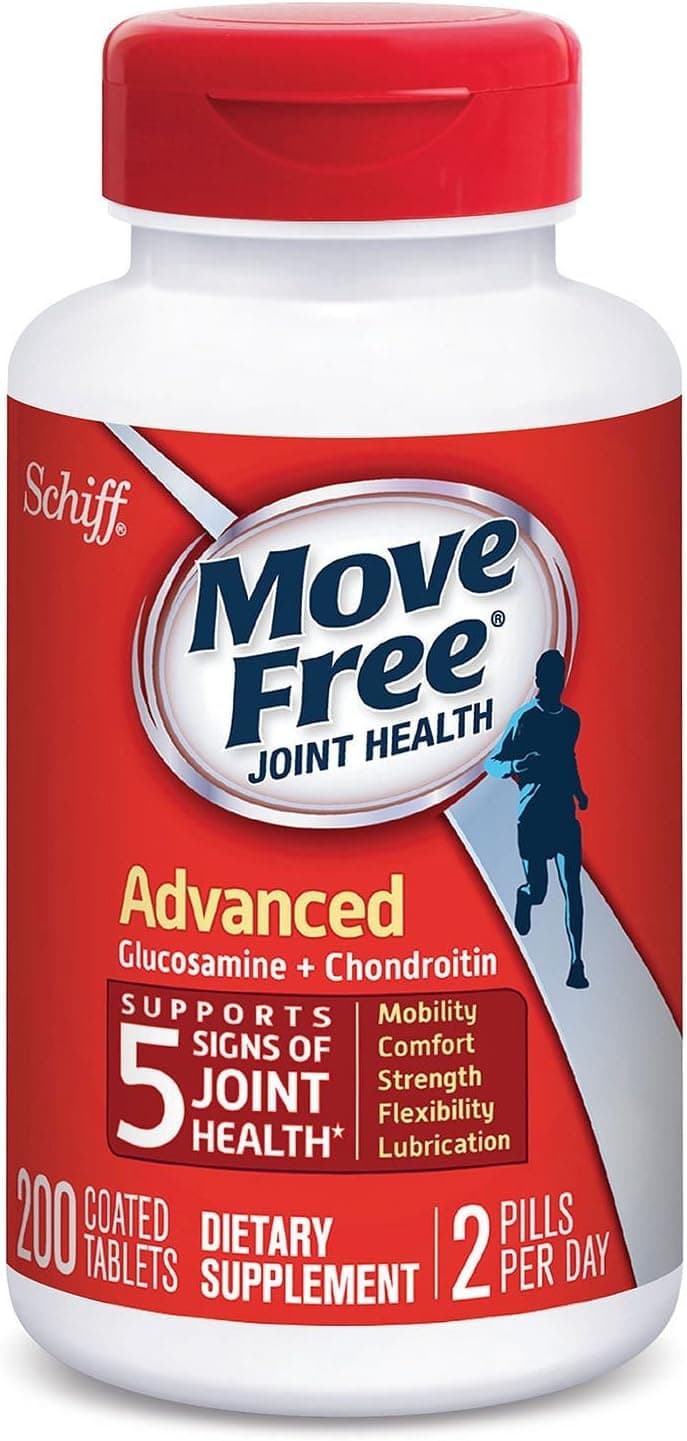
Glucosamine Hydrochloride.
Research-backed compound with potential health benefits.
Reviewed March 2026
- Category
- Compound
What Glucosamine Hydrochloride is, and what it does.
- Does it work
- Maybe. High-quality studies say it's no better than a sugar pill. If your expectations are low, a 3-month trial won't hurt your body, just maybe your wallet.
- How much to take
- 1500mg daily.
- Time to feel it
- Four to eight weeks of daily use before joint comfort scores move, and cartilage turnover is slow enough that three months is the honest window.
- The first dose
- Absolutely nothing. It needs weeks to build up, if it does anything at all.
- With regular use
- Over three to six months, trials track joint comfort and stiffness on movement. Results vary a lot between people, and structural cartilage change moves slower than the comfort scores.
- How well tolerated
- Well tolerated for most. Avoid if you have a shellfish allergy. Can cause mild gas or heartburn. Check with a doctor if you're on blood thinners.
- How it feels
- Like nothing, for weeks. Then maybe, just maybe, your knees feel a tiny bit less creaky. It's not a painkiller. The effect, if any, is subtle.
- The overlooked benefit
- The amino sugar feeds more than cartilage. It becomes UDP-N-acetylglucosamine, the donor your body uses to glycosylate proteins right across the body.
1,000 to 1,500mg a day is where Glucosamine Hydrochloride works.
Source: Wandel 2010 meta + GAIT study 2006
The proof, claim by claim.
These words describe the research, not the molecule's worth. Research strength is how much work stands behind one claim, and it is never a product score.
Glucosamine Hydrochloride is documented in the library. The clinical read is in the queue. Nothing about the strength of the research prints until the read is done.
- joint comfort and stiffness on movementMeta-analysis
- building blocks for cartilage glycosaminoglycan chainsNarrative review
- joint mobility with daily useRandomised trial
- knee comfort in active adults after loading exerciseRandomised trial
- substrate for the hexosamine biosynthetic pathwayIn vitro study
Questions people ask about Glucosamine Hydrochloride.
- Does this actually work for knee pain?
- The big studies say no, not much better than a placebo. Some people still feel it provides mild relief, but the science is weak.
- Sulfate or Hydrochloride (HCl)? Which is better?
- Glucosamine sulfate has slightly more positive (but still weak) research behind it. HCl is common but has even less scientific support.
- How long until I see results?
- At least 4-8 weeks. If you feel nothing after 3 months, it's not working for you.
- Can I take it with Tylenol or Advil?
- Yes. No major interactions with common over-the-counter painkillers.
- Is it made from shellfish?
- Yes. Most glucosamine is derived from the shells of crabs, shrimp, and lobsters. Avoid if you have a serious shellfish allergy.
- Does it have side effects?
- Usually not. The most common are minor digestive issues like gas, bloating, or heartburn. Taking it with food helps.
Why these belong in the same formula. Each row says what the basis is, from settled biochemistry through to a trial that measured the pair.
Glucosamine supplies the amino sugar backbone of glycosaminoglycan chains and chondroitin supplies the sulfated galactosamine polymer. The two have been formulated together for decades as complementary matrix substrates.
The hydrochloride salt delivers the amino sugar without the sulfate ion that the sulfate salt provides, and sulfation is required to finish glycosaminoglycan chains. MSM is the usual sulfur source added to cover that gap.
Both salts deliver the same amino sugar, and the difference is the sulfate ion and the sodium or potassium that comes with it. Stacking them raises the amino sugar dose without adding a second mechanism.
Glucosamine enters the hexosamine pathway as UDP-N-acetylglucosamine, one of the two sugars hyaluronan is built from. Supplying both gives the substrate and the finished polymer.
Glucosamine is acetylated to N-acetylglucosamine before it can be used in glycosaminoglycan and glycoprotein chains. NAG enters the same pool one step further along.
Acetylglucosamine is the acetylated form that glucosamine is converted into inside the cell. The pairing loads a single pool from two entry points rather than adding a separate route.
The glycosyltransferases that assemble proteoglycan chains are manganese dependent. Joint formulas have long carried manganese alongside glucosamine for that reason.
Prolyl and lysyl hydroxylases need ascorbate to build stable collagen, the protein scaffold the proteoglycans sit within. The pairing covers the fibre side while glucosamine covers the sugar side.
Collagen peptides supply the glycine and proline rich building blocks of the fibrous scaffold while glucosamine supplies the amino sugar for the ground substance. They feed different halves of the same tissue.
Undenatured type II collagen acts through gut-level immune tolerance rather than as a building block, so it does not compete with glucosamine for anything. The two are commonly combined because the mechanisms do not overlap.
Glucosamine crosses cell membranes on the same GLUT transporters glucose uses and then enters the hexosamine branch that glucose flux also feeds. High glucose availability competes for that uptake and shifts how much hexosamine flux the amino sugar produces.
A curcumagalactomannoside and glucosamine combination was compared against glucosamine with chondroitin in adults with age-related joint wear, and the authors report better joint comfort and mobility scores with the combination. The two ingredients approach the joint differently, one supplying substrate for glycosaminoglycan synthesis and the other acting on inflammatory signalling. The trial tested a specific curcumin delivery form, so the result belongs to that form rather than to curcumin generally.
Boswellic acids act on the 5-lipoxygenase arm of inflammatory signalling, which is not where an amino sugar operates. Joint formulas pair the two so that substrate supply and signalling are both covered. The pairing is widespread in products. A head-to-head combination trial against either alone is what is missing.
EPA and DHA displace arachidonic acid in membrane phospholipids and give rise to less inflammatory eicosanoids plus the resolvin series. That is a membrane-level change with no overlap with hexosamine pathway substrate supply. The combination is common in joint products and rests on two independent mechanisms.
Bromelain is a proteolytic enzyme complex used for its effect on bradykinin and prostaglandin signalling when taken away from food. Taken with food it acts as a digestive protease instead, so timing decides which role it plays. It brings a mechanism unrelated to glycosaminoglycan substrate supply.
Boron influences calcium, magnesium and vitamin D handling and is a common minor component of joint and bone formulas. Its route is mineral handling rather than cartilage matrix substrate. The intake range in supplements is small and the mechanistic detail is still incomplete.
Silicon is associated with collagen and glycosaminoglycan cross-linking in connective tissue, sitting alongside rather than inside the hexosamine pathway. Orthosilicic acid forms are the ones with absorption data. The relationship is mechanistic and mostly preclinical.
Vitamin D drives intestinal calcium absorption and normal bone mineralisation, the bone side of a joint rather than the cartilage side. It contributes nothing to hexosamine substrate supply. The two are combined because a joint formula spans both tissues.
Quercetin damps NF-kB driven inflammatory signalling in cell models, which is where cartilage-degrading enzyme expression is regulated. That is a different lever from supplying an amino sugar. The work is cell and animal based, so it stays mechanistic.
Glucosamine that is not absorbed reaches the colon, and in vitro work on human gut-dominant bacteria reports shifts in the growth of specific genera when it is present. That places it upstream of a probiotic dose as a substrate consideration. The data are bacterial cultures, not people, and no clinical effect follows from them.
Glucosamine is an amino sugar and its effect on glucose handling has been examined repeatedly, with most human work failing to detect a meaningful change at supplemental doses. A failure to detect is not proof of no effect. Chromium is taken for glucose metabolism support, so the two sit on the same axis. Anyone monitoring blood sugar should keep that pairing in view.
Manganese is the cofactor for glycosyltransferases that assemble glycosaminoglycan chains, the reactions that use the substrate glucosamine feeds into. Legacy joint formulas included it for exactly that reason. Intakes add up across a stack and manganese has a narrow useful range, so the total is worth counting.
Nothing specific on file for Glucosamine Hydrochloride. Match the label to the daily amount above, and tell your doctor what you take.
Not medical advice. Show the label to your pharmacist.What Glucosamine Hydrochloride actually does.
Glucosamine is a sugar with an amine group swapped in at carbon 2. The hydrochloride version just means that amine is paired up with chloride. Same molecule, different salt partner.
Your body already builds glucosamine 6-phosphate on its own. An enzyme moves nitrogen from glutamine onto fructose 6-phosphate, and that single step sets the pace for the whole pathway.
That glucosamine 6-phosphate gets converted onward into UDP-N-acetylglucosamine, the building block cells hand over when they assemble sugar chains and decorate proteins with sugar groups.
Cartilage is built from proteoglycans whose sugar chains, keratan sulfate and hyaluronan among them, are strung together from N-acetylglucosamine units. That is the structural reason for supplying the amino sugar.
Where Glucosamine Hydrochloride comes from.
Shrimp and crab shells contain a tough material called chitin, which is a long chain of the sugar in question. Strong acid snaps the chain into single units, and because the acid is hydrochloric, the result is the hydrochloride form. It is then cleaned and crystallised. A shellfish-free version does the same thing to a mould grown on plant sugar, and the finished molecule is the same either way.
The same molecule is reached more than one way. Which route a given product used is a manufacturing choice, and the finished compound is the same either way.
Shrimp and crab shell from food processing supplies chitin. The alternative route starts from corn or wheat glucose
Shell is treated with acid to strip calcium carbonate and with alkali to strip protein, leaving chitin. The fermentation route instead grows Aspergillus niger, whose cell wall chitin is the source
Concentrated hydrochloric acid cleaves the chitin chain and removes the acetyl groups, releasing glucosamine directly as its hydrochloride salt
Activated carbon treatment then repeated crystallisation from water or aqueous alcohol removes colour, residual protein and hydrolysis by-products
Purity by titration or HPLC, specific rotation, heavy metals, and residual protein testing which is the relevant allergen control for the shellfish route
Dried to a controlled water content and milled to a particle size that flows for tabletting or capsule filling
The forms it comes in.
The essence, in one line each.
- In a crossover pharmacokinetic comparison, the crystalline sulfate and hydrochloride salt forms of glucosamine produced measurably different blood level profiles after the same dose.Randomised trial. Chang et al., 2025 (Nutrients). PMID 40806074 ↗
- Glucosamine supplementation shifted gut bacterial composition and some gut health markers in the adults studied.Randomised trial. Moon et al., 2021 (Nutrients). PMID 34202877 ↗
- A curcumagalactomannoside plus glucosamine combination was compared with glucosamine and chondroitin in adults with age-related joint wear, and the authors report greater improvement in joint comfort and mobility measures with the combination arm.Randomised trial. Khanna A et al., 2020 (Journal of Alternative and Complementary Medicine). PMID 32678677 ↗
- A low-dose curcumagalactomannoside complex was tested in adults with age-related knee joint wear and the authors report improvement in symptom and function scores over the study period.Randomised trial. Thomas JV et al., 2021 (Phytotherapy Research). PMID 33210408 ↗
- The authors report on cartilage-supporting nutritional supplementation and its relationship with knee symptom scores and quality of life, with glucosamine named among the constituents of the supplementation studied.Cohort study. Fladerer-Grollitsch JP et al., 2025 (Scientific Reports). PMID 40664872 ↗
- D-glucosamine altered the growth of gut-dominant bacterial genera in culture, which the authors put forward as a possible route by which an oral dose interacts with the colonic microbiota.In vitro study. Shintani T et al., 2026 (Journal of Applied Glycoscience). PMID 41815201 ↗
These are the studies our verdict leans on, chosen from the 760 we read for Glucosamine Hydrochloride. The full linked list is below.
The studies, linked.
1 source behind our Glucosamine Hydrochloride verdict: peer-reviewed studies and registered clinical trials. Every one links straight to PubMed, the journal, or ClinicalTrials.gov. Read them yourself.
- Clinical trialNon-Inferiority Clinical Trial On The Efficacy And Safety Of Chondroitin Sulfate And Glucosamine Hydrochloride In Combination Versus Celecoxib In Patients With Knee OsteoarthritisClinicalTrials.gov ↗Phase 4, 606 participants, Completed
Evidence surfaced via Semantic Scholar (Allen Institute for AI) and ClinicalTrials.gov. Ranked by study type and citation weight, not cherry-picked.
Problems people have reported.
Read this carefully. These are 4,434 voluntary, unverified reactions reported to the FDA (openFDA). The number mostly reflects how popular Glucosamine Hydrochloride is, not how risky it is. A report is not proof Glucosamine Hydrochloride caused anything. It is a signal of what to watch for, nothing more.
Source: openFDA adverse-event reports. Voluntary reporting, not an incidence rate.
FDA Disclaimer: These statements have not been evaluated by the Food and Drug Administration. This information is for educational purposes only and is not intended to diagnose, treat, cure, or prevent any disease. Consult your healthcare provider before starting any supplement regimen.