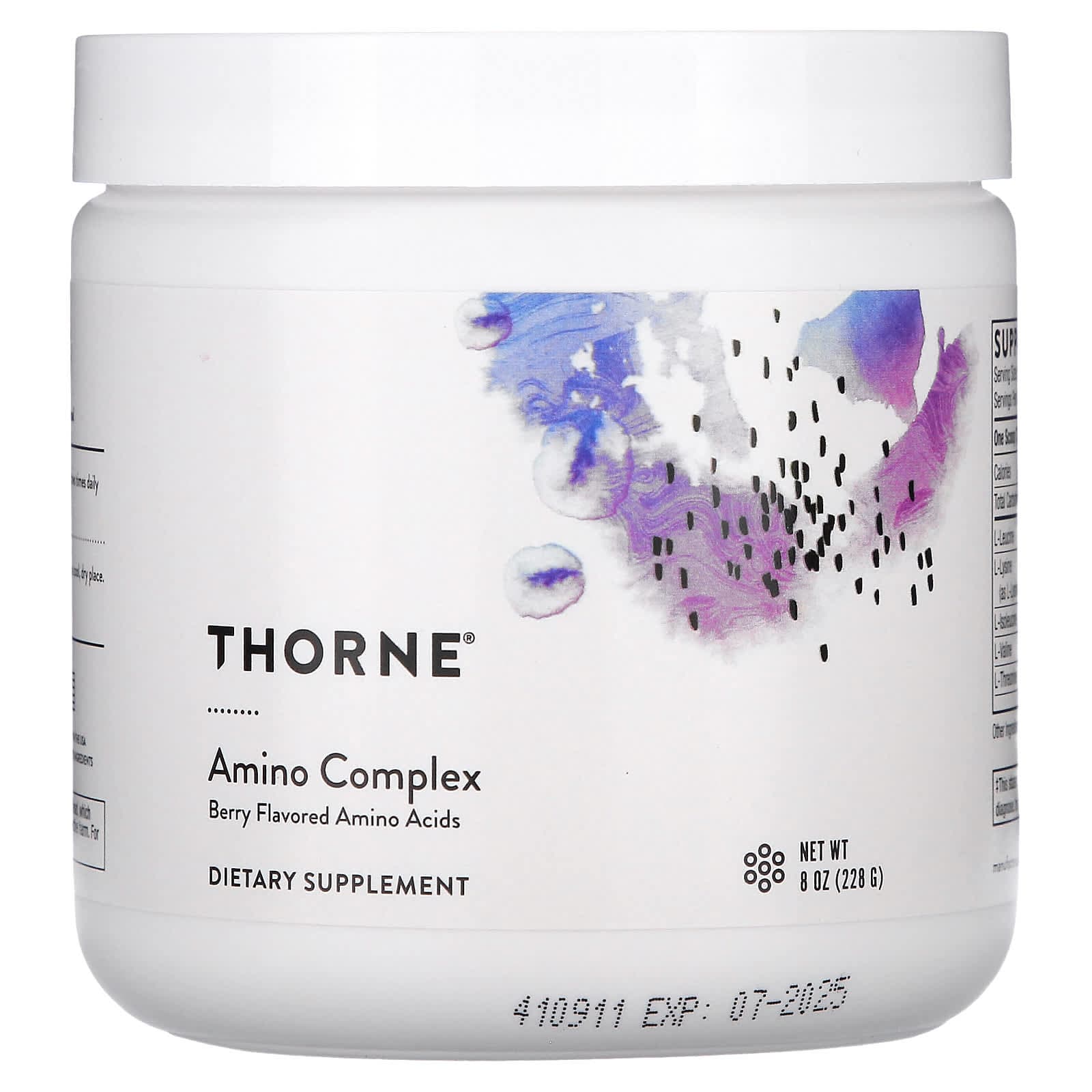
Histidine.
Histidine may support exercise performance and muscle recovery. Acts as a building block for carnosine, a compound that helps soak up the acid that builds in your muscles during intense exercise. Less burn, potentially more reps.
Reviewed March 2026
- Category
- Amino acid
- Also filed under
- Supports muscle healthMay improve exercise performanceAntioxidant properties
What Histidine is, and what it does.
- Does it work
- Suits people already taking beta-alanine who want the other half of the carnosine pair, and anyone eating little protein. Regular meat and fish eaters get plenty from food.
- How much to take
- Start with 500mg a day. That is the daily maintenance amount, and it sits on top of the histidine your protein intake already delivers.
- Time to feel it
- Weeks rather than days. Muscle carnosine builds slowly, so what shifts is your output in short, hard efforts rather than anything you notice on the day you take it.
- The first dose
- Absolutely nothing. This is not a stimulant. It needs to build up in your system over weeks to have an effect.
- With regular use
- After 4-6 weeks, you might notice slightly better endurance during high-intensity sets (like lifting in the 8-15 rep range or during sprints). The effect is subtle.
- How well tolerated
- Well tolerated for the vast majority of people. It's an essential amino acid found in food. No major side effects are reported at standard doses.
- How it feels
- There is no sensation to it. It works as a building block, and the change shows up as slightly steadier output late in a hard set over several weeks.
- The overlooked benefit
- Skin turns histidine into the urocanic acid in its own natural moisturising factor, so this amino acid has a barrier role as well as a muscle one.
500mg a day is where Histidine works.
Source: Kopple & Swendseid. J Clin Invest 1975; essential amino acid research
The proof, claim by claim.
These words describe the research, not the molecule's worth. Research strength is how much work stands behind one claim, and it is never a product score.
While histidine has a clear biochemical role, the evidence supporting its benefits at typical supplement doses is still developing. More research is needed to confirm its efficacy for specific applications.
- carnosine synthesis in skeletal muscleRandomised trial
- intracellular pH bufferingNarrative review
- high-intensity exercise capacityRandomised trial
- antioxidant marker changesRandomised trial
- skin barrier moisturising factorRandomised trial
- histamine synthesis as the direct precursorNarrative review
- metal ion binding as a chelating amino acidIn vitro study
Questions people ask about Histidine.
- Is this the same as histamine?
- No. Histidine is the raw material your body uses to make histamine. Taking it as a supplement won't trigger allergy symptoms.
- Should I take this or Beta-Alanine?
- Take Beta-Alanine first. It's the main driver of carnosine production in muscle and is much better studied for performance. Histidine is the sidekick.
- Will it help me build muscle?
- Indirectly at best. By allowing you to train slightly harder, it could support muscle growth over time, but it's not a direct muscle builder like leucine.
- Can I get enough from food?
- For general health, yes. A single chicken breast or steak provides several grams. Supplementing is for athletes seeking specific performance benefits beyond normal dietary intake.
- Is it safe to take every day?
- Yes. It's an essential amino acid your body needs. No need to cycle it.
- Does it have any side effects?
- Extremely rare at normal doses. It's very well-tolerated. Taking massive amounts might cause mild digestive upset, but that's about it.
Why these belong in the same formula. Each row says what the basis is, from settled biochemistry through to a trial that measured the pair.
Carnosine is the dipeptide beta-alanyl-L-histidine, so muscle carnosine synthesis draws on both amino acids through carnosine synthase. Beta-alanine is normally the limiting substrate and histidine supplies the other half of the molecule.
Histidine decarboxylase is a pyridoxal-5-phosphate enzyme, so B6 status sets how readily histidine is decarboxylated. Other steps of normal histidine turnover are likewise PLP dependent.
Histidine's imidazole nitrogen is a primary zinc-binding ligand in plasma and in zinc amino acid chelates. That coordination is why histidine is used as a carrier ligand in zinc formulations.
Histidine breakdown passes through formiminoglutamate, whose formimino group is handed to tetrahydrofolate. Folate availability therefore governs the last step of normal histidine catabolism.
Carnosine is the dipeptide of histidine and beta-alanine, so histidine is one of its two building blocks. Carnosine also hydrolyses back to free histidine in tissue, making the pair a two way pool.
Anserine is methylated carnosine and carries the same histidine imidazole ring that does the pH buffering. Histidine availability feeds the same dipeptide family.
Histidine is the main small molecule ligand carrying the exchangeable copper fraction in plasma alongside albumin. That copper histidine complex is how copper moves into cells.
The histidine imidazole ring chelates ferrous and ferric iron and keeps non heme iron soluble in the intestinal lumen. That is why amino acids including histidine improve non heme iron uptake from a meal.
Histidine is the principal low molecular weight ligand binding nickel in plasma, in the same way it handles copper. The complex determines how nickel distributes between blood compartments.
Histidine catabolism passes through formiminoglutamate, which hands its formimino group to tetrahydrofolate, and B12 status governs how freely that folate pool cycles. A B12 shortfall backs up the folate step that histidine breakdown depends on.
Histidine is a substrate of the system L transporter, the same carrier that moves leucine and the other large neutral amino acids. A large single dose of one raises competition at that shared carrier. In practice this matters most for isolated free-form amino acid dosing rather than for protein-bound intake from food.
Tryptophan and histidine both use the large neutral amino acid transporter to cross the gut wall and the blood brain barrier. Taking a large free-form dose of one alongside the other means they compete for the same carrier sites. Spacing free-form amino acid doses is the usual formulation answer.
Tyrosine competes with histidine for the same large neutral amino acid transporter. This is a well-described carrier-level competition rather than a metabolic conflict. It only becomes relevant at the concentrations reached by free-form supplemental doses.
Phenylalanine is another substrate of the system L carrier that histidine uses. Co-dosing large free-form amounts raises competition at that transporter. The effect is on the rate of appearance, not on whether the amino acid is usable.
Taurine and histidine are discussed together in a review of retinal tissue biology, where both are described as contributing to the amino acid environment of the retina. The material summarised there is largely laboratory and animal work rather than controlled human trials. Read the pairing as mechanistic and preliminary.
Carnosine is the dipeptide of beta-alanine and histidine, and zinc carnosine is that dipeptide complexed with zinc. Histidine supplies the imidazole ring that gives carnosine its pH buffering and metal binding behaviour. Histidine is not usually the limiting input for carnosine synthesis in people eating adequate protein, which is why beta-alanine is the usual lever.
When histidine is broken down through urocanate to formiminoglutamate, the formimino group is handed to tetrahydrofolate. That one-carbon unit joins the same folate pool used to remethylate homocysteine back to methionine. The relationship is a shared pathway rather than a direct pairing effect.
Betaine donates a methyl group directly to homocysteine through betaine homocysteine methyltransferase, while histidine catabolism contributes a one-carbon unit to the folate route to the same reaction. The two feed the same node by different roads. This is pathway-level reasoning, not a measured combination.
Histidine decarboxylase converts histidine into histamine, which is stored in mast cells and basophils. Quercetin is described as stabilising mast cell membranes and reducing mediator release. The two therefore sit on opposite sides of the same mediator pool, which is why they are worth flagging together rather than assumed additive.
Free histidine chelates divalent metals through its imidazole nitrogen and is one of the amino acids described as improving zinc and non-heme iron solubility in the gut. Ascorbate does the same for non-heme iron by keeping it reduced. Where both are present the effect on mineral solubility runs in the same direction, though the size of any combined effect is not established here.
The imidazole nitrogen of histidine binds divalent transition metals, which is why histidine residues form the metal sites of many enzymes. Free histidine will complex manganese in solution in the same way it complexes zinc and copper. Whether that changes manganese absorption in people has not been measured here.
Whey protein supplies histidine along with the other indispensable amino acids in a protein-bound form that is absorbed as di- and tripeptides. That route avoids the free-amino-acid transporter competition that isolated dosing creates. For most people, protein intake rather than a free-form dose determines histidine availability.
The histidine catabolic route runs through urocanate and formiminoglutamate to glutamate, which sits in equilibrium with glutamine through glutamine synthetase. The two amino acids therefore share a metabolic node. This is standard biochemistry rather than a documented supplement pairing.
Molybdenum-dependent enzymes handle sulfur and purine catabolism rather than histidine directly, so the connection is indirect. It is listed here only because amino acid catabolism as a whole depends on an intact set of trace element cofactors. No direct histidine and molybdenum interaction is described.
Carnosine synthase joins beta-alanine to histidine in an ATP-dependent reaction, and ATP-using enzymes work with magnesium as the counter-ion of the nucleotide. Magnesium is therefore an ordinary requirement of that step rather than a specific histidine partner. Read it as background enzymology.
Talk to a doctor before taking Histidine if any of these apply to you: People with rare genetic disorders like histidinemia should avoid histidine supplements, Those with kidney or liver problems should consult a doctor before supplementing. These are flags to check first, not effects Histidine is known to cause.
Not medical advice. Show the label to your pharmacist.What Histidine actually does.
Histidine is essential in infants and only conditionally essential in adults. Either way it has to come in from the diet, because human tissue can't build its imidazole ring.
That imidazole side chain trades protons right around the pH of your tissues. It's why histidine sits in enzyme active sites doing the proton work, and why it helps buffer pH inside cells.
An ATP-driven enzyme joins beta-alanine to histidine to make carnosine, the small dipeptide that piles up in skeletal muscle and brain tissue.
A vitamin B6-dependent enzyme clips the carboxyl group off histidine, and what comes out is histamine.
Where Histidine comes from.
Bacteria are fed sugar in a tank and make histidine as they grow. The cells are filtered out, the amino acid is pulled from the liquid on a resin, and it is crystallised into a white powder. Making it by pure chemistry gives a mix of two mirror-image forms and only one of them is useful, so fermentation is the normal route.
Built by fermentation, the same way vitamin B12 and many amino acids are made at scale. Controlled conditions, consistent output.
Glucose or sucrose derived from corn, cassava or sugar beet, plus an ammonium nitrogen source and mineral salts.
Selected strains of Corynebacterium or Escherichia coli, bred or engineered so that the feedback controls on the histidine biosynthetic operon are relaxed, secrete L-histidine into the broth.
Biomass is removed from the broth by centrifugation and filtration, leaving a crude amino acid solution.
The amino acid is captured on ion exchange resin, eluted, decolourised and then crystallised, often as the hydrochloride monohydrate, which is easier to crystallise cleanly than the free base.
Identity and the L configuration are confirmed by assay and optical rotation, since only the L form is used metabolically.
Sold as free base or hydrochloride monohydrate crystals, milled to a defined particle size for capsule filling or drink powders.
Getting Histidine from food.
The whole-food sources on file. A supplement closes the gap, it does not replace dinner.
A gram-for-gram figure (how much of each you would eat to match a dose) will appear here once it is sourced and reviewed. This page will not print a number it cannot cite.
The forms it comes in.
The essence, in one line each.
- In women with excess body weight, 4 g of histidine a day for 12 weeks lowered the HOMA-IR insulin resistance marker by about 1.1 points and waist circumference by about 2.9 cm compared with placebo.Randomised trial. Feng et al., 2013 (Diabetologia). PMID 23361591 ↗
- Over 23 days, 3.5 g of L-histidine a day did not raise muscle carnosine in young adults while beta-alanine did, and pairing histidine with beta-alanine prevented the roughly 32 percent fall in muscle histidine that beta-alanine alone produced.Controlled trial. Blancquaert et al., 2017 (Medicine and Science in Sports and Exercise). PMID 28106620 ↗
- Across the human studies reviewed, intakes near 4.0 to 4.5 g of histidine a day tracked with lower BMI, body fat and fasting blood glucose, while intakes above 24 g a day were followed by falls in blood zinc.Review. Thalacker-Mercer and Gheller, 2020 (The Journal of Nutrition). PMID 33000165 ↗
- A systematic review and meta-analysis found that supplementation with histidine-containing dipeptides improved delayed recall on memory tests, with no difference detected on other cognitive domains.Meta-analysis. Bell et al., 2024 (Nutrition reviews). PMID 38013229 ↗
- A systematic review and meta-analysis of carnosine, the dipeptide built from histidine, pooled trials measuring cognitive performance and mood-related outcomes in adults.Meta-analysis. Hsiao et al., 2026 (Nutrients). PMID 42123986 ↗
- A systematic review and meta-analysis found that carnosine and other histidine-containing dipeptides shifted blood markers of inflammation and oxidative stress in a favourable direction across randomised trials.Meta-analysis. Saadati et al., 2024 (Nutrition reviews). PMID 38086332 ↗
- A dose-escalation trial in healthy adults found graded oral histidine doses were tolerated, and it identified the intake level at which side effects began to appear.Clinical trial. Gheller et al., 2020 (The American journal of clinical nutrition). PMID 32766885 ↗
- A placebo-controlled randomised trial measured whether carnosine supplementation changed physical endurance performance in adults.Randomised trial. O'Toole et al., 2026 (Journal of the International Society of Sports Nutrition). PMID 42308284 ↗
- A three-level meta-analysis of supplemental histidine and lactational performance in dairy cattle. The effects reported are agricultural production outcomes in ruminants, not human outcomes.Meta-analysis, in animals. Xu L et al., 2026 (Journal of Dairy Science). PMID 41342705 ↗
- Combined beta-alanine and L-histidine feeding raised muscle carnosine content in the birds studied, which supports the precursor relationship. Carnosine content is a tissue marker.Animal study. Suwanvichanee C et al., 2022 (Poultry Science). PMID 35303689 ↗
- A correction notice to a rodent study in which carnosine and histidine supplementation reduced oxidative stress markers in reproductive tissue after heavy metal exposure. The readouts are biochemical markers.Animal study. Ommati MM et al., 2026 (Biological Trace Element Research). PMID 41348262 ↗
- The authors report hearing, vision and growth measures in a small group carrying variants of the histidyl-tRNA synthetase gene who received histidine. An uncontrolled case series, so the measures cannot be attributed to the supplement.Case series. Siu VM et al., 2026 (American Journal of Medical Genetics Part A). PMID 42157369 ↗
- A review of taurine and histidine in retinal tissue that summarises mainly laboratory and animal findings rather than controlled human trials.Narrative review. Lee D et al., 2024 (Life). PMID 39768274 ↗
- In model organisms carrying histidyl-tRNA synthetase variants, added histidine either worsened or rescued the defect depending on the specific variant, which is a direct caution against assuming one direction of effect.Animal study. Qiu Y et al., 2023 (Human Molecular Genetics). PMID 36164730 ↗
- Metabolomic profiling showed histidine supplementation shifted hepatic oxidative stress markers in animals under high salt exposure. The endpoints are metabolites, not clinical outcomes.Animal study. Yang P et al., 2023 (Life Sciences). PMID 36596407 ↗
- Dietary histidine kept amino acid profiles stable and reduced liver fat accumulation in the fish studied. A species-specific feeding result.Animal study. Liang H et al., 2022 (Aquaculture Nutrition). PMID 36860443 ↗
- A review setting out both potential benefits and potential downsides of histidine supplementation, and explicitly cautioning that the direction of effect depends on context.Narrative review. Petrova B et al., 2020 (The Journal of Nutrition). PMID 33000153 ↗
- A probiotic intervention study in which histidine appears among the host metabolites that shifted. Histidine was measured as a metabolite here, not given as a supplement.Animal study. Wang Y et al., 2026 (Free Radical Biology & Medicine). PMID 41690607 ↗
These are the studies our verdict leans on, chosen from the 62,985 we read for Histidine. The full linked list is below.
The studies, linked.
6 sources behind our Histidine verdict: peer-reviewed studies and registered clinical trials. Every one links straight to PubMed, the journal, or ClinicalTrials.gov. Read them yourself.
- Clinical trialCustodiol-HTK Solution as a Cardioplegic Agent- A Prospective Non-Inferiority Randomized Clinical TrialClinicalTrials.gov ↗Phase 2, 110 participants, Completed
- Clinical trialMolecular Bases of Response to Copper Treatment in Menkes Disease, Related Phenotypes, and Unexplained Copper DeficiencyClinicalTrials.gov ↗Phase 3, 93 participants, Completed
- Clinical trialRandomized Phase 2 Trial of Seribantumab Plus Fulvestrant in Postmenopausal Women With Hormone Receptor-positive, Heregulin Positive (HRG+), HER2 Negative Metastatic Breast Cancer (Merrimack Pharmaceuticals Inc.)ClinicalTrials.gov ↗Phase 2, 22 participants, Terminated
- Clinical trialNeurovascular Regulation During Exercise in Humans With Chronic Kidney DiseaseClinicalTrials.gov ↗Phase 2, 150 participants, Recruiting
- Clinical trialThe Effects of Oral Supplement Containing L-Histidine and Antioxidants on the Skin Barrier Function and Systemic Inflammation in RosaceaClinicalTrials.gov ↗24 participants, Unknown
- Clinical trialHistidine Therapy: A Project to Treat HARS DeficiencyClinicalTrials.gov ↗Phase 2, 14 participants, Unknown
Evidence surfaced via Semantic Scholar (Allen Institute for AI) and ClinicalTrials.gov. Ranked by study type and citation weight, not cherry-picked.
Problems people have reported.
Read this carefully. These are 1,486 voluntary, unverified reactions reported to the FDA (openFDA). The number mostly reflects how popular Histidine is, not how risky it is. A report is not proof Histidine caused anything. It is a signal of what to watch for, nothing more.
Source: openFDA adverse-event reports. Voluntary reporting, not an incidence rate.
FDA Disclaimer: These statements have not been evaluated by the Food and Drug Administration. This information is for educational purposes only and is not intended to diagnose, treat, cure, or prevent any disease. Consult your healthcare provider before starting any supplement regimen.