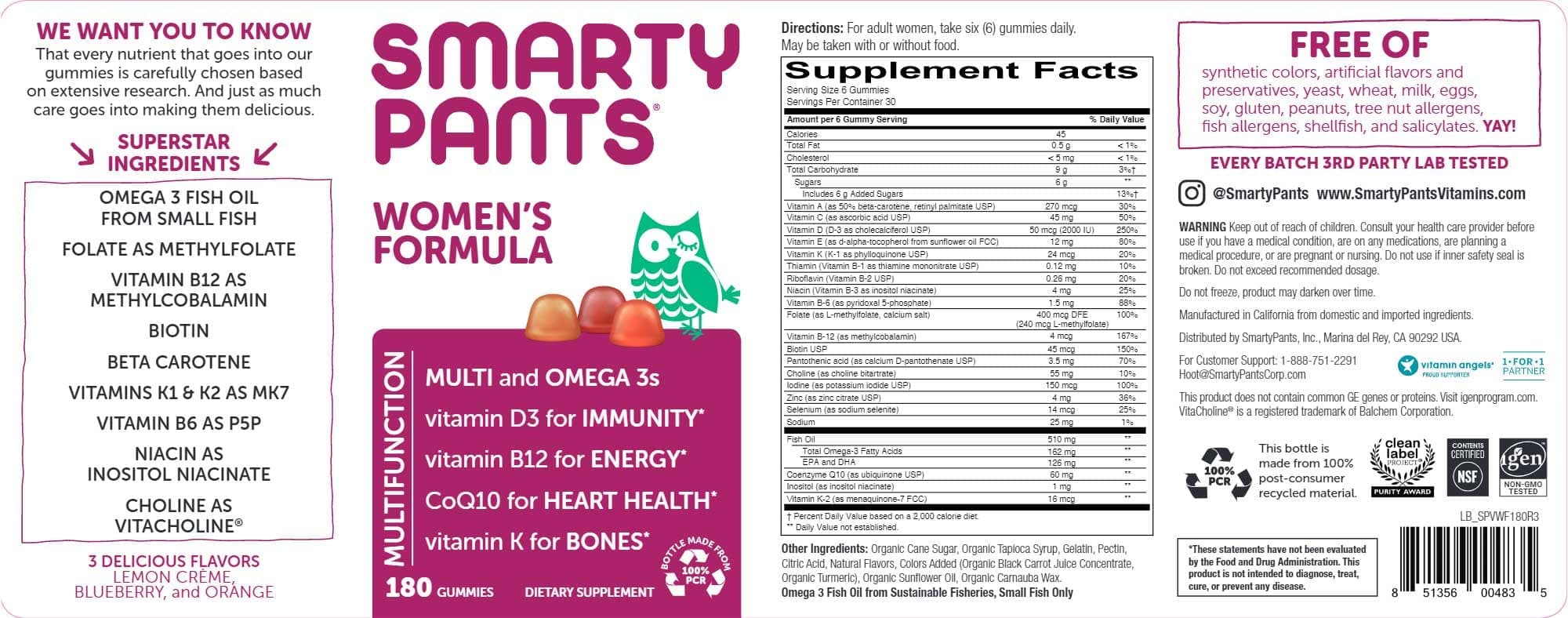
Inositol Niacinate.
Research-backed compound with potential health benefits. A 'no-flush' form of niacin (B3). Aims to improve circulation and help manage cholesterol levels without making your skin red and itchy.
Reviewed March 2026
- Category
- Compound
What Inositol Niacinate is, and what it does.
- Does it work
- Suits people who want the nicotinic acid form without the skin flush, and anyone focused on circulation to the extremities. The lipid data for this ester is thin.
- How much to take
- Starts at 500mg and can go up to 2000mg per day, split into doses. Start low and see how you respond. Best taken with food.
- Time to feel it
- Weeks rather than days. Circulation and lipid changes here are read from a blood panel, or from how your hands and feet handle cold over a month or two.
- The first dose
- Nothing. This isn't a pre-workout. It takes weeks to build up and exert any noticeable effect.
- With regular use
- After a month or two, some people report warmer extremities (better circulation) or improvement in Raynaud's symptoms. Cholesterol changes, if any, will show up on a blood test.
- How well tolerated
- Generally well-tolerated. The whole point is to avoid the flush. As with any niacin product, high doses can stress the liver, so don't go crazy.
- How it feels
- Subtle. You'll likely notice the absence of the niacin flush more than the presence of any effect. It works quietly in the background on your blood vessels.
- The overlooked benefit
- Roughly 85 percent of its weight is nicotinic acid, so the number on the label and the amount of vitamin it can release are two different figures.
2,000 to 4,000mg a day is where Inositol Niacinate works.
Source: Unfer 2017 meta (PCOS) + Levine 1995 (anxiety)
The proof, claim by claim.
These words describe the research, not the molecule's worth. Research strength is how much work stands behind one claim, and it is never a product score.
Inositol Niacinate is documented in the library. The clinical read is in the queue. Nothing about the strength of the research prints until the read is done.
- Peripheral blood flow supportRandomised trial
- Less cutaneous flushing than free nicotinic acidRandomised trial
- Blood lipids already in the normal rangeRandomised trial
- NAD production from released nicotinic acidNarrative review
- Slow and incomplete release of free nicotinic acidIn vitro study
Questions people ask about Inositol Niacinate.
- Is this the same as regular Niacin?
- No. It's six niacin molecules attached to one inositol molecule. Your body has to break it down first, which is why it doesn't cause the 'flush'.
- Will I get the 'niacin flush'?
- Almost certainly not. That's its main selling point. If you do, the dose is way too high.
- Does it actually lower cholesterol?
- The evidence is mixed. Some studies show a modest benefit, others show little effect. Standard niacin is more proven for that.
- What is it best for then?
- Improving circulation. Think conditions like Raynaud's phenomenon or intermittent claudication. That's where it has the most solid, though still modest, evidence.
- Can I take it with a statin?
- Talk to your doctor. Combining things that affect the liver is something you want medical supervision for.
- When should I take it?
- With meals to improve absorption and minimize any potential stomach upset. Splitting the dose (e.g., morning and night) is a good idea.
Why these belong in the same formula. Each row says what the basis is, from settled biochemistry through to a trial that measured the pair.
Inositol hexanicotinate is six nicotinic acid molecules esterified to one inositol, and it releases free nicotinic acid slowly as esterases hydrolyse it. Anything said about the niacin moiety applies once hydrolysis has happened.
Hydrolysis of the ester frees the inositol core along with the nicotinic acid, so one dose contributes to both pools. The inositol contribution is small relative to a dedicated inositol dose.
Nicotinic acid released from the ester enters NAD synthesis through the Preiss-Handler pathway, so this form contributes to the same NAD pool as other B3 precursors. Stacking several precursors loads one pool rather than several.
Excess nicotinamide is disposed of by nicotinamide N-methyltransferase, which spends a methyl group from S-adenosylmethionine on every molecule. Sustained higher niacin intake therefore draws on the methyl pool. Betaine donates a methyl group to homocysteine to regenerate methionine and then SAM, which is why the two are paired in formulas. This is settled one-carbon biochemistry.
5-methyltetrahydrofolate donates its methyl group to homocysteine through methionine synthase, regenerating methionine for SAM synthesis. That matters alongside a niacin ester because methylation is how surplus nicotinamide leaves the body. The relationship is textbook and needs no trial to state.
Without adequate B12 the methyl group carried by 5-methyltetrahydrofolate cannot be transferred to homocysteine, and folate becomes trapped in that form. Since methylation is the disposal route for surplus nicotinamide, B12 status sits underneath niacin handling. This is established cofactor biochemistry.
Choline dehydrogenase oxidises choline to betaine, which then serves as the methyl donor for betaine-homocysteine methyltransferase. So choline supports methyl availability indirectly. The pathway is settled and applies to any sustained methylation demand, including nicotinamide disposal.
Nicotinic acid released from the inositol ester enters NAD synthesis through the Preiss-Handler route, while nicotinamide riboside enters through the salvage route via NRK phosphorylation. Both converge on NAD. Combining them means a person is taking two niacin-family precursors, and the total load on methylation for disposal adds up.
Nicotinamide mononucleotide sits one step from NAD in the salvage pathway. Taken alongside a nicotinic acid ester it is a second precursor rather than a different mechanism. Read the pair as a combined precursor load, not as two separate actions.
The body can make NAD from tryptophan, and two steps on that path depend on riboflavin-derived FAD. Riboflavin status therefore influences how much NAD comes from protein intake as opposed to from a niacin supplement. This is established vitamin biochemistry.
Pyridoxal 5-phosphate is required for kynureninase, the step that produces 3-hydroxyanthranilic acid on the way to NAD. Low B6 shifts the tryptophan pathway toward other branch products instead. The cofactor requirement is textbook.
Roughly a fixed fraction of dietary tryptophan is converted to NAD through the kynurenine pathway, which is why niacin requirements are expressed in niacin equivalents that include tryptophan intake. A niacin ester and dietary tryptophan feed the same end product by different routes. This relationship is the basis of the niacin equivalent unit itself.
Nicotinamide mononucleotide adenylyltransferase and the upstream phosphoribosyltransferase steps all run on magnesium-complexed nucleotides. Magnesium status therefore sits underneath NAD synthesis generally. This is standard enzymology rather than a tested supplement pairing.
Nicotinamide N-methyltransferase spends one SAM molecule per nicotinamide methylated, so a sustained niacin intake is a draw on the same SAM pool that supports other methylation reactions. Supplying SAM directly or supplying its precursors are two ways of covering that draw. The competition for methyl groups is established biochemistry.
Methionine adenosyltransferase converts methionine plus ATP into SAM, the universal methyl donor. Since nicotinamide disposal spends SAM, methionine supply is upstream of that step. The pathway is settled and needs no citation.
Nothing specific on file for Inositol Niacinate. Match the label to the daily amount above, and tell your doctor what you take.
Not medical advice. Show the label to your pharmacist.What Inositol Niacinate actually does.
This compound is one inositol molecule bonded to six niacin molecules, so most of its weight by far is actually niacin.
The compound itself isn't the active form, enzymes have to slowly and only partially break the bonds apart to free the niacin and inositol, which is why it behaves differently in your body than plain niacin at the same dose.
Once the niacin is freed, it feeds into making NAD, a molecule your cells use as an electron carrier in hundreds of reactions and as fuel for a couple of specific enzyme families.
Free nicotinic acid, unlike nicotinamide, activates a receptor on skin immune cells, which releases signalling molecules and causes the brief skin flushing linked to this form of the vitamin. Releasing free acid more slowly is the stated design reason for using the ester form instead.
Where Inositol Niacinate comes from.
Six molecules of niacin are chemically attached to one molecule of inositol in a reactor, then the product is washed and recrystallised so little loose niacin is left behind, giving a compound the body has to take apart before the niacin is available.
Chemically synthesised. The molecule is identical to the one a plant or an animal makes, and building it deliberately means a known purity, a fixed dose and no crop contaminants. For several nutrients this is the only route that reaches a usable amount.
Myo-inositol usually comes from hydrolysed plant phytate or from fermentation, and nicotinic acid is made industrially by oxidising alkylpyridines such as 3-methylpyridine or 2-methyl-5-ethylpyridine.
The six hydroxyl groups of inositol are esterified with an activated form of nicotinic acid, commonly nicotinoyl chloride, under conditions that drive the reaction toward full substitution.
The product is washed free of unreacted acid, chloride residues and partially substituted esters, then recrystallised from solvent.
Batches are checked for nicotinic acid content and for free nicotinic acid, since residual free acid changes how the material behaves and is a specification point.
Milled to a defined particle size for tablet or capsule manufacture.
Labels do not state the residual free nicotinic acid content or the degree of substitution, both of which affect how much free acid a dose delivers early.
The forms it comes in.
Problems people have reported.
Read this carefully. These are 141 voluntary, unverified reactions reported to the FDA (openFDA). The number mostly reflects how popular Inositol Niacinate is, not how risky it is. A report is not proof Inositol Niacinate caused anything. It is a signal of what to watch for, nothing more.
Source: openFDA adverse-event reports. Voluntary reporting, not an incidence rate.
FDA Disclaimer: These statements have not been evaluated by the Food and Drug Administration. This information is for educational purposes only and is not intended to diagnose, treat, cure, or prevent any disease. Consult your healthcare provider before starting any supplement regimen.