Methionine.
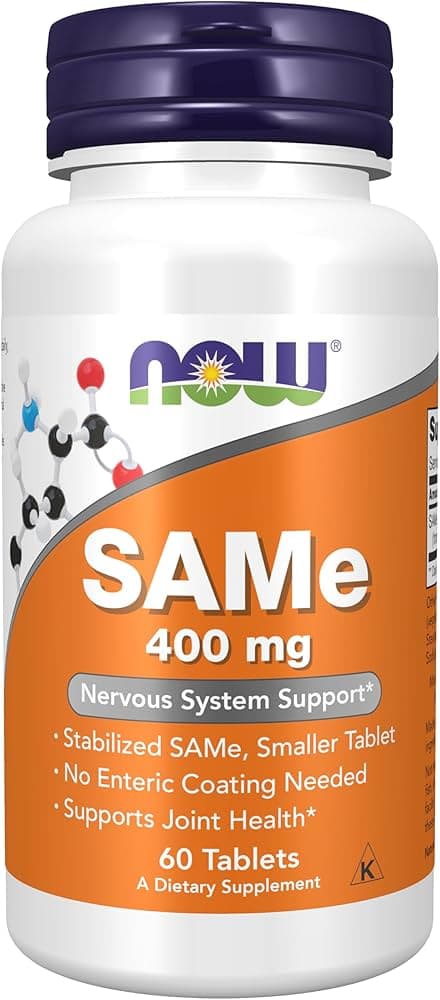
Supports liver health and may aid detoxification processes. Helps your liver process fats and toxins. It's a precursor to other important molecules like SAMe, which is involved in mood regulation and joint health.
Reviewed March 2026
- Category
- Amino acid
- Also filed under
- Liver health supportDetoxificationMood support (SAMe form)
What Methionine is, and what it does.
- Does it work
- Suits people eating low protein or plant-heavy, where sulphur amino acid intake runs thin. Eat plenty of protein already and food is likely covering the daily need.
- How much to take
- 500-1,000 mg of L-Methionine daily for general support. For mood or joints, look for its active form, SAMe, usually at 400-1,600 mg daily.
- Time to feel it
- Nothing on a clock. The work happens in methylation chemistry, and where it shows is a homocysteine or liver panel drawn after several weeks of steady intake.
- The first dose
- Nothing. It needs weeks to support cellular processes. Don't expect to feel different.
- With regular use
- After a month or more, you might see improvements in liver enzyme tests if they were off. With the SAMe form, some report better mood or less joint stiffness over 4-8 weeks.
- How well tolerated
- Generally well tolerated at standard doses. The main watch-out is the potential to increase homocysteine levels with long-term high doses. This is a known risk factor for heart issues.
- How it feels
- Like nothing. It's a backstage crew member, not the star of the show. You're supplementing for long-term cellular support, not an immediate feeling.
- The overlooked benefit
- It's the upstream source of cysteine, which is the rate-limiting piece of glutathione, and of taurine. Your antioxidant reserve partly starts with this amino acid.
500mg a day is where Methionine works.
Source: WHO protein requirement reports; Ball et al., J Nutr, 2006
The proof, claim by claim.
These words describe the research, not the molecule's worth. Research strength is how much work stands behind one claim, and it is never a product score.
Methionine has a clear biochemical role, and some evidence supports its use for specific liver conditions. However, its effectiveness as a general supplement for the average person is modest.
- Protein synthesis and nitrogen balanceNarrative review
- Methyl group supply through S-adenosylmethionineNarrative review
- Cysteine and glutathione precursor supplyAnimal study
- Liver fat handlingAnimal study
- Plasma homocysteine response to a methionine loadRandomised trial
Questions people ask about Methionine.
- Can I just get this from food?
- Yes. Any high-protein food like meat, eggs, fish, and nuts has plenty for basic needs. Supplementing is for getting a higher, therapeutic dose.
- Will this help with a hangover?
- Theoretically, it supports liver detox. But don't count on it to erase a night of bad decisions. Better to just drink less.
- Is it vegan?
- Most supplemental L-Methionine is made through fermentation and is vegan-friendly. Just check the capsule source (gelatin vs. veggie cap).
- Does this have sulfur? Does it smell?
- Yes, it's a sulfur-containing amino acid. Sometimes the powder can have a slight sulfurous smell, but it's usually not noticeable in capsules.
- When should I take it?
- Doesn't matter much. Take it whenever you'll remember. For SAMe, some prefer taking it in the morning on an empty stomach.
Why these belong in the same formula. Each row says what the basis is, from settled biochemistry through to a trial that measured the pair.
Glycine N-methyltransferase uses glycine to absorb surplus methyl groups from SAM, which is the body's main route for handling a methionine load. Glycine supply is what keeps the methylation cycle from backing up.
Betaine-homocysteine methyltransferase transfers a methyl group from betaine to homocysteine, regenerating methionine independently of folate. It is the direct partner reaction to methionine turnover.
Betaine is the substrate BHMT uses to convert homocysteine back into methionine in liver and kidney. That pathway runs in parallel to the folate route.
Choline is oxidised to betaine, which then donates a methyl group to homocysteine. Choline intake therefore feeds methionine regeneration one step upstream.
5-methyltetrahydrofolate is the methyl donor that methionine synthase uses to rebuild methionine from homocysteine. Folate and methionine are two points on one cycle.
Methionine synthase requires methylcobalamin to accept a methyl group from folate and pass it to homocysteine. Without B12 the folate route to methionine cannot turn over.
Folate carries the one-carbon unit that methionine synthase transfers to homocysteine. Folate status shapes how efficiently a methionine load is recycled rather than accumulated.
Cystathionine beta-synthase and cystathionine gamma-lyase both use pyridoxal phosphate to move homocysteine onward into cysteine. B6 is what opens the exit route from the methionine cycle.
MTHFR uses FAD from riboflavin to generate the methylfolate that methionine synthase needs. Riboflavin status sits one step behind the folate arm of the cycle.
Methionine synthase and betaine-homocysteine methyltransferase are both zinc metalloenzymes that use the metal to activate the thiol of homocysteine. Zinc is required for either remethylation route.
Methionine adenosyltransferase converts methionine plus ATP into SAM, the universal methyl donor. The two are consecutive members of the same pathway, so both should not be pushed hard at once.
Cysteine is made from the sulfur of methionine through the transsulfuration pathway, so supplying cysteine spares methionine for methylation instead. This sparing relationship is long-established nutrition biochemistry.
NAC feeds the same cysteine pool that methionine sulfur otherwise supplies, easing the demand on transsulfuration. It also raises homocysteine handling load, so B6 status matters alongside.
Cysteine derived from methionine is the rate-limiting residue of glutathione synthesis, so methionine sits upstream of the body's main thiol. Supplying glutathione directly reduces the pull on methionine sulfur.
Taurine is formed from cysteine, which itself comes from methionine sulfur, so taurine intake spares that route. The three sit on one sulfur pathway.
Endogenous creatine synthesis consumes a large share of the body's SAM methyl groups, so taking creatine lowers that methyl demand and spares methionine. A settled and often overlooked link.
Serine donates its side chain carbon to the folate pool through serine hydroxymethyltransferase, generating the units that remethylate homocysteine. Serine supply feeds methionine regeneration indirectly.
Carnitine synthesis begins with lysine residues trimethylated using SAM, which is derived from methionine. Methionine is the methyl source behind endogenous carnitine.
Carnitine synthesis starts when lysine residues in protein are methylated three times, and every one of those methyl groups comes from S-adenosylmethionine made out of methionine. Lysine supplies the carbon skeleton, methionine supplies the methyl. The two are also the amino acids most often limiting in cereal-based diets, which is why they are supplemented together in production animals. Human data for the pairing as a supplement is not what this row rests on.
Methionine adenosyltransferase joins methionine to ATP to make S-adenosylmethionine, and that reaction runs on a magnesium-ATP complex rather than free ATP. Without magnesium in the active site the transfer does not proceed. This is settled enzymology and needs no trial to state. It says nothing about whether extra magnesium raises methylation in a person with adequate status.
Methionine adenosyltransferase is stimulated by monovalent cations, with potassium the physiological one. The effect is on enzyme kinetics measured in purified systems, not on any clinical endpoint. Ordinary dietary potassium covers this. Read it as mechanistic context for how methionine becomes a methyl donor.
Creatine is built in two steps: arginine and glycine combine to form guanidinoacetate, then guanidinoacetate is methylated using S-adenosylmethionine derived from methionine. Arginine gives the amidino group, methionine gives the methyl. This single reaction accounts for a large share of the body's daily methyl transfer. It is biochemistry, not a claim about supplementing both.
The liver can build phosphatidylcholine by methylating phosphatidylethanolamine three times, and each methyl comes from S-adenosylmethionine. Dietary phosphatidylcholine reduces how much of that route the body needs to run, which lowers methyl-group demand. Methionine supply and choline supply therefore sit on the same ledger. Neither substitutes fully for the other.
The final step of melatonin synthesis methylates N-acetylserotonin, and the methyl group is donated by S-adenosylmethionine made from methionine. That is the biochemical link between the two. It does not mean taking methionine raises melatonin, and supplemental melatonin bypasses the step entirely. The relevance is mechanistic.
A published protocol describes a trial giving branched-chain amino acids alone or with tryptophan or with methionine and measuring appetite-related responses. It is a design paper, so no results support the pairing yet. Separately, tryptophan-derived serotonin is methylated using methionine-derived methyl groups on the way to melatonin. Count this as a planned comparison, not an established combination.
The same protocol places leucine-containing branched-chain amino acids alongside methionine in an appetite-response comparison. No outcome data are reported in a protocol. Both are indispensable amino acids that compete for the same neutral amino acid transporters, which is the mechanistic reason to study them together. Read the pairing as under investigation.
Excess nicotinamide is cleared by nicotinamide N-methyltransferase, which spends a methyl group from S-adenosylmethionine on every molecule it disposes of. Large niacin intakes therefore draw on the same methyl pool methionine feeds. The interaction is a demand on methyl groups, not a change in absorption of either nutrient. It is well described and needs no trial to state.
Nicotinamide disposal runs through the same S-adenosylmethionine-dependent methylation step as niacin, producing methylnicotinamide. The methyl groups ultimately trace back to methionine and the folate cycle. At ordinary intakes this is a background cost. At high intakes it becomes a measurable draw on methyl supply. What follows for a person's methylation markers depends on their folate and B12 status.
Selenomethionine is handled by the body as if it were methionine and gets incorporated non-specifically into protein in its place. How much selenium ends up stored in tissue protein therefore depends on methionine supply: more methionine means more of the selenomethionine is directed toward the selenium-specific routes instead of protein. This is an incorporation relationship, not an effect on any measured outcome. It matters most when selenium is taken as selenomethionine rather than as selenite.
Chromium methionine is a chelated mineral form in which methionine is the ligand carrying the metal. A lactation trial in dairy cattle reported effects of chromium methionine supplementation on production and antioxidant measures. That is animal work with markers, not a human outcome. The relevant point for a formulator is that methionine is functioning as the carrier, not as a separate active.
Copper methionine complexes are used where a chelated mineral is wanted, with the amino acid stabilising the metal against binding to competing dietary ligands. Copper and methionine also co-occur heavily in the sulfur-metabolism literature because thiol-containing metabolites bind copper. The chelate is a delivery choice, and it is described here without any suggestion that one carrier is better than another.
Manganese methionine belongs to the same family of amino acid mineral chelates, with methionine as the ligand. Chelation changes the chemical environment the mineral travels in rather than adding an action of its own. Human comparative data for this specific chelate is thin. Regard it as a formulation option described, not ranked.
Methionine has been used as a ligand in amino acid iron complexes, the same principle behind glycine-chelated iron. Iron also appears alongside methionine in heme and sulfur-metabolism literature because both feed into the same redox environment. Neither point is a human absorption claim. It is context for why the two names appear together.
Folic acid is reduced to tetrahydrofolate and then to 5-methyltetrahydrofolate, which is the methyl donor that lets methionine synthase rebuild methionine from homocysteine. Without folate in that reduced form, the remethylation route stalls and homocysteine accumulates. Folic acid requires the extra reduction step that already-reduced folates do not. That is a chemistry difference, not a ranking.
In brassica plants, methionine is the starting amino acid for the chain-elongation sequence that builds glucoraphanin, the glucosinolate that yields sulforaphane. The link is in the plant, not in human metabolism, which is why it explains sulfur chemistry rather than any combined effect in a person. It is worth naming because both compounds are described as sulfur nutrients and are often assumed to interact in the body. They do not, on this route.
Talk to a doctor before taking Methionine if any of these apply to you: Individuals with homocystinuria, Those with bipolar disorder, People taking MAO inhibitors. These are flags to check first, not effects Methionine is known to cause.
Not medical advice. Show the label to your pharmacist.What Methionine actually does.
The body cannot make methionine from scratch, so it has to come from food.
Every new protein chain starts with a methionine.
Methionine is turned into the molecule the body uses to add methyl groups to DNA, proteins and hormones.
Once the methyl group is handed off, what is left has to be cleared or methylation slows down.
Where Methionine comes from.
There are two ways to make it. One is straight chemistry from petrochemical building blocks, which gives a mixture of two mirror-image forms and needs an extra enzyme step if only one form is wanted. The other is fermentation, where bacteria fed sugar produce the natural form directly and it is filtered and crystallised out. Both finish as the same purified white powder.
The same molecule is reached more than one way. Which route a given product used is a manufacturing choice, and the finished compound is the same either way.
The chemical route starts from propylene-derived acrolein together with methyl mercaptan and hydrogen cyanide. The fermentation route starts from a sugar feedstock such as glucose or sucrose plus an inorganic sulfur source.
Chemically, acrolein and methyl mercaptan give methylthiopropionaldehyde, which is carried through a hydantoin intermediate and hydrolysed to racemic DL-methionine. Biologically, engineered strains of Escherichia coli or Corynebacterium glutamicum are grown to overproduce L-methionine, which accumulates in the broth.
Racemic material can be acetylated and then selectively deacetylated by an acylase, which frees N-acetyl-D-methionine for recycling and yields L-methionine. Fermentation-derived material is already the L-form and skips this step.
For the fermentation route, cells and insoluble matter are removed by filtration or centrifugation before the amino acid is recovered from the liquid.
The amino acid is captured on ion exchange resin, eluted, decolourised with activated carbon, then concentrated and crystallised. Repeated crystallisation raises purity.
The crystals are dried and sized to a specified powder, then released against assay, enantiomeric purity where relevant, heavy metals and microbial specifications.
Labels rarely state which route was used, and the finished crystalline material does not carry an obvious signature of its origin. Where it matters, the specification sheet rather than the label is the place it is recorded.
Getting Methionine from food.
The whole-food sources on file. A supplement closes the gap, it does not replace dinner.
A gram-for-gram figure (how much of each you would eat to match a dose) will appear here once it is sourced and reviewed. This page will not print a number it cannot cite.
The forms it comes in.
The essence, in one line each.
- Dietary methionine supplementation was reported to affect growth performance, immune responses and antioxidant measures in birds.Animal study. Zhang J et al., 2024 (Poultry science). PMID 38176373 ↗
- DL-methionine given above the stated requirement was reported to affect performance, intestinal morphology and antioxidant activity.Animal study. Morales A et al., 2023 (Journal of animal science). PMID 36383458 ↗
- Rumen-protected methionine supplementation was reported to affect performance measures in first-lactation cows.Animal study. Abedal-Majed MA et al., 2023 (Animal science journal). PMID 37144633 ↗
- Chromium methionine supplementation was reported to affect lactation performance and antioxidative measures.Animal study. Wu ZZ et al., 2021 (Animal: an international journal of animal bioscience). PMID 34371467 ↗
- Prepartum zinc-methionine supplementation was reported to affect feed digestibility, rumen fermentation patterns and immune measures.Animal study. Chen F et al., 2020 (Journal of dairy science). PMID 32713690 ↗
- Choline and methionine supplementation in flaxseed-fed hens was reported to affect production performance and egg fatty acid composition.Animal study. Beheshti Moghadam MH et al., 2021 (Poultry science). PMID 34271229 ↗
- Paternal methionine supplementation was reported to alter DNA methylation patterns in early embryos, a molecular marker rather than a health outcome.Animal study. Graybeal JT et al., 2026 (Epigenomes). PMID 42496534 ↗
- Maternal methionine supplementation was reported to influence skeletal muscle development through RNA methylation signalling, measured as a molecular marker.Animal study. Gao M et al., 2026 (Animal nutrition). PMID 42290959 ↗
- Rumen-protected lysine with methionine was reported to affect lactation performance measures.Animal study. Gao W et al., 2026 (Animals). PMID 42353495 ↗
- Rumen-protected methionine supplementation was reported to affect carcass traits and gastrointestinal morphology in grazing cattle.Animal study. Lelis ALJ et al., 2026 (Scientific reports). PMID 42342813 ↗
- Graded methionine on reduced crude protein diets was reported to affect growth performance and nitrogen utilisation.Animal study. Shim SH et al., 2026 (Animals). PMID 42278120 ↗
- Rumen-protected methionine under heat stress was reported to affect immune, metabolic and inflammatory markers.Animal study. Guadagnin AR et al., 2026 (Journal of dairy science). PMID 42114754 ↗
- A published protocol for a randomised comparison of branched-chain amino acids alone or with tryptophan or methionine on appetite-related measures. No results are reported in a protocol.Randomised trial. Zhang S et al., 2026 (JMIR research protocols). PMID 42166751 ↗
These are the studies our verdict leans on, chosen from the 13 we read for Methionine. The full linked list is below.
The studies, linked.
9 sources behind our Methionine verdict: peer-reviewed studies and registered clinical trials. Every one links straight to PubMed, the journal, or ClinicalTrials.gov. Read them yourself.
- Clinical trialMuscle Regrowth During Physical Rehabilitation and Amino Acid SupplementationClinicalTrials.gov ↗60 participants, Completed
- Clinical trialS-Adenosyl Methionine for Symptomatic Treatment of Primary Biliary CirrhosisClinicalTrials.gov ↗Phase 2, 50 participants, Terminated
- ClinicalTrials.gov ↗
- Clinical trialEffectiveness of S-adenosyl-L-methionine in Patients With Primary Biliary CirrhosisClinicalTrials.gov ↗Phase 4, 24 participants, Completed
- Clinical trialRandomized, Double-Blind, Placebo Controlled, Parallel Dose Ranging Phase 2a Trial of ZGN-440 (Subcutaneous Beloranib in Suspension), A Novel Methionine Aminopeptidase 2 Inhibitor, in Over-weight and Obese Subjects With Prader-Willi Syndrome to Evaluate Weight Reduction, Food-related Behavior, Safety, and Pharmacokinetics Over 4 Weeks Followed by Optional 4-Week Open-Label ExtensionClinicalTrials.gov ↗Phase 2, 17 participants, Completed
- Clinical trialMethionine-Restricted Diet to Potentiate The Effects of Radiation TherapyClinicalTrials.gov ↗8 participants, Terminated
- Clinical trialPhenylalanine, Methionine and Histidine Requirements in Total Parenteral Nutrition (TPN) Fed NeonatesClinicalTrials.gov ↗60 participants, Recruiting
- Clinical trialEarly Diagnosis of Pseudoprogression Using 11C-Methionine PET-MRI After Concomitant Radiochemotherapy Treatment for Glioblastoma.ClinicalTrials.gov ↗40 participants, Unknown
- Clinical trialOsilodrostat Therapy and 11C-methionine PET to IMprove Corticotroph Pituitary Adenoma Detection and Localisation in Patients With Cushing's DiseaseClinicalTrials.gov ↗15 participants, Not yet recruiting
Evidence surfaced via Semantic Scholar (Allen Institute for AI) and ClinicalTrials.gov. Ranked by study type and citation weight, not cherry-picked.
Problems people have reported.
Read this carefully. These are 2,617 voluntary, unverified reactions reported to the FDA (openFDA). The number mostly reflects how popular Methionine is, not how risky it is. A report is not proof Methionine caused anything. It is a signal of what to watch for, nothing more.
Source: openFDA adverse-event reports. Voluntary reporting, not an incidence rate.
FDA Disclaimer: These statements have not been evaluated by the Food and Drug Administration. This information is for educational purposes only and is not intended to diagnose, treat, cure, or prevent any disease. Consult your healthcare provider before starting any supplement regimen.