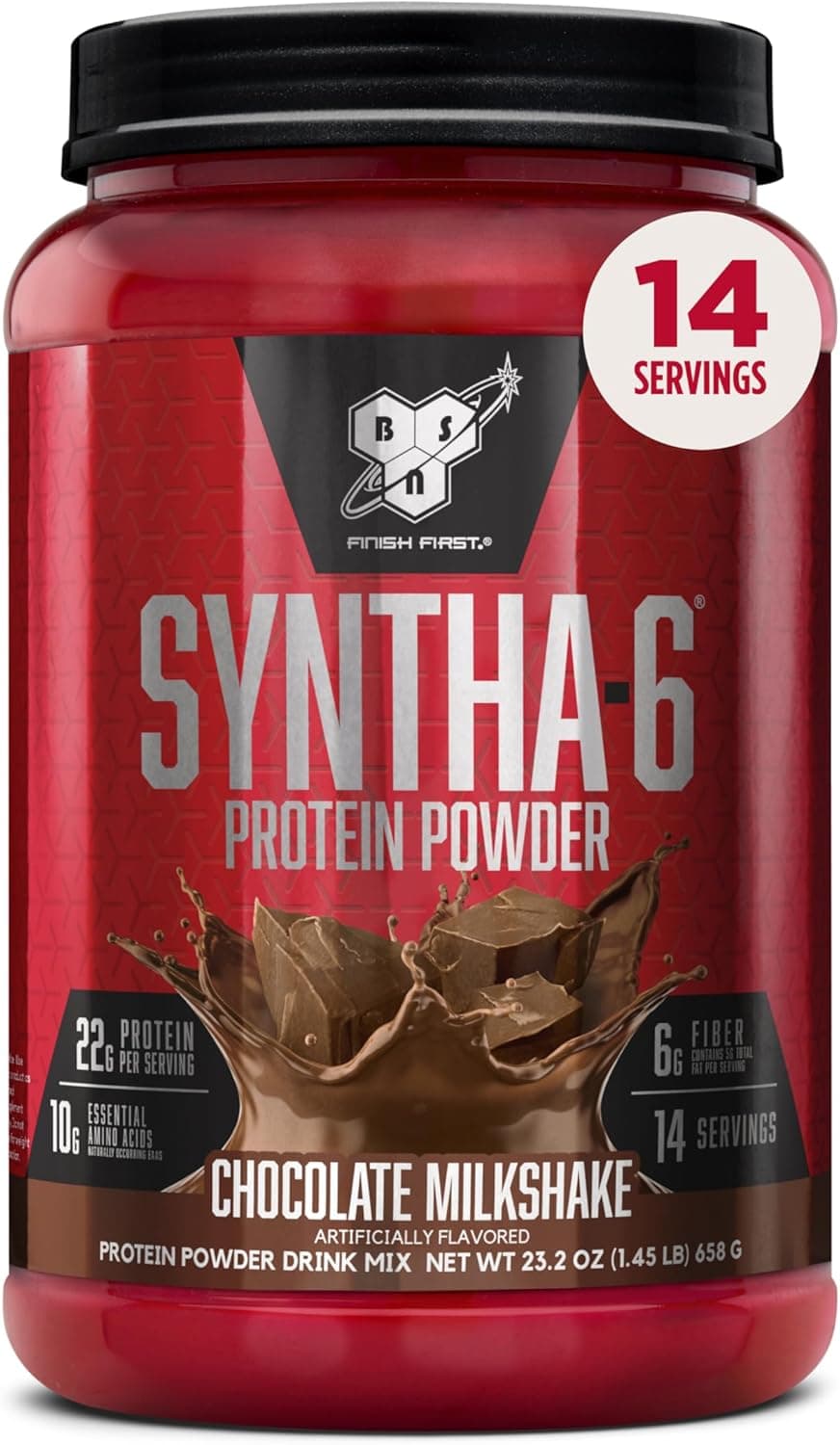
Milk Protein Hydrolysate.
Milk Protein Hydrolysate supplementation for targeted health support. Provides milk amino acids in pre-digested form. Faster absorption for sports nutrition. Reduced allergenicity for sensitive individuals. Same nutritional value as intact protein.
Reviewed March 2026
- Category
- Protein
What Milk Protein Hydrolysate is, and what it does.
- Does it work
- Useful for specific situations: post-workout rapid absorption, dairy sensitivity (not severe allergy), or digestive issues with intact protein. Not necessary for most people.
- How much to take
- 20-40g protein equivalent, same as regular protein. Timing matters more than dose for the absorption advantage.
- Time to feel it
- Amino acids appear in blood within about half an hour, sooner than from intact casein. The training payoff builds over weeks of hitting your daily protein target.
- The first dose
- Faster amino acid availability post-workout. Possible easier digestion.
- With regular use
- Same benefits as any quality protein source.
- How well tolerated
- Good. Some may still react if truly dairy allergic. Bitter taste is main issue.
- How it feels
- Absorbs faster but otherwise similar to regular protein.
- The overlooked benefit
- Casein hydrolysis frees phosphopeptides that hold calcium, magnesium, zinc and iron in soluble form in the lower small intestine, where minerals would otherwise drop out.
5 to 20g a day is where Milk Protein Hydrolysate works.
Source: Koopman et al., Am J Clin Nutr, 2009; Pennings et al., J Nutr, 2011
The proof, claim by claim.
These words describe the research, not the molecule's worth. Research strength is how much work stands behind one claim, and it is never a product score.
- Faster absorptionAmino acid kinetics studies
- Reduced allergenicityInfant formula research
- Better for muscle buildingSpeed may or may not improve outcomes
- Well tolerated in consumptionExtensive use in formulas and sports nutrition
Questions people ask about Milk Protein Hydrolysate.
- Is it better than regular whey?
- Faster absorption, yes. Better for muscle building? Probably the same end result. The speed advantage matters most around workouts.
- Can I use it if I'm lactose intolerant?
- Protein hydrolysates have minimal lactose. Should be fine for most lactose-intolerant people. But not guaranteed lactose-free.
- Why does it taste bitter?
- Hydrolysis creates small peptides, some of which taste bitter. It's a trade-off for faster absorption. Flavored products mask this.
- Is it hypoallergenic?
- Reduced allergenicity, not hypoallergenic. Severely dairy-allergic individuals may still react. Extensively hydrolyzed infant formulas are different from sports hydrolysates.
- When should I take it?
- Post-workout is where the fast absorption matters most. The timing advantage is less relevant at other times.
Why these belong in the same formula. Each row says what the basis is, from settled biochemistry through to a trial that measured the pair.
Milk protein hydrolysate is already leucine-rich and absorbs quickly, and free leucine is the amino acid that switches on the mTORC1 signal. Added leucine lifts a smaller protein dose over the threshold that triggers synthesis.
Hydrolysis pre-cleaves peptide bonds so di- and tripeptides cross the gut wall faster than intact whey. Blending the two gives an early aminoacidemia peak plus a longer tail from the intact protein.
Casein clots in the stomach and releases amino acids slowly, the opposite kinetics to a hydrolysate. Combining them covers both the immediate rise and the sustained supply of circulating amino acids.
Creatine uptake into muscle is insulin-responsive, and a rapidly absorbed protein raises insulin alongside amino acid delivery. Recovery products pair the two on that transport rationale.
Milk proteins carry casein phosphopeptides that keep calcium soluble in the distal small intestine, where pH would otherwise precipitate it. The protein and the mineral travel together in the natural dairy matrix for that reason.
Vitamin D drives the calbindin machinery that moves calcium across the intestinal wall, and dairy protein delivers both calcium and amino acids for tissue. Fortified dairy pairs them because the two act on the same downstream tissues.
Milk proteins, especially casein fractions, bind catechins through hydrogen bonding and hydrophobic contacts, lowering the free polyphenol available for uptake. Taking a catechin extract in a milk protein matrix reduces how much circulates.
Calcium carried with milk protein competes with non-heme iron at the enterocyte, and casein phosphopeptides bind iron in the lumen. An iron dose taken with dairy protein is absorbed less well than one taken apart from it.
The calcium load that travels with milk protein competes with zinc for shared divalent cation transport at the brush border. Separating the zinc dose from a dairy protein serving avoids the overlap.
Every transamination step that moves the amino groups from absorbed peptides runs on pyridoxal-5-phosphate. A larger protein load therefore leans on B6 status rather than the other way round. This is settled biochemistry, not a tested supplement pair.
Dairy protein is methionine rich, and methionine catabolism passes through homocysteine, which is remethylated using a methyl group carried by 5-methyltetrahydrofolate. Folate status therefore shapes how a methionine load is handled. Homocysteine is a marker, and this row is about pathway capacity rather than any endpoint.
Methionine synthase needs methylcobalamin to transfer the folate-borne methyl group onto homocysteine. Without it the folate route stalls regardless of folate intake. The relevance to a hydrolysate is simply the size of the methionine load being processed.
Betaine donates a methyl group to homocysteine through betaine-homocysteine methyltransferase, a route parallel to the folate one and concentrated in liver and kidney. It gives a second lane for handling the methionine that a dairy hydrolysate delivers. The readout is a plasma marker.
The sulfur released from methionine and cysteine ends up as sulfite, and sulfite oxidase, a molybdenum-dependent enzyme, carries it to sulfate for excretion. A sulfur-amino-acid-rich protein therefore engages this step. Ordinary diets supply molybdenum, so this is pathway context rather than a supplement recommendation.
Dairy proteins are already lysine rich, which is why they complement cereal proteins that are not. Adding free lysine to a milk hydrolysate adds little to the profile and mainly shifts the free amino acid load. Worth naming so the pairing is understood as redundant rather than synergistic.
A small fraction of leucine is converted to beta-hydroxy-beta-methylbutyrate, so a leucine-rich hydrolysate feeds the same pathway HMB supplies directly. The two therefore overlap in part rather than acting independently. Combination trials in this exact pair are not in the candidate set.
Glutamine is the preferred fuel of the small-intestinal mucosa that does the absorbing, and hydrolysates are often used precisely where mucosal handling is the limiting step. The pairing is common in clinical nutrition formulas. Support is mechanistic rather than a head-to-head trial.
Muscle carnosine synthesis is limited by beta-alanine, while the histidine half comes from dietary protein such as a dairy hydrolysate. The two supply different halves of the same dipeptide. Carnosine content is a tissue marker.
A hydrolysate arrives with many peptide bonds already broken, so an added protease has less work to do than it would with an intact protein. That is the honest framing: the pairing is less useful here than with a whole protein, not more. It is worth stating because the two are often sold together.
Trypsin and chymotrypsin cleave at residues a manufacturer's protease has often already cut, so the incremental effect on a hydrolysate is small. Where pancreatic output is low, a pre-cleaved protein is the reason hydrolysates are used at all. This is a mechanistic relationship, not a measured combination.
Hydrolysis cleaves peptide bonds and leaves the carbohydrate fraction alone, so a milk protein hydrolysate can still carry residual lactose depending on the upstream fraction used. Anyone reacting to lactose rather than to the protein gains nothing from the hydrolysis step. Lactase addresses that separate fraction.
Proanthocyanidins complex with milk peptides much as tannins do, which changes mouthfeel and can lower the measured free polyphenol content of the drink. The physiological consequence is unclear. The formulation consequence is not. Keep them in separate servings if the polyphenol is the point.
Casein hydrolysis releases phosphoserine-rich peptides that hold divalent and trivalent cations in solution at the near-neutral pH of the distal small intestine, where iron would otherwise precipitate. That is the accepted route by which dairy peptides can favour mineral uptake. Reported as absorption markers rather than as iron status outcomes.
The same casein phosphopeptide fraction that holds calcium in solution also binds magnesium and zinc. Whether this changes net magnesium absorption in a normal diet is not settled. The mechanism is well described. The magnitude is not.
Peptides that escape absorption reach the colon and become nitrogen substrate for resident bacteria, so protein form shapes the microbial environment a probiotic lands in. A preclinical report describes microbiota changes with milk protein hydrolysate in an undernutrition model. Microbiota composition is a marker, and the finding is not human evidence.
Lactoferrin is a minor whey protein kept intact for its iron-binding and structural properties, the opposite processing goal from a hydrolysate. Formulas that carry both are pairing a cleaved bulk protein with an intact functional one. No combination data supports an added effect.
Colostrum contributes immunoglobulins and growth factors that depend on remaining intact, whereas a hydrolysate is defined by having been cut. Stacking them adds dairy protein and duplicates part of the amino acid profile. The pairing is formulation practice, not a tested synergy.
Nothing specific on file for Milk Protein Hydrolysate. Match the label to the daily amount above, and tell your doctor what you take.
Not medical advice. Show the label to your pharmacist.What Milk Protein Hydrolysate actually does.
Hydrolysis just means proteases have cut peptide bonds, and the degree of hydrolysis tells you what share of those bonds got cut. Partially and extensively hydrolysed protein differ in peptide chain length, not in which amino acids are present.
Two and three amino acid chunks cross the gut lining whole on PepT1, a proton-driven peptide transporter separate from the sodium-driven amino acid carriers. That's why a hydrolysate and a free amino acid mix don't compete for the same door.
Hydrolysis exposes greasy amino acid side chains that taste bitter, and that's the practical ceiling on how far you can push it in a flavoured product.
Cutting up casein releases phosphopeptides carrying clusters of phosphoserine, and those keep calcium, magnesium, zinc and iron dissolved at the near-neutral pH of the lower small intestine.
Where Milk Protein Hydrolysate comes from.
It starts as cow's milk. The protein is separated out, then enzymes cut it into short pieces the way digestion would, and the mixture is filtered, debittered and dried into powder. How far the cutting goes is the main thing that separates one hydrolysate from another.
Made from an animal material. Species and tissue are the things worth knowing, and both belong on a label.
Starting material is either skim milk for total milk protein and casein, or the whey stream left after cheese or casein manufacture.
Microfiltration and ultrafiltration separate casein from whey and concentrate the protein while lactose and minerals pass into the permeate.
Food-grade proteases of microbial, plant or animal origin are held at controlled pH and temperature for a set time, then heat inactivated. The enzyme choice and the hold time set the peptide profile.
Residual large fragments are removed by ultrafiltration, and activated carbon or exopeptidase treatment reduces the bitter hydrophobic peptides.
Lots are specified on degree of hydrolysis, protein content, molecular weight distribution, residual lactose and fat, and microbial limits.
The hydrolysate is evaporated and spray dried, sometimes agglomerated or lecithinated so it wets and disperses.
Labels usually omit the degree of hydrolysis, the enzyme used, the molecular weight distribution and the residual lactose content, which are the numbers that distinguish one hydrolysate from another.
The forms it comes in.
The essence, in one line each.
- Pooled trials found milk protein supplementation associated with gains in lean body mass and small reductions in fat mass in adults.Meta-analysis. Mohammadi et al., 2025 (Nutrients). PMID 41470822 ↗
- Pooled data indicate whey protein taken alongside exercise raises muscle protein synthesis and related signalling activity in healthy adults, a mechanistic marker rather than a measured strength outcome.Meta-analysis. Ji et al., 2025 (Nutrients). PMID 40871607 ↗
- A casein-derived ACE-inhibitory peptide lowered blood pressure and shifted gut bacterial composition in adults with elevated blood pressure.Randomised trial. Li et al., 2025 (Scientific reports). PMID 40263513 ↗
- Dairy protein and collagen hydrolysate showed similar recovery of muscle function after damaging eccentric exercise, with no clear difference detected between them.Randomised trial. Barclay et al., 2024 (Nutrients). PMID 39771010 ↗
- A double-blind crossover comparison in which casein protein served as the dairy comparator against a hemp seed protein hydrolysate. The trial's own conclusion concerns the comparison between protein sources, not a benefit of milk protein itself.Randomised trial. Samsamikor et al., 2024 (The American Journal of Clinical Nutrition). PMID 38710445 ↗
- Milk protein hydrolysate intake was associated with shifts in gut bacterial composition in a protein energy undernutrition model. A compositional marker in animals, not a human outcome.Animal study. Prakash et al., 2022 (Food and Function). PMID 36125286 ↗
- A leucine-containing dipeptide added to essential amino acids supported whole-body anabolism after resistance exercise, which speaks to the peptide-versus-free-amino-acid question that hydrolysates raise.Randomised trial. Aguilera et al., 2025 (Journal of the International Society of Sports Nutrition). PMID 41321015 ↗
- A pooled review of oral protein and peptide supplementation reports modest and inconsistent effects across outcomes. Milk protein hydrolysate appears as a comparator inside the wider peptide literature rather than as the subject.Meta-analysis. Gong et al., 2026 (Nutrients). PMID 41978105 ↗
- Lipid content altered the rate at which milk proteins were broken down in a simulated gastric model, showing that meal matrix, not protein form alone, governs digestion speed.In vitro study. Mo et al., 2026 (Food Research International). PMID 42116441 ↗
- A hydrolysate-based protein complex was associated with changes in endurance and glucose handling measures in animals. Preclinical markers that do not transfer to humans.Animal study. Kurkin et al., 2026 (Nutrients). PMID 42280377 ↗
- Reviews laboratory bioactivity attributed to whey-derived peptides and concludes the work is mechanistic. The review names hydrolysates as the source of those peptides and reports no human outcome data.Systematic review. Elmas et al., 2025 (International Journal of Molecular Sciences). PMID 41226446 ↗
- A randomised controlled trial of nutritional supplements aimed at the gut barrier in adults with recurrent digestive symptoms. Milk-derived protein appears as one component of the tested formulations rather than the isolated variable.Randomised trial. van den Belt et al., 2025 (Journal of Nutritional Science). PMID 40692549 ↗
- Protein hydrolysates functioned as peptide nitrogen sources in microbial culture media, which illustrates what hydrolysis does chemically to a protein.In vitro study. Shabir et al., 2026 (BioTech). PMID 41718352 ↗
These are the studies our verdict leans on, chosen from the 1,781 we read for Milk Protein Hydrolysate. The full linked list is below.
FDA Disclaimer: These statements have not been evaluated by the Food and Drug Administration. This information is for educational purposes only and is not intended to diagnose, treat, cure, or prevent any disease. Consult your healthcare provider before starting any supplement regimen.