Natural Mixed Tocopherols.
A full-spectrum form of vitamin E that protects your cells from oxidative damage and keeps your supplement oils from going rancid. Protects cell membranes from oxidative damage and preserves oil-based supplements from going rancid
Reviewed March 2026
- Category
- Vitamin
- Also filed under
- Antioxidant protectionCardiovascular supportPreserves oil based supplement freshness
What Natural Mixed Tocopherols is, and what it does.
- Does it work
- But check if it's actually dosed therapeutically or just there as a preservative.
- How much to take
- 15-400 IU daily for health benefits. Most supplements list it as 'other ingredients' at far less than that.
- Time to feel it
- Weeks. Circulating tocopherol levels move over days to weeks of daily intake, and that shift shows on a nutrient panel rather than as a sensation.
- The first dose
- Nothing noticeable. Vitamin E works behind the scenes in your cell membranes.
- With regular use
- Potential cardiovascular and antioxidant benefits over months. Skin health improvement possible.
- How well tolerated
- Generally well tolerated. High doses may increase bleeding risk. Don't exceed 1,000 IU daily. Interacts with blood thinners.
- How it feels
- Subtle to nonexistent. Most people don't feel vitamin E working. It's a long-term cellular protector.
- The overlooked benefit
- The gamma form it carries is the one that steady high-dose alpha-tocopherol tends to push out, and the same molecules keep the oils beside them in a softgel from oxidising.
15 to 400 IU a day is where Natural Mixed Tocopherols works.
Source: NIH Office of Dietary Supplements
The proof, claim by claim.
These words describe the research, not the molecule's worth. Research strength is how much work stands behind one claim, and it is never a product score.
- Antioxidant cell protectionNIH Office of Dietary Supplements
- Cardiovascular benefitHOPE, ATBC trials showed conflicting results
- Cancer preventionSELECT trial showed no benefit, possible prostate risk at high doses
Questions people ask about Natural Mixed Tocopherols.
- Is this the active ingredient or just a preservative?
- Check the label. If it's under 'other ingredients,' it's a preservative. Under 'supplement facts' with a dose? It's active.
- Natural vs synthetic vitamin E?
- Natural (d-alpha) is about 1.5-2x more bioactive than synthetic (dl-alpha). Look for the 'd' prefix, not 'dl'.
- Why mixed instead of just alpha?
- Gamma-tocopherol handles a type of free radical that alpha can't. The full mix provides broader protection.
- Can I take too much?
- Yes. Don't exceed 1,000 IU daily. High-dose studies have raised safety concerns.
- Should I take it with food?
- Yes. Vitamin E is fat-soluble. Taking it with a meal containing fats improves absorption significantly.
- Does cooking destroy vitamin E?
- Partially. High heat and light degrade tocopherols. That's why supplementation can make sense.
Why these belong in the same formula. Each row says what the basis is, from settled biochemistry through to a trial that measured the pair.
Ascorbate returns the tocopheryl radical to its active form at the water and lipid boundary. Without it tocopherol is consumed instead of recycled.
Tocopherol intercepts lipid radicals while selenium-dependent glutathione peroxidase clears the peroxides that form. The two handle consecutive steps.
The alpha-tocopherol fraction of a mixed tocopherol blend lowers tocotrienol uptake through the alpha-tocopherol transfer protein and shared lipoprotein transport. Tocotrienols are dosed apart from a high alpha serving.
Adding high-dose alpha-tocopherol on top of a mixed blend displaces gamma and delta tocopherol from plasma and tissue, because the transfer protein prefers alpha. Read the isomer split, not just total vitamin E.
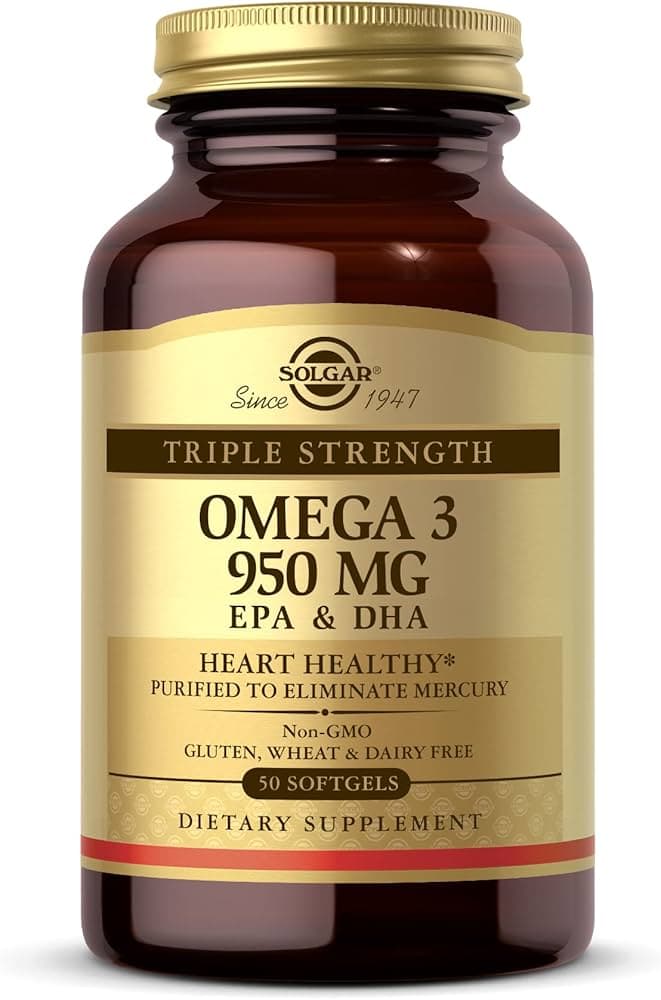
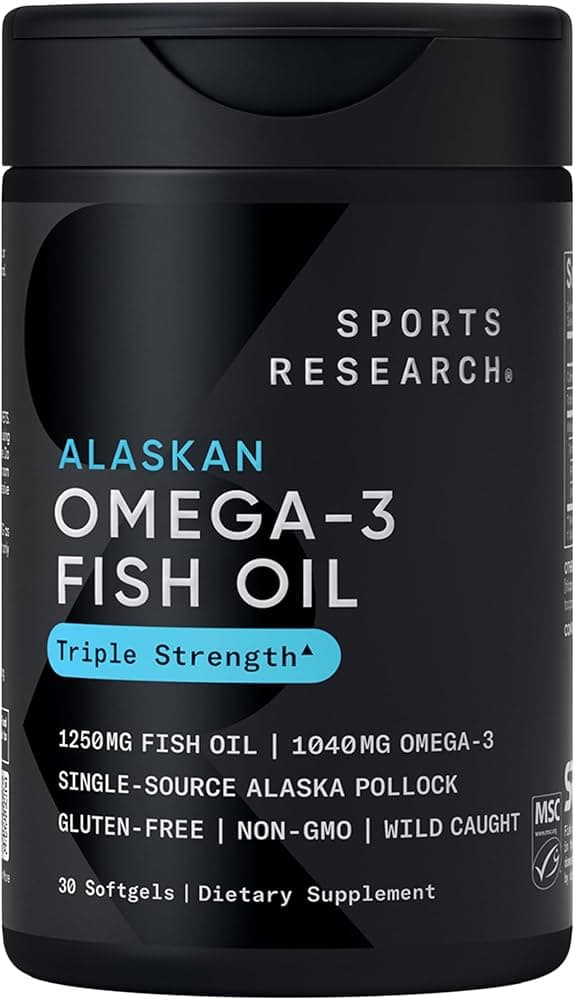
Mixed tocopherols are the standard in-oil antioxidant that keeps long-chain polyunsaturated fats from oxidising. Most fish oil softgels list them on the label for this role.
Tocopherol absorption depends on bile and dietary fat forming mixed micelles. An oil base or a fat-containing meal is what makes the dose usable.
High alpha-tocopherol intake interferes with vitamin K dependent carboxylation of clotting factors, so the two act against each other on normal clotting. Relevant when both are dosed high in one formula.
Glutathione keeps ascorbate reduced and ascorbate regenerates tocopherol, so glutathione status feeds the tocopherol cycle. The three operate as one relay.
Reduced coenzyme Q10 regenerates tocopherol inside the membrane rather than at its surface. A complementary step, not a replacement.
Dihydrolipoate regenerates ascorbate and glutathione, which in turn recycle tocopherol. The connection is real but indirect.
Free ferrous iron drives Fenton chemistry that consumes tocopherol in the same mix. High-dose iron and tocopherol are kept apart for stability.
Copper ions catalyse the breakdown of lipid hydroperoxides into radicals, and alpha-tocopherol is the chain-breaking antioxidant that stops that propagation inside the membrane. In an oil or softgel matrix the two therefore pull in opposite directions, which is why formulators keep free metal ions away from tocopherol-protected oils. This is a formulation and redox relationship, not a clinical outcome.
Retinol and its esters are oxidation-prone and travel the same fat-dependent micellar route as tocopherols. Tocopherols are routinely present alongside retinyl esters in oil-based products because they take the oxidative hit first. Both nutrients also need dietary fat and bile for uptake, so the same meal supports either one.
Beta-carotene quenches singlet oxygen and reacts with peroxyl radicals at low oxygen tension, while alpha-tocopherol donates hydrogen to peroxyl radicals in the propagation step. The two sit in the same lipid phase and cover different parts of the same chain reaction. Carotenoid uptake also depends on the same fat and bile requirement.
Lycopene is an acyclic carotenoid with no provitamin A activity that partitions into the same lipid core as tocopherols. Both need dietary fat to form mixed micelles, so they are commonly delivered together in an oil carrier. High single-carotenoid loads can crowd micellar uptake, which is worth noting when several fat-soluble actives share one softgel.
Lutein, tocopherols and the other fat-soluble actives are all carried in mixed micelles and then on lipoproteins, and that capacity is finite at a single dose. Large amounts of one fat-soluble compound can reduce the fraction of another taken up from the same meal. Splitting them across meals is the usual practical answer.
Cholecalciferol needs dietary fat, bile salts and an intact micellar phase to be absorbed, exactly as tocopherols do. It is also oxidation-sensitive, so tocopherols are frequently the antioxidant present in a vitamin D oil concentrate. The relationship supports delivery of normal vitamin D status rather than adding a separate effect.
Large alpha-tocopherol intakes have long been described as interfering with vitamin K dependent carboxylation of clotting factors, which is why vitamin K status is the thing to keep in view at high doses. Phylloquinone shares the same fat-dependent absorption route as well. Anyone on medication that affects clotting should raise this with a clinician before combining them.
Rosemary extract contributes carnosic acid and carnosol, phenolic antioxidants that act partly by regenerating the tocopheroxyl radical and partly by chelating pro-oxidant metals. The pair is a standard combination for stabilising polyunsaturated oils. This is a stability relationship in the product, not a physiological claim.
Every additional double bond in a fatty acid raises its susceptibility to peroxidation, and docosahexaenoic acid carries six. Vitamin E requirement is conventionally described as scaling with polyunsaturated fat intake, which is why DHA oils are supplied with tocopherols in the bottle. The relationship protects the oil and the membrane lipid it becomes.
Eicosapentaenoic acid oxidises readily in both the container and the membrane, and alpha-tocopherol is the chain-breaking antioxidant that limits propagation. Tocopherols are therefore near-universal in EPA concentrates. Neither the dose of one nor the other changes the other's own function.
Linoleic acid is the dominant polyunsaturated fatty acid in the vegetable oils that mixed tocopherols are themselves recovered from, and the two travel together naturally. Tocopherol content in an oil tracks broadly with its unsaturation for this reason. Refining strips both, which is why tocopherols are often added back.
Lecithin phospholipids emulsify oil into finer droplets, which increases the surface available for lipase and bile salt action on a tocopherol-containing oil. The same phospholipids are themselves peroxidation targets that tocopherols protect. The pairing is about dispersion and stability rather than a new physiological effect.
Astaxanthin's polar end groups let it sit across the bilayer while alpha-tocopherol's chromanol head stays at the water interface, so the two occupy different positions in the same membrane. Laboratory work describes complementary radical handling between carotenoids and tocopherols. Human outcome data for the combination is not what is being claimed here.
Squalane is fully saturated and so contributes no double bonds of its own for peroxidation, which makes it a stable carrier for tocopherols in topical and oil-phase products. Tocopherols in turn protect any residual unsaturated lipid in the same phase. This is a delivery-vehicle relationship.
Talk to a doctor before taking Natural Mixed Tocopherols if any of these apply to you: May interact with blood thinners, High doses linked to increased bleeding risk, Often present only as preservative, not therapeutic dose. These are flags to check first, not effects Natural Mixed Tocopherols is known to cause.
Not medical advice. Show the label to your pharmacist.What Natural Mixed Tocopherols actually does.
Vitamin E stops the chain reaction that turns fats rancid, inside cell membranes as well as in the bottle.
Vitamin C hands vitamin E back its missing electron, so the same vitamin E molecule can work again.
Take it with a meal that contains fat, otherwise much of it is not absorbed.
The liver sorts the four vitamin E forms and keeps the alpha form in circulation, so blood levels mostly reflect alpha-tocopherol whatever the mix in the capsule.
Where Natural Mixed Tocopherols comes from.
It is a by-product of making cooking oil. When vegetable oil is deodorised, the vitamin E comes off in the vapour, and that stream is collected, cleaned up and concentrated. Which crop it came from decides the mix of the four vitamin E forms you end up with.
Made from a plant. What ends up in the capsule tracks the harvest, so batch testing and a stated marker matter more here than with a made molecule.
Commercial mixed tocopherols come from oilseed crops, most often soybean, with sunflower, rapeseed and corn also used. The homologue ratio in the finished material follows the crop: soybean oil distillate is gamma-dominant, sunflower is alpha-dominant.
Tocopherols are not extracted from the seed directly. They concentrate in the vapour stream removed during the deodorising step of edible oil refining, and that distillate is collected as the starting material.
The distillate also carries free fatty acids, sterols and sterol esters. These are esterified or saponified and the sterol fraction is crystallised out, since plant sterols are a co-product of the same stream.
Short-path or molecular distillation under high vacuum raises total tocopherol content while keeping heat exposure brief, because the molecules degrade at the temperatures ordinary distillation would need. Ion exchange or chromatographic polishing may follow.
For acetate or succinate grades the chromanol hydroxyl is esterified. For alpha-enriched natural grades, gamma and delta tocopherols can be methylated to alpha, which changes the homologue profile of the material without leaving the RRR configuration.
Material is assayed by HPLC for each homologue and standardised in a carrier oil to a declared total tocopherol or alpha-tocopherol figure. Peroxide value and acid value are the usual quality checks alongside.
The concentrate is filled into softgels, dosed into oil blends as an antioxidant, or encapsulated into a beadlet for dry formats. Nitrogen headspace and light-protective packaging are standard because the material is sacrificial by design.
Labels frequently say mixed tocopherols without naming the oil crop, which is the piece that determines the homologue ratio and matters to anyone avoiding soy-derived material. Whether the alpha fraction was enriched by methylation is also rarely stated.
Getting Natural Mixed Tocopherols from food.
The whole-food sources on file. A supplement closes the gap, it does not replace dinner.
A gram-for-gram figure (how much of each you would eat to match a dose) will appear here once it is sourced and reviewed. This page will not print a number it cannot cite.
The forms it comes in.
The essence, in one line each.
- Adding antioxidative substances, tocopherols among them, was reported to improve micronutrient retention and measured antioxidative capacity in rapeseed oil. These are food-matrix measurements, not human outcomes.In vitro study. Liu F et al., 2025 (Foods). PMID 41300065 ↗
- A compositional review describes sea buckthorn oil and its processing by-products as carrying tocopherols alongside their fatty acid profile, characterising raw-material composition rather than measuring an effect in people.Narrative review. Jiang X et al., 2026 (Foods). PMID 42279660 ↗
- A scoping review of rodent studies maps how vitamin E forms were tested in intestinal tissue models and reports that dosing, form and endpoints varied widely across the studies, so the body of work is preclinical and does not support inference to people.Systematic review. Mohd Murshid N et al., 2026 (Nutrients). PMID 41599900 ↗
These are the studies our verdict leans on, chosen from the 3 we read for Natural Mixed Tocopherols. The full linked list is below.
FDA Disclaimer: These statements have not been evaluated by the Food and Drug Administration. This information is for educational purposes only and is not intended to diagnose, treat, cure, or prevent any disease. Consult your healthcare provider before starting any supplement regimen.