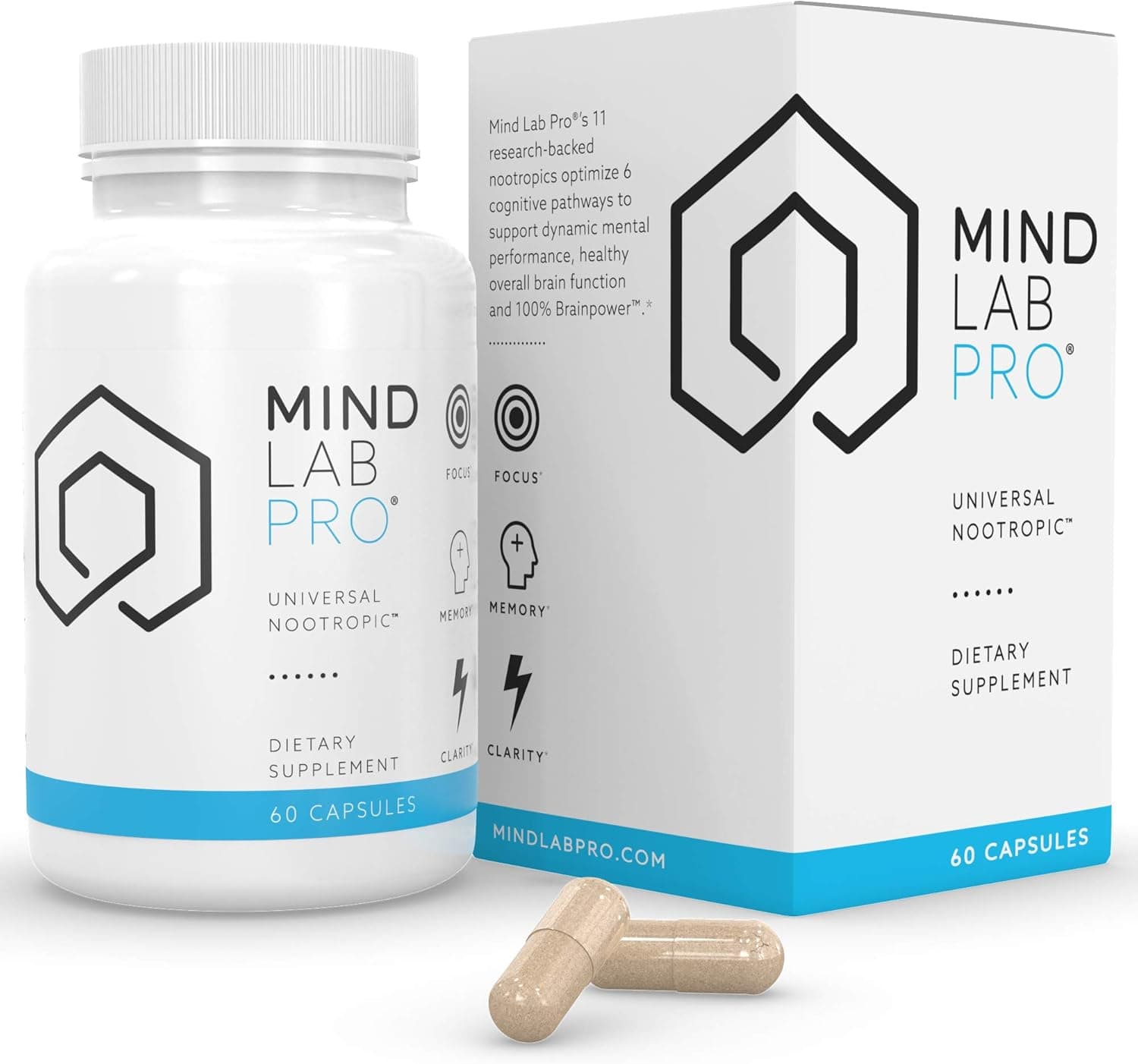
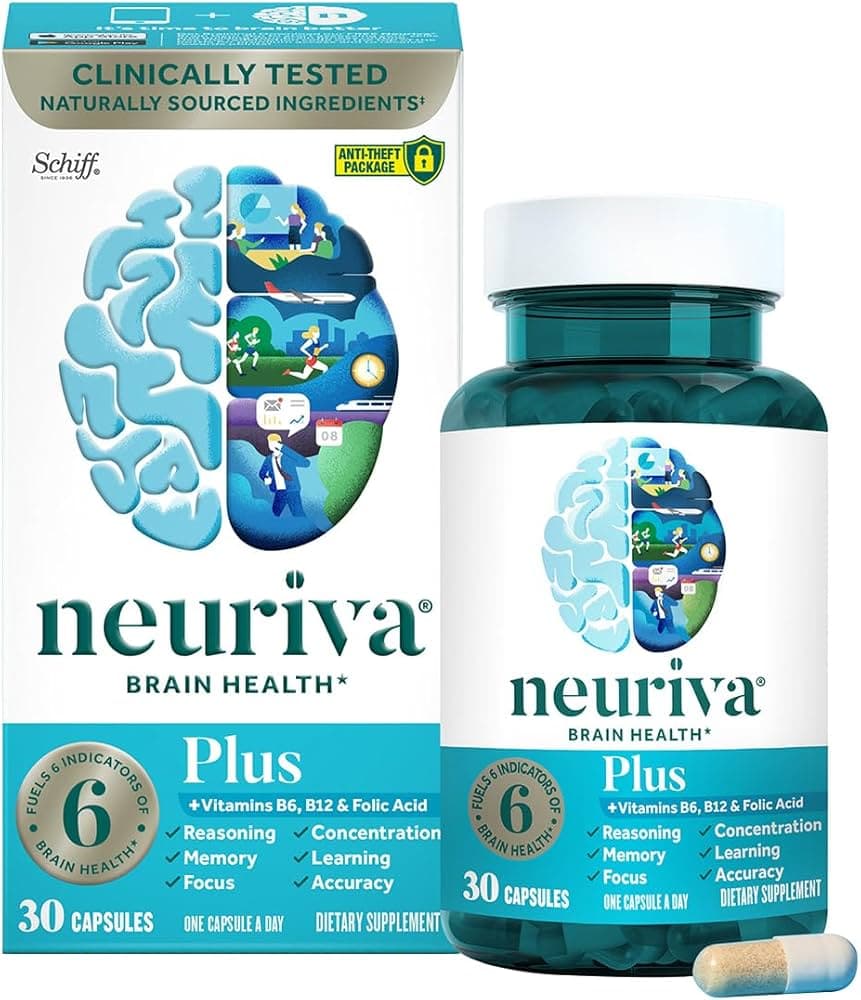
Phosphatidylserine.
May subtly sharpen focus and reduce stress under pressure. It's a key building block for your brain cell membranes. Helps keep them fluid and communicating properly. Can also help lower cortisol, the main stress hormone.
Reviewed March 2026
- Category
- Fatty acid
- Also filed under
- Cognitive functionStress reductionMemory support
What Phosphatidylserine is, and what it does.
- Does it work
- Suits older adults wanting recall support and hard-training athletes watching their stress hormone response. Give it a couple of months, since the readout builds slowly.
- How much to take
- 100-300mg per day. Start with 100mg and see how you feel. The data on higher doses for stress is interesting but less common in supplements.
- Time to feel it
- Tested out to 30 weeks of daily use.
- The first dose
- Nothing. This isn't a stimulant. It needs to build up in your system over time.
- With regular use
- After 3-4 weeks, you might feel a bit more resilient to stress or notice slightly better recall. The effect is mild, not dramatic.
- How well tolerated
- Generally well tolerated. It's a natural part of your cells. The main caution is for people on blood thinners.
- How it feels
- A slight calming effect or a feeling of being less frazzled. It’s a background helper, not a foreground 'kick'.
- The overlooked benefit
- The cortisol findings came from studies around hard exercise rather than desk stress, so heavy training is the setting where that measured effect has been recorded.
100 to 300mg a day is where Phosphatidylserine works.
Source: Kato-Kataoka 2010 + Glade 2015 cognitive review
Phosphatidylserine with DHA was safe and well tolerated in a double-blind placebo-controlled trial of 157 non-demented elderly adults at 300 mg per day for 15 weeks, and at 100 mg per day through a 30-week open-label extension.
The proof, claim by claim.
These words describe the research, not the molecule's worth. Research strength is how much work stands behind one claim, and it is never a product score.
While some studies show benefits, particularly for cognitive function and stress response, other studies show minimal to no effect. The inconsistency in results and the subtle nature of the effects contribute to the moderate consensus.
- Improves memory and cognitive function in elderly individualsSystematic reviews of multiple RCTs
- Blunts cortisol response to acute physical stressSeveral RCTs (n=9 to n=75)
- Reduces ADHD symptoms in childrenMeta-analysis of 6 RCTs
Questions people ask about Phosphatidylserine.
- Is this a stimulant?
- No. It works by supporting brain cell structure, not by revving up your nervous system. Don't expect a caffeine buzz.
- Does it work for everyone?
- Nope. The effects are subtle and highly individual. Some people notice a clear benefit, others feel nothing at all.
- Soy or sunflower derived - which is better?
- Both work. Sunflower is the choice for people with soy allergies. Otherwise, they're functionally identical.
- Can I take it with food?
- Yes. With or without food is fine. It's a fat-soluble compound, so taking it with a meal containing some fat might help absorption.
- Is this related to the old 'mad cow disease' scare?
- Good question. It used to be derived from cow brains, but that stopped years ago for safety. All modern PS is from soy or sunflower.
- How long until I know if it's working?
- Give it a solid month. If you don't notice any difference in stress or focus after 4-6 weeks, it's probably not for you.
Why these belong in the same formula. Each row says what the basis is, from settled biochemistry through to a trial that measured the pair.
Brain phosphatidylserine carries a high share of DHA within its structure, and DHA supply drives the synthesis and membrane accumulation of phosphatidylserine in nerve cells. Taking the two together gives the body both the phospholipid and the fatty acid it preferentially builds into that phospholipid.
Both are phospholipid-derived compounds that feed cholinergic signaling from different sides: alpha-GPC supplies the choline used to make acetylcholine, while phosphatidylserine sits in the neuronal membrane and helps modulate the release of neurotransmitters including acetylcholine. This is why the two are often formulated together for memory and focus support.
Mammalian cells make phosphatidylserine by swapping the head group of phosphatidylcholine or phosphatidylethanolamine for serine. Phosphatidylcholine is therefore the direct backbone donor for phosphatidylserine synthesis.
The serine in phosphatidylserine comes from free L-serine through the base exchange reaction. Supplying serine feeds the exact substrate the synthase needs.
Phosphatidylserine is decarboxylated in mitochondria to phosphatidylethanolamine, which is then methylated toward phosphatidylcholine. Choline supply keeps that loop from draining one pool to fill another.
Brain phosphatidylserine is unusually rich in long chain omega-3 acyl chains, and those chains come from dietary EPA and DHA. Head group and fatty acid are the two halves of the same molecule.
Krill oil supplies omega-3 fatty acids already esterified to phospholipids, including serine-containing species. It overlaps with phosphatidylserine on both the head group and the acyl chain.
Serine phospholipids carry highly unsaturated fatty acids that oxidise readily during storage and in the membrane. Tocopherol in the same lipid phase interrupts that peroxidation chain.
Commercial phosphatidylserine is made by enzymatic base exchange on soy or sunflower lecithin. The two share the same phospholipid backbone and are often present together in a finished blend.
The route from phosphatidylethanolamine back to phosphatidylcholine needs S-adenosylmethionine, and B12 keeps methionine regenerating. Steady methyl supply keeps the phospholipid interconversion pathway moving.
The two are sold and studied as a pair in cognitive formulas, ginkgo for its flavone glycoside and terpene lactone content and phosphatidylserine as a membrane phospholipid. The cited paper reviews that combination rather than reporting a single controlled trial of it. Read it as support for the pairing being studied, not as an effect estimate.
The protocols tested combined all three ingredients, so any change measured belongs to the blend and cannot be assigned to phosphatidylserine or taurine alone. That is a real limitation of multi-ingredient designs and it is the honest reading here. It does establish that the pairing is a studied one.
Caffeine has an immediate and well-characterised effect on alertness while phosphatidylserine is a structural phospholipid with a slower rationale, which is why pre-workout and focus formulas pair them. The cited work tested them inside a blend, so attribution to either alone is not available. Marked page for that reason.
Plant sterols act in the gut lumen on cholesterol absorption while dietary phospholipids alter the lipid composition of cell membranes, and the cited work looked at the pair together on lipid measures and red cell membrane profiles. Those are markers rather than clinical endpoints. Phosphatidylserine is named inside the phospholipid category rather than isolated as the variable.
Serine headgroups carry a negative charge, and calcium ions bridge those headgroups to the C2 domains of proteins such as protein kinase C and to clotting factor complexes. This is the textbook basis for calling phosphatidylserine a signalling platform. It describes membrane chemistry, not an effect from swallowing calcium alongside a phosphatidylserine capsule.
Methionine feeds S-adenosylmethionine, the methyl donor for the PEMT pathway that converts phosphatidylethanolamine into phosphatidylcholine. Phosphatidylserine sits directly upstream through the decarboxylation step. So the three phospholipid headgroups are interconvertible along a methyl-dependent route in normal metabolism.
Phosphatidylserine decarboxylase makes phosphatidylethanolamine, and PEMT then adds three methyl groups from S-adenosylmethionine to build phosphatidylcholine. The pathway consumes one-carbon units, which links phospholipid headgroup handling to methylation status. A settled route rather than a tested pairing.
Methylating phosphatidylethanolamine to phosphatidylcholine is one of the larger consumers of methyl groups in the body, and folate keeps methionine regenerated so that consumption can continue. Phosphatidylserine feeds that route through decarboxylation. The connection is upstream cofactor supply, not a measured combination effect.
An intact phosphatidylserine molecule is not absorbed whole in any meaningful quantity. Pancreatic phospholipase A2 cleaves it, and the lysophospholipid and free fatty acid are taken up and re-esterified in the enterocyte. Adequate pancreatic lipolytic activity and bile are therefore part of how any phospholipid supplement is handled. Enzyme products are the practical hook for that mechanism.
Taking a phospholipid with fat triggers bile secretion and pancreatic enzyme release, which are the conditions under which it is hydrolysed and absorbed. Medium-chain triglycerides are one common vehicle in softgels and powders for that reason. Note that MCTs themselves need less bile than long-chain fats, so the vehicle role is about formulation and meal context.
Phosphatidylserine preparations, especially those enriched with docosahexaenoic acid, carry oxidisable double bonds. Lipid-soluble antioxidants such as astaxanthin partition into the same lipid phase where that oxidation happens. The rationale is chemical and formulation-level. It is not a measured human co-supplementation outcome.
Phosphatidylserine and bacopa appear together in memory and focus formulas, one as a membrane phospholipid and the other as a standardised bacoside extract. The pairing rests on each ingredient's own literature rather than on any study of the two together. Marked Early and page because that is exactly what the grounding supports.
Talk to a doctor before taking Phosphatidylserine if any of these apply to you: Blood thinners, Pregnancy, Breastfeeding, Children (consult a pediatrician). These are flags to check first, not effects Phosphatidylserine is known to cause.
Not medical advice. Show the label to your pharmacist.What Phosphatidylserine actually does.
Phosphatidylserine is a negatively charged phospholipid that sits mostly on the inner face of your cell membranes, where its serine head group sets the local surface charge.
That negative surface charge pulls in and switches on proteins carrying basic or C2 domains, including protein kinase C and Akt. That's the structural reason people call phosphatidylserine a signalling platform.
The lopsided arrangement is held in place by flippase enzymes that spend ATP, and when phosphatidylserine shows up on the outer face it acts as a recognition tag that scavenger receptors read during normal cell turnover.
An enzyme called phosphatidylserine decarboxylase converts phosphatidylserine into phosphatidylethanolamine, which S-adenosylmethionine can then methylate three times to give phosphatidylcholine, so the three head groups can be converted into one another.
Where Phosphatidylserine comes from.
It starts as lecithin, the fatty material left over from refining soy or sunflower oil. An enzyme swaps one small chemical head on that fat for the amino acid serine, which turns it into phosphatidylserine. The mixture is then cleaned up, checked for how much of the finished lipid it contains, and dried onto a carrier powder. The old version made from cow brain is not sold any more.
The same molecule is reached more than one way. Which route a given product used is a manufacturing choice, and the finished compound is the same either way.
Crude lecithin recovered from soybean or sunflower oil degumming, a phospholipid mixture that is mostly phosphatidylcholine, phosphatidylethanolamine and phosphatidylinositol.
The amino acid supplying the new headgroup, itself usually produced by microbial fermentation of a sugar substrate.
Microbial phospholipase D, typically of Streptomyces origin, is run in a two-phase system with excess L-serine so that the choline headgroup of phosphatidylcholine is transferred out and serine is installed. This is the enzymatic step the legacy note refers to.
The reaction mixture is partitioned and washed to separate the serine-headed phospholipid from unreacted phosphatidylcholine, released choline, residual enzyme and salts.
Column or solvent fractionation raises the phosphatidylserine share. The balance is other phospholipids and neutral lipids, which is why an assay percentage rather than a mass alone defines the material.
Batches are standardised to a stated phosphatidylserine content, commonly on a maltodextrin or lecithin carrier, and residual solvent and oxidation markers are tested.
The purified lipid is dried onto a carrier or converted to the sodium salt powder for capsules, tablets and sachets, with oxygen-barrier packaging because the acyl chains are unsaturated.
Labels often omit the assay percentage behind the stated milligrams, the lecithin source when it is not being marketed as soy-free, and whether the powder is carrier-diluted.
Getting Phosphatidylserine from food.
The whole-food sources on file. A supplement closes the gap, it does not replace dinner.
A gram-for-gram figure (how much of each you would eat to match a dose) will appear here once it is sourced and reviewed. This page will not print a number it cannot cite.
The forms it comes in.
The essence, in one line each.
- Pooling three trials in children, 200 to 300 mg a day produced a small improvement in attention ratings versus placebo (effect size 0.36), while overall and hyperactivity measures did not reach significance.Systematic review and meta-analysis. Bruton et al., 2021 (Journal of Alternative and Complementary Medicine). PMID 33539192 ↗
- Over 15 weeks, older adults with memory complaints taking phosphatidylserine bound to omega-3 improved immediate verbal recall compared with placebo, in a trial of 157 participants.Randomised trial. Vakhapova et al., 2010 (Dementia and Geriatric Cognitive Disorders). PMID 20523044 ↗
- In a crossover trial of ten healthy men, 600 mg a day for ten days lowered the peak cortisol rise from moderate cycling by about 39 percent versus placebo.Randomised trial. Starks et al., 2008 (Journal of the International Society of Sports Nutrition). PMID 18662395 ↗
- Sunflower-derived phosphatidylserine was tested for cognitive performance in healthy children aged 8 to 12, with effects limited to specific test measures rather than across the board.Randomised trial. Friling et al., 2025 (Nutrition Journal). PMID 41318468 ↗
- Oral phosphatidylserine was reported to change vascular function measures in adults with high blood sugar. These are vascular markers rather than clinical events.Randomised trial. McMillan et al., 2026 (Journal of Applied Physiology). PMID 42312814 ↗
- The review pooled trials of phosphatidylserine on behaviour rating scores in children assessed for attention and behaviour difficulties, and the authors note the small number and modest size of the included studies.Systematic review. Shen et al., 2026 (Frontiers in Psychiatry). PMID 41960234 ↗
- A review of antioxidant-type interventions in children and adolescents that names phosphatidylserine among the agents covered. It does not isolate phosphatidylserine as its own effect estimate.Systematic review. Zhou et al., 2024 (PLoS One). PMID 38547138 ↗
- A narrative review of phospholipids as dietary agents, describing their membrane and signalling roles. Phosphatidylserine is named within the phospholipid class rather than assessed alone.Narrative review. Kang et al., 2027 (Nutrition). PMID 42425817 ↗
- A narrative review of dietary approaches discussed in relation to restful sleep that names phosphatidylserine among the components covered. Narrative synthesis, not a trial of phosphatidylserine.Narrative review. Conti et al., 2026 (Nutrition Reviews). PMID 40418260 ↗
- Dietary phosphatidylserine altered growth, lipid metabolism and antioxidant capacity measures in an animal feeding study. Animal data, and not evidence of a human effect.Animal study. Chen et al., 2026 (Comparative Biochemistry and Physiology Part B). PMID 41638302 ↗
- In a preclinical model of restricted cardiac blood flow, phosphatidylserine supplementation was reported to reduce the extent of tissue injury and limit adverse remodelling measures. Preclinical only.Animal study. Schumacher et al., 2021 (International Journal of Molecular Sciences). PMID 33922385 ↗
These are the studies our verdict leans on, chosen from the 21,294 we read for Phosphatidylserine. The full linked list is below.
The studies, linked.
8 sources behind our Phosphatidylserine verdict: peer-reviewed studies and registered clinical trials. Every one links straight to PubMed, the journal, or ClinicalTrials.gov. Read them yourself.
- Clinical trialA Single-Center, Randomized, Double-Blind, Placebo-Controlled Study to Assess the Efficacy of Phosphatidylserine-Omega3 in Elderly With Age Associated Memory ImpairmentClinicalTrials.gov ↗Phase 4, 157 participants, Completed
- Clinical trialDose-Dependent Effects of Multi-Ingredient Supplementation on Physical Performance, Recovery, and Cognitive Function in Professional Football PlayersClinicalTrials.gov ↗97 participants, Completed
- Clinical trialEffects of Combined Taurine, Caffeine, and Phosphatidylserine Supplementation on Physical and Cognitive Performance in Professional Male Football PlayersClinicalTrials.gov ↗81 participants, Completed
- Clinical trialNeurocognitive Fatigue Resistance, Visual Search Efficiency, and Tactical Decision-Making After Phosphatidylserine-Containing Taurine-Caffeine Supplementation in Professional Male Football PlayersClinicalTrials.gov ↗65 participants, Completed
- Clinical trialDifferential Cognitive Effects of DHA-Enriched and Standard Phosphatidylserine Formulations in Children With ADHD: A Randomized Placebo-Controlled TrialClinicalTrials.gov ↗45 participants, Completed
- Clinical trialA Multicenter, Open-Label Safety and Pharmacokinetics Study of Chimeric Anti-Phosphatidylserine Monoclonal Antibody (Bavituximab) in Patients With Refractory Advanced Solid Tumor MalignanciesClinicalTrials.gov ↗Phase 1, 28 participants, Completed
- Clinical trialA Phase I Study of the Phosphatidylserine-Targeting Antibody Bavituximab in Combination With Capecitabine and Radiation Therapy for the Treatment of Stage II and III Rectal AdenocarcinomaClinicalTrials.gov ↗Phase 1, 15 participants, Completed
- Clinical trialExternal Validation and Extension of Physical, Recovery, and Perceptual-Cognitive Responder Profiles After Phosphatidylserine-Containing Taurine-Caffeine Supplementation in Professional Football Players: A Randomized, Double-Blind, Placebo-Controlled TrialClinicalTrials.gov ↗65 participants, Recruiting
Evidence surfaced via Semantic Scholar (Allen Institute for AI) and ClinicalTrials.gov. Ranked by study type and citation weight, not cherry-picked.
Problems people have reported.
Read this carefully. These are 225 voluntary, unverified reactions reported to the FDA (openFDA). The number mostly reflects how popular Phosphatidylserine is, not how risky it is. A report is not proof Phosphatidylserine caused anything. It is a signal of what to watch for, nothing more.
Source: openFDA adverse-event reports. Voluntary reporting, not an incidence rate.
FDA Disclaimer: These statements have not been evaluated by the Food and Drug Administration. This information is for educational purposes only and is not intended to diagnose, treat, cure, or prevent any disease. Consult your healthcare provider before starting any supplement regimen.