Phospholipids.
Supports cell structure and brain health. They form the outer layer of all your cells. Think of them as the gatekeepers. Especially important for brain cells and liver function.
Reviewed March 2026
- Category
- Fatty acid
- Also filed under
- Supports cell membrane structure and functionMay improve liver healthPotentially enhances cognitive function
What Phospholipids is, and what it does.
- Does it work
- Maybe. If you have specific brain fog or liver health goals, it's worth considering. For general health, a good diet with eggs and fatty fish is a better start.
- How much to take
- For general support, 500mg - 1g daily. For specific goals, up to 2g. Look for products high in Phosphatidylcholine (PC) or Phosphatidylserine (PS).
- Time to feel it
- Weeks rather than days. Membrane lipids turn over slowly, so what moves first is a blood marker or a gradual steadying over one to two months of daily use.
- The first dose
- Nothing. Your cells are rebuilding, not getting a jolt of energy. Be patient.
- With regular use
- After 1-2 months, potential for better mental clarity and improved liver enzyme markers. It's a slow, structural improvement.
- How well tolerated
- Well tolerated in most people. Can cause mild GI upset at high doses. The main watch-out is for people on blood thinners.
- How it feels
- Subtle. Like your brain's operating system got a minor, stabilizing update. Not a stimulant, just potentially smoother function over time.
- The overlooked benefit
- Phosphatidylcholine from lecithin becomes a dietary source of choline once it is digested, feeding the same choline pool that most everyday diets supply sparingly.
500mg a day is where Phospholipids works.
Source: Küllenberg et al., 2012, Lipids Health Dis
The proof, claim by claim.
These words describe the research, not the molecule's worth. Research strength is how much work stands behind one claim, and it is never a product score.
While phospholipids are crucial for health, the benefits of supplementation are still being researched. Evidence suggests potential benefits for specific conditions, but more robust studies are needed.
- Cell membrane structure and bilayer formationNarrative review
- Choline supply from phosphatidylcholineNarrative review
- Emulsification of dietary fatNarrative review
- Hepatic VLDL assembly and fat exportAnimal study
- Storage and release of arachidonic acid, EPA and DHANarrative review
- Memory and cognitive measures during supplementationRandomised trial
Questions people ask about Phospholipids.
- What's the best type of phospholipid?
- Depends on your goal. Phosphatidylserine (PS) for focus. Phosphatidylcholine (PC) for liver and general brain health.
- Is soy lecithin bad for you?
- Not usually. The amount in supplements is tiny. If you have a soy allergy, choose sunflower lecithin instead.
- Can't I just get this from food?
- You can. Egg yolks and liver are great sources. But getting a targeted, therapeutic dose of a specific type like PS is tough without a supplement.
- Will this help my memory?
- It might. Phosphatidylserine (PS) in particular has some decent research for age-related cognitive decline. It's not a magic pill, though.
- When should I take it?
- With a meal. Since it's a fat, taking it with other fats improves absorption.
- Is this the same as lecithin?
- Mostly. Lecithin is a mixture of fats, and its main active components are phospholipids. Good quality lecithin is a great source.
Why these belong in the same formula. Each row says what the basis is, from settled biochemistry through to a trial that measured the pair.
Phosphatidylcholine is the dominant species in most dietary phospholipid blends, so the two overlap chemically and their intakes add together. Formulas that list both are describing one pool, not two separate ones.
Phospholipid headgroups are built from choline, and digestion of phosphatidylcholine releases choline back into circulation. The two sit on the same pathway, so phospholipid intake contributes to total choline supply.
Lecithin is the crude phospholipid fraction from soy or sunflower, so it is a delivery vehicle for the same phosphatidylcholine, phosphatidylethanolamine and phosphatidylinositol. Listing both describes the same lipid family at different purities.
Krill oil carries its EPA and DHA already attached to phospholipid backbones rather than as triglycerides, which is why it disperses in the aqueous gut without needing much bile emulsification. Added phospholipids act the same way as emulsifiers for other lipids in the same capsule.
DHA is esterified into the sn-2 position of membrane phospholipids, so the two are structural partners rather than separate actives. Phospholipid carriers also improve the dispersion of long-chain fatty acids in the gut.
Phospholipids rich in polyunsaturated fatty acids oxidise readily, and alpha-tocopherol sits inside the same bilayer intercepting lipid peroxyl radicals. This is why tocopherol is standard in phospholipid and fish oil formulations.
Curcumin is poorly water soluble, and complexing it with phospholipids forms a phytosome that carries it across the intestinal membrane far more readily than the raw powder. This is long-standing formulation practice rather than a claimed biological interaction.
Silybin binds phospholipids through hydrogen bonding at its flavonoid hydroxyls, and the resulting complex is absorbed much better than unformulated silymarin. Phospholipid pairing is the standard way silymarin is made bioavailable.
Ubiquinol is a large lipophilic molecule whose uptake depends on being presented in a lipid or emulsified phase. Phospholipids provide that phase and keep it dispersed through the gut.
The body makes part of its own phosphatidylcholine by adding three methyl groups to phosphatidylethanolamine, a step that draws on the methyl pool betaine helps refill. Supplying phospholipids directly reduces how much methyl currency that route spends.
Phosphatidylserine is one of the phospholipid species counted in a total phospholipid figure, and it is made in the body by swapping the headgroup of phosphatidylcholine or phosphatidylethanolamine. The two interconvert on the same pathway.
Plant sterols and dietary phospholipids both act inside the intestinal mixed micelle, where sterols displace cholesterol from micellar solubilisation and phospholipids set the micelle's surface properties. One 2026 study fed the two together and reported effects on blood lipid measures and on red cell membrane fluidity and lipid profile. Those are markers of membrane composition, not clinical outcomes. The pairing is a plausible formulation combination rather than a settled one.
Long-chain omega-3 fatty acids can be delivered esterified to a triglyceride or to a phospholipid backbone, and the backbone changes how the fatty acid is digested and packaged. A 2026 randomised comparison in adults reported that krill oil, in which the omega-3 is largely phospholipid-bound, raised plasma omega-3 more than fish oil. Phospholipids in a formula also act as the emulsifier that keeps an oil dispersed. Plasma fatty acid level is a marker of delivery, not an outcome by itself.
Dietary phospholipids are not absorbed intact. Bile salts emulsify them and pancreatic phospholipase A2 clips the sn-2 fatty acid to leave a lysophospholipid, and both products then enter the mixed micelle for uptake. Bile salts and phospholipids are also co-dependent in the other direction, since biliary phosphatidylcholine is what keeps bile salt micelles from stripping membranes.
Pancreatic lipase preparations sold as digestive enzymes usually carry phospholipase and colipase activity alongside triglyceride lipase. That activity is the step that converts a dietary phospholipid into an absorbable lysophospholipid and free fatty acid. Without it a phospholipid stays in the lumen as an emulsifier rather than a nutrient.
Lutein is a xanthophyll carotenoid with essentially no water solubility, so its uptake depends on being carried in a lipid phase and a bile salt micelle. Phospholipids are the standard emulsifier used to disperse carotenoids in a formulation and they contribute to micelle formation in the gut. The effect is on delivery of the carotenoid, not on what the carotenoid does once absorbed.
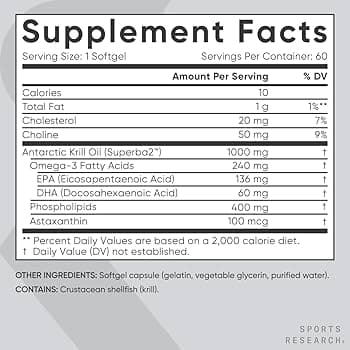
Astaxanthin is highly lipophilic and in krill it arrives already dispersed in a phospholipid matrix. Phospholipid emulsification keeps it in a fine dispersion instead of an aggregated crystal, which is the form that is poorly taken up. This is a formulation and absorption relationship.
Cholecalciferol needs a lipid phase and bile salt micelles to cross the enterocyte membrane. Phospholipids are used as the emulsifier in liquid and emulsion vitamin D formats and they contribute to the micelle the vitamin partitions into. The relationship concerns delivery of the vitamin rather than any additional action.
Beta-carotene absorption tracks the fat content of the meal and the quality of the emulsion it is presented in. Phospholipids lower interfacial tension and stabilise the fine droplets that feed micelle formation. Practically, this is why carotenoid beadlets and emulsions are built on lecithin-type phospholipids.
Medium-chain triglycerides are the oil phase in many softgels and liquid emulsions and phospholipids are the surfactant that holds that oil phase dispersed in water. The two are routinely used together for that reason. Neither changes the metabolism of the other. The pairing is about physical stability of the product.
Phosphatidylserine is made in mammalian cells by base exchange, in which serine replaces the head group of phosphatidylcholine or phosphatidylethanolamine through the PSS1 and PSS2 enzymes. Serine is therefore the head-group donor for a whole phospholipid class. Decarboxylation of phosphatidylserine in the mitochondrion then regenerates phosphatidylethanolamine.
Myo-inositol is the head group of phosphatidylinositol, the parent lipid of the phosphoinositide signalling pool. CDP-diacylglycerol and inositol are joined by phosphatidylinositol synthase to make it. So an inositol supply feeds directly into one branch of phospholipid synthesis.
The liver can build phosphatidylcholine from phosphatidylethanolamine by three successive methylations through PEMT, and every one of those methyl groups comes from S-adenosylmethionine made from methionine. That route runs alongside the CDP-choline pathway. Methionine supply and choline supply are therefore linked at the level of phospholipid synthesis.
Folate in its 5-methyltetrahydrofolate form donates the methyl group that remethylates homocysteine to methionine, which is then adenosylated to SAM. SAM is the methyl donor for the PEMT route to phosphatidylcholine. Folate status therefore sits upstream of endogenous phospholipid methylation.
Methionine synthase is a B12-dependent enzyme, and it is the step that converts homocysteine back to methionine using the folate methyl group. Without that step SAM regeneration slows and with it the methylation route to phosphatidylcholine. This is a cofactor relationship, not an additive effect.
Every phospholipid molecule carries one phosphate group, so a phospholipid concentrate contributes measurable phosphorus to a product's total. Formulators counting mineral content need to account for it. This is a compositional fact rather than a functional interaction.
A 2026 non-human study reported that supplementation with a Bifidobacterium longum strain was associated with higher circulating choline plasmalogen concentrations. Plasmalogens are ether-linked phospholipids, so the finding points to gut microbial influence on host phospholipid species. It is an association measured in animals, not a demonstrated cause in people.
A 2026 feeding study in laying hens reported that flaxseed in the diet enriched plasmalogens and glycosphingolipids in egg yolk and shifted where polyunsaturated fatty acids were esterified on the phospholipid backbone. That shows dietary fatty acid supply changes phospholipid species composition, at least in birds. Whether the same remodelling happens in people at supplement doses was not tested here.
Menaquinone-7 is fat soluble and is typically delivered in an oil or emulsified matrix. Phospholipid emulsifiers keep it dispersed and support micelle formation during digestion. As with the other fat-soluble vitamins the relationship is about delivery.
Talk to a doctor before taking Phospholipids if any of these apply to you: May interact with blood thinners, Consult a doctor if you have liver or kidney conditions, Possible gastrointestinal discomfort in some individuals. These are flags to check first, not effects Phospholipids is known to cause.
Not medical advice. Show the label to your pharmacist.What Phospholipids actually does.
Phospholipids are the building material of the membrane around every cell in the body.
The same structure that builds membranes also makes phospholipids good at keeping oil and water mixed.
Phospholipids are broken into pieces in the gut, absorbed, and rebuilt inside the intestinal cells.
The main phospholipid in the body is built either from choline or by adding methyl groups to a related lipid.
Where Phospholipids comes from.
Most supplement phospholipids are the gum separated out when seed oil is refined. It is dried, cleaned up, and sometimes enzyme-treated to make a specific phospholipid before being sold as lecithin, granules or a powder.
The same molecule is reached more than one way. Which route a given product used is a manufacturing choice, and the finished compound is the same either way.
Commercial phospholipids come mainly from soybean or sunflower seed oil processing, from krill and fish by-products, or from egg yolk. The source sets the fatty acid profile and the allergen declaration.
For seed oils the phospholipids are the gums removed when water or acid is added to crude oil. The wet gum is the lecithin fraction. Marine and egg material is instead extracted with ethanol, acetone or supercritical CO2.
The wet gum is dried under vacuum to fluid lecithin, then optionally deoiled with acetone or CO2 to a granule or powder, then optionally fractionated with alcohol to raise the phosphatidylcholine share.
Phospholipase D with an added alcohol or amino acid swaps the head group, which is how phosphatidylserine is produced from plant lecithin rather than from bovine brain.
Grades are set on total phospholipid or on a named species such as phosphatidylcholine, usually by HPLC or by acetone-insoluble matter.
The finished material ships as a viscous fluid, deoiled granules, a spray-dried powder on a carrier, or an oil dispersion for softgel filling.
Suppliers often declare only total lecithin, not the phosphatidylcholine share or the extraction solvent, so the exact grade behind a label may not be stated.
Getting Phospholipids from food.
The whole-food sources on file. A supplement closes the gap, it does not replace dinner.
A gram-for-gram figure (how much of each you would eat to match a dose) will appear here once it is sourced and reviewed. This page will not print a number it cannot cite.
The forms it comes in.
The essence, in one line each.
- A review article surveying dietary and endogenous phospholipids and the range of physiological roles that have been proposed for them.Narrative review. Kang JH et al., 2027 (Nutrition). PMID 42425817 ↗
- Dietary soybean lecithin and krill oil phospholipids at appropriate levels supported growth and antioxidant capacity measures in the animals studied.Animal study. Zhang Y et al., 2026 (Animals). PMID 42121812 ↗
- Flaxseed feeding enriched plasmalogens and glycosphingolipids in egg yolk and altered the esterification site of polyunsaturated fatty acids.Animal study. Wang Y et al., 2026 (Food chemistry: X). PMID 42021841 ↗
- Long-term feeding of a curcuminoid phospholipid enriched diet altered progression measures in a genetic rodent model.Animal study. Purushotham SS et al., 2026 (Neurochemistry international). PMID 42134658 ↗
- A reference entry describing lecithin as a mixture of phospholipids used both as a food emulsifier and as a dietary source of phosphatidylcholine.Narrative review. Anonymous, 2006 (reference monograph entry, Lecithin). PMID 30000831 ↗
- Krill oil, in which omega-3 fatty acids are largely phospholipid-bound, increased plasma omega-3 fatty acids more than fish oil over the study period.Randomised trial. Loukil I et al., 2026 (The American journal of clinical nutrition). PMID 42144109 ↗
These are the studies our verdict leans on, chosen from the 6 we read for Phospholipids. The full linked list is below.
The studies, linked.
1 source behind our Phospholipids verdict: peer-reviewed studies and registered clinical trials. Every one links straight to PubMed, the journal, or ClinicalTrials.gov. Read them yourself.
- Clinical trialEffect of Dietary Milk Phospholipids on Subjects With Atopic DermatitisClinicalTrials.gov ↗39 participants, Completed
Evidence surfaced via Semantic Scholar (Allen Institute for AI) and ClinicalTrials.gov. Ranked by study type and citation weight, not cherry-picked.
Problems people have reported.
Read this carefully. These are 1,229 voluntary, unverified reactions reported to the FDA (openFDA). The number mostly reflects how popular Phospholipids is, not how risky it is. A report is not proof Phospholipids caused anything. It is a signal of what to watch for, nothing more.
Source: openFDA adverse-event reports. Voluntary reporting, not an incidence rate.
FDA Disclaimer: These statements have not been evaluated by the Food and Drug Administration. This information is for educational purposes only and is not intended to diagnose, treat, cure, or prevent any disease. Consult your healthcare provider before starting any supplement regimen.