Selenium.
The thyroid shield. Keeps your thyroid running right, helps your body make its master antioxidant (glutathione), and supports your immune system. It's a key player in your metabolic machinery.
Reviewed March 2026
- Category
- Mineral
- Also filed under
- ThyroidMetabolismImmunityMineral
What Selenium is, and what it does.
- Does it work
- For everyone else, you probably get enough from food. Brazil nuts are loaded with it.
- How much to take
- 55-200mcg daily. The 200mcg dose is what's used in studies for thyroid support. Don't go over 400mcg from all sources.
- Time to feel it
- About ten weeks of daily use.
- The first dose
- Absolutely nothing.
- With regular use
- For others, it's about maintaining healthy levels for long-term immune and metabolic health.
- How well tolerated
- Well tolerated at recommended doses. The upper limit is 400mcg per day from all sources. Toxicity is real, so respect the label.
- How it feels
- Like nothing. It's a foundational mineral, not a stimulant or a calming agent. Its job is to let other systems work properly.
- The overlooked benefit
- Selenium and iodine work as a pair. The enzymes that convert thyroxine into its active form are selenoenzymes, so iodine alone cannot complete that step without selenium present.
55 to 200mcg a day is where Selenium works.
Source: NIH ODS + Rayman 2012 review
In a 12 week randomised double-blind placebo-controlled trial in 119 healthy UK adults aged 50 to 64, mean plasma selenium rose from 95.7 ng/mL at baseline to steady state by week 10, reaching 118.3, 152.0 and 177.4 ng/mL on 50, 100 and 200 micrograms a day of selenium-enriched yeast. Plasma selenoprotein P rose in every selenium arm. Platelet glutathione peroxidase activity did not change significantly at any dose or form.
The proof, claim by claim.
These words describe the research, not the molecule's worth. Research strength is how much work stands behind one claim, and it is never a product score.
Essential trace mineral.
- PromisingReduces anti-TPO antibodies in Hashimoto's thyroiditisMeta-analysis21 trials, Zhang et al., 2025 (Medicine (Baltimore))PMID 40898469
- Supports enzymatic antioxidant defense (Glutathione Peroxidase)Established physiological consensus
- Reduces risk of mortality in deficiency statesSystematic review of observational data
Questions people ask about Selenium.
- Can I just eat Brazil nuts instead?
- Yes. One Brazil nut can have 60-90mcg. The problem is consistency – the amount varies wildly from nut to nut. A supplement is more precise.
- Is it safe with my thyroid medication?
- Usually, yes, and it can be helpful. But this is a mandatory 'talk to your doctor' situation. Don't self-prescribe for a medical condition.
- How much is too much?
- The official upper limit is 400 mcg per day from all sources (food + supplements). Stick to 200 mcg or less in supplement form to be safe.
- Will it help me lose weight?
- Indirectly, maybe, if a sluggish thyroid was the problem. It supports metabolism, but it's not a weight loss pill. That's not how biology works.
What the trials show about these together.
Outcomes the engine found studied for these actives as a combination, not one at a time. Each is a finding a named trial measured, cited and dated, never written by the brand.
- EarlySelenium + ZincImmune
In a two-year trial in older adults, zinc taken together with selenium improved the antibody response to influenza vaccination.
Girodon et al., 1999 (Arch Intern Med)PMID 10218756
Research strength. Research strength says how much work stands behind the combination. It is never a product score.
Fail closed. Where actives were studied on their own rather than together, each shows on its own evidence, never a combined effect no trial measured.
Independent record. Every finding is cited to a named trial, dated, and never written by the brand.
Findings from trials that studied these actives as a combination. Context for how the actives were tested together, not a statement about any individual and not a claim about this product.
Why these belong in the same formula. Each row says what the basis is, from settled biochemistry through to a trial that measured the pair.
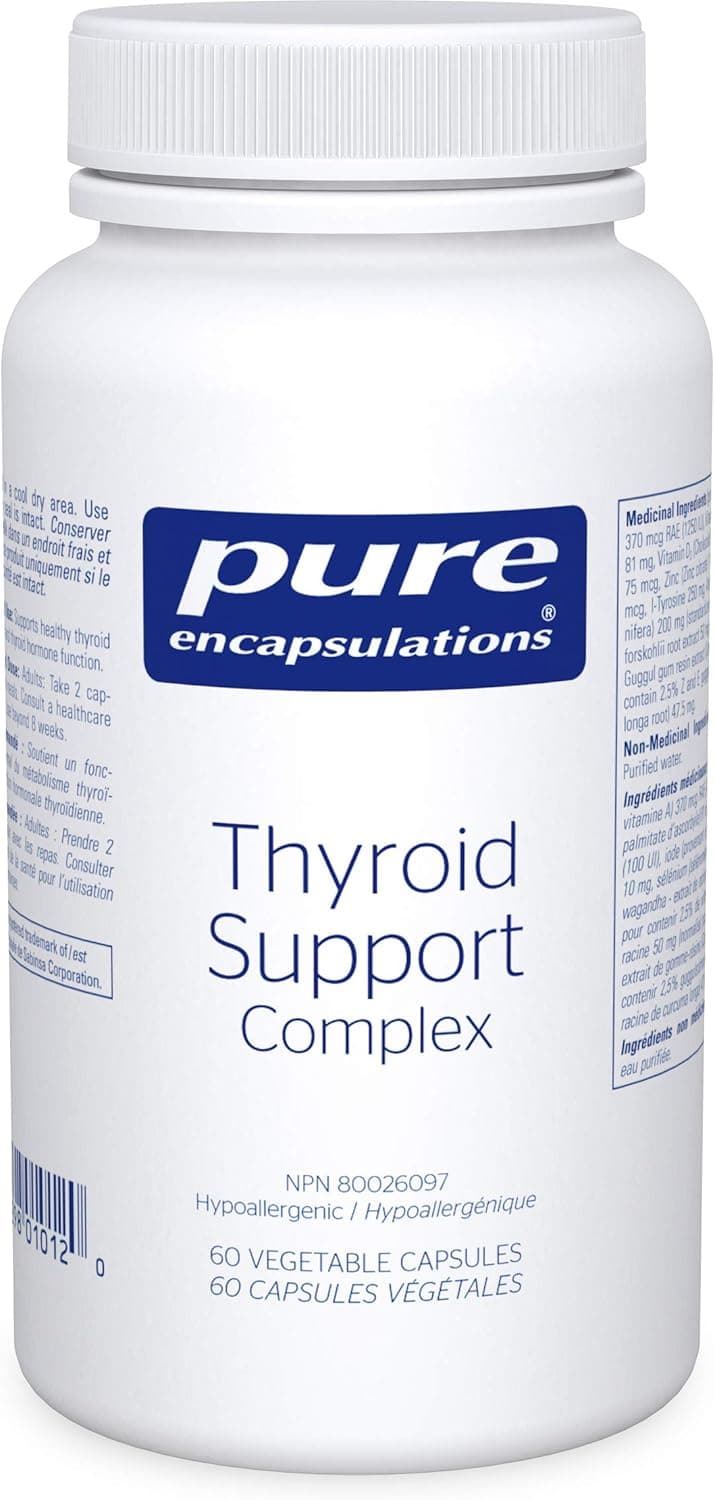
Selenium forms the deiodinase enzymes that convert thyroid hormone into its active form, and iodine is the raw material the thyroid uses to make that hormone in the first place. Selenium enzymes also clear the peroxide the gland generates while it works, so both minerals support normal thyroid hormone metabolism.
Selenium powers glutathione peroxidase, which clears peroxides from the watery inside of the cell, while vitamin E protects the fatty cell membranes from the same kind of oxidation. They cover different compartments, so having enough of one eases the demand on the other, a sparing relationship documented since early nutrition research.
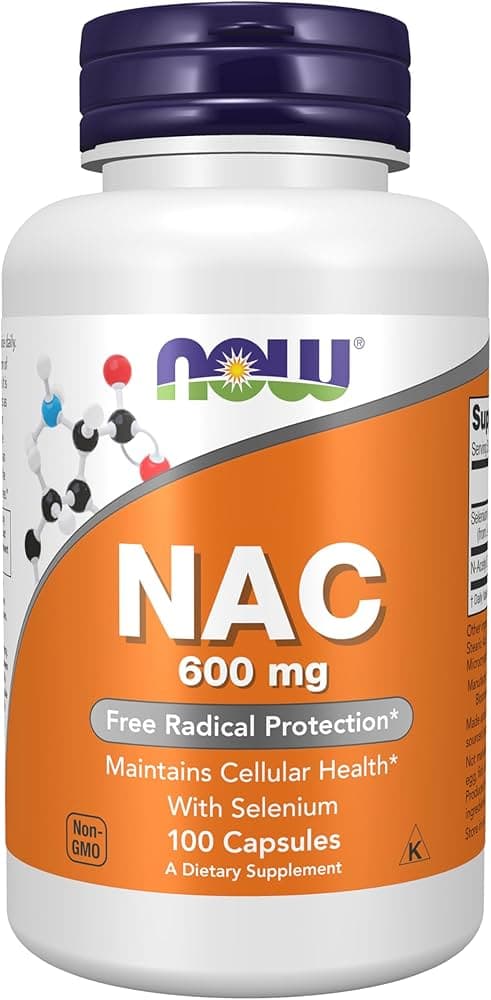
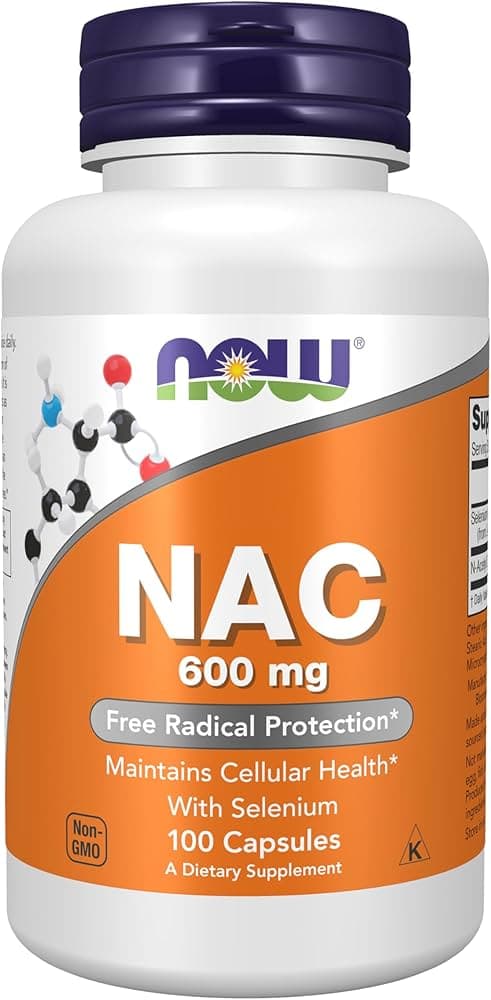
Glutathione peroxidase is a selenium enzyme that runs on glutathione as its reducing fuel. NAC supplies the cysteine the body needs to build glutathione, so selenium provides the enzyme and NAC helps keep its glutathione partner stocked for the same antioxidant reaction.
Glutathione peroxidase carries selenium as selenocysteine in its active site and uses glutathione as the electron donor for every cycle. Enzyme and substrate are two halves of one reaction, so neither works without the other.
High-dose ascorbate reduces selenite to elemental selenium in the stomach, a form the intestine does not absorb. Taking a large vitamin C dose with an inorganic selenium salt lowers selenium uptake, which is why selenomethionine or separate timing is used.
Thioredoxin reductase is a selenoenzyme that helps keep ubiquinone reduced to its active ubiquinol form. Selenium status therefore feeds directly into how much of the CoQ10 pool sits in the antioxidant-active state.
Alpha lipoic acid is reduced by the selenium-dependent thioredoxin reductase and in turn helps regenerate glutathione. The three sit in one recycling loop rather than acting independently.
Sulforaphane raises transcription of thioredoxin reductase and glutathione peroxidase through Nrf2, and both of those enzymes are selenoproteins. Induction only translates into enzyme activity when selenium is available to build the active site.
Thioredoxin reductase is a flavoprotein that carries both an FAD from riboflavin and a selenocysteine residue. Both nutrients are structural requirements of the same enzyme.
Thyroid hormone is built by iodinating tyrosine residues on thyroglobulin, and the selenium-dependent deiodinases then convert the four-iodine form to the three-iodine form that binds receptors. Tyrosine supplies the skeleton, iodine the halogen and selenium the conversion enzyme. All three are required for the pathway to run normally, which is a cofactor relationship rather than a stimulatory effect.
Selenomethionine is handled by the methionine transporters and the methionine tRNA synthetase, which is why it ends up non-specifically built into body proteins as a selenium reservoir. A large methionine intake competes for those same steps. This matters mainly for how a selenomethionine form is retained, not for whether selenoenzymes get made.
Selenocysteine is the selenium analogue of cysteine and occupies the catalytic site of glutathione peroxidases and thioredoxin reductases, where its lower pKa makes it a stronger nucleophile than sulfur. Cysteine supply also sets the glutathione pool that those enzymes consume as substrate. The two elements are chemically parallel and metabolically intertwined rather than interchangeable.
Copper is the catalytic metal in the extracellular and cytosolic superoxide dismutases and in ceruloplasmin, both of which sit upstream of the selenium-dependent peroxidases. Excess of one trace mineral can disturb the status of another when supplemented for long periods without measurement. The relationship is one of balance, not a boost.
Thyroid peroxidase is a heme enzyme, so iron status sits alongside iodine and selenium in normal thyroid hormone production. Iron also drives Fenton chemistry that generates the hydroperoxides the selenium-dependent peroxidases reduce. The elements are linked at two separate points, which makes this a balance relationship rather than an additive one.
Selenate is a structural mimic of sulfate and is carried by sulfate transporters, and molybdate moves through overlapping anion transport systems. High intake of one oxyanion can therefore compete with another at the absorption step. The effect has been characterised more in plants and livestock than in people, so it is stated as chemistry.
Sulfur compounds that yield sulfate raise the pool that competes with selenate for the same intestinal anion carriers. This applies to an inorganic selenate or selenite form far more than to selenomethionine, which travels the amino acid route instead. The practical note is that which selenium form is used changes whether this competition applies at all.
Glutathione peroxidase 4 reduces lipid hydroperoxides already formed inside membranes, while astaxanthin intercepts the radical chain that forms them. The two act at different stages of the same lipid peroxidation sequence. No trial of the combination was retrieved, so this is a mechanistic complement.
Lycopene quenches singlet oxygen and peroxyl radicals within lipid structures, upstream of where the selenium-dependent peroxidases clear hydroperoxides. Coverage of the sequence is broader with both present. This is stated as chemistry, not as a measured combination effect.
Activated charcoal adsorbs a wide range of ingested molecules in the gut lumen, and a mineral or amino-acid-bound mineral taken in the same window can be carried through unabsorbed. This is the intended action of a binder rather than a defect. Separating the doses by several hours is the ordinary handling.
Zinc and selenium are cofactors on different immune and antioxidant enzymes: zinc on the metalloenzymes and transcription factors that immune cells depend on, selenium on the glutathione peroxidases that handle oxidative load. They are paired in formulas as two trace minerals with separate jobs in the same tissues rather than as a single mechanism.
Talk to a doctor before taking Selenium if any of these apply to you: Toxic in excess. Do not overdose. These are flags to check first, not effects Selenium is known to cause.
Not medical advice. Show the label to your pharmacist.What Selenium actually does.
The body has a special genetic trick for slotting selenium into proteins at a spot that normally means stop. Roughly two dozen human proteins are made that way.
Selenium sits in the enzymes that break down peroxides, using glutathione as fuel. Unlike a vitamin antioxidant, these enzymes work over and over.
Another selenium enzyme keeps a key shuttle protein charged up, which lets cells repair and rebuild.
Selenium enzymes switch thyroid hormone between its active and inactive forms, so normal thyroid hormone handling needs selenium as well as iodine.
Where Selenium comes from.
It is collected as a by-product of copper refining, turned into a soluble salt, and then either used that way or fed to yeast that builds it into amino acids. Because a dose is tiny, it is diluted onto a bulking powder before it goes into a capsule.
The same molecule is reached more than one way. Which route a given product used is a manufacturing choice, and the finished compound is the same either way.
Commercial selenium is a by-product of electrolytic copper refining, recovered from the anode slimes rather than mined as its own ore.
The recovered element is oxidised and neutralised into water-soluble inorganic salts, which are the starting material for every downstream form.
For selenium yeast, Saccharomyces cerevisiae is grown on a selenite-enriched medium and builds the element into amino acids, mainly selenomethionine, inside its own protein. Synthetic L-selenomethionine is made chemically instead.
Yeast biomass is washed to remove unincorporated inorganic selenium, then heat-inactivated and dried. A specification usually states what fraction of total selenium is organically bound.
Total selenium is measured by ICP-MS and the individual species are separated chromatographically, because the total figure alone does not tell you which forms are present.
Because a daily dose is in micrograms, the material is diluted onto a carrier such as microcrystalline cellulose or dicalcium phosphate so it can be blended uniformly into a tablet or capsule.
Selenium yeast products often declare total selenium without stating the organically bound fraction or the species breakdown, and labels rarely say whether an amino acid form was made by fermentation or by chemical synthesis.
Getting Selenium from food.
The whole-food sources on file. A supplement closes the gap, it does not replace dinner.
A gram-for-gram figure (how much of each you would eat to match a dose) will appear here once it is sourced and reviewed. This page will not print a number it cannot cite.
The forms it comes in.
Same mineral in different salts. Each is its own molecule with its own page, and absorption and feel differ from one to the next.
See all 1 form
The essence, in one line each.
- Pooling randomized trials, selenium raised the proportion of motile sperm by about 3.3 percentage points, with a smaller rise in the proportion of normally shaped sperm and a higher sperm concentration.Meta-analysis. Salas-Huetos et al., 2018 (Advances in Nutrition). PMID 30462179 ↗
- Pooling 13 randomized trials, selenium increased activity of the antioxidant enzyme glutathione peroxidase (standardized mean difference about 0.54) and total antioxidant capacity, and lowered malondialdehyde, a marker of lipid oxidation.Meta-analysis. Hasani et al., 2019 (Hormones). PMID 31820398 ↗
- In adults with metabolic risk factors, selenium supplementation was linked to small changes in blood lipid and inflammatory markers, with results varying between trials.Meta-analysis. Systematic review and meta-analysis, 2026. PMID 41738711 ↗
- Pooling the randomised evidence, the review reports reductions in circulating thyroid autoantibody concentrations with selenium supplementation.Meta-analysis. Zhang H et al., 2025 (Medicine). PMID 40898469 ↗
- Pools trials of selenium supplementation during pregnancy and reports the effects on the glycaemic and related measures that the included trials recorded.Systematic review. Sun J et al., 2025 (BMC Endocrine Disorders). PMID 41073938 ↗
- Pooled analysis of selenium supplementation reports changes in selenium status and in inflammatory and oxidative markers in the population studied.Meta-analysis. Cheng Q et al., 2025 (International Urology and Nephrology). PMID 39900786 ↗
- Reviews trials of selenium supplementation and reports what happened to inflammatory markers and to joint symptom scores.Systematic review. Long M et al., 2025 (Journal of Trace Elements in Medicine and Biology). PMID 40695138 ↗
- Explores reported effects of selenium supplementation on nutritional indices, inflammatory markers and measures of cardiac function.Systematic review. Kou L et al., 2025 (Cardiovascular Toxicology). PMID 40668353 ↗
- A double-blind multi-centre randomised trial testing selenium added to usual care in adults with elevated thyroid hormone levels. The retrieved record does not state the direction of effect, so regard this as design-level evidence only.Randomised trial. Cramon PK et al., 2026 (European Thyroid Journal). PMID 41384622 ↗
- Reports changes in JAK and STAT signalling measures with a nano-selenium preparation.Randomised trial. Noormohammadi M et al., 2025 (BMC Psychiatry). PMID 40796838 ↗
- A randomised controlled trial of selenium supplementation reporting the glycaemic measures recorded during pregnancy.Randomised trial. Yigit E et al., 2024 (Journal of the College of Physicians and Surgeons Pakistan). PMID 38720217 ↗
- A randomised controlled trial of selenium supplementation reporting the ocular and quality-of-life measures collected in the study.Randomised trial. Potita P et al., 2024 (Orbit). PMID 38374579 ↗
- A published protocol setting out how oxidative stress markers, symptom scales and mental health status will be assessed under selenium supplementation. No results are reported in it.Randomised trial. Balali A et al., 2024 (Trials). PMID 38515207 ↗
- Systematically compares selenium supplementation strategies and reports tissue selenium retention across the forms used.Systematic review. Xie M et al., 2026 (Poultry Science). PMID 41946026 ↗
- Compares different chemical forms of selenium supplementation and reports the growth and physiological measures recorded for each.Animal study. Moustafa KME et al., 2024 (Tropical Animal Health and Production). PMID 38637421 ↗
- A global meta-analysis of selenium application in plants under drought conditions, reporting effects on plant stress measures.Meta-analysis. Huang F et al., 2026 (Journal of Agricultural and Food Chemistry). PMID 41841705 ↗
These are the studies our verdict leans on, chosen from the 815 we read for Selenium. The full linked list is below.
The studies, linked.
12 sources behind our Selenium verdict: peer-reviewed studies and registered clinical trials. Every one links straight to PubMed, the journal, or ClinicalTrials.gov. Read them yourself.
- Clinical trialS0000B: Prevention of Cataract and Age-Related Macular Degeneration With Vitamin E and Selenium - SELECT Eye Endpoints (SEE)ClinicalTrials.gov ↗Phase 3, 13,475 participants, Completed
- Clinical trialThe Chronic Autoimmune Thyroiditis Quality Of Life Selenium TrialClinicalTrials.gov ↗415 participants, Completed
- Clinical trialMitigating Arsenic Toxicity in Bangladeshi People by Supplementing Their Diets With High Selenium LentilsClinicalTrials.gov ↗400 participants, Completed
- Clinical trialEndothelial Dysfunction and Selenium Status in Children With Acute Systemic InflammatoryClinicalTrials.gov ↗114 participants, Completed
- Clinical trialSelenium Treatment in Autoimmune Thyroiditis: Long Term Follow-Up With Variable DosesClinicalTrials.gov ↗100 participants, Completed
- Clinical trialEvaluation and Comparison of the Benefits of Routine vs Shampoo Alone During 4 Weeks of Treatment and 12 Weeks Remanence n Subjects With Moderate to Severe DandruffClinicalTrials.gov ↗80 participants, Completed
- Clinical trialThe Efficacy of Selenium as an Alternative or Complementary Topical Treatment of Oral Lichen Planus (Randomized Clinical Trial)ClinicalTrials.gov ↗Phase 4, 50 participants, Completed
- Clinical trialEffects of Brazil Nuts Consumption on Selenium Status and Cognitive Performance in Older Adults With Mild Cognitive Impairment: a Randomized Controlled Pilot TrialClinicalTrials.gov ↗31 participants, Completed
- Clinical trialRandomized Open Clinical Study to Evaluate the Efficacy of Selenium Plus Methimazole for Treatment of Graves' HyperthyroidismClinicalTrials.gov ↗30 participants, Completed
- Clinical trialBladder Cancer Prognosis Programme (Incorporating SELENIB Trial)ClinicalTrials.gov ↗Phase 3, 3,400 participants, Unknown
- Clinical trialA Randomized, Double-Blind, Placebo-Controlled Clinical Trial to Evaluate the Efficacy of a Zinc, Selenium, and L-Tyrosine Supplement in the Prevention of Thyrotoxicosis in Subjects With r25191G/A SEPP1 PolymorphismClinicalTrials.gov ↗150 participants, Not yet recruiting
- Clinical trialEvaluation of the Antidandruff Effect of a Shampoo on Subjects With Dandruff and Slight Itching. Single-blind, Monocentric Study Realized Under Dermatological ControlClinicalTrials.gov ↗40 participants, Unknown
Evidence surfaced via Semantic Scholar (Allen Institute for AI) and ClinicalTrials.gov. Ranked by study type and citation weight, not cherry-picked.
Problems people have reported.
Read this carefully. These are 891,591 voluntary, unverified reactions reported to the FDA (openFDA). The number mostly reflects how popular Selenium is, not how risky it is. A report is not proof Selenium caused anything. It is a signal of what to watch for, nothing more.
Source: openFDA adverse-event reports. Voluntary reporting, not an incidence rate.
FDA Disclaimer: These statements have not been evaluated by the Food and Drug Administration. This information is for educational purposes only and is not intended to diagnose, treat, cure, or prevent any disease. Consult your healthcare provider before starting any supplement regimen.