Shilajit.
May offer a modest boost to testosterone and energy levels. It’s a mineral-rich substance from the Himalayas. A few small human studies suggest it might help increase testosterone and improve energy production in your cells.
Reviewed March 2026
- Category
- Herb
- Also filed under
- May increase testosterone levelsMay improve energy levelsAntioxidant properties
What Shilajit is, and what it does.
- Does it work
- Suits people already covering the basics who want a traditional preparation with early human data behind it. Purified, tested material is what decides what you actually get.
- How much to take
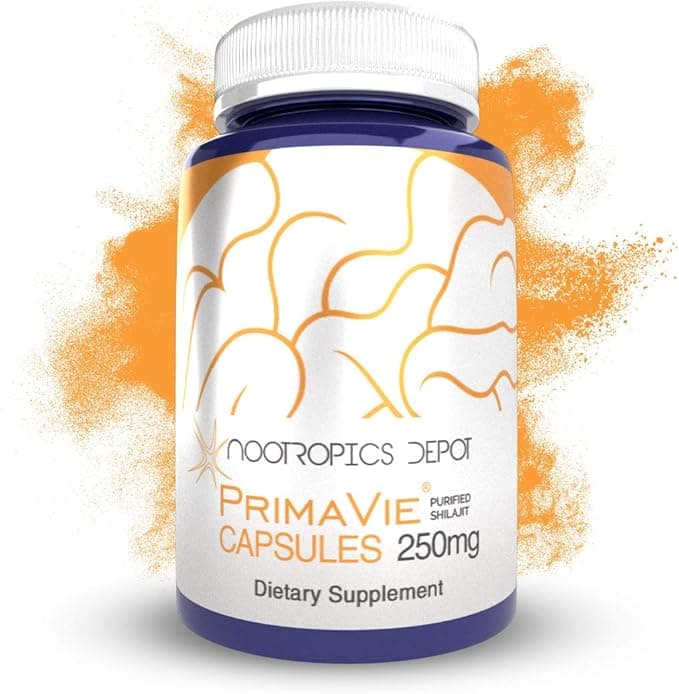
- 250-500mg of a purified extract daily. Look for one that's standardized for fulvic acid content. More isn't better.
- Time to feel it
- Four to eight weeks of daily use before much shows. The human trials reporting changes ran for around three months, so this is a slow build rather than a same day lift.
- The first dose
- Nothing. Don't expect any changes. This isn't pre-workout.
- With regular use
- If it works for you, you might notice a subtle increase in general vitality or libido after 4-8 weeks. Results are very inconsistent person to person.
- How well tolerated
- Purified forms are generally well tolerated. Unprocessed shilajit is a hard no – it can contain heavy metals. Avoid if you have iron overload or blood pressure issues.
- How it feels
- A very subtle background effect, if anything. A mild energy lift, not a jolt. Some people report feeling more 'resilient'.
- The overlooked benefit
- It never arrives as one isolated compound. The fulvic and humic acids bind metal ions, so a purified resin brings a trace mineral load along with the pyrones.
200 to 500mg a day is where Shilajit works.
Source: Pandit et al. 2016 Andrologia RCT (testosterone); Surapaneni et al. 2012 IJAM
The proof, claim by claim.
These words describe the research, not the molecule's worth. Research strength is how much work stands behind one claim, and it is never a product score.
Limited evidence and inconsistent results across studies. More high-quality research is needed to confirm the benefits of shilajit supplementation.
- testosterone already within the normal range in menRandomised trial
- everyday energy and fatigue ratingsRandomised trial
- muscle strength retention through a training blockRandomised trial
- antioxidant statusAnimal study
- mitochondrial electron transportAnimal study
- tolerance of altitude in traditional useNarrative review
Questions people ask about Shilajit.
- What does it actually taste like?
- Awful. Like earthy, bitter tar. The resin form is particularly strong. Capsules are your friend here.
- Does it really increase testosterone?
- A couple of small studies in men showed a modest increase. It's promising but far from proven. Needs more research.
- Why does quality matter so much?
- Because raw shilajit is scraped off rocks. It can be contaminated with heavy metals and other toxins. Purification is non-negotiable.
- Can women take it?
- Yes, it's traditionally used by both men and women for energy and vitality. Just avoid it during pregnancy or breastfeeding.
- Should I cycle it?
- Not necessary. The studies use continuous daily dosing. No evidence that cycling helps.
- Can I take it with coffee?
- Yes, no problem. It's not a stimulant, so it won't interact with caffeine in a weird way.
Why these belong in the same formula. Each row says what the basis is, from settled biochemistry through to a trial that measured the pair.
Shilajit's dibenzo-alpha-pyrones and fulvic acid concentrate in the mitochondria, where they can donate electrons and help regenerate coenzyme Q10 into its active reduced form. Since CoQ10 is the electron carrier the respiratory chain runs on, the two support the body's normal ATP production from complementary angles.
The two support the body's normal testosterone production through separate routes, shilajit acting on the pathways that sustain output and tongkat ali by influencing how much circulating testosterone stays unbound and available. Formulators have long combined them in male-vitality blends for that complementary reason.
Shilajit acts on mitochondrial energy handling through dibenzo-alpha-pyrones and fulvic acid, and ashwagandha acts on the cortisol axis. They are the standard Ayurvedic vitality pair because the mechanisms do not overlap.
Tribulus furostanol saponins act on gonadotropin signalling while shilajit contributes mineral transport and mitochondrial support. Ayurvedic and modern male formulas combine them for that split.
Fulvic acid chelates divalent minerals and keeps them soluble across the gut pH range, which is the basis of shilajit's traditional role as a carrier substance. That improves the fraction of zinc that stays available for uptake.
The same fulvic and humic acids that make shilajit a mineral carrier form soluble complexes with magnesium. Chelated magnesium resists precipitation as insoluble salts in the intestine.
Shilajit itself carries measurable iron and its fulvic acid binds and mobilises iron in solution. Stacking it with a separate iron supplement raises total iron exposure more than the label of either suggests.
Cordycepin and adenosine analogues from cordyceps act on ATP turnover and oxygen utilisation, and shilajit dibenzo-alpha-pyrones act as electron carriers in the respiratory chain. Both converge on cellular energy output by different routes.
Triphala tannins and shilajit fulvic acid are combined in classical formulas, with shilajit used as the mineral-bearing carrier. Triphala polyphenols also bind minerals, so the combination shifts mineral availability in both directions.
A twelve-week randomised study tested chromium, Phyllanthus emblica fruit extract and shilajit together as one supplementation regimen. Because all three were given as a combination, the reported effects belong to the regimen and cannot be split between the components. The pairing is documented, and its interpretation is limited to what a multi-ingredient design can show.
Fulvic and humic acids carry dense carboxylate and phenolate groups that bind divalent cations, which is the same chemistry that lets them carry trace minerals in the first place. Taken at the same time as a large calcium dose, part of the binding capacity is occupied by calcium. Separating the doses is the ordinary way to keep the two from competing.
Shilajit resin has been tested for physical performance measures and blood biomarkers in healthy adults, and creatine has a long-standing separate performance literature acting through phosphocreatine resynthesis. Products pair them because the intended use overlaps, not because a combination has been tested. Read the pairing as formulation convention with two independent evidence bases.
Carnitine shuttles long-chain fatty acids across the inner mitochondrial membrane, and the mechanistic case usually made for shilajit centres on mitochondrial electron transport via its dibenzo-alpha-pyrone constituents. The two therefore touch mitochondrial energy handling from different points. This is mechanistic reasoning rather than a tested combination.
Lipoic acid is the covalently bound cofactor of pyruvate dehydrogenase and alpha-ketoglutarate dehydrogenase, sitting directly in the pathway feeding the electron transport chain. Shilajit's dibenzo-alpha-pyrone chromoproteins are described as electron carriers in that same chain. The pairing follows the biochemistry. No combination trial supports it.
Shilajit carries iron among its mineral content, in mixed and variable amounts. Ascorbate reduces ferric iron to the ferrous form and keeps it soluble at intestinal pH, which is the standard route for improving non-heme iron uptake. What this actually does depends on how much iron a given batch carries, which varies widely by source.
Fulvic acid complexes trace elements and can change how they move across the intestinal wall, which is the mechanism behind the mineral-carrier description often attached to shilajit. Selenium is one of the trace elements found in analyses of shilajit material. The direction of the effect on any one element is not predictable from the chemistry alone, so this is worth measuring rather than assuming.
Analytical work on shilajit and shilajit supplements reports a mixed inorganic profile, and manganese is among the elements commonly found. Adding a separate manganese supplement on top means the total intake is the sum of a declared dose and an undeclared, batch-variable one. Screening the certificate of analysis is the practical answer.
Talk to a doctor before taking Shilajit if any of these apply to you: Pregnancy, Breastfeeding, Iron Overload (Hemochromatosis), Low Blood Pressure. These are flags to check first, not effects Shilajit is known to cause.
Not medical advice. Show the label to your pharmacist.What Shilajit actually does.
Shilajit isn't a plant part at all. It's a tarry material that seeps out of rock, and the constituents that have been characterised are fulvic and humic acids along with dibenzo-alpha-pyrones and their chromoprotein forms.
Fulvic and humic acids are covered in acidic and phenol groups, which is why they grab and carry metal ions with two or three positive charges, and why the material always turns up with a mineral load attached.
Since the raw material is collected from rock exudate, it can carry mineral contaminants including heavy metals and mycotoxins unless it's purified. That's why the purification step and a certificate of analysis matter more here than for a farmed botanical.
Fulvic acid content is the marker most often used to standardise shilajit, and the lab methods for measuring it differ. So two products declaring the same fulvic acid percentage may have been measured in different ways.
Where Shilajit comes from.
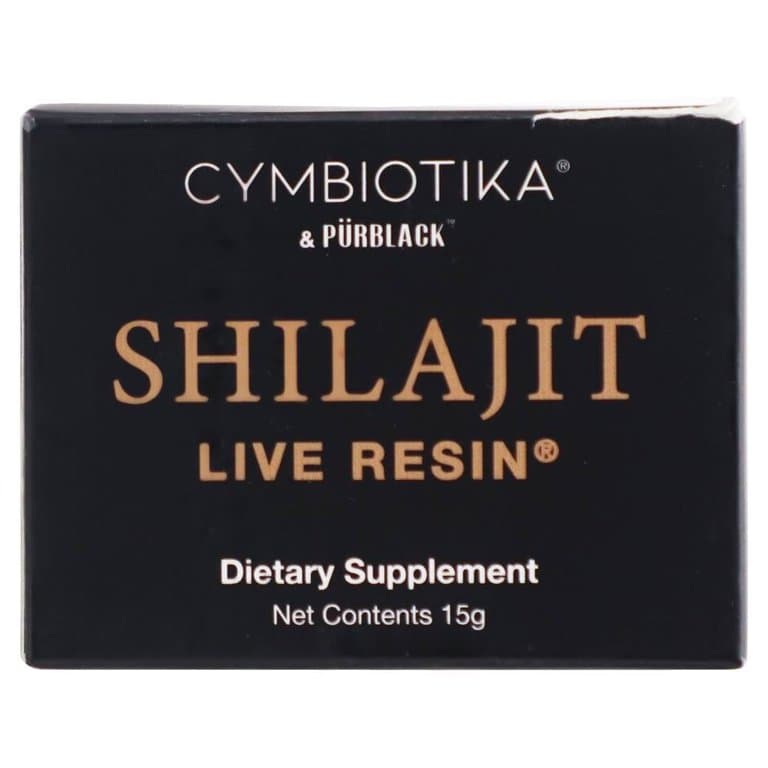
It is scraped from rock at altitude, not farmed. Producers dissolve it in water, filter out the dirt and rock, check it for contaminants, then gently boil off the water to leave a sticky resin or dry it into a powder. Because the raw material comes out of the ground, the filtering and testing step is the part that actually determines what you end up taking.
From a mineral source, then refined and usually bound to a carrier so the body can take it up.
Shilajit is gathered by hand from crevices in rock faces at altitude, where it has formed over long periods from compressed organic material. It is a mineral-organic exudate rather than a harvested plant.
The crude material is dissolved so that the water-soluble fulvic and humic fraction separates from insoluble rock, sand and plant debris.
The solution is filtered, often repeatedly, to remove particulate matter. This step is also where heavy metal and contaminant screening is applied in a controlled process.
Water is driven off under low heat to protect the heat-sensitive dibenzo-alpha-pyrone fraction, leaving either a resin or a concentrate for drying.
The concentrate is assayed for fulvic acid content and adjusted to a declared specification. Assay methods vary between suppliers.
The finished material is either held as a resin or spray dried onto a carrier so it can be encapsulated or tabletted.
The forms it comes in.
The essence, in one line each.
- In healthy men aged 45 to 55, purified shilajit 250 mg twice daily for 90 days significantly raised total testosterone, free testosterone and DHEAS versus placebo, while LH and FSH held steady.Randomised trial. Pandit et al., 2016 (Andrologia). PMID 26395129 ↗
- In older women with reduced bone density, shilajit extract at 250 mg or 500 mg daily for 48 weeks dose-dependently supported bone mineral density at the spine and femoral neck versus placebo, whose density kept declining (p < 0.001).Randomised trial. Pingali and Nutalapati, 2022 (Phytomedicine). PMID 35933897 ↗
- In recreationally active men, shilajit 500 mg daily for 8 weeks left a smaller fatigue-induced drop in maximal muscle strength (about 9 percent versus 16 percent on placebo) in the stronger subgroup.Randomised trial. Keller et al., 2019 (Journal of the International Society of Sports Nutrition). PMID 30728074 ↗
- In recreationally trained men, 8 weeks of shilajit at 500 mg or 1000 mg daily roughly doubled serum pro-c1a1, a marker of type 1 collagen synthesis, with no change on placebo.Randomised trial. Neltner et al., 2022 (Journal of Dietary Supplements). PMID 36546868 ↗
- Eight weeks of oral shilajit shifted the expression of skeletal-muscle genes tied to extracellular matrix and connective tissue in muscle biopsies, a gene-expression change rather than a measured performance outcome.Randomised trial. Das et al., 2016 (Journal of Medicinal Food). PMID 27414521 ↗
- Skin biopsies from middle-aged women taking a herbo-mineral shilajit showed increased expression of genes involved in the skin's extracellular matrix and collagen structure, again a gene-expression measure.Randomised trial. Controlled supplementation trial, 2019. PMID 31161927 ↗
- Twelve weeks of a combined chromium, Phyllanthus emblica fruit extract and shilajit regimen was compared against control in a randomised design. The effects reported belong to the combination and cannot be assigned to shilajit alone.Randomised trial. Martinez V et al., 2025 (Nutrients). PMID 40573153 ↗
- A branded shilajit resin was assessed for physical performance measures, tolerability and blood biomarkers in healthy adults. The outcomes are performance and biomarker measures in a single branded preparation.Randomised trial. Yadav D et al., 2026 (Cureus). PMID 41613504 ↗
- Analytical screening quantified inorganic anions across shilajit raw material and finished supplements and documented variation between samples, which bears on batch-to-batch composition rather than on any effect in people.In vitro study. Kamgar E et al., 2025 (BMC Chemistry). PMID 40223103 ↗
- High-dose shilajit was associated with greater xenograft-mediated bone regeneration in a rat tibial defect model, an animal surgical model that provides mechanistic signal only.Animal study. Guler R et al., 2025 (Life). PMID 41157202 ↗
- Different concentrations of shilajit given to lambs were associated with changes in the physiological and blood measures the authors tracked. This is a livestock physiology study.Animal study. Agwaan HWK et al., 2026 (Open Veterinary Journal). PMID 42375260 ↗
These are the studies our verdict leans on, chosen from the 150 we read for Shilajit. The full linked list is below.
The studies, linked.
2 sources behind our Shilajit verdict: peer-reviewed studies and registered clinical trials. Every one links straight to PubMed, the journal, or ClinicalTrials.gov. Read them yourself.
- Clinical trialEffects of Chromium, Phyllanthus Emblica Fruit Extract, and Shilajit Supplementation on Markers of Cardiovascular Health, Fitness, and Weight Loss in Men and Women Initiating an Exercise and Diet Intervention ProgramClinicalTrials.gov ↗112 participants, Completed
- Clinical trialEffects of PrimaVie and Exercise Training on Human Skeletal Muscle AdaptationClinicalTrials.gov ↗29 participants, Completed
Evidence surfaced via Semantic Scholar (Allen Institute for AI) and ClinicalTrials.gov. Ranked by study type and citation weight, not cherry-picked.
Problems people have reported.
Read this carefully. These are 53 voluntary, unverified reactions reported to the FDA (openFDA). The number mostly reflects how popular Shilajit is, not how risky it is. A report is not proof Shilajit caused anything. It is a signal of what to watch for, nothing more.
Source: openFDA adverse-event reports. Voluntary reporting, not an incidence rate.
FDA Disclaimer: These statements have not been evaluated by the Food and Drug Administration. This information is for educational purposes only and is not intended to diagnose, treat, cure, or prevent any disease. Consult your healthcare provider before starting any supplement regimen.