Thiamine.
Research-backed compound with potential health benefits. Helps your body convert carbohydrates into usable energy. It's critical for the proper function of your nerves, muscles, and heart.
Reviewed March 2026
- Category
- Compound
What Thiamine is, and what it does.
- Does it work
- It suits people whose intake runs thin: heavy drinkers, people eating very little, and anyone on a long-term diuretic. In a B complex it is a settled part of the base.
- How much to take
- The RDA is tiny, about 1.2 mg. Supplements often come in 100mg doses, which is massive overkill for most people. Follow your doctor's advice.
- Time to feel it
- About 18 to 30 days of restricted intake.
- The first dose
- Zero noticeable effect. Your body will absorb a small amount and discard the rest.
- With regular use
- For a healthy person, no change. If you were correcting a true deficiency, you'd see improved energy metabolism and nerve function over weeks.
- How well tolerated
- Water-soluble and well tolerated at supplement amounts, with what is not used leaving in urine. Check with your doctor if you take a diuretic long term.
- How it feels
- You don't feel it. It's not a stimulant or a relaxant. It's a background utility worker for your cells.
- The overlooked benefit
- Its coenzyme form is made using magnesium, so the two nutrients sit together. Thiamine also runs the committed step in branched-chain amino acid breakdown.
1.2 to 50mg a day is where Thiamine works.
Source: NIH ODS + Lonsdale 2006 review
In the controlled depletion study the EFSA reference opinion reviews, restricting thiamin intake to 0.009 to 0.015 mg/MJ for 30 days brought urinary free thiamin excretion from a mean of 0.283 mg/24 h down to undetectable levels by day 18 of the depletion period.
The proof, claim by claim.
These words describe the research, not the molecule's worth. Research strength is how much work stands behind one claim, and it is never a product score.
Thiamine is documented in the library. The clinical read is in the queue. Nothing about the strength of the research prints until the read is done.
- Cofactor role in carbohydrate energy metabolismNarrative review
- Normal nervous system functionNarrative review
- Thiamine status during long-term diuretic useCohort study
- Glucose metabolism markers with benfotiamineRandomised trial
Questions people ask about Thiamine.
- Do I need to take Vitamin B1?
- Probably not. Most people get enough from a normal diet, especially with fortified foods like bread and cereal.
- Can it give me an energy boost?
- Only if you're correcting a genuine deficiency. For 99% of people, no. It doesn't create energy, it just helps unlock it from food you've already eaten.
- Who is at risk for low thiamine?
- People with heavy alcohol consumption, those who've had bariatric surgery, the elderly, and individuals with certain digestive conditions.
- Should I take a B-Complex instead?
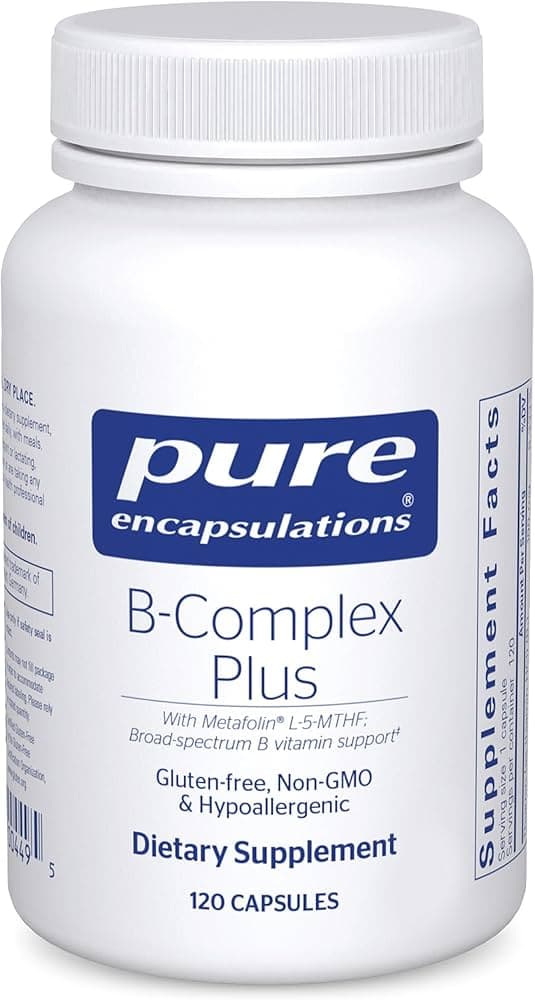
- If you feel you need B-vitamin support, a low-dose B-complex is usually a better idea. It provides all B vitamins in balance.
- What's benfotiamine?
- A lab-made, fat-soluble version of thiamine. It may be absorbed better and is often used for nerve-related issues. Overkill for the average person.
- Can I get too much from food?
- No. It's practically impossible. Your body is very good at regulating it.
Why these belong in the same formula. Each row says what the basis is, from settled biochemistry through to a trial that measured the pair.
Thiamine works as thiamine pyrophosphate, and the enzymes that use it bind the cofactor together with a magnesium ion. Transketolase and pyruvate dehydrogenase need that magnesium for the activated form of thiamine to sit in the active site.
Pyruvate dehydrogenase and the related alpha-ketoacid dehydrogenase complexes carry thiamine pyrophosphate on one subunit and riboflavin-derived FAD on another. Both have to be present for the complex to move carbon into the citric acid cycle.
Thiamine pyrophosphate performs the decarboxylation step, and the resulting two-carbon unit is handed to coenzyme A, which the body builds from pantothenic acid. The pair covers the input and the output of the same reaction in normal energy metabolism.
Lipoic acid is the swinging arm on the core subunit of the same dehydrogenase complexes where thiamine pyrophosphate does the first step. It carries the intermediate onward from the thiamine-bound site.
The pyruvate and alpha-ketoglutarate dehydrogenase complexes need thiamine pyrophosphate as cofactor and NAD from niacin as the electron acceptor in the same reaction, so neither alone lets the step run.
Biotin is the cofactor for pyruvate carboxylase and thiamine for pyruvate dehydrogenase, the two enzymes that decide whether pyruvate enters the Krebs cycle or goes back toward glucose synthesis. Both are needed for that node to work normally.
Acetylcholine is assembled from choline and acetyl-CoA, and the acetyl-CoA comes from the thiamine-dependent pyruvate dehydrogenase step, so each partner supplies one half of the molecule.
Thiamine pyrophosphate and pyridoxal phosphate serve adjacent steps of carbohydrate and amino acid handling, and the two are classically dosed together because a high single-B intake can expose a shortfall in another.
B12 supports myelin maintenance and methylation while thiamine supports the nerve energy supply that runs through pyruvate dehydrogenase and transketolase. B1, B6 and B12 are the classic neurotropic combination for exactly that split.
Manganese is the metal cofactor for pyruvate carboxylase, sitting opposite the thiamine-dependent dehydrogenase at the pyruvate branch point that sets carbohydrate flow.
Carnitine carries fatty acids into mitochondria for beta-oxidation while thiamine gates the entry of carbohydrate-derived pyruvate, so the pair covers both fuel streams feeding the Krebs cycle.
Thiamine-dependent dehydrogenases generate reducing equivalents that CoQ10 then shuttles through the electron transport chain, consecutive stages of the same energy pathway.
Ascorbate protects thiamine from oxidative and sulfite-driven breakdown in solution, which is why the two are commonly formulated in the same tablet.
Tea tannins and related polyphenols react with the thiazole ring of thiamine and convert it into a form the body cannot use, a long-documented antagonism, so a large tannin dose in the same window lowers what the thiamine delivers.
Benfotiamine is a lipid-compatible S-acyl derivative that is dephosphorylated and converted to thiamine after absorption, so it feeds the same coenzyme pool. Its uptake does not depend on the saturable thiamine transporters in the same way water-soluble salts do. Anyone combining the two is loading one pathway from two entry points rather than adding a second nutrient.
Thiamine is phosphorylated by thiamine pyrophosphokinase to thiamine pyrophosphate, the coenzyme form that the dehydrogenase complexes and transketolase actually bind. Supplying the preformed diphosphate and supplying thiamine converge on the same intracellular pool. The conversion step needs ATP and magnesium, which is where the rest of the picture matters.
The branched-chain alpha-ketoacid dehydrogenase complex that handles leucine, isoleucine and valine breakdown requires thiamine pyrophosphate as a cofactor. A higher branched-chain amino acid load therefore draws on the same coenzyme pool as pyruvate and alpha-ketoglutarate handling. The relationship is enzymology, not a combination-trial finding.
Valine catabolism runs through the same branched-chain alpha-ketoacid dehydrogenase complex, which is thiamine pyrophosphate dependent. Thiamine status is one of the inputs that determines how efficiently that step proceeds. This is textbook enzymology and carries no claim about a combined supplemental effect.
Transketolase, a thiamine pyrophosphate enzyme, moves two-carbon units between sugar phosphates in the non-oxidative pentose phosphate pathway and sits directly on ribose-5-phosphate handling. Erythrocyte transketolase activity is in fact the classic laboratory marker of thiamine status. The link is pathway-level. A marker is not an outcome.
Polyphenolic tannins oxidise the thiazole ring of thiamine to the non-coenzyme thiochrome form, which is how the classic fluorimetric assay works and also how tea and betel tannins degrade dietary thiamine. Taking a strong tannin source in the same glass as a thiamine dose reduces what survives to be absorbed. Separating them by an hour or two is the ordinary way around it.
When a carbohydrate load restarts glycolysis, potassium, phosphate and magnesium all shift into cells while thiamine demand rises at the pyruvate dehydrogenase step. Clinical refeeding protocols therefore cover thiamine and these electrolytes together rather than separately. The pairing is protocol convention grounded in established physiology.
Converting thiamine to its diphosphate coenzyme consumes ATP and transfers a pyrophosphate group, so phosphate availability sits upstream of the activation step. Carbohydrate refeeding drives phosphate into cells at the same moment thiamine demand climbs. Regard this as physiology rather than a reason to dose the two together.
Pyruvate dehydrogenase and alpha-ketoglutarate dehydrogenase each need thiamine pyrophosphate, lipoate, FAD, coenzyme A and NAD+ to complete a turn. NR is one of the routes to NAD+ supply. Both are inputs into the same multi-cofactor machine, which makes the relationship stoichiometric rather than demonstrated in a combination study.
Thiamine pyrophosphate binds its enzymes as a magnesium complex, so magnesium status governs whether the coenzyme can do anything once it is made. Correcting thiamine without adequate magnesium leaves the coenzyme present but poorly engaged. Any well-absorbed magnesium form serves the same biochemical role here.
Sulbutiamine is a synthetic disulfide of two modified thiamine molecules, lipid-compatible enough to cross membranes without the saturable transporter, and it is reduced back to thiamine intracellularly. It therefore raises the same coenzyme pool by a different entry route. Combining it with a plain thiamine salt is duplication of one nutrient, not a two-nutrient stack.
Nothing specific on file for Thiamine. Match the label to the daily amount above, and tell your doctor what you take.
Not medical advice. Show the label to your pharmacist.What Thiamine actually does.
An enzyme uses ATP and magnesium to add two phosphates to thiamine, turning it into thiamine pyrophosphate, the form its enzymes actually bind.
Thiamine pyrophosphate is the required helper for pyruvate dehydrogenase, the step that connects sugar breakdown to the citric acid cycle by turning pyruvate into acetyl coenzyme A.
It's also the required helper for alpha-ketoglutarate dehydrogenase, a step inside the citric acid cycle that helps set the pace.
It's the required helper for the enzyme that commits the branched-chain amino acids leucine, isoleucine and valine to being broken down.
Where Thiamine comes from.
Thiamine is built in a reactor from two halves that are joined together, then cleaned up by crystallising it out of solution. The molecule that results is the same one that is in food. The salt attached to it is what makes one powder dissolve faster or sit more stably in a tablet.
Chemically synthesised. The molecule is identical to the one a plant or an animal makes, and building it deliberately means a known purity, a fixed dose and no crop contaminants. For several nutrients this is the only route that reaches a usable amount.
Industrial thiamine is built from two separately synthesised halves: a substituted aminopyrimidine and a thiazole ring, each made from petrochemical and ammonia-derived intermediates.
The two halves are joined by quaternising the thiazole nitrogen with a pyrimidinylmethyl halide, forming the thiazolium salt that defines the molecule.
The resulting thiamine cation is paired with a counter-ion, chloride hydrochloride for the hydrochloride or nitrate for the mononitrate, which sets the solubility and hygroscopicity of the finished powder.
Repeated crystallisation from aqueous or alcoholic solvent removes reaction by-products and residual halide, and sets crystal size for blending.
Potency is checked against pharmacopoeial thiamine assays, typically by HPLC or by the thiochrome fluorescence method that exploits thiamine's own oxidation product.
Material is milled, sometimes coated for stability in multivitamin blends, and dosed into tablets, capsules, powders or aqueous solutions.
Getting Thiamine from food.
The whole-food sources on file. A supplement closes the gap, it does not replace dinner.
A gram-for-gram figure (how much of each you would eat to match a dose) will appear here once it is sourced and reviewed. This page will not print a number it cannot cite.
The forms it comes in.
The essence, in one line each.
- In a pilot trial of adults with high blood sugar and a kidney-protein marker, three months of high-dose thiamine lowered urinary albumin excretion by a median of about 18 mg per day, while the placebo group showed no significant change.Randomised trial. Rabbani et al., 2009 (Diabetologia). PMID 19057893 ↗
- Among 335 lactating mothers, 1.2 mg per day of thiamine raised human milk thiamine to about 183 micrograms per litre versus 153 on placebo, and about 2.35 mg per day was the dose reaching 90 percent of the maximum milk concentration.Randomised trial. Gallant et al., 2021 (American Journal of Clinical Nutrition). PMID 33829271 ↗
- Pooling six trials in 364 adults with elevated blood sugar, thiamine at 100 to 900 mg per day showed no detectable effect on HbA1c (-0.02 percent) or fasting glucose, while HDL cholesterol rose by about 0.10 mmol/L.Meta-analysis. Muley et al., 2022 (BMJ Open). PMID 36008064 ↗
- The authors compare established dosing protocols against thiamine's own pharmacokinetics and argue that several conventional regimens were set by clinical habit rather than by the biology of absorption and tissue saturation.Narrative review. Bonnan et al., 2025 (Journal of Clinical Medicine). PMID 40507549 ↗
- Pooling randomised trials of thiamine in intensive care, the authors did not detect a clear effect on the pooled clinical endpoints, which is a failure to detect a difference rather than a demonstration that none exists.Meta-analysis. Sedhai et al., 2021 (Journal of Critical Care). PMID 34118501 ↗
- An updated pooling of randomised trials reported a change in left ventricular ejection fraction, a measured marker of heart pumping, with thiamine supplementation, on a small and heterogeneous trial base.Meta-analysis. He et al., 2024 (Clinical Cardiology). PMID 38940395 ↗
- The review pooled randomised trials and concluded that the ejection fraction signal is marker-level and the trial base too limited to settle the question.Systematic review. Syed et al., 2023 (Heart and Lung). PMID 37126872 ↗
- Pooled randomised trials showed a change in ejection fraction, a marker, and the authors called for larger trials before drawing conclusions about how people actually do.Meta-analysis. Xu et al., 2022 (Complementary Therapies in Medicine). PMID 35842069 ↗
- The review gathers trials of thiamine in adults with high blood sugar and reports changes mainly in biochemical and vascular markers, with the authors noting the evidence base is small.Systematic review. Serra et al., 2025 (International Journal of Molecular Sciences). PMID 40362174 ↗
- A pilot randomised trial of sustained high-dose thiamine around cardiopulmonary bypass, designed to test feasibility and metabolic response rather than to settle clinical endpoints.Randomised trial. Lomivorotov et al., 2020 (Journal of Cardiothoracic and Vascular Anesthesia). PMID 31558398 ↗
- Response to thiamine varied with baseline cellular respiration measurements, which points at a subgroup effect and is exploratory rather than confirmatory.Randomised trial. Vine et al., 2026 (Resuscitation). PMID 41759812 ↗
- Thiamine supplementation was associated with lower 30-day mortality in a records-based intensive care population. An association drawn from records is not a causal finding.Cohort study. Wang et al., 2026 (Scientific Reports). PMID 41872438 ↗
- Records-based analysis found thiamine supplementation associated with lower in-hospital and intensive care mortality. The design cannot separate the nutrient from the reasons clinicians chose to give it.Cohort study. Yin et al., 2026 (BMC Pulmonary Medicine). PMID 41862834 ↗
- The study evaluated whether high-dose intravenous thiamine changed lactate clearance, a laboratory marker of tissue metabolism, in hospitalised adults with advanced liver impairment.Randomised trial. Ali et al., 2026 (International Journal of Critical Illness and Injury Science). PMID 42281816 ↗
- In a setting where maternal thiamine intake is commonly low, infant language processing measures differed with maternal thiamine supplementation dose.Randomised trial. Baldwin et al., 2025 (Developmental Psychology). PMID 39699595 ↗
- Metagenomic sequencing in dairy cattle showed shifts in rumen microbial community composition with thiamine supplementation, a mechanistic observation in a non-human system.Animal study. Xue et al., 2026 (Animals). PMID 41751141 ↗
These are the studies our verdict leans on, chosen from the 1,307 we read for Thiamine. The full linked list is below.
The studies, linked.
6 sources behind our Thiamine verdict: peer-reviewed studies and registered clinical trials. Every one links straight to PubMed, the journal, or ClinicalTrials.gov. Read them yourself.
- Clinical trialA Study to Establish a Case Definition of Thiamine Responsive Disorders (TRD) Among Infants in Lao PDRClinicalTrials.gov ↗1,394 participants, Completed
- Clinical trialAscorbic Ccid, Hydrocortisone, and Thiamine in Sepsis and Septic Shock - A Randomized, Double-Blind, Placebo-Controlled TrialClinicalTrials.gov ↗Phase 2, 205 participants, Completed
- Clinical trialA Prospective, Randomized Clinical Study Comparing Triple Therapy Regimen to Hydrocortisone Monotherapy in Reducing Mortality in Septic Shock PatientsClinicalTrials.gov ↗Phase 3, 94 participants, Completed
- Clinical trialEfficacy of Thiamine in Patients With Clinically Suspected Dry Beriberi: An Open Labeled Hospital Bases Study in BangladeshClinicalTrials.gov ↗55 participants, Completed
- Clinical trialFurther Development and Assessment of Tools to Measure Risk Factors for and Treatment of Thiamine Deficiency Disorders: a Comparison of Rural and Urban Contexts in Lao PDRClinicalTrials.gov ↗42 participants, Completed
- Clinical trialRandomized, Double-blind, Placebo-controlled Trial of the Effect of Thiamine on Oxygen Consumption After In-hospital Cardiac Arrest.ClinicalTrials.gov ↗Phase 2, 41 participants, Terminated
Evidence surfaced via Semantic Scholar (Allen Institute for AI) and ClinicalTrials.gov. Ranked by study type and citation weight, not cherry-picked.
Problems people have reported.
Read this carefully. These are 943,924 voluntary, unverified reactions reported to the FDA (openFDA). The number mostly reflects how popular Thiamine is, not how risky it is. A report is not proof Thiamine caused anything. It is a signal of what to watch for, nothing more.
Source: openFDA adverse-event reports. Voluntary reporting, not an incidence rate.
FDA Disclaimer: These statements have not been evaluated by the Food and Drug Administration. This information is for educational purposes only and is not intended to diagnose, treat, cure, or prevent any disease. Consult your healthcare provider before starting any supplement regimen.