AdultsNHANES 2005 to 2016
About 84% of US adults
take in less vitamin E than the estimated average requirement.
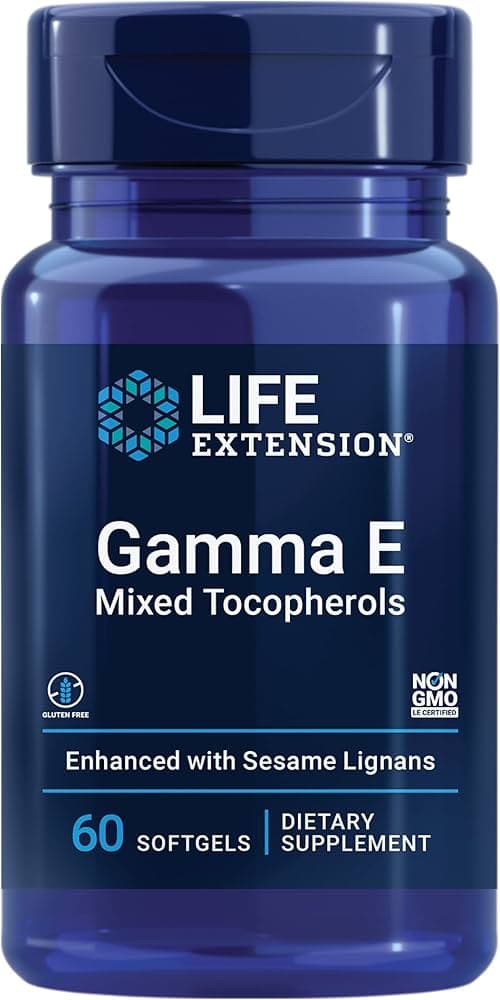
Reider et al., Nutrients 2020, immune-nutrient intakes in US adults, NHANES 2005 to 2016. ↗Tocopherol supplementation for targeted health support. Protects cell membranes from lipid peroxidation. Essential antioxidant for fats. Supports immune function, skin health, and neurological function.
Reviewed March 2026
Public health figures for this ingredient, reported by the agencies that publish them, cited and dated.
About 84% of US adults
take in less vitamin E than the estimated average requirement.
Reider et al., Nutrients 2020, immune-nutrient intakes in US adults, NHANES 2005 to 2016. ↗About 85% of US women aged 19 and over
take in less vitamin E from food and drink than the estimated average requirement.
USDA ARS, Usual Nutrient Intake from Food and Beverages, by Gender and Age, WWEIA NHANES 2013-2016, Table A 32 (vitamin E as alpha-tocopherol), females 19+: 85% below EAR (SE 1.7). ↗About 72% of US men aged 19 and over
take in less vitamin E from food and drink than the estimated average requirement.
USDA ARS, Usual Nutrient Intake from Food and Beverages, by Gender and Age, WWEIA NHANES 2013-2016, Table A 32 (vitamin E as alpha-tocopherol), males 19+: 72% below EAR (SE 1.3). ↗About 90% of US women aged 71 and over
take in less vitamin E from food and drink than the estimated average requirement.
USDA ARS, Usual Nutrient Intake from Food and Beverages, by Gender and Age, WWEIA NHANES 2013-2016, Table A 32 (vitamin E as alpha-tocopherol), females 71+: 90% below EAR (SE 1.2). ↗About 95% of US girls aged 14 to 18
take in less vitamin E from food and drink than the estimated average requirement.
USDA ARS, Usual Nutrient Intake from Food and Beverages, by Gender and Age, WWEIA NHANES 2013-2016, Table A 32 (vitamin E as alpha-tocopherol), females 14-18: 95% below EAR (SE 1.5). ↗Population figures from public health data. Context for the category, not a statement about any individual and not a claim about this product.
Source: NIH ODS + Miller 2005 meta-analysis
These words describe the research, not the molecule's worth. Research strength is how much work stands behind one claim, and it is never a product score.
Tocopherol has emerging evidence, with 15 cited human studies on this page.
Why these belong in the same formula. Each row says what the basis is, from settled biochemistry through to a trial that measured the pair.
When tocopherol quenches a fat radical inside a cell membrane it is left spent as a tocopheroxyl radical, and vitamin C in the surrounding water passes it an electron to restore its working form. Because the two hand off across the fat and water boundary, vitamin C helps keep membrane vitamin E in active supply.
The two guard membrane fats from oxidation at consecutive steps. Tocopherol intercepts the radicals that would start a peroxidation chain, while selenium, as the cofactor of glutathione peroxidase, clears the fat peroxides that still form. Covering different stages of the same process, each eases the demand placed on the other.
The long-chain fats in fish oil are among the most oxidation-prone molecules the body carries, and tocopherol is the membrane antioxidant that stops that chain reaction, so more vitamin E is used up as omega-3 intake rises. This is why fish oil products routinely include tocopherol, both to protect the body's own fats and to keep the oil itself from turning rancid.
Reduced coenzyme Q10 hands an electron back to the tocopheroxyl radical inside the membrane, returning tocopherol to its active form. The pair keeps lipid antioxidant capacity going longer than either alone.
Alpha-tocopherol is the preferred ligand of hepatic alpha-tocopherol transfer protein, so generous alpha-tocopherol lowers circulating tocotrienol levels. Formulators separate the doses or hold alpha-tocopherol low when tocotrienols are the intended active.
Dihydrolipoic acid regenerates ascorbate and glutathione, and those in turn restore oxidised tocopherol at the membrane surface. The result is a relay that spans the water and lipid phases.
Glutathione maintains the ascorbate pool that reduces the tocopheroxyl radical back to tocopherol. Without a reducing partner, oxidised tocopherol can itself act as a pro-oxidant.
Generous alpha-tocopherol intake antagonises vitamin K action on the gamma-carboxylation of clotting factors and can lengthen clotting time. The two are kept in balance rather than pushed in opposite directions.
Tocopherol needs bile salts and dietary lipid to enter mixed micelles, so a lipid carrier raises the fraction absorbed. This is standard practice in softgel formulation.
Both are fat-soluble and compete for the same micellar and lipoprotein carriers, so large amounts of one can lower uptake of the other. In balanced amounts tocopherol also shields carotene from oxidation in the oil phase.
Free ferrous iron drives Fenton chemistry that consumes tocopherol and oxidises the lipid it sits in. Separating the two in time or by encapsulation keeps both intact.
Astaxanthin spans the lipid bilayer while tocopherol works near the surface, so the two cover different depths of the same membrane. Together they slow the chain reaction of lipid peroxidation more completely.
Hepatic alpha-tocopherol transfer protein preferentially selects RRR-alpha-tocopherol for loading onto VLDL. High-dose alpha-tocopherol therefore lowers circulating gamma-tocopherol, because gamma is left to be metabolised and excreted. A product supplying both is not simply additive, and the ratio matters more than the total.
Both are fat-soluble and both need incorporation into mixed micelles before uptake. When large doses of one are taken with the other in the same meal, micellar carrying capacity becomes the limiting step. Separating the doses across meals is the usual formulation response.
Zeaxanthin travels the same lipid absorption route as tocopherol and is carried on the same lipoproteins afterward. High-dose tocopherol taken in the same meal competes for that capacity. The competition is on absorption, not on function.
Lycopene and tocopherol both require bile salts, dietary fat and micelle formation to be absorbed. Large simultaneous doses compete for the same vehicle. Both are also lipid-phase antioxidants, so their functional relationship in tissue differs from their competitive relationship in the gut.
Retinol oxidises readily, and tocopherol is routinely added to retinol-containing oils and creams to protect it. That is a genuine chemical service in the container. In the gut, however, the two compete for the same micellar carrier, so the same pairing helps in the bottle and competes at the brush border.
Alpha-tocopherol quinone, a metabolite formed at high intakes, interferes with the vitamin K cycle that carboxylates clotting factors. This is the pharmacological basis of the standard caution about high-dose vitamin E in people on anticoagulants. It is textbook, not a combination-trial finding, and it applies at supplemental rather than dietary intakes.
The same vitamin K cycle that carboxylates clotting factors also carboxylates osteocalcin and matrix Gla protein, the proteins MK-7 is taken for. High-dose alpha-tocopherol pressures that cycle. The functional consequence at ordinary supplemental doses has not been quantified.
Long-chain polyunsaturated fats oxidise easily, both in the container and in membranes. Tocopherol terminates the peroxidation chain by donating a hydrogen atom to the lipid peroxyl radical. Higher polyunsaturated intake also raises the tocopherol requirement, which is why marine oils are routinely formulated with it.
Flaxseed oil is dominated by alpha-linolenic acid, which has three double bonds and oxidises quickly. Tocopherol added to the oil slows rancidity, and the same chemistry operates in membranes after absorption. This is standard oil chemistry rather than a clinical finding.
Seed oils rich in gamma-linolenic acid carry multiple double bonds and are prone to peroxidation. Tocopherol is the usual in-bottle protection. Its role here is a formulation service to the oil as much as a nutritional one to the person.
DHA carries six double bonds, making it the most oxidation-prone fatty acid in a membrane. Tocopherol sits in that membrane and intercepts the peroxyl radicals that propagate the chain. Raising DHA intake raises the amount of tocopherol needed to hold the same protection.
EPA's five double bonds make it a ready substrate for lipid peroxidation. Tocopherol donates a hydrogen to the propagating radical and stops the chain. This is why marine oil products almost always list a tocopherol on the ingredient line.
Vitamin E requirement scales with polyunsaturated fat intake, and linoleic acid is the dominant polyunsaturated fat in most Western diets. The two travel together in vegetable oils for that reason. The relationship is a requirement relationship, not a benefit claim.
When tocopherol quenches a lipid radical it becomes a tocopheroxyl radical and must be reduced back to continue working. Ascorbate does this at the membrane surface, and polyphenols including proanthocyanidins have been shown to do it in laboratory systems. Whether polyphenol supplementation measurably changes tocopherol turnover in people has not been established.
Pine bark polyphenols regenerate oxidised tocopherol in vitro, which is the same service ascorbate performs. The observation is chemical and comes from model systems rather than from human dosing studies.
Quercetin can reduce the tocopheroxyl radical in model membrane systems, returning tocopherol to its active form. This is chemistry measured in vitro. It has not been shown to change tocopherol status in people.
Both are used as antioxidants and both partition toward lipid environments, though resveratrol is much less lipophilic. Co-antioxidant interactions have been described in model systems. Human co-supplementation data is absent from this candidate set.
Tocopherol absorption depends on getting into a mixed micelle, which requires bile salts and dietary fat. Phospholipid emulsifiers assist that dispersion, which is why lecithin appears in emulsified vitamin E products. This is formulation chemistry, not a nutrient interaction.
Sunflower-derived phosphatidylcholine performs the same emulsifying role as soy lecithin in dispersing a fat-soluble vitamin. Product choice between them is usually about allergen labelling rather than performance. The mechanism is physical dispersion ahead of micelle formation.
Rosemary extract, carrying carnosic acid and rosmarinic acid, is combined with tocopherols to protect oils from rancidity. The two act by different routes, radical chain termination for tocopherol and metal chelation plus radical scavenging for the rosemary diterpenes. The pairing is a container-level effect and says nothing about what happens after ingestion.
Free ferrous iron drives Fenton chemistry, generating hydroxyl radicals that start lipid peroxidation chains. Tocopherol terminates those chains but is consumed doing so. Formulating a high iron dose alongside polyunsaturated oil raises the antioxidant demand on the tocopherol present.
Copper catalyses lipid peroxidation in the same way iron does, which is why chelators are added to oils alongside tocopherols. In a formulation the practical answer is separating the metal from the oil phase. In the body the relationship is about oxidative load rather than a direct binding interaction.
Zinc and tocopherol are combined in antioxidant-oriented formulations, with zinc contributing through superoxide dismutase and metallothionein rather than through radical chain termination. The available combination work in this candidate set was carried out in breeding animals and measured blood and semen parameters. That does not transfer to human outcomes.
Choline supports phosphatidylcholine synthesis and therefore membrane lipid supply, while tocopherol protects those membrane lipids from peroxidation. The two have been co-supplemented in dairy cattle with metabolic markers as the endpoint. Read this as a mechanism pairing observed in livestock, not human evidence.
Both are fat-soluble vitamins absorbed through micelle incorporation. Large simultaneous doses compete for micellar capacity, though at typical supplemental amounts the effect is modest. Taking either with a meal containing fat matters more than separating them.
Nothing specific on file for Tocopherol. Match the label to the daily amount above, and tell your doctor what you take.
Not medical advice. Show the label to your pharmacist.Tocopherol, vitamin E, is the main fat-soluble antioxidant in cell membranes. It donates a hydrogen atom to a damaging fat radical, stopping a chain reaction of fat damage from spreading.
After donating that hydrogen, tocopherol turns into a stable radical of its own, which vitamin C can then reduce back to active tocopherol, linking vitamin E's recycling to vitamin C status.
A liver protein specifically selects one form of vitamin E, alpha-tocopherol, for release into the blood, which is why alpha-tocopherol dominates in plasma while gamma-tocopherol gets cleared faster, even though it's more common in food.
Extra vitamin E gets broken down by liver enzymes into metabolites excreted in urine, and this clearance route is more active for the gamma form than the alpha form.
The whole-food sources on file. A supplement closes the gap, it does not replace dinner.
A gram-for-gram figure (how much of each you would eat to match a dose) will appear here once it is sourced and reviewed. This page will not print a number it cannot cite.
These are the studies our verdict leans on, chosen from the 3,437 we read for Tocopherol. The full linked list is below.
3 sources behind our Tocopherol verdict: peer-reviewed studies and registered clinical trials. Every one links straight to PubMed, the journal, or ClinicalTrials.gov. Read them yourself.
Evidence surfaced via Semantic Scholar (Allen Institute for AI) and ClinicalTrials.gov. Ranked by study type and citation weight, not cherry-picked.
Read this carefully. These are 922,567 voluntary, unverified reactions reported to the FDA (openFDA). The number mostly reflects how popular Tocopherol is, not how risky it is. A report is not proof Tocopherol caused anything. It is a signal of what to watch for, nothing more.
Source: openFDA adverse-event reports. Voluntary reporting, not an incidence rate.
FDA Disclaimer: These statements have not been evaluated by the Food and Drug Administration. This information is for educational purposes only and is not intended to diagnose, treat, cure, or prevent any disease. Consult your healthcare provider before starting any supplement regimen.