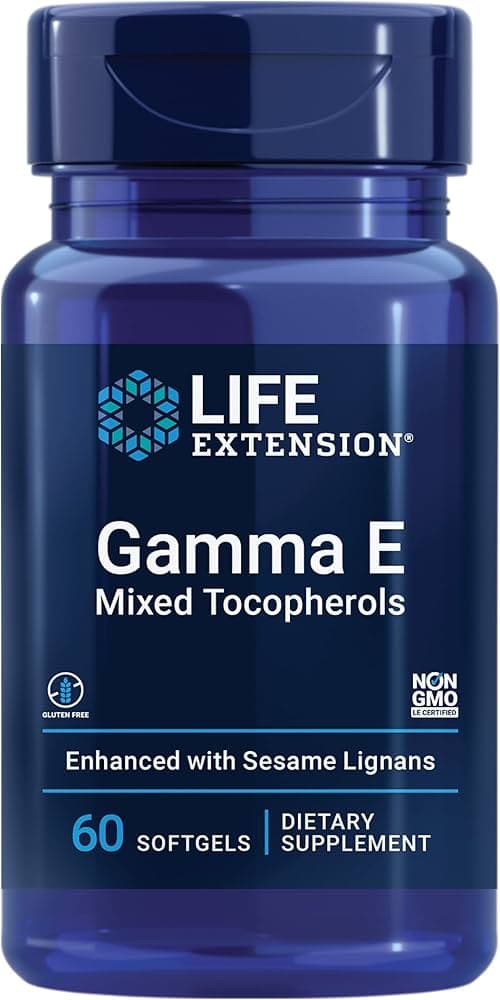
Tocotrienols.
The other vitamin E. Better for cholesterol and neuroprotection. A powerful antioxidant that protects cells from damage. It's being studied for protecting brain cells, supporting healthy cholesterol levels, and liver health.
Reviewed March 2026
- Category
- Vitamin
- Also filed under
- CholesterolNeuroprotectionAntioxidant
What Tocotrienols is, and what it does.
- Does it work
- Maybe. It's not a first-line supplement. If you're focused on healthy aging or have specific cholesterol concerns, it's worth a look. Otherwise, get the basics right first.
- How much to take
- 100-400 mg daily. Always take it with a meal that contains some fat to ensure it actually gets absorbed.
- Time to feel it
- Trials read out at eight to twelve weeks. Lipid and antioxidant markers move on a blood panel long before anything is noticeable.
- The first dose
- Nothing. Don't expect any change. This is a slow build inside your cells.
- With regular use
- The goal is cellular protection. Over months, it may contribute to healthier cholesterol markers and better antioxidant status.
- How well tolerated
- Generally well tolerated. The main concern is high doses interfering with blood clotting, like regular Vitamin E. Stick to the recommended dose.
- How it feels
- Like you're taking a supplement. Seriously, you don't feel it. The benefits are happening at a level you can't perceive directly.
- The overlooked benefit
- A large alpha-tocopherol serving taken at the same time cuts how much tocotrienol reaches your blood, because both ride the same liver transfer protein.
100 to 200mg a day is where Tocotrienols works.
Source: Qureshi et al. (2002) Am J Cardiol; Ahsan et al. (2014) Nutr Metab
The proof, claim by claim.
These words describe the research, not the molecule's worth. Research strength is how much work stands behind one claim, and it is never a product score.
Based on 25 human trials with 65% consistency.
- support for cholesterol already in the normal rangeRandomised trial
- antioxidant protection of membrane lipidsIn vitro study
- antioxidant status measured in bloodRandomised trial
- protection of neural cells in laboratory modelsAnimal study
Questions people ask about Tocotrienols.
- Is this better than regular Vitamin E?
- It's different. Tocotrienols are much more potent antioxidants. Taking high-dose regular vitamin E (alpha-tocopherol) can actually block tocotrienol benefits.
- Can I get this from food?
- Technically yes, but not easily. You'd need to consume large amounts of red palm oil or annatto seeds daily. A supplement is more practical.
- When's the best time to take it?
- With a meal containing fat. Breakfast with eggs or dinner with olive oil works. It's fat-soluble, so it needs fat to be absorbed.
- Any side effects I'll feel?
- Extremely unlikely at standard doses. It's very well-tolerated. High doses (over 900mg) could cause digestive upset for some.
- Does it really help the brain?
- Early research is promising. Studies show it can accumulate in the brain and help protect neurons from damage, but more data is needed.
- Should I look for a specific type?
- Yes. Look for a 'full-spectrum' blend that contains all four types (alpha, beta, gamma, delta). Annatto-derived tocotrienols are naturally free of tocopherols, which is a plus.
Why these belong in the same formula. Each row says what the basis is, from settled biochemistry through to a trial that measured the pair.
The hepatic alpha tocopherol transfer protein strongly prefers alpha tocopherol, so a large alpha tocopherol dose crowds tocotrienols out of lipoprotein packaging and lowers their blood levels. Tocotrienol products are normally formulated low in alpha tocopherol or dosed apart from it.
Tocotrienols carry the same chromanol head as tocopherols, and once that head quenches a lipid radical it is left as a chromanoxyl radical. Ascorbate at the membrane surface donates an electron to regenerate the reduced form, a recycling step shown for the chromanol chemistry the two share.
Tocotrienols are lipid soluble and absorb poorly without fat present to form micelles, which is why fasted doses give much lower blood levels than fed ones. An oil carrier in the capsule or a fat containing meal is the usual formulation answer.
Tocotrienols promote degradation of HMG-CoA reductase, the same enzyme step that supplies the isoprenoid tail of endogenous coenzyme Q10. Adding coenzyme Q10 covers that shared upstream branch.
Both act on HMG-CoA reductase, tocotrienols by promoting its degradation and monacolin K by inhibiting it, so their effects on normal lipid handling point the same way. The same shared step also lowers endogenous coenzyme Q10 output, which is why the trio is usually formulated together.
Standard vitamin E products are mostly alpha-tocopherol, the preferred ligand of the hepatic transfer protein, and it displaces tocotrienols from that carrier. Circulating tocotrienol levels fall when the two are dosed together.
Tocotrienols quench lipid peroxyl radicals while selenium-dependent glutathione peroxidase reduces the lipid hydroperoxides that remain. The two halves of the same defence cover different intermediates.
Tocotrienols distribute readily through the lipid bilayer thanks to their unsaturated tail, and astaxanthin spans the same bilayer. Their positions overlap little, so coverage of the membrane is wider.
EPA and DHA carry many double bonds and oxidise easily, and tocotrienols intercept the peroxyl radicals that propagate that chain. The pairing keeps the oil stable in the capsule and in the membrane.
The liver's alpha-tocopherol transfer protein binds alpha-tocopherol far more tightly than it binds tocotrienols, so alpha-tocopherol is preferentially loaded onto VLDL for redistribution while tocotrienols are cleared faster. A high-dose alpha-tocopherol taken alongside lowers circulating tocotrienol levels. Formulators who want tocotrienol status therefore keep alpha-tocopherol content low and dose the two apart. This is settled vitamin E pharmacokinetics and needs no combination trial.
Mixed tocopherol preparations are dominated by alpha and gamma tocopherol, both of which compete with tocotrienols for micellar incorporation and for hepatic transfer protein handling. Blending them dilutes the tocotrienol fraction that reaches the circulation. Where both are wanted, separating the dosing times is the usual approach.
Carotenoids and tocotrienols both depend on mixed micelles for uptake and on chylomicrons for transport, and high doses of one can reduce the absorption of the other. Palm-derived preparations naturally carry both, which is why red palm oil concentrates present them together. The competition matters most at supplemental rather than dietary doses.
Retinol and tocotrienols share the bile-dependent micellar route into the enterocyte, so a large dose of one can reduce uptake of the other taken at the same time. In a multivitamin the doses are usually small enough that this is a formulation consideration rather than a practical loss. Spacing high single doses removes the overlap.
Vitamin D3 and tocotrienols both require bile salts and dietary fat to form the mixed micelles that carry them across the intestinal wall. Taking them in the same fat-containing meal supports the absorption of both, while very high single doses of one compete for the same micellar capacity. The practical guidance is the same either way: take them with fat.
Tocotrienols quench lipid peroxyl radicals in the membrane and become tocotrienoxyl radicals in the process. Dihydrolipoic acid, generated from alpha-lipoic acid, can reduce oxidised antioxidants back to their active form, which is the same recycling role vitamin C plays. The network relationship is established for the vitamin E family. The specific evidence in people is thinner for tocotrienols than for tocopherols.
Glutathione operates in the aqueous phase and the vitamin E family in the lipid phase, and the two are linked through the regeneration chain that restores oxidised chromanol rings. Together they cover both compartments of a membrane. These are mechanistic and marker-level relationships, not demonstrated clinical outcomes.
N-acetylcysteine supplies cysteine, the rate-limiting substrate for glutathione, which sits upstream of the recycling steps that restore oxidised lipid-phase antioxidants. The pairing therefore supports the same network from opposite ends. The mechanism is well described. The human combination data for tocotrienols specifically are limited.
Tocotrienols are oils and depend on emulsification for dispersion and micellar uptake. Phospholipid emulsifiers such as lecithin improve dispersion in an aqueous format and in self-emulsifying systems. The role is formulation delivery rather than a biological interaction.
Sunflower-derived phospholipids serve the same emulsifying function as soy lecithin without soy in the ingredient statement. In a tocotrienol softgel or powder they help the oil disperse and form micelles. Purpose is delivery, and the choice between lecithin sources is one of sourcing rather than function.
Any dietary fat co-ingested with tocotrienols stimulates bile release and provides the lipid phase for micelle formation, which is what carries them across the gut wall. A carrier oil in a softgel performs the same job. Highly unsaturated carrier oils also draw on the antioxidant they are carrying, which is a stability consideration for the formulator.
Quercetin is a flavonoid that scavenges radicals largely in the aqueous and interfacial phase, while tocotrienols work inside the lipid bilayer. Combined, they cover more of the membrane environment than either alone. The rationale is mechanistic and marker-based. No combination outcome study grounds it here.
Proanthocyanidins from grape seed act mainly in the aqueous phase and at the membrane surface, complementing the lipid-interior position of tocotrienols. Antioxidant blends combine the two on that reasoning. What has been measured is oxidative stress markers, not outcomes.
Pine bark proanthocyanidins occupy the aqueous compartment while tocotrienols sit within the membrane lipid. Formulas pair them to cover both. The evidence for the pairing is mechanistic rather than clinical.
Lycopene and tocotrienols compete for space in the same mixed micelles and for the same chylomicron transport out of the enterocyte. At supplemental doses this can reduce the absorption of either. Both occur together naturally in red palm concentrates, so their coexistence is not new. The competition shows at high isolated doses.
Pterostilbene is the dimethylated stilbene analogue with greater lipophilicity than resveratrol, so it partitions into membranes where tocotrienols also sit. Combined use is a design choice around lipid-phase coverage. Human combination data are absent.
Nothing specific on file for Tocotrienols. Match the label to the daily amount above, and tell your doctor what you take.
Not medical advice. Show the label to your pharmacist.What Tocotrienols actually does.
Tocotrienols are one of the two branches of the vitamin E family. Same chromanol head as tocopherols, but the tail is a farnesyl chain carrying three double bonds instead of a saturated one.
There are four forms, alpha, beta, gamma and delta, told apart by how many methyl groups sit on the chromanol ring and where. The ratio shifts with the plant source, and that ratio is what a standardised extract spells out.
The unsaturated tail is shorter and more mobile than a tocopherol's, so tocotrienols move more freely inside the fatty layer of a membrane and cover more of it per molecule.
They work as chain-breaking antioxidants. The chromanol hydroxyl hands a hydrogen atom to a lipid peroxyl radical, which halts the spread of lipid oxidation and leaves behind a fairly stable tocotrienoxyl radical.
Where Tocotrienols comes from.
The oil is pressed or extracted from annatto seed, palm fruit or rice bran. It is then distilled under vacuum at low heat and run through a separation step that pulls the tocotrienols away from everything else, tested to confirm which forms are present and in what proportion, and sealed away from air because it oxidises easily.
Made from a plant. What ends up in the capsule tracks the harvest, so batch testing and a stated marker matter more here than with a made molecule.
Each source carries a different isomer profile: annatto is delta-dominant and tocopherol-free, palm fruit gives a mixed alpha, gamma and delta profile with tocopherol present, rice bran is gamma-dominant with gamma-oryzanol alongside.
Seed or bran is pressed or solvent extracted. For palm, the tocotrienols concentrate in the deodoriser distillate produced during refining of the crude oil, which is the practical starting stream.
Where a distillate is the feedstock, free fatty acids and glycerides are converted or removed so the unsaponifiable and minor-component fraction can be separated.
Short-path molecular distillation under high vacuum and low temperature concentrates the vitamin E fraction without thermal damage. Chromatography then separates tocotrienols from tocopherols and sterols.
The concentrate is assayed by HPLC for total tocotrienol content and for the alpha, gamma and delta breakdown, since both numbers define the specification a brand buys against.
The concentrate is diluted into a carrier oil, filled into softgels under nitrogen, or adsorbed onto a carrier for dry blending. Oxygen, light and heat are controlled at every stage because the unsaturated side chain oxidises readily.
Getting Tocotrienols from food.
The whole-food sources on file. A supplement closes the gap, it does not replace dinner.
A gram-for-gram figure (how much of each you would eat to match a dose) will appear here once it is sourced and reviewed. This page will not print a number it cannot cite.
The forms it comes in.
The essence, in one line each.
- Pooling 10 randomised trials in adults with persistently raised blood sugar, 250 to 400 mg a day of tocotrienol-rich fraction lowered HbA1c by about 0.23 percentage points, with no change detected in systolic or diastolic blood pressure or in high-sensitivity C-reactive protein.Meta-analysis. Phang et al., 2023 (Advances in Nutrition). PMID 37321474 ↗
- Across 15 trials, tocotrienol supplementation raised HDL cholesterol by about 0.15 mmol/L, with doses of 200 mg a day or more raising it about 0.20 mmol/L, and did not significantly change LDL cholesterol, total cholesterol or triglycerides.Meta-analysis. Zuo et al., 2020 (Complementary Therapies in Medicine). PMID 32951713 ↗
- Pooling 13 trials, tocotrienols lowered C-reactive protein by about 0.52 mg/L, a result the authors traced to a single delta-tocotrienol study rather than to mixed tocotrienols, with no change detected in interleukin-6, TNF-alpha or malondialdehyde.Meta-analysis. Khor et al., 2021 (PLoS One). PMID 34297765 ↗
- Across 17 randomised trials in mixed populations, tocotrienol intake was linked to a small drop in systolic blood pressure alongside a small rise in diastolic blood pressure and body weight, with no change detected in fasting glucose, HbA1c, BMI, waist circumference, inflammation markers or liver enzymes.Meta-analysis. Li et al., 2021 (Critical Reviews in Food Science and Nutrition). PMID 33909529 ↗
- Pooled trials of rice bran, a natural tocotrienol source, showed lower total and LDL cholesterol in adults.Meta-analysis. Park et al., 2024 (Nutrients). PMID 39796546 ↗
- Pooled trials found rice bran supplementation, one dietary source of tocotrienols, improved several metabolic measures including blood lipids and fasting blood sugar.Meta-analysis. Tantayakhom et al., 2025 (International journal of molecular sciences). PMID 41009614 ↗
- In a network comparison of supplements studied for hair density, tocotrienols were among the interventions showing an increase in hair count versus placebo.Systematic review. Zhou et al., 2025 (Frontiers in nutrition). PMID 41561175 ↗
- A tocotrienol-enriched beverage improved self-reported psychological wellbeing, raised antioxidant defence markers and reduced DNA damage markers versus control.Randomised trial. Sharif et al., 2025 (Nutrients). PMID 40647282 ↗
- Tocotrienol-enriched oat supplementation improved blood lipid measures, nutritional status and reported quality of life in older adults compared with control.Randomised trial. Norazman et al., 2025 (Food & function). PMID 39930892 ↗
- Daily palm tocotrienol supplementation shifted immune cell and cytokine markers in healthy adults relative to placebo.Randomised trial. Radhakrishnan et al., 2024 (F1000Research). PMID 39268057 ↗
- A randomised trial in healthy adults examined a rice-derived tocotrienol preparation against cognitive performance and sleep measures. A single trial in a healthy population, and its findings should be read at that weight rather than generalised.Randomised trial. Lopresti AL et al., 2025 (Frontiers in Nutrition). PMID 40969603 ↗
- Reports that dietary gamma-oryzanol with vitamin E tocotrienols lessened production and oxidative stress markers in laying hens kept under high stress conditions. Markers measured in poultry, which does not transfer to people.Animal study. Incharoen T et al., 2026 (Journal of Animal Science and Technology). PMID 42305233 ↗
- A randomised study of long-term carotenoid-enriched egg intake in healthy people that names tocotrienols among the lipophilic micronutrients considered. It is not a test of tocotrienol supplementation and cannot be read as one.Randomised trial. Lu Y et al., 2024 (Food & Function). PMID 38864191 ↗
- Reports correlations between oxidative stress and inflammatory markers and the metabolomic profile of skeletal muscle in an ageing animal model, with tocotrienols named within the work. A correlation in animals is an association, not a cause, and not human evidence.Animal study. Saud Gany SL et al., 2026 (British Journal of Biomedical Science). PMID 42181963 ↗
- A review of red palm oil's nutritional composition and bioactive constituents that identifies tocotrienols as a defining component of the unsaponifiable fraction. A narrative review describing composition, not a test of effect.Narrative review. Madoromae H et al., 2025 (Molecules). PMID 41302459 ↗
These are the studies our verdict leans on, chosen from the 2,386 we read for Tocotrienols. The full linked list is below.
The studies, linked.
5 sources behind our Tocotrienols verdict: peer-reviewed studies and registered clinical trials. Every one links straight to PubMed, the journal, or ClinicalTrials.gov. Read them yourself.
- Clinical trialA Clinical Study on the Neuroprotection by Tocotrienols in Type 1 and Type 2 Diabetes MellitusClinicalTrials.gov ↗Phase 3, 300 participants, Completed
- Clinical trialEffect of Tocotrienols on Bone Health: A Pilot StudyClinicalTrials.gov ↗Phase 1, 78 participants, Completed
- Clinical trialMechanism of Absorption and Distribution of Tocotrienols Under Different Food StatusClinicalTrials.gov ↗10 participants, Completed
- Clinical trialA Randomised Double-blind Placebo-controlled Study on the Effects of Topical Palm Tocotrienols on Blemish-prone SkinClinicalTrials.gov ↗5 participants, Terminated
- Clinical trialEffects of Dietary Supplementation Using Palm Tocotrienols in Chronic Hemodialysis (PATCH) Patients - A Multicenter Study Evaluating Markers of Inflammation, Oxidative Stress and Blood LipidsClinicalTrials.gov ↗336 participants, Unknown
Evidence surfaced via Semantic Scholar (Allen Institute for AI) and ClinicalTrials.gov. Ranked by study type and citation weight, not cherry-picked.
Problems people have reported.
Read this carefully. These are 309 voluntary, unverified reactions reported to the FDA (openFDA). The number mostly reflects how popular Tocotrienols is, not how risky it is. A report is not proof Tocotrienols caused anything. It is a signal of what to watch for, nothing more.
Source: openFDA adverse-event reports. Voluntary reporting, not an incidence rate.
FDA Disclaimer: These statements have not been evaluated by the Food and Drug Administration. This information is for educational purposes only and is not intended to diagnose, treat, cure, or prevent any disease. Consult your healthcare provider before starting any supplement regimen.