Type II Collagen.
May support joint health and reduce joint pain, though more research is needed. Provides the specific protein that makes up your joint cartilage. The goal is to reduce inflammation and give your body the raw materials to repair joints.
Reviewed March 2026
- Category
- Amino acid
- Also filed under
- Joint HealthReduced Joint PainCartilage Support
What Type II Collagen is, and what it does.
- Does it work
- Maybe. If you've already tried glucosamine and chondroitin without success, this could be worth a shot.
- How much to take
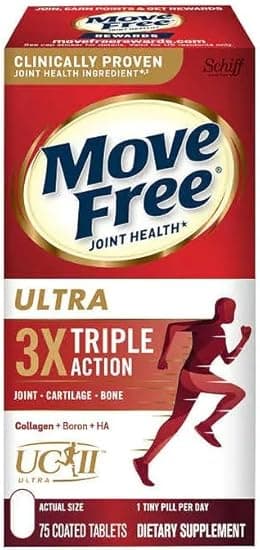
- For the specific undenatured form (UC-II), 40mg once a day. For standard hydrolyzed versions, you might see doses up to 2.5 grams. Read the label carefully.
- Time to feel it
- Plan on eight to twelve weeks. The route is a slow immune one, and trials read joint comfort at ninety days and beyond rather than at week one.
- The first dose
- Absolutely nothing. Your joints don't get rebuilt overnight. This takes time.
- With regular use
- After 2-3 months of daily use, some people report less joint pain and stiffness. If you feel zero difference by month three, it's probably not working for you.
- How well tolerated
- Generally well tolerated. The main concern is for those with chicken allergies. No major side effects reported in studies.
- How it feels
- You don't feel it. It's a background process. The best-case scenario is that one day you realize your joints just feel a little better than they used to.
- The overlooked benefit
- The dose scale tells you which product you hold: milligrams point to the intact immune-route material, grams to peptides supplying amino acids.
40mg a day is where Type II Collagen works.
Source: Choi 2019 meta-analysis + Zague 2011 skin studies
The proof, claim by claim.
These words describe the research, not the molecule's worth. Research strength is how much work stands behind one claim, and it is never a product score.
While some studies suggest potential benefits for joint health, the overall body of evidence is still somewhat limited and inconsistent. More high-quality research is needed to confirm these effects.
- joint comfort in daily activityRandomised trial
- joint mobility and range of motionRandomised trial
- joint discomfort after exercise in healthy adultsRandomised trial
- cartilage turnover markers in bloodRandomised trial
Questions people ask about Type II Collagen.
- What's the difference between UC-II and regular collagen?
- UC-II is a special 'undenatured' form taken in a tiny 40mg dose. It's thought to work by calming the immune system's attack on joints. Regular hydrolyzed collagen is just protein building blocks, taken in larger gram doses.
- Will this help my skin and hair?
- Wrong tool for the job. You want Type I & III collagen for skin, hair, and nails. This is specifically for joints.
- Is this better than glucosamine?
- The evidence for glucosamine and chondroitin is stronger and more consistent. Try those first. This is a good second-line option.
- Is Type II Collagen vegan?
- Nope. It's sourced from chicken cartilage. There is no vegan version.
- Can I just drink bone broth instead?
- Bone broth has some collagen, but the amount and type are inconsistent. A standardized supplement guarantees you're getting the right dose and form used in studies.
Why these belong in the same formula. Each row says what the basis is, from settled biochemistry through to a trial that measured the pair.
Ascorbate keeps the iron in prolyl and lysyl hydroxylase in its reduced state, and without those hydroxylations the collagen triple helix does not hold its shape. This is textbook connective tissue biochemistry.
Lysyl oxidase is a copper-dependent enzyme that forms the covalent crosslinks giving collagen fibrils their tensile strength. Copper status therefore sets the quality of newly laid collagen.
Manganese-dependent glycosyltransferases build the glycosaminoglycan chains that sit alongside type II collagen in cartilage matrix. Collagen and proteoglycan are the two structural halves of that tissue.
Prolyl and lysyl hydroxylase are non-heme iron enzymes, and vitamin C exists in this pathway largely to keep that iron reduced. Adequate iron is the other half of the same cofactor requirement.
The collagen triple helix requires glycine at every third position because no larger side chain fits the helix core. Glycine is therefore the single most demanded amino acid in collagen synthesis.
Hydroxylysine formed from lysine residues provides the aldehyde groups lysyl oxidase uses to crosslink fibrils, and lysine also carries the glycosylation sites. It is a required residue rather than an optional add-on.
Glucosamine is the amino sugar backbone of the glycosaminoglycan chains that hold water in cartilage, while type II collagen supplies the fibrillar scaffold. Long-standing joint formulas carry both because they build different components.
Chondroitin sulfate chains attach to aggrecan and draw water into the space held open by the type II collagen network. The two are structurally interdependent in cartilage.
MSM supplies sulfur used in the sulfation of glycosaminoglycans and in disulfide bonds within connective tissue proteins. It is the standard third component in collagen and glucosamine joint blends.
Hyaluronic acid forms the long central chain that aggrecan monomers attach to inside the collagen fibril mesh, and it also gives synovial fluid its viscosity. Collagen supplies structure while hyaluronan supplies hydration and lubrication.
Orthosilicic acid is associated with normal collagen synthesis and with the crosslinking of connective tissue matrix. It is a common companion in joint and skin structure formulas.
Zinc is required for the metalloenzymes that remodel extracellular matrix and for normal protein synthesis in connective tissue cells. Both sides of matrix turnover depend on adequate zinc.
Boswellic acids act on the 5-lipoxygenase arm of eicosanoid signalling, while type II collagen acts structurally and, in the undenatured form, through oral tolerance in gut lymphoid tissue. The mechanisms do not overlap.
Curcumin modulates NF-kappaB driven signalling in joint tissue while collagen supplies matrix material and, undenatured, engages an immune tolerance route. Joint blends carry both as separate levers.
Eggshell membrane already contains type I collagen, hyaluronic acid, chondroitin and elastin in one natural matrix. Pairing it with isolated type II collagen adds the cartilage-specific fibril type the membrane lacks.
Undenatured type II collagen works only while its native triple helix and epitopes stay intact, and a proteolytic enzyme taken at the same time can break that structure down. Separate the doses or use hydrolysed collagen instead.
Broad protease blends hydrolyse peptide bonds in the collagen helix, which is exactly the structure undenatured type II collagen depends on. Co-dosing undermines the ingredient it is sitting beside.
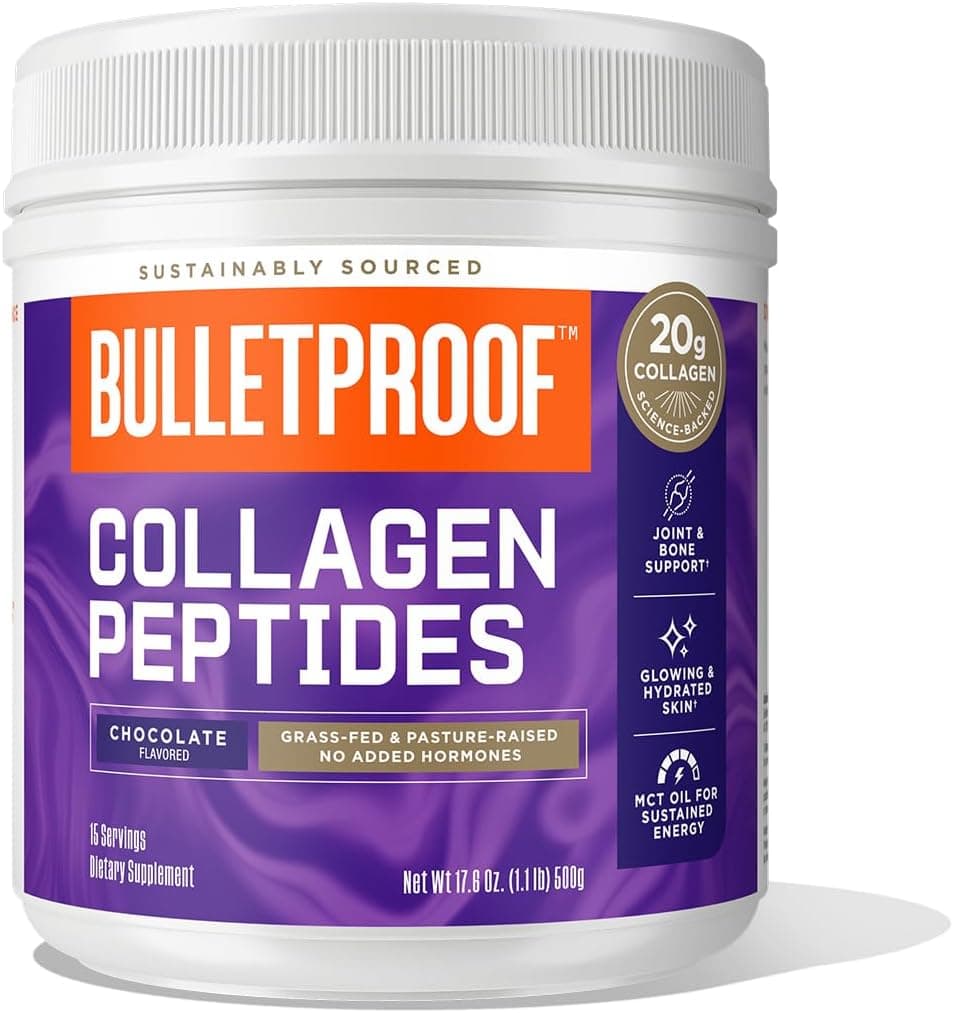
Collagen peptides are hydrolysed type I and III that supply amino acids and signalling di-peptides, while undenatured type II acts in small doses through its intact structure. They are not substitutes for each other and their doses differ by orders of magnitude.
Calcitriol regulates transcription in chondrocytes and osteoblasts at the bone and cartilage interface, a different lever from supplying collagen substrate or presenting an oral antigen. Products aimed at joint comfort routinely carry both. What is established is that each acts on connective tissue. A combined effect has not been measured.
Bone is hydroxyapatite crystallised onto a collagen scaffold, so the mineral and the protein matrix are structurally interdependent. Type II collagen is the cartilage isoform rather than the bone isoform, which is type I, so the relationship here is adjacency at the joint surface rather than shared matrix. That distinction is worth keeping straight in a formula.
Magnesium is required by the ATP-dependent steps of protein synthesis and by alkaline phosphatase at the mineralising front. Collagen synthesis is an energy-intensive process with extensive post-translational modification. The cofactor requirement is textbook and needs no citation.
Proline and its hydroxylated derivative hydroxyproline together make up close to a quarter of collagen's residues, and prolyl hydroxylase converts proline to hydroxyproline after the chain is assembled. That hydroxylation is what stabilises the triple helix. Supplying proline supports the substrate side of a reaction that vitamin C enables.
EPA and DHA displace arachidonic acid in membrane phospholipids and give rise to less inflammatory eicosanoid species, which is a separate route from anything collagen does. Joint comfort formulas commonly stack the two for that reason. The pairing rests on each component's own mechanism rather than on a combination trial.
Boron forms borate esters with cis-diol groups on glycoproteins and influences steroid hormone handling and mineral retention. Its role in connective tissue is described but not quantified in the way calcium or magnesium are. It is a small-dose partner with a modest evidence base.
Astaxanthin sits across the membrane bilayer and interrupts lipid peroxidation, while collagen supply and oral tolerance mechanisms operate on entirely different levers. The two are combined in joint formulas because they do not overlap. The rationale is mechanistic complementarity.
Quercetin inhibits matrix metalloproteinase expression in cell systems, and those enzymes are what degrade the collagen matrix. Slowing degradation and supplying substrate are opposite ends of the same balance. The inhibition is characterised in vitro and has not been translated into a measured human matrix effect.
Grape seed proanthocyanidins bind collagen and elastin fibres directly and are described as reducing their susceptibility to enzymatic breakdown. That binding is well characterised chemically. Whether it changes cartilage turnover in a person has not been established.
Pine bark procyanidins share the collagen-binding behaviour of grape seed proanthocyanidins and are commonly used in connective tissue formulas. The chemistry of the binding is established. The clinical consequence of pairing it with type II collagen has not been measured.
Undenatured type II collagen depends on its intact triple helix being presented to gut-associated lymphoid tissue, and a supplemental acid load lowers gastric pH further, which is exactly the condition that unwinds the helix. Adding a hydrochloride acidifier alongside a native collagen preparation works against the reason that preparation exists. Hydrolysed collagen peptides, by contrast, are unaffected because they are already cleaved.
Pepsin cleaves peptide bonds in acid conditions, and once the collagen helix unwinds it becomes a substrate rather than an intact antigen. Supplemental protease alongside a native collagen preparation raises the chance of that cleavage happening before the intestine. Native and hydrolysed collagen respond to this in opposite ways, which is why the form matters more than the dose here.
Menaquinone is the cofactor for gamma-glutamyl carboxylase, which activates matrix Gla protein, the inhibitor of soft tissue and cartilage calcification. That protein sits directly at the cartilage matrix. The cofactor relationship is settled biochemistry. An animal study in the candidate set examined K2 in a joint model separately from collagen.
Beta-hydroxy-beta-methylbutyrate acts on muscle protein breakdown signalling, a different tissue from cartilage but the same musculoskeletal unit around a joint. Collagen supplementation studies in tendon and connective tissue tend to pair supplementation with loading. The two are combined on structural logic, not on a joint trial.
Glutamine is the preferred fuel of the enterocyte and supports normal intestinal barrier structure, which is the environment where an undenatured collagen preparation has to survive intact to reach gut-associated lymphoid tissue. The connection is contextual rather than direct. Read it as mechanistic.
Gingerols and shogaols inhibit cyclooxygenase and lipoxygenase activity in laboratory systems, which is a distinct route from collagen substrate supply. Ginger is a frequent component of joint comfort blends for that reason. The enzyme inhibition is characterised in vitro. The clinical size of the effect varies between studies.
Epigallocatechin gallate inhibits several matrix metalloproteinases and aggrecanases in cell and explant systems, the enzymes that break down cartilage matrix components. Preserving matrix and supplying matrix building blocks address the same balance from different sides. The evidence sits at the laboratory level.
Undenatured type II collagen is described as working through oral tolerance, an antigen-specific process mediated by Peyer's patch dendritic cells and regulatory T cells. The gut microbial community influences how readily those tolerogenic responses develop. This is a plausible interaction from immunology rather than a measured one.
Vitamin D receptor signalling in dendritic cells favours a tolerogenic phenotype and supports regulatory T cell development, the same arm of the immune system the oral tolerance account of undenatured collagen depends on. The receptor biology is established. Whether adequate vitamin D status changes the response to an oral collagen antigen has not been tested.
Talk to a doctor before taking Type II Collagen if any of these apply to you: Individuals with allergies to chicken, Those with autoimmune conditions should consult their doctor. These are flags to check first, not effects Type II Collagen is known to cause.
Not medical advice. Show the label to your pharmacist.What Type II Collagen actually does.
Type II collagen is the main structural protein in the cushioning tissue at joint surfaces, while skin, bone, and tendon rely mainly on a different type. The two are not interchangeable targets.
Collagen's twisted rope structure needs a specific small amino acid at every third spot, because only that one fits inside the crowded structure. Swap it out and the whole molecule becomes unstable.
Two enzymes that stabilize the collagen structure need vitamin C to work. Without it, the resulting collagen is unstable at body temperature.
A copper-dependent enzyme forms the chemical links between collagen strands that give the finished tissue its strength.
Where Type II Collagen comes from.
Cartilage from chicken breastbone is cleaned and ground while cold. To keep the collagen in its natural coiled shape it is gently loosened with mild acid at low temperature. To make the peptide version it is instead broken up with enzymes. Either way the liquid is filtered, tested and dried into a powder.
Made from an animal material. Species and tissue are the things worth knowing, and both belong on a label.
Sternal keel cartilage is recovered from broiler chickens at processing. It is chosen because it is the richest readily available type II collagen tissue. Bovine trachea is the main alternative source.
Adhering soft tissue is trimmed away and the cartilage is ground under chilled conditions to increase surface area without raising temperature.
The ground cartilage is held in a mild acid at low temperature, conditions selected to release collagen from the matrix while keeping the triple helix wound. Temperature and pH are the critical control points.
For hydrolysed material the cartilage is instead digested with proteases such as pepsin, papain or a bacterial protease, cleaving the protein into peptides of a targeted molecular weight range.
Insoluble residue is removed by filtration or centrifugation, and ultrafiltration separates the target fraction from small solutes and residual enzyme.
Undenatured material is assayed by an immunoassay specific to the native type II epitope. Hydrolysed material is characterised by molecular weight distribution and total protein. The two use different specifications and cannot be compared on the same number.
The concentrate is spray-dried or freeze-dried under conditions limited by the need to keep undenatured material below its denaturation temperature, then blended and milled for capsules or powders.
Getting Type II Collagen from food.
The whole-food sources on file. A supplement closes the gap, it does not replace dinner.
A gram-for-gram figure (how much of each you would eat to match a dose) will appear here once it is sourced and reviewed. This page will not print a number it cannot cite.
The forms it comes in.
The essence, in one line each.
- Native undenatured type II collagen supplementation was assessed for joint comfort measures and tolerability in healthy volunteers. The reported endpoints are self-reported joint function and comfort scores.Open-label trial. Möller et al., 2026 (Nutrition Journal). PMID 41787523 ↗
- Combined undenatured type II collagen with hydrolysed collagen was compared against control on joint comfort and function scores in adults with age-related knee joint wear. The two collagen types cannot be separated from one another.Randomised trial. Yuenyongviwat et al., 2025 (Scientific Reports). PMID 40897777 ↗
- A review of undenatured type II collagen use in the Indian subcontinent summarises the available trials and expert opinion. It is a synthesis of existing work rather than new measurement.Narrative review. Prabhoo et al., 2026 (Cureus). PMID 42333321 ↗
- A systematic review of collagen supplementation for tendon structural and performance outcomes found the trials small and heterogeneous, with the clearest signals in studies pairing supplementation with loading exercise.Systematic review. Buchalski et al., 2026 (Journal of Functional Morphology and Kinesiology). PMID 41900537 ↗
- Undenatured type II collagen was compared with, and combined with, a veterinary anti-inflammatory in dogs. The endpoints are veterinary clinical scores in a non-human population.Animal study. Stabile et al., 2022 (Research in Veterinary Science). PMID 35853328 ↗
- Decorin was shown to strengthen the integration of collagen II with aggrecan and to promote retention of newly made proteoglycan in cartilage matrix, describing how the type II network holds the matrix together.In vitro study. Li et al., 2026 (Acta Biomaterialia). PMID 42263900 ↗
- A systematic review and meta-analysis of oral and topical peptides for skin ageing reports pooled effects on skin measures. The collagen preparations included are peptides rather than undenatured type II collagen.Meta-analysis. Nukaly et al., 2026 (Frontiers in Medicine). PMID 41924746 ↗
- Oral vitamin K2 was assessed in an experimental animal knee joint model with cartilage and matrix endpoints. It grounds the vitamin K partner mechanistically and is not a collagen study.Animal study. Uzun et al., 2026 (Metabolites). PMID 42346405 ↗
These are the studies our verdict leans on, chosen from the 8 we read for Type II Collagen. The full linked list is below.
The studies, linked.
4 sources behind our Type II Collagen verdict: peer-reviewed studies and registered clinical trials. Every one links straight to PubMed, the journal, or ClinicalTrials.gov. Read them yourself.
- Clinical trialOpen Label Multicenter Induction of CII Tolerance in Patients With Rheumatoid ArthritisClinicalTrials.gov ↗Phase 2, 110 participants, Completed
- Clinical trialA Randomized, Double-blind, Placebo-controlled Clinical Study to Assess the Effect of Collavant® n2 on Joint Function and Performance in Healthy, Active Male Adults With Exercise-induced Joint Discomfort.ClinicalTrials.gov ↗80 participants, Recruiting
- Clinical trialAn International Prospective Natural History Study in Children With a Type II Collagen Disorder With Short StatureClinicalTrials.gov ↗60 participants, Recruiting
- Clinical trialCartilage Biomarkers and HEAD-US Score in Severe Hemophilia A Patients Receiving Low Dose FVIII ProphylaxisClinicalTrials.gov ↗19 participants, Enrolling by invitation
Evidence surfaced via Semantic Scholar (Allen Institute for AI) and ClinicalTrials.gov. Ranked by study type and citation weight, not cherry-picked.
FDA Disclaimer: These statements have not been evaluated by the Food and Drug Administration. This information is for educational purposes only and is not intended to diagnose, treat, cure, or prevent any disease. Consult your healthcare provider before starting any supplement regimen.