Vegetable Stearate.
A plant-derived lubricant that keeps supplement powder flowing through manufacturing machines.
Reviewed March 2026
- Category
- General
- Also filed under
- Manufacturing lubricantPrevents powder clumping
What Vegetable Stearate is, and what it does.
- Does it work
- Necessary for manufacturing. Zero health value.
- How much to take
- No dose figure is on record, and it isn't something you dose. It sits at roughly a quarter to two percent of a blend, so a capsule carries milligrams.
- Time to feel it
- It has no onset. Its work happens in the tablet press, and the thin film it leaves breaks up along with the tablet within minutes of swallowing.
- The first dose
- On day one the tablet ejects cleanly at the factory and comes apart on time in your stomach. The stearate is digested as an ordinary fatty acid.
- With regular use
- No effects. Stearic acid is naturally found in food (cocoa butter, meat).
- How well tolerated
- Well tolerated. The internet scare about stearate blocking absorption has been debunked. You eat way more stearic acid in a chocolate bar.
- How it feels
- You don't experience it directly. What you notice is a tablet that holds its shape in the bottle and still breaks up when you take it.
- The overlooked benefit
- Absorbed stearic acid is largely converted to oleic acid by stearoyl-CoA desaturase, which is why it behaves differently from shorter saturated fats in blood lipid work.
The proof, claim by claim.
These words describe the research, not the molecule's worth. Research strength is how much work stands behind one claim, and it is never a product score.
- Does not impair nutrient absorptionStudies show no absorption interference at typical supplement levels
Questions people ask about Vegetable Stearate.
- Does vegetable stearate block nutrient absorption?
- No. This is an internet myth. Studies show no meaningful interference at supplement doses.
- Is it the same as magnesium stearate?
- Related but not identical. Vegetable stearate is stearic acid. Magnesium stearate is stearic acid bonded to magnesium. Both are safe lubricants.
- Why is it in so many supplements?
- Because it works. Without a lubricant, powder sticks to machines and you get inconsistent doses.
- Is it natural?
- Yes. Stearic acid is naturally found in cocoa butter, coconut oil, and animal fats. 'Vegetable stearate' specifies a plant source.
- Should I buy stearate-free supplements?
- There's no scientific reason to. Some brands market 'stearate-free' as a selling point, but the research doesn't support the concern.
- How much am I actually consuming?
- Typically 1-5mg per capsule. For context, a tablespoon of cocoa butter has about 5,000mg of stearic acid.
Why these belong in the same formula. Each row says what the basis is, from settled biochemistry through to a trial that measured the pair.
Silica coats particle surfaces to break up cohesive bridges so powder flows, while a stearate reduces friction between the compact and the die wall. Tablet presses need both functions and the two are used side by side.
Rice hull concentrate is the plant sourced silica glidant that improves die filling, and vegetable stearate is the lubricant that lets the tablet eject cleanly. Clean label formulas pair them for the two separate jobs.
Microcrystalline cellulose bonds by plastic deformation, and stearate films spread over its surfaces during blending and weaken those bonds. Over mixing the two lowers tablet hardness and slows disintegration, which is why blend time is kept short.
Magnesium stearate is alkaline and moisture in a blend lets it react at the surface of an acid sensitive active such as ascorbic acid, which discolours and degrades over shelf life. Formulators either separate the two or switch to a non alkaline lubricant.
Stearate lubricates the dosator and tamping pins of a capsule filler so plugs release cleanly into an HPMC shell. It is the routine lubricant in vegetarian capsule production.
Starch swells with water to break a tablet apart, and a stearate coating is hydrophobic enough to slow water reaching it. Above roughly one percent lubricant the disintegration time lengthens noticeably.
Vegetable stearate in supplements is usually the magnesium salt of stearic acid, so it carries a small amount of elemental magnesium. The contribution is minor against a magnesium supplement dose but it is the same mineral.
Mineral powders such as calcium carbonate are abrasive and compress poorly on their own, so a lubricant is added to cut die-wall friction and stop the tablet sticking or capping. Stearate is the usual choice at well under one percent of the blend. This is manufacturing practice and has no bearing on what the mineral does once swallowed.
Creatine monohydrate is a dense crystalline powder with poor flow through a capsule filler or a tablet press. A fraction of a percent of stearate coats the particles and lets the blend move at production speed. The lubricant is a processing aid, not an active contributor.
Glucomannan absorbs moisture aggressively and bridges in a hopper, which stalls a filling line. A hydrophobic lubricant such as stearate, usually alongside a glidant, keeps the blend flowing. The same hydrophobicity slows the initial wetting of the finished dose, which is the trade-off.
Freeze-dried probiotic powders are filled at low moisture, and stearate is a common flow aid in those blends because it adds no water. The hydrophobic coating also has to be balanced against the need for the capsule to release its contents promptly. Formulators weigh flow against release for each blend.
Stearic acid exists in food as part of a triglyceride, and pancreatic lipase is what releases it from the glycerol backbone before absorption. Free stearic acid supplied as a stearate salt skips that step. This is background digestive biochemistry, and the milligram amounts in a capsule are trivial next to dietary fat.
Stearic acid is an 18-carbon long-chain fatty acid, and long-chain acyl-CoA cannot cross the inner mitochondrial membrane unaided. Carnitine palmitoyltransferase 1 exchanges CoA for carnitine so the acyl group can cross and be oxidised. This is the normal route for any long-chain fatty acid, including the small amount from a stearate excipient.
Free long-chain saturated fatty acids bind luminal calcium into insoluble soaps, which lowers absorption of both. The chemistry is well described for dietary fat intakes measured in grams. At the milligram amounts a stearate excipient contributes to a capsule, the effect is negligible. The chemistry is noted for accuracy rather than as a practical concern.
Ascorbyl palmitate is the fatty-acid ester of ascorbic acid and is used both as an antioxidant and as a secondary lubricant in tablet blends. It appears alongside stearate where a formulator wants some lubricity with an antioxidant function attached. The two roles are complementary in the blend, not in the body.
Oily and semi-solid fills that carry tocopherols need different flow control from a dry powder, and stearate is one of the agents used to adjust that. Its hydrophobic surface behaviour sits comfortably in a lipid blend. This concerns manufacturing behaviour rather than any effect on vitamin E status.
Amino acid chelates are bulky and low-density, which makes them hard to compress and hard to fill consistently. A small stearate addition reduces friction so the press can run without picking or sticking. The magnesium in magnesium stearate is present at trace level and does not contribute meaningfully to a magnesium dose.
Talk to a doctor before taking Vegetable Stearate if any of these apply to you: Internet myths about absorption (unfounded). These are flags to check first, not effects Vegetable Stearate is known to cause.
Not medical advice. Show the label to your pharmacist.What Vegetable Stearate actually does.
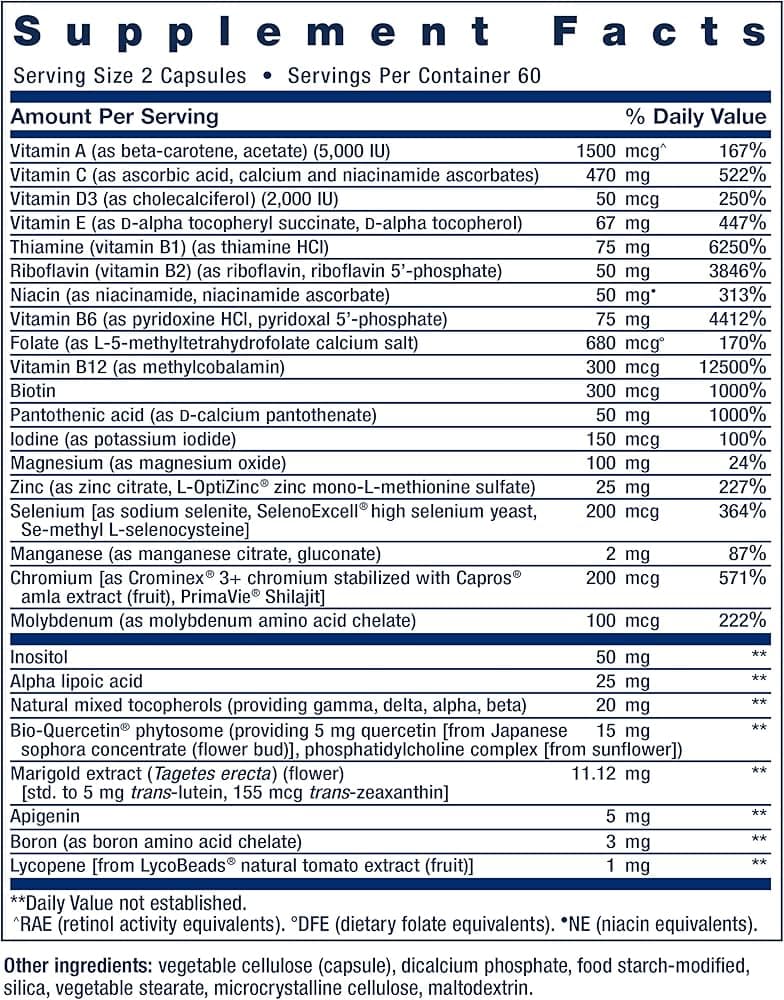
Vegetable stearate is a salt form of a common saturated fatty acid, usually the magnesium version, used in supplement manufacturing.
Commercial magnesium stearate isn't one pure compound, it's a mix of two related fatty acid salts, and the exact mix depends on the source fat used.
Stearate works as a lubricant in tablet making, forming a thin film that keeps the powder from sticking to the equipment.
Because that film repels water, mixing it into the powder for too long, not using too much of it, can slow how quickly a tablet breaks apart in lab testing.
Where Vegetable Stearate comes from.
Vegetable stearate starts as ordinary plant fat, usually palm or coconut. Hot water under pressure splits that fat into its fatty acids and glycerine, and the fatty acids are separated out and combined with magnesium or calcium to make a fine white powder. That powder is added to capsules and tablets at less than one percent, where it keeps the blend from sticking to the machinery.
Made from a plant. What ends up in the capsule tracks the harvest, so batch testing and a stated marker matter more here than with a made molecule.
The starting material is an ordinary vegetable fat rich in stearic and palmitic acids. The vegetable declaration on the finished excipient traces back to this step and nowhere else.
The triglyceride is hydrolysed with water at high temperature and pressure, breaking it into free fatty acids and glycerol. The glycerol is recovered as a separate product stream.
The mixed free fatty acids are separated by distillation and controlled crystallisation into cuts enriched in stearic and palmitic acid. Commercial stearic acid grades are defined by the ratio of the two rather than by absolute purity of one.
For magnesium stearate the fatty acid cut is reacted with a magnesium source, either by direct fusion or by precipitating from a soluble soap with a magnesium salt. The precipitation route gives a finer, lower-density powder than fusion.
The salt is dried and milled to a target particle size, then tested against the pharmacopoeial monograph for assay, magnesium content, fatty acid composition and specific surface area. Surface area matters because it governs how quickly the lubricant film forms during blending.
The finished excipient is a fine white powder dosed into blends at a fraction of a percent.
Getting Vegetable Stearate from food.
The whole-food sources on file. A supplement closes the gap, it does not replace dinner.
A gram-for-gram figure (how much of each you would eat to match a dose) will appear here once it is sourced and reviewed. This page will not print a number it cannot cite.
The forms it comes in.
FDA Disclaimer: These statements have not been evaluated by the Food and Drug Administration. This information is for educational purposes only and is not intended to diagnose, treat, cure, or prevent any disease. Consult your healthcare provider before starting any supplement regimen.