4-Hydroxyisoleucine.
A fenugreek amino acid studied around glucose handling. In isolated pancreatic islets it prompts insulin release only when glucose is already elevated.
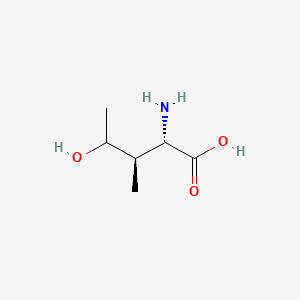 Compound
- Category
- Compound
What 4-Hydroxyisoleucine is, and what it does.
- Does it work
- Suits people who already use fenugreek and want the standardised version of what it carries. Most of the evidence sits in tissue and animal work, so human data is the thin part.
- How much to take
- No dose figure is on record. Extracts standardised on this compound are taken daily with meals, and a good label says which mirror-image form is inside.
- Time to feel it
- Nobody has measured a human time course. In tissue work the action is tied to a meal's glucose rise, so any signal would sit in post-meal readings.
- The first dose
- Day one is quiet. If you track glucose with a monitor, the place to look is the hours after a carbohydrate-heavy meal.
- With regular use
- Weeks of use have not been mapped in people for the isolated compound. Fenugreek extract trials are short and small, and that is the honest state of it.
- How well tolerated
- Fenugreek is a long-standing food and spice, generally well tolerated. It is a legume, so check if you react to peanuts, and ask your doctor if you take glucose-lowering medication.
- How it feels
- There is no reliable sensation. Fenugreek does give some people a maple-like smell to sweat and urine, which is harmless and the one obvious sign you took it.
- The overlooked benefit
- It rides the same transporter as leucine, isoleucine and valine, so a large amino acid drink taken at the same moment competes with it for uptake.
The proof, claim by claim.
What these words mean
These words describe the research, not the molecule's worth. Research strength is how much work stands behind one claim, and it is never a product score.
- Glucose-dependent insulin release in isolated pancreatic isletsIn vitro study
- Stereochemistry-dependent activity between natural and racemic materialIn vitro study
2 more claims
- Healthy glucose metabolism support from standardised fenugreek extractRandomised trial
- Content of the compound in fenugreek seedNarrative review
Why these belong in the same formula, 9 pairings
Why these belong in the same formula. Each row says what the basis is, from settled biochemistry through to a trial that measured the pair.
4-hydroxyisoleucine differs from isoleucine by a single hydroxyl group at the fourth carbon, and it is formed in fenugreek seed by hydroxylation of isoleucine. The two are handled differently once absorbed, since the hydroxyl changes how the molecule behaves at amino acid transporters and in metabolism. Isoleucine itself is a standard branched chain amino acid with an established role in protein synthesis. The relationship is chemical lineage, not a tested combination.
Fenugreek seed contains 4-hydroxyisoleucine at roughly 0.1 to 0.5 percent by weight, and commercial extracts are usually specified on its content. Taking both is duplication rather than combination, since the isolated compound and the standardised extract deliver the same molecule. The extract additionally carries saponins, galactomannan fibre and trigonelline, which the isolate does not. Anyone using both should count total 4-hydroxyisoleucine.
Leucine and isoleucine-family molecules compete for the same large neutral amino acid transporters at the intestine and elsewhere, so co-dosing large amounts affects the uptake of each. Both are also described as insulin secretagogues acting on the pancreatic beta cell, though by routes that are not identical. The competition point is established transporter biology. The insulin point for 4-hydroxyisoleucine specifically comes largely from isolated islet and animal work.
Valine, leucine and isoleucine and its analogues all use the same LAT-family carriers for intestinal uptake and for crossing into tissue. Loading one in large amounts reduces the transported fraction of the others through simple carrier saturation. This is well established transporter pharmacology. Whether it matters at supplement doses depends entirely on how large the doses are relative to a normal protein meal.
Chromium is described as supporting insulin signalling at the receptor level, while 4-hydroxyisoleucine is described as acting on pancreatic insulin release. Different points in the same physiological loop is a coherent formulation rationale. The evidence for each is uneven and there is no controlled work on the pairing. Anyone using medication that lowers blood sugar should discuss this stack with their prescriber.
Berberine acts largely through AMP-activated protein kinase and hepatic glucose output, while 4-hydroxyisoleucine is described as acting on insulin secretion. The routes differ but the direction of effect on blood glucose is the same, which is the definition of an additive interaction worth flagging. This matters most for anyone already on glucose-lowering medication. The flag is about additive direction, not about efficacy of either.
Gymnemic acids are described as reducing intestinal glucose absorption and affecting beta cell function. Stacked with a compound described as an insulin secretagogue, the combined direction on blood glucose is downward. That is worth flagging rather than celebrating, particularly alongside prescription glucose-lowering therapy. Neither the individual evidence nor the pairing evidence is strong.
Cinnamon is commonly included in glucose-support formulas alongside fenugreek-derived material. The mechanisms described for each are different, and the evidence for cinnamon is mixed. The reason to note the pairing is the shared direction of effect rather than any demonstrated synergy. Read this as a caution about stacking rather than as a recommendation.
A whey serving supplies several grams of leucine, isoleucine and valine, which saturates the large neutral amino acid carriers. A gram or less of 4-hydroxyisoleucine taken in the same window is a small competitor against that. Spacing the two apart is the straightforward handling if transported fraction matters. This is carrier kinetics rather than any chemical incompatibility.
Nothing specific on file for 4-Hydroxyisoleucine. Match the label to the daily amount above, and tell your doctor what you take.
Not medical advice. Show the label to your pharmacist.What 4-Hydroxyisoleucine actually does.
4-hydroxyisoleucine is an amino acid your body doesn't build proteins with, so it has no structural role.
3 more mechanisms
It's a modified version of the amino acid isoleucine, and the natural form found in fenugreek seed is mainly one specific mirror-image version of the molecule.
Fenugreek seed contains only a small fraction of this compound by weight, which is why concentrated extracts rather than whole seed are used when it's the target ingredient.
Fenugreek seed also contains other compounds like saponins, fibre and trigonelline, so any effect seen from a whole seed extract can't be pinned on this compound alone.
Where 4-Hydroxyisoleucine comes from.
It comes from fenugreek seed, the same seed used in curry powder, where it makes up well under one percent of the weight. Getting a useful amount out means extracting a lot of seed and then separating this one molecule from the sugars and soaps that come with it. It can also be made by taking ordinary isoleucine, an amino acid from fermentation, and having an enzyme add a single oxygen to it. Which mirror-image version you end up with matters, so a good product says which one it contains.
What this route gives you
The same molecule is reached more than one way. Which route a given product used is a manufacturing choice, and the finished compound is the same either way.
6 steps on record
Plant route uses Trigonella foenum-graecum seed, grown mainly in India, Turkey and North Africa. Biosynthetic route uses fermentation-derived L-isoleucine as the substrate.
Defatted, milled seed is extracted to bring the free amino acid fraction into solution along with saponins and soluble carbohydrate.
Alternative route. An isoleucine dioxygenase converts L-isoleucine directly to the 4-hydroxy compound with defined stereochemistry, avoiding the isomer mixture that chemical synthesis can produce.
The amino acid is captured on a cation exchange resin, eluted, and crystallised. This step separates it from the saponins and sugars in a plant extract.
Content is declared as a percentage of extract, and for isolated material the stereoisomer ratio should be stated because the isomers are not equivalent.
Sold either as a purified white powder dosed in milligrams, or as a fenugreek extract with a declared 4-hydroxyisoleucine percentage.
Getting 4-Hydroxyisoleucine from food.
The whole-food sources on file. A supplement closes the gap, it does not replace dinner.
A gram-for-gram figure (how much of each you would eat to match a dose) will appear here once it is sourced and reviewed. This page will not print a number it cannot cite.
The forms it comes in.
3 more forms
The essence, in one line each.
- Review of Trigonella foenum-graecum bioactives, listing 4-hydroxyisoleucine among the seed constituents described as relevant to glucose handling.Narrative review. Akhtar et al., 2025 (Food Science and Nutrition). PMID 40918167 ↗
Chosen from the 2 we read for 4-Hydroxyisoleucine.
FDA Disclaimer: These statements have not been evaluated by the Food and Drug Administration. This information is for educational purposes only and is not intended to diagnose, treat, cure, or prevent any disease. Consult your healthcare provider before starting any supplement regimen.