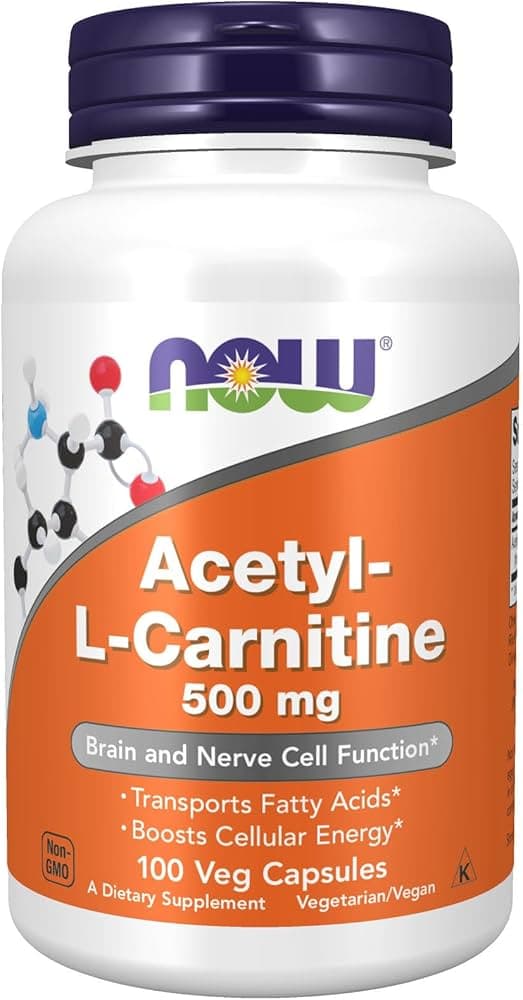
ALCAR (Acetyl-L-Carnitine).
Brain carnitine. Crosses blood-brain barrier for cognition. Shuttles fatty acids into mitochondria for energy production and supports acetylcholine synthesis in the brain. Think of it as fuel delivery for your cells.
Reviewed March 2026
- Category
- Compound
- Also filed under
- CognitionEnergyNeuroprotection
What ALCAR (Acetyl-L-Carnitine) is, and what it does.
- Does it work
- Solid evidence for cognitive support, especially in older adults. Also helps with fatigue and exercise recovery.
- How much to take
- 500-2000mg daily. Start with 500mg and increase if needed. Split doses work well for all-day cognitive support.
- Time to feel it
- About 24 weeks of daily use.
- The first dose
- Some people feel a subtle energy boost and mental clarity within hours. Others need a few days to notice.
- With regular use
- Over weeks, expect improved mental stamina, better mood, and potentially enhanced exercise performance.
- How well tolerated
- Generally well tolerated. Might cause mild nausea or fishy body odor at high doses. Start low to assess tolerance.
- How it feels
- A gentle lift in mental energy. Not stimulating like caffeine. More like the fog clears a bit.
- The overlooked benefit
- It buffers the acetyl-CoA to free coenzyme A ratio inside mitochondria, freeing coenzyme A for other reactions, which is why it turns up in fatigue work too.
500 to 2,000mg a day is where ALCAR (Acetyl-L-Carnitine) works.
Source: Fielding 2018 + Ruggenenti 2009 kidney study
A multicentre, randomised, double-blind trial in 232 diabetic patients with abnormal nerve conduction gave 500 mg acetyl-l-carnitine three times daily or methylcobalamin for 24 weeks. At week 24 the acetyl-l-carnitine group showed a mean fall of 2.35 points in neuropathy symptom score and 1.66 points in neuropathy disability score from baseline, both p < 0.0001, with no significant difference from the methylcobalamin comparator. The trial had no placebo arm, so the 24-week change is measured against baseline and an active comparator only, and the population was clinical rather than healthy.
The proof, claim by claim.
These words describe the research, not the molecule's worth. Research strength is how much work stands behind one claim, and it is never a product score.
Based on 40 human trials with 70% consistency.
- Cognitive support in agingMultiple meta-analyses show benefit
- Exercise performanceSome positive trials, especially for recovery
- Fat lossMinor effects at best, not a weight loss supplement
Questions people ask about ALCAR (Acetyl-L-Carnitine).
- When should I take it?
- Timing matters less than consistency. Pick a time that works for you and take it daily.
- Should I take it on an empty stomach?
- Most amino acids absorb better on an empty stomach since they don't compete with food proteins for absorption. 30 minutes before meals is ideal.
- Can I get enough from protein?
- If you eat enough protein (0.8-1g per pound bodyweight), you probably get enough aminos. Supplementing specific ones only makes sense for targeted goals.
- Can I take it with other supplements?
- Usually fine. The main thing to watch is not doubling up on the same ingredient from different products. If you're on prescription meds, check with your pharmacist first.
- Who benefits most from this?
- People with a specific, evidence-backed need. Acetyl L Carnitine has strong research. If your situation matches the studied use case, it's one of the more reliable supplements you can take.
What the trials show about these together.
Outcomes the engine found studied for these actives as a combination, not one at a time. Each is a finding a named trial measured, cited and dated, never written by the brand.
- EarlyALCAR (Acetyl-L-Carnitine) + CarbohydrateAbsorption
In two human studies, the first randomized, adding a carbohydrate drink to oral L-carnitine lowered 24-hour urinary carnitine excretion compared with L-carnitine alone, which the authors said suggests more of the dose was retained.
Stephens et al., 2006 (J Appl Physiol)PMID 17138832
Research strength. Research strength says how much work stands behind the combination. It is never a product score.
Fail closed. Where actives were studied on their own rather than together, each shows on its own evidence, never a combined effect no trial measured.
Independent record. Every finding is cited to a named trial, dated, and never written by the brand.
Findings from trials that studied these actives as a combination. Context for how the actives were tested together, not a statement about any individual and not a claim about this product.
Why these belong in the same formula. Each row says what the basis is, from settled biochemistry through to a trial that measured the pair.
Acetyl-l-carnitine helps carry fatty acids into the mitochondria and feeds acetyl groups into the reactions that burn them for fuel. The electrons that burning releases are passed along the respiratory chain by coenzyme Q10, so the two act along the same energy-producing pathway, one supplying the fuel and the other moving the electrons it yields.
Acetyl-l-carnitine can hand off its acetyl group toward the synthesis of acetylcholine, while alpha-GPC supplies the choline that forms the other half of that same messenger molecule. Providing both building blocks supports the normal production of acetylcholine by the enzyme that joins them.
The acetyl group that defines acetyl-l-carnitine is constantly handed back and forth with coenzyme A, the carrier the body builds from vitamin B5. The two work as a matched pair that shuttles acetyl groups through mitochondrial energy metabolism.
Carnitine acetyltransferase converts the two forms into each other, so both feed one body pool. Combining them raises total carnitine while the acetylated form reaches brain tissue more readily.
Lipoic acid is the cofactor of the dehydrogenase complexes that consume the acetyl units carnitine delivers, and it acts in the same organelle.
Long-chain fatty acids including EPA and DHA enter mitochondria only as carnitine esters. Carnitine availability sets how fast supplied fatty acids are moved in for oxidation.
Acetyl groups carried by ALCAR can be handed to choline acetyltransferase, and choline supplies the other half of the molecule. Neither builds the transmitter alone.
The body builds carnitine from methylated lysine, so lysine supply feeds the same pool a supplement fills directly.
Two of the four steps that build carnitine are ascorbate-dependent hydroxylations. Low vitamin C status lowers how much carnitine the body makes.
Pyridoxal phosphate is required at the aldolase step of the carnitine pathway, alongside lysine and ascorbate.
The two hydroxylases in carnitine synthesis are non-heme iron enzymes, so iron status limits endogenous production.
Beta oxidation of the fatty acids carnitine imports consumes NAD at every turn of the spiral, so NAD availability is one input to that pathway.
A multicentre randomised trial gave acetyl-L-carnitine alongside methylcobalamin in adults with high blood sugar and nerve-related symptoms, and reported larger movement in nerve conduction measures than methylcobalamin alone. Nerve conduction is a marker, not a symptom outcome. The two act on different steps, one on mitochondrial acyl transfer and one on methylation and myelin maintenance, which is why they are commonly given together.
Endogenous carnitine is built from lysine residues that have first been trimethylated using methyl groups donated by S-adenosylmethionine, which comes from methionine. Adequate methionine therefore supports the body's own carnitine pool rather than adding to the supplemental dose. This is textbook biochemistry, not a trial finding.
Betaine remethylates homocysteine back to methionine, which refills the S-adenosylmethionine pool that trimethyllysine formation draws on. That places betaine upstream of the body's own carnitine synthesis. The link is mechanistic. No combination trial of betaine with acetyl-L-carnitine grounds a dose or an outcome.
5-methyltetrahydrofolate hands a methyl group to homocysteine in the B12-dependent methionine synthase reaction, sustaining the methyl supply used for trimethyllysine and other methylation steps. Supporting that cycle supports endogenous carnitine production. The reasoning is pathway-level rather than outcome-level.
Once carnitine carries a long-chain fatty acyl group into the mitochondrion, the first oxidation step is run by FAD-dependent acyl-CoA dehydrogenases. FAD comes from riboflavin. Carnitine delivers the substrate. Riboflavin status determines whether the enzyme that receives it can work.
Each turn of the beta-oxidation spiral downstream of the carnitine shuttle reduces NAD+ to NADH, and NAD+ is regenerated from niacin-derived nucleotides. Without NAD+ turnover the acyl groups carnitine imports have nowhere to go. Established biochemistry, no citation required.
Acetyl-L-carnitine is hydrolysed to carnitine plus an acetyl group that enters the mitochondrial acetyl-CoA pool, one source of acetyl units for acetylcholine synthesis. CDP-choline supplies the choline half of the same reaction. The pairing is mechanistically coherent for supporting normal cholinergic signalling. It has not been measured head to head against either alone.
Both appear together in cognitive-support formulas, phosphatidylserine as a membrane phospholipid and acetyl-L-carnitine as a mitochondrial acyl carrier. The rationale is that they act on different parts of the same neuronal energy and membrane picture. No trial isolates the combination, so this is a formulation pattern rather than evidence.
Heavier flux of fatty acids through mitochondrial oxidation raises the load of reactive species on the surrounding membranes, and alpha-tocopherol is the chain-breaking antioxidant that sits in those membranes. Pairing them is a plausible way to keep membrane lipids intact while oxidation runs. This is mechanism, not a measured joint effect.
Ribose feeds the pentose phosphate route toward adenine nucleotide salvage while acetyl-L-carnitine acts on fatty acid entry into mitochondria. The two touch different bottlenecks in cellular energy handling. The pairing rests on that logic alone. No combination data exists.
Unabsorbed carnitine reaching the colon is converted by gut bacteria to trimethylamine, which the liver oxidises to trimethylamine N-oxide. The size of that conversion depends on which organisms are present, so changing the microbial community changes how much of a carnitine dose takes that route. Whether a given probiotic shifts it in a person has not been measured.
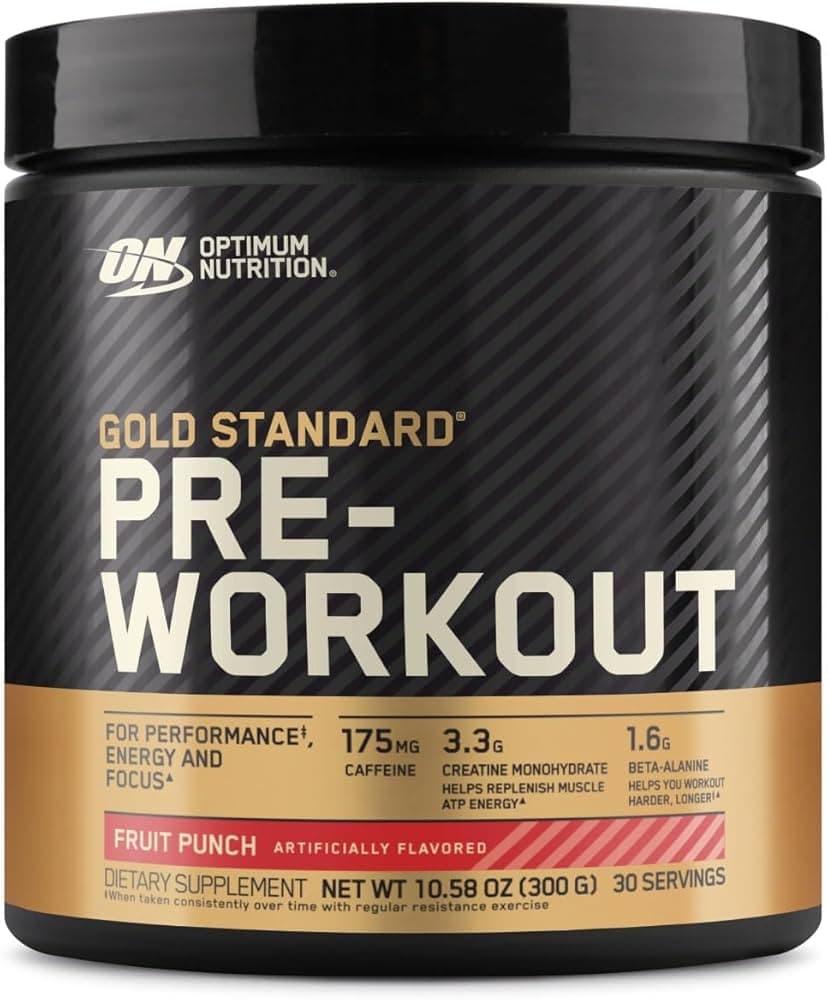
Creatine buffers phosphate transfer for short bursts of work while the carnitine shuttle governs fat entry into mitochondria for sustained work. They sit on different timescales of the same energy system. Common in the same sports formulas, untested as a pair.
Nothing specific on file for ALCAR (Acetyl-L-Carnitine). Match the label to the daily amount above, and tell your doctor what you take.
Not medical advice. Show the label to your pharmacist.What ALCAR (Acetyl-L-Carnitine) actually does.
Carnitine is the ferry that moves long-chain fatty acyl groups across the inner mitochondrial membrane. One enzyme loads them on the outer face, a translocase carries them through, and a second enzyme unloads them inside.
Acetyl-L-carnitine is L-carnitine with an acetyl group attached. An enzyme swaps that group back and forth with acetyl-CoA, so the molecule works as a two-way buffer for the mitochondrial acetyl-CoA to free CoA ratio.
Cells pull carnitine and its short-chain esters in through a sodium-driven transporter called OCTN2. It is a carrier, which means it has a ceiling rather than an open door.
Once absorbed, part of any dose is split back into free carnitine plus acetate. So some of what you take simply tops up the general carnitine pool instead of acting as the intact ester.
Where ALCAR (Acetyl-L-Carnitine) comes from.
It starts as ordinary L-carnitine, either grown by fermentation or built chemically, and then one small acetyl group is attached. After that it is crystallised, dried and finished either on its own or paired with chloride, arginine or taurine. The molecule is the same whichever way the carnitine was made.
The same molecule is reached more than one way. Which route a given product used is a manufacturing choice, and the finished compound is the same either way.
Commercial acetyl-L-carnitine begins from L-carnitine, which reaches industry either by microbial fermentation and enzymatic conversion or by chemical synthesis with a resolution step that separates the L-enantiomer, since only the L form is biologically active.
An acetyl group is added to the carnitine hydroxyl using an acetylating reagent such as acetic anhydride or acetyl chloride under acid conditions. Enzymatic acetylation is also described. Route choice affects residual solvent and reagent profiles that the certificate of analysis reports, not the identity of the molecule.
The crude product is crystallised, washed and dried to remove unreacted carnitine, acetic acid residues and reagent by-products. Optical purity is checked because the D-enantiomer is not the intended species.
The material is finished either as the hydrochloride, or as the hygroscopic free inner salt, or paired with arginine or taurine. Each finished salt has its own moisture behaviour and its own active fraction per gram.
Content is set by chromatographic assay against a reference standard, with specifications for free carnitine, water content and optical rotation.
Labels rarely state whether the underlying carnitine was fermentation-derived or synthetic, and rarely name the acetylating chemistry.
Getting ALCAR (Acetyl-L-Carnitine) from food.
The whole-food sources on file. A supplement closes the gap, it does not replace dinner.
A gram-for-gram figure (how much of each you would eat to match a dose) will appear here once it is sourced and reviewed. This page will not print a number it cannot cite.
The forms it comes in.
The essence, in one line each.
- Pooling four randomized controlled trials, acetyl-L-carnitine supported nerve conduction and eased nerve-related discomfort by about 20% from baseline versus placebo.Systematic review and meta-analysis. Di Stefano et al., 2019 (Journal of Pain Research). PMID 31118753 ↗
- Across nine randomized trials, acetyl-L-carnitine lowered low-mood scores more than placebo (standardized mean difference about -1.1), with few reported adverse effects.Systematic review and meta-analysis. Veronese et al., 2018 (Psychosomatic Medicine). PMID 29076953 ↗
- In a meta-analysis, L-carnitine combined with acetyl-L-carnitine improved low sperm motility versus placebo (standardized mean difference about 0.57).Meta-analysis. Buhling et al., 2019 (Reproductive Biomedicine Online). PMID 31160241 ↗
- Only two short trials in cognitively healthy young adults qualified, and neither detected an effect of L-carnitine or its acetyl form on reaction time, vigilance, immediate memory or delayed recall, with the evidence rated very low quality.Systematic review. Chen et al., 2017 (Cochrane Database of Systematic Reviews). PMID 28349514 ↗
- In healthy volunteers, a 1.5 g acetylcarnitine dose raised peak plasma levels by 48 percent but delivered 7.7-fold less total exposure than plain carnitine, and about 90 percent of either form was converted to TMAO, reaching roughly 50 micromolar in plasma.Randomised trial. Krims-Davis et al., 2025 (Molecular Nutrition and Food Research). PMID 41243468 ↗
- The reviewers found human studies of carnitine forms across mood and neurological measures to be mixed in design and result, and stopped short of a firm conclusion.Systematic review. Wang et al., 2024 (Nutrients). PMID 38674921 ↗
- The reviewers judged the available trials too few and too heterogeneous to determine an effect on clinical outcomes, and rated the certainty of the evidence low.Systematic review. Marti-Carvajal et al., 2019 (Cochrane Database of Systematic Reviews). PMID 30610762 ↗
- The reviewers reported that the trial evidence was insufficient to detect whether carnitine changes fatigue scores, which is a failure to detect rather than a finding of no effect.Systematic review. Tejani et al., 2012 (Cochrane Database of Systematic Reviews). PMID 22592719 ↗
- Memory and cognitive test scores were higher than at baseline in adults taking a multi-nutrient formulation that included acetyl-L-carnitine. The design was uncontrolled and open-label, and because the formulation was multi-ingredient the change cannot be assigned to any single component.Open-label trial. Chan et al., 2010 (The Journal of Nutrition, Health and Aging). PMID 20191258 ↗
- Acetyl-L-carnitine is named among mitochondrial-targeting nutraceuticals reviewed for mental-health outcomes. The reviewers described the body of trials as small and inconsistent.Systematic review. Tortajada et al., 2026 (General Psychiatry). PMID 42253799 ↗
- The review names acetyl-L-carnitine among agents studied for mitochondrial and oxidative-stress mechanisms in nerve tissue. It summarises mechanism rather than reporting an effect.Narrative review. Sztanek et al., 2026 (Antioxidants). PMID 41897513 ↗
- Serum trimethylamine N-oxide and trimethyllysine, both carnitine-pathway metabolites, were higher in the patient group than in comparison participants. This is an association between markers, not a cause.Case-control. Sotgia et al., 2026 (IBRO Neuroscience Reports). PMID 41705073 ↗
These are the studies our verdict leans on, chosen from the 411 we read for ALCAR (Acetyl-L-Carnitine). The full linked list is below.
FDA Disclaimer: These statements have not been evaluated by the Food and Drug Administration. This information is for educational purposes only and is not intended to diagnose, treat, cure, or prevent any disease. Consult your healthcare provider before starting any supplement regimen.