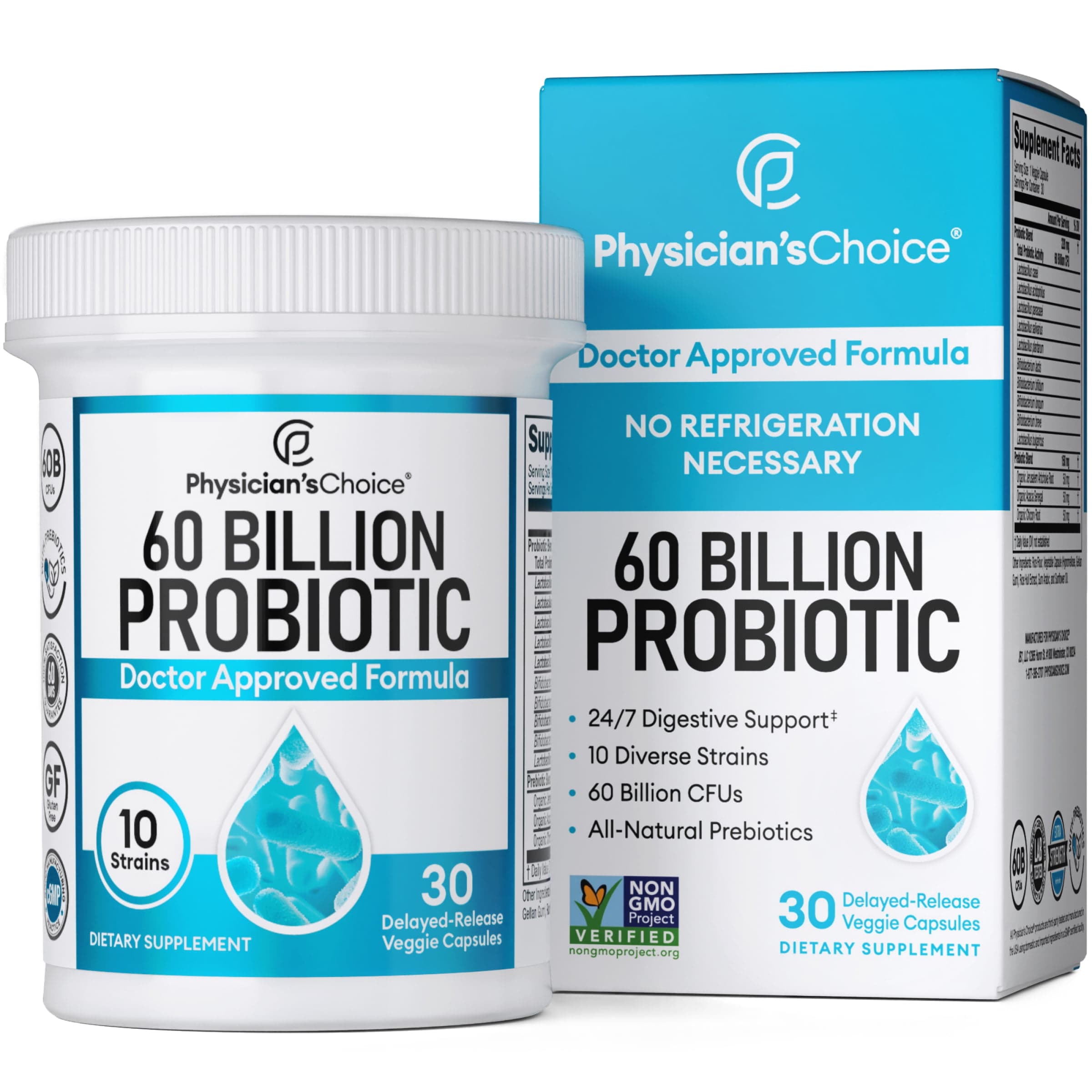
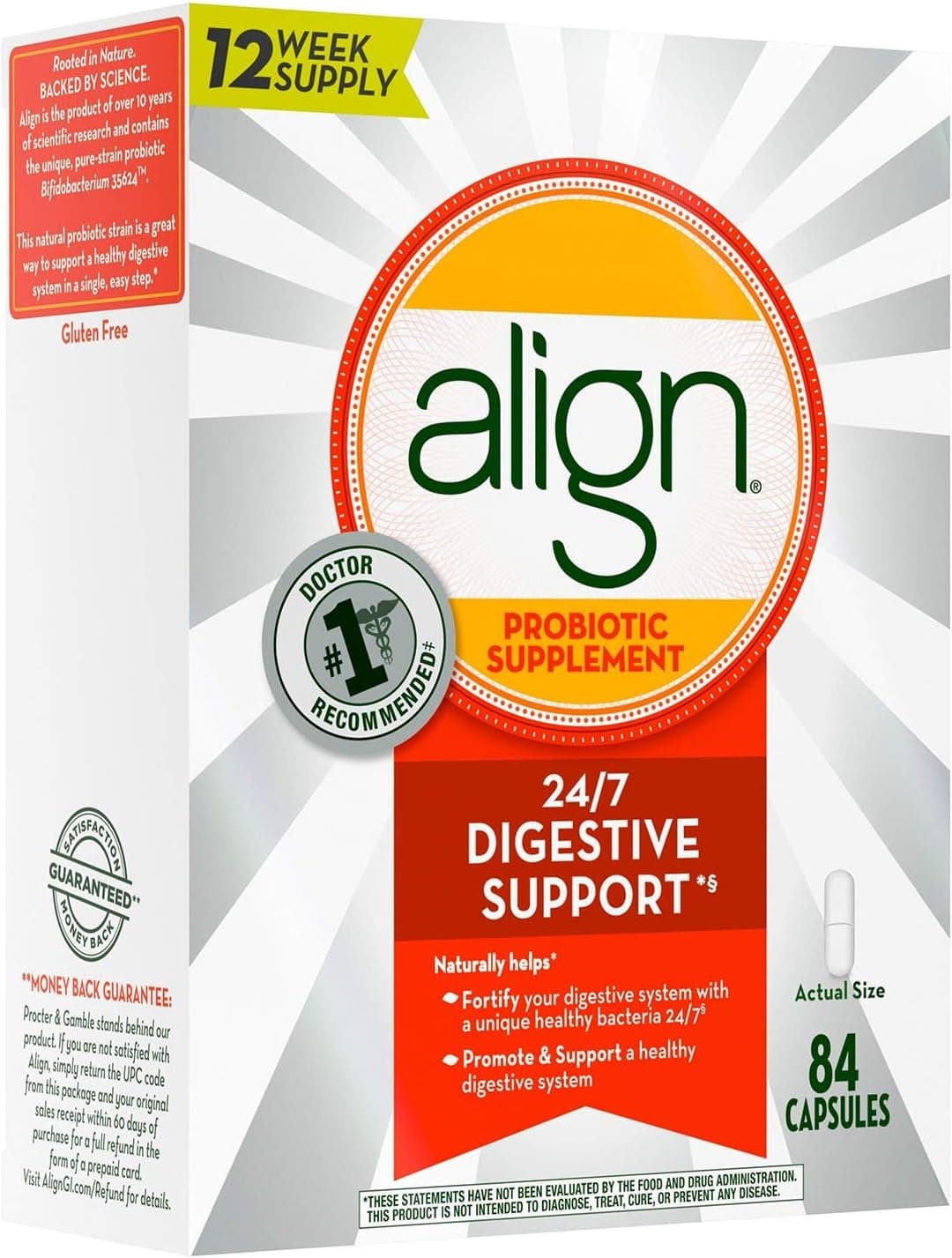
Probiotics.
Research-backed probiotic with potential health benefits. Populates your gut with beneficial bacteria. This can improve digestion, reduce bloating, and support your immune system. Some strains can even influence mood.
Reviewed March 2026
- Category
- Probiotic
- Also called
- Probiotic, Probiotic Blend, Multi-strain Probiotics, Probiotic Blends
What Probiotics is, and what it does.
- Does it work
- Maybe. For a generally healthy person? The evidence is less clear.
- How much to take
- 1-20 billion CFU is a common range. But the strain matters more than the number. For example, *Lactobacillus rhamnosus GG* for diarrhea. Don't just buy the highest CFU count you can find.
- Time to feel it
- Two to four weeks of daily dosing before digestion settles into a new pattern. Mild gut rumbling in the first few days is the earliest sign of the shift.
- The first dose
- Nothing significant. Maybe some mild gas or gut rumbling as things shift around. That's it.
- With regular use
- After 2-4 weeks, you might notice better digestion and less bloating. Some people report fewer sick days or even a brighter mood. Highly dependent on the strain and your body.
- How well tolerated
- Well tolerated for most people. That initial gas is normal. If you have a serious immune condition, talk to a doctor. These are live organisms.
- How it feels
- You don't feel it working. You just notice the absence of problems. Less digestive drama. A calmer gut. It's the feeling of things just working better in the background.
- The overlooked benefit
- Most supplemented strains are passengers, not permanent residents. They work while you keep taking them and fade within weeks of stopping, so daily consistency matters more than the count.
1,000,000,000 to 10,000,000,000 CFU a day is where Probiotics works.
Source: ISAPP consensus statement 2019 + Ford 2014 meta-analysis
The proof, claim by claim.
These words describe the research, not the molecule's worth. Research strength is how much work stands behind one claim, and it is never a product score.
Probiotics is documented in the library. The clinical read is in the queue. Nothing about the strength of the research prints until the read is done.
- Everyday digestive comfortMeta-analysis
- Bowel regularityMeta-analysis
- Normal bowel habits during and after a course of antibioticsMeta-analysis
- Lactose digestion from fermented dairyRandomised trial
- Immune resilience through the darker monthsMeta-analysis
- Mood and the gut-brain axisRandomised trial
- Short-chain fatty acid production in the colonNarrative review
Questions people ask about Probiotics.
- Does the strain really matter that much?
- Yes. It's everything. Think of it like dogs: a chihuahua and a great dane are both dogs, but you wouldn't use them for the same job. Strains are that different.
- What does CFU mean?
- Colony Forming Units. It's a measure of how many live, viable bacteria are in each dose. More isn't always better. The right strain is more important.
- Do I need to keep them in the fridge?
- Depends on the product. Many are now shelf-stable due to freeze-drying. Check the label. If it says refrigerate, do it.
- Can I just eat yogurt instead?
- Yogurt is great, but it's not a therapeutic supplement. The CFU count is often lower and the strains aren't targeted for specific health issues. A supplement is more direct.
- Should I take probiotics with antibiotics?
- Yes, but separated by at least 2 hours. The antibiotic kills bacteria indiscriminately. Taking probiotics can help reduce side effects like diarrhea.
- How do I know if it's working?
- Look for a reduction in symptoms after 3-4 weeks. Less bloating, better regularity, etc. It's a slow and subtle process.
Why these belong in the same formula. Each row says what the basis is, from settled biochemistry through to a trial that measured the pair.
Inulin passes undigested to the colon where bifidobacteria and lactobacilli ferment it, so it feeds the organisms the capsule delivers. Supplying strain and substrate in one dose is the defining synbiotic combination.
PHGG is a low-viscosity fibre fermented gradually along the colon into short-chain fatty acids, which lowers luminal pH in a range that favours lactobacilli. It is chosen over inulin when gas production needs to be gentler.
Glutamine is a preferred fuel of the cells lining the small intestine and supports the tight-junction proteins that hold that lining together. It acts on the host side of the barrier while the strains act on the luminal side.
Colonic bacteria ferment beta glucan into short-chain fatty acids, so it acts as a carbohydrate source for the strains supplied alongside it. The pairing follows the same substrate plus organism logic as other synbiotics.
Pectin is fermented by colonic bacteria into short chain fatty acids, giving supplemented organisms a substrate to grow on. Feeding the organism is the classic synbiotic pairing.
Psyllium is only partly fermented, so it both feeds some fermentation and holds water to slow transit, giving organisms longer contact time.
Butyrate is the short chain fatty acid colonic bacteria produce from fibre and the main fuel for colonocytes. Supplying it directly delivers the end point that fermentation normally provides.
Lactic acid bacteria carry their own beta-galactosidase, which is the same activity supplemental lactase provides. Both act on lactose in the small intestine.
Carvacrol and thymol disrupt bacterial membranes without distinguishing supplemented organisms from resident ones. Taken at the same time they reduce how many viable organisms arrive, so dosing is separated.
Charcoal adsorbs a wide range of organic material in the gut lumen and can bind organisms and their substrate. Taking it with a probiotic reduces what is delivered.
Clay binds material in the gut lumen by surface charge, including bacterial cells. Separating doses is standard practice.
Berberine has broad antibacterial activity in the gut and shifts microbial composition on its own. Given together with a probiotic it can reduce the viable count delivered.
Iron that is not absorbed reaches the colon, where it favours iron-scavenging enterobacteria over lactobacilli and bifidobacteria. Higher unabsorbed iron shifts the population away from the supplemented organisms.
Several bifidobacteria and lactobacilli synthesise folate in the colon, adding to dietary intake. The organism and the vitamin sit on the same supply route.
FOS passes the small intestine undigested and is fermented by lactobacilli and bifidobacteria to short-chain fatty acids. It is the substrate most often paired with live strains in synbiotic formulas. Larger amounts increase gas and bloating in people who are sensitive to fermentable carbohydrate.
Resistant starch escapes amylase digestion and is fermented in the distal colon, where butyrate-producing species use it. That is further down the gut than most oligosaccharides reach. The pairing shifts where fermentation happens, not just how much.
Partially hydrolysed guar gum is a slowly fermented soluble fibre that gives a gradual fermentation profile rather than a rapid one. Fast-fermenting oligosaccharides are more often reported to produce gas at the same gram dose, though tolerance varies between people. It gives resident and supplemented species a substrate along the length of the colon.
Konjac glucomannan is a viscous soluble fibre fermented by colonic bacteria to short-chain fatty acids. It is used mainly for viscosity and satiety, with fermentation as a secondary property. It needs to be taken with adequate water because of how much it swells.
Oat beta-glucan is both viscous in the small intestine and fermentable in the colon, so it feeds resident and supplemented bacteria. The fermentation end products include propionate and butyrate. This is a substrate relationship described in fermentation studies rather than a clinical outcome measured with a live strain.
S. boulardii is a yeast, not a bacterium, so it is unaffected by antibacterial agents that suppress bacterial strains. Formulas often pair it with bacterial strains for that reason. The two act through different surfaces of the same gut environment.
Lactoferrin sequesters free iron, which limits the growth of iron-scavenging organisms while bifidobacteria, which have low iron requirements, are less constrained. It is a component of human milk that sits alongside the oligosaccharides shaping the infant microbiota. The pairing is mechanistic and has not been resolved into a specific clinical effect here.
Bovine colostrum carries immunoglobulins, lactoferrin and oligosaccharides, several of which are fermentable or bind bacterial surfaces. It is used alongside live strains in gut-focused formulas. The evidence is mechanistic and composition-based rather than a trial of the combination.
Zinc carnosine adheres to the mucosal surface and has been studied for its effect on epithelial integrity markers. Live strains act at the same interface through mucin stimulation and tight-junction proteins. The two are formulated together on mechanistic grounds, with no combination trial cited here.
Menaquinones are made by bacteria, not by plants, and gut bacteria including Bacillus and some lactic acid species produce various menaquinone forms. That is why MK-7 in supplements is produced by fermentation. Colonic menaquinone production is real but its contribution to human vitamin K status is difficult to quantify.
Cobalamin is synthesised only by bacteria and archaea, and certain lactic acid bacteria and propionibacteria produce it during fermentation. Colonic synthesis sits below the ileal absorption site, so it does not reliably reach the bloodstream. The relationship explains where dietary B12 comes from, not that a probiotic supplies it.
Urolithin A is not present in food. It is produced when gut bacteria metabolise ellagitannins from pomegranate and certain nuts. Only some people carry the microbial capacity to make it, which is why the metabolite is sold directly. This is one of the clearest examples of the microbiota determining what a person actually absorbs.
Curcumin is poorly absorbed, and much of an oral dose reaches the colon where bacteria convert it to metabolites including tetrahydrocurcumin. The bacterial population present therefore shapes which metabolites appear. The direction and size of that effect in people has not been settled.
Catechins that escape absorption are ring-fissioned by colonic bacteria into smaller phenolic acids, and catechins in turn have antibacterial activity against some species. The relationship runs both ways. It is characterised in fermentation work rather than by a clinical combination study.
Supplemental proteases and carbohydrases break substrate down in the small intestine, which reduces what reaches the colon for fermentation. In a shared capsule, proteases can also act on the bacterial cells themselves during storage if moisture is present. Formulators generally separate the two for that reason.
Gastric acid is the main barrier live organisms have to survive, and betaine hydrochloride is taken specifically to lower stomach pH. Taking the two at the same moment works against the delivery of the strain. Separating them by an hour, or using an acid-resistant capsule, is the usual approach.
Allicin and related thiosulfinates have broad antibacterial activity in laboratory systems, including against lactic acid bacteria. Whether a culinary or supplemental dose meaningfully reduces a live strain reaching the colon has not been quantified. It is worth separating the doses when both are being taken deliberately.
Chicory root inulin is a fructan of longer chain length than FOS, so it ferments more slowly and further along the colon. It is the most widely used prebiotic in synbiotic products. Tolerance is dose-dependent and gas is the usual limiting factor.
Nothing specific on file for Probiotics. Match the label to the daily amount above, and tell your doctor what you take.
Not medical advice. Show the label to your pharmacist.What Probiotics actually does.
Most supplement strains just pass through. You can detect them in stool while you keep dosing, then they fade within weeks of stopping instead of settling in permanently.
Gut bacteria ferment fibre you can't digest into short-chain fatty acids: acetate, propionate and butyrate. Butyrate is the fuel the cells lining your colon prefer.
Stomach acid and bile are the main hurdle for a live culture you swallow. That's why acid-resistant capsules, buffering blends and spore-forming strains exist.
Live organisms compete with other gut bacteria for places to stick to the gut lining and for food. Scientists call that competitive exclusion.
Where Probiotics comes from.
One specific bacterial strain is grown in a big sterile tank, spun out of the liquid, mixed with sugars that protect it through freezing, then freeze-dried into a powder. The powder is not dead, it is dormant, and it wakes up when it meets moisture in your gut.
Produced by a cultured organism rather than harvested. The strain is selected and the conditions are controlled, so batches sit closer together than a field crop.
A single characterised strain isolate, genetically identified and stored frozen, from which every production lot descends
The strain is grown in sterile stainless vessels on a defined medium with pH and temperature control until the target cell density is reached
Cells are separated from spent medium by centrifugation or membrane filtration and washed
The concentrate is mixed with protectants such as trehalose, sucrose or milk solids that stabilise the cell membrane through freezing
Vacuum sublimation removes water, the dry cake is milled, blended with a carrier and encapsulated under controlled humidity
Viable count is measured by plate assay or flow cytometry, and stability testing sets the count that can be declared at expiry rather than at manufacture
The specific growth medium and cryoprotectant blend are usually treated as manufacturer confidential, which is why a label states the strain and count but not the process.
Getting Probiotics from food.
The whole-food sources on file. A supplement closes the gap, it does not replace dinner.
A gram-for-gram figure (how much of each you would eat to match a dose) will appear here once it is sourced and reviewed. This page will not print a number it cannot cite.
The forms it comes in.
The essence, in one line each.
- Taken alongside a course of antibiotics, probiotics lowered the risk of antibiotic-associated loose stools by about 37 percent (risk ratio 0.63) across 42 trials in 11,305 adults.Systematic review and meta-analysis. Goodman et al., 2021 (BMJ Open). PMID 34385227 ↗
- In adults with recurring gut pain and bowel upsets, probiotics were more likely than placebo to improve overall gut symptoms across 54 trials (odds ratio 0.53, 95% CI 0.48 to 0.59).Systematic review and network meta-analysis. Wu et al., 2024 (Nutrients). PMID 38999862 ↗
- Across 15 trials in adults with sluggish bowels, probiotics shortened whole gut transit time by about 13.75 hours and added roughly one bowel movement per week (0.98).Meta-analysis of randomised controlled trials. Zhang et al., 2020 (Clinical Nutrition). PMID 32005532 ↗
- Across 19 trials in 967 adults with raised cholesterol, probiotics lowered LDL cholesterol by about 0.17 mmol/L and total cholesterol by about 0.25 mmol/L.Meta-analysis of randomised controlled trials. Mo et al., 2018 (Medicina Clinica). PMID 30467077 ↗
- Across 30 randomised trials in 1,499 people, 53% reported a rise in at least one short-chain fatty acid with probiotics, 30% found no detectable change and 17% reported a fall, with the clearest increases in children.Systematic review. Brasiel and Potente Dutra Luquetti, 2025 (Nutrition Reviews). PMID 40265671 ↗
- Pooling 46 randomised trials in 3,516 people, probiotics lowered cortisol levels with a standardised mean difference of 0.45, an effect the authors rate low certainty because results varied widely between studies.Meta-analysis. Jain et al., 2024 (Nutrients). PMID 39458560 ↗
- Across 8 randomised trials in adults with higher-than-normal blood sugar, probiotics lowered glycated haemoglobin by 0.07 percentage points, with no detectable difference in cholesterol, triglycerides or body mass index.Meta-analysis. Japar et al., 2025 (Probiotics and Antimicrobial Proteins). PMID 39806201 ↗
- In 66 adults with excess body weight and elevated blood pressure on a reduced-calorie diet for 12 weeks, an 8-strain probiotic at 30 billion CFU daily produced a greater fall in glycated haemoglobin than placebo, while fat loss matched the diet-only group.Randomised trial. Pontes et al., 2025 (Clinical Nutrition). PMID 40409234 ↗
- An umbrella meta-analysis pooling reviews of probiotic supplementation alongside routine dental care reported improvements in clinical gum indices, with the authors noting heterogeneity between strains and protocols.Meta-analysis. Tan et al., 2026 (Nutrition Reviews). PMID 40576216 ↗
- A systematic review of probiotic supplementation alongside phototherapy in newborns with raised bilirubin. Bilirubin level is a laboratory marker and the included studies varied in strain and dose.Systematic review. Wijaya et al., 2026 (Journal of Neonatal-Perinatal Medicine). PMID 40540314 ↗
- A systematic review of supplementation during pregnancy or infancy reporting shifts in infant gut microbiota composition alongside mixed findings for reported food-allergy endpoints.Systematic review. Jiang et al., 2025 (Nutrition Reviews). PMID 38502006 ↗
- A systematic review of probiotic supplementation and semen parameters in adult men. The endpoints are laboratory measures of sperm quality rather than pregnancy outcomes.Systematic review. Oliveira et al., 2024 (JBRA Assisted Reproduction). PMID 38530761 ↗
- A critical umbrella review of intervention reviews reporting effects on gastrointestinal complications during oncology care, with the authors flagging low certainty across most pooled comparisons.Systematic review. Yang et al., 2025 (Critical Reviews in Food Science and Nutrition). PMID 39002141 ↗
- After 24 weeks of probiotic supplementation the trial did not detect a reduction in cardiovascular risk markers compared with control. A failure to detect a difference is not evidence that no difference exists.Randomised trial. Barcelos et al., 2023 (Annals of Hepatology). PMID 36216309 ↗
- Soymilk combined with probiotics was examined against cardiovascular risk markers in adults with high blood sugar. Because two components were given together the effect cannot be assigned to the probiotic alone.Randomised trial. Hasanpour et al., 2023 (BMC Endocrine Disorders). PMID 36759798 ↗
- Supplementation was reported to improve quality-of-life scores and inflammatory markers in adults under dermatology care. Quality-of-life scores are self-reported and inflammatory markers are laboratory measures.Randomised trial. Moludi et al., 2022 (Journal of Drugs in Dermatology). PMID 35674759 ↗
- In weaned animals, probiotic supplementation was reported to alter caecal microbial populations and stress-related measures. Animal gut findings do not transfer directly to people.Animal study. Khalifa et al., 2024 (Journal of Animal Physiology and Animal Nutrition). PMID 38879790 ↗
- Maternal supplementation was reported to change immune and antioxidant measures in suckling offspring alongside modified gut microbiota. These are markers measured in animals.Animal study. Ma et al., 2022 (Journal of Applied Microbiology). PMID 35396768 ↗
- A scoping review mapping what has and has not been studied for probiotic supplementation in an infectious-disease care setting. It maps the literature rather than pooling effects.Systematic review. Baral et al., 2025 (Scientifica). PMID 41256827 ↗
These are the studies our verdict leans on, chosen from the 65,659 we read for Probiotics. The full linked list is below.
The studies, linked.
11 sources behind our Probiotics verdict: peer-reviewed studies and registered clinical trials. Every one links straight to PubMed, the journal, or ClinicalTrials.gov. Read them yourself.
- Clinical trialEfficacy of Physiological Saline and Probiotics (LiveSpo Navax) in Preventing Respiratory Diseases in Children Aged 2-5, in Son Tay Province, HanoiClinicalTrials.gov ↗600 participants, Completed
- Clinical trialBuilding Up the Vaginal Flora Using Multistrain Probiotics in Patients with Bacterial VaginosisClinicalTrials.gov ↗Early phase 1, 56 participants, Terminated
- Clinical trialEffects of the Use of Probiotics Ayran on Gingival Inflammation: An Experimental Gingivitis StudyClinicalTrials.gov ↗54 participants, Completed
- Clinical trialEffects of Orange Juice Enriched With Vitamin D3 and Encapsulated Probiotics in High Cardiometabolic Risk IndividualsClinicalTrials.gov ↗50 participants, Completed
- Clinical trialEffect of Probiotics on Chromogenic Bacteria and Extrinsic Stains in ChildrenClinicalTrials.gov ↗Phase 4, 9 participants, Completed
- Clinical trialProbiotics Regulates Skin Care in Children : A Randomized, Double-blind Clinical Trial With PlaceboClinicalTrials.gov ↗148 participants, Unknown
- Clinical trialSafety and Efficacy of Vonoprazan vs Proton Pump Inhibitor With Vitamin D or Probiotics Based Triple Therapy for Eradication of Helicobacter Pylori InfectionClinicalTrials.gov ↗Phase 2, 132 participants, Recruiting
- Clinical trialA Randomized, Double-Blind, Placebo-Controlled Study to Assess the Effects of Consumption of a Limosilactobacillus Supplement on Recurrence of Uncomplicated Symptomatic Urinary Tract Infections (UTI) in Healthy Women During a 6-month PeriodClinicalTrials.gov ↗130 participants, Unknown
- Clinical trialProbiotics and the Microbiome: Clinical Intervention Trial for Anxiety and DepressionClinicalTrials.gov ↗Phase 2, 75 participants, Unknown
- Clinical trialAdjunctive Periodontal Treatment With Coenzyme Q10 in Association With Probiotics for Pregnant Women: Randomized Clinical Trial.ClinicalTrials.gov ↗40 participants, Enrolling by invitation
- ClinicalTrials.gov ↗
Evidence surfaced via Semantic Scholar (Allen Institute for AI) and ClinicalTrials.gov. Ranked by study type and citation weight, not cherry-picked.
Problems people have reported.
Read this carefully. These are 46,884 voluntary, unverified reactions reported to the FDA (openFDA). The number mostly reflects how popular Probiotics is, not how risky it is. A report is not proof Probiotics caused anything. It is a signal of what to watch for, nothing more.
Source: openFDA adverse-event reports. Voluntary reporting, not an incidence rate.
FDA Disclaimer: These statements have not been evaluated by the Food and Drug Administration. This information is for educational purposes only and is not intended to diagnose, treat, cure, or prevent any disease. Consult your healthcare provider before starting any supplement regimen.