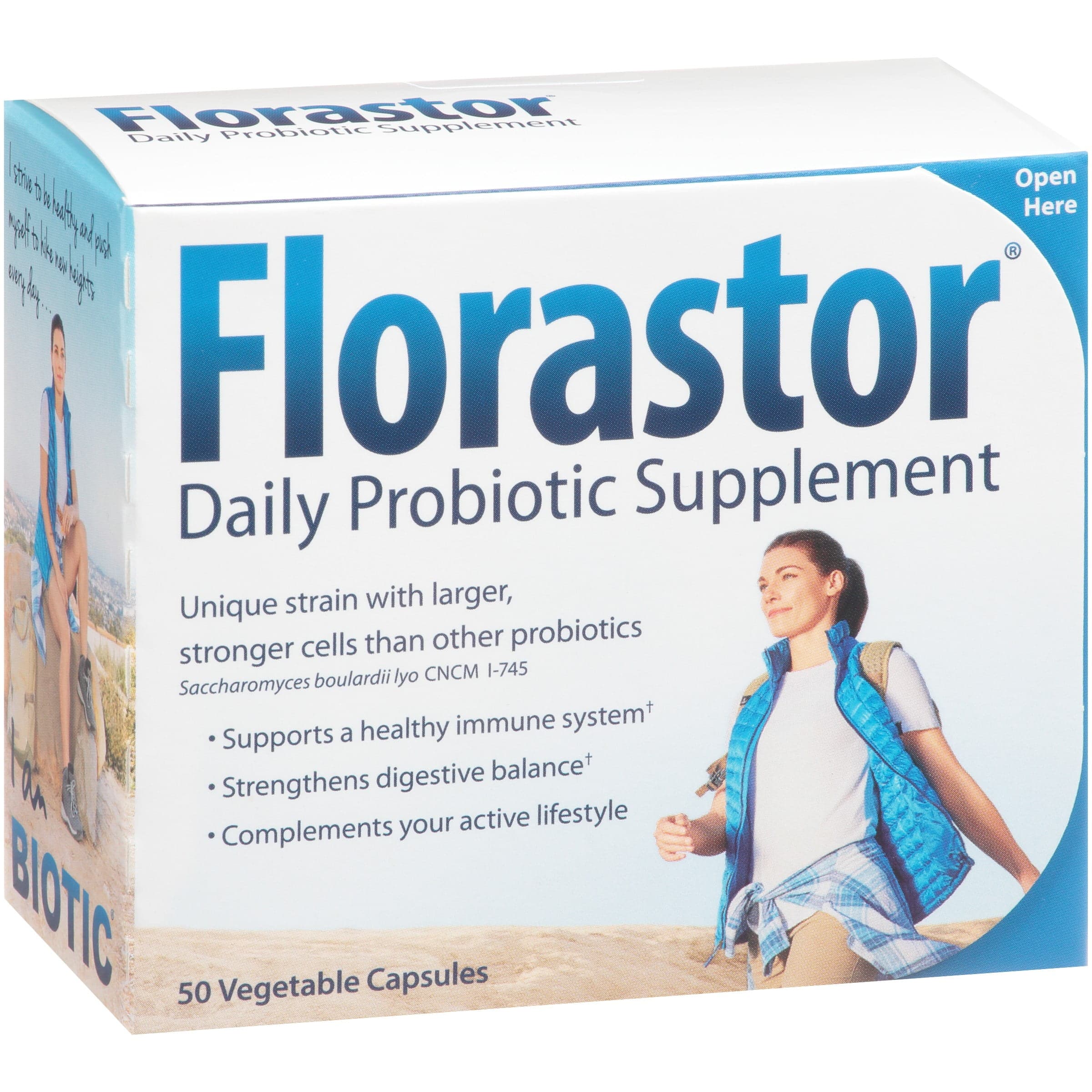
Saccharomyces boulardii.
The travelers probiotic. Not bacteria, but yeast that helps. A probiotic yeast that rides through your gut supporting normal regularity and digestive comfort, including while you are travelling or on a course of antibiotics.
Reviewed March 2026
- Category
- Probiotic
- Also filed under
- DiarrheaTravelAntibiotics
What Saccharomyces boulardii is, and what it does.
- Does it work
- Suits travellers, people finishing a course of antibiotics, and anyone with an unsettled gut who wants a probiotic that antibacterial medicines do not knock down.
- How much to take
- Start with 250mg to 500mg a day, the daily maintenance band, split morning and evening if your gut prefers it. Because it clears within days of stopping, daily intake is the point.
- Time to feel it
- It reaches steady levels in the gut in about three days. Changes in comfort and regularity are usually described within the first week of daily use.
- The first dose
- Day one is usually uneventful, sometimes a little gas as things adjust. The yeast is still building toward steady numbers, which takes roughly three days.
- With regular use
- It never settles in, so weeks of use are weeks of maintained levels. Regularity and comfort hold while you take it and drift back within days of stopping.
- How well tolerated
- Well tolerated by most people. It is a live yeast, so anyone immunocompromised, with a central venous line, or with a yeast allergy should check with a clinician first.
- How it feels
- A settled, predictable gut rather than a sensation. A few people notice mild gas in the first days that eases as levels steady.
- The overlooked benefit
- Its cell wall carries mannose sugars that some bacteria stick to, so they leave with the yeast rather than attaching to your gut wall. It also supports brush-border lactase activity.
250 to 500mg a day is where Saccharomyces boulardii works.
Source: ISAPP consensus statement 2019 + Ford 2014 meta-analysis
The proof, claim by claim.
These words describe the research, not the molecule's worth. Research strength is how much work stands behind one claim, and it is never a product score.
Based on 80 human trials with 80% consistency.
- bowel regularity during and after a course of antibioticsMeta-analysis
- digestive comfort while travellingMeta-analysis
- gut microbial balanceRandomised trial
- brush-border disaccharidase activityAnimal study
- binding and removal of gut bacteria by cell wall mannansIn vitro study
Questions people ask about Saccharomyces boulardii.
- When should I take it?
- Timing matters less than consistency. Pick a time that works for you and take it daily.
- How long until I notice something?
- GI effects can show within days. Immune and mood benefits take 4-8 weeks of consistent use.
- Do I need to refrigerate it?
- Depends on the brand. Shelf-stable formulas exist and work fine. But if it says refrigerate, do it. Dead bacteria don't help anyone.
- Should I take it with food?
- With or right before a meal, ideally. The food buffers stomach acid and gives the bacteria a better chance of surviving the trip down.
- Can I take it with other supplements?
- Usually fine. The main thing to watch is not doubling up on the same ingredient from different products. If you're on prescription meds, check with your pharmacist first.
Why these belong in the same formula. Each row says what the basis is, from settled biochemistry through to a trial that measured the pair.
The yeast and the bacteria occupy different niches and are not inhibited by the same agents. Combining them keeps a live organism present across conditions that suppress only one kingdom.
A yeast is unaffected by antibacterial pressure that reduces a bacterial culture, which is the reason multi-strain formulas pair the two. Neither competes with the other for the same substrate.
Berberine acts on bacterial membranes and bacterial cell division and has little effect on a eukaryotic yeast. Saccharomyces boulardii persists through a course of it where a bacterial culture would not.
Carvacrol and thymol are active against yeasts as well as bacteria and disrupt the fungal membrane directly. Taken in the same dose window they reduce viable Saccharomyces boulardii.
Caprylic acid is used specifically for its action on yeast cell membranes. Co-dosing it with a live yeast preparation works against the organism being supplied.
Monolaurin destabilises lipid membranes of microorganisms including yeasts. Taken alongside a live yeast it lowers the delivered viable count, so the doses belong apart.
Charcoal adsorbs organic material non-selectively during transit, including yeast cells and their secreted proteins. Spacing the doses by several hours preserves the delivered load.
The charged clay surface binds cells and proteins in the lumen. Co-dosing lowers how much live yeast reaches the colon.
Saccharomyces boulardii raises brush border disaccharidase expression, including lactase, sucrase and maltase. That works alongside a supplemental enzyme acting on the same sugars in the lumen.
Glutamine fuels the enterocyte and supports normal tight junction protein expression from the tissue side. The yeast acts on the luminal side, so the two address the barrier from opposite faces.
Colostrum supplies secretory immunoglobulins and growth factors that act on the mucosal surface, while the yeast raises secretory IgA output itself. The two reach the same surface by different routes.
Saccharomyces boulardii shifts the resident community toward higher short-chain fatty acid output. Supplying butyrate directly covers the same colonocyte fuel without waiting on that shift.
Inulin is fermented by resident Bifidobacteria and other bacteria rather than by Saccharomyces boulardii, which does not use it appreciably. Pairing them supports the bacterial community alongside the transient yeast rather than feeding the yeast itself. Describing it as food for the yeast would be the common mistake here.
Short-chain fructooligosaccharides are fermented by resident bacteria to short-chain fatty acids, which supports the gut environment the yeast passes through. The yeast is a passenger rather than a beneficiary of the substrate. The pairing is a whole-ecosystem rationale.
Galactooligosaccharides selectively feed Bifidobacteria and are unavailable to Saccharomyces boulardii. Combining them addresses two different parts of the same ecosystem. No combined measurement is implied.
Resistant starch reaches the colon intact and is fermented by resident bacteria to butyrate. Supporting colonocyte energy supply complements a transient yeast working in the lumen. The rationale is ecological rather than a tested pairing.
Partially hydrolysed guar gum ferments slowly along the colon and is tolerated at doses where more rapidly fermented fibres cause gas. That makes it a common companion in products aimed at digestive comfort. The pairing is formulation practice supported by fibre pharmacology.
Psyllium adds water-holding bulk and normalises stool form, a different lever from a transient yeast. The two are combined for that reason in digestive formulas. There is no combination trial to cite.
Guar gum is fermented by resident bacteria and increases viscosity of gut contents. Both effects act on the environment rather than on the yeast. The pairing sits at an early confidence.
Zinc is required for normal enterocyte turnover and tight junction protein function, which is the same barrier layer this yeast is described as supporting. Adequate zinc status is a precondition for normal barrier maintenance regardless of what else is taken. This is a cofactor requirement, not a measured combined effect.
Zinc-carnosine adheres to the gastric mucosa and supplies zinc at that surface, which is the same region where the yeast is commonly taken alongside a clinician-directed stomach regimen. The two act by different means on the same tissue. Support is mechanistic plus formulation practice.
Lactoferrin sequesters free iron in the gut lumen, which restricts iron-scavenging bacteria, and it is used alongside probiotics for that reason. Saccharomyces boulardii is a yeast and is not the target of lactoferrin's antibacterial action. The two work on different members of the ecosystem.
A yeast and a lactic acid bacterium occupy different niches and neither inhibits the other, which is why they are routinely blended. The yeast is also unaffected by antibacterial agents that would knock down the bacterial strain. That difference is the practical reason to carry both.
Lactobacillus acidophilus and Saccharomyces boulardii are from different kingdoms and are commonly combined in a single capsule. The yeast survives antibacterial exposure that the bacterium does not. Blending covers both situations.
Bifidobacteria act mainly in the colon while this yeast passes through the whole tract without colonising. The two are complementary in where they act. Blending is standard, and no cross-inhibition is described.
Bifidobacterium lactis is a well-characterised colonic strain routinely blended with the yeast in commercial products. Neither organism antagonises the other. The pairing rests on microbiology and formulation practice.
Beta-1,3/1,6-glucan is a structural part of the Saccharomyces cell wall and is also sold as an isolated ingredient that engages the same pattern-recognition receptors. Taking the isolated glucan alongside live yeast supplies the same class of cell wall material in larger amount. The receptor chemistry is established. A combined effect has not been measured.
Slippery elm mucilage forms a viscous demulcent layer over the gut lining, a physical action unrelated to the yeast's own mechanism. The two are combined in digestive comfort formulas. Evidence for the combination is not available.
Marshmallow root supplies polysaccharide mucilage with the same demulcent behaviour as slippery elm. It is a traditional companion in the same category of formula. The pairing is practice-based.
Garlic sulfur compounds have described activity against yeasts, and Saccharomyces boulardii is a yeast, so a strong garlic preparation taken at the same time can reduce the number of viable cells delivered. Separating them by a few hours is the practical answer. The direction of the interaction follows from the pharmacology rather than from a combination study.
Propolis extracts show antifungal as well as antibacterial activity in laboratory work, which places them at odds with a live yeast taken at the same moment. Spacing the doses avoids the overlap. This is a caution drawn from chemistry, not a measured loss of viability in people.
Betaine hydrochloride is taken to lower gastric pH, and lower pH reduces the fraction of any live organism that survives the stomach, although this yeast is more acid-tolerant than most probiotic bacteria. Taking them in the same swallow is worth avoiding when a full viable count matters. The interaction is a delivery consideration.
Saccharomyces boulardii has been described as increasing brush-border disaccharidase activity, which is the same class of function a supplemental enzyme blend supplies directly. The two approach carbohydrate digestion from inside and outside. The mechanism is described in the literature. The combination has not been measured.
Vitamin D receptor signalling in the gut epithelium is part of normal barrier and immune regulation, the same layer a probiotic yeast is described as supporting. Adequate vitamin D status is a background condition rather than an amplifier. The link is mechanistic.
Talk to a doctor before taking Saccharomyces boulardii if any of these apply to you: immunocompromised. These are flags to check first, not effects Saccharomyces boulardii is known to cause.
Not medical advice. Show the label to your pharmacist.What Saccharomyces boulardii actually does.
It is a yeast, so antibiotics that kill bacteria do not touch it.
It passes through rather than settling in, so it only works while you keep taking it.
It is built for body temperature and survives stomach acid well.
Its outer wall is made of the same fibres the immune system is built to notice.
Where Saccharomyces boulardii comes from.
The yeast is grown in big tanks on a sugar broth, spun out of the liquid, mixed with a protective sugar so it survives being dried, then freeze-dried into a powder. A lab counts how many living cells are in each gram, a little extra is added so the number on the label still holds at the end of shelf life, and it is packed with a drying sachet because heat and damp are what kill it.
Built by fermentation, the same way vitamin B12 and many amino acids are made at scale. Controlled conditions, consistent output.
A defined growth medium built on molasses or glucose with a nitrogen source, minerals and vitamins. The yeast was originally isolated from lychee and mangosteen fruit in Indochina in the 1920s. Commercial material comes from a maintained master cell bank, never from fresh fruit.
The working cell bank is scaled from a shake flask through seed vessels into a stirred production fermenter, run aerobically with controlled pH, temperature near the organism's optimum and fed-batch sugar delivery to keep biomass yield high.
Biomass is separated from spent medium by centrifugation or membrane filtration, then washed to remove residual medium components.
The cell cream is concentrated and mixed with a cryoprotectant such as trehalose, skimmed milk solids or maltodextrin, which is what allows cells to survive freezing and drying.
Colony-forming units per gram are counted by plate assay after drying and the powder is blended with a carrier to hit the declared count. An overage is normally built in so the label figure still holds at the end of shelf life. Identity is confirmed to strain level by genetic methods where a strain is declared.
Lyophilised under vacuum to low residual moisture, then filled into capsules, sachets or tablets and packed with a desiccant, since moisture and heat are what kill viable count during storage.
Getting Saccharomyces boulardii from food.
The whole-food sources on file. A supplement closes the gap, it does not replace dinner.
A gram-for-gram figure (how much of each you would eat to match a dose) will appear here once it is sourced and reviewed. This page will not print a number it cannot cite.
The forms it comes in.
The essence, in one line each.
- Pooled trials reported higher clearance rates of a common stomach bacterium and fewer reported digestive complaints when this yeast was added to a clinician-prescribed antibiotic regimen.Meta-analysis. Westphal et al., 2026 (Journal of Gastrointestinal and Liver Diseases). PMID 42470702 ↗
- The pooled review reported a higher clearance rate and lower reported side-effect burden when the yeast was added as an adjunct to standard regimens.Systematic review. Li et al., 2025 (Frontiers in Cellular and Infection Microbiology). PMID 40012609 ↗
- In pooled paediatric trials the addition of the yeast was associated with higher clearance rates and fewer reported digestive complaints. The review notes variable trial quality.Systematic review. Liu et al., 2023 (BMC Infectious Diseases). PMID 38102568 ↗
- Adding the yeast to a four-drug bismuth-containing regimen was reported to change clearance rate and tolerability measures compared with the regimen alone.Randomised trial. Jiang et al., 2025 (BMC Gastroenterology). PMID 40251486 ↗
- The trial reported outcomes for the yeast added to a standard four-drug regimen, including tolerability measures.Randomised trial. Ma et al., 2025 (Journal of the College of Physicians and Surgeons Pakistan). PMID 41247686 ↗
- Adding the yeast to a two-drug vonoprazan and amoxicillin regimen was compared with the regimen alone for clearance and tolerability.Randomised trial. Qu et al., 2026 (Infection and Drug Resistance). PMID 41971394 ↗
- The trial examined supplementation alongside a two-drug regimen in people receiving that regimen for the first time and reported clearance and side-effect measures.Randomised trial. Ji et al., 2026 (BMC Gastroenterology). PMID 42026480 ↗
- The report compares a two-drug regimen with and without the yeast for clearance rate and reported tolerability.Randomised trial. Yu et al., 2024 (BMC Gastroenterology). PMID 39592940 ↗
- Supplementation did not produce a detectable difference in anaerobic power gains from short-term sprint interval training. This is a failure to detect a difference in this trial, not evidence that none exists.Randomised trial. Hudson et al., 2025 (Brazilian Journal of Medical and Biological Research). PMID 40136227 ↗
- Multi-omics profiling during supplementation described coordinated shifts in gut microbial composition, metabolite profiles and immune markers. These are molecular measures rather than clinical outcomes.Open-label trial. Vaaben et al., 2026 (Gut Microbes). PMID 42381379 ↗
- A randomised, controlled study reported changes in symptom scores and laboratory measures in adults enrolled in a respiratory-health trial.Randomised trial. Dezfouli et al., 2025 (Drug Research). PMID 40228543 ↗
- Supplementation was reported to change clinical scores and laboratory markers in adults with excess body weight and age-related knee joint wear.Randomised trial. Dolatkhah et al., 2024 (European Journal of Nutrition). PMID 38761281 ↗
- Supplementation changed faecal parameters, microbiota composition and nutritional measures in dogs. A non-human study.Animal study. Meineri et al., 2022 (Veterinary Sciences). PMID 36006304 ↗
These are the studies our verdict leans on, chosen from the 13 we read for Saccharomyces boulardii. The full linked list is below.
The studies, linked.
11 sources behind our Saccharomyces boulardii verdict: peer-reviewed studies and registered clinical trials. Every one links straight to PubMed, the journal, or ClinicalTrials.gov. Read them yourself.
- Clinical trialThe Evaluation of Saccharomyces Boulardii Sachets Combined With Standard Quadruple Therapy for Eradication of Helicobacter Pylori: a Prospective, Multi-Center TrialClinicalTrials.gov ↗360 participants, Completed
- Clinical trialEfficacy and Safety of Probiotics in the Treatment of Acute Gastroenteritis in ChildrenClinicalTrials.gov ↗Phase 4, 317 participants, Completed
- Clinical trialA Randomized Clinical Study of the Efficacy of a Formulation of Four Probiotics for the Prevention of Post-operative Complications in Patients Undergoing Colorectal SurgeryClinicalTrials.gov ↗Phase 4, 164 participants, Completed
- Clinical trialGastrointestinal Preparation and Efficacy of Saccharomyces Boulardii as a Pre-treatment for Helicobacter Pylori Rescue TherapyClinicalTrials.gov ↗106 participants, Completed
- Clinical trialEffect of Saccharomyces Boulardii CNCM I-745 on Antibiotic-perturbed Microbiota in Children: RESTORE STUDYClinicalTrials.gov ↗Phase 4, 100 participants, Completed
- Clinical trialEffect of Saccaromyces Boulardii CNCM I-745 Supplementation on the Fecal Resistome of Patients Treated Against Helicobacter Pylori InfectionClinicalTrials.gov ↗Phase 4, 72 participants, Completed
- Clinical trialThe Impact of Probiotic Supplementation on Antibiotic Induced Changes in Gastrointestinal Function And/or Faecal Microbiota Composition (FANTIB)ClinicalTrials.gov ↗50 participants, Completed
- Clinical trialImpact of Probiotics in Modulation of Intestinal Microbiota of Patients Undergoing a Resection ColonicClinicalTrials.gov ↗33 participants, Completed
- Clinical trialRole Of Saccharomyces Boulardii in Preventin Necrotizing Enterocolitis in Very Low Birth Weight InfantsClinicalTrials.gov ↗Phase 3, 220 participants, Unknown
- Clinical trialImpact of Additional Treatment With Saccharomyces Boulardii on Quality of Life in Patients With Mild Forms of Ulcerative Colitis and Crohn DiseaseClinicalTrials.gov ↗150 participants, Unknown
- Clinical trialThe Effect of Saccharomyces Boulardii in Clinical Presentation and Quality of Life Patient With IBSClinicalTrials.gov ↗52 participants, Unknown
Evidence surfaced via Semantic Scholar (Allen Institute for AI) and ClinicalTrials.gov. Ranked by study type and citation weight, not cherry-picked.
Problems people have reported.
Read this carefully. These are 1,500 voluntary, unverified reactions reported to the FDA (openFDA). The number mostly reflects how popular Saccharomyces boulardii is, not how risky it is. A report is not proof Saccharomyces boulardii caused anything. It is a signal of what to watch for, nothing more.
Source: openFDA adverse-event reports. Voluntary reporting, not an incidence rate.
FDA Disclaimer: These statements have not been evaluated by the Food and Drug Administration. This information is for educational purposes only and is not intended to diagnose, treat, cure, or prevent any disease. Consult your healthcare provider before starting any supplement regimen.