Propolis.
Bee glue with antimicrobial and immune benefits
Reviewed March 2026
- Category
- Compound
- Also filed under
- ImmuneAntimicrobialWound Healing
What Propolis is, and what it does.
- Does it work
- Suits people looking after gum and mouth comfort, and anyone building seasonal immune support. What is inside tracks the trees the bees visited, so the type on the label matters.
- How much to take
- Start with 200 to 500mg of extract a day, which is the band that keeps the flavonoids topped up. Trials have run 1,000mg, a research condition rather than a daily target.
- Time to feel it
- Mouth and gum comfort uses tend to read within a few days. For everyday immune support, think in weeks of daily use.
- The first dose
- Day one is quiet. A tincture tastes resinous and can numb the mouth a little, while the antioxidant and immune work builds across weeks rather than one afternoon.
- With regular use
- Most effects take 2-8 weeks. Be patient.
- How well tolerated
- Generally well tolerated. Check with your doctor if on medications.
- The overlooked benefit
- What is inside tracks the trees the bees visited. Poplar-type propolis is rich in galangin and chrysin, Brazilian green propolis carries artepillin C instead.
200 to 500mg a day is where Propolis works.
Source: Kuropatnicki et al., 2013; Silveira et al., 2019
The proof, claim by claim.
These words describe the research, not the molecule's worth. Research strength is how much work stands behind one claim, and it is never a product score.
Propolis has emerging evidence, with 13 cited human studies on this page.
- Mouth and gum comfortRandomised trial
- Everyday immune resilienceRandomised trial
- Antioxidant defence from phenolic compoundsNarrative review
- Activity against bacteria in laboratory systemsIn vitro study
- Skin and tissue repair supportRandomised trial
Questions people ask about Propolis.
- When should I take it?
- Timing matters less than consistency. Pick a time that works for you and take it daily.
- Can I take it with other supplements?
- Usually fine. The main thing to watch is not doubling up on the same ingredient from different products. If you're on prescription meds, check with your pharmacist first.
- Any side effects to watch for?
- Most people tolerate it well at recommended doses. GI upset is the most common complaint with any supplement. Start with a lower dose and work up. If something feels off, stop and reassess.
Why these belong in the same formula. Each row says what the basis is, from settled biochemistry through to a trial that measured the pair.
Ascorbate reduces flavonoid radicals back to their active form, so the polyphenols in propolis stay in circulation as reducing agents for longer. That regeneration step is settled redox chemistry and the reason flavonoid and ascorbate blends are traditional.
Zinc is a structural cofactor for enzymes and transcription factors that immune cells need to divide and mature, which is established nutrition. Propolis flavonoids act on redox tone instead, so the two reach the same normal defences from unrelated directions.
Propolis is a plant resin matrix carrying flavonoids and phenolic acids, while royal jelly contributes glandular proteins and the fatty acid 10-HDA. The two materials share almost no constituents, so a blend widens the compound profile rather than doubling one.
Bee pollen brings amino acids, carotenoids and B vitamins from plant material, and propolis brings concentrated resin phenolics such as galangin and caffeic acid esters. The nutritional and the polyphenol fractions of the hive sit in different products.
Propolis flavonoids and echinacea alkylamides act on different arms of innate immune signalling, so the two have been combined in throat and seasonal formulas for decades. The pairing broadens the mechanism rather than doubling one.
Quercetin and its glycosides are among the flavonoids propolis itself carries, so added quercetin extends the same radical-scavenging chemistry the extract already supplies. Both are conjugated by the same sulfotransferase and UGT enzymes, which slows clearance of either one.
Tocopherol works inside the lipid phase and hands its radical to water-phase phenolics for recycling, which propolis flavonoids can accept. That keeps the tocopherol pool in its active form longer.
The polyphenols that make up much of propolis bind non-heme iron in the gut lumen and form complexes the intestine cannot take up. Spacing the two by a couple of hours keeps iron uptake intact.
A clinical study combined alpha-lipoic acid, myo-inositol and propolis in one regimen and followed metabolic profile measures and liver enzymes. Because the three moved together, the design cannot separate each component's contribution. Both alpha-lipoic acid and propolis polyphenols act on redox handling from different chemistry, which is the stated rationale for combining them. The row rests on a combination study, and the readouts are markers rather than outcomes.
Myo-inositol was the third component of the tested regimen and contributes through insulin signalling intermediates rather than through antioxidant chemistry. The combination was studied as a unit, so any effect belongs to the regimen and not to inositol or propolis alone. Marker-level endpoints were reported. The pairing is grounded in an actual co-administration rather than in inference.
Propolis flavonoids and curcuminoids are both electron-donating phenolics that are heavily glucuronidated and sulfated after absorption. Formulators pair them for that overlapping chemistry. No trial has tested the two together, so the combined effect is unmeasured. The shared conjugation route also means they compete for the same clearance capacity.
Resveratrol and the flavone fraction of propolis both donate hydrogen atoms to radical species and both are extensively conjugated in the gut wall and liver. The pairing is common in polyphenol blends. Nothing has measured the combination in people. Read it as chemical rationale rather than as evidence of an added effect.
Poplar-type propolis carries galangin, chrysin and pinocembrin, all flavonoid aglycones, while rutin is the rutinoside of quercetin. They share radical-scavenging chemistry and are cleared through overlapping conjugation enzymes. Blends combine them for breadth of the flavonoid profile. The combination itself has not been tested.
Catechins and propolis phenolic acids both chelate non-heme iron in the gut lumen and both bind dietary protein. Taken together, that chelating capacity adds up. It is a useful pairing for antioxidant formulation and a reason to keep either away from an iron dose. The interaction is established polyphenol chemistry rather than a tested combination.
Analytical work on propolis consistently reports apigenin among its flavone constituents alongside chrysin and galangin. Adding isolated apigenin to a propolis extract increases the intake of a compound already present. That makes the pairing chemically coherent but also makes the two hard to separate in any assessment. No combination study exists.
Propolis phenolics scavenge radicals directly, while selenium works one step back by supplying the selenocysteine residue that glutathione peroxidase needs. The two act at different points of the same redox defence. The cofactor role of selenium is established. The combined effect with propolis is not measured. Meta-analytic work on propolis reports movement in oxidative stress markers, which are markers and not outcomes.
Ubiquinol works inside membranes, while most propolis phenolics act in the aqueous phase and at membrane surfaces. Antioxidant networks pass reducing equivalents between compartments, which is the rationale for combining them. No trial has tested propolis with coenzyme Q10. The row is mechanistic.
NAC contributes cysteine for glutathione synthesis, raising the cell's own reducing pool, while propolis constituents act on radicals directly and on antioxidant response signalling. The two routes are complementary rather than duplicative. Nothing has tested them together in people. Regard the pairing as biochemical rationale.
Propolis polyphenols reach the colon largely unabsorbed and are transformed there by resident bacteria, and the same polyphenols shape which bacteria thrive. A clinical study in adults on dialysis reported changes in microbiota and microbial metabolite profiles. Pairing with a live culture therefore changes both the organisms present and the compounds they produce. The direction of that combined change has not been measured.
Flavonoids from propolis are conjugated rapidly by UDP-glucuronosyltransferases in the gut wall, which is the main reason their plasma levels stay low. Piperine slows that conjugation and can raise exposure to co-administered polyphenols. The mechanism is established for several polyphenols but has not been measured for propolis specifically. Higher exposure is not automatically a greater effect.
Much of raw propolis is wax and resin, and its active phenolics are poorly water soluble, which is why ethanol is the traditional solvent. Phospholipid complexes give an alcohol-free way to disperse those constituents. This is formulation chemistry with a clear rationale and no propolis-specific absorption trial. The description is about delivery, not about effect size.
Silymarin is a flavonolignan complex and propolis carries flavones and phenolic acids, so both arrive at the liver as substrates for the same phase II enzymes. Products combine them for the shared antioxidant rationale. The combination has not been tested, and the shared conjugation route means they can compete for clearance capacity. State it as formulation logic at early confidence.
Ginkgolides antagonise platelet activating factor, and several propolis phenolics including caffeic acid derivatives have been reported to reduce platelet aggregation in laboratory work. Combining them stacks two influences on the same process. This is worth flagging for anyone already monitoring clotting or taking anticoagulant medication, who should speak to their prescriber. The additive direction is inferred from each ingredient's own pharmacology rather than from a combination trial.
Nattokinase is a fibrinolytic enzyme, while propolis constituents have shown antiplatelet activity in laboratory models. The combination pushes on clot formation and clot breakdown at once. Anyone on anticoagulant or antiplatelet medication should raise the combination with their prescriber. No study has measured the pair together.
Allicin-derived compounds have a documented antiplatelet action, and several propolis constituents show the same direction in vitro. Together they represent two overlapping influences on platelet behaviour. Both are also traditional pairings in immune-oriented formulations, which is why they meet often. The additive effect is inferred from each ingredient rather than measured in combination.
Propolis and honey come from the same hive and have been combined in oral and throat preparations for a very long time. Honey supplies a viscous carrier that holds a resin extract in contact with mucosa. The pairing is traditional and formulational rather than clinically tested. Both also share the allergen risk that comes with bee products.
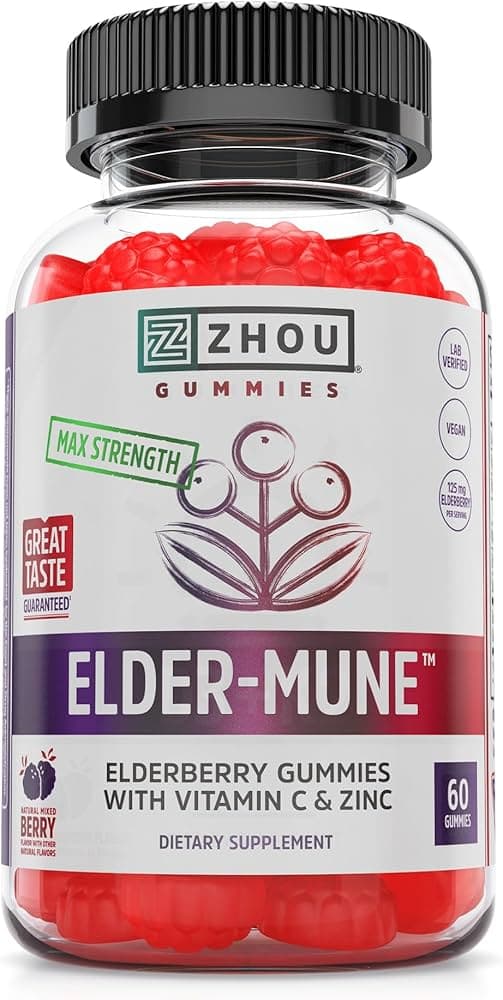
Elderberry contributes anthocyanins and propolis contributes flavones and phenolic acids, so a blend widens the polyphenol profile. Products pair them for that reason and for tradition. No study has measured the two together. This is formulation practice stated at its true confidence.
Nothing specific on file for Propolis. Match the label to the daily amount above, and tell your doctor what you take.
Not medical advice. Show the label to your pharmacist.What Propolis actually does.
Propolis is a bee-made resin, and what is in it depends on which trees the bees visited.
Two jars labelled propolis can carry different main compounds depending on where the resin came from.
The main phenolics in propolis don't dissolve well in water, so an alcohol tincture is the traditional format. Alcohol-free versions get around that with glycerol, water-soluble fractions or phospholipid dispersion.
Propolis phenolics hand off a hydrogen atom from their hydroxyl groups to settle down reactive radicals, and they grab hold of transition metals so those metals can't kick off Fenton-type radical generation.
Getting Propolis from food.
The whole-food sources on file. A supplement closes the gap, it does not replace dinner.
A gram-for-gram figure (how much of each you would eat to match a dose) will appear here once it is sourced and reviewed. This page will not print a number it cannot cite.
The forms it comes in.
The essence, in one line each.
- Pooling 21 randomised trials in adults, propolis lowered fasting blood glucose by about 9.75 mg/dL, insulin by about 1.64 microunits/mL and glycated haemoglobin by about 0.46 percentage points.Meta-analysis. Adeli et al., 2024 (Clinical Therapeutics). PMID 39097520 ↗
- Across 20 randomised trials with 1,139 adults, propolis lowered interleukin 6 and TNF-alpha, while C-reactive protein was unchanged overall and fell only in trials running 10 weeks or longer.Meta-analysis. Zhong-Yong et al., 2024 (Prostaglandins and Other Lipid Mediators). PMID 39490733 ↗
- Pooling nine controlled trials, propolis raised glutathione, glutathione peroxidase and total antioxidant capacity, with no detectable change in superoxide dismutase and no overall change in malondialdehyde.Meta-analysis. Nazari-Bonab et al., 2023 (Phytotherapy Research). PMID 37317592 ↗
- Across nine trials in 333 people, propolis mouthwash reduced dental plaque and gum inflammation, mostly performing on par with chlorhexidine, though most of the trials carried a high risk of bias and the data were too varied to pool.Systematic review. Halboub et al., 2020 (BMC Oral Health). PMID 32650754 ↗
- Across controlled trials, propolis supplementation was followed by lower serum interleukin 6 and lower C-reactive protein, both blood markers rather than measured outcomes.Meta-analysis. Gholami et al., 2024 (Journal of health, population, and nutrition). PMID 39127756 ↗
- An Artepillin C-rich propolis extract was followed by faster recovery of muscle function and less soreness after exercise that damaged muscle.Randomised trial. Ramos Junior et al., 2025 (Journal of the International Society of Sports Nutrition). PMID 41074544 ↗
- Pooling controlled trials, the authors report a change in blood pressure readings with propolis supplementation.Meta-analysis. Qu et al., 2025 (Minerva Cardiology and Angiology). PMID 39846965 ↗
- Across pooled trials, propolis supplementation was associated with movement in inflammatory and oxidative stress biomarkers. These are markers, not clinical outcomes.Meta-analysis. Bahari et al., 2025 (Frontiers in Nutrition). PMID 40421039 ↗
- A systematic review and meta-analysis of propolis supplementation reports changes in blood sugar, blood pressure and blood fat measures in at-risk adults.Meta-analysis. Rab et al., 2026 (Health Science Reports). PMID 41767366 ↗
- In a randomised controlled trial, propolis supplementation was reported to change metabolic index measures against control.Randomised trial. Gholami et al., 2025 (Health Science Reports). PMID 41245948 ↗
- In a double-blind trial, propolis supplementation was reported to change cardiovascular risk marker measures.Randomised trial. Maddahi et al., 2023 (Phytotherapy Research). PMID 37644763 ↗
- The authors report changes in glucose homeostasis measures with propolis supplementation in adults carrying excess body weight and elevated liver fat.Randomised trial. Nikbaf-Shandiz et al., 2022 (Food and Function). PMID 36263703 ↗
- In a paired non-randomised design, red propolis did not produce a detectable reduction in acute respiratory event counts, which is a failure to detect a difference rather than evidence that none exists.Open-label trial. Antunes Moura et al., 2022 (Clinical Nutrition ESPEN). PMID 35871934 ↗
- In rats given cadmium, propolis supplementation was reported to blunt renal and hepatic biochemical changes.Animal study. Ayhan et al., 2025 (Journal of Trace Elements in Medicine and Biology). PMID 39764897 ↗
- Propolis supplementation was reported to change oxidative stress and antioxidant status measures and intestinal parameters in an aflatoxin exposure model.Animal study. Kabali et al., 2025 (Molecular Nutrition and Food Research). PMID 40159764 ↗
These are the studies our verdict leans on, chosen from the 5,767 we read for Propolis. The full linked list is below.
The studies, linked.
12 sources behind our Propolis verdict: peer-reviewed studies and registered clinical trials. Every one links straight to PubMed, the journal, or ClinicalTrials.gov. Read them yourself.
- Clinical trialHoney and a Mixture of Honey, Beeswax and Olive Oil-propolis Extract in Treatment of Chemotherapy-induced Oral Mucositis: a Randomized Controlled Pilot StudyClinicalTrials.gov ↗90 participants, Completed
- Clinical trialEffiacacy of Desensitizing Agent,After an In-office Vital Tooth Bleaching. A Randomized Double Blind Clinical Trial Trial.ClinicalTrials.gov ↗90 participants, Completed
- Clinical trialEffects of Honey and Propolis on Head and Neck Cancer Patients With Oral Mucositis: a Randomized Controlled TrialClinicalTrials.gov ↗75 participants, Completed
- Clinical trialPropolis in Management of Primary Herpetic Gingivostomatitis Measuring the Level of INF-γ in Saliva. Randomized Clinical TrialClinicalTrials.gov ↗60 participants, Completed
- Clinical trialA Comparative Study On The Effect Of Propolis And Dentine Bonding Agent In Treating Dentine Hypersensitivity: A Randomized Clinical TrialClinicalTrials.gov ↗Early phase 1, 52 participants, Completed
- Clinical trialInvestigation of the Effect of Toothpastes With Different Ingredients on Oral Malodor in Young AdultsClinicalTrials.gov ↗52 participants, Completed
- Clinical trialEffect of Hyaluronic Acid Oral Supplementation on Sexual and Urinary Symptoms of Women With Recurrent Urinary Tract InfectionsClinicalTrials.gov ↗50 participants, Completed
- Clinical trialComparison of Effectiveness of Propolis Mouthwash on Gingivitis - Randomized Controlled Clinical StudyClinicalTrials.gov ↗45 participants, Completed
- Clinical trialEfficiency of Triple Antibiotic Mixture and Propolis as Intracanal Medication in Revascularization Process in Immature Apex: A Clinical StudyClinicalTrials.gov ↗Phase 4, 40 participants, Completed
- Clinical trialEffects of Natural Propolis Extract-Containing Chewing Gum on Dental Plaque Accumulation and GingivitisClinicalTrials.gov ↗40 participants, Completed
- Clinical trialPropolis as Adjuvant in the Healing of Human Diabetic Foot Wounds Receiving Care in Diagnostic and Treatment Center From Regional Hospital of TalcaClinicalTrials.gov ↗31 participants, Completed
- Clinical trialEvaluation of Nutrikinetic and Bioavailability of Phenolic Compounds From ESIT12, a Poplar-type Propolis Dry ExtractClinicalTrials.gov ↗10 participants, Completed
Evidence surfaced via Semantic Scholar (Allen Institute for AI) and ClinicalTrials.gov. Ranked by study type and citation weight, not cherry-picked.
Problems people have reported.
Read this carefully. These are 1,067 voluntary, unverified reactions reported to the FDA (openFDA). The number mostly reflects how popular Propolis is, not how risky it is. A report is not proof Propolis caused anything. It is a signal of what to watch for, nothing more.
Source: openFDA adverse-event reports. Voluntary reporting, not an incidence rate.
FDA Disclaimer: These statements have not been evaluated by the Food and Drug Administration. This information is for educational purposes only and is not intended to diagnose, treat, cure, or prevent any disease. Consult your healthcare provider before starting any supplement regimen.