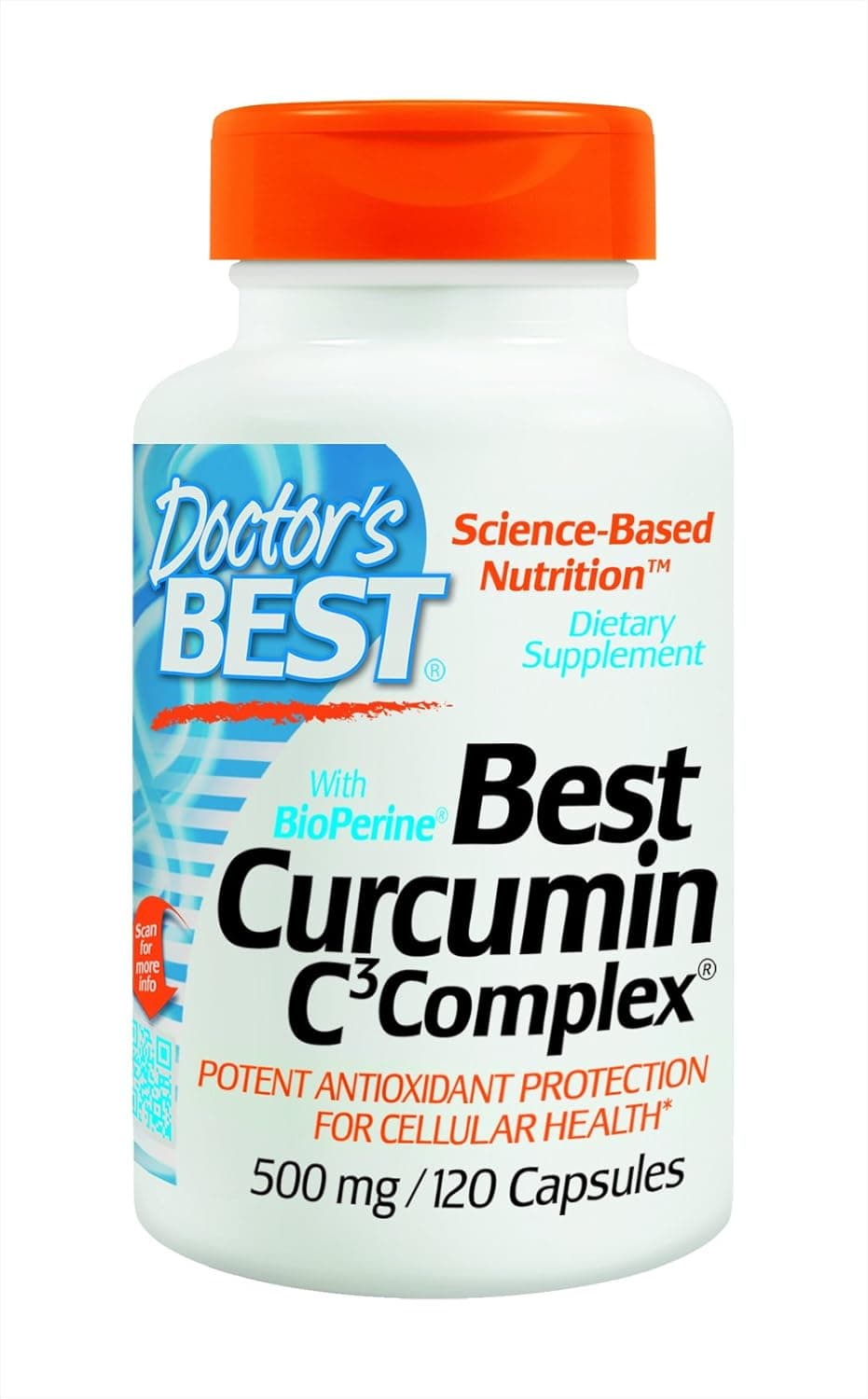
Black Pepper Extract (BioPerine).
The nutrient bio-hacker. Makes your other supplements more powerful. It temporarily blocks enzymes in your gut and liver that break down compounds, so more of the good stuff gets into your bloodstream.
Reviewed March 2026
- Category
- Other
- Also filed under
- BioavailabilityAbsorptionStack Booster
What Black Pepper Extract (BioPerine) is, and what it does.
- Does it work
- Suits people already taking curcumin, resveratrol, CoQ10 or green tea compounds, where absorption is the limiting step. On its own it delivers no nutrient of its own.
- How much to take
- 5-10mg, taken at the same time as the supplement you want to enhance. It's almost always included in formulas, so you rarely need to buy it separately.
- Time to feel it
- About 3 weeks of daily use.
- The first dose
- Nothing, directly. It gets to work immediately, helping the other supplements you took with it get absorbed better.
- With regular use
- Your other supplements just work more consistently and effectively. You're getting more bang for your buck from everything else you're taking.
- How well tolerated
- Well tolerated in most people at standard doses. The main concern is its interaction with prescription meds. It can make them more potent, which can be dangerous. Check with your doc.
- How it feels
- You don't feel it. It's a silent partner. The feeling comes from the enhanced effect of whatever you pair it with.
- The overlooked benefit
- It doesn't pick favourites. The clearance routes it slows are the same ones many prescription medicines use, so run the pairing past a pharmacist if you take any.
5 to 10mg a day is where Black Pepper Extract (BioPerine) works.
Source: Shoba 1998 curcumin study + Various bioavailability studies
In a double-blind clinical study in healthy adult men, 5 mg of piperine from black pepper extract taken daily alongside 120 mg of coenzyme Q10 produced an approximately 30 percent greater area under the plasma coenzyme Q10 curve after 21 days, while a single dose and 14 days of use showed smaller, non-significant increases.
The proof, claim by claim.
These words describe the research, not the molecule's worth. Research strength is how much work stands behind one claim, and it is never a product score.
Clinically proven bioavailability enhancer.
- EarlyIncreases Curcumin bioavailability by 2000%Clinical trialShoba et al., 1998 (Planta Medica)PMID 9619120
- Enhances CoQ10 serum levelsDouble-blind study (30% increase vs placebo)
- Improves absorption of Iron and Beta-CaroteneSeveral small clinical trials
Questions people ask about Black Pepper Extract (BioPerine).
- Do I need this?
- Only if you're taking other supplements with poor absorption, like curcumin. It's a booster, not a standalone nutrient.
- Does it work for everything?
- No. It works best for specific compounds, like curcumin, CoQ10, resveratrol, and some vitamins. It won't boost creatine or protein powder.
- Is it just ground-up pepper?
- No. It's a concentrated extract of piperine, the active compound. Eating pepper from a shaker won't be as precise or effective.
- Why is it in my multivitamin?
- To help you absorb the fat-soluble vitamins (A, D, E, K) and minerals in the formula more effectively.
- Can I take too much?
- The real risk isn't toxicity from the extract itself, but from making your prescription medications too strong. Stick to the recommended 5-10mg dose.
- What's the difference between BioPerine and regular black pepper extract?
- BioPerine is a specific, patented brand that guarantees 95% piperine and has been used in most of the clinical studies. It's the one with the proof.
Why these belong in the same formula. Each row says what the basis is, from settled biochemistry through to a trial that measured the pair.
Curcumin is broken down and cleared so quickly by gut and liver enzymes that very little normally reaches the bloodstream on its own. Piperine slows that glucuronidation step, so much more of the curcumin you take stays in circulation, which is why the two are nearly always formulated together.
Curcuminoids are almost entirely glucuronidated and sulfated on first pass, and piperine inhibits those intestinal and hepatic enzymes. This is the original and most documented use of the pairing.
Piperine slows the UGT-mediated conjugation that removes curcuminoids during absorption. Circulating curcuminoid levels rise several fold from the same oral dose.
Resveratrol is limited almost entirely by rapid glucuronidation and sulfation in the gut wall and liver. Piperine inhibits those enzymes, so more free resveratrol reaches circulation.
CoQ10 is a large lipophilic molecule with poor and variable uptake. Piperine is used in CoQ10 formulations to raise the absorbed fraction, and the standardised extract has been characterised for that effect.
EGCG is heavily glucuronidated and methylated during absorption, which caps its exposure. Piperine slows that first-pass conjugation and raises circulating catechin levels.
Quercetin is cleared mainly by intestinal glucuronidation and sulfation. Inhibiting those enzymes with piperine leaves more of the aglycone available for absorption.
Berberine's low oral bioavailability comes largely from P-glycoprotein pumping it back into the gut lumen. Piperine inhibits P-glycoprotein, which raises berberine exposure and means dosing should account for that.
Piperine increases the intestinal uptake of carotenoids, an effect measured directly with beta carotene. The same oral dose produces higher plasma levels.
The standardised piperine extract has been characterised for raising selenium absorption, attributed to effects on intestinal transport and enterocyte membrane fluidity.
Piperine has been characterised for increasing uptake of water-soluble vitamins including pyridoxine, attributed to altered enterocyte membrane dynamics and slower gut transit.
Piperine raises intestinal permeability and mineral uptake, and iron is one of the minerals characterised for that effect. Dose accounting matters because uptake shifts upward.
Long pepper also owes its activity to piperine, so combining the two stacks the same alkaloid rather than adding a new mechanism. Total piperine load is what needs watching.
Black pepper, long pepper and ginger form the classical trikatu combination used with other botanicals. Ginger also slows gastric emptying, which lengthens the absorption window.
Boswellic acids have low and variable oral uptake driven by efflux and rapid conjugation. Piperine acts on both, which is why it appears in boswellia formulations.
Lycopene shares the micellar uptake and enterocyte processing route that piperine acts on. No human piperine plus lycopene measurement is available in this record. The mechanism is the claim. The magnitude is not.
Astaxanthin absorption is limited by micelle formation and by efflux back into the lumen, both of which piperine has been shown to influence for other substrates. Nothing in the available literature measures the pair. It sits in formulas on mechanistic grounds.
EGCG plasma exposure is short because glucuronidation and methylation clear it quickly. Piperine inhibits UGT activity in intestinal and hepatic preparations, and preclinical work using this pair reports higher EGCG exposure. Human confirmation of the size of that shift is not in the candidate set.
Pterostilbene resists first-pass conjugation better than resveratrol but is still glucuronidated. Piperine's inhibition of that step is the reason the two appear together. No dedicated human pharmacokinetic pairing is cited here.
Silybin exposure after oral dosing is low largely because conjugation removes it before it reaches circulation. Piperine acts on that same conjugation step for other substrates, which is the stated rationale for co-formulation. The pairing has not been measured in the papers available here.
Piperine itself dissolves in oil far better than in water, and so do most of the compounds it is paired with. A lipid vehicle raises the fraction that ends up in mixed micelles and available for uptake. This is formulation chemistry rather than a claimed physiological interaction.
Ayurvedic formulation uses pungent enhancers alongside botanical actives, and modern products carry that pattern forward with standardised piperine. Withanolide pharmacokinetics with piperine have not been characterised in the literature available here. The row records the practice, not a measured gain.
In rodent work piperine stimulates bile and pancreatic secretion and lengthens transit time, both of which extend contact time for luminal digestion. Whether that adds anything to a supplemental enzyme blend in people has not been measured. Read this as a preclinical mechanism, not a human effect.
Hypericum constituents raise CYP3A4 and P-glycoprotein expression over days to weeks, and piperine inhibits the activity of the same two systems acutely. Combining them makes the exposure of anything else in the formula unpredictable, since one arm is turning capacity up and the other is turning activity down. Flagged because the interaction direction is textbook even though the pair has not been studied together.
Piperine is a common addition to caffeine-containing thermogenic blends on the reasoning that it slows clearance of co-ingested actives. Caffeine is cleared mainly by CYP1A2, where piperine's effect is less characterised than at CYP3A4. Any additive stimulant sensation should be counted as unquantified.
Talk to a doctor before taking Black Pepper Extract (BioPerine) if any of these apply to you: Medication interactions. These are flags to check first, not effects Black Pepper Extract (BioPerine) is known to cause.
Not medical advice. Show the label to your pharmacist.What Black Pepper Extract (BioPerine) actually does.
It slows the gut and liver step that normally attaches a sugar to polyphenols and clears them, so more of the original compound gets through.
It blocks a pump that pushes absorbed compounds back out of the gut wall, and one of the main liver enzymes that breaks them down.
It is an oily, sharp-tasting compound that does not dissolve in water, so it is carried in fat or on a powder.
Where Black Pepper Extract (BioPerine) comes from.
Peppercorns are dried, ground and extracted, then the pungent compound piperine is crystallised out and purified. What differs between products is how pure that end material is, which is what the percentage on the label is telling you.
Made from a plant. What ends up in the capsule tracks the harvest, so batch testing and a stated marker matter more here than with a made molecule.
Mature fruit is harvested, blanched and sun or mechanically dried, then graded. Piperine content varies with origin, cultivar and maturity at harvest.
Peppercorns are cleaned of stalk and dust and ground to a particle size that lets solvent reach the interior of the fruit.
Food-grade solvent, historically ethanol or ethyl acetate depending on the process, pulls piperine and the resin fraction out of the milled fruit. The solvent is then recovered under vacuum.
Piperine is separated from the oleoresin by repeated crystallisation, which also strips most of the volatile aroma compounds. Residual solvent limits are the controlled parameter at this step.
The crystalline material is assayed, usually by HPLC, and blended with a carrier if a lower declared strength is wanted.
Dosed at milligram amounts, so it is nearly always pre-blended onto a carrier to make it weighable and uniform in a batch.
Getting Black Pepper Extract (BioPerine) from food.
The whole-food sources on file. A supplement closes the gap, it does not replace dinner.
A gram-for-gram figure (how much of each you would eat to match a dose) will appear here once it is sourced and reviewed. This page will not print a number it cannot cite.
The forms it comes in.
The essence, in one line each.
- Adding 20 mg of piperine to a 2 g dose of curcumin raised curcumin's measured bioavailability by about 2000% in healthy volunteers.Clinical trial (human). Shoba et al., 1998 (Planta Medica). PMID 9619120 ↗
- Pooled across randomized trials in adults with a cluster of raised metabolic markers, curcumin taken together with piperine lowered total and LDL cholesterol, with no significant change in triglycerides.Systematic review and meta-analysis. Hosseini et al., 2023 (Phytotherapy Research). PMID 36649934 ↗
- Across 13 randomized trials, curcumin combined with piperine lowered the inflammatory markers TNF-alpha and IL-6 and the oxidative-stress marker MDA, and raised SOD antioxidant activity.Systematic review and meta-analysis. Hosseini et al., 2025 (Current Medicinal Chemistry). PMID 38561618 ↗
- The authors review bioavailability enhancers for iron in physically active people and regard piperine-standardised black pepper extract as a plausible enhancer of non-heme iron uptake, while noting the human evidence base for that specific pairing is thin.Narrative review. Fernandez-Lazaro D et al., 2020 (Nutrients). PMID 32599787 ↗
These are the studies our verdict leans on, chosen from the 2,759 we read for Black Pepper Extract (BioPerine). The full linked list is below.
FDA Disclaimer: These statements have not been evaluated by the Food and Drug Administration. This information is for educational purposes only and is not intended to diagnose, treat, cure, or prevent any disease. Consult your healthcare provider before starting any supplement regimen.