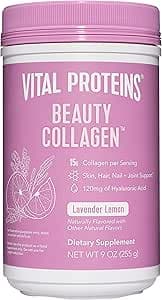
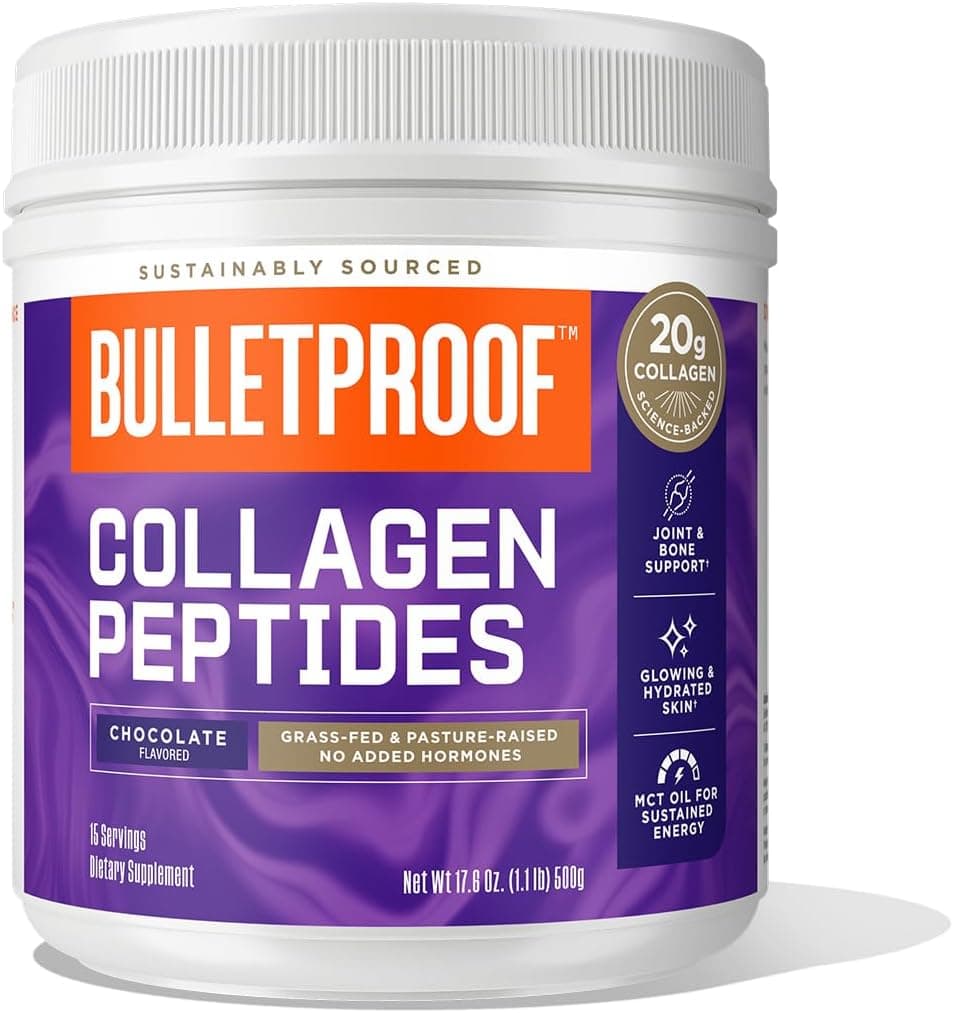
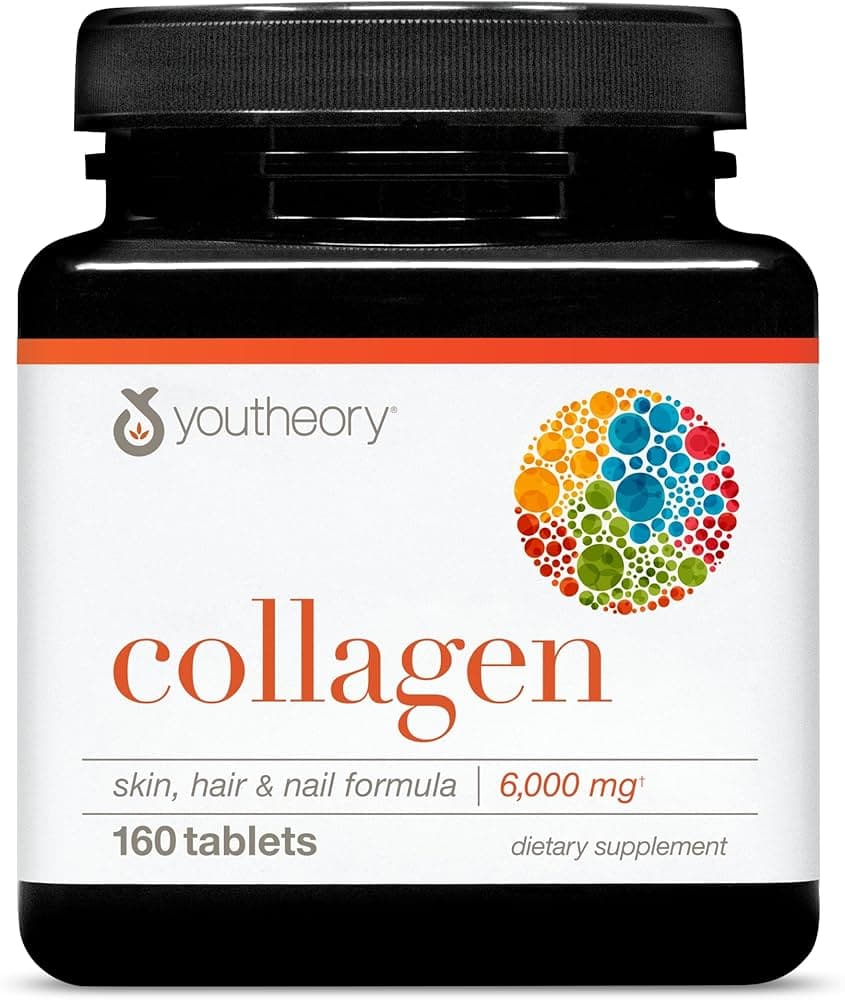
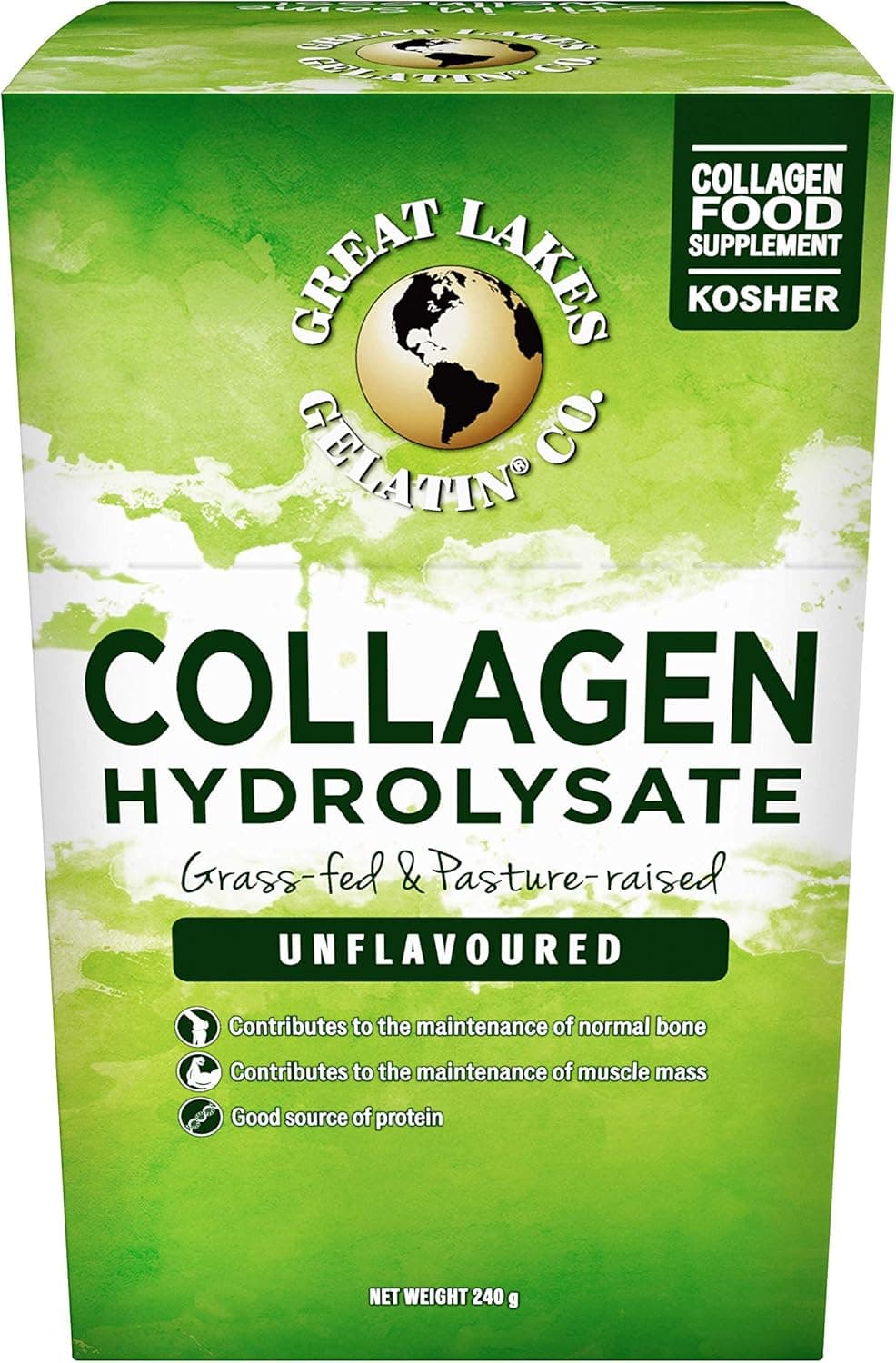
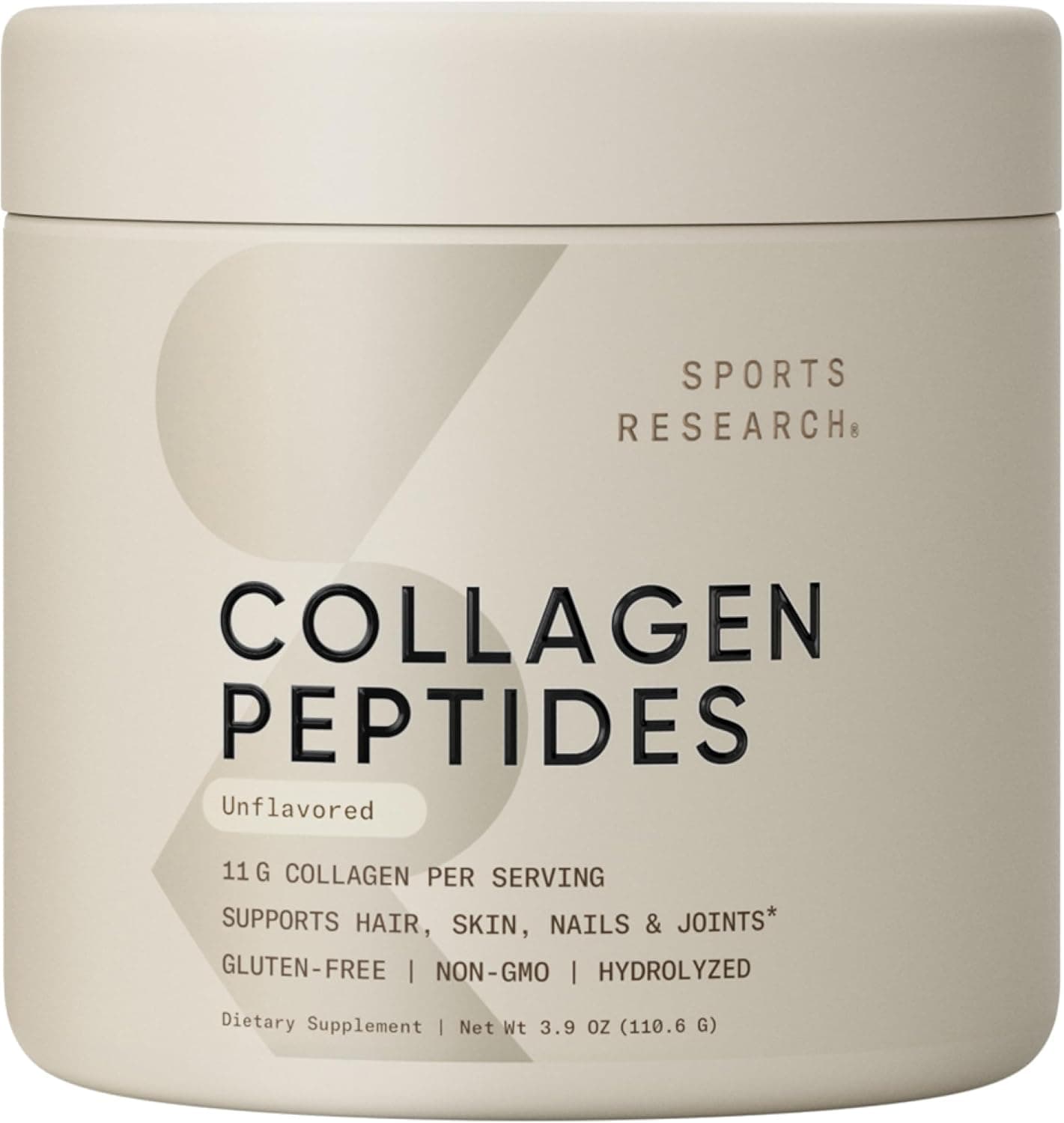
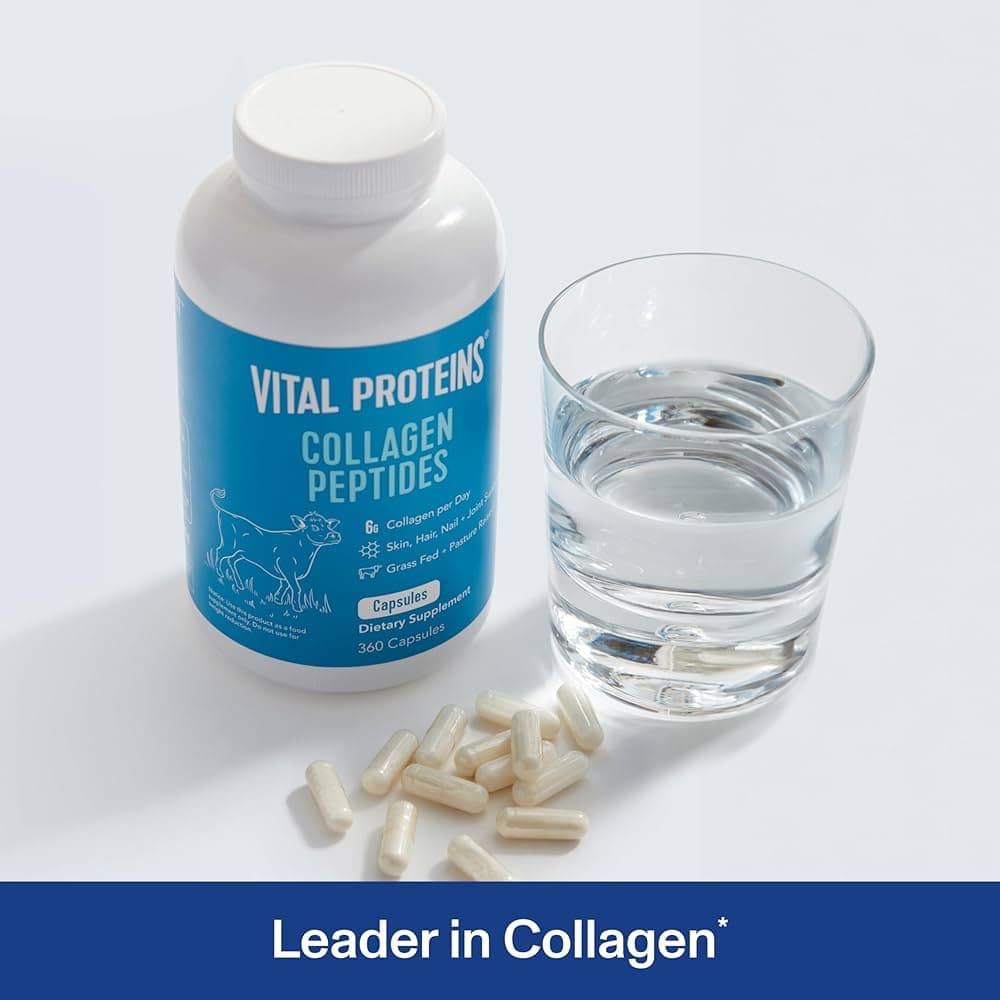
Collagen Peptides.
The biological glue. Provides the specific amino acids your body uses to build and repair skin, hair, nails, and joints. Think of it as sending a specialized repair crew to your body's scaffolding.
Reviewed March 2026
- Category
- Other
- Also filed under
- SkinJointsAnti AgingProteinBeauty
- Also called
- Collagen, Hydrolyzed Collagen, Collagen Peptides
What Collagen Peptides is, and what it does.
- Does it work
- Yes. For skin hydration and easing joint aches, the evidence is strong. Multiple meta-analyses prove it. For other claims like gut health, the jury's still out.
- How much to take
- 10-20 grams daily. One big scoop. It's tasteless, so dump it in your morning coffee, smoothie, or even a glass of water.
- Time to feel it
- About 12 weeks of daily use.
- The first dose
- Nothing. Your body is just digesting protein. Don't expect any magic.
- With regular use
- This is where it shines. After 8-12 weeks of consistent use, you should see measurable improvements in skin hydration and elasticity. Joint pain may also be noticeably reduced.
- How well tolerated
- Well tolerated. It's derived from food sources. The main thing is to choose a reputable brand that tests for heavy metals and other contaminants.
- How it feels
- You don't 'feel' it kick in. It's not a stimulant or a relaxant. The effects are things you see in the mirror or feel in your joints over months, not minutes.
- The overlooked benefit
- It's about a third glycine, and glycine is also the amino acid your body spends on glutathione and creatine, so a daily scoop tops up a supply most diets run thin on.
10 to 20g a day is where Collagen Peptides works.
Source: Choi 2019 meta-analysis + Zague 2011 skin studies
In a randomised double blind placebo controlled trial, 77 healthy women took 5,000 mg a day of bioactive collagen peptides or placebo for 12 weeks with measurements at weeks 8, 12 and 16. Dermal density and hydration rose and transepidermal water loss fell against placebo at week 12, and those changes were still present after a 4 week washout rather than returning toward baseline. A second trial in 72 women separated from placebo at 8 weeks on hydration, elasticity and density, and retained the change 2 weeks after stopping. Both trials were run by or with the peptide manufacturers. A 2025 meta analysis of 23 randomised trials and 1,474 participants found these skin effects present in industry funded trials and absent in trials without industry funding, which is why the grade here is D.
The proof, claim by claim.
These words describe the research, not the molecule's worth. Research strength is how much work stands behind one claim, and it is never a product score.
Strong evidence for skin hydration and joint pain.
- Improves skin elasticity and hydrationMeta-analysis of 19 RCTs (n=1,125)
- Reduces joint pain in osteoarthritis and athletesMeta-analysis of 5 RCTs
- Reduces skin wrinkle depthSystematic review of 11 studies
Questions people ask about Collagen Peptides.
- Does it matter what 'type' I take?
- For skin and general health, Types I & III are key. For joints, Type II is the focus. Most powders are a mix of I & III, which covers most people's goals.
- Can I just drink bone broth instead?
- You could, but you'd need a lot. A scoop of powder is far more concentrated and convenient than drinking 2-3 cups of broth daily.
- Will this help me build muscle like whey protein?
- No. It's an incomplete protein, missing the amino acid tryptophan. It's great for connective tissue, but terrible for building muscle. Stick to whey for that.
- Is there a vegan version?
- No. That's not how biology works. Collagen only comes from animals. 'Vegan collagen' products are just collections of vitamins and amino acids that support your body's own production.
- Does it mix well?
- Yes, if it's 'hydrolyzed' or in 'peptide' form. It should dissolve easily in hot or cold liquids and be virtually tasteless.
- Do the creams with collagen work?
- Not for rebuilding collagen. The molecules are too big to penetrate the skin. They can act as a good moisturizer on the surface, but that's about it.
What the trials show about these together.
Outcomes the engine found studied for these actives as a combination, not one at a time. Each is a finding a named trial measured, cited and dated, never written by the brand.
- EarlyCollagen Peptides + Vitamin CRecovery
In a randomized crossover trial, 15 g of vitamin C-enriched gelatin taken an hour before exercise roughly doubled a blood marker of collagen synthesis compared with placebo.
Shaw et al., 2017 (Am J Clin Nutr)PMID 27852613
Research strength. Research strength says how much work stands behind the combination. It is never a product score.
Fail closed. Where actives were studied on their own rather than together, each shows on its own evidence, never a combined effect no trial measured.
Independent record. Every finding is cited to a named trial, dated, and never written by the brand.
Findings from trials that studied these actives as a combination. Context for how the actives were tested together, not a statement about any individual and not a claim about this product.
Why these belong in the same formula. Each row says what the basis is, from settled biochemistry through to a trial that measured the pair.
Copper runs lysyl oxidase, the enzyme that forges the cross-links that lock collagen strands into a strong network. With copper on hand, the collagen the body builds from these amino acids can mature into its firm, load-bearing form.
Collagen forms the fibrous scaffold of skin and connective tissue while hyaluronic acid binds water in the spaces between those fibers, two complementary jobs in the same matrix. Formulators combine them so one supplies the framework and the other the moisture that fills it.
Roughly one in three positions in the collagen helix is glycine, so it is the biggest amino acid demand of new collagen synthesis.
Lysine residues are hydroxylated and then cross-linked by lysyl oxidase, the copper enzyme that gives collagen fibrils their tensile strength, so lysine supply and the cross-link step share one path.
Prolyl and lysyl hydroxylase are iron-dependent dioxygenases, so ferrous iron sits in the active site alongside ascorbate for every hydroxyproline formed.
Silicon concentrates in connective tissue and has been reported to support prolyl hydroxylase activity and fibril cross-linking, which is why orthosilicic acid is formulated with collagen peptides.
Manganese is the cofactor for the glycosyltransferases that build the glycosaminoglycan matrix collagen fibrils sit in, so it supports the material around the fibre rather than the fibre itself.
Zinc is the catalytic metal in the matrix metalloproteinases that remodel collagen and is needed for normal fibroblast protein synthesis. At high intakes it competes with copper for uptake, so the two are dosed in a fixed ratio.
MSM contributes sulfur used in the sulfated glycosaminoglycans and disulfide bonds of connective tissue, a different building block from the amino acids collagen peptides deliver.
Retinoids raise procollagen gene expression in dermal fibroblasts, so vitamin A acts on the synthesis instruction while peptides supply the residues to build with.
Glucosamine is the amino sugar backbone of the glycosaminoglycans that hold water in cartilage matrix, so it builds the medium while collagen builds the fibre.
Green tea catechins bind non-heme iron and copper in the gut lumen, and those two metals are the cofactors that hydroxylate and cross-link new collagen, so a shared dose window lowers how much of each is taken up. Separating them by a couple of hours avoids it.
A large calcium dose competes with non-heme iron at the DMT1 transporter in the gut, and iron is the metal centre of the collagen hydroxylases, so stacking the two in one serving lowers iron uptake.
A 2026 review frames collagen, vitamin C and vitamin E as a triad in ageing, on the grounds that tocopherol handles lipid-phase oxidation while ascorbate regenerates it and drives collagen hydroxylation. The review is narrative and reports emerging roles rather than trial results. Take the mechanism seriously and the effect size as unmeasured.
A 2026 trial gave whey protein and collagen together and looked at bone mineral density and muscle mass in resistance-trained participants. The pairing also makes composition sense, since collagen carries no tryptophan and little leucine while whey is heavy in both. Read the outcomes as belonging to the combination, not to collagen alone.
A narrative review sets out collagen with curcumin and glutathione for dermal support in ageing women with declining estrogen. No arm in that review isolates curcumin's contribution. The pairing has a published rationale and no controlled comparison behind it.
The same review groups glutathione with collagen on dermal grounds. Oral glutathione bioavailability remains contested in the wider literature and the review does not resolve it. Nothing here separates glutathione's effect from the rest of the combination.
Proline residues inside the procollagen chain are hydroxylated to hydroxyproline, the residue that stabilises the triple helix. Collagen peptides already deliver proline and hydroxyproline, so added proline overlaps with what the peptide supplies. This is substrate chemistry rather than a tested combination.
Vitamin K dependent carboxylation of osteocalcin is what lets that protein bind calcium onto the type I collagen scaffold in bone. Collagen peptides address the protein scaffold. K2 addresses how mineral attaches to it. Different steps, same tissue.
Active vitamin D drives intestinal calcium absorption, so the mineral available for deposition on the collagen matrix depends on vitamin D status. Bone support built on collagen alone leaves that half unaddressed. The candidate papers here did not test the pairing directly.
Magnesium sits at the surface of bone mineral and is a cofactor for ATP-dependent enzymes throughout protein synthesis. It is a standard component of bone stacks that also carry collagen. No combination trial appears in the candidate set.
Boron is described as influencing calcium and magnesium handling and is included in bone formulas at trace amounts. Its role is far less defined than calcium or vitamin D. Nothing in the candidate set gave boron with collagen peptides.
A GRADE-assessed review of potassium citrate reported changes in bone turnover markers in postmenopausal women, and collagen-derived fragments are among the markers used in that field. A turnover marker is a marker, not a fracture or density outcome. Potassium and collagen were not given together in that work.
Tannins bind and precipitate proline-rich proteins, and collagen peptides are exactly that. Mixing a collagen powder into strong tea can leave haze or sediment in the cup. Whether the bound fraction is still absorbed has not been quantified, so this is a mixing caution rather than a measured loss.
Hydrolysed collagen arrives pre-cleaved into short peptides that PepT1 can carry intact, so added proteases have little substrate left. The picture changes for unhydrolysed gelatin, which does need proteolysis. Relevance depends on which form is in the tub.
Piperine is used to raise exposure to lipophilic compounds that absorb poorly, which is not the problem collagen peptides have. Prolyl-hydroxyproline is measurable in plasma after an oral dose without any enhancer. No candidate study measured the two together.
Creatine supports phosphocreatine resynthesis while collagen peptides are studied around connective tissue turnover in trained people. The two mechanisms do not intersect. The candidate set contains no trial giving both.
Ubiquinone cycles redox states in membranes and is present in dermal fibroblasts, which is why it appears in skin formulas. Collagen peptides work on matrix substrate and signalling instead. Mechanistic complementarity, no combination data.
Collagen is low in leucine, the residue that carries most of the signal for muscle protein synthesis. Anyone using collagen as part of a training protein target is getting little leucine from it. Adding a leucine-rich protein or free leucine covers the gap. This is composition arithmetic, not a trial finding.
Pyridoxal phosphate is described in connective tissue literature as needed for normal lysine-derived cross-link formation. Copper-dependent lysyl oxidase performs the oxidation, so B6 sits alongside copper rather than replacing it. The relationship is clearest at frank deficiency.
The body builds collagen by hydroxylating proline and lysine on the new chain, and the enzymes that do it need vitamin C as a cofactor. Without it the chains cannot fold into a stable triple helix. Collagen peptides supply the amino acids. Vitamin C lets the cell assemble them.
Nothing specific on file for Collagen Peptides. Match the label to the daily amount above, and tell your doctor what you take.
Not medical advice. Show the label to your pharmacist.What Collagen Peptides actually does.
Vitamin C and iron are required to finish a collagen strand properly.
Copper runs the enzyme that ties collagen strands together.
Collagen is missing an essential amino acid, so it cannot replace a full protein.
Collagen is unusually high in glycine, an amino acid the body uses elsewhere too.
Where Collagen Peptides comes from.
Animal skin, hide or fish scale left over from food processing is cleaned, cooked out into gelatin, then split by enzymes into small pieces and dried into a powder that dissolves in cold water.
The same molecule is reached more than one way. Which route a given product used is a manufacturing choice, and the finished compound is the same either way.
Bovine hide and split, porcine skin, fish skin and scale, or chicken sternum, all recovered as by-products of meat and fish processing
Alkaline liming or acid treatment strips non-collagen protein and mineral, then controlled heating releases collagen into solution as gelatin
Food-grade proteases cleave the gelatin into peptides, which removes the gelling behaviour and gives cold water solubility
Filtration and adsorption reduce residual fat, ash, colour and odour compounds
Suppliers state average peptide molecular weight and protein content, sometimes with hydroxyproline as an identity marker
The concentrated hydrolysate is spray dried to a free-flowing powder for blending, tabletting or encapsulation
Many labels state only collagen peptides without naming the species, the tissue or the collagen type, and average peptide molecular weight is rarely disclosed.
Getting Collagen Peptides from food.
The whole-food sources on file. A supplement closes the gap, it does not replace dinner.
A gram-for-gram figure (how much of each you would eat to match a dose) will appear here once it is sourced and reviewed. This page will not print a number it cannot cite.
The forms it comes in.
The essence, in one line each.
- Pooling 26 randomized trials in 1,721 people, hydrolyzed collagen improved skin hydration and elasticity compared with placebo.Meta-analysis. Pu et al., 2023 (Nutrients). PMID 37432180 ↗
- In adults with ongoing joint discomfort, pooled placebo-controlled trials found collagen supplementation lowered self-reported joint discomfort by about 17 points on a 100-point scale and reduced joint stiffness compared with placebo.Meta-analysis. García-Coronado et al., 2019 (International Orthopaedics). PMID 30368550 ↗
- In postmenopausal women, 5 g of specific collagen peptides daily for 12 months increased bone mineral density at the spine and femoral neck compared with placebo.Randomised trial. König et al., 2018 (Nutrients). PMID 29337906 ↗
- In older men doing resistance training, 15 g of collagen peptides daily added about 1.3 kg more fat-free mass over 12 weeks than training with placebo, alongside larger gains in leg strength.Randomised trial. Zdzieblik et al., 2015 (British Journal of Nutrition). PMID 26353786 ↗
- Across dietary intervention trials, collagen containing supplements were linked with improvements in skin elasticity and wrinkle measures.Meta-analysis. Ng et al., 2025 (Journal of physiological anthropology). PMID 41174715 ↗
- In active adults, collagen peptides improved joint function scores and lowered reported joint discomfort compared with placebo.Randomised trial. Kviatkovsky et al., 2023 (Journal of the International Society of Sports Nutrition). PMID 37551682 ↗
- Low molecular weight collagen peptides improved skin elasticity along with measures of skin dimpling and hair condition.Randomised trial. Hwang et al., 2026 (Journal of medicinal food). PMID 41788055 ↗
- In adults recovering from hip replacement surgery, no change in blood markers of bone turnover was detected with collagen protein.Randomised trial. Monsegue et al., 2026 (Clinical nutrition ESPEN). PMID 41905472 ↗
- A randomised, double-blind, placebo-controlled trial reported sustained skin measures with bioactive collagen peptides over the study period.Randomised trial. Wang et al., 2025 (Journal of Cosmetic Dermatology). PMID 41311286 ↗
- Collagen type I content in skeletal muscle rose after 12 weeks of training with specific collagen peptides, which is a tissue composition marker rather than a strength or function outcome.Randomised trial. Jerger et al., 2026 (Frontiers in Physiology). PMID 42376607 ↗
- Whey protein and collagen were given together and assessed for bone mineral density and muscle mass in resistance-trained participants, so any effect belongs to the combination.Randomised trial. Seyhan et al., 2026 (BMC Sports Science, Medicine and Rehabilitation). PMID 42426859 ↗
- A narrative review of dietary collagen supplementation summarises reported clinical effects across skin and hair without pooling the data.Narrative review. Biełach-Bazyluk et al., 2026 (Nutrients). PMID 42451143 ↗
- Liposomal delivery of a collagen tripeptide formulation was reported to change dermal structure and optical skin measures relative to the standard formulation.Open-label trial. Lin et al., 2026 (Journal of Cosmetic Dermatology). PMID 41918155 ↗
- The authors describe collagen, vitamin C and vitamin E as an interacting triad in ageing and label the wider roles they discuss as emerging.Narrative review. Xiong et al., 2026 (Frontiers in Nutrition). PMID 42253734 ↗
- A recombinant type III humanised collagen injection combined with a collagen-III topical was assessed together, so this speaks to a procedural protocol rather than an oral peptide.Open-label trial. Qin et al., 2026 (Journal of Cosmetic Dermatology). PMID 42087486 ↗
- A systematic review and meta-analysis of randomised trials of oral and topical peptides for skin ageing pools a peptide literature in which collagen peptides are one component.Meta-analysis. Nukaly et al., 2026 (Frontiers in Medicine). PMID 41924746 ↗
- Non-pharmacological interventions were reviewed for bone health in adults with reduced bone density, with collagen named inside the wider intervention set.Systematic review. Na et al., 2025 (Frontiers in Endocrinology). PMID 41450587 ↗
- Collagen, curcumin and glutathione are described together as a dermal support rationale in ageing women with declining estrogen, without controlled comparison.Narrative review. Arbex et al., 2026 (Dermatology and Therapy). PMID 42056376 ↗
- A one-year calcium-enriched permeate supplement was tested for bone health in postmenopausal females. Collagen appears only as context, so this frames the bone field rather than the ingredient.Randomised trial. Tetens et al., 2026 (American Journal of Clinical Nutrition). PMID 42097280 ↗
These are the studies our verdict leans on, chosen from the 1,205 we read for Collagen Peptides. The full linked list is below.
The studies, linked.
3 sources behind our Collagen Peptides verdict: peer-reviewed studies and registered clinical trials. Every one links straight to PubMed, the journal, or ClinicalTrials.gov. Read them yourself.
- Clinical trialAssessment of Anti-aging Efficacy of Marine Collagen PeptidesClinicalTrials.gov ↗60 participants, Completed
- Clinical trialComparative, Randomized Study on the Anti-inflammatory and Regenerative Efficacy of a New Medical Device (DM) Based on Hydrolyzed Collagen Peptides in Patients With Femoro-acetabular Impingement Undergoing Hip ArthroscopyClinicalTrials.gov ↗25 participants, Completed
- Clinical trialInfluence of Specific Collagen Peptides on Training-Induced Metabolic and Biomechanical Adaptations of Skeletal MuscleClinicalTrials.gov ↗60 participants, Enrolling by invitation
Evidence surfaced via Semantic Scholar (Allen Institute for AI) and ClinicalTrials.gov. Ranked by study type and citation weight, not cherry-picked.
Problems people have reported.
Read this carefully. These are 252 voluntary, unverified reactions reported to the FDA (openFDA). The number mostly reflects how popular Collagen Peptides is, not how risky it is. A report is not proof Collagen Peptides caused anything. It is a signal of what to watch for, nothing more.
Source: openFDA adverse-event reports. Voluntary reporting, not an incidence rate.
FDA Disclaimer: These statements have not been evaluated by the Food and Drug Administration. This information is for educational purposes only and is not intended to diagnose, treat, cure, or prevent any disease. Consult your healthcare provider before starting any supplement regimen.