Hyaluronic Acid.
The molecular sponge. A sugar chain your body already makes that holds water in skin and joint fluid. Taken by mouth it's studied for skin hydration and everyday joint comfort.
Reviewed March 2026
- Category
- Probiotic
- Also filed under
- HydrationSkinPlumpAnti Aging
What Hyaluronic Acid is, and what it does.
- Does it work
- Suits people working on skin hydration or easy joint movement. It sits naturally alongside collagen peptides and vitamin C in a daily routine.
- How much to take
- Start with 1mg to 2mg a day, the maintenance amount on record here. Trials have gone as high as 400mg, which is a research condition rather than a daily target.
- Time to feel it
- About 8 weeks of daily use.
- The first dose
- Day one is quiet. The dose is broken into smaller fragments and sugars within hours, and what it contributes shows up in tissue measures weeks later.
- With regular use
- Four to eight weeks of daily use is where skin hydration and easy joint movement measures shift, and instruments read that change before you notice it.
- How well tolerated
- Well tolerated by mouth, with mild digestive upset the usual complaint. If you're pregnant or breastfeeding, or taking anything long term, check with your clinician first.
- How it feels
- Undramatic. Over weeks people describe skin that feels less tight and joints that move more easily, and instruments pick the hydration change up first.
- The overlooked benefit
- Chain length matters as much as the milligram number. Short and long chains signal differently through CD44, so a label naming molecular weight is telling you something real.
1 to 2mg a day is where Hyaluronic Acid works.
Source: Oe et al. 2016 Nutr J RCT; Tashiro et al. 2012 Sci World J
Three placebo controlled trials of oral hyaluronic acid measured skin on a schedule rather than at endpoint only. In 40 Asian adults aged 35 to 64 taking 120 mg a day for 12 weeks, wrinkle assessment, stratum corneum water content and elasticity separated from placebo at 8 weeks and again at 12 weeks. In 60 Japanese adults aged 22 to 59 taking 120 mg a day, the 300 k molecular weight arm separated from placebo on crow's feet wrinkles at 8 weeks. In 60 women taking 200 mg a day of a mixed molecular weight hyaluronan, hydration rose 10.6 percent and wrinkle depth fell 18.8 percent at day 28. The first two carry authors from Kewpie Corporation, which manufactures the ingredient.
The proof, claim by claim.
These words describe the research, not the molecule's worth. Research strength is how much work stands behind one claim, and it is never a product score.
Universal hydrator.
- PromisingIncreases skin hydration and moisture contentMeta-analysis7 trials, Amin et al., 2025 (J Drugs Dermatol)PMID 40911749
- PromisingReduces wrinkle depth and improves elasticityMeta-analysis7 trials, Amin et al., 2025 (J Drugs Dermatol)PMID 40911749
Questions people ask about Hyaluronic Acid.
- When should I take it?
- Timing matters less than consistency. Pick a time that works for you and take it daily.
- Can I take it with other supplements?
- Usually fine. The main thing to watch is not doubling up on the same ingredient from different products. If you're on prescription meds, check with your pharmacist first.
- Any side effects to watch for?
- Most people tolerate it well at recommended doses. GI upset is the most common complaint with any supplement. Start with a lower dose and work up. If something feels off, stop and reassess.
Why these belong in the same formula. Each row says what the basis is, from settled biochemistry through to a trial that measured the pair.
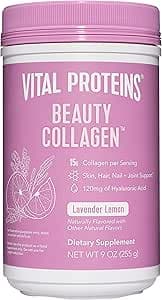
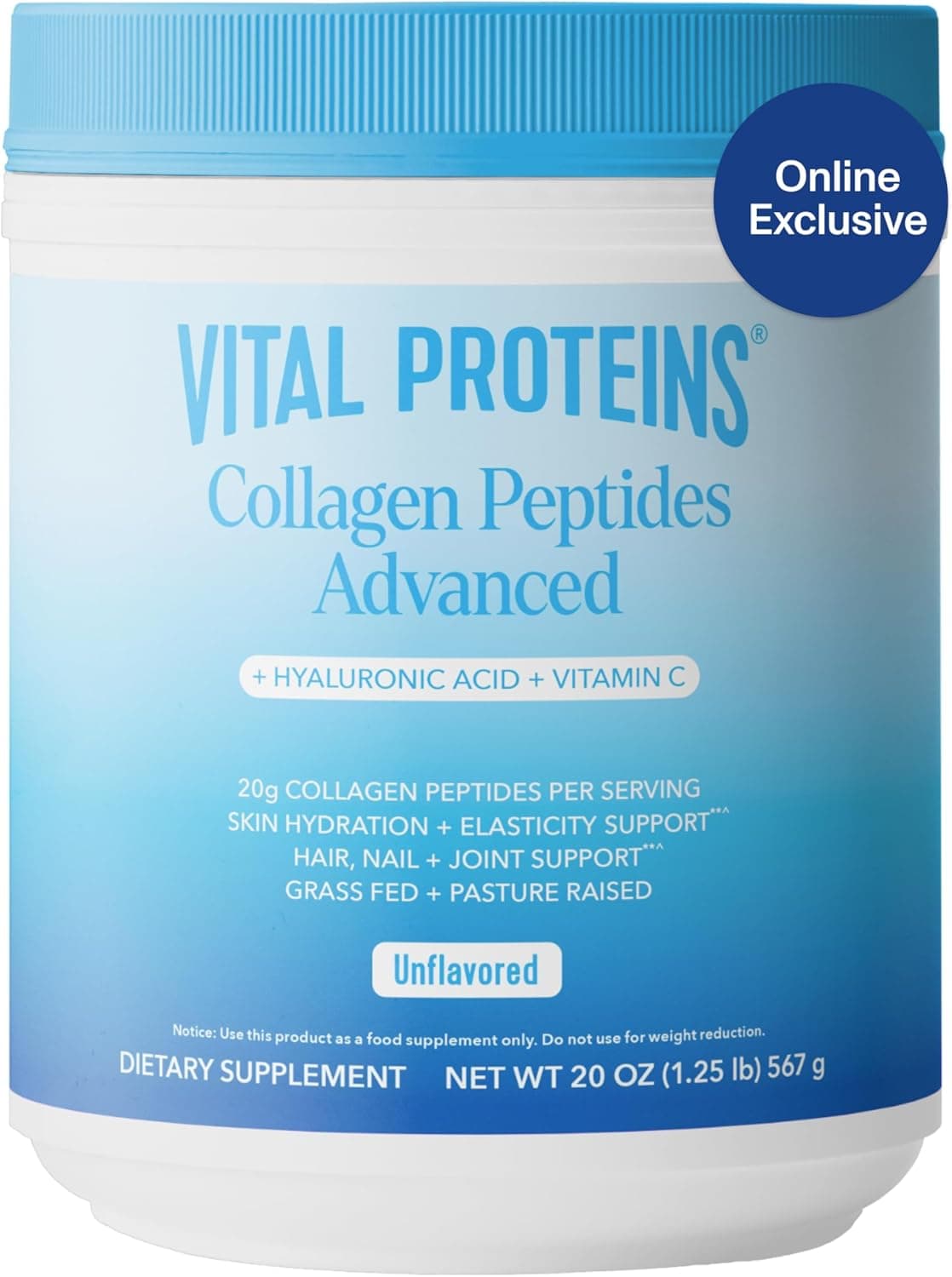
Collagen is the fibrous protein that forms the scaffold of skin's connective tissue, and hyaluronic acid is the glycosaminoglycan that sits between those fibers and binds water. They are the two principal components of the same dermal matrix, one giving it structure and the other holding its moisture, so the pair supports skin firmness and hydration together.
Hyaluronic acid is a humectant that pulls water into the outer layers of skin, while ceramides are the lipids that build the skin barrier and slow how fast that water evaporates. One draws moisture in and the other helps hold it there, so the two cover complementary steps of skin hydration.
Vitamin C is a required cofactor for the enzymes that assemble and stabilize collagen, the structural protein of the dermal matrix that hyaluronic acid hydrates. Taken together they support the two sides of that matrix, the protein scaffold vitamin C helps build and the water hyaluronic acid holds within it.
Hyaluronic acid draws water to the skin surface, and squalane is a lightweight emollient that mirrors the skin's own sebum, smoothing the surface and slowing water loss from it. The humectant and the emollient work on different steps of surface hydration, which is why they are routinely layered together.
Hyaluronan is a repeating polymer of glucuronic acid and N-acetylglucosamine, and glucosamine feeds directly into the amino sugar half of that backbone. Supplying the monomer alongside the finished polymer addresses synthesis and supply at once.
Chondroitin and hyaluronan are the two dominant glycosaminoglycans in the joint matrix, with chondroitin bound into aggrecan and hyaluronan forming the backbone that aggrecan attaches to. They are structural partners rather than competing options.
Sulfated glycosaminoglycans require a sulfur supply, and MSM contributes to the sulfate pool used in that sulfation step. It is standard in joint and skin formulas alongside hyaluronan for that reason.
In dermal matrix the collagen fibres provide tensile structure while hyaluronan holds the water between them, so the two functions are inseparable. Collagen peptides also carry the glycine and proline a fibroblast needs.
Orthosilicic acid supports prolyl hydroxylase activity and the cross-linking of collagen and glycosaminoglycans in connective tissue. It acts on matrix assembly rather than on hydration, so the two are complementary.
Zinc is the catalytic metal in matrix metalloproteinases and is required for the protein synthesis that renews dermal matrix. Matrix turnover therefore depends on zinc status alongside the hydration hyaluronan supplies.
Hyaluronan chains are depolymerised by reactive oxygen species, which shortens them and reduces their water-holding capacity. A lipid-phase carotenoid that quenches those radicals protects the polymer already present.
The glycosyltransferases that add sugar units to glycosaminoglycan chains are manganese dependent, so hyaluronan synthesis needs manganese present. That makes it a true cofactor partner rather than a co-ingredient.
Lysyl oxidase is a copper-dependent enzyme that cross-links collagen and elastin into the mature matrix hyaluronan sits within. Because zinc and copper compete for the same intestinal transporter, a matrix formula carrying high zinc should account for copper.
Eggshell membrane supplies hyaluronan, chondroitin, collagen and glycosaminoglycans together as they occur in native connective tissue. Formulators use it as the whole-matrix companion to isolated hyaluronan.
Curcumin reduces NF-kB driven expression of matrix metalloproteinases and hyaluronidases, the enzymes that break the matrix down. Slowing degradation complements adding the polymer.
Hyaluronan holds water inside a dermal matrix whose fibrous scaffold is collagen, and roughly one in three residues of collagen is glycine. The two act on different halves of the same structure rather than on each other. Read this as a formulation rationale grounded in composition, not as a measured combination effect.
Proline and its hydroxylated form give the collagen triple helix its stability, and that fibrous network is the compartment hyaluronan hydrates. Pairing them addresses matrix and water-binding separately. No trial in this candidate set tested the pair together.
Lysyl residues are the anchor points for the covalent crosslinks that hold mature collagen fibrils together, which is why lysine supply matters to matrix mechanics. Hyaluronan contributes the hydrated space between those fibrils. The rationale is structural and composition-based, not an effect measured in a combination study.
Hyaluronan synthases are membrane glycosyltransferases and, like that enzyme class generally, they need a divalent cation to position the nucleotide sugar for transfer. Magnesium is the cation that ordinarily fills that role in cells. This is cofactor logic and it does not imply that taking magnesium raises hyaluronan levels.
In the animal work in this set, a low molecular weight hyaluronic acid fraction changed gut microbial profiles and short-chain fatty acid output. Inulin is fermented by overlapping bacteria to the same class of short-chain fatty acids, so the two act on one output. Nothing here was measured in people, and microbial profile is a marker rather than a health outcome.
Butyrate is one of the short-chain fatty acids that gut bacteria produce, and the animal study in this set tracked that output after low molecular weight hyaluronic acid. A supplied butyrate and a fermentation-derived butyrate reach the same pool. The finding is non-human and concerns a measured metabolite, not a clinical result.
Oral hyaluronan is a large polysaccharide that resident gut bacteria depolymerise, and the animal study in this set recorded a shift in microbial profile alongside that. Which organisms are present therefore shapes what happens to an oral dose. The direction of that interaction in humans has not been measured.
Reactive oxygen species cut hyaluronan chains, which is why the same molecule behaves differently as high and low molecular weight fragments. A lipid-phase antioxidant such as vitamin E limits the peroxidation chemistry that generates those radicals in membranes. The chemistry is settled. A matching effect on tissue hyaluronan chain length in people is not.
Hyaluronidases are the enzymes that shorten hyaluronan chains, and several flavonoids slow them in cell-free assays. Quercetin is among that group. This is test-tube enzymology, and no human study in this candidate set tested the pair.
Proanthocyanidin-rich extracts slow hyaluronidase activity in cell-free assays, which is the same enzyme class that controls hyaluronan turnover. That places the two on one pathway on paper. Nothing in this candidate set measured the combination in people.
Hyaluronan works as a humectant that holds water in the outer skin layers, and niacinamide is routinely formulated alongside it for barrier lipid handling. The pairing is a formulation convention with distinct targets. No trial in this set compared the pair against either alone.
The pilot trial in this set gave oral hyaluronic acid on its own to adults reporting ocular dryness. Long-chain omega-3 fatty acids act on the lipid layer of the tear film rather than its aqueous mucin phase, so the two address different layers. Combining them is a rationale, not a tested regimen.
Nothing specific on file for Hyaluronic Acid. Match the label to the daily amount above, and tell your doctor what you take.
Not medical advice. Show the label to your pharmacist.What Hyaluronic Acid actually does.
It is a long sugar chain the body builds itself from two simple sugar units, one after the other.
The chain carries a negative charge, so it pulls in and holds water, giving tissue its cushioned, springy feel.
Long chains act like a water-holding gel. Short pieces act more like a message to cells, so chain size is not a detail.
Most of it sits in skin and joints, and the body replaces its stock quickly.
Where Hyaluronic Acid comes from.
It is either grown by bacteria in a tank or pulled out of animal tissue, then washed, dried and sorted by chain length. Neither route is the one to look for. They differ in feedstock and in what has to be cleaned out.
The same molecule is reached more than one way. Which route a given product used is a manufacturing choice, and the finished compound is the same either way.
Supplement-grade material comes either from a glucose-fed bacterial fermentation, commonly Streptococcus zooepidemicus or an engineered Bacillus strain, or from animal tissue rich in the polymer such as rooster comb
In the microbial route the organism secretes hyaluronan into the broth, where chain length is steered by strain, medium and aeration
Cells or tissue solids are removed and the polymer is recovered by solvent precipitation, usually with ethanol or isopropanol
Enzymatic digestion, filtration and repeated precipitation remove residual protein and, for the fermentation route, bacterial endotoxin
Material is characterised and released against a declared molecular weight range, which is the specification that most changes how the ingredient behaves
Neutralised, dried and milled to the sodium salt, or hydrolysed further to a low molecular weight fraction before drying
Getting Hyaluronic Acid from food.
The whole-food sources on file. A supplement closes the gap, it does not replace dinner.
A gram-for-gram figure (how much of each you would eat to match a dose) will appear here once it is sourced and reviewed. This page will not print a number it cannot cite.
The forms it comes in.
The essence, in one line each.
- Pooling seven randomised trials of oral hyaluronic acid, supplementation significantly improved skin hydration, elasticity, and wrinkle depth versus placebo.Meta-analysis. Amin et al., 2025 (Journal of Drugs in Dermatology). PMID 40911749 ↗
- In 60 women, 200 mg a day of oral hyaluronan for 28 days raised skin moisture by about 10.6% and reduced wrinkle depth by about 18.8% versus placebo.Randomised trial. Michelotti et al., 2021 (European Journal of Dermatology). PMID 34933842 ↗
- Across 40 randomised trials of oral supplements for sun-aged skin, oral hyaluronic acid did not show a detectable benefit for skin elasticity or minimal erythema dose, while collagen and polyphenols did.Meta-analysis. Yang et al., 2025 (Frontiers in Medicine). PMID 40761858 ↗
- In this small pilot, oral hyaluronic acid was associated with improvement in ocular surface comfort and tear film measures over the study period. The authors call the design preliminary.Open-label trial. Kim Y et al., 2019 (Journal of Ophthalmology). PMID 31662894 ↗
- A pilot double-blinded trial of a single intra-articular hyaluronic acid injection reported changes in gait parameters. The authors present it as a feasibility study, not a definitive result.Randomised trial. Pereira LC et al., 2019 (Pilot and Feasibility Studies). PMID 31024734 ↗
- Fibroblast-populated collagen lattices behaved differently in their mechanical properties depending on whether fibrin or hyaluronic acid was added, showing that hyaluronan changes matrix mechanics directly.In vitro study. Chopin-Doroteo M et al., 2018 (Journal of the Mechanical Behavior of Biomedical Materials). PMID 29653380 ↗
- Low molecular weight hyaluronic acid at graded fractions shifted gut microbial profiles and short-chain fatty acid output. These are microbial and metabolite markers measured in animals, not human outcomes.Animal study. Dong J et al., 2026 (Microorganisms). PMID 42197407 ↗
- The authors describe an injectable hyaluronic acid carrier engineered to release a glucosinolate at cartilage lesion sites, characterised in laboratory models.In vitro study. Gambari L et al., 2026 (International Journal of Biological Macromolecules). PMID 42034134 ↗
- A tear-film-inspired material was characterised for lubrication, surface anchoring and antioxidative behaviour, with hyaluronan named among the reference comparators.In vitro study. Lu M et al., 2026 (Acta Biomaterialia). PMID 42468597 ↗
- This review of oral collagen oligopeptides and skin measures names hyaluronan among the dermal matrix components discussed. It reviews collagen peptides rather than hyaluronic acid itself.Narrative review. Zague V et al., 2025 (Journal of Medicinal Food). PMID 40518844 ↗
- A single reported course combining carboxytherapy with oral hydrolysed marine collagen fragments. Hyaluronan is named in the discussion of matrix hydration. A case report describes one course and cannot support a general effect.Case report. Fraone N et al., 2026 (International Medical Case Reports Journal). PMID 42306081 ↗
- Curcuma longa was reported to change endothelial glycocalyx integrity and redox markers in adults with high blood sugar. Hyaluronan matters here only because it is a structural component of that glycocalyx, and glycocalyx integrity is a marker.Randomised trial. Viudes DR et al., 2026 (European Journal of Nutrition). PMID 41984245 ↗
These are the studies our verdict leans on, chosen from the 1,344 we read for Hyaluronic Acid. The full linked list is below.
The studies, linked.
9 sources behind our Hyaluronic Acid verdict: peer-reviewed studies and registered clinical trials. Every one links straight to PubMed, the journal, or ClinicalTrials.gov. Read them yourself.
- Clinical trialAssessment of Short-term Effectiveness of Five Local Treatment Modalities in Patients With Symptomatic Knee Osteoarthritis: a Randomized Prospective StudyClinicalTrials.gov ↗150 participants, Completed
- Clinical trialA Post-market, Prospective, Observational (Non-interventional), Partly Confirmatory, Multi-centre Clinical Investigation to Confirm the Clinical Safety and Performance Profile of Decoria® Intense Hyaluronic Acid Dermal Filler for the Correction of Nasolabial Folds.ClinicalTrials.gov ↗94 participants, Completed
- Clinical trialComparative Evaluation of Hyaluronic Acid Spray and Low-Level Laser Therapy on Wound Healing Following GingivectomyClinicalTrials.gov ↗64 participants, Completed
- Clinical trialThe Efficacy and Safety of Intravesical Hyaluronic Acid and Chondroitin Sulfate After Transurethral Resection of Hunner Lesion in Interstitial Cystitis/Bladder Pain Syndrome PatientsClinicalTrials.gov ↗62 participants, Completed
- Clinical trialClinical and Radiographic Evaluation of Formocresol, Ferric Sulfate and Hyaluronic Acid Pulpotomies on Human Primary Teeth: A Randomized Controlled Clinical TrialClinicalTrials.gov ↗47 participants, Completed
- Clinical trialEvaluation of the Benefit of the Use of Platelet-Rich Plasma (PRP) Combined to Hyaluronic Acid (HA) for Vulvovaginal DrynessClinicalTrials.gov ↗20 participants, Completed
- Clinical trialPhase IV Study of Hyaluronic Acid Gels for Upper Lid Retraction in Active Stage Thyroid Eye DiseaseClinicalTrials.gov ↗Phase 4, 2 participants, Terminated
- Clinical trialThe Biomechanical Impact of Intra-Articular Hyaluronic Acid in Knee Osteoarthritis Patients: A Randomized, Double Blind, Placebo Controlled StudyClinicalTrials.gov ↗Phase 4, 30 participants, Unknown
- Clinical trialVoice and Swallow Outcomes After Office-based Injection Laryngoplasty in Patients With Glottal InsufficiencyClinicalTrials.gov ↗10 participants, Unknown
Evidence surfaced via Semantic Scholar (Allen Institute for AI) and ClinicalTrials.gov. Ranked by study type and citation weight, not cherry-picked.
Problems people have reported.
Read this carefully. These are 313,813 voluntary, unverified reactions reported to the FDA (openFDA). The number mostly reflects how popular Hyaluronic Acid is, not how risky it is. A report is not proof Hyaluronic Acid caused anything. It is a signal of what to watch for, nothing more.
Source: openFDA adverse-event reports. Voluntary reporting, not an incidence rate.
FDA Disclaimer: These statements have not been evaluated by the Food and Drug Administration. This information is for educational purposes only and is not intended to diagnose, treat, cure, or prevent any disease. Consult your healthcare provider before starting any supplement regimen.