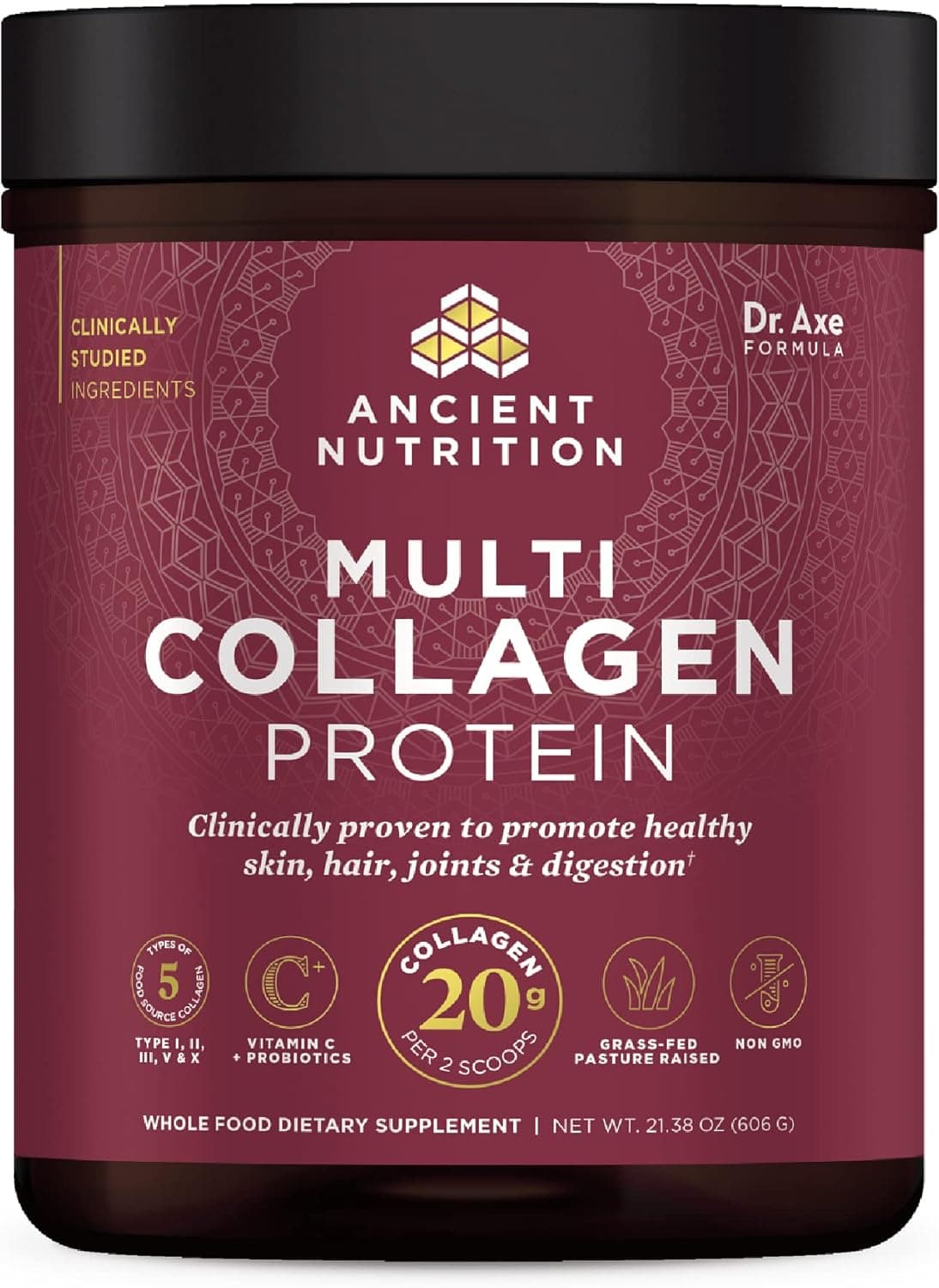
Eggshell Membrane.
May provide mild joint support and skin hydration benefits. Provides natural collagen, glucosamine, and chondroitin. The idea is to give your body the raw materials to support joint cartilage and skin structure.
Reviewed March 2026
- Category
- Compound
- Also filed under
- Joint supportSkin hydration
What Eggshell Membrane is, and what it does.
- Does it work
- Maybe. The evidence is promising but not rock-solid yet. If other joint supplements haven't helped, it could be worth a try. But it's not a first-line defense.
- How much to take
- 300-500mg daily. Most products are conveniently dosed at 500mg per capsule.
- Time to feel it
- Joint comfort trials followed people for four to eight weeks, and that is the window where most of the change lands. Some report easier movement inside the first two weeks.
- The first dose
- Zero. Nothing. This needs weeks to potentially build up and have an effect.
- With regular use
- After 4-8 weeks, some people report less joint stiffness and pain. The effects are typically mild. Don't expect to feel 20 again.
- How well tolerated
- Generally well tolerated. The big one is egg allergies—avoid it if you have one. Talk to a doc if you're on blood thinners.
- How it feels
- Subtle. You're not going to 'feel' it working. It's more about noticing less discomfort over time.
- The overlooked benefit
- It is easy to confuse with eggshell calcium. The membrane is collagen, elastin and glycosaminoglycan with negligible calcium, so it is not a calcium source.
500mg a day is where Eggshell Membrane works.
Source: Ruff et al., Clin Rheumatol, 2009
The proof, claim by claim.
These words describe the research, not the molecule's worth. Research strength is how much work stands behind one claim, and it is never a product score.
While some studies suggest potential benefits for joint health and skin, larger, more rigorous trials are needed to confirm these findings. The mechanisms of action are not fully understood, and the effective dosage is still being refined.
- Joint comfort during daily activityRandomised trial
- Joint range of motionRandomised trial
- Joint stiffness after exerciseRandomised trial
- Skin hydration and elasticityRandomised trial
- Supply of collagen types I, V and X with bound glycosaminoglycansNarrative review
- Cartilage turnover markersRandomised trial
Questions people ask about Eggshell Membrane.
- Is this just for joints?
- Mostly, but it also has things like collagen and hyaluronic acid, so some people take it for skin health too.
- How is it different from a collagen supplement?
- It's a natural complex. It has collagen, but also glucosamine, chondroitin, and hyaluronic acid all in one package.
- Can I take it if I have an egg allergy?
- No. Absolutely not. Steer clear.
- When's the best time to take it?
- Anytime. Morning, night, with or without food. Consistency is more important than timing.
- How long until I see results?
- Be patient. At least a month, maybe two. If you feel nothing by then, it's probably not working for you.
- Is it vegetarian?
- Vegetarian, yes. Vegan, no. It comes from eggs.
Why these belong in the same formula. Each row says what the basis is, from settled biochemistry through to a trial that measured the pair.
Eggshell membrane is mostly type I, V and X collagen with elastin. Vitamin C is the cofactor for the prolyl and lysyl hydroxylases that mature newly made collagen, so it acts on the same pathway the membrane feeds.
Eggshell membrane naturally carries chondroitin sulfate along with collagen and hyaluronic acid, so added chondroitin raises the same glycosaminoglycan pool the membrane supplies. Joint formulas have combined the two on that basis for years.
Glucosamine is the amino sugar the body incorporates into glycosaminoglycan chains, while eggshell membrane delivers those chains ready-formed with collagen. One feeds synthesis, the other supplies substrate.
Hyaluronic acid is one of the glycosaminoglycans present in eggshell membrane and the backbone that other glycosaminoglycans attach to in cartilage matrix. Adding it raises the same structural pool.
Sulfation of chondroitin and keratan chains needs a sulfur supply, and MSM contributes to that body sulfur pool. Eggshell membrane brings the sulfated matrix proteins, MSM the sulfur feedstock behind them.
Manganese is the cofactor for the glycosyltransferases that build glycosaminoglycan chains onto proteoglycan cores. Without it the matrix material eggshell membrane supplies cannot be extended by the body.
Lysyl oxidase is a copper-dependent enzyme that crosslinks collagen and elastin fibres. Eggshell membrane collagen is only as useful as the crosslinking machinery that stabilises it.
Hydrolysed collagen delivers absorbable glycine-proline-hydroxyproline dipeptides that reach connective tissue, while eggshell membrane supplies intact collagen types I, V and X plus glycosaminoglycans. The two cover different parts of the same matrix.
Orthosilicic acid is associated with collagen type I synthesis in connective tissue cells and with glycosaminoglycan crosslinking. It supports the matrix building that eggshell membrane provides raw material for.
Roughly every third residue in collagen is glycine, making it the rate-shaping amino acid for collagen synthesis. Supplying it supports the body's own matrix production alongside the membrane's delivered collagen.
Boswellic acids act on 5-lipoxygenase signalling in joint tissue while eggshell membrane supplies structural matrix material. Joint formulas combine a signalling botanical with a substrate on that split.
Curcuminoids modulate NF-kB dependent signalling in joint tissue, a different lever from supplying collagen and glycosaminoglycans. The combination is standard in connective tissue formulas for that reason.
Calcitriol drives calbindin-mediated calcium absorption in the small intestine, so calcium supply and vitamin D status are functionally linked. A randomised trial fortified a home meal replacement with eggshell powder plus vitamin D and reported preservation of bone mineral density in postmenopausal women. That trial used eggshell powder, the calcified shell, not the membrane, so the citation grounds the vitamin D and calcium relationship rather than a membrane effect.
Eggshell membrane and eggshell calcium carbonate are two separate materials from the same raw egg, and they are often confused on labels. The membrane is a protein and glycosaminoglycan network. The shell is roughly 95 percent calcium carbonate. A formula wanting both the structural protein fraction and a calcium source needs both, since the membrane supplies negligible calcium.
Vitamin K is the cofactor for gamma-glutamyl carboxylase, which carboxylates osteocalcin so it can bind calcium into the bone matrix. Eggshell membrane contributes collagen-type structural protein rather than mineral handling, so the two act on different parts of matrix formation. Neither substitutes for the other.
Proline and its hydroxylated form make up a large share of the collagen triple helix, and eggshell membrane is built on collagen types I, V and X. Supplying proline provides substrate for the same synthesis pathway that membrane-derived peptides feed into. This is a substrate relationship, not a demonstrated joint clinical effect.
Lysine residues are the ones lysyl oxidase modifies to form the covalent crosslinks that give collagen and elastin their tensile strength. Eggshell membrane is heavily crosslinked through exactly this chemistry, including desmosine bridges. Lysine supply is upstream of that step.
Zinc is a cofactor for matrix metalloproteinases and for alkaline phosphatase, both involved in normal connective tissue turnover. Membrane-derived peptides supply building material into that same turnover cycle. The relationship is cofactor to substrate.
Biotin is the cofactor for carboxylases in fatty acid and amino acid metabolism that feed keratin-rich tissue turnover. Eggshell membrane is used in nail, hair and skin formulas for its collagen and glycosaminoglycan content, and the two are routinely combined there. The pairing is nutritional logic plus formulation practice, not a combination trial.
Eggshell membrane is a densely crosslinked, largely insoluble protein network, which is why commercial grades are partially hydrolysed before sale. Proteolytic enzymes are used in joint and connective tissue formulas and can act on residual intact protein. The mechanism is digestion of a difficult substrate rather than a demonstrated absorption gain.
Roughly half of body magnesium sits in bone, where it is part of the hydroxyapatite surface and influences crystal size. Membrane-derived collagen peptides address the organic matrix instead. A formula covering both is covering two different components of the same tissue.
Boron influences the handling of calcium and magnesium and interacts with steroid hormone metabolism relevant to bone turnover. It is a common minor component of connective tissue formulas built around collagen sources such as eggshell membrane. The mechanism is described in the literature. The pairing itself has not been trialled.
Astaxanthin is used in nutricosmetic formulas for its lipid-phase antioxidant behaviour, and eggshell membrane is used in the same category for its collagen and hyaluronic acid content. The two address different components of skin structure and oxidative load. The combination is formulation practice, not a tested pair.
Pine bark procyanidins are used in connective tissue formulas alongside collagen sources, where they contribute polyphenol antioxidant capacity rather than structural protein. Eggshell membrane supplies the protein and glycosaminoglycan side. Nothing has tested the two together.
Strontium substitutes for calcium in the hydroxyapatite lattice and is incorporated into bone mineral. Because it is chemically similar to calcium it also competes with calcium for intestinal absorption, so the two are dosed apart. Eggshell membrane contributes organic matrix and does not participate in that competition.
Glutamine is the nitrogen donor for hexosamine synthesis, which produces the amino sugars that build glycosaminoglycans. Eggshell membrane itself carries glycosaminoglycans including hyaluronic acid and dermatan sulfate. One supplies the finished polymer fraction and the other supplies substrate for making more.
Prolyl and lysyl hydroxylases are iron-dependent dioxygenases, and without iron they cannot hydroxylate the proline and lysine residues that stabilise the collagen triple helix. Eggshell membrane peptides feed the same synthesis. This is a textbook cofactor requirement rather than a claim about supplementing iron.
Calcium carbonate is what eggshell itself is made of, and eggshell-derived calcium is sold as a separate ingredient from eggshell membrane. Formulas sometimes carry both because the shell and the membrane come apart during processing. The distinction matters on a label, since one supplies mineral and the other supplies protein and glycosaminoglycans.
Intact eggshell membrane protein is highly crosslinked and resists digestion, which is why manufacturers partially hydrolyse it. Pancreatic proteases continue that hydrolysis in the gut to peptides small enough for PepT1-mediated uptake. The step is normal protein digestion applied to a difficult substrate.
Talk to a doctor before taking Eggshell Membrane if any of these apply to you: Egg allergy (use with caution), Potential interaction with blood thinners (consult physician). These are flags to check first, not effects Eggshell Membrane is known to cause.
Not medical advice. Show the label to your pharmacist.What Eggshell Membrane actually does.
It is the thin fibrous sheet inside an eggshell, made of collagen fibres with hyaluronic acid and related molecules woven through it.
The raw membrane is too tough to digest well, so it is broken into short peptides that the gut can actually absorb.
Building stable collagen needs vitamin C and iron as well as the amino acids themselves.
The membrane and the hard shell are not the same thing: the shell is calcium, the membrane is protein.
Where Eggshell Membrane comes from.
It is made from the thin fibrous lining inside eggshells, collected as a leftover from plants that crack eggs for food. The shells are washed, the lining is peeled or spun off the hard shell, and it is usually broken down partway with enzymes so the body can absorb it, then dried into a powder.
Made from an animal material. Species and tissue are the things worth knowing, and both belong on a label.
Shells arrive as a byproduct of plants that break eggs for liquid egg products, or from hatcheries. Because the input is a byproduct stream, incoming material carries residual albumen and needs cleaning before anything else happens.
Shells are washed to remove residual egg white and reduce microbial load, a necessary step given the feedstock's origin.
The membrane is separated mechanically, by air or water classification after milling, or with a steam or dilute alkali assisted step. Separation efficiency is what determines how much calcium carbonate stays in the final powder, and it varies by process.
Most commercial grades are partially hydrolysed with proteases or by controlled thermal treatment, breaking down part of the heavily crosslinked collagen network into shorter peptides. Unhydrolysed grades skip this step. Water-soluble grades go further with reductive or alkaline treatment.
Powders are tested for protein content, glycosaminoglycan or hyaluronic acid content, residual calcium, and microbial limits. Suppliers differ in which of these they declare, which is why nominal doses are not directly comparable.
The material is dried and milled to a specified particle size for capsules, tablets, drink mixes or topical formats.
The forms it comes in.
The essence, in one line each.
- Pooling five randomised trials in adults with knee joint pain and stiffness, eggshell membrane produced a small improvement in total WOMAC joint score (effect size -0.34, 95% CI -0.56 to -0.13) and in the pain subscale (-0.23, 95% CI -0.42 to -0.04).Meta-analysis. García-Muñoz et al., 2024 (Nutrients). PMID 39203777 ↗
- In 67 adults with knee pain and stiffness, 500 mg of eggshell membrane once daily lowered mean pain scores by about 16% and stiffness scores by about 13% versus placebo within 10 days, while function and overall scores did not separate from placebo.Randomised trial. Ruff et al., 2009 (Clinical Rheumatology). PMID 19340512 ↗
- In 60 healthy women after midlife following a step exercise routine, 500 mg a day lowered the cartilage turnover marker CTX-II by about 17% versus placebo after one week and about 10% after two weeks, while pain immediately after exercise did not differ.Randomised trial. Ruff et al., 2018 (Clinical Interventions in Aging). PMID 29497287 ↗
- Comparing two eggshell membrane doses against placebo in adults with knee pain, pain fell in every group including placebo, with the largest fall in the higher-dose group, which also gained isometric and isokinetic knee strength.Randomised trial. Cánovas et al., 2022 (Nutrients). PMID 35684140 ↗
- In a network comparison of nutritional supplements taken by adults with knee joint pain and stiffness, eggshell membrane was among the options associated with improved pain and function scores.Meta-analysis. Zhang et al., 2025 (Nutrients). PMID 40806131 ↗
- A comparative nutricosmetic study of an eggshell membrane preparation against hydrolysed collagen reported changes in skin biophysical measures such as hydration and elasticity. These are instrument-measured markers of skin properties rather than clinical endpoints.Open-label trial. González-Rodríguez et al., 2025 (Frontiers in Nutrition). PMID 41613921 ↗
- A 12-week before-and-after study in warmblood horses given eggshell membrane reported changes in gait and movement scores. With no control group and a non-human population this is descriptive rather than comparative evidence.Open-label trial. Kwon et al., 2026 (Frontiers in Veterinary Science). PMID 41834880 ↗
- Long-term eggshell membrane feeding was associated with maintained bone mass in rats, which the authors attribute to reduced bone resorption markers. This is a rodent model and the mechanism is inferred from markers.Animal study. Yashima et al., 2026 (Tissue and Cell). PMID 41955929 ↗
- A home meal replacement fortified with eggshell powder and vitamin D was associated with preservation of bone mineral density in postmenopausal women over the study period. The tested material was calcified eggshell powder, not eggshell membrane.Randomised trial. Joo et al., 2024 (Nutrients). PMID 38674843 ↗
These are the studies our verdict leans on, chosen from the 1,572 we read for Eggshell Membrane. The full linked list is below.
The studies, linked.
12 sources behind our Eggshell Membrane verdict: peer-reviewed studies and registered clinical trials. Every one links straight to PubMed, the journal, or ClinicalTrials.gov. Read them yourself.
- Clinical trialEvaluation of the Efficacy and Safety of NEM® Brand Eggshell Membrane in Patients With Grade 2/3 Knee Osteoarthritis: A Multi-center, Randomized, Double-blind, Placebo-controlled, Single-crossover StudyClinicalTrials.gov ↗166 participants, Completed
- Clinical trialEfficacy of the NEM® Brand Eggshell Membrane + KD PUR® Brand Fish Oil Combination (Move3™) Versus Placebo in Exercised-induced Joint Pain, Stiffness, & Cartilage Turnover in Healthy Men & WomenClinicalTrials.gov ↗85 participants, Completed
- Clinical trialEfficacy of NEM® Brand Eggshell Membrane Versus Placebo in Exercised-induced Joint Pain, Stiffness, & Cartilage Turnover in Healthy Men & WomenClinicalTrials.gov ↗84 participants, Completed
- Clinical trialEfficacy of NEM® Brand Eggshell Membrane Plus BIOCURC® Brand Bioavailable Curcumin Versus Placebo in Exercised-induced Joint Pain, Stiffness, & Cartilage Turnover in Healthy Men & WomenClinicalTrials.gov ↗84 participants, Completed
- Clinical trialA Multi-Center, Randomized, Double-blind, Placebo-controlled Study to Evaluate the Effectiveness and Safety of Natural Eggshell Membrane (NEM) in the Treatment of Pain & Stiffness Associated With Moderate Osteoarthritis of the KneeClinicalTrials.gov ↗67 participants, Completed
- Clinical trialEvaluation of the Effects of Eggshell Membrane in Protecting Skin From Damage Caused by Environmental Challenges and AgingClinicalTrials.gov ↗63 participants, Completed
- Clinical trialEvaluation of the Effects of NEM® Brand Eggshell Membrane Versus Placebo on Exercise-induced Joint Pain, Stiffness, & Cartilage Turnover in Healthy, Post-menopausal WomenClinicalTrials.gov ↗60 participants, Completed
- ClinicalTrials.gov ↗
- Clinical trialA Double Arm Study to Evaluate the Effectiveness of NEM Compositions for the Treatment of Joint and Connective Tissue PainClinicalTrials.gov ↗28 participants, Completed
- Clinical trialA Single Arm Pilot Study to Evaluate the Effectiveness of Eggshell Membrane Compositions for the Treatment of Pain Associated With Connective Tissue and JointsClinicalTrials.gov ↗11 participants, Completed
- Clinical trialA 12 Week Clinical Study to Evaluate the Effects of an Eggshell Membrane Dietary Supplement on Elasticity and Skin Hydration Versus PlaceboClinicalTrials.gov ↗100 participants, Enrolling by invitation
- Clinical trialEffects of NEM® Brand Eggshell Membrane and curQ+® Brand Highly Absorbable Curcumin Supplementation, Alone or in Combination, on Recovery From Intense Exercise in Recreationally Active Men.ClinicalTrials.gov ↗60 participants, Recruiting
Evidence surfaced via Semantic Scholar (Allen Institute for AI) and ClinicalTrials.gov. Ranked by study type and citation weight, not cherry-picked.
FDA Disclaimer: These statements have not been evaluated by the Food and Drug Administration. This information is for educational purposes only and is not intended to diagnose, treat, cure, or prevent any disease. Consult your healthcare provider before starting any supplement regimen.