AdultsWWEIA NHANES 2009 to 2010
About 42% of Americans
take in less calcium than the estimated average requirement.
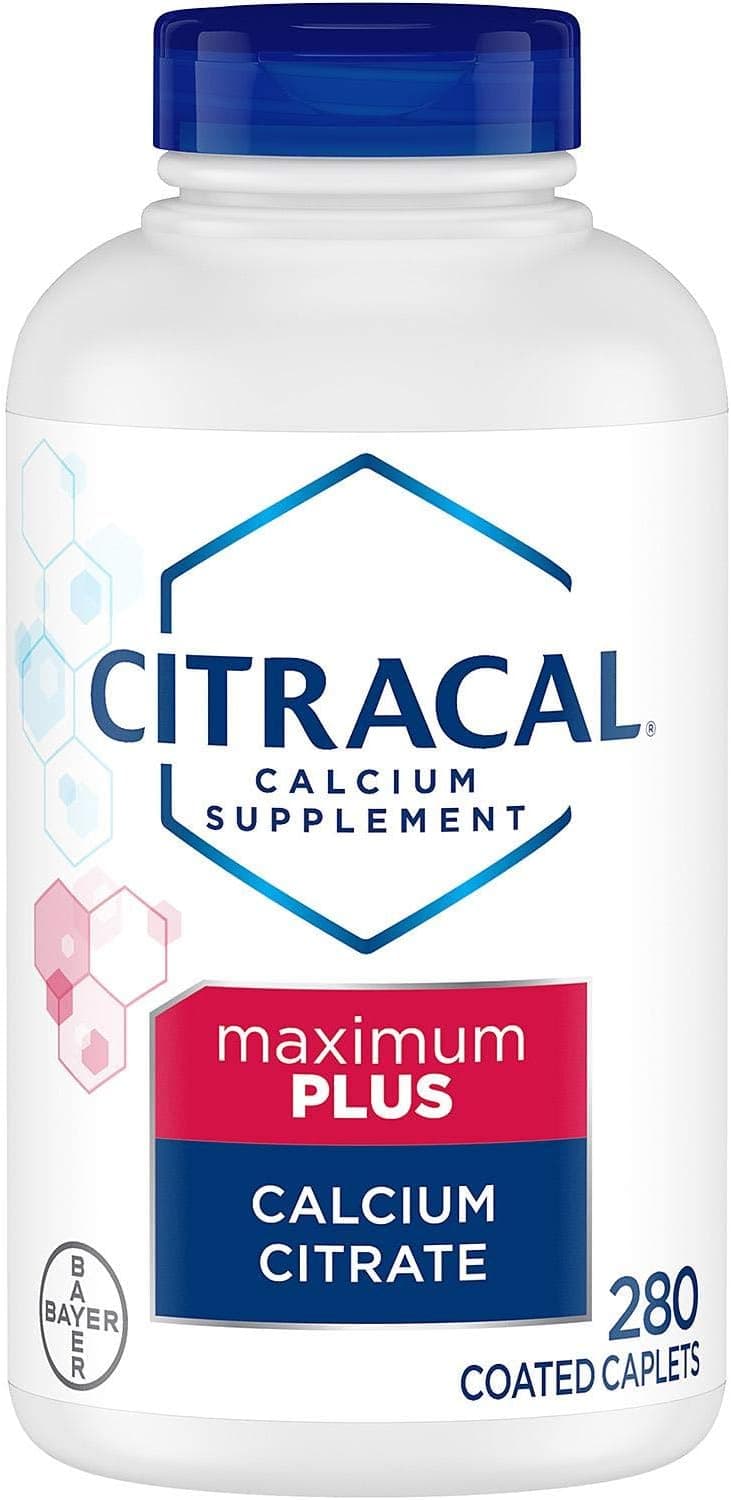
USDA/ARS What We Eat in America, NHANES 2009 to 2010 (FSRG Dietary Data Brief, NCBI NBK589560). ↗Research-backed mineral with potential health benefits. Provides calcium for bones and teeth. Also neutralizes stomach acid for quick heartburn relief.
Reviewed March 2026
Public health figures for this ingredient, reported by the agencies that publish them, cited and dated.
United States
About 42% of Americans
take in less calcium than the estimated average requirement.
USDA/ARS What We Eat in America, NHANES 2009 to 2010 (FSRG Dietary Data Brief, NCBI NBK589560). ↗About 80% of US women aged 71 and over
take in less calcium from food and drink than the estimated average requirement.
USDA ARS, Usual Nutrient Intake from Food and Beverages, by Gender and Age, WWEIA NHANES 2013-2016, Table A 34 (calcium), females 71+: 80% below an EAR of 1,000 mg (SE 2.4). ↗About 75% of US women aged 51 to 70
take in less calcium from food and drink than the estimated average requirement.
USDA ARS, Usual Nutrient Intake from Food and Beverages, by Gender and Age, WWEIA NHANES 2013-2016, Table A 34 (calcium), females 51-70: 75% below an EAR of 1,000 mg (SE 1.8). ↗About 59% of US women aged 19 and over
take in less calcium from food and drink than the estimated average requirement.
USDA ARS, Usual Nutrient Intake from Food and Beverages, by Gender and Age, WWEIA NHANES 2013-2016, Table A 34 (calcium), females 19+: 59% below EAR (SE 1.2). ↗About 80% of US girls aged 14 to 18
take in less calcium from food and drink than the estimated average requirement.
USDA ARS, Usual Nutrient Intake from Food and Beverages, by Gender and Age, WWEIA NHANES 2013-2016, Table A 34 (calcium), females 14-18: 80% below an EAR of 1,100 mg (SE 3.6). ↗About 60% of US men aged 71 and over
take in less calcium from food and drink than the estimated average requirement.
USDA ARS, Usual Nutrient Intake from Food and Beverages, by Gender and Age, WWEIA NHANES 2013-2016, Table A 34 (calcium), males 71+: 60% below an EAR of 1,000 mg (SE 2.2). ↗About 28% of US men aged 19 and over
take in less calcium from food and drink than the estimated average requirement.
USDA ARS, Usual Nutrient Intake from Food and Beverages, by Gender and Age, WWEIA NHANES 2013-2016, Table A 34 (calcium), males 19+: 28% below EAR (SE 1.3). ↗United Kingdom
About 4% of UK women aged 75 and over
take in less calcium from food than the lower reference nutrient intake (LRNI).
NDNS: results from years 9 to 11 (2016/17 to 2018/19) combined — statistical summary, section 4.6 Calcium ↗Fieldwork April 2016 to June 2019 (NDNS Rolling Programme Years 9 to 11 combined)About 9% of UK women aged 19 to 64
take in less calcium from food than the lower reference nutrient intake (LRNI).
NDNS: results from years 9 to 11 (2016/17 to 2018/19) combined — statistical summary, section 4.6 Calcium ↗Fieldwork April 2016 to June 2019 (NDNS Rolling Programme Years 9 to 11 combined)About 19% of UK girls aged 11 to 18
take in less calcium from food than the lower reference nutrient intake (LRNI).
National Diet and Nutrition Survey: Results from Years 5 and 6 (combined) of the Rolling Programme (2012/13 to 2013/14), Table E 'Average daily intake as a percentage of the RNI... and proportion of participants with average daily intakes below the LRNI', Calcium row, p.17-18 ↗Fieldwork 2012/13 to 2013/14 (NDNS Rolling Programme Years 5 and 6 combined)About 9% of UK adults
take in less calcium from food than the lower reference nutrient intake.
National Diet and Nutrition Survey 2019 to 2023: data tables, chapter 5 (nutrient intakes), Table 5.40b 'Micronutrient intakes from food sources only, Calcium (mean and median intake as % RNI and % below LRNI)', Adults 19 years and over, Years 12 to 15 (2019 to 2023) ↗NDNS 2019 to 2023 (fieldwork years 12 to 15)About 4% of UK men aged 75 and over
take in less calcium from food than the Lower Reference Nutrient Intake (LRNI).
National Diet and Nutrition Survey: Results from Years 7 and 8 (combined) of the Rolling Programme (2014/15 to 2015/16), Table F 'Average daily intake as a percentage of the RNI... and proportion with intakes below the LRNI', Calcium row, p.18 ↗Fieldwork 2014/15 to 2015/16 (NDNS Rolling Programme Years 7 and 8 combined)About 4% of UK men aged 19 to 64
take in less calcium from food than the Lower Reference Nutrient Intake (LRNI).
National Diet and Nutrition Survey: Results from Years 5 and 6 (combined) of the Rolling Programme (2012/13 to 2013/14), Table E 'Average daily intake as a percentage of the RNI... and proportion of participants with average daily intakes below the LRNI', Calcium row, p.17-18 ↗Fieldwork 2012/13 to 2013/14 (NDNS Rolling Programme Years 5 and 6 combined)Canada
About 93% of Canadian women aged 71 and over
take in less calcium from food than the estimated average requirement.
Health Canada/Statistics Canada, Total Usual Intakes from Food (2015 CCHS, Nutrition), Open Government Portal dataset; Calcium (mg/d), Female, 71 years and over ↗About 88% of Canadian women aged 51 to 70
take in less calcium from food than the estimated average requirement.
Health Canada/Statistics Canada, Total Usual Intakes from Food (2015 CCHS, Nutrition), Open Government Portal dataset; Calcium (mg/d), Female, 51-70 years ↗About 77% of Canadian girls aged 14 to 18
take in less calcium from food than the estimated average requirement.
Health Canada/Statistics Canada, Total Usual Intakes from Food (2015 CCHS, Nutrition), Open Government Portal dataset; Calcium (mg/d), Female, 14-18 years ↗About 82% of Canadian men aged 71 and over
take in less calcium from food than the estimated average requirement.
Health Canada/Statistics Canada, Total Usual Intakes from Food (2015 CCHS, Nutrition), Open Government Portal dataset; Calcium (mg/d), Male, 71 years and over ↗Australia
About 6 in 10 Australians
aged 2 and over take in less calcium than the estimated average requirement.
ABS, Usual nutrient intakes, 2023, Calcium section ↗About 87.2% of Australian women aged 75 and over
take in less calcium from food and drink than the estimated average requirement.
ABS, Usual nutrient intakes, 2023, Calcium, Table: Proportion of people with an inadequate calcium intake by age and sex ↗About 90.7% of Australian women aged 50 to 64
take in less calcium from food and drink than the estimated average requirement.
ABS, Usual nutrient intakes, 2023, Calcium, Table: Proportion of people with an inadequate calcium intake by age and sex ↗About 93.2% of Australian girls aged 12 to 17
take in less calcium from food and drink than the estimated average requirement.
ABS, Usual nutrient intakes, 2023, Calcium, Table: Proportion of people with an inadequate calcium intake by age and sex ↗About 74.1% of Australian men aged 75 and over
take in less calcium from food and drink than the estimated average requirement.
ABS, Usual nutrient intakes, 2023, Calcium, Table: Proportion of people with an inadequate calcium intake by age and sex ↗Population figures from public health data. Context for the category, not a statement about any individual and not a claim about this product.
Source: NIH ODS + USPSTF 2018 + WHI calcium trial
A randomised cross-over trial in ten women of mean age 69 gave a single 500 mg dose of calcium as citrate fasting, citrate with a meal, fortified juice or a dairy product meal, with blood drawn before and at 1, 2, 4 and 6 hours. Serum ionised and total calcium increased significantly from baseline over six hours, with the rise similar after fortified juice, delayed when citrate was taken with a meal and smaller after the dairy meal. A separate double-blind cross-over trial in 25 postmenopausal women measured parathyroid hormone and a bone resorption marker 12 hours after a single calcium dose. Ten participants is a small sample, and what moved was blood chemistry, not a sensation.
These words describe the research, not the molecule's worth. Research strength is how much work stands behind one claim, and it is never a product score.
Calcium Carbonate is documented in the library. The clinical read is in the queue. Nothing about the strength of the research prints until the read is done.
Outcomes the engine found studied for these actives as a combination, not one at a time. Each is a finding a named trial measured, cited and dated, never written by the brand.
In a 12-month randomised, double-blind trial, 98 adults aged 50 and over drank a litre a day of either a naturally calcium- and magnesium-rich mineral water or a low-mineral water. The mineral-rich group had fewer falls at the 6-month assessment and higher appendicular muscle mass, with the minerals delivered as drinking water rather than a capsule.
Research strength. Research strength says how much work stands behind the combination. It is never a product score.
Fail closed. Where actives were studied on their own rather than together, each shows on its own evidence, never a combined effect no trial measured.
Independent record. Every finding is cited to a named trial, dated, and never written by the brand.
Findings from trials that studied these actives as a combination. Context for how the actives were tested together, not a statement about any individual and not a claim about this product.
Why these belong in the same formula. Each row says what the basis is, from settled biochemistry through to a trial that measured the pair.
Vitamin D switches on the active transport system in the gut that carries calcium across the intestinal wall, so it raises how much of the calcium in calcium carbonate the body actually absorbs. Without enough vitamin D, a large share of the calcium taken by mouth passes through unabsorbed.
Taken in the same dose, calcium blunts the uptake of both heme and non-heme iron, since the two minerals compete for absorption in the gut. Spacing calcium carbonate a couple of hours apart from iron keeps that competition from lowering how much iron is absorbed.
Magnesium is a cofactor for the enzymes that convert vitamin D into its active form, and that active vitamin D is what drives calcium absorption in the gut. So keeping magnesium adequate supports the same pathway that pulls in the calcium from calcium carbonate.
Calcium carbonate must be dissolved by stomach acid before the calcium ion is free to absorb, which is why it is taken with food. Added acid helps when gastric acid output is low.
A large carbonate dose in the same meal as zinc lowers zinc uptake through overlapping divalent transport. Spacing the doses removes it.
MK-7 stays in circulation long enough to carboxylate matrix Gla protein and osteocalcin between doses, and those proteins direct where calcium is laid down.
Strontium competes with calcium for intestinal absorption and for the same mineral sites in bone, so the two are dosed at separate times.
Boron affects urinary calcium loss and the handling of vitamin D metabolites that set absorption.
Phytate binds calcium in grain and legume meals and blocks absorption. Phytase cleaves it and releases the mineral.
Inulin fermentation lowers colonic pH, which keeps calcium soluble and absorbable in the lower gut. That matters for a poorly soluble carbonate salt.
Sodium and calcium share renal tubular reabsorption, so higher sodium intake pushes more calcium into the urine.
Caffeine slightly increases urinary calcium loss and marginally reduces intestinal absorption. The effect is small but consistent.
A viscous gel partly binds divalent cations and speeds their passage through the small intestine, lowering the calcium picked up from that meal.
Manganese is a cofactor for the enzymes building bone and cartilage matrix, and at high doses it competes with calcium for divalent uptake.
Calcium and phosphate form poorly soluble complexes in the intestinal lumen, and the reaction runs in both directions: a large calcium dose lowers phosphate uptake from the same meal, and a high phosphate load lowers calcium uptake. For a formulator it means the two minerals in one dose partly cancel each other.
Calcium taken in the same dose reduces the absorbed fraction of non-heme iron, an interaction documented for decades. Calcium carbonate adds a second effect by raising gastric pH, and ferrous iron needs an acidic environment to stay soluble. Separating an iron dose from a calcium dose by a few hours is the standard practical response.
High calcium intakes have been reported to reduce absorption of several trace minerals including copper, which shares divalent cation transport routes. The effect is modest compared with the iron interaction. It matters most in multi-mineral products where all the minerals arrive in one tablet.
Calcium carbonate must be dissolved by stomach acid before the calcium ion is released, which is why it is taken with food. Ascorbic acid lowers the pH of the local environment and can assist dissolution. The effect is smaller than simply taking the dose with a meal, and it should not be sold as the main lever.
Lysine has been reported to increase intestinal calcium transport in laboratory and small human work. The mechanism proposed involves both paracellular permeability and the amino acid's own transport. The supporting evidence is limited and does not establish a change in any bone outcome.
Fermentable fructans are converted by colonic bacteria to short chain fatty acids, which lower luminal pH and keep calcium in a soluble ionised state further down the tract. That supports passive absorption in a region where little normally occurs. Reported fractional absorption changes have been measured with isotope methods, which is a marker rather than a bone outcome.
Galactooligosaccharides are fermented in the colon with the same acidifying effect on the lumen that supports calcium solubility. Isotope studies of fractional calcium absorption have been run with this substrate class. As with other prebiotics, larger doses bring gas and bloating for some people.
Resistant starch escapes small intestinal digestion and is fermented in the colon, producing butyrate and other short chain fatty acids that acidify the lumen. That favours mineral solubility in the large bowel. The measured endpoint in this line of work is fractional absorption, not bone density.
Osteocalcin must be gamma-carboxylated by a vitamin K dependent carboxylase before its glutamate residues can bind calcium into the bone matrix. Vitamin K1 is the dietary form that dominates in leafy greens. Supplying calcium without adequate vitamin K status leaves part of the matrix protein pool undercarboxylated, which is measurable in blood.
Silicon has been associated with collagen cross-linking and early bone matrix formation in laboratory and observational work. Mineral density depends on the protein scaffold as well as the mineral. The evidence here is associational and mechanistic rather than trial-based.
Higher protein intakes raise urinary calcium excretion and also raise intestinal calcium absorption, so the net effect is smaller than the urinary figure alone suggests. Protein additionally supplies the substrate for bone matrix. Reporting only the urinary loss misstates what the whole picture shows.
Pectin carries free carboxyl groups that bind divalent cations, and its gel structure slows mixing in the small intestine. Both reduce the fraction of a calcium dose available at the absorptive surface. Some of that calcium is released again during colonic fermentation of the pectin.
Guar gum raises the viscosity of intestinal contents, which slows diffusion of dissolved minerals to the mucosal surface. Taken in the same dose as calcium carbonate it can reduce uptake from that dose. Separating a viscous fibre from a mineral dose is common practice for this reason.
Glucomannan forms one of the most viscous gels among food fibres, which physically slows mineral diffusion. Anything taken alongside it, including a calcium salt, encounters that barrier. The interaction is physical rather than chemical and is managed by dose timing.
Oat beta-glucan slows small intestinal mixing while also being fermented in the colon, so it works in two opposite directions on calcium availability. The net effect is not established. Flagged because a single label statement about fibre and minerals would be an oversimplification.
Activated charcoal adsorbs a wide range of compounds without discriminating between them. Taken with a mineral dose it lowers what is available for uptake. This is a reason to separate it from anything else being taken, not a pairing to recommend.
Bacteria that produce lactate and short chain fatty acids lower colonic pH, which keeps calcium ionised and soluble further along the tract. The effect depends heavily on whether fermentable substrate is present. Strain-level differences are large and the endpoint measured is fractional absorption, a marker.
Sodium bicarbonate raises gastric pH, and calcium carbonate needs stomach acid to dissolve and release the calcium ion. Taken together the bicarbonate works against the dissolution step. Anyone combining buffering agents with a carbonate mineral should know that the mineral form matters here.
Tannins bind divalent cations in the gut lumen and form complexes that are not absorbed. A strongly tannic drink taken with a calcium dose lowers the available fraction. The size of the effect depends on the tannin load rather than being fixed.
Nothing specific on file for Calcium Carbonate. Match the label to the daily amount above, and tell your doctor what you take.
Not medical advice. Show the label to your pharmacist.Around 40 percent of the weight is actual calcium, so the number on the front of the label and the elemental number are different figures.
It needs stomach acid to break apart, which is why it works better taken with a meal.
It reacts with stomach acid and releases gas, which is where the burping comes from.
Calcium gets in two ways, an active vitamin D dependent route and a passive one that just follows how much is present.
It is either limestone that has been mined, cleaned and ground very fine, or the same mineral rebuilt in a reactor from lime and carbon dioxide, or shell material from oysters or coral. Whichever route, it is tested for lead and other metals before it goes into a product.
From a mineral source, then refined and usually bound to a carrier so the body can take it up.
Most supplement-grade material comes from mined sedimentary limestone or marble. A smaller share comes from oyster shell or coral, which is the aragonite polymorph and carries the source organism's trace mineral profile.
The rock is quarried, crushed and washed. Deposit selection is the first quality control step because the geology determines the baseline lead, arsenic and cadmium content of the lot.
For precipitated calcium carbonate the limestone is calcined at high temperature to lime, slaked with water to calcium hydroxide, and then reacted with carbon dioxide so the carbonate crystallises out under controlled temperature and agitation. This is what sets crystal shape and size rather than milling.
Insolubles are separated and the material is tested against pharmacopoeial limits for lead, arsenic, cadmium and mercury. This is the step that separates a supplement grade from an industrial filler grade of the same chemical.
The powder is milled or classified to a specified particle size distribution, and assayed for calcium carbonate content against the pharmacopoeial monograph. Particle size drives both how the powder compresses into a tablet and how quickly it dissolves in acid.
The powder is granulated with binders and disintegrants for tablets and chewables, or blended directly for powders. Disintegrant choice matters because a hard, poorly disintegrating calcium tablet is a common formulation failure.
The whole-food sources on file. A supplement closes the gap, it does not replace dinner.
A gram-for-gram figure (how much of each you would eat to match a dose) will appear here once it is sourced and reviewed. This page will not print a number it cannot cite.
Calcium Carbonate is the carbonate form of Calcium. Same mineral, bound to a different partner, so absorption and feel differ from form to form.
These are the studies our verdict leans on, chosen from the 18,511 we read for Calcium Carbonate. The full linked list is below.
6 sources behind our Calcium Carbonate verdict: peer-reviewed studies and registered clinical trials. Every one links straight to PubMed, the journal, or ClinicalTrials.gov. Read them yourself.
Evidence surfaced via Semantic Scholar (Allen Institute for AI) and ClinicalTrials.gov. Ranked by study type and citation weight, not cherry-picked.
Read this carefully. These are 1,052,635 voluntary, unverified reactions reported to the FDA (openFDA). The number mostly reflects how popular Calcium Carbonate is, not how risky it is. A report is not proof Calcium Carbonate caused anything. It is a signal of what to watch for, nothing more.
Source: openFDA adverse-event reports. Voluntary reporting, not an incidence rate.
FDA Disclaimer: These statements have not been evaluated by the Food and Drug Administration. This information is for educational purposes only and is not intended to diagnose, treat, cure, or prevent any disease. Consult your healthcare provider before starting any supplement regimen.