Pancreatin.
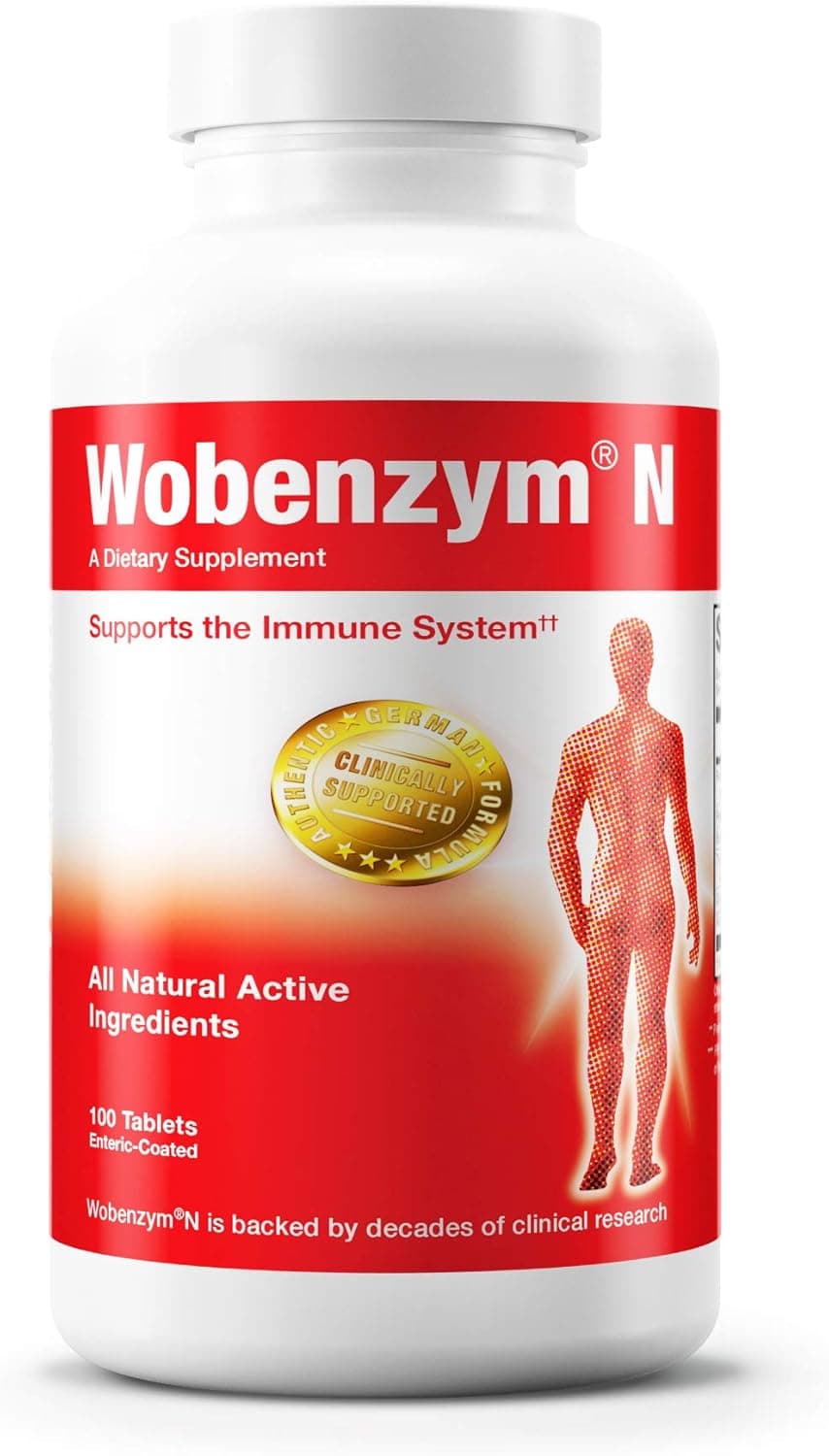
Pancreatic enzyme replacement. For real deficiency. A pig-derived enzyme mix of lipase, amylase and proteases. Taken with a meal, it adds enzyme activity in the gut so fat, starch and protein get broken down more completely.
Reviewed March 2026
- Category
- Enzyme
- Also filed under
- DigestionPancreaticMalabsorption
What Pancreatin is, and what it does.
- Does it work
- Suits people who feel heavy after fatty or rich meals and want enzyme support at the table. If a clinician is directing your enzyme support, follow the lipase units they specify.
- How much to take
- Start at 200 to 500mg a day taken with meals, which is where daily use sits. Potency is declared in lipase units, so read those alongside the milligrams.
- Time to feel it
- It works on the meal it's swallowed with, so comfort after a fatty meal is a same-day matter rather than something that accumulates.
- The first dose
- The first rich meal is where it shows. Fat digestion is measured in the gut rather than felt, though plenty of people do notice food sitting lighter.
- With regular use
- Most effects take 2-8 weeks. Be patient.
- How well tolerated
- Generally well tolerated. Check with your doctor if on medications.
- How it feels
- Better fat digestion. Essential for pancreatic issues.
- The overlooked benefit
- Lipase, amylase and protease don't lose activity at the same rate in storage, which is why potency is declared as three separate numbers instead of one.
200 to 500mg a day is where Pancreatin works.
Source: Layer P et al. Pancreas. 2003;27(3):261-267
The proof, claim by claim.
These words describe the research, not the molecule's worth. Research strength is how much work stands behind one claim, and it is never a product score.
Based on 35 human trials.
- digestion and absorption of dietary fatMeta-analysis
- starch and protein breakdown in the small intestineNarrative review
- comfort after fat-rich mealsRandomised trial
- enzyme delivery from delayed-release preparationsRandomised trial
- status of the fat-soluble vitaminsCohort study
Questions people ask about Pancreatin.
- When should I take it?
- Timing matters less than consistency. Pick a time that works for you and take it daily.
- Can I take it with other supplements?
- Usually fine. The main thing to watch is not doubling up on the same ingredient from different products. If you're on prescription meds, check with your pharmacist first.
- Any side effects to watch for?
- Most people tolerate it well at recommended doses. GI upset is the most common complaint with any supplement. Start with a lower dose and work up. If something feels off, stop and reassess.
Why these belong in the same formula. Each row says what the basis is, from settled biochemistry through to a trial that measured the pair.
Bile salts emulsify dietary fat and, with colipase, position the lipase component at the lipid interface. Without them the lipase fraction of pancreatin has little accessible substrate.
Pancreatic enzymes work near neutral pH and are inactivated by acid, which is why the pancreas normally secretes bicarbonate with them. Raising duodenal pH keeps a dose active.
Betaine HCl lowers gastric pH, which supports pepsin but inactivates uncoated pancreatin before it reaches the small intestine. Enteric coating or separate timing preserves the enzyme activity.
Pancreatic proteases release B12 from haptocorrin in the duodenum so it can bind intrinsic factor and be taken up in the ileum. Low pancreatic protease output limits that hand-off regardless of the B12 dose.
Bromelain stays active across a wider pH range than pancreatic proteases, so it covers the stomach phase that pancreatin does not reach. Digestive blends pair them for that spread.
Papain is a plant cysteine protease that works in the acidic stomach, ahead of where pancreatin acts. The pair covers protein breakdown across two segments of the tract.
Pancreatin carries no lactase activity, since lactose is split at the brush border rather than in the lumen. Adding lactase covers a substrate pancreatin cannot handle.
Triglyceride-form omega-3 must be cleaved into free fatty acids and monoglycerides before micellar uptake, which is the lipase component's job. Adequate lipolysis raises the absorbed EPA and DHA share.
Fat-soluble vitamins enter mixed micelles only after dietary triglyceride has been hydrolysed. Low lipolytic activity lowers the absorbed fraction of a vitamin D dose.
Tocopherol esters require lipolysis and micelle formation before uptake at the enterocyte. The lipase component supplies that first step.
Retinyl esters are hydrolysed by pancreatic and brush border esterases before retinol enters the enterocyte. Pancreatic output is part of that route.
CoQ10 is large and lipophilic and depends on fat digestion and micelle formation to cross the gut wall. Lipolysis of the carrier oil is the rate-limiting step.
Charcoal adsorbs proteins and lipids without selectivity, including dosed enzymes and the nutrients they act on. The two belong hours apart.
Pancreatin already carries amylase alongside protease and lipase, so added amylase raises the starch-splitting load rather than adding a new capability. Formulators stacking both should count the total activity units.
Pancreatin already contains lipase as one of its three declared activities, so adding a separate lipase raises the fat-splitting capacity of the dose without changing the protease or amylase content. Some formulas do this to shift the ratio. The declared lipase unit total is what matters, not which source it came from.
Pepsin works in the acid of the stomach and pancreatin works in the alkaline small intestine, so they act in sequence rather than in the same place. Pepsin begins protein breakdown and pancreatic proteases finish it. Neither substitutes for the other because their pH optima do not overlap.
Plant and fungal enzyme blends work across a wider pH range than pancreatin, which needs the alkaline environment downstream of the stomach. Combining them covers both compartments. The trade-off is that unit systems differ between sources, so totals cannot simply be added.
Medium-chain triglycerides are absorbed largely without the micelle formation that long-chain fats require, so they depend far less on pancreatic lipase and bile. That makes them a fat source that behaves differently when lipase output is low. It is a workaround, not a substitute for enzyme activity on ordinary dietary fat.
Calcium carbonate neutralises stomach acid and raises gastric pH. Since pancreatic enzymes are irreversibly denatured by acid, a higher gastric pH means more activity survives into the small intestine, which is the same logic behind enteric coating. The timing of the antacid relative to the meal decides whether this helps or simply delays gastric emptying.
Free fatty acids released by lipase can bind calcium in the gut lumen to form insoluble soaps. That reduces absorption of both the fatty acid and the calcium from that meal. The effect is larger when fat digestion is incomplete and a large calcium dose arrives at the same time.
Vitamin K is fat-soluble and needs dietary fat to be emulsified and absorbed. Pancreatic lipase performs the step that generates the fatty acids and monoglycerides forming the mixed micelles that carry it. When fat digestion is incomplete, fat-soluble vitamin absorption falls with it.
MK-7 is a long-chain, highly lipophilic menaquinone whose uptake depends on micellar solubilisation. Adequate fat digestion is upstream of that. Taking it with a fat-containing meal is the practical version of this mechanism.
Carotenoid absorption is a micelle-dependent process, and micelles form from the products of triglyceride hydrolysis. Without lipase activity, carotenoids pass through largely unabsorbed. This is standard nutritional biochemistry.
Lutein is a xanthophyll carotenoid that partitions into mixed micelles before crossing the enterocyte membrane. Fat digestion supplies the micelle components. Formulas often pair it with an oil for the same reason.
Lycopene is one of the more lipophilic carotenoids and its absorption tracks the fat content of the meal. Lipase-generated micelles are the vehicle. Poor fat digestion lowers how much reaches circulation.
Astaxanthin is a lipid-soluble ketocarotenoid taken up through the same micellar route as other carotenoids. Fat digestion is the enabling step. Esterified forms additionally need esterase activity before the free molecule is released.
Phospholipids are emulsifiers in their own right and are also substrates for pancreatic phospholipase A2, which pancreatin carries. They help disperse dietary fat into droplets the lipase can work on. The relationship runs both ways: the phospholipid assists the enzyme and is also digested by it.
Lecithin lowers the surface tension of fat droplets and increases the interfacial area available to lipase, which acts only at the oil and water boundary. That is why emulsified fats are digested faster than bulk oil. The effect is physical, on droplet size.
Curcuminoids are poorly water-soluble and absorb better when taken with dietary fat, which routes them through the micellar pathway. Fat digestion is upstream of that route. This is one reason curcumin products are so often oil-based or phospholipid-complexed.
Psyllium forms a viscous gel that slows mixing of enzymes with meal contents and slows the diffusion of digestion products to the intestinal wall. Taken in the same dose window as an enzyme supplement it can blunt the mixing the enzymes depend on. Separating them across the day is the usual answer.
Glucomannan produces one of the highest viscosities of the common soluble fibres, which slows gastric emptying and nutrient diffusion. That viscosity works against efficient enzyme and substrate contact. It is a timing conflict rather than a chemical one.
Whey is a substrate for the trypsin and chymotrypsin activity in pancreatin, which cleaves it to peptides and free amino acids. A large protein bolus raises the protease demand of that meal. Hydrolysed whey has had part of that work done already.
Collagen peptides are supplied pre-hydrolysed, so much of the protease work is already complete before they are swallowed. They place less demand on pancreatic protease than intact protein. Residual peptide bonds are still cleaved by intestinal peptidases.
Carboxypeptidase A and B, both present in pancreatic secretions, are zinc metalloenzymes that need a zinc ion at the active site to cleave the terminal amino acid from a peptide. Zinc status therefore sits upstream of the body's own protein digestion. This is a cofactor relationship, established in enzymology.
Green tea catechins inhibit pancreatic lipase and alpha-amylase in laboratory assays by binding the enzyme protein. Taken in the same window as an enzyme supplement they work against it. This is measured on enzyme activity in vitro, not on a digestion outcome in people.
1-deoxynojirimycin is a competitive inhibitor of intestinal alpha-glucosidase, the enzyme that finishes the job pancreatic amylase starts. One ingredient supplies carbohydrate-digesting capacity while the other restrains it. Whether that conflict matters depends entirely on what the formula is for.
Bentonite is a layered aluminosilicate with a large charged surface that adsorbs proteins, and enzymes are proteins. Taken together, some enzyme activity is bound and carried through rather than working on the meal. Spacing the two apart avoids the adsorption.
Krill oil delivers omega-3 fatty acids largely bound to phospholipids rather than triglycerides, so the digestive step is phospholipase rather than lipase. Pancreatin carries both activities. The route differs from a triglyceride fish oil even though the fatty acids are the same.
Nothing specific on file for Pancreatin. Match the label to the daily amount above, and tell your doctor what you take.
Not medical advice. Show the label to your pharmacist.What Pancreatin actually does.
Pancreatin is three kinds of enzyme in one: lipase splits fats into fatty acids and monoglycerides, amylase chops starch into shorter sugar chains, and proteases like trypsin and chymotrypsin cut protein into peptides.
These enzymes want things slightly alkaline, around pH 7 to 8, and stomach acid ruins them permanently. That's why uncoated pancreatin can lose activity before it ever reaches the place it's supposed to work.
Your pancreatic duct also releases bicarbonate, which lifts the pH in the upper small intestine into the range these enzymes need. Neutralising the acid isn't an optional extra, it's a prerequisite.
Lipase only works where oil meets water, so how fast fat gets digested depends on how much droplet surface there is. Bile salts and food emulsifiers matter as much as the enzyme units on the label.
Where Pancreatin comes from.
It comes from animal pancreas, in practice almost always pig, as a by-product of meat processing. The enzymes are pulled out of the tissue and dried, then the powder is tested for how much fat, starch and protein it can break down and blended to hit those numbers. The porcine source is worth knowing if that matters to you.
Made from an animal material. Species and tissue are the things worth knowing, and both belong on a label.
Pancreatic glands recovered as a by-product of meat processing, most commonly from pigs. The species matters to people avoiding porcine material
Glands are frozen promptly, minced and defatted. Processing is kept cold because the tissue's own proteases begin degrading the enzymes on thawing
Enzymes are extracted into an aqueous phase under controlled pH and temperature, with the pH held away from the range that triggers trypsin activation
Extract is precipitated with a solvent or salt, separated and dried at low temperature to preserve activity
Lipase, amylase and protease activities are each assayed and the powder is diluted with a carrier to a declared multiple of the reference standard
Standardised powder is granulated, enteric-coated where the format calls for it, and filled into capsules or compressed into tablets
The forms it comes in.
The essence, in one line each.
- Across the trials reviewed, supplemental pancreatic enzymes raised the share of dietary fat absorbed in adults whose own enzyme output is low, and were generally well tolerated.Systematic review. Chu et al., 2025 (Digestion). PMID 39299226 ↗
- Pooling randomised trials, pancreatic enzyme supplements did not show a detectable reduction in abdominal pain compared with placebo, which is a failure to find a difference rather than proof there is none.Meta-analysis. Yaghoobi et al., 2016 (Canadian journal of gastroenterology and hepatology). PMID 27446871 ↗
- In this real-world study the authors report on enteric-coated pancreatin capsules used for postprandial fullness and upper abdominal discomfort, describing symptom scores and tolerability over the observation period.Cohort study. Liu W et al., 2026 (Saudi Journal of Gastroenterology). PMID 41989951 ↗
- A 13C-labelled triglyceride breath test was used to monitor fat digestion during pancreatin supplementation, giving a non-invasive marker of how much lipolysis the dose supported rather than a clinical outcome.Open-label trial. Braden B et al., 1997 (Zeitschrift fur Gastroenterologie). PMID 9066102 ↗
- Targeted-release capsule formulations preserved more pancreatin activity than uncoated formats under simulated fasted gastric conditions, confirming that the delivery format decides how much enzyme survives the stomach.In vitro study. Karimian Azari E et al., 2026 (Pharmaceutics). PMID 41900772 ↗
- Amylase, protease and lipase activities in ultrasound-extracted bovine pancreatic material declined measurably with storage duration, so the three declared activities do not age at the same rate.In vitro study. Kenenbay G et al., 2026 (Molecules). PMID 41900079 ↗
- Pancreatin is named as the enzyme used in the simulated intestinal digestion stage of this fermented soymilk work, illustrating its standard role as the reference intestinal digestion reagent.In vitro study. Cuong NC et al., 2026 (Food Technology and Biotechnology). PMID 42317291 ↗
- Extrusion and high-dose pancreatin altered the metabolic impact of a high-inclusion microalgae diet in broilers, showing enzyme dosing can change how much of a difficult matrix is digested.Animal study. Mendes AR et al., 2026 (Journal of Animal Physiology and Animal Nutrition). PMID 42035478 ↗
- Enzyme super-dosage reduced growth impairment in broilers fed high levels of a microalgae with a tough cell wall, with the enzyme mix named in the protocol.Animal study. Mendes AR et al., 2026 (British Poultry Science). PMID 42290609 ↗
- Extended feeding of a high level of Arthrospira platensis with a commercial enzyme mix changed digestibility measures in this veterinary feeding study.Animal study. Lopes PA et al., 2025 (BMC Veterinary Research). PMID 40670977 ↗
- Reduced pancreatic enzyme output is described as an under-recognised contributor to persistent loose stools after upper gastrointestinal surgery, identified on testing in these cases.Case series. Kang M et al., 2026 (Clinical Nutrition Research). PMID 42136406 ↗
These are the studies our verdict leans on, chosen from the 1,585 we read for Pancreatin. The full linked list is below.
The studies, linked.
2 sources behind our Pancreatin verdict: peer-reviewed studies and registered clinical trials. Every one links straight to PubMed, the journal, or ClinicalTrials.gov. Read them yourself.
- Clinical trialAn Open Label, Multicenter Study Evaluating Safety and Tolerability of Creon Micro in Pediatric Subjects From at Least One Month to Less Than Four Years of Age With Pancreatic Exocrine Insufficiency Due to Cystic FibrosisClinicalTrials.gov ↗Phase 3, 40 participants, Completed
- Clinical trialEffect of Endotherapy on the Progression of Chronic Pancreatitis in Painless PatientsClinicalTrials.gov ↗60 participants, Unknown
Evidence surfaced via Semantic Scholar (Allen Institute for AI) and ClinicalTrials.gov. Ranked by study type and citation weight, not cherry-picked.
Problems people have reported.
Read this carefully. These are 6,428 voluntary, unverified reactions reported to the FDA (openFDA). The number mostly reflects how popular Pancreatin is, not how risky it is. A report is not proof Pancreatin caused anything. It is a signal of what to watch for, nothing more.
Source: openFDA adverse-event reports. Voluntary reporting, not an incidence rate.
FDA Disclaimer: These statements have not been evaluated by the Food and Drug Administration. This information is for educational purposes only and is not intended to diagnose, treat, cure, or prevent any disease. Consult your healthcare provider before starting any supplement regimen.