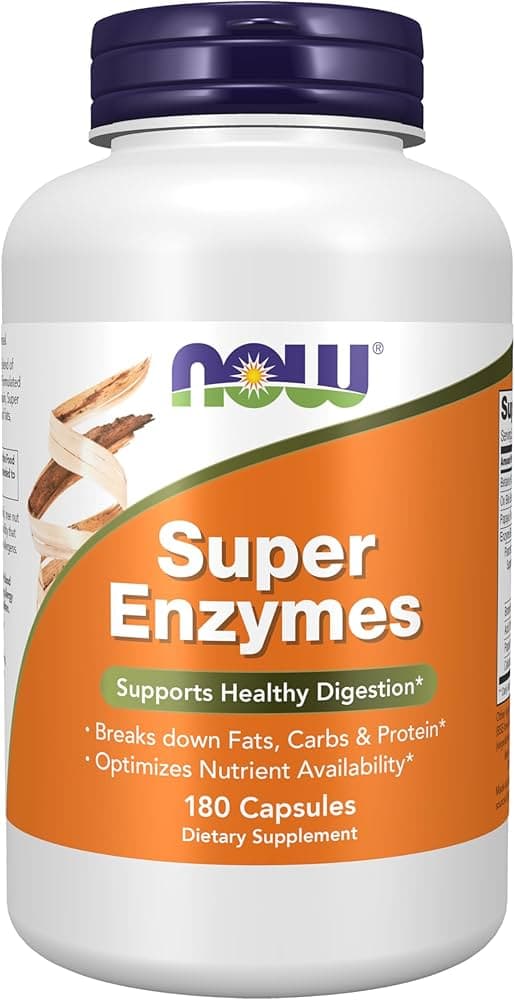
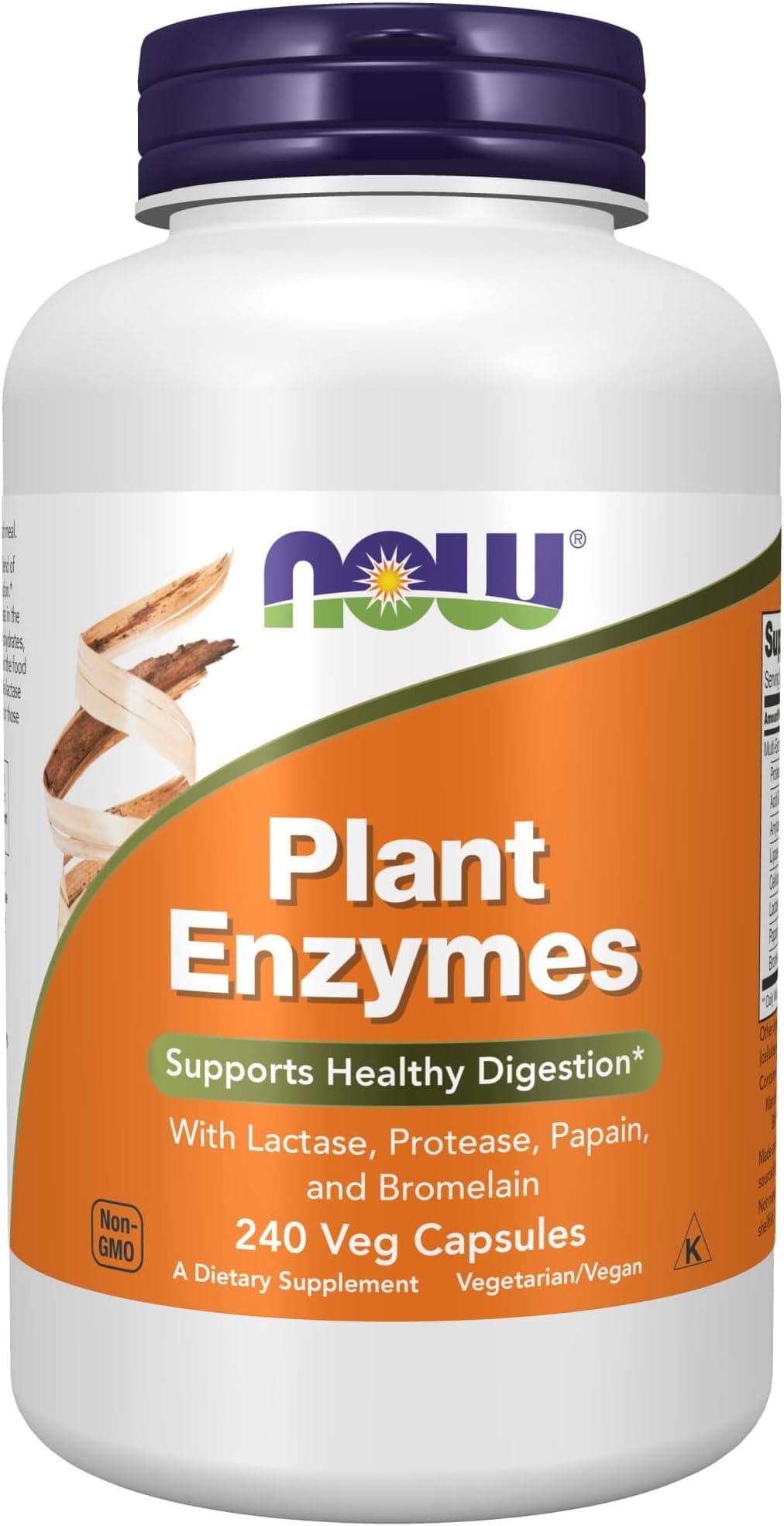
Papain.
Papaya enzyme. Protein digestion, meat tenderizer. Breaks down proteins in your digestive tract. May reduce inflammation. Used in meat tenderizers.
Reviewed March 2026
- Category
- Enzyme
- Also filed under
- DigestionProteinInflammation
What Papain is, and what it does.
- Does it work
- Maybe. Can help if you have trouble digesting protein. Less research than bromelain.
- How much to take
- 200-500mg with meals. Look for standardized enzyme activity.
- Time to feel it
- Within the meal itself. It starts breaking protein apart as soon as it meets food, so any difference in comfort turns up over the hour or two after eating.
- The first dose
- May notice less bloating after protein-heavy meals.
- With regular use
- Ongoing digestive support. Some people use it for inflammation.
- How well tolerated
- Generally well tolerated. Bleeding risk with anticoagulants. Possible allergies.
- How it feels
- Easier digestion. Less heaviness after meat-heavy meals.
- The overlooked benefit
- Milligrams tell you little here. It is sold by activity units, so two servings of the same weight can differ severalfold in how much protein they actually break down.
500 to 2,000mg a day is where Papain works.
Source: Muss et al. 2013 Neuro Endocrinol Lett RCT; Ezike et al. 2012 Afr J Tradit Med
The proof, claim by claim.
These words describe the research, not the molecule's worth. Research strength is how much work stands behind one claim, and it is never a product score.
Based on 20 human trials with 60% consistency.
- breakdown of dietary proteinIn vitro study
- digestive comfort after protein-rich mealsRandomised trial
- muscle soreness after hard training, within protease blendsRandomised trial
- a healthy inflammatory responseNarrative review
Questions people ask about Papain.
- When should I take it?
- Timing matters less than consistency. Pick a time that works for you and take it daily.
- Can I take it with other supplements?
- Usually fine. The main thing to watch is not doubling up on the same ingredient from different products. If you're on prescription meds, check with your pharmacist first.
- Any side effects to watch for?
- Most people tolerate it well at recommended doses. GI upset is the most common complaint with any supplement. Start with a lower dose and work up. If something feels off, stop and reassess.
Why these belong in the same formula. Each row says what the basis is, from settled biochemistry through to a trial that measured the pair.
Papain and bromelain are cysteine proteases with different cleavage preferences, so together they break a wider range of peptide bonds than either alone. Both stay active across a broad pH range, which is why plant enzyme blends pair them.
Papain hydrolyses protein only, so it is combined with amylase and lipase activity to cover starch and fat in the same meal. The blend matches the mixed macronutrient content of normal food.
Pepsin works at strongly acidic gastric pH while papain stays active as the meal moves toward neutral pH. Sequencing the two is a formulation choice meant to extend peptide breakdown across the gastric and early intestinal phases.
Papain acts on protein and amylase on starch, so the pair covers two of the three macronutrients in a mixed meal. Neither enzyme competes with the other for substrate.
Papain hydrolyses peptide bonds while lactase splits the lactose disaccharide, so the two cover different substrates in one meal. Broad-spectrum enzyme formulas include both by design.
Phytase releases minerals bound in phytate that protease action alone cannot free. In plant-protein formulas the two enzymes act on the same bolus from different angles.
Reduced glutathione maintains the free thiol at papain's catalytic cysteine. An oxidising environment inactivates the enzyme, so a thiol reductant preserves activity.
Condensed tannins complex with proteins, including the enzyme itself, and inhibit protease activity. Putting a high-tannin extract in the same capsule as papain lowers measured enzyme activity.
Galloylated catechins such as EGCG bind protein surfaces and are established inhibitors of digestive proteases. Co-formulation reduces the papain activity the label claims.
Papain stays active across a wide pH range, so it keeps working in an acidified stomach where pancreatic proteases would not. Pairing it with betaine HCl covers the gastric phase of protein digestion.
Papain works on peptide bonds and bile acids emulsify the fat fraction of the same meal. Full-spectrum digestive formulas combine the two to cover both macronutrients.
Catalysis runs through a cysteine-25 thiolate paired with histidine-159. Oxidation of that thiol to a disulfide or sulfenic acid stops the enzyme, and reducing agents such as cysteine restore it. This is the standard laboratory activation used whenever papain activity is assayed, so the relationship is textbook enzymology rather than a supplement finding.
NAC supplies a free sulfhydryl group and reduces disulfides. The same chemistry that regenerates cysteine will reduce an oxidised papain active site. The effect is characterised in enzyme systems, and no one has measured what it does to a swallowed enzyme in a real digestive tract.
Papain has a broad pH optimum spanning weakly acidic to neutral, while pancreatic proteases need the alkaline environment created by bicarbonate. Combining them covers a wider stretch of the tract than either alone. Both act on the same substrate class, dietary protein, so the effect is cumulative peptide bond hydrolysis.
Papain cleaves peptide bonds. Lipase cleaves ester bonds in fats. The two do not overlap or compete. In a mixed enzyme product they cover different macronutrients, which is why blends are built that way.
Papain's broad specificity makes it a standard enzyme for producing whey hydrolysates. Hydrolysis lowers molecular weight and changes the peptide profile, and it also produces the bitter taste characteristic of hydrolysates. Whether adding papain to an intact whey powder at the point of consumption changes anything meaningful has not been shown.
Papain hydrolyses casein readily, which is why casein-based assays are used to assign activity units to a papain preparation. Casein hydrolysates made this way carry a different peptide profile from the intact protein. The activity is enzymology, measured in a beaker.
Collagen must be hydrolysed before it dissolves and is absorbed as di- and tripeptides. Plant cysteine proteases including papain are used at the manufacturing stage to do that. This is a processing relationship, so it belongs in the story of how collagen peptides are made rather than in a stack recommendation.
Enterocytes oxidise glutamine preferentially, which is settled metabolic biochemistry. It appears alongside enzyme blends because both are aimed at normal digestive function. The pairing is formulation convention plus separate mechanisms, not a tested combination.
Peptides that escape absorption reach the colon, where they are fermented by proteolytic bacteria. Changing the peptide profile therefore changes what arrives. The direction of that change is not established, and proteolytic fermentation is not uniformly desirable, so this should be stated as a mechanism rather than a benefit.
Flavonoids form hydrogen bonds and hydrophobic contacts with protein surfaces, including enzyme active sites, and protease inhibition by polyphenols is repeatedly measured in vitro. Combining a high polyphenol dose with a protease in the same capsule works against the enzyme's activity. This is an anti-synergy worth flagging at the formulation stage.
Hydrolysable tannins bind proteins with high affinity through multiple phenolic contacts, which is the chemistry behind leather tanning and astringency. Papain is a protein and is bound and inactivated by the same interaction. Anyone combining a tannin-rich extract with an enzyme blend should expect measured enzyme activity to fall.
The catalytic cysteine is a soft nucleophile with high affinity for soft metal ions. Zinc and other divalent cations coordinate it and block catalysis, which is standard cysteine protease enzymology. Practically this matters inside a capsule or a slurry more than in the whole gut, but it is a genuine formulation interaction.
Copper both coordinates the thiolate and catalyses its oxidation to a disulfide. Either route inactivates the enzyme. This is why papain assay buffers routinely include a chelator such as EDTA alongside a reducing agent.
The high surface area of activated charcoal binds a wide range of organic species, enzymes included, as measured in vitro. Taken at the same time as an enzyme product it would be expected to reduce the amount of active enzyme reaching the substrate. Separating them in time is the ordinary handling of this.
Bentonite is the standard fining agent used in winemaking specifically to remove protein. That same property applies to an enzyme in the gut lumen. It is an anti-synergy with any protein-based ingredient, not with papain alone.
The pairing is a formulation convention rather than a mechanistic relationship. MSM is a sulfur-containing small molecule with its own literature and papain is an enzyme. No combination study supports a specific joint effect, and the row exists to describe what formulators actually do.
This is a combination that exists commercially, built on separate mechanisms rather than a measured interaction. Boswellic acids act on eicosanoid pathways. Papain hydrolyses peptide bonds. Nothing here establishes a combined effect, and the honest framing is a formulation practice.
Mucilaginous polysaccharides raise luminal viscosity, and higher viscosity slows the diffusion that any enzyme reaction depends on. That works against, not with, an added protease taken at the same moment. Spacing the two apart avoids the question.
Talk to a doctor before taking Papain if any of these apply to you: a blood thinner. These are flags to check first, not effects Papain is known to cause.
Not medical advice. Show the label to your pharmacist.What Papain actually does.
Papain is a protein-cutting enzyme from the cysteine protease family, pulled from the latex of the papaya plant.
A cysteine and a histidine work as a pair. The cysteine grabs the protein bond and briefly holds it on the enzyme, then water splits it and the pieces let go.
It is not fussy about what it cuts, though it prefers bulky greasy residues in one pocket. That is why it works on a wide range of food proteins rather than one target.
The enzyme only works while its active-site thiol stays reduced. Oxidisers, heavy metal ions and alkylating agents shut it down, and reducing agents plus a chelator bring it back.
Where Papain comes from.
Unripe papayas are scratched on the tree so a milky sap runs out. The sap is dried fast, dissolved in water, and cleaned up to separate the enzyme from everything else in it. What is left is tested for how much protein it can break down per gram, which is what the label unit refers to.
Made from a plant. What ends up in the capsule tracks the harvest, so batch testing and a stated marker matter more here than with a made molecule.
Unripe Carica papaya fruit are scored on the tree and the white latex that weeps out is collected. Latex is the richest source. The ripe fruit pulp carries far less enzyme.
Latex is dried quickly, by sun or by spray drying, because the enzyme autolyses in the wet latex. Drying temperature is the main determinant of how much activity survives.
Dried latex is dissolved in buffer, usually with a reducing agent present to keep the catalytic thiol reduced, and insoluble gum and debris are filtered off.
Salt precipitation, ion exchange chromatography or ultrafiltration separate papain from chymopapain and the other latex proteins to whatever grade the specification calls for.
The preparation is assayed against a defined substrate such as casein or a synthetic peptide, and blended with a carrier to a stated unit count per gram. Weight alone does not describe the material.
Dried to a stable powder, often with a reducing stabiliser, then encapsulated or tableted.
The assay method behind a stated unit is often left off the label, and units from different methods are not interchangeable. Whether a preparation is crude latex or a purified fraction is also frequently unstated, and that difference is the one that matters for the residual latex protein load.
Getting Papain from food.
The whole-food sources on file. A supplement closes the gap, it does not replace dinner.
A gram-for-gram figure (how much of each you would eat to match a dose) will appear here once it is sourced and reviewed. This page will not print a number it cannot cite.
The forms it comes in.
The essence, in one line each.
- Adults with long-standing digestive complaints who took 20 ml of a papaya preparation daily for 40 days reported less constipation and bloating than those on placebo, and the difference was no longer seen after they stopped taking it.Randomised trial. Muss et al., 2013 (Neuro Endocrinology Letters). PMID 23524622 ↗
- Men taking a multi-enzyme protease blend containing papain four times a day around a 30 minute downhill run recovered knee extension and flexion strength better and rated their muscle soreness lower than the placebo group, so the effect belongs to the blend rather than to papain alone.Controlled trial. Miller et al., 2004 (Journal of Sports Sciences). PMID 15161110 ↗
- Reports that papain treatment of textured soybean protein altered the gel properties of the resulting surimi gels, a food-system measurement of enzymatic protein hydrolysis.In vitro study. Yu et al., 2025 (Journal of Food Science). PMID 41373168 ↗
- Reports that enzyme-specific casein hydrolysates increased calcium uptake in laboratory models. Papain is named among the enzymes used to produce hydrolysates, and the readout is a measured marker rather than a clinical outcome.In vitro study. Zhang et al., 2025 (Journal of Dairy Science). PMID 40685134 ↗
These are the studies our verdict leans on, chosen from the 12,776 we read for Papain. The full linked list is below.
The studies, linked.
12 sources behind our Papain verdict: peer-reviewed studies and registered clinical trials. Every one links straight to PubMed, the journal, or ClinicalTrials.gov. Read them yourself.
- Clinical trialEfficacy of Topical Agents in the Treatment of Chrysaora Chinensis StingsClinicalTrials.gov ↗97 participants, Completed
- Clinical trialEffectiveness of Papain-based Materials Compared With NaOCl-based Materials in Chemo-mechanical Caries Removal: A Randomized Controlled TrialClinicalTrials.gov ↗90 participants, Completed
- Clinical trialA Phase I/II Randomized, Double Blind, Placebo-Controlled Dose- Escalating Study, to Assess The Safety and Efficacy of Enzystream™ Debriding Solution (Papain) Applied by Dermastream™ Device for the Treatment of Lower Extremity Chronic Venous UlcersClinicalTrials.gov ↗Phase 1, 48 participants, Completed
- Clinical trialComparing the Effectiveness of Papain Based Chemico-mechanical Caries Removal Gel and 38% Silver Diamine Fluoride for Treating Active Caries Lesion of Primary MolarsClinicalTrials.gov ↗45 participants, Completed
- Clinical trialThe Use of Silver Diamine Fluoride and Papain-Based Gel for Management of MIH-affected Molar in Paediatric Patients: A Randomised Controlled TrialClinicalTrials.gov ↗38 participants, Completed
- Clinical trialCharacterization of New Human Models of Non-histaminergic Itch and Their Interaction With the TRPM8 ReceptorClinicalTrials.gov ↗20 participants, Completed
- Clinical trialCharacterization of New Human Models of Non-histaminergic Itch and Their Interaction With the TRPM8 ReceptorClinicalTrials.gov ↗20 participants, Completed
- Clinical trialChemomechanical Caries Removal Using a Papain-Based Gel: A Randomized Clinical TrialClinicalTrials.gov ↗20 participants, Completed
- Clinical trialCharacterization of New Human Models of Non-histaminergic Itch and Their Interaction With the TRPM8 ReceptorClinicalTrials.gov ↗20 participants, Completed
- Clinical trialA Phase II Randomized Controlled Trial of a Supplement Containing Quercetin, Bromelain, Rye Flower Pollen, and Papain on Reducing the Severity of Radiation-Induced ProstatitisClinicalTrials.gov ↗Phase 2, 10 participants, Terminated
- Clinical trialClinical Evaluation and Antimicrobial Effect of Papain Based Chemo-mechanical Caries Removal Agents in Young Permanent Molars (A Randomized Controlled Clinical Trial)ClinicalTrials.gov ↗108 participants, Unknown
- Clinical trialAntimicrobial Photodynamic Therapy Mediated by Papain Gel on Peri-implantitis Lesions: A Randomized Controlled Clinical TrialClinicalTrials.gov ↗Phase 2, 20 participants, Unknown
Evidence surfaced via Semantic Scholar (Allen Institute for AI) and ClinicalTrials.gov. Ranked by study type and citation weight, not cherry-picked.
Problems people have reported.
Read this carefully. These are 749 voluntary, unverified reactions reported to the FDA (openFDA). The number mostly reflects how popular Papain is, not how risky it is. A report is not proof Papain caused anything. It is a signal of what to watch for, nothing more.
Source: openFDA adverse-event reports. Voluntary reporting, not an incidence rate.
FDA Disclaimer: These statements have not been evaluated by the Food and Drug Administration. This information is for educational purposes only and is not intended to diagnose, treat, cure, or prevent any disease. Consult your healthcare provider before starting any supplement regimen.