Grape Seed Extract.
Supports cardiovascular health and may reduce inflammation through antioxidant effects. Concentrated flavanols from the seeds left after wine making. The human work sits on blood flow, on blood pressure already in the normal range, and on small vessels.
Reviewed March 2026
- Category
- Antioxidant
- Also filed under
- Antioxidant supportCardiovascular healthReduced inflammation
What Grape Seed Extract is, and what it does.
- Does it work
- Suits people wanting circulation and vessel support, and people who eat few polyphenol rich plants. With 4,691 records at Europe PMC it is a well studied plant extract.
- How much to take
- Start with 100 to 300mg a day. That band is where the flavanols do their daily work on vessel measures. 600mg turns up in trials as a research condition.
- Time to feel it
- Blood flow measures shift within hours of a dose in trial settings. What shows on a home cuff builds over four to eight weeks of daily use.
- The first dose
- Day one is quiet. The extract is astringent, so a capsule taken dry can feel drying, and flavanol metabolites are already circulating within a few hours.
- With regular use
- Four to eight weeks of daily use is where cuff and blood flow readings settle into a new pattern, and flavanol metabolites keep circulating for as long as you keep taking it.
- How well tolerated
- Well tolerated at 100 to 300mg a day, with occasional headache or stomach upset. Check with your doctor if you take a blood thinner, since flavanols affect platelets.
- How it feels
- Not much you can point to, which is normal here. It is bitter and mouth drying if you open a capsule, and the effect sits in vascular measures.
- The overlooked benefit
- The tannins bind non-heme iron in the gut, so keep a few hours between this and an iron serving. That same protein binding is why it tastes drying.
100 to 300mg a day is where Grape Seed Extract works.
Source: Feringa et al. 2011 J Am Diet Assoc meta-analysis; Zhang et al. 2016 Medicine
The proof, claim by claim.
These words describe the research, not the molecule's worth. Research strength is how much work stands behind one claim, and it is never a product score.
Research supports antioxidant and anti-inflammatory effects, but results are often modest and vary depending on the individual and the specific extract used. More high-quality human studies are needed to confirm the extent of its benefits.
- blood pressure already in the normal rangeMeta-analysis
- endothelial function and blood flowRandomised trial
- oxidative stress markersRandomised trial
- capillary and leg vein comfortRandomised trial
- transition metal chelation and radical scavengingIn vitro study
- healthy lipids already in the normal rangeMeta-analysis
Questions people ask about Grape Seed Extract.
- When should I take it?
- Timing matters less than consistency. Pick a time that works for you and take it daily.
- Can I take it with other supplements?
- Usually fine. The main thing to watch is not doubling up on the same ingredient from different products. If you're on prescription meds, check with your pharmacist first.
- Any side effects to watch for?
- Most people tolerate it well at recommended doses. GI upset is the most common complaint with any supplement. Start with a lower dose and work up. If something feels off, stop and reassess.
Why these belong in the same formula. Each row says what the basis is, from settled biochemistry through to a trial that measured the pair.
Grape seed proanthocyanidins and vitamin C are both water phase antioxidants. After a polyphenol quenches a free radical it becomes an oxidized phenoxyl radical, and vitamin C donates an electron to reduce it back to its active form. This sparing keeps the pair quenching reactive species in the aqueous compartment longer than either does alone.
When vitamin E neutralizes a lipid radical in a cell membrane it becomes an oxidized tocopheroxyl radical. Water phase polyphenols such as grape seed proanthocyanidins help return an electron to restore active tocopherol, often by way of the ascorbate pool. This couples the fat phase and water phase antioxidant defenses so membrane protection is sustained across more than a single pass.
The tannin like proanthocyanidins in grape seed extract bind non heme iron in the digestive tract and form complexes the gut takes up less readily, so taking the two at the same time lowers how much of that iron is absorbed. Spacing the iron dose a couple of hours apart from the extract keeps normal iron uptake intact.
Both extracts are standardised to oligomeric proanthocyanidins built from the same catechin and epicatechin units. A formula carrying both stacks one chemistry, so total procyanidin load is the number that matters.
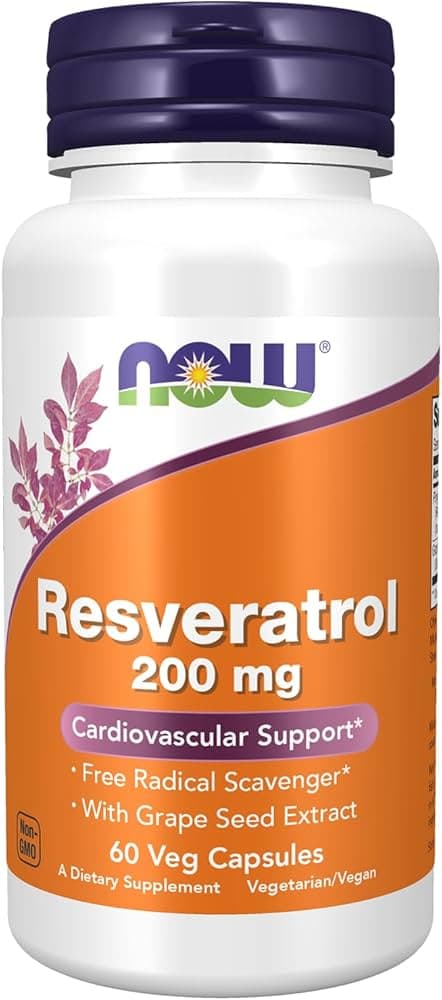
Resveratrol is the stilbene fraction of grape skin while procyanidins are the seed fraction, and resveratrol acts on partly different targets including sirtuin and eNOS signalling. Whole-grape formulas combine them for that reason.
Citrulline raises the arginine pool that nitric oxide synthase uses as substrate, while grape procyanidins support eNOS activity and slow nitric oxide breakdown by superoxide. Substrate and enzyme conditions are separate levers on normal vessel tone.
Quercetin and grape procyanidins share the same methylation and glucuronidation routes, so each can spare the other from first-pass conjugation. Both also act on capillary basement membrane proteins.
Lipoic acid regenerates ascorbate and glutathione, the systems that in turn return oxidised polyphenol radicals to their active form. The network keeps each member working longer than it would alone.
Bilberry anthocyanins concentrate in retinal and capillary tissue while grape procyanidins act on vessel wall protein cross-linking. Ocular microcirculation formulas have combined the two for decades.
Procyanidins carry adjacent hydroxyl groups that bind divalent metal ions in the gut lumen, lowering the free zinc available to transporters. Separating the doses by a couple of hours removes most of the competition.
Polyphenols and tannins oxidise the thiazole ring of thiamine to inactive forms, a long-documented food chemistry effect. Holding the two apart in a formula or in timing protects thiamine potency.
Procyanidins slow peroxidation of the long chain polyunsaturated fatty acids in the oil, which is why antioxidants are standard in fish oil formulas. In the other direction both nudge normal platelet aggregation the same way, so the additive effect belongs on the label.
Ginkgolides antagonise platelet activating factor and grape procyanidins damp thromboxane-driven aggregation, so the two press on normal clotting from different angles. A formula holding both should account for that additive effect.
Garlic organosulfur compounds and grape procyanidins each lower normal platelet aggregation by separate routes. Stacking them is additive rather than independent.
Ubiquinol works inside the lipid bilayer while procyanidin metabolites act mostly at aqueous and membrane surfaces. Covering both phases is standard practice in vascular antioxidant formulas.
Most of an oral proanthocyanidin dose is too polymeric to be absorbed intact and passes to the colon, where gut bacteria break it down to smaller phenyl-valerolactones and phenolic acids that do enter circulation. The composition of the microbiota therefore shapes what actually appears in blood after a dose. This is why plasma metabolite profiles differ so much between people given the same extract.
Both compounds act less as direct radical scavengers in vivo than as mild stressors that trigger the Nrf2 pathway and raise endogenous antioxidant enzyme expression. Acting on the same transcriptional switch, their effects are not simply additive at the receptor level. Most of the supporting work is in cell and animal models.
Pterostilbene is a methylated stilbene from grapes and berries that overlaps with grape seed proanthocyanidins in the vascular and redox pathways studied. The methylation gives it different absorption behaviour, so the two reach tissues on different timescales. Combination data in people are limited.
Rutin and grape seed oligomeric proanthocyanidins are both flavonoid-class compounds studied for capillary integrity and normal venous tone. They are frequently combined in the same products on that shared rationale. The pairing rests on class similarity rather than on a trial of the combination.
Both are polyphenols heavily conjugated by intestinal and hepatic UGT and SULT enzymes before they reach circulation. Taken together they compete for the same conjugation capacity, which can raise the free fraction of either. The direction is plausible from established metabolism. The magnitude in people has not been quantified.
Piperine inhibits intestinal UDP-glucuronosyltransferase, the main route by which flavan-3-ols are conjugated before entering circulation. That is the same mechanism by which piperine raises curcumin exposure. Whether it does the same for grape seed catechins specifically has not been established in people.
Green tea catechins and grape seed proanthocyanidins are both flavan-3-ols, differing mainly in galloylation and degree of polymerisation. They compete for the same conjugation enzymes and both bind non-heme iron in the gut. Stacking two concentrated flavan-3-ol extracts increases the total polyphenol load rather than adding a distinct action.
Polyphenols with adjacent hydroxyl groups bind copper and other transition metals, which is part of why they suppress metal-catalysed oxidation in a test tube. The same binding reduces the availability of the mineral when the two are taken together. Spacing them apart is the usual handling.
Condensed tannins bind divalent cations in the gut lumen, forming complexes that are poorly absorbed. Grape seed extracts standardised to high proanthocyanidin content carry a meaningful tannin load. The interaction is dose-related and concerns the same-meal window.
Proanthocyanidins bind salivary and pancreatic alpha-amylase and slow starch hydrolysis in laboratory and animal work. Where a formulation relies on supplemental amylase to break down starch, a concentrated tannin extract works against that. The inhibition has mostly been characterised in vitro.
Grape seed proanthocyanidins inhibit pancreatic lipase in assay systems by binding the enzyme protein. That is the same protein-binding property responsible for the extract's astringency. A supplemental lipase taken in the same dose is working against a binder.
Proline-rich proteins such as casein bind condensed tannins tightly, which is exactly why milk softens the astringency of tea and red wine. That binding also reduces how much free polyphenol is available for absorption in the same window. It is a straightforward chemical association, well characterised in food science.
Proanthocyanidins bind collagen and elastin fibres and slow their enzymatic breakdown in laboratory systems, which is the basis of the traditional pairing in skin and connective tissue formulations. In the gut, the same binding means the two associate before absorption. Human combination data are limited.
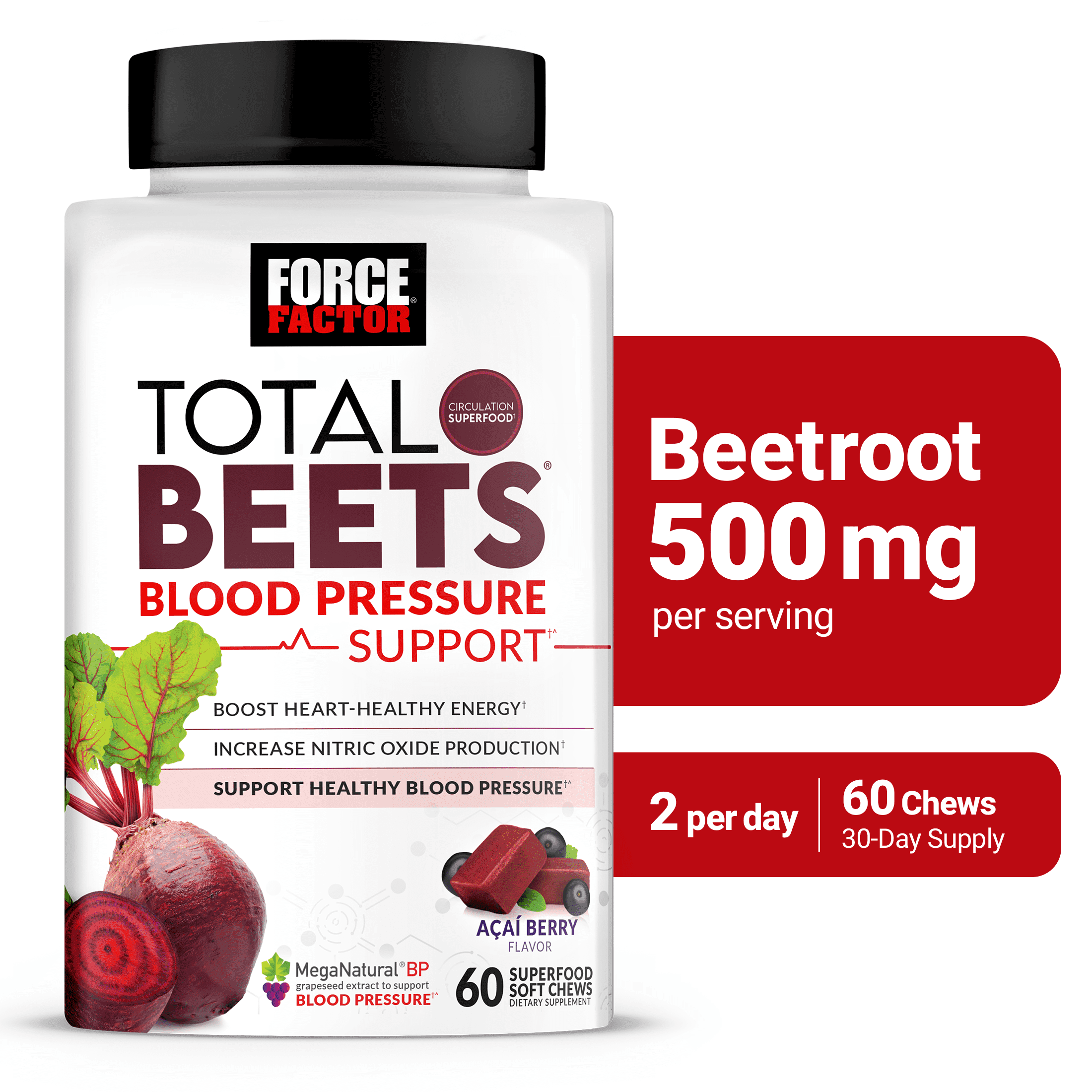
Dietary nitrate is reduced to nitrite and then to nitric oxide by an enzyme-independent route, while grape seed polyphenols have been studied for their effects on endothelial nitric oxide synthase activity. The two reach the same endpoint by different paths, so anyone tracking blood pressure should account for both. Combination trials are lacking.
Arginine is the substrate for endothelial nitric oxide synthase, while grape seed polyphenols have been studied for their influence on that enzyme's activity and on the tetrahydrobiopterin cofactor pool. Substrate and enzyme activity are different levers on the same output. The pairing is mechanistically coherent and has not been trialled as a combination.
Grape seed proanthocyanidins have been reported to reduce platelet aggregation in laboratory and small human studies, and nattokinase acts on fibrin. Stacking two ingredients that both bear on clot formation is worth flagging rather than ignoring, particularly around surgery. This is a caution about additivity, not a claimed benefit.
Salicin from willow bark is metabolised to salicylate, which inhibits platelet cyclooxygenase, and grape seed polyphenols have their own reported antiplatelet activity. Combining them adds two effects in the same direction. The flag is for additivity, and neither the size nor the clinical relevance of the combined effect has been measured.
Polyphenol radicals formed after scavenging can be reduced back by cellular thiols, and polyphenols also raise the expression of glutathione-synthesising enzymes through the Nrf2 pathway. The relationship runs in both directions. Most of the supporting work is cellular.
Grape seed proanthocyanidins slow starch digestion by inhibiting alpha-amylase, while berberine acts through AMPK and intestinal routes on glucose handling. Two ingredients moving post-meal glucose in the same direction are worth flagging when combined. The evidence for the grape seed component here is largely laboratory work.
Riboflavin is a photosensitiser that generates reactive species under light and degrades polyphenols in solution. In liquid formats where the two share a bottle, opaque packaging is the usual formulation answer. This is a stability point rather than a physiological interaction.
Talk to a doctor before taking Grape Seed Extract if any of these apply to you: May interact with blood thinners, Possible digestive upset in sensitive individuals. These are flags to check first, not effects Grape Seed Extract is known to cause.
Not medical advice. Show the label to your pharmacist.What Grape Seed Extract actually does.
What you're getting is mostly two small building blocks, catechin and epicatechin, plus the bigger chains they form, which are called proanthocyanidins or condensed tannins.
The smallest units, single molecules and pairs, cross your gut wall. The longer chains mostly don't, so they travel through to your colon still intact.
Your gut bacteria break the leftover chains into smaller pieces called phenyl-gamma-valerolactones and simple phenolic acids. Those bacterial products make up most of what can be measured in blood and urine after a dose.
Once absorbed, these compounds get tagged fast by your own enzymes, so they circulate almost entirely as tagged versions rather than the free forms used in cell-dish experiments.
Where Grape Seed Extract comes from.
The seeds left over from making wine are dried, ground and soaked in water or alcohol to pull the polyphenols out. The liquid is cleaned up, concentrated and dried into a powder that is tested to a stated percentage. Which solvent was used changes the mix of small and large molecules in the finished powder, and that mix is not something the percentage on the label tells you.
Made from a plant. What ends up in the capsule tracks the harvest, so batch testing and a stated marker matter more here than with a made molecule.
Seeds are recovered from the grape pomace left after pressing, then separated from skin and stem material, washed and dried. Cultivar and growing season affect the polyphenol profile of the starting material.
Milled seed is extracted with hot water, ethanol-water or acetone-water. Acetone-water recovers more of the larger polymers, while ethanol-water is more selective for the smaller oligomers.
The crude extract is passed over adsorbent resin to separate polyphenols from sugars and organic acids, then eluted and concentrated with the solvent stripped and checked against residual solvent limits.
The concentrate is assayed, commonly by a colorimetric method for total proanthocyanidins or by HPLC for named catechins, and blended with carrier to hit the declared figure. Which assay was used changes what the number means.
The standardised concentrate is spray dried onto a carrier such as maltodextrin and packed with protection from light and moisture, both of which degrade flavan-3-ols.
Getting Grape Seed Extract from food.
The whole-food sources on file. A supplement closes the gap, it does not replace dinner.
A gram-for-gram figure (how much of each you would eat to match a dose) will appear here once it is sourced and reviewed. This page will not print a number it cannot cite.
The forms it comes in.
The essence, in one line each.
- Across 16 randomized trials in 810 adults, grape seed extract was associated with lower systolic blood pressure by about 6.1 mmHg and lower diastolic blood pressure by about 2.8 mmHg.Meta-analysis. Zhang et al., 2016 (Medicine). PMID 27537554 ↗
- Pooling 11 randomized trials in 536 people, grape seed extract supplementation was associated with lower LDL cholesterol by about 0.17 mmol/L and lower triglycerides by about 0.11 mmol/L, with no clear change in total or HDL cholesterol.Meta-analysis. Anjom-Shoae et al., 2020 (British Journal of Nutrition). PMID 32138795 ↗
- Across 19 controlled trials, grape seed extract was associated with a lower resting heart rate by about 1.25 beats per minute and lower diastolic blood pressure by about 2.2 mmHg, while flow-mediated dilation did not change significantly.Meta-analysis. Foshati et al., 2021 (Pharmacological Research). PMID 34798267 ↗
- A systematic review and meta-analysis of randomised trials found that grape seed extract supplementation shifted blood markers of oxidative stress and inflammation in a favourable direction across the pooled studies.Meta-analysis. Foshati et al., 2021 (International journal of clinical practice). PMID 34107109 ↗
- A systematic review and meta-analysis of dietary interventions for skin ageing pooled trials that included grape seed proanthocyanidins and reported on measured skin appearance outcomes.Meta-analysis. Ng et al., 2025 (Journal of physiological anthropology). PMID 41174715 ↗
- In adults with excess body weight following a restricted-calorie diet, adding grape seed extract moved cardiovascular risk markers further in a favourable direction than the diet alone.Randomised trial. Yousefi et al., 2021 (Phytotherapy research : PTR). PMID 33044768 ↗
- A randomised trial in adults with higher levels of fat stored in the liver measured grape seed extract against placebo on cardiovascular risk markers, liver enzymes and liver fat content.Randomised trial. Ghanbari et al., 2024 (BMC complementary medicine and therapies). PMID 38755622 ↗
- In basketball players, grape seed extract supplementation was tested for its effect on blood vessel dilation and endurance performance during training.Clinical trial. Nho et al., 2022 (International journal of environmental research and public health). PMID 36361103 ↗
- Chronic daily grape seed extract intake was tested for its effect on aortic stiffness and blood pressure responses, a measure of large-artery flexibility.Clinical trial. Dillon et al., 2022 (European journal of sport science). PMID 33905304 ↗
- A single dose of grape seed extract was followed by changes in haemodynamic measures that differed between the two body-weight groups studied, per the authors.Randomised trial. Dillon et al., 2020 (Journal of Nutritional Science and Vitaminology). PMID 33132345 ↗
- The authors report that grape seed extract supplementation blunted the rise in blood pressure during exercise in men with elevated resting blood pressure.Randomised trial. Kim et al., 2018 (Journal of Medicinal Food). PMID 29683391 ↗
- Acute grape seed extract supplementation was associated with a difference in heart rate recovery after exercise compared with control in this young cohort, per the authors.Randomised trial. Song et al., 2025 (Journal of Cardiovascular Development and Disease). PMID 41149258 ↗
- The reviewers pooled supplementation trials and reported the direction of change in inflammatory and oxidative stress biomarkers. Those are markers rather than outcomes.Systematic review. Eshaghian et al., 2025 (Journal of Research in Medical Sciences). PMID 41623439 ↗
- The review of grape seed extract and dental hard tissue found that most of the available work was laboratory-based, with limited human data, and the authors called the human evidence preliminary.Systematic review. Delimont et al., 2020 (Nutrition and Health). PMID 31760860 ↗
- Dietary grape seed extract was associated with differences in growth performance, nutrient digestibility and immune markers in weaned piglets.Animal study. Ma et al., 2024 (Frontiers in Veterinary Science). PMID 39346956 ↗
- In rats, grape seed extract supplementation altered hepatic lipid handling, with the authors implicating PPAR beta/delta signalling.Animal study. Guisantes-Batan et al., 2022 (Food and Function). PMID 36260060 ↗
- The reviewers compared antibacterial and antioxidant activity across grape seed varieties in laboratory assays and reported that activity varied considerably by cultivar.Systematic review. Nourbakhsh et al., 2026 (Veterinary Medicine and Science). PMID 42033289 ↗
- The authors pooled trials of antioxidant adjuncts, grape seed extract among them, and reported pooled changes in gum-health measures in adults with high blood sugar.Meta-analysis. Abdulla et al., 2025 (Clinical and Experimental Dental Research). PMID 41158097 ↗
- The review maps clinical trials and molecular mechanisms of plant-derived compounds including grape polyphenols in neuronal models, and notes that mechanistic work substantially outweighs clinical work.Systematic review. Bayo Jimenez et al., 2025 (International Journal of Molecular Sciences). PMID 41226670 ↗
These are the studies our verdict leans on, chosen from the 91 we read for Grape Seed Extract. The full linked list is below.
The studies, linked.
12 sources behind our Grape Seed Extract verdict: peer-reviewed studies and registered clinical trials. Every one links straight to PubMed, the journal, or ClinicalTrials.gov. Read them yourself.
- Clinical trialA Phase 2 Study of Grape Seed Extract (GSE) Product in Asymptomatic Non-Metastatic Prostate Cancer Patients With Rising Prostate Specific Antigen (PSA)ClinicalTrials.gov ↗41 participants, Completed
- Clinical trialChronic Study of the Effect of Grape Seed Extract Plus Ascorbic Acid on Endothelial Function in Patients With Coronary Artery DiseaseClinicalTrials.gov ↗40 participants, Completed
- Clinical trialThe Anticariogenic Effect of Miswak (Silvadora Persica) and Grape Seed ExtractClinicalTrials.gov ↗30 participants, Completed
- Clinical trialA Randomized Controlled Trial Evaluating the Effects of Functional Date Bars Enriched With Magnesium, Vitamin C, and Grape Seed Extract on Perceived Stress and Salivary Cortisol in Healthy Young WomenClinicalTrials.gov ↗30 participants, Completed
- Clinical trialGRAPe Seed Extract and Ventriculovascular Investigation in Normal Ejection-Fraction Heart FailureClinicalTrials.gov ↗Phase 1, 15 participants, Completed
- Clinical trialEffect of Acute Grape Seed Extract Supplementation on the Heart Rate Recovery in Young IndividualsClinicalTrials.gov ↗12 participants, Completed
- Clinical trialEffects of Acute Grape Seed Extract Supplementation on Muscle Metaboreflex in HealthyClinicalTrials.gov ↗12 participants, Completed
- Clinical trialGrape Seed Extract and Postprandial Oxidation and Inflammation: A Pilot Study in People With the Metabolic Syndrome.ClinicalTrials.gov ↗12 participants, Completed
- Clinical trialPhase II Grape Seed Extract as Anti-Oligomerization Agent in Alzheimer's DiseaseClinicalTrials.gov ↗Phase 2, 10 participants, Terminated
- Clinical trialGrape Seeds Versus Standard Measures for Prevention of Caries Incidence in Young Egyptian Adults: A Randomized Controlled TrialClinicalTrials.gov ↗Phase 1, 80 participants, Unknown
- Clinical trialHemodynamic Effects of a Standardized Grape Seed Extract Supplementation: A Randomized, Double-Blind, Placebo-Controlled, Parallel-Group Clinical TrialClinicalTrials.gov ↗60 participants, Recruiting
- Clinical trialEvaluation of the Effect of Grape Seed Extract, Glycyrrhizin Compared to Triple Antibiotic Paste as Intra Canal Medication in Revascularization of Necrotic Permanent Immature Teeth in Children: A Randomized Clinical TrialClinicalTrials.gov ↗45 participants, Not yet recruiting
Evidence surfaced via Semantic Scholar (Allen Institute for AI) and ClinicalTrials.gov. Ranked by study type and citation weight, not cherry-picked.
Problems people have reported.
Read this carefully. These are 13,542 voluntary, unverified reactions reported to the FDA (openFDA). The number mostly reflects how popular Grape Seed Extract is, not how risky it is. A report is not proof Grape Seed Extract caused anything. It is a signal of what to watch for, nothing more.
Source: openFDA adverse-event reports. Voluntary reporting, not an incidence rate.
FDA Disclaimer: These statements have not been evaluated by the Food and Drug Administration. This information is for educational purposes only and is not intended to diagnose, treat, cure, or prevent any disease. Consult your healthcare provider before starting any supplement regimen.