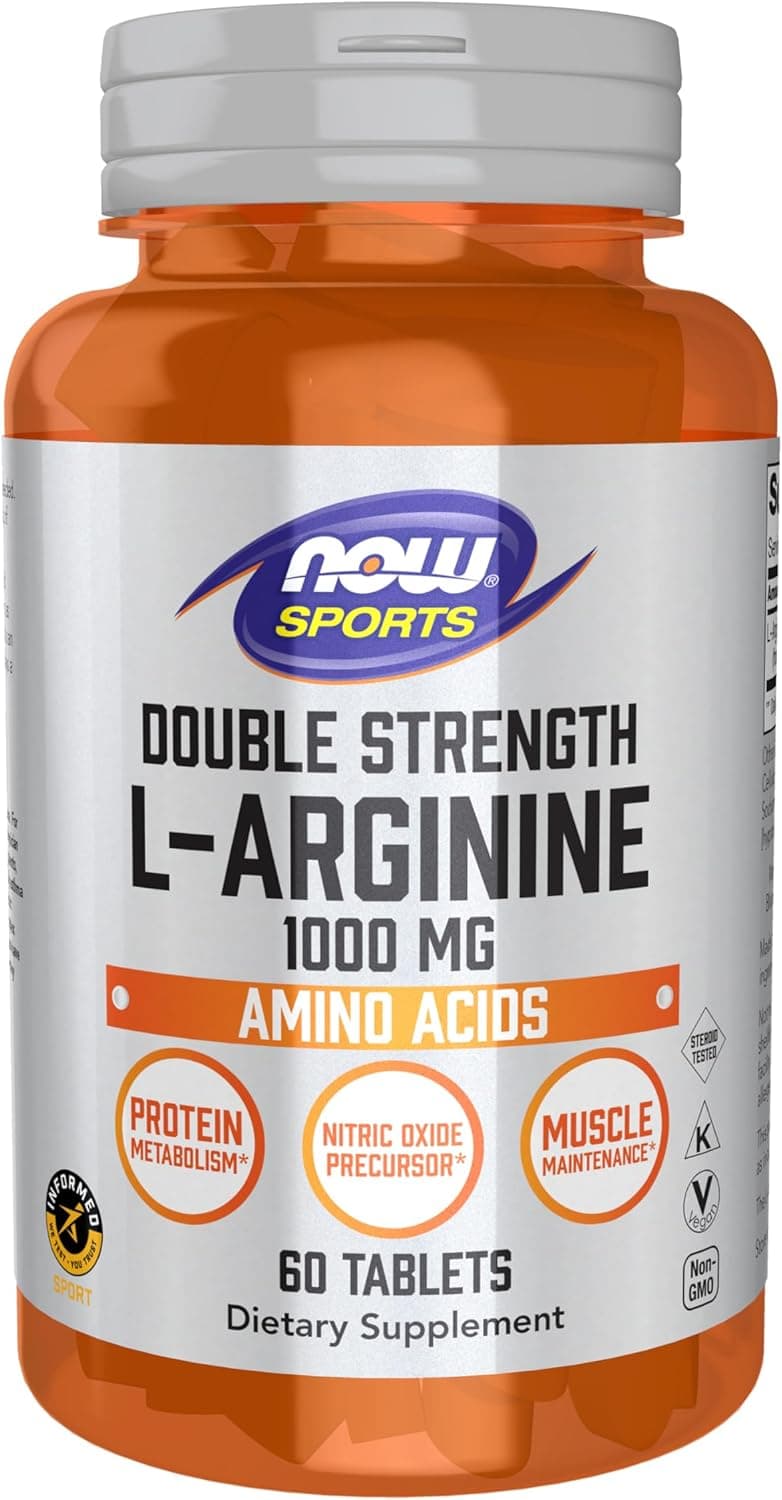
L-Arginine.
Original pump amino. Broken down before it helps. It's the raw material your body turns into nitric oxide, the signal that relaxes the vessel wall, so it supports blood flow to working muscle.
Reviewed March 2026
- Category
- Amino acid
- Also filed under
- Blood flowNitric oxideErectile function
What L-Arginine is, and what it does.
- Does it work
- Suits lifters, endurance athletes and anyone building around blood flow. Gut tolerance sets the ceiling on how much you can take at once.
- How much to take
- Start with 3g to 6g a day, the band arginine works in. Splitting it, or taking it 30 to 60 minutes before training, puts the plasma peak where you want it.
- Time to feel it
- Plasma arginine peaks about an hour after a dose. Any fullness in training lands in that window, while vessel measures shift over weeks of daily use.
- The first dose
- Plasma arginine climbs within the hour and some people notice a fuller muscle in a hard set. A large single dose on an empty stomach can loosen stools.
- With regular use
- Weeks of daily use keep the nitric oxide substrate pool topped up. That change reads on measures like flow-mediated dilation rather than as a feeling.
- How well tolerated
- Well tolerated at the daily band. Larger single doses can loosen stools or cause cramping. Check with your doctor first if you take blood pressure or heart medication.
- How it feels
- Some people notice a warmer, fuller muscle during a hard set. For others it's quiet, and the effect sits in blood flow measures instead.
- The overlooked benefit
- It sits on the creatine pathway. Arginine hands its amidino group to glycine, and a methyl donor finishes the job, so arginine, glycine and methylation share one route.
3 to 6g a day is where L-Arginine works.
Source: Bai 2009 blood pressure meta + Dong 2011 review
The proof, claim by claim.
These words describe the research, not the molecule's worth. Research strength is how much work stands behind one claim, and it is never a product score.
Based on 50 human trials with 50% consistency.
- Nitric oxide productionNarrative review
- Endothelial function and vasodilationMeta-analysis
- Blood pressure already in the normal rangeMeta-analysis
- Exercise performance and exercise capacityMeta-analysis
- Growth hormone response to an oral doseRandomised trial
- Urea cycle nitrogen handlingNarrative review
- Polyamine synthesis in dividing tissueNarrative review
Questions people ask about L-Arginine.
- When should I take it?
- Timing matters less than consistency. Pick a time that works for you and take it daily.
- Should I take it on an empty stomach?
- Most amino acids absorb better on an empty stomach since they don't compete with food proteins for absorption. 30 minutes before meals is ideal.
- Can I get enough from protein?
- If you eat enough protein (0.8-1g per pound bodyweight), you probably get enough aminos. Supplementing specific ones only makes sense for targeted goals.
- Can I take it with other supplements?
- Usually fine. The main thing to watch is not doubling up on the same ingredient from different products. If you're on prescription meds, check with your pharmacist first.
Why these belong in the same formula. Each row says what the basis is, from settled biochemistry through to a trial that measured the pair.
Citrulline is converted back to arginine in the kidneys, and because it bypasses first-pass gut and liver breakdown it raises circulating arginine more steadily than arginine taken alone. The two feed the same nitric oxide pathway that supports normal blood vessel tone.
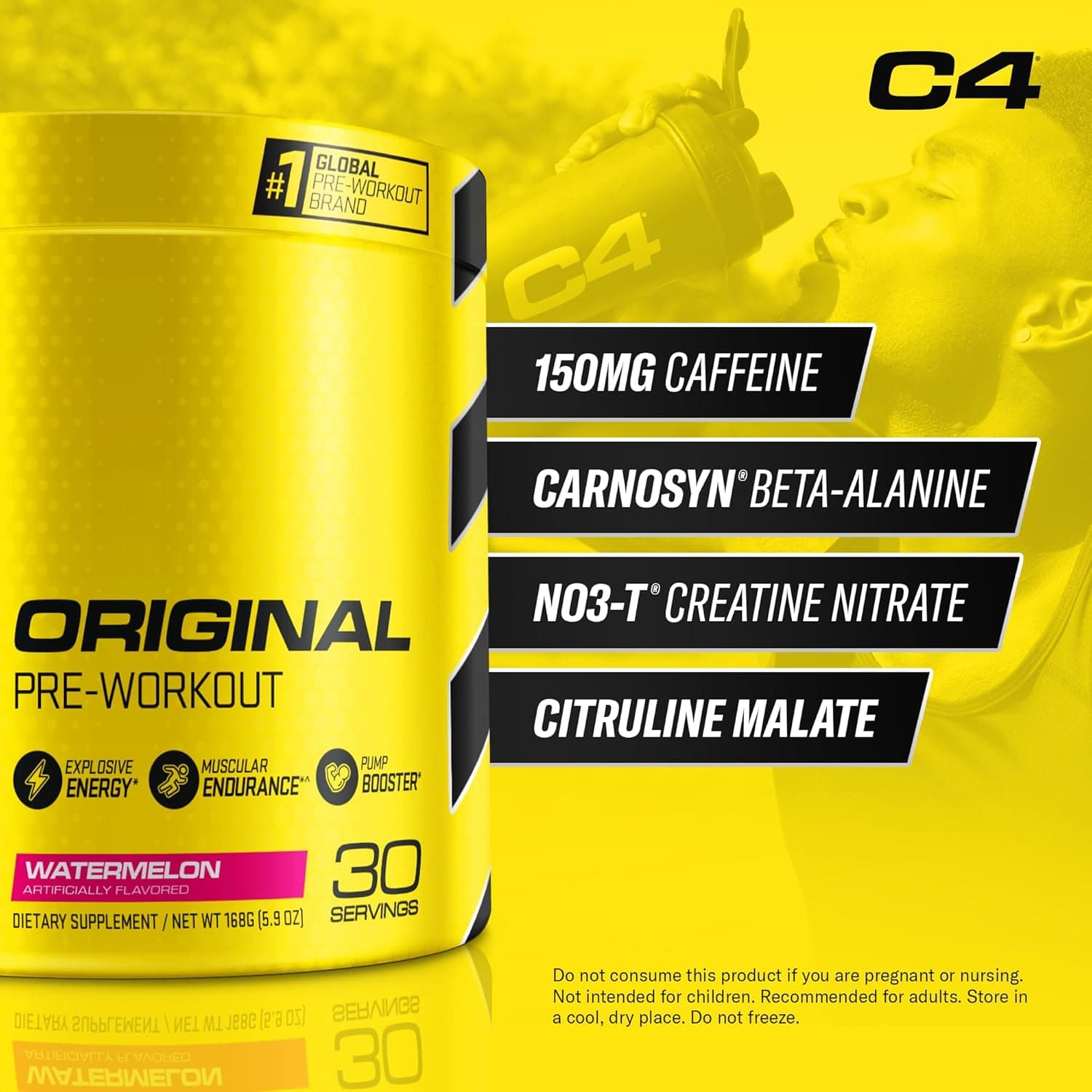
Arginine supports nitric oxide through the enzyme-driven NOS route, while dietary nitrate supports it through the separate nitrate to nitrite to nitric oxide route that stays active in low-oxygen tissue. Because they reach the same end molecule by different mechanisms, they are often formulated together to support normal blood vessel tone.
Pine bark polyphenols help keep the endothelial NOS enzyme active, and arginine is the raw substrate that enzyme uses to make nitric oxide. Pairing the enzyme support with its fuel is why the two are commonly formulated together for normal endothelial function.
Arginase hydrolyses L-arginine into ornithine and urea, and ornithine feeds back through citrulline to arginine. The pair sits on adjacent steps of the same cycle.
Agmatine is formed when arginine is decarboxylated, and it then modulates nitric oxide synthase and arginase activity. Substrate and metabolite act at different points.
Lysine and arginine share the y+ cationic amino acid transporters, so a high lysine dose competes for intestinal and renal uptake of arginine. Separating the doses avoids that.
Norvaline inhibits arginase, the enzyme that diverts arginine into urea, so more arginine stays available to nitric oxide synthase.
Arginine and glycine form guanidinoacetate, the immediate precursor methylated into creatine. Supplying creatine directly reduces the arginine pulled into that route.
Arginine and glycine are the two substrates of arginine glycine amidinotransferase, the enzyme that makes guanidinoacetate on the way to creatine. Neither works at that step without the other.
Ascorbate helps keep tetrahydrobiopterin reduced so nitric oxide synthase stays coupled, and it scavenges superoxide that would otherwise consume the nitric oxide arginine yields.
Converting guanidinoacetate into creatine spends a methyl group from S-adenosylmethionine, and betaine remethylates homocysteine to restore that pool. It keeps the arginine-fed step supplied.
Enterocytes turn glutamine into citrulline through glutamate and ornithine, and the kidney converts that citrulline into arginine. Glutamine feeds the endogenous arginine route.
Citrulline escapes intestinal arginase and is converted to arginine in the kidney, so it lifts plasma arginine efficiently while the malate feeds the citric acid cycle.
Beetroot nitrate is reduced by oral bacteria and tissue enzymes to nitrite and then nitric oxide, a route that does not need nitric oxide synthase. It runs alongside the arginine pathway.
Folate supports regeneration of tetrahydrobiopterin, the cofactor nitric oxide synthase needs to convert arginine productively rather than uncoupling.
Nitric oxide synthase is a flavoprotein that carries both FAD and FMN in its reductase domain, and riboflavin is the dietary source of both. Electron transfer from NADPH to the heme domain, where arginine is converted, runs through those flavins. This is cofactor biochemistry rather than a tested combination, so read it as mechanistic.
Niacin supplies the nicotinamide ring of NADP, and NADPH is the reducing equivalent consumed when arginine is hydroxylated and then cleaved to nitric oxide and citrulline. Without NADPH the reaction does not turn over. The relationship is settled biochemistry, not a clinical claim about either ingredient.
Each nitric oxide synthase monomer carries a heme prosthetic group at the site where arginine binds, and heme synthesis depends on iron. Iron status therefore sits upstream of the whole arginine to nitric oxide step. This is a cofactor relationship and says nothing about supplementing iron for that purpose.
A rise in intracellular calcium loads calmodulin, and calmodulin binding is what couples the reductase and oxygenase domains so electrons reach the heme. Arginine availability matters only once that activation step has happened. The pairing is mechanistic and describes normal enzyme regulation.
Arginase holds two manganese ions in its active site and splits arginine into ornithine and urea, the competing branch to nitric oxide synthase. Manganese therefore supports the route that draws arginine away from nitric oxide production. Listing it as modulating rather than additive is the honest direction.
Arginine gives its amidino group to glycine to form guanidinoacetate, and the final step methylates that intermediate. The methyl comes from S-adenosylmethionine, which is made from methionine. Methionine supply therefore sits on the same two-step route as arginine.
The creatine route starts with arginine and glycine and finishes when S-adenosylmethionine methylates guanidinoacetate. It is one of the larger consumers of labile methyl groups in the body. The link is textbook and is about a shared pathway, not a tested product combination.
5-methyltetrahydrofolate hands a methyl group to homocysteine to remake methionine, which is then reactivated as S-adenosylmethionine. Heavy demand from guanidinoacetate methylation pulls on that cycle. This is a pathway relationship measured in metabolites, which are markers rather than outcomes.
Methionine synthase needs a cobalamin cofactor to move the folate methyl group onto homocysteine. That step reloads the methyl donor spent when guanidinoacetate becomes creatine. It is a cofactor link in one-carbon metabolism and is described here as mechanism only.
Nitric oxide synthase needs reduced tetrahydrobiopterin to stay coupled. When that cofactor oxidises the enzyme makes superoxide instead. Cysteine supply feeds glutathione, which participates in keeping the cellular redox environment reducing. The connection is mechanistic and has not been settled in combination trials.
Glutathione is the main intracellular redox buffer and helps limit oxidation of tetrahydrobiopterin, the cofactor that keeps the arginine reaction coupled. Coupling determines whether the enzyme yields nitric oxide or superoxide. Read this as mechanism rather than a demonstrated combined effect.
Ubiquinol participates in mitochondrial and membrane redox handling in endothelial cells, the same cells where arginine is converted to nitric oxide. Both are often studied against vascular function markers. Markers are not outcomes, and the two have not been jointly characterised well enough to claim more.
EPA and DHA incorporate into endothelial membranes and are studied against flow-mediated dilation and related vascular markers, the same readouts used for arginine work. The routes differ, so any combined effect would be additive rather than synergistic. These are markers of vessel behaviour, not clinical endpoints.
Magnesium influences vascular smooth muscle tone through calcium handling, while arginine acts upstream of nitric oxide. Taken together the directional effect on blood pressure readings would stack rather than cancel. Anyone monitoring blood pressure should account for the pairing rather than assume the effects are independent.
Potassium intake affects sodium handling and vascular tone, a separate route from nitric oxide production. Combined use points the same direction on blood pressure numbers. The point of flagging it is additivity, not a claim that either lowers pressure in a given person.
Garlic preparations carry organosulfur compounds studied for effects on vascular tone and platelet behaviour. Arginine works through the nitric oxide route. The two are frequently combined in cardiovascular formulas, and the additive direction on blood pressure readings is the reason to note it.
Taurine is studied for effects on endothelial function and vascular tone through routes distinct from nitric oxide synthase. The two appear together in pre-workout and cardiovascular formulas. Evidence for the combination specifically is thin, so this stays at the mechanistic level.
Alpha-lipoic acid cycles between oxidised and reduced forms and participates in regenerating other antioxidants. That redox environment influences whether the nitric oxide synthase cofactor stays reduced. The link is indirect and early, and it is offered as mechanism only.
Grape seed proanthocyanidins are studied for effects on endothelial nitric oxide signalling, which is downstream of the substrate arginine supplies. The pairing is common in vascular formulas. The supporting work is largely mechanistic and in vitro, so the confidence stays low.
Many gut bacteria carry arginase and arginine deiminase and will consume free arginine in the lumen, which is one reason oral arginine reaches plasma less efficiently than citrulline. Changing the microbial community can change how much survives to the enterocyte. The direction of that change is not predictable from current work.
Talk to a doctor before taking L-Arginine if any of these apply to you: herpes caution. These are flags to check first, not effects L-Arginine is known to cause.
Not medical advice. Show the label to your pharmacist.What L-Arginine actually does.
L-arginine is the raw material for nitric oxide synthase, which turns it into nitric oxide and citrulline. That reaction needs heme, FAD, FMN, NADPH, tetrahydrobiopterin and calcium-loaded calmodulin to run.
An enzyme called arginase splits arginine into ornithine and urea, so the same molecule feeds two competing branches: nitric oxide production and the urea cycle.
Arginine is a step in the urea cycle, the route your liver uses to package waste nitrogen as urea so you can excrete it.
Arginine hands its amidino group to glycine to make guanidinoacetate, which then gets methylated into creatine. So arginine, glycine and a methyl donor all sit on one pathway.
Where L-Arginine comes from.
Bacteria are fed plant sugar in a tank and make the amino acid, which is then filtered, captured on a resin and crystallised into a white powder. If the label says a salt, that acid is added at the end.
Built by fermentation, the same way vitamin B12 and many amino acids are made at scale. Controlled conditions, consistent output.
Glucose or sucrose from corn, cassava or sugar cane serves as the carbon source, with ammonium salts supplying nitrogen.
Amino-acid-producing bacterial strains, typically Corynebacterium glutamicum derivatives, are grown in stirred tanks and excrete arginine into the broth.
Cells and solids are removed by filtration, then the cationic arginine is captured on a strong acid ion exchange resin and eluted with ammonia or acid.
The eluate is concentrated and arginine is crystallised, washed and recrystallised to remove residual fermentation by-products and colour.
The crystals are either dried as the free base or reacted with hydrochloric, aspartic, malic or nitric acid to give the corresponding salt, then milled to a specified particle size.
Getting L-Arginine from food.
The whole-food sources on file. A supplement closes the gap, it does not replace dinner.
A gram-for-gram figure (how much of each you would eat to match a dose) will appear here once it is sourced and reviewed. This page will not print a number it cannot cite.
The forms it comes in.
The essence, in one line each.
- Pooling 22 randomized trials, oral L-arginine lowered systolic blood pressure by about 6.4 mmHg and diastolic by about 2.6 mmHg versus placebo, with roughly 4 g per day the effective systolic dose.Systematic review and dose-response meta-analysis of randomized trials. Shiraseb et al., 2022 (Advances in Nutrition). PMID 34967840 ↗
- Pooling short-term randomized trials, oral L-arginine raised flow-mediated dilation, a marker of endothelial function, by about 2 percentage points, with the gain largest when starting dilation was low (under 7%).Meta-analysis of randomized controlled trials. Bai et al., 2008 (American Journal of Clinical Nutrition). PMID 19056561 ↗
- Across 10 randomized trials in 540 men with mild to moderate difficulty, arginine supplements improved erectile function, roughly tripling the odds of reported improvement (odds ratio 3.37) and raising International Index of Erectile Function scores.Systematic review and meta-analysis of randomized controlled trials. Rhim et al., 2019 (Journal of Sexual Medicine). PMID 30770070 ↗
- Pooling 11 randomised trials in healthy people, L-arginine raised maximal oxygen uptake by about 0.11 L per minute compared with control.Meta-analysis. Rezaei et al., 2021 (Physiological Reports). PMID 33587327 ↗
- Across 12 randomised trials in adults, no effect of L-arginine was detected on fasting blood sugar (about 3.4 mg/dL lower, confidence interval crossing zero), insulin, glycated haemoglobin or insulin resistance.Meta-analysis. Karimi et al., 2023 (Archives of Physiology and Biochemistry). PMID 33426939 ↗
- Eight days of 8 g daily L-arginine in 15 trained swimmers did not produce a detectable change in 200 m (p = 0.226) or 100 m (p = 0.993) freestyle time trials or in plasma nitric oxide.Randomised trial. Esen et al., 2022 (International Journal of Environmental Research and Public Health). PMID 35457330 ↗
- The pooled analysis of controlled trials reported changes in glycaemic markers with l-arginine supplementation. These are blood markers, not clinical outcomes.Meta-analysis. Yousefi Rad et al., 2020 (Journal of Integrative Medicine). PMID 32561357 ↗
- The review summarised maternal and fetal measures reported across l-arginine supplementation studies in pregnancy and described the evidence base as heterogeneous.Systematic review. Menichini et al., 2023 (The Journal of Maternal-Fetal and Neonatal Medicine). PMID 37258415 ↗
- Pooled neonatal measures were reported as more favourable with l-arginine supplementation in pregnancies complicated by elevated blood pressure or restricted fetal growth. The populations were clinically selected.Systematic review. Xu et al., 2022 (Clinical Nutrition). PMID 35667267 ↗
- One week of l-arginine supplementation produced no detectable difference in 200m freestyle time trial performance. A null result is a failure to detect a difference, not evidence that none exists.Randomised trial. Esen et al., 2023 (Journal of Dietary Supplements). PMID 36093907 ↗
- No detectable impact on the rate of cardiovascular and autonomic recovery after exercise was found with l-arginine supplementation. This is a failure to detect a difference.Randomised trial. Porto et al., 2024 (Nutrients). PMID 39683461 ↗
- Interleukin-6 concentrations were reported lower after high intensity interval training with l-arginine supplementation. Interleukin-6 is an inflammatory marker, not a clinical outcome.Randomised trial. Irandoust et al., 2022 (La Tunisie Medicale). PMID 36571754 ↗
- Expression of BAX, BCL2, BMAL1 and CCAR2 was measured after sleep deprivation and anaerobic exercise with l-arginine. Gene expression is a laboratory marker and does not establish a functional effect.Randomised trial. Norouzi Kamareh et al., 2023 (Gene). PMID 37625565 ↗
- Circulating myeloid-derived suppressor cell frequency was tracked around surgery with l-arginine supplementation. An immune cell count is a marker, not a recovery outcome.Open-label trial. Szefel et al., 2022 (Advances in Medical Sciences). PMID 34995935 ↗
- The review of preclinical work reported that oral l-arginine was associated with changes in bone repair measures in animal fracture models. Preclinical findings do not transfer directly to people.Systematic review, in animals. Canintika et al., 2022 (Acta Orthopaedica Belgica). PMID 36791716 ↗
- Across the included livestock studies, l-arginine fed to sows was associated with piglet performance measures. This is agricultural animal evidence.Systematic review. Cruz et al., 2025 (Journal of Animal Physiology and Animal Nutrition). PMID 39152530 ↗
- Dietary l-arginine altered gut microbial composition and mucosal markers in a mouse model. The work is mechanistic and non-human.Animal study. Gong et al., 2026 (Frontiers in Nutrition). PMID 42293221 ↗
- Dietary l-arginine or l-citrulline changed immune and intestinal morphology measures in poultry. These are livestock measurements, not human outcomes.Animal study. Ma et al., 2026 (Poultry Science). PMID 42335777 ↗
These are the studies our verdict leans on, chosen from the 1,909 we read for L-Arginine. The full linked list is below.
The studies, linked.
2 sources behind our L-Arginine verdict: peer-reviewed studies and registered clinical trials. Every one links straight to PubMed, the journal, or ClinicalTrials.gov. Read them yourself.
- Clinical trialThe Safety and Efficacy of L-arginine in Patients With Polycystic Ovary SyndromeClinicalTrials.gov ↗31 participants, Completed
- Clinical trialThe Combination of Myoinositol, L-arginine and Chromium With Letrozole for Ovulation Induction in Polycystic Ovarian Syndrome PatientsClinicalTrials.gov ↗Phase 3, 100 participants, Unknown
Evidence surfaced via Semantic Scholar (Allen Institute for AI) and ClinicalTrials.gov. Ranked by study type and citation weight, not cherry-picked.
Problems people have reported.
Read this carefully. These are 1,523 voluntary, unverified reactions reported to the FDA (openFDA). The number mostly reflects how popular L-Arginine is, not how risky it is. A report is not proof L-Arginine caused anything. It is a signal of what to watch for, nothing more.
Source: openFDA adverse-event reports. Voluntary reporting, not an incidence rate.
FDA Disclaimer: These statements have not been evaluated by the Food and Drug Administration. This information is for educational purposes only and is not intended to diagnose, treat, cure, or prevent any disease. Consult your healthcare provider before starting any supplement regimen.