Arginine Silicate (Nitrosigine).
The engineered arginine. Actually works for once. Delivers arginine and silicon in a form that raises blood arginine levels more than regular arginine. Supports blood flow and may enhance cognitive function.
Reviewed March 2026
- Category
- Amino acid
- Also filed under
- Blood flowPumpsCognitive
What Arginine Silicate (Nitrosigine) is, and what it does.
- Does it work
- Better than plain arginine. Good evidence for vasodilation. Interesting cognitive angle.
- How much to take
- Start with 1.5g a day, the daily maintenance amount the complex is specified around. Usually taken 30 to 60 minutes before training, since plasma arginine climbs within about half an hour.
- Time to feel it
- Plasma arginine rises within about 30 minutes of a dose and stays up for hours, so pump and mental clarity, where they show, land in that same session.
- The first dose
- Arginine in the blood rises inside half an hour, so a fuller pump or a clearer head can land in that first session. Plenty of people have an uneventful day one.
- With regular use
- Consistent acute effects. May support blood vessel health.
- How well tolerated
- Generally well tolerated at the amounts used in studies. Check with a clinician first if you take blood pressure or nitrate medicine, since the arginine side acts on blood vessels.
- How it feels
- Better pumps than regular arginine. Some notice mental clarity.
- The overlooked benefit
- The silicon half is the quiet part. It travels as orthosilicic acid, the soluble form connective tissue chemistry uses, and works on systems unrelated to the arginine side.
1.5g a day is where Arginine Silicate (Nitrosigine) works.
Source: Rood-Ojalvo et al. Nutrients 2015; Nitrosigine patent research
The proof, claim by claim.
These words describe the research, not the molecule's worth. Research strength is how much work stands behind one claim, and it is never a product score.
Based on 15 human trials with 75% consistency.
- Increased blood flowMultiple studies show vasodilation
- Cognitive benefitsPositive cognitive studies
Questions people ask about Arginine Silicate (Nitrosigine).
- When should I take it?
- Timing matters less than consistency. Pick a time that works for you and take it daily.
- Should I take it on an empty stomach?
- Most amino acids absorb better on an empty stomach since they don't compete with food proteins for absorption. 30 minutes before meals is ideal.
- Can I get enough from protein?
- If you eat enough protein (0.8-1g per pound bodyweight), you probably get enough aminos. Supplementing specific ones only makes sense for targeted goals.
- Can I take it with other supplements?
- Usually fine. The main thing to watch is not doubling up on the same ingredient from different products. If you're on prescription meds, check with your pharmacist first.
Why these belong in the same formula. Each row says what the basis is, from settled biochemistry through to a trial that measured the pair.
Inositol-stabilised arginine silicate holds arginine and silicic acid together in a soluble complex, and the inositol is what keeps the silicate from polymerising. The pairing is a property of the ingredient's own chemistry.
The silicate portion of this complex is a soluble silicon source, and orthosilicic acid is the form the body absorbs. Adding a separate silicon source raises total intake of the same element.
Silicon is associated with the cross-linking of collagen and glycosaminoglycans in connective tissue, and collagen peptides supply the proline and glycine building blocks. One provides material, the other is linked to how it is assembled.
Ascorbate is required by prolyl and lysyl hydroxylase for stable collagen, the same matrix silicon contributes to, and it keeps tetrahydrobiopterin reduced for the arginine half. It serves both parts of this complex.
Citrulline is converted to arginine in the kidney after bypassing intestinal arginase, sustaining the plasma arginine that this complex raises quickly. Fast delivery and sustained supply from one pool.
Arginine and lysine cross membranes on the same y+ transporters, so lysine in the same serving competes for arginine uptake. It holds even for a complexed arginine, since absorption still uses that carrier.
Nitrate reduction generates nitric oxide with no enzyme substrate needed, while the arginine half works through nitric oxide synthase. The two routes are additive rather than competing.
Pine bark polyphenols support endothelial nitric oxide synthase and limit oxidative loss of nitric oxide once formed. Arginine silicate supplies the substrate that enzyme uses.
A 2018 animal study fed the arginine silicate inositol complex and measured calcium absorption and metabolism rather than blood flow, which is the only strand of this ingredient's literature that touches mineral handling. Silicon is the plausible link, since orthosilicic acid has its own connective tissue and bone matrix literature. This is animal evidence for a mineral handling effect, not human evidence.
Caffeine raises sympathetic drive and can nudge blood pressure upward, while the arginine portion feeds nitric oxide synthesis and pushes vascular tone the other way. The two are put together constantly in pre-workout formulas, so the interaction is worth stating plainly rather than assuming it cancels out. Neither direction has been isolated for this specific complex in a combination trial.
Creatine works inside the muscle cell on phosphate energy buffering, while arginine silicate acts on vascular tone through nitric oxide. The routes do not overlap, which is precisely why they are combined. No trial has separated the contribution of each in a blend.
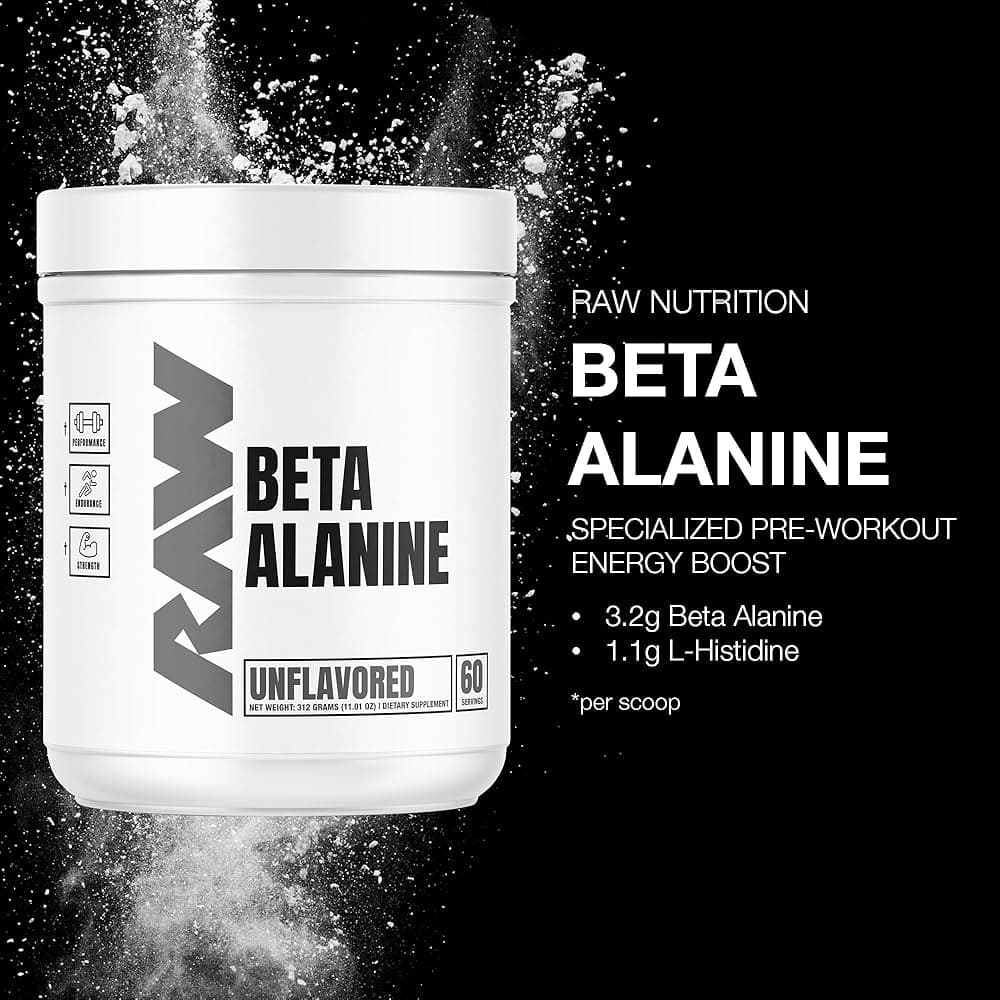
Beta-alanine raises muscle carnosine and buffers intracellular acid over weeks of loading, whereas arginine silicate is dosed acutely for vascular effects. One is a chronic loading ingredient and the other an acute one, so they occupy different slots in the same product. The pairing rests on non-overlap rather than on a measured interaction.
The y+ cationic amino acid transporters carry arginine, lysine and ornithine through the same binding site, so a large dose of one reduces uptake of the others taken together. Ornithine is additionally the product of arginase acting on arginine, which puts the two on the same pathway as well as the same carrier. Dosing them together is a real competition, not an additive stack.
Taurine acts as a cellular osmolyte and has its own effects on endothelial function, and it appears alongside arginine sources in most performance blends. The mechanisms are separate and neither depends on the other. No trial has tested this pair against either alone.
Alpha-GPC supplies choline for acetylcholine synthesis, while the arginine silicate cognitive trials point at cerebral blood flow as the proposed route. Different targets, commonly combined. The additive claim is a formulation rationale and has not been measured for the pair.
Theanine modifies attention and subjective calm through neurotransmitter effects, which is a different mechanism from cerebral perfusion. Products that pair them are targeting the same cognitive endpoints from two directions. No combination data exist for this specific complex.
Tyrosine is the precursor for dopamine and noradrenaline, which is a supply-side mechanism, while arginine silicate has been studied for cognitive measures on a perfusion rationale. The two are stacked routinely in cognitive formulas. The pairing is untested as a pair.
The silicate portion of this complex delivers silicon, and silicon and boron are both discussed in connective tissue and bone matrix work at trace intakes. Neither has a settled human requirement. Regard this as a shared-topic pairing, not a demonstrated interaction.
Nothing specific on file for Arginine Silicate (Nitrosigine). Match the label to the daily amount above, and tell your doctor what you take.
Not medical advice. Show the label to your pharmacist.What Arginine Silicate (Nitrosigine) actually does.
Arginine is what a specific enzyme converts into nitric oxide, which then triggers a chain of steps in blood vessel muscle that makes it relax. That chain is the entire proposed mechanism behind any arginine-based ingredient's effect on blood flow.
Another enzyme, arginase, competes for that same arginine supply and diverts it elsewhere instead of toward nitric oxide. So how much of a given arginine dose actually goes toward nitric oxide depends on that competing enzyme's activity, not just on the dose itself.
Plain oral arginine gets broken down substantially by the gut and liver before it reaches circulation, and that's the problem every modified arginine form is trying to solve. Combining it with silicate and inositol is one such formulation approach, and what actually matters is arginine levels in the blood over time, not just the milligrams listed on the label.
The silicate part of this ingredient supplies silicon, and silicon works through a completely separate system from arginine. So this is really two active components combined, not one active ingredient with an inert carrier.
Where Arginine Silicate (Nitrosigine) comes from.
None of this is picked or mined in finished form. The arginine is grown by bacteria fed sugar. The silicon starts as quartz sand melted with an alkali to make it soluble. The inositol comes from corn processing or fermentation. Those three are then joined in water under controlled conditions and dried into a powder, and the finished lot gets tested for how much of each part it actually contains.
The same molecule is reached more than one way. Which route a given product used is a manufacturing choice, and the finished compound is the same either way.
Pharmaceutical and food grade L-arginine is produced by fermenting glucose or molasses with selected Corynebacterium or Brevibacterium strains, then recovering the amino acid from the broth. The alternative historical route, hydrolysis of protein-rich material, has largely been displaced by fermentation.
Silicon enters as a soluble silicate, typically potassium or sodium silicate produced by fusing quartz sand with an alkali carbonate. The silicate solution is what makes silicon available for complexing at all, since quartz itself is inert.
Myo-inositol is obtained either by hydrolysing phytate recovered from corn steep liquor or by microbial fermentation. Both routes end at the same molecule and are chosen on cost and on whether a corn-derived label declaration is acceptable.
Arginine and the silicate are brought together in aqueous solution under controlled pH so the components associate rather than simply co-exist, with inositol added as the stabilising component. This is the proprietary step, and it is the reason the finished material behaves differently from a dry blend of the same three inputs.
Counter-ions and unreacted material are removed before drying, since residual alkali from the silicate would drive the finished powder's pH up.
The lot is released against stated arginine, silicon and inositol figures plus heavy metal limits carried in from the mineral input. A silicon assay is the part a plain arginine specification does not include.
Dried to a free-flowing powder for capsules, tablets and drink mixes. Agglomerated grades exist for cold-water dispersion and carry a correspondingly lower active fraction per gram.
Getting Arginine Silicate (Nitrosigine) from food.
The whole-food sources on file. A supplement closes the gap, it does not replace dinner.
A gram-for-gram figure (how much of each you would eat to match a dose) will appear here once it is sourced and reviewed. This page will not print a number it cannot cite.
The forms it comes in.
The essence, in one line each.
- Acute dosing of inositol-stabilised arginine silicate and of citrulline malate were both compared for vasodilation measures in young adults, so the trial reports a within-subject comparison of two arginine-route ingredients on a vascular marker.Randomised trial. Rogers JM et al., 2020 (Journal of the International Society of Sports Nutrition). PMID 32093766 ↗
- A single acute dose of inositol-stabilised arginine silicate improved cognitive test outcomes in healthy adults relative to placebo.Randomised trial. Gills JL et al., 2021 (Nutrients). PMID 34959823 ↗
- Ingestion of inositol-enhanced bonded arginine silicate affected cognitive and executive function measures in habitual gamers, a task-specific cognitive population.Randomised trial. Sowinski R et al., 2021 (Nutrients). PMID 34836014 ↗
- Randomised double-blind studies evaluated the cognitive effects of inositol-stabilised arginine silicate. This is the earliest controlled cognitive work on the complex.Randomised trial. Kalman D et al., 2016 (Nutrients). PMID 27869715 ↗
- A prospective study of a multi-ingredient nutritional supplement that names inositol-stabilised arginine silicate among its components reported changes in cognition and mood measures. The effect cannot be attributed to any single ingredient.Open-label trial. Tartar JL et al., 2019 (Nutrients). PMID 31581523 ↗
- Dietary arginine-silicate-inositol complex changed calcium absorption and metabolism measures in an animal feeding model, which extends the ingredient's mechanism beyond vascular tone into mineral handling.Animal study. Sahin K et al., 2018 (PLoS One). PMID 29360830 ↗
- Dietary inositol-stabilised arginine silicate numerically reduced a muscle myopathy severity score in male broilers, a numerical trend the authors report rather than a confirmed effect.Animal study. Meyer MM et al., 2023 (Poultry Science). PMID 36907126 ↗
- Dietary arginine silicate inositol complex reduced measured gum tissue loss in rats with experimentally induced tissue destruction, an animal model result on a tissue endpoint.Animal study. Dundar S et al., 2016 (Drug Design, Development and Therapy). PMID 27895467 ↗
These are the studies our verdict leans on, chosen from the 8 we read for Arginine Silicate (Nitrosigine). The full linked list is below.
FDA Disclaimer: These statements have not been evaluated by the Food and Drug Administration. This information is for educational purposes only and is not intended to diagnose, treat, cure, or prevent any disease. Consult your healthcare provider before starting any supplement regimen.