AdultsNHANES 2003 to 2008
Under 250 mg a day
US adults average well under the 250 mg a day of EPA and DHA that health authorities suggest for heart health.
Papanikolaou et al., Nutrition Journal 2014, analysis of NHANES 2003 to 2008. ↗Omega-3 in phospholipid form. Better absorption, plus astaxanthin. Supplies EPA and DHA carried on phospholipids, along with astaxanthin and choline, feeding the membranes that heart, brain, eye and joint tissue are built from.
Reviewed March 2026
Public health figures for this ingredient, reported by the agencies that publish them, cited and dated.
Under 250 mg a day
US adults average well under the 250 mg a day of EPA and DHA that health authorities suggest for heart health.
Papanikolaou et al., Nutrition Journal 2014, analysis of NHANES 2003 to 2008. ↗Population figures from public health data. Context for the category, not a statement about any individual and not a claim about this product.
Source: Ulven et al., Lipids 2011; Berge et al., Lipids Health Dis 2014; Ramprasath et al., Nutr Metab 2015
Two identical randomised, double-blind, placebo-controlled trials pooled 520 adults with fasting triglycerides of 500 to 1,500 mg/dL, randomised 2.5 to 1 to 4 g per day of a krill-derived omega-3 phospholipid and free fatty acid formulation or placebo for 26 weeks. Triglycerides fell 26.0 percent on the krill formulation and 15.1 percent on placebo at 12 weeks, a treatment difference of 10.9 percent, and the difference persisted at 26 weeks. Three authors were employed by the sponsor, Acasti Pharma. Separately, a 25-person double-blind crossover trial in mildly hypertriglyceridaemic adults measured a triglyceride change after four weeks on krill oil 500 mg twice daily. Blood lipids were measured, not a feeling.
These words describe the research, not the molecule's worth. Research strength is how much work stands behind one claim, and it is never a product score.
Based on 30 human trials with 70% consistency.
Why these belong in the same formula. Each row says what the basis is, from settled biochemistry through to a trial that measured the pair.
Astaxanthin is a fat-soluble carotenoid that krill oil naturally contains, and it partitions into the oil where it helps shield the fragile EPA and DHA double bonds from oxidation. Because astaxanthin needs dietary fat for uptake, the oil also acts as the lipid vehicle that carries it across the gut, so the two support each other in both directions.
Vitamin E is the main fat-phase chain-breaking antioxidant that interrupts lipid peroxidation, so it helps keep the long-chain omega-3s in krill oil from oxidizing both on the shelf and in the body. Taking in more of these readily oxidized fats also raises the body's use of vitamin E, which is the settled reason the two are routinely paired.
Coenzyme Q10 is highly fat-loving and poorly absorbed on its own, since its uptake depends on dietary fat to stimulate bile flow and form the micelles that ferry it across the gut. Taken alongside krill oil, the oil supplies that lipid matrix and supports how much CoQ10 reaches circulation.
Most krill oil EPA and DHA is bound in phosphatidylcholine, so every dose delivers choline as part of the molecule. Total choline intake from a formula has to count the krill phospholipid fraction.
Krill oil is largely phosphatidylcholine with long-chain omega-3 fatty acids at the sn-2 position, so added phosphatidylcholine feeds the same membrane phospholipid pool. The phospholipid form also self-emulsifies, so absorption does not depend on a fatty meal.
Cholecalciferol needs a lipid phase and bile-driven micelle formation to be absorbed, and krill phospholipids act as both lipid and emulsifier. Co-dosing raises the absorbed fraction relative to a dry tablet taken alone.
MK-7 is a long-chain fat-soluble quinone that travels in chylomicrons, so uptake improves in the presence of a lipid carrier such as krill phospholipid. This is an absorption effect, not a change in either nutrient's own action.
Long-chain omega-3 fatty acids have many double bonds and oxidise readily, and the tocopherol that intercepts that chain reaction is regenerated by ascorbate at the membrane surface. Vitamin C keeps the protective tocopherol pool working rather than acting on the fatty acids directly.
DHA is the dominant fatty acid of photoreceptor membranes while lutein concentrates in the macular pigment layer, and lutein is carried more efficiently when taken with a phospholipid meal.
Zeaxanthin is a lipophilic xanthophyll whose absorption depends on being incorporated into micelles, which krill phospholipids assist. It then deposits in the same DHA-rich retinal membranes.
Krill oil and fish oil deliver the same two long-chain omega-3 fatty acids in different chemical carriers, phospholipid versus triglyceride or ethyl ester. Running both in one formula stacks the same EPA and DHA total, so the doses have to be read together.
EPA is converted to thromboxane A3, a weaker platelet activator than the arachidonic acid product, while ginkgolides antagonise platelet activating factor. Both nudge normal clotting in the same direction, so the effect is additive when they share a formula.
Garlic organosulfur compounds reduce platelet aggregation through thromboxane-independent routes, adding to the shift that long-chain omega-3 fatty acids produce in eicosanoid balance.
Gingerols inhibit thromboxane synthase, and omega-3 fatty acids shift the eicosanoid substrate pool away from arachidonic acid. The two act at neighbouring points in the same pathway, so effects on normal clotting add.
Salicin metabolites inhibit cyclooxygenase in platelets while omega-3 fatty acids change which fatty acid that enzyme sees. Combining them compounds the shift in normal clotting behaviour.
Eicosapentaenoic acid is one of the two long-chain omega-3s krill oil delivers, carried largely on phospholipids rather than triglycerides. Once incorporated into membranes it competes with arachidonic acid for cyclooxygenase and lipoxygenase, shifting eicosanoid output. Adding separate EPA raises the same pool krill oil is already feeding.
Docosahexaenoic acid concentrates in neural and retinal membrane phospholipids, where it shapes membrane fluidity and receptor behaviour. Krill oil delivers DHA already esterified to phosphatidylcholine, the same chemical arrangement found in those membranes. A separate DHA product adds to the same pool from a triglyceride starting point.
Phospholipid-bound fatty acids are released mainly by pancreatic phospholipase A2 rather than by the lipase that handles triglycerides. Digestive enzyme blends that include phospholipase are therefore acting on the specific bond krill oil presents. This is mechanism, not a measured combination trial.
Bile salts emulsify dietary lipid so that lipase and phospholipase can act at the oil-water interface. Krill phospholipids are amphipathic and self-emulsify to a degree that triglyceride oils do not, so they are less dependent on bile than a standard fish oil. Anyone with reduced bile flow is the group for whom this distinction matters most.
A randomised study tested a cardioprotective diet with and without phytosterol and krill oil supplementation in adults with an inherited pattern of elevated blood cholesterol. Phytosterols compete with cholesterol for micellar space in the gut while omega-3s act on hepatic triglyceride output, so the two work at different steps. Blood lipid levels are markers, not clinical outcomes.
A network meta-analysis compared nutritional supplements studied for joint comfort and mobility, placing krill oil alongside glucosamine among the compared agents. Glucosamine supplies substrate for glycosaminoglycan synthesis while omega-3 phospholipids act on eicosanoid balance in the joint. The comparison was between agents, not a test of the two given together.
Chondroitin is a structural glycosaminoglycan of cartilage matrix and is almost always formulated with glucosamine. Krill oil enters the same category from the lipid mediator side. No trial of the specific combination was identified in this candidate set.
MSM is a small sulfur donor studied for joint comfort during activity, and it appears in the same product category as krill oil. Their mechanisms do not overlap, which is the usual argument for combining them. Combination evidence was not identified here.
Boswellic acids act on 5-lipoxygenase, one of the two enzymes that long-chain omega-3s also compete for as substrate. Acting on the same enzyme from two directions is the reason the pair is co-formulated. Human data on the combination was not identified.
Curcumin and long-chain omega-3s both reduce platelet aggregation in laboratory measures, by different routes. Stacked, those effects add. This is worth flagging for anyone on anticoagulant or antiplatelet medication or approaching surgery, and is a conversation for a clinician rather than a formulation decision.
Nattokinase has fibrinolytic activity in laboratory assays and krill oil's omega-3s reduce platelet aggregation. The two act on different points of clot formation and their directions add. Anyone taking blood-thinning medication should have this pairing reviewed before combining them.
Vitamin K1 is the cofactor for gamma-carboxylation of clotting factors, so it pushes coagulation in the opposite direction to the antiplatelet effect of long-chain omega-3s. The two do not cancel each other out. They act on different arms of haemostasis. Consistency of vitamin K intake matters most for people on vitamin K antagonist medication.
Glutathione peroxidase is a selenoenzyme that reduces lipid hydroperoxides, the products formed when polyunsaturated fatty acids oxidise. Loading membranes with highly unsaturated fatty acids raises the substrate load on that system. This is established biochemistry rather than a combination trial result.
Dihydrolipoic acid regenerates other antioxidants including tocopherol and ascorbate, which is the system that protects membrane polyunsaturated fatty acids from peroxidation. Krill oil raises membrane unsaturation. The connection is redox chemistry, not measured joint or muscle data.
A randomised trial in older adults measured skeletal muscle function and size during krill oil supplementation, and protein intake is the other established input to those endpoints. Omega-3 incorporation into muscle membranes and amino acid availability are different levers on the same outcome. No trial of the two combined was identified here.
Leucine triggers mTORC1-driven muscle protein synthesis while long-chain omega-3s have been reported to sensitise that response. Krill oil's muscle literature is small and mostly in older adults. The pairing is mechanistically reasonable and not yet tested as a combination.
Carnitine carries long-chain fatty acids across the inner mitochondrial membrane for beta-oxidation, and long-chain omega-3s are among the fatty acids handled that way. The pairing follows from the transport chemistry. It has not been tested as a combination in the papers identified here.
Collagen peptides supply glycine, proline and hydroxyproline for connective tissue matrix while krill oil acts on the lipid mediator side of joint comfort during activity. They appear together in joint and mobility formulas. Combination evidence was not identified in this candidate set.
Talk to a doctor before taking Krill Oil if any of these apply to you: shellfish allergy. These are flags to check first, not effects Krill Oil is known to cause.
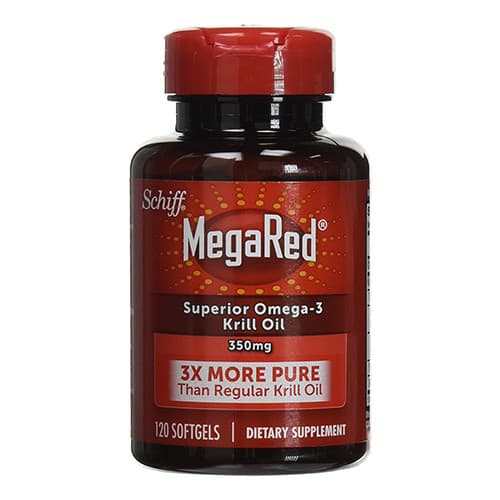
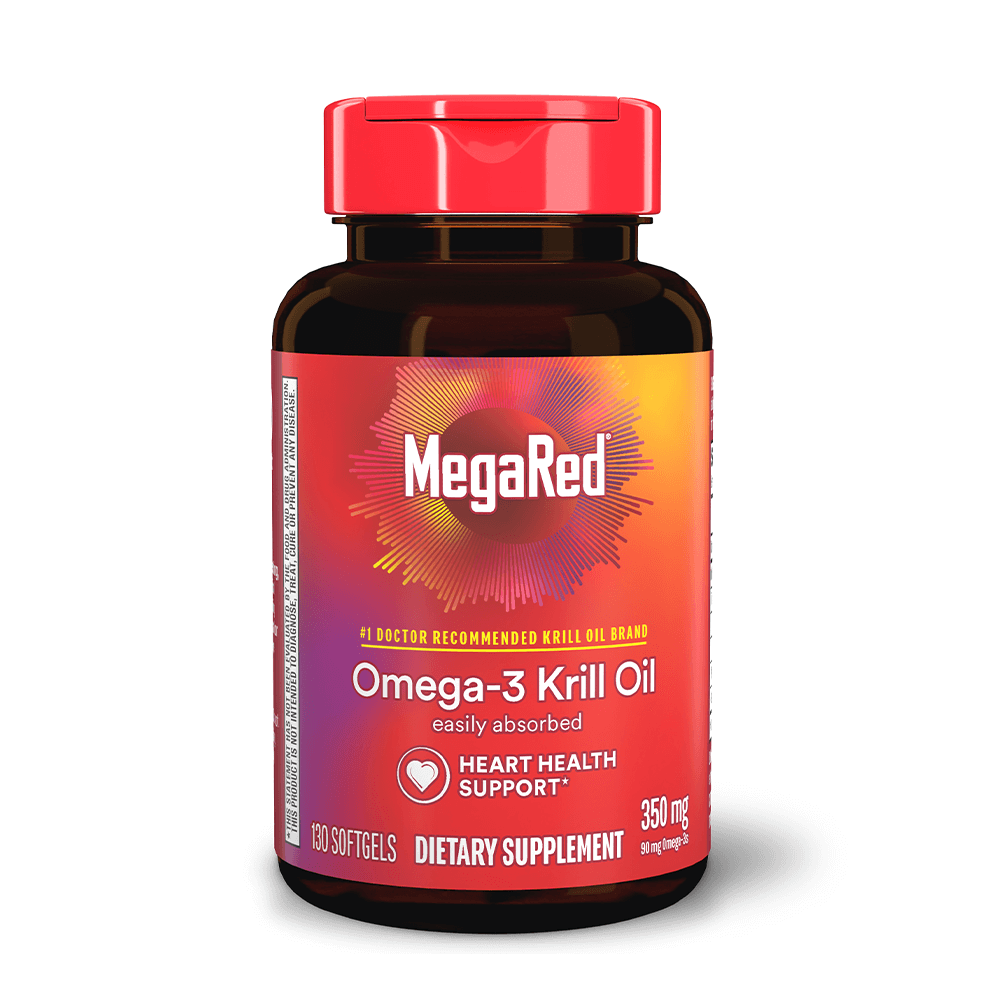
Not medical advice. Show the label to your pharmacist.In krill oil, a large share of the omega-3s EPA and DHA ride on phospholipids, mainly phosphatidylcholine, instead of on the triglycerides you get in standard fish oil. That carrier difference is the defining chemical feature of the ingredient.
Your body uses one digestive enzyme to free fats that are bound to phospholipids and a different one for fats bound to triglycerides, so the two oils get broken down by different enzymes.
Phospholipids mix into water on their own in your gut, so they need less bile to disperse than a plain oil does. That chemistry is the usual explanation for the reduced reflux and fishy repeat some users report, which is a reported experience rather than a measured endpoint.
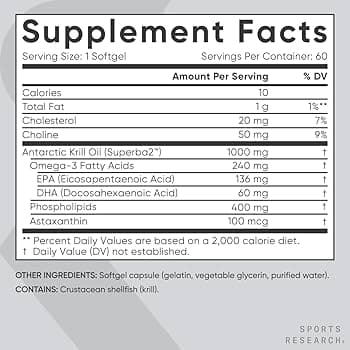
Astaxanthin is naturally present in krill oil and gives it the red colour. As a carotenoid antioxidant, it adds to the oxidative stability of the very unsaturated fats sitting in the same oil.
It comes from a small shrimp-like crustacean caught in Antarctic waters. Krill spoil within hours of being caught, so the oil is pressed or extracted on the ship rather than back on land. The shell is separated out because it carries fluoride, and the finished red oil is tested for how much omega-3 and astaxanthin it holds and for signs that it has started to go rancid.
Made from an animal material. Species and tissue are the things worth knowing, and both belong on a label.
Euphausia superba harvested in the Southern Ocean, with catch limits set by the Commission for the Conservation of Antarctic Marine Living Resources and a continuous pumping trawl used by most operators
Krill contains powerful endogenous enzymes that begin degrading the catch within hours, so processing happens at sea, either by immediate cooking and drying to meal or by direct onboard extraction
The oil is recovered with polar solvents such as ethanol or acetone, or with supercritical carbon dioxide plus an ethanol co-solvent, since the target phospholipids are polar and are not recovered by non-polar solvent alone
Chitinous shell fragments are separated because the exoskeleton is high in fluoride, and residual solvent is stripped under vacuum to specification
Batches are standardised for total phospholipid, EPA, DHA and astaxanthin, and tested for peroxide and anisidine value, fluoride and heavy metals
Filled into softgel capsules, often with added tocopherols or rosemary extract for oxidative stability, or spray-dried into an encapsulated powder
Whether the oil was extracted directly onboard or made later from dried krill meal, the exact solvent used, and the specific fishery area are rarely stated on a label. This is a crustacean product and is unsuitable for anyone avoiding shellfish.
The whole-food sources on file. A supplement closes the gap, it does not replace dinner.
A gram-for-gram figure (how much of each you would eat to match a dose) will appear here once it is sourced and reviewed. This page will not print a number it cannot cite.
These are the studies our verdict leans on, chosen from the 496 we read for Krill Oil. The full linked list is below.
12 sources behind our Krill Oil verdict: peer-reviewed studies and registered clinical trials. Every one links straight to PubMed, the journal, or ClinicalTrials.gov. Read them yourself.
Evidence surfaced via Semantic Scholar (Allen Institute for AI) and ClinicalTrials.gov. Ranked by study type and citation weight, not cherry-picked.
Read this carefully. These are 10,383 voluntary, unverified reactions reported to the FDA (openFDA). The number mostly reflects how popular Krill Oil is, not how risky it is. A report is not proof Krill Oil caused anything. It is a signal of what to watch for, nothing more.
Source: openFDA adverse-event reports. Voluntary reporting, not an incidence rate.
FDA Disclaimer: These statements have not been evaluated by the Food and Drug Administration. This information is for educational purposes only and is not intended to diagnose, treat, cure, or prevent any disease. Consult your healthcare provider before starting any supplement regimen.