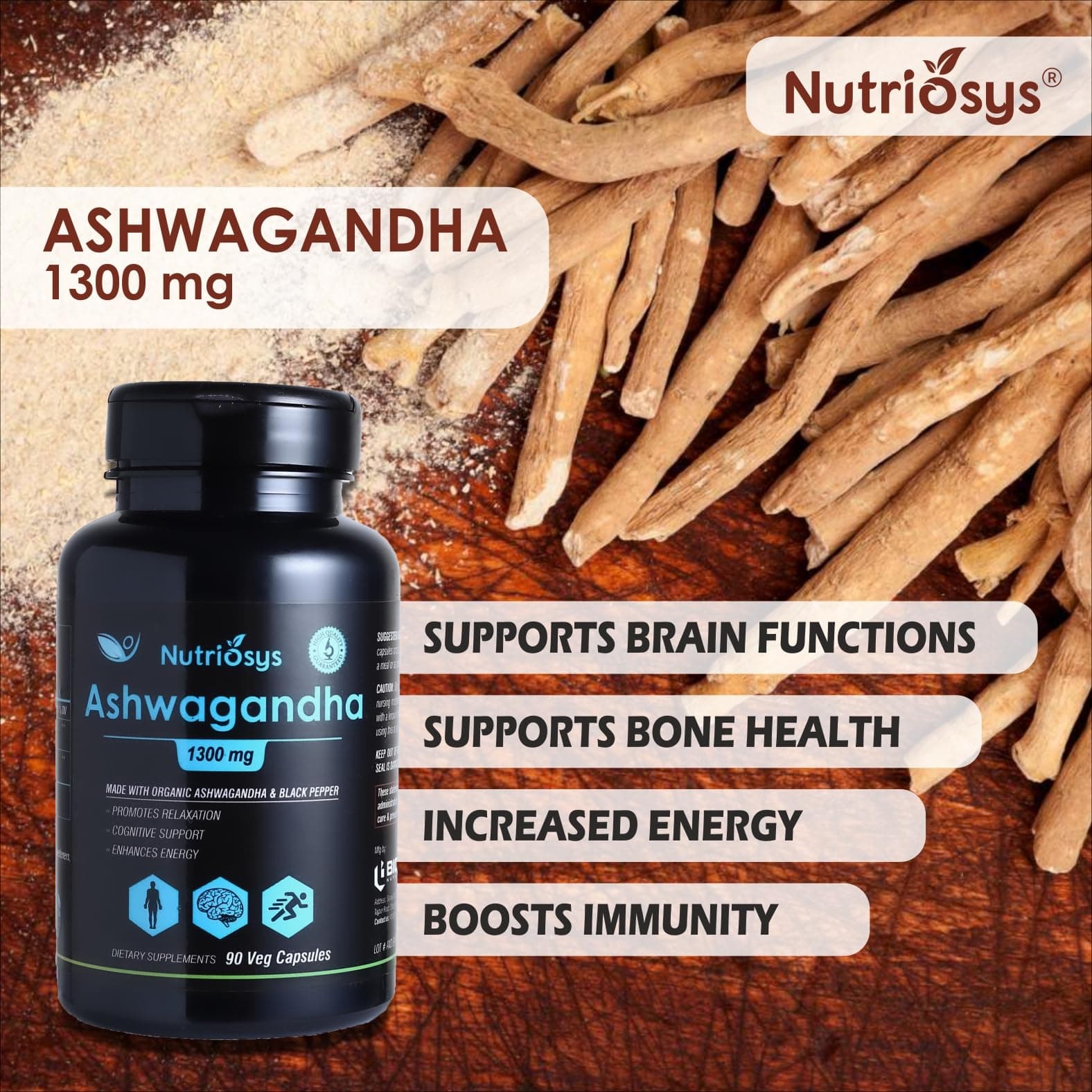
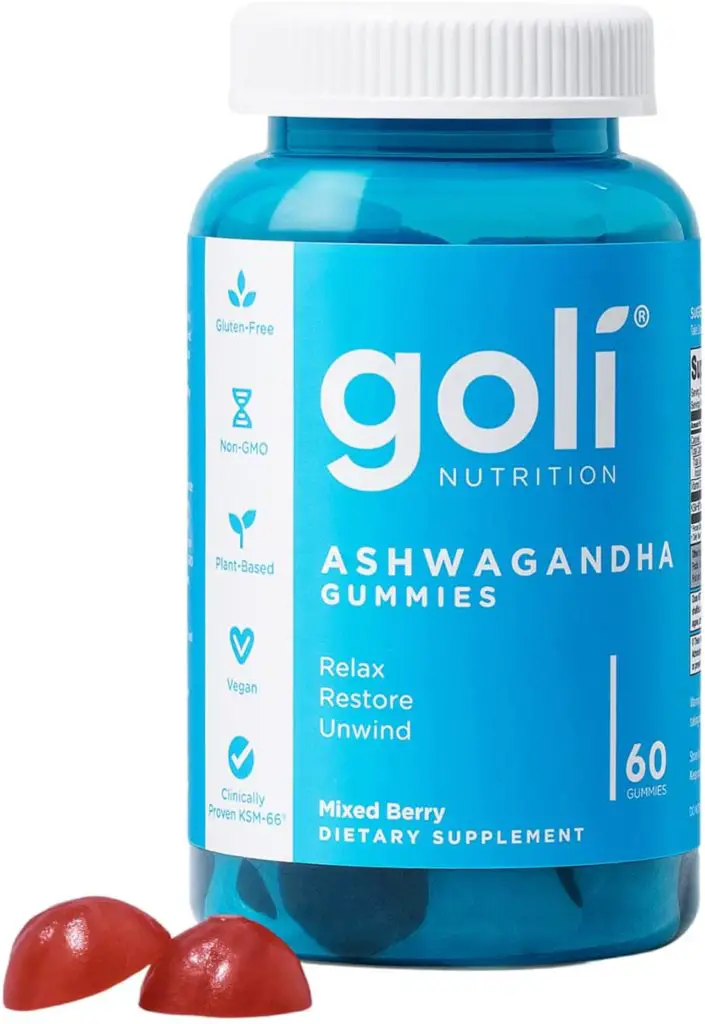
Ashwagandha.
May help manage stress and support healthy testosterone levels. Helps your body manage stress by lowering cortisol.
Reviewed March 2026
- Category
- Herb
- Also filed under
- Stress reductionMay support healthy testosterone levelsImproved sleep quality
- Also called
- Withania Somnifera, Ashwagandha Root, Ashwagandha Root Powder Extract, Ashwagandha Extract
What Ashwagandha is, and what it does.
- Does it work
- Yes. It's a solid, well-studied adaptogen for stress. If you're constantly wired, it's worth a shot. Testosterone benefits are a possible bonus, not the main event.
- How much to take
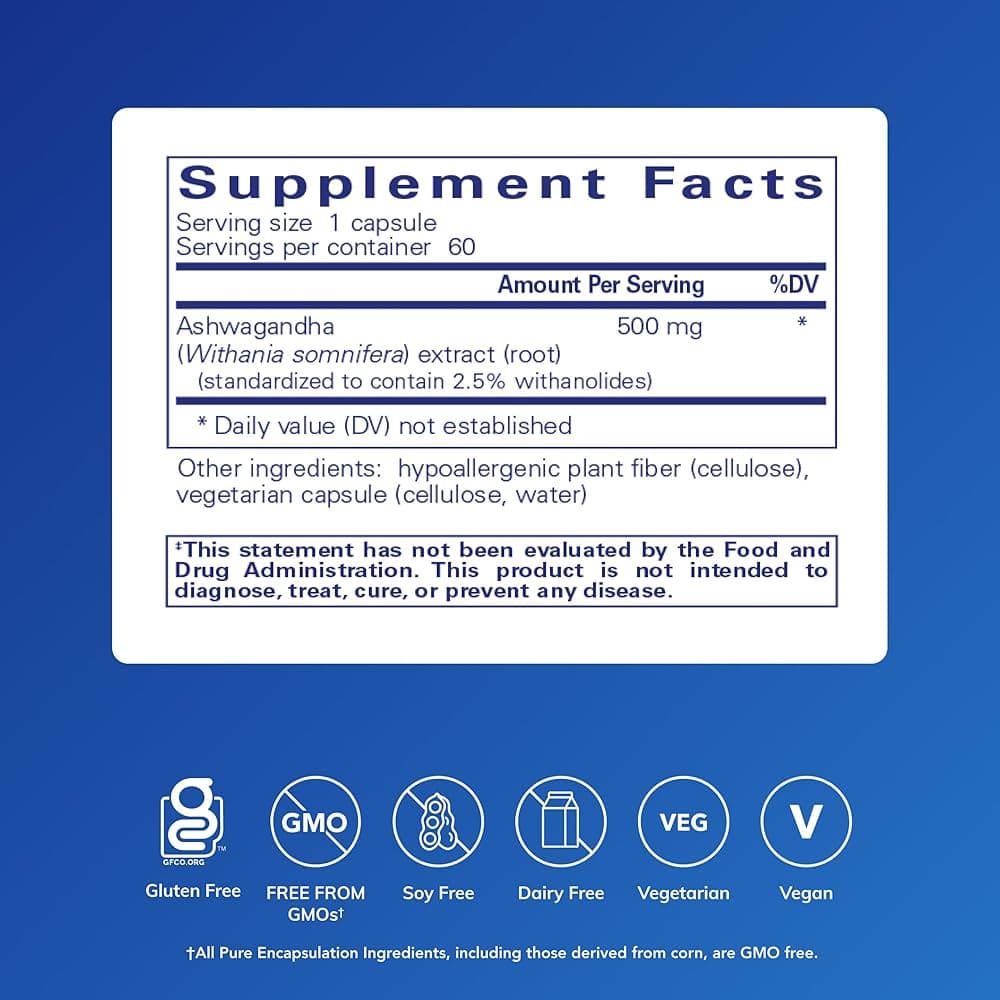
- Start with 300 to 500mg a day of a root extract carrying a stated withanolide percentage. That band is where daily use sits. 1,200mg shows up in trials as a research condition.
- Time to feel it
- About eight to nine weeks of daily use.
- The first dose
- Probably nothing. This isn't a Xanax. It needs to build up in your system over a few weeks.
- With regular use
- After 2-4 weeks, a noticeable drop in general anxiety. Better sleep. You feel more resilient to stress, not numb to it.
- How well tolerated
- Generally well tolerated for most people. The main watch-outs are for thyroid and autoimmune conditions. Don't take it if you're pregnant.
- How it feels
- Calming, not sedating. It's the feeling of having a bit more bandwidth to deal with life. Less snapping at people in traffic.
- The overlooked benefit
- The trials that measured sleep rather than stress found people settled faster and rated their nights better, so it earns a place in an evening routine as much as a morning one.
300 to 500mg a day is where Ashwagandha works.
Source: Chandrasekhar 2012 + Lopresti 2019 meta-analysis
In a 60 day randomised, double-blind, placebo-controlled trial, 60 stressed healthy adults took 240 mg of a standardised ashwagandha extract (Shoden) once daily or placebo. The ashwagandha arm showed a larger fall in Hamilton Anxiety Rating Scale scores (p = .040) and in morning cortisol (p < .001) than placebo, with the DASS-21 change near-significant (p = .096). A separate 8 week randomised, double-blind, placebo-controlled dose-ranging trial enrolled 131 adults with self-reported high stress and analysed 98, measuring reduced Perceived Stress Scale scores at 125, 250 and 500 mg per day of an aqueous root and leaf extract. Two trials on two different extracts, both landing in the same eight to nine week band.
The proof, claim by claim.
These words describe the research, not the molecule's worth. Research strength is how much work stands behind one claim, and it is never a product score.
There's a good body of evidence supporting ashwagandha's stress-reducing effects. The evidence for testosterone support is promising but requires further investigation, particularly comparing it to other readily available supplements.
- Perceived stress and serum cortisol, a marker of the stress axisMeta-analysis
- Sleep quality and time taken to fall asleepMeta-analysis
- Testosterone already in the normal range in menRandomised trial
- Strength and lean mass alongside resistance trainingRandomised trial
- Endurance capacity measured as peak oxygen uptakeMeta-analysis
- Memory and attention scores in healthy adultsRandomised trial
- Sexual wellbeing and reported driveRandomised trial
Questions people ask about Ashwagandha.
- Will it make me sleepy during the day?
- Shouldn't. It's calming, not a sedative. Most people take it anytime without issues.
- Can I take it forever?
- You can, but some people like to cycle it. Try 8-12 weeks on, then a few weeks off to give your body a reset.
- What's KSM-66?
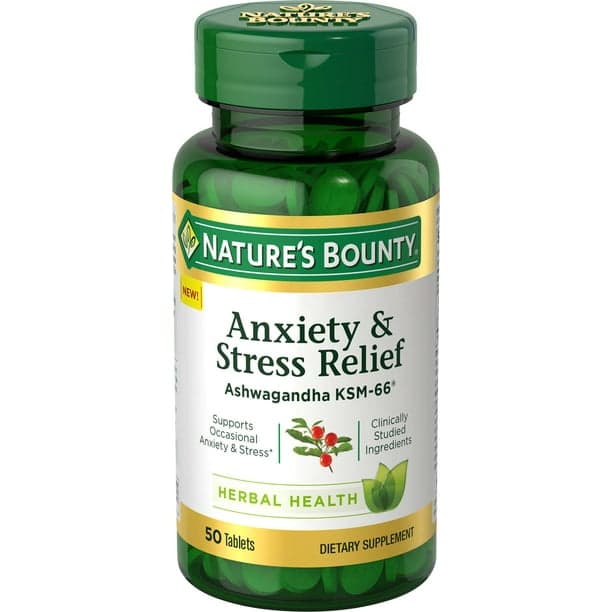
- Just a brand name for a well-studied extract. It's a good sign of quality on the label. Sensoril is another one.
- Will it actually boost my testosterone?
- Maybe. Some studies show a modest bump, especially in men with lower levels. But don't expect steroid-like results. That's not how biology works.
- Can I take this with my antidepressant?
- Talk to your doctor. Seriously. It can interact with meds that affect your brain chemistry.
- Does it taste bad?
- Yes, the powder is notoriously bitter. That's why most people use capsules.
Why these belong in the same formula. Each row says what the basis is, from settled biochemistry through to a trial that measured the pair.
Ashwagandha supports a calmer stress response, and magnesium is an essential mineral cofactor for the nerve signaling and muscle function that let the body settle. The two are long paired in evening and stress support blends because they support the same settling physiology by different routes.
L-theanine shifts brain activity toward relaxed alpha wave patterns and supports a calm but alert state, reaching it by a different route than ashwagandha's action on the stress response axis. That complementary pairing is why the two are routinely combined in calm focus formulas.
Both are long used adaptogens that act on the HPA stress response system, with ashwagandha leaning calming and rhodiola leaning more activating and energizing. Formulators pair them so a blend supports steadiness under everyday stress without landing too sedating or too stimulating.
Withanolides act on GABA-A signalling while glycine works at its own inhibitory receptor and lowers core body temperature at night. The two reach settled sleep onset by different routes, which is why they share evening formulas.
Phosphatidylserine acts on feedback sensitivity of the hypothalamic pituitary adrenal axis while ashwagandha lowers cortisol output at the adrenal end. Pairing them addresses the same normal stress response at two points.
Piperine slows intestinal glucuronidation and some CYP-mediated clearance, which raises exposure to a range of lipophilic plant actives. Ayurvedic practice paired pepper with root extracts long before the enzymology was described.
Valerenic acid and the withanolides both act as positive modulators at GABA-A sites, so their calming effects stack. That is useful in an evening formula and worth knowing about for daytime dosing.
Passionflower flavonoids act at benzodiazepine-sensitive GABA-A sites, overlapping the withanolide mechanism. The combined evening effect is likely stronger than either alone.
Ashwagandha raises circulating T4 and T3 within the normal range, and iodine is the substrate the gland needs to make them. Stacking both pushes the same output in one direction, so the pairing warrants attention rather than casual combination.
The deiodinase enzymes that convert T4 to T3 are selenoproteins, so selenium status governs the step ashwagandha nudges. The effect on normal thyroid hormone levels runs in the same direction.
Caffeine blocks adenosine receptors to raise arousal while withanolides lower sympathetic tone, so the pair smooths the jittery edge of a stimulant without cancelling the alertness. This is why ashwagandha appears in stimulant preworkout and focus blends.
Melatonin acts on circadian timing through MT1 and MT2 receptors while ashwagandha lowers evening cortisol and leans on GABA-A signalling. One sets the clock, the other lowers arousal, so evening formulas pair them.
Withanolides are lipophilic steroidal lactones with limited water solubility, and a lipid vehicle helps disperse them for uptake. Oil-based and lipid-loaded ashwagandha presentations rest on this.
Panax ginseng and ashwagandha occupy the same adaptogen category and appear together in stress and stamina formulas. Their characterised constituents differ, ginsenosides against withanolides, so the pairing is compositional rather than mechanistic. No combination trial is cited here.
Eleuthero is a long-standing member of the same adaptogen grouping and is blended with ashwagandha in stress-support products. The rationale is traditional and formulary. Read it as convention, not as demonstrated additivity.
Schisandra lignans and ashwagandha withanolides are combined in classical adaptogen blends aimed at the stress response. The two constituent classes are chemically unrelated and have not been tested together in the evidence supplied here. This is a formulation pairing.
Cordyceps is paired with ashwagandha in stamina and training-support formulas, where each is included for its own reasons rather than for an interaction. No shared pathway is established between a fungal preparation and a withanolide-standardised root extract. The pairing is formulation practice.
Bacopa and ashwagandha are the two most commonly combined Ayurvedic botanicals in cognitive-support blends, and each has its own human literature on cognitive measures. Their active constituent classes differ, bacosides against withanolides. Nothing in the sources supplied tests the combination.
Lion's mane appears alongside ashwagandha in cognitive and stress blends sold as a single product. The two act through unrelated chemistry and have separate literatures. Count the pairing as category convention.
Tyrosine is the amino acid precursor for dopamine and noradrenaline, and it is combined with ashwagandha in products aimed at performance under stress. The precursor role is established biochemistry. The combined effect is not tested in the sources here. The two work on different levels of the same broad system.
Withanolide preparations have been described in preclinical work as acting at GABA-A receptor sites, and supplemental gamma-aminobutyric acid is taken for the same calming intent. Stacking two agents pointed at the same receptor system is worth flagging for additive drowsiness. The receptor work is preclinical.
Chamomile apigenin binds benzodiazepine sites on the GABA-A receptor, the same receptor family implicated in preclinical work on withanolides. Combined use can add to daytime drowsiness even when each alone is mild. Flag the direction rather than assume a benefit.
Lemon balm constituents inhibit GABA transaminase, raising local gamma-aminobutyric acid availability, and ashwagandha is used for the same calming purpose. The combination is common in evening formulas. The interaction to watch is additive sedation.
Honokiol and magnolol are described as positive modulators at GABA-A receptors, which is the same site preclinical ashwagandha work points to. Sleep and stress blends frequently carry both. Additive drowsiness is the practical consequence.
5-hydroxytryptophan is the immediate precursor to serotonin and then melatonin, and it is combined with ashwagandha in evening mood and sleep products. The precursor step is established. The combination is not tested in the sources here. Two calming agents together can add up.
Ashwagandha has been tested for strength, endurance and recovery measures in trained and amateur athletes, which is the same category creatine occupies. The two act through entirely separate mechanisms, one phosphagen and one endocrine and stress-axis. Co-formulation is convention, not a measured interaction.
Turmeric and ashwagandha are classical Ayurvedic companions and are frequently sold in the same formula. Both are lipophilic preparations that are commonly taken with food containing fat. The pairing is traditional and formulary rather than demonstrated.
Both botanicals appear in products aimed at hormonal balance and training response in men, each with its own small human literature. No supplied source tests them together. Stacking two agents pointed at the same axis is a reason to read labels rather than a demonstrated gain.
KSM-66 is a branded root extract standardised to a declared withanolide percentage, so taking it alongside another ashwagandha preparation stacks the same constituent class rather than adding a second one. The practical point is total withanolide intake across the whole stack. Check both labels before combining.
Ascorbic acid is added to botanical stress formulas as an antioxidant and as a stabiliser for the finished blend. Its own role in normal adrenal tissue is established biochemistry, but nothing supplied tests it with ashwagandha. The pairing is formulation practice.
Talk to a doctor before taking Ashwagandha if any of these apply to you: Pregnancy, Thyroid disorders, Autoimmune diseases. These are flags to check first, not effects Ashwagandha is known to cause.
Not medical advice. Show the label to your pharmacist.What Ashwagandha actually does.
The constituents that have been characterised in ashwagandha are withanolides, a family of steroid-like compounds including withaferin A and withanolide A. Extracts are standardised to a stated withanolide percentage.
Root and leaf carry different withanolide mixes, with withaferin A more concentrated in the leaf. So which plant part was used is part of what an extract actually is.
Withanolides are fat-loving steroid-like molecules, so the solvent used during extraction decides which compounds carry through into the finished powder.
The root also holds alkaloids and saponins alongside the withanolides. So a water extract and an alcohol-water extract of the same root aren't chemically interchangeable.
Where Ashwagandha comes from.
The roots are dug up, dried and ground, then soaked in water or in an alcohol and water mix to pull out the compounds called withanolides. That liquid is concentrated and dried back into a powder, and each batch is tested so the label can state a withanolide percentage. Plain ground root is also sold, and it is far less concentrated than an extract, so the two are not swappable gram for gram.
Made from a plant. What ends up in the capsule tracks the harvest, so batch testing and a stated marker matter more here than with a made molecule.
The plant is grown as an annual, mainly in India, and the roots are lifted after the growing season. Root diameter and age at harvest affect the constituent profile.
Roots are washed, cut to length and dried to a low moisture content, then milled to a coarse powder before extraction.
The milled root is percolated or macerated with water, or with an ethanol and water mixture, which changes how much of the lipophilic withanolide fraction is recovered.
The liquid extract is filtered to remove plant solids, then concentrated under vacuum at reduced temperature to limit heat exposure of the withanolides.
The concentrate is assayed by HPLC and blended with a carrier such as maltodextrin or with lower-strength material to hit a declared withanolide percentage.
The standardised concentrate is spray-dried to a free-flowing powder, then encapsulated, tableted or blended into a stick pack.
Some labels state only ashwagandha extract without naming the plant part or the extraction solvent, both of which change what is in the capsule.
The forms it comes in.
The essence, in one line each.
- Pooling nine randomized trials in 558 adults, ashwagandha lowered perceived stress scores by about 4.7 points and serum cortisol by about 2.6 micrograms per deciliter compared with placebo.Meta-analysis. Arumugam et al., 2024 (Explore). PMID 39348746 ↗
- Across five randomized trials in 400 adults, ashwagandha extract improved overall sleep with a small pooled effect (standardized mean difference -0.59), most noticeable at doses of 600 mg or more per day taken for at least eight weeks.Meta-analysis. Cheah et al., 2021 (PLoS One). PMID 34559859 ↗
- Pooling four randomized trials in 142 athletes and healthy adults, ashwagandha raised maximal oxygen uptake (VO2max) by about 3.0 mL/kg/min compared with placebo.Meta-analysis. Perez-Gomez et al., 2020 (Nutrients). PMID 32316411 ↗
- Pooling randomised trials, ashwagandha supplementation lowered self-reported anxiety and stress scores compared with placebo.Meta-analysis. Akhgarjand et al., 2022 (Phytotherapy research). PMID 36017529 ↗
- Across randomised trials, ashwagandha supplementation was associated with small gains in exercise performance measures such as strength and oxygen uptake.Meta-analysis. Li et al., 2026 (Nutrients). PMID 42356302 ↗
- In a pooled analysis of supplement trials, ashwagandha was among the interventions linked with better self-reported sleep quality.Meta-analysis. Mei et al., 2025 (Nutrients). PMID 41470897 ↗
- Pooling randomised trials, Withania somnifera was associated with shifts in circulating hormone levels, including testosterone and cortisol.Meta-analysis. Fornalik et al., 2026 (Planta medica). PMID 41740946 ↗
- Both single-dose and repeated ashwagandha supplementation improved measures of cognitive performance and self-reported mood in healthy adults.Randomised trial. Leonard et al., 2024 (Nutrients). PMID 38931168 ↗
- In healthy men, ashwagandha root extract was associated with improved self-reported sexual function scores over the study period.Randomised trial. Khanna et al., 2026 (Frontiers in reproductive health). PMID 41766918 ↗
- Adding ashwagandha to high-intensity interval training showed no detectable extra change in the energy metabolism measures tracked, a failure to detect a difference rather than evidence of none.Randomised trial. Charmas et al., 2025 (Nutrients). PMID 41156498 ↗
- The review pools published trials of Withania somnifera on cognitive and physical function measures in adults and reports the pattern across them rather than a single effect.Systematic review. Zhu et al., 2026 (Frontiers in Pharmacology). PMID 42199854 ↗
- A dose-response meta-analysis of ashwagandha on mental wellbeing measures in adults, reporting how the pooled effect tracks with dose.Meta-analysis. Alsanie et al., 2026 (Complementary Therapies in Medicine). PMID 41644067 ↗
- Ashwagandha root extract was associated with steadier physiological stress response measures across a competitive period in male and female team sport athletes.Randomised trial. Coope et al., 2026 (Nutrients). PMID 41599843 ↗
- A clinical assessment of ashwagandha root extract reporting changes in cognitive performance, sleep and fatigue measures over the study period.Randomised trial. Saxena et al., 2026 (Frontiers in Nutrition). PMID 41889719 ↗
- A sustained-release ashwagandha root extract capsule was tested in healthy adults reporting stress, with tolerability recorded alongside the efficacy measures.Randomised trial. Thanawala et al., 2026 (Medicine). PMID 41824889 ↗
- A low-dose ashwagandha regimen was compared with placebo on exercise endurance measures.Randomised trial. Prajapati et al., 2026 (Phytotherapy Research). PMID 41846233 ↗
- Eight days of ashwagandha supplementation were assessed against strength, fatigue, soreness and recovery measures in amateur players.Randomised trial. Ferreira et al., 2026 (Nutrition and Health). PMID 41940566 ↗
- Eight weeks of high intensity interval training with ashwagandha supplementation were assessed against aerobic capacity and related measures.Randomised trial. Ewa et al., 2025 (Biology of Sport). PMID 40657001 ↗
- The review summarises the athletic performance and recovery literature on ashwagandha and describes the trials as small and varied in design.Narrative review. AKbulut et al., 2026 (Nutrition and Health). PMID 42068281 ↗
- A review of proposed mechanisms for Withania somnifera alongside its reported roles in sports performance.Narrative review. Sprengel et al., 2025 (Nutrition and Metabolism). PMID 39910586 ↗
- A prospective study recording tolerability of ashwagandha root extract in healthy adults over the supplementation period.Open-label trial. Movva et al., 2026 (Frontiers in Nutrition). PMID 42253745 ↗
- A prospective study of ashwagandha root extract in pregnant women, recording tolerability alongside the measured outcomes.Open-label trial. Ajgaonkar et al., 2026 (Frontiers in Global Women's Health). PMID 41767760 ↗
- One adult developed acute involuntary muscle contractions after taking ashwagandha. A single case report describes a temporal sequence and cannot establish cause.Case report. Fazlani et al., 2025 (Cureus). PMID 40896056 ↗
- The review gathers the clinical evidence for adaptogenic effects of Withania somnifera and Rhodiola rosea and describes the trial base as heterogeneous.Narrative review. Luszczak et al., 2026 (Annals of Agricultural and Environmental Medicine). PMID 41906501 ↗
These are the studies our verdict leans on, chosen from the 2,244 we read for Ashwagandha. The full linked list is below.
The studies, linked.
11 sources behind our Ashwagandha verdict: peer-reviewed studies and registered clinical trials. Every one links straight to PubMed, the journal, or ClinicalTrials.gov. Read them yourself.
- Clinical trialEvaluating the Efficacy of a Supplement Combination for Improving Stress and Sleep: A Randomized Placebo-Controlled Clinical TrialClinicalTrials.gov ↗115 participants, Completed
- Clinical trialSensoril® (Ashwagandha) - A Standardized Extract From a Medicinal Plant - (Withania Somnifera) for Cognitive Enhancement in Persons With Bipolar Disorder: A Parallel Group, Randomized Double Blind, and Placebo Controlled StudyClinicalTrials.gov ↗Phase 3, 60 participants, Completed
- Clinical trialEffect of Ashwagandha (Withania Somnifera) as an Adjunct to Scaling and Root Planing on Salivary Antioxidant and Serum c Reactive Protein Levels in Chronic Generalized Periodontitis- a Randomized Double Blind Clinico-biochemical TrialClinicalTrials.gov ↗Phase 1, 50 participants, Completed
- Clinical trialEffects of Ashwagandha Extract (Capsule KSM-66 300 mg) on Sexual Health in Healthy Women: A Prospective, Randomized, Double-Blind, Placebo-Controlled StudyClinicalTrials.gov ↗45 participants, Completed
- Clinical trialA Randomized, Single-Blind, Placebo-Controlled Trial for the Role of a Dietary Supplement in Lowering S-Adenosylhomocysteine (SAH) in Healthy Adults With Elevated Plasma SAH and Normal Homocysteine Levels and Identification of Participants With Elevated Plasma SAH in the General Population Using the MethylQ ScoreClinicalTrials.gov ↗40 participants, Completed
- Clinical trialThe Effects of Ashwagandha (Withania Somnifera) Supplementation on Exercise Performance in Female FootballersClinicalTrials.gov ↗30 participants, Completed
- Clinical trialA Randomized Placebo-controlled Trial of Ashwagandha (Withania Somnifera) for Cognitive Dysfunction Associated With Cancer Chemotherapy.ClinicalTrials.gov ↗Phase 2, 80 participants, Unknown
- Clinical trialCombination Therapy With Liposomal Doxorubicin and Withaferin A (Ashwagandha, ASWD) in Recurrent Ovarian CancerClinicalTrials.gov ↗Phase 1, 72 participants, Recruiting
- Clinical trialWhey Protein and Adaptogenic Herb Supplementation in Physically Active Females: A Randomised Controlled TrialClinicalTrials.gov ↗60 participants, Recruiting
- Clinical trialEfficacy and Safety of Shatavari for Treatment of Menopausal Symptoms in Women: A Randomized, Double-blind, Three-arm, Parallel, Placebo-controlled StudyClinicalTrials.gov ↗51 participants, Recruiting
- Clinical trialAshwagandha (Withania Somnifera) and Its Effects on Recovery Perceived and Muscle Strength in Male Handball Players: a Randomized Controlled TrialClinicalTrials.gov ↗30 participants, Not yet recruiting
Evidence surfaced via Semantic Scholar (Allen Institute for AI) and ClinicalTrials.gov. Ranked by study type and citation weight, not cherry-picked.
Problems people have reported.
Read this carefully. These are 800 voluntary, unverified reactions reported to the FDA (openFDA). The number mostly reflects how popular Ashwagandha is, not how risky it is. A report is not proof Ashwagandha caused anything. It is a signal of what to watch for, nothing more.
Source: openFDA adverse-event reports. Voluntary reporting, not an incidence rate.
FDA Disclaimer: These statements have not been evaluated by the Food and Drug Administration. This information is for educational purposes only and is not intended to diagnose, treat, cure, or prevent any disease. Consult your healthcare provider before starting any supplement regimen.