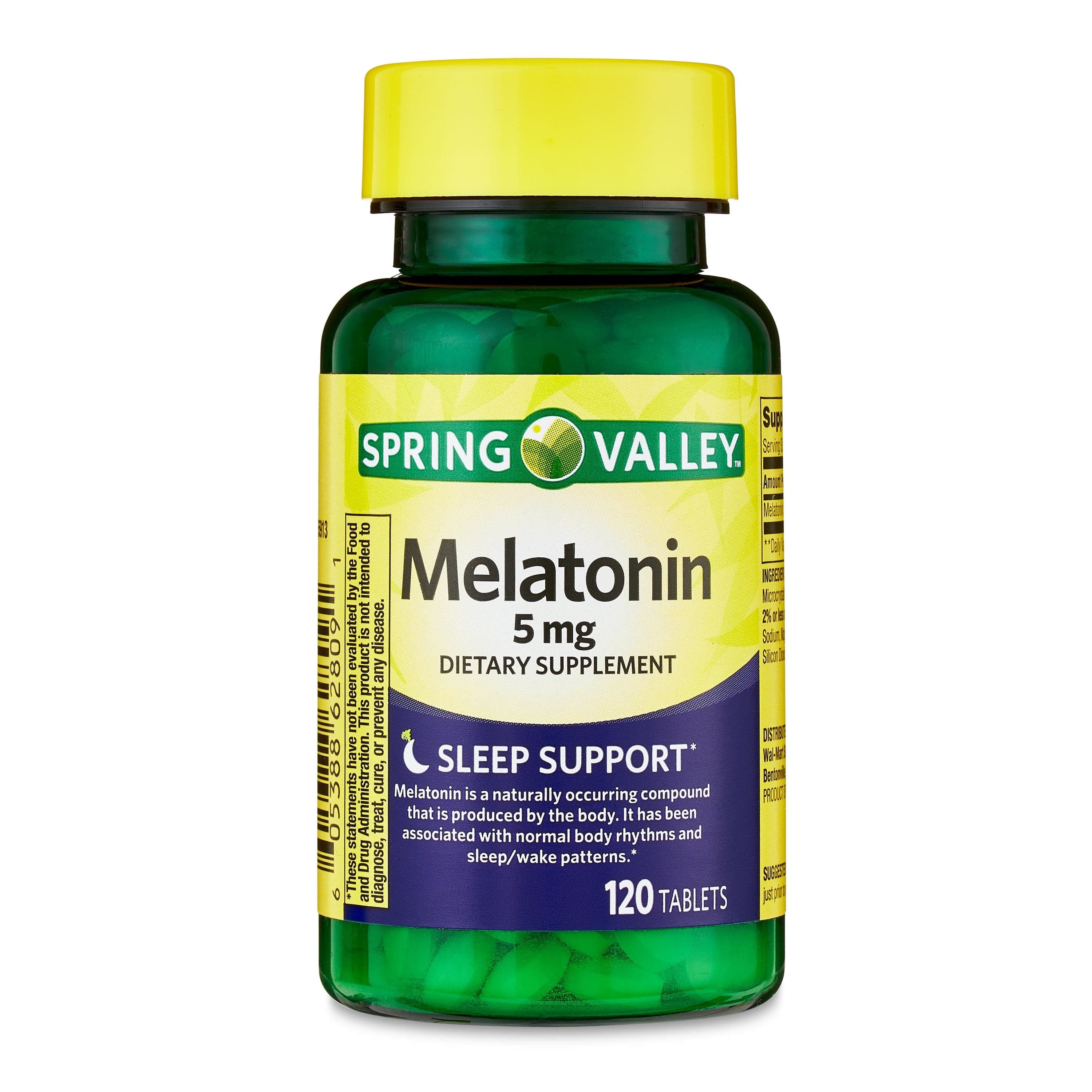
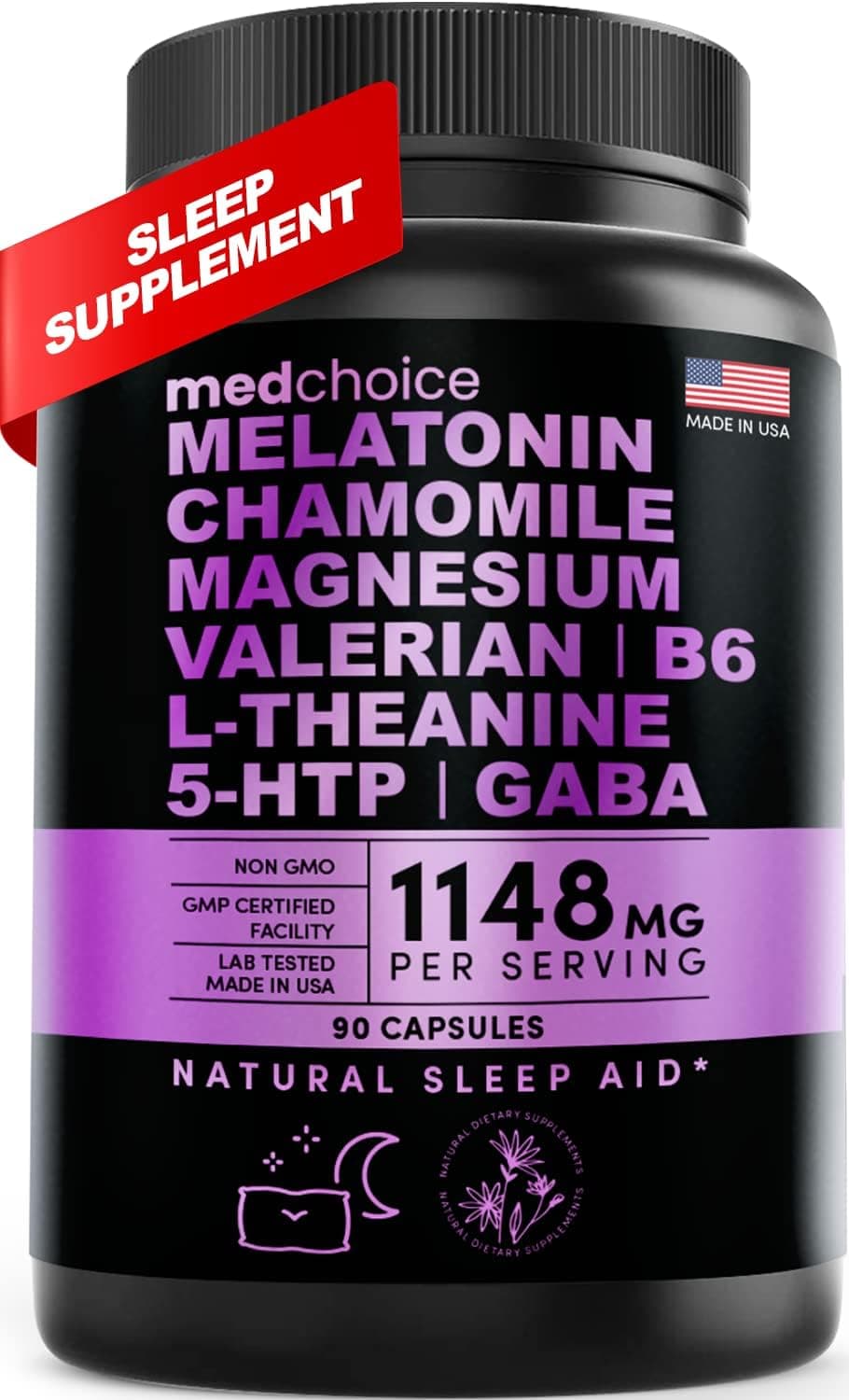
Ingredients/Compound/Melatonin

Melatonin.

The vampire hormone. Melatonin is your body's night signal. Taken in the evening it shortens the wait to fall asleep, and it can shift your body clock after travel or a change of shift.

StrongResearch strength0.3mgDaily amount250Studies read19Trials, time to fall asleep

Reviewed March 2026

MECompound
MelatoninIngredientMD
Category
Compound

Studied for
Time to fall asleep

Also filed under
SleepHormoneRecoveryProven

What Melatonin is, and what it does.

Does it work
Most useful when your body clock is out of step: crossing time zones, rotating shifts, a bedtime that keeps drifting later. Timing matters more here than the size of the dose.
How much to take
Start with about 0.3mg at the same hour each evening. Timing does more of the work here than size, and 3mg is a research condition rather than a daily target.
Time to feel it
Within about 40 minutes of a single dose.
The first dose
Drowsiness usually arrives 30 to 60 minutes after that first evening dose. Sleep comes more easily; the body-clock shift needs a few nights at the same hour.
With regular use
Taken nightly at a steady time, it helps hold a sleep schedule in place. It doesn't accumulate, so the amount has no need to climb.
How well tolerated
Well tolerated at small evening amounts. Vivid dreams and morning heaviness are the usual complaints. Check with your doctor if pregnant, breastfeeding, or on medication.
How it feels
Soft drowsiness rather than sedation. You still feel like yourself, sleep just becomes easier to fall into. Dreams can get more vivid.
The overlooked benefit
Timing does more work than milligrams. The same amount taken at the wrong hour moves your rhythm the other way, because the clock-shifting receptor responds to when, not how much.

0.3mg a day is where Melatonin works.

How much to take a dayMedium confidence
0.3mg
Daily maintenanceThe everyday amount, and where most daily supplements sit. This is the one you take month after month.
3mgClinical territory. Trials run high on purpose, for a set number of weeks, against one measured outcome. Impressive to hit, and not what a daily product is for.
Above 10mgPast what the research covers. More capsules rather than more effect.
MORE EFFECT ↑01mg3mg plateauDAILY DOSE →
The shaded band is where the dosing trials landed.

Source: Ferracioli-Oda 2013 meta-analysis + MIT studies

How long it takesPromising
WHAT THE TRIALS MEASUREDthe level the trials measuredDay 0TIME ON IT →
Builds over within about 40 minutes of a single dose

In a crossover pharmacokinetic study, 12 healthy male volunteers received 10 mg of oral melatonin and 10 mg intravenously on separate days. Oral melatonin reached mean peak plasma concentration 40.8 minutes after ingestion, with a mean elimination half-life of 53.7 minutes and absolute bioavailability of about 3 percent. A separate randomised double-blind crossover trial in 18 healthy adults aged 18 to 65 measured time to peak concentration of 0.6 hours for 4 mg immediate-release melatonin and 1.56 hours for a 4 mg extended-release form. Both studies measured blood concentration, not sleep. The second was run by employees of Pharmavite, a supplement manufacturer.

The size of the effect, in plain numbers.

Where a trial measured an actual number, we show it next to the claim. It is the average across the trials, never a promise about one person.

Time to fall asleepMean difference
Average change in the trials

About 7 minutes shorter time to fall asleep, on average across the trials.

0
Confidence interval95% CI 4.4 to 9.8 minutes

Adults and children with primary sleep disorders.

Read at the source. The magnitude sits beside the same trial the claim already cites. It describes what the trials measured, never what any one person will feel.

1 meta-analysis, 19 pooled trials

The proof, claim by claim.

These words describe the research, not the molecule's worth. Research strength is how much work stands behind one claim, and it is never a product score.

Extensively studied.

Proven chronobiotic (time-shifter).

19 trials, time to fall asleep4 citations on page
Who the trials studied
Time to fall asleep
Adults and children with primary sleep disorders. Ferracioli-Oda et al., 2013 (PLoS One).
  • Reduces sleep onset latency (time to fall asleep)Meta-analysis

    About 7 minutes shorter time to fall asleep, on average across the trials.

    Adults and children with primary sleep disorders. Confidence interval 95% CI 4.4 to 9.8 minutes.

    Promising
  • Alleviates symptoms of jet lag and circadian misalignmentCochrane Systematic Review
  • Increases total sleep timeMeta-analysis of 15 RCTs
PubMedCochraneClinicalTrials.govNIH ODSSUPP.AI250 studies readLabs test. IngredientMD verifies.PubMedCochraneClinicalTrials.govNIH ODSSUPP.AI250 studies readLabs test. IngredientMD verifies.

Questions people ask about Melatonin.

When should I take it?
Timing matters less than consistency. Pick a time that works for you and take it daily.
Can I take it with other supplements?
Usually fine. The main thing to watch is not doubling up on the same ingredient from different products. If you're on prescription meds, check with your pharmacist first.
Any side effects to watch for?
Most people tolerate it well at recommended doses. GI upset is the most common complaint with any supplement. Start with a lower dose and work up. If something feels off, stop and reassess.
Who benefits most from this?
People with a specific, evidence-backed need. Melatonin has strong research. If your situation matches the studied use case, it's one of the more reliable supplements you can take.

What the trials show about these together.

Outcomes the engine found studied for these actives as a combination, not one at a time. Each is a finding a named trial measured, cited and dated, never written by the brand.

  • Melatonin + MagnesiumSleep

    In a 2024 randomized crossover trial in adults with disturbed sleep, melatonin taken with magnesium improved sleep efficiency and latency more than placebo, though average sleep quality stayed below the trial threshold.

    Early

Research strength. Research strength says how much work stands behind the combination. It is never a product score.

Fail closed. Where actives were studied on their own rather than together, the record shows each on its own evidence, never a combined effect no trial measured.

Independent record. Every finding is cited to a named trial, dated, and never written by the brand.

Findings from trials that studied these actives as a combination. Context for how the actives were tested together, not a statement about any individual and not a claim about this product.

Pairs well with38 on file

Why these belong in the same formula. Each row says what the basis is, from settled biochemistry through to a trial that measured the pair.

Melatonin + 5-HTPMetabolic precursor pathway

Melatonin is built from serotonin, and serotonin is built from 5-HTP, so 5-HTP sits one step upstream in the same pathway that ends in melatonin. Supplying the precursor alongside the finished molecule supports the body's own serotonin to melatonin conversion.

Melatonin + Vitamin B6 (Pyridoxine)Enzyme cofactor in the pathway

Vitamin B6, in its active pyridoxal 5-phosphate form, is the cofactor the decarboxylase enzyme uses to turn 5-HTP into serotonin, the molecule the body then converts into melatonin. Keeping that precursor step supplied supports the pathway that feeds melatonin production.

Melatonin + L-Tryptophanupstream precursor in the same pathway

Tryptophan is hydroxylated to 5-HTP, then decarboxylated to serotonin, acetylated and methylated to melatonin. Supplying the precursor supports the body's own night-time production alongside the finished molecule.

Melatonin + SAM-e (S-Adenosyl Methionine)methyl donor for the final synthesis step

The last step of melatonin synthesis is an O-methylation of N-acetylserotonin by ASMT, and SAM-e is the methyl donor it uses. Methyl group availability therefore sits directly on the pathway.

Melatonin + Methylfolateregenerates the methyl donor

Methylfolate hands its methyl group to homocysteine to remake methionine and then SAM-e, the donor the final melatonin step consumes. Folate status is upstream of the same one-carbon supply.

Melatonin + TMG (Trimethylglycine)alternative methyl donor route

Betaine remethylates homocysteine through BHMT, a folate-independent path back to methionine and SAM-e. That keeps the methyl pool that the last melatonin synthesis step draws on.

Melatonin + Vitamin B3 (Niacin)spares tryptophan from the NAD route

Tryptophan can be shunted down the kynurenine pathway to make NAD when niacin intake is low. Adequate preformed niacin leaves more tryptophan available for the serotonin and melatonin branch.

Melatonin + Tart Cherry Extractfood source of the same molecule plus tryptophan

Montmorency cherry contains measurable melatonin and also raises tryptophan availability by slowing its degradation. Combining the two puts the same molecule in from two directions.

Melatonin + Montmorency Cherry Sleepoverlapping melatonin content

A cherry sleep preparation is standardised for the melatonin and phenolics the fruit already carries. Stacking it with isolated melatonin raises one total rather than adding a second route.

Melatonin + Magnolia Barkreceptor timing signal plus inhibitory tone

Melatonin acts on MT1 and MT2 receptors as a timing signal, while magnolia biphenols modulate GABA-A to lower arousal. The two act on different systems and are routinely combined for that reason.

Melatonin + L-Theanineseparate calming route

Theanine raises alpha wave activity and modulates glutamate signalling without acting on melatonin receptors. It lowers arousal while melatonin sets the timing.

Melatonin + Glycineinhibitory transmitter plus core temperature drop

Glycine acts at its own inhibitory receptor and lowers core body temperature, the physiological change that normally accompanies the melatonin rise. The two reinforce the same evening pattern by different means.

Melatonin + Valerian Rootadditive on normal sleep onset

Valerenic acid modulates GABA-A while melatonin works through its own receptors, so the drowsiness effects add rather than overlap. Start both low when they appear in one formula.

Passionflower flavonoids raise GABAergic signalling, an independent route from melatonin receptor activation. The combined effect on normal sleep onset is stronger than either alone.

Melatonin + Caffeineopposing signals plus shared CYP1A2 clearance

Caffeine blocks adenosine receptors and works directly against the drowsiness melatonin signals, and both molecules are cleared by CYP1A2 so each slows the other's breakdown. A formula holding both is arguing with itself.

Melatonin + St. John's Wortenzyme induction lowers exposure

St John's wort induces CYP1A2 and CYP3A4 through PXR activation, and CYP1A2 is melatonin's main clearance route. Regular use lowers the plasma level a given melatonin dose produces.

Melatonin + magnesium-glycinateFormulation practice: a well-tolerated magnesium form paired with an evening melatonin dose, with glycine contributing its own described effect.

Glycinate is chosen for evening formulas because it is less likely to have a laxative effect than magnesium oxide or citrate at the same elemental dose. The glycine portion has its own small sleep literature. This is a form and formulation choice rather than a distinct pharmacological interaction.

Melatonin + zincEstablished cofactor and enzymatic roles in the tryptophan and indoleamine route; zinc also appears in combined evening formulas.

Zinc is a cofactor across many enzymes touching amino acid metabolism and has been combined with melatonin and magnesium in sleep formulations. The cofactor relationships are established biochemistry. Attributing a sleep effect to the zinc component specifically goes beyond what has been shown.

Melatonin + gabaEstablished receptor biology: melatonin receptor signalling and GABA-A signalling are separate routes converging on sleep regulation.

Melatonin acts at MT1 and MT2 receptors to signal biological night, while GABA is the main inhibitory neurotransmitter in the central nervous system. The routes are distinct, which is why they are combined. Oral GABA's own crossing of the blood brain barrier remains debated, so the pairing carries that uncertainty.

Melatonin + apigeninEstablished binding of apigenin at the benzodiazepine site of the GABA-A receptor in laboratory work.

Apigenin is the flavone behind chamomile's traditional evening use and binds at the GABA-A benzodiazepine site in receptor studies. Melatonin acts through an entirely separate receptor family. The receptor binding is well described in vitro; human data at supplement doses are thin.

Melatonin + chamomileTraditional evening pairing with an apigenin-based mechanistic rationale.

Chamomile is a long-standing evening preparation whose apigenin content gives a plausible receptor rationale. It is combined with melatonin in sleep formulas for that reason. No combination trial supports it, so the label stays early.

Melatonin + lemon-balmTraditional evening pairing, with described GABA transaminase inhibition by rosmarinic acid in laboratory work.

Lemon balm is used traditionally in the evening and its rosmarinic acid has described effects on GABA breakdown in laboratory systems. That is a different route from melatonin receptor signalling. The pairing is conventional rather than measured.

Melatonin + ashwagandhaFormulation practice in evening formulas, with the herb's own literature on sleep and stress measures.

Ashwagandha is used for its described effects on the stress axis and has human trials reporting changes in sleep quality scores. Melatonin signals circadian timing instead. The two are combined because they address different reasons a person sleeps poorly, not because they interact.

Melatonin + inositolEstablished second messenger biochemistry: inositol phosphates are downstream of Gq-coupled receptor signalling, and MT2 receptor signalling engages phospholipase C.

Inositol supplies the backbone for phosphatidylinositol signalling, which sits downstream of several receptor systems. The biochemical connection is real but distant from any practical claim. Nothing has measured the two together, so this stays early.

Melatonin + glutathioneEstablished redox chemistry: melatonin and its metabolites act as direct radical scavengers alongside the glutathione system.

Melatonin scavenges radicals directly and its metabolites do the same in a cascade, a property described extensively in the redox literature. Glutathione is the main intracellular thiol antioxidant working through a different chemistry. They operate in different compartments and phases, which makes them complementary rather than redundant. A change in an oxidative stress marker is a marker, not a clinical outcome.

Melatonin + nacEstablished precursor relationship: N-acetylcysteine supplies cysteine, the rate-limiting substrate for glutathione synthesis.

NAC works upstream by providing the cysteine that glutathione synthesis needs, while melatonin scavenges directly. The precursor step is textbook biochemistry. Combining them targets the same oxidative-stress markers by two separate routes.

Melatonin + alpha-lipoic-acidEstablished amphiphilic antioxidant chemistry: both alpha-lipoic acid and melatonin act in aqueous and lipid environments.

Alpha-lipoic acid participates in regenerating other antioxidants and works in both water and lipid phases, as does melatonin. That overlap is why the two appear together in redox-focused formulas. The chemistry is established; the combination has not been quantified in humans.

Melatonin + coenzyme-q10Established mitochondrial localisation: melatonin concentrates in mitochondria and CoQ10 is a mitochondrial electron carrier.

Both compounds are found at the mitochondrial membrane, CoQ10 as an electron carrier in the respiratory chain and melatonin as a lipid-soluble scavenger of the radicals that chain leaks. The co-localisation is well described. Pairing them addresses mitochondrial redox markers rather than a clinical endpoint.

Melatonin + vitamin-eEstablished lipid-phase antioxidant chemistry: alpha-tocopherol terminates lipid peroxidation chains in membranes.

Vitamin E is the primary chain-breaking antioxidant of the lipid membrane, and melatonin is lipid soluble enough to reach the same environment. Both act on lipid peroxidation, which is why malondialdehyde appears as a shared readout in this literature. Malondialdehyde is a marker of lipid peroxidation, not a health outcome.

Melatonin + vitamin-cEstablished aqueous-phase antioxidant chemistry and the ascorbate to tocopherol recycling relationship.

Ascorbate works in the water phase and regenerates the tocopheroxyl radical back to vitamin E, a settled redox relationship. Melatonin adds direct scavenging in both phases. This is a network relationship described in biochemistry texts rather than a tested combination product.

Melatonin + taurineEstablished osmolyte and membrane-stabilising roles alongside a separate route to evening calm.

Taurine has described roles in calcium handling and membrane stability and appears in some evening formulas. It does not act on melatonin receptors. The pairing is formulation-driven and the label stays early.

Melatonin + omega-3-fish-oil-epadhaEstablished membrane phospholipid biochemistry: DHA is a major structural fatty acid of neuronal membranes where lipophilic melatonin distributes.

DHA is heavily enriched in neuronal membrane phospholipid, and those same polyunsaturated chains are the primary target of lipid peroxidation that melatonin can intercept. The membrane biochemistry is established. Any combined effect on sleep or redox measures has not been quantified.

Melatonin + green-tea-extractEstablished stimulant content: green tea extracts carry caffeine unless decaffeinated, and caffeine opposes the evening signal melatonin provides.

Caffeine antagonises adenosine receptors and delays sleep onset, working directly against what an evening melatonin dose is for. A caffeinated green tea extract in the same product or the same few hours is a timing conflict. Decaffeinated extracts avoid the issue.

Melatonin + l-tyrosineEstablished catecholamine precursor biochemistry, which favours alertness rather than sleep onset.

Tyrosine feeds dopamine and noradrenaline synthesis, the alerting side of the picture. Taking it near an evening melatonin dose puts two opposing timing signals together. This is a scheduling point rather than a reason to avoid either.

Melatonin + caffeine-anhydrousEstablished adenosine receptor antagonism and hepatic CYP1A2 competition.

Beyond the obvious opposing effect on sleep onset, caffeine and melatonin are both handled by hepatic CYP1A2, so the enzyme is shared. Slower clearance of one in the presence of the other is a described possibility. Separating them by several hours is the ordinary answer.

Melatonin + ginseng-panaxFormulation and timing conflict: panax ginseng is used for daytime alertness.

Ginseng is taken in the morning in most traditional and modern use because of its alerting profile. Pairing it with an evening melatonin dose sets up opposing timing signals. This is a scheduling note, not a pharmacological interaction with evidence behind it.

Melatonin + vitamin-b2-riboflavinEstablished photosensitivity chemistry and the flavin cofactor requirement of monoamine oxidase.

Riboflavin-derived FAD is the cofactor for monoamine oxidase, one of the enzymes acting on the serotonin pool that melatonin is made from. That is a settled cofactor relationship. Whether riboflavin status meaningfully shifts melatonin production in people has not been established.

Melatonin + ironEstablished cofactor role: tryptophan hydroxylase is an iron-dependent enzyme at the first step of the serotonin route.

Tryptophan hydroxylase requires iron and tetrahydrobiopterin to make 5-hydroxytryptophan, the committed step toward serotonin and then melatonin. Low iron status therefore sits upstream of the whole pathway. This is textbook enzymology and applies to endogenous production rather than to a swallowed melatonin dose.

Who should be cautious

Nothing specific on file for Melatonin. Match the label to the daily amount above, and tell your doctor what you take.

Not medical advice. Show the label to your pharmacist.

What Melatonin actually does.

Established

Your body builds melatonin from tryptophan, passing through 5-hydroxytryptophan and serotonin, then adding an acetyl group and a methyl group to finish the molecule.

Established

The brain's master clock drives melatonin release from the pineal gland, and light hitting the retina shuts it down, short wavelengths most. That is why it marks biological night.

Established

Melatonin acts at two receptors, MT1 and MT2. MT1 signalling is linked with quieting firing in the body clock, and MT2 with shifting the clock's timing.

Established

Because that MT2 clock shift depends on when you take it relative to your own rhythm, timing sets the direction. The same dose at different hours moves your rhythm different ways.

Made in a lab, 6 steps on record

Where Melatonin comes from.

Nearly all melatonin on sale is made in a factory by chemistry, not taken from an animal gland, which is a change from decades ago when bovine pineal extract was used. The synthesis builds the same molecule the body makes, then purifies it by crystallising it out. Some products extract it from plants instead; the molecule is the same either way, and what actually changes how it behaves is the delivery format, not the source.

Chemically synthesised. The molecule is identical to the one a plant or an animal makes, and building it deliberately means a known purity, a fixed dose and no crop contaminants. For several nutrients this is the only route that reaches a usable amount.

Starts as
Indole chemical intermediates

Commercial melatonin is made from petrochemically derived indole building blocks such as 5-methoxyindole. The starting materials are ordinary fine-chemical commodities.

Converted by
Side-chain construction to 5-methoxytryptamine

The ethylamine side chain is built onto the methoxylated indole ring, giving 5-methoxytryptamine, the immediate precursor.

Converted by
N-acetylation

Acetylation of the primary amine produces N-acetyl-5-methoxytryptamine, which is melatonin. This is the same chemical transformation the body performs enzymatically, run with an acetylating reagent instead.

Purified by
Recrystallisation

Crude melatonin is recrystallised, often more than once, to meet identity and impurity specifications. Related indole impurities are the ones that matter here.

Standardised to
Assay against a pharmacopoeial reference

Identity and assay are checked against compendial reference standards. Melatonin is a well-characterised compound with published methods, so a certificate of analysis is meaningful when it names the method.

Ends up as
Tablet, capsule, sublingual, liquid or gummy

The same molecule is then put into whichever delivery format the product uses, and that format is what determines the concentration curve rather than the raw material. A separate route exists in which melatonin is extracted and concentrated from plant material and sold as phytomelatonin; the molecule is identical and the difference sits in sourcing and co-extracted compounds.

Which delivery system a prolonged-release product uses, and the batch-level content uniformity of gummy formats, are generally not disclosed on labels.

Getting Melatonin from food.

The whole-food sources on file. A supplement closes the gap, it does not replace dinner.

Tart cherriesWalnutsMilk

A gram-for-gram figure (how much of each you would eat to match a dose) will appear here once it is sourced and reviewed. This page will not print a number it cannot cite.

The forms it comes in.

Immediate-release melatoninN-acetyl-5-methoxytryptamine in an uncoated tablet or capsule, releasing the whole dose at once and producing a sharp, short peak.Fits Sleep onset timing, where the point is a rapid rise in circulating melatonin at a chosen hour.Trade-off The peak is short and clears quickly, so it does not maintain concentration through the night; the sharp peak is also far higher than physiological night-time levels at common doses.
What the strongest studies found

The essence, in one line each.

  1. Pooling 19 randomized trials of 1,683 people with disrupted sleep, melatonin shortened the time to fall asleep by about 7 minutes and added about 8 minutes of total sleep versus placebo.Meta-analysis. Ferracioli-Oda et al., 2013 (PLoS One). PMID 23691095
  2. In nine of ten randomized trials, melatonin taken near the destination bedtime eased travelers' self-rated jet lag after flights crossing five or more time zones.Systematic review. Herxheimer & Petrie, 2002 (Cochrane Database of Systematic Reviews). PMID 12076414
  3. Across 26 randomized trials, melatonin's shortening of time to fall asleep and lengthening of total sleep time both peaked near a 4 mg dose taken about 3 hours before the target bedtime.Meta-analysis. Cruz-Sanabria et al., 2024 (Journal of Pineal Research). PMID 38888087
  4. Melatonin improved insulin resistance markers in the pooled trials, while fasting blood sugar showed no detectable change.Meta-analysis. Systematic review and meta-analysis, 2026. PMID 42070664
  5. Across cardiometabolic outcomes, melatonin was linked to small reductions in blood pressure and in blood lipid levels.Meta-analysis. Systematic review and dose-response meta-analysis, 2025. PMID 41515249
  6. Melatonin lowered markers of exercise-induced muscle damage, with the size of the effect depending on when the dose was taken relative to exercise.Systematic review. Systematic review, 2026. PMID 41769636
  7. A systematic review and meta-analysis pooling trials of melatonin supplementation alongside assisted reproductive technology, reporting the pooled effects on the outcomes the included trials measured.Meta-analysis. Tang H et al., 2025 (BMC Pregnancy and Childbirth). PMID 41286761
  8. Pooled trial data reported a lower incidence of acute confusional states among critically ill adults given melatonin compared with control, with the authors noting heterogeneity across the included studies.Meta-analysis. Wu X et al., 2026 (Frontiers in Pharmacology). PMID 41602948
  9. A pooled analysis of melatonin supplementation and glycaemic markers in adults with high blood sugar; the endpoints are laboratory markers of glucose handling rather than clinical outcomes.Meta-analysis. Lv X et al., 2025 (Frontiers in Endocrinology). PMID 40698248
  10. A systematic review of melatonin supplementation and sleep quality among children with an inflammatory skin condition, summarising sleep and severity measures reported by the included studies.Systematic review. Alghamdi F et al., 2025 (Frontiers in Medicine). PMID 41647028
  11. Pooled trial data on melatonin supplementation and lipid, oxidative stress, inflammatory and sleep quality measures; all of the biochemical endpoints are markers rather than clinical outcomes.Meta-analysis. Abuhassan Q et al., 2026 (Frontiers in Nutrition). PMID 41727206
  12. Melatonin was added to a dual-task training programme and functional capacity and quality of life measures were compared against training alone.Randomised trial. Ben Yahia M et al., 2026 (International Journal of Food Sciences and Nutrition). PMID 42339752
  13. A randomised clinical trial of melatonin supplementation in adults with an inflammatory skin condition, reporting the trial's prespecified severity and sleep endpoints.Randomised trial. Heidari Z et al., 2026 (Journal of Pineal Research). PMID 41787942
  14. Early oral melatonin given to preterm infants was associated with imaging measures of white matter maturation reported by the investigators as supportive of a neuroprotective mechanism.Randomised trial. Garofoli F et al., 2026 (Journal of Pineal Research). PMID 42138165
  15. Twelve weeks of self-paced training with melatonin supplementation was compared against training alone on oxidative stress and inflammation markers; these are biochemical markers and not clinical endpoints.Randomised trial. Jallouli S et al., 2026 (Brain Research Bulletin). PMID 42217742
  16. A randomised controlled trial measuring self-reported quality of life in older adults receiving supportive oncology care, with melatonin supplementation as the intervention.Randomised trial. Ginzac A et al., 2025 (BMC Geriatrics). PMID 41421991
  17. A randomised double-blind trial of oral melatonin for sleep disturbance in children with a neurological motor condition, reporting the trial's sleep endpoints.Randomised trial. K GP et al., 2026 (Indian Journal of Pediatrics). PMID 41369870
  18. A randomised double-masked trial of melatonin supplementation on sleep quality scores in adults under ophthalmic care for advanced optic nerve damage.Randomised trial. Nogueira PF et al., 2026 (Ophthalmology Glaucoma). PMID 41386535
  19. Maternal melatonin supplementation during late-gestation nutrient restriction altered placental fatty acid transporter expression in the animals studied; a transporter expression change is a mechanistic marker.Animal study. Kennedy KM et al., 2026 (Journal of Animal Science). PMID 41871606
  20. Early melatonin supplementation partially delayed measures of gastrointestinal ageing in the preclinical model used, with the authors framing the finding as mechanistic rather than translational.Animal study. Sun T et al., 2026 (Biochimica et Biophysica Acta, Molecular Basis of Disease). PMID 42385865

These are the studies our verdict leans on, chosen from the 1,876 we read for Melatonin. The full linked list is below.

Primary evidence

The studies, linked.

12 sources behind our Melatonin verdict: peer-reviewed studies and registered clinical trials. Every one links straight to PubMed, the journal, or ClinicalTrials.gov. Read them yourself.

  1. ClinicalTrials.gov
  2. ClinicalTrials.gov
  3. ClinicalTrials.gov
  4. ClinicalTrials.gov
  5. ClinicalTrials.gov
  6. Clinical trialSleep and Circadian Rhythms in Men and Women - Protocol 4
    NA · 6 participants · Terminated
    ClinicalTrials.gov
  7. ClinicalTrials.gov
  8. ClinicalTrials.gov
  9. ClinicalTrials.gov
  10. ClinicalTrials.gov
  11. ClinicalTrials.gov
  12. ClinicalTrials.gov

Evidence surfaced via Semantic Scholar (Allen Institute for AI) and ClinicalTrials.gov. Ranked by study type and citation weight, not cherry-picked.

Side effects reported to the FDA

Problems people have reported.

Read this carefully. These are 120,846 voluntary, unverified reactions reported to the FDA (openFDA). The number mostly reflects how popular Melatonin is, not how risky it is. A report is not proof Melatonin caused anything. It is a signal of what to watch for, nothing more.

Fatigue
4,619
Nausea
3,924
Off Label Use
3,515
Drug Ineffective
3,351
Diarrhoea
3,158
Headache
3,113

Source: openFDA adverse-event reports. Voluntary reporting, not an incidence rate.

FDA Disclaimer: These statements have not been evaluated by the Food and Drug Administration. This information is for educational purposes only and is not intended to diagnose, treat, cure, or prevent any disease. Consult your healthcare provider before starting any supplement regimen.