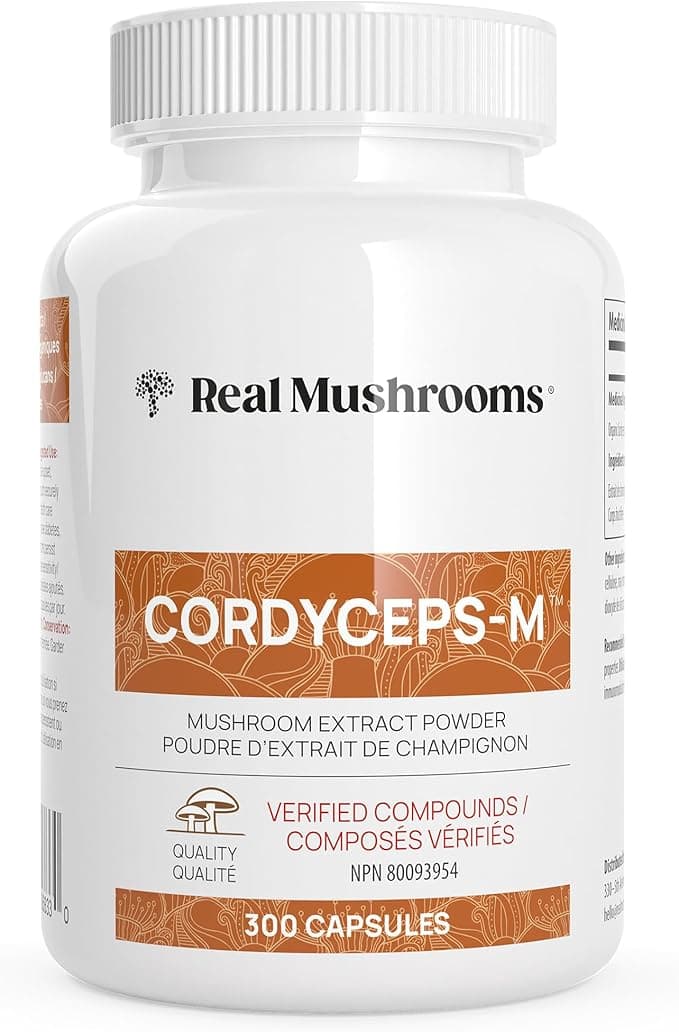
Cordyceps.
May offer mild energy and immune support, but effects are subtle. Claims to boost cellular energy, improve oxygen use, and support immunity. Think of it as a potential tune-up for your body's energy production.
Reviewed March 2026
- Category
- Herb
- Also filed under
- Energy SupportImmune SupportExercise Performance
- Also called
- Cordyceps Sinensis, Cordyceps Militaris
What Cordyceps is, and what it does.
- Does it work
- Maybe. The evidence in healthy humans is shaky. Some studies show a small benefit for exercise, others show nothing. For the price, you could get something with more proof.
- How much to take
- 1-3 grams of a quality extract daily. Doses in studies are often higher than what's in a single capsule, so check the label.
- Time to feel it
- Within the hour of a single dose.
- The first dose
- Absolutely nothing. It needs weeks of consistent use to build up.
- With regular use
- After 3-4 weeks, some people report slightly better endurance or stamina. The effects are not dramatic, and many feel nothing at all.
- How well tolerated
- Generally well tolerated for most healthy people. But if you have an autoimmune condition or take blood thinners, talk to your doctor. It can make your immune system more active.
- How it feels
- Like a 5% battery boost, not a new power pack. It's subtle, if you feel it at all.
- The overlooked benefit
- Its beta-glucans aren't digested by human enzymes, so they reach the colon intact and feed resident bacteria, a gut effect separate from anything to do with stamina.
500 to 1,500mg a day is where Cordyceps works.
Source: Hirsch 2017 exercise study + Chen 2010 review
In a randomised, double-blind, placebo-controlled crossover in 12 recreationally active young men, a single 1 g dose of standardised Cordyceps militaris extract taken 30 minutes before a maximal cycling test was followed by faster Stroop reaction times across the session compared with placebo.
The proof, claim by claim.
These words describe the research, not the molecule's worth. Research strength is how much work stands behind one claim, and it is never a product score.
While some studies show promise, particularly in animal models and in-vitro, more robust human trials at realistic supplement doses are needed to confirm the purported benefits. The variability in Cordyceps species and extraction methods also contributes to the lack of consensus.
- Improves aerobic capacity (VO2 max)Systematic review of mixed RCTs
- Enhances high-intensity exercise toleranceSmall RCTs (n=20-30)
Questions people ask about Cordyceps.
- Will it make me feel wired like caffeine?
- No. It's not a stimulant. Any energy boost is mild and non-jittery.
- Can I take it every day?
- Yes, it's meant for consistent, long-term use. No need to cycle it.
- Best time of day to take it?
- Morning or early afternoon is common, just in case it provides a slight energy lift. But timing isn't critical.
- Does it actually help with athletic performance?
- The jury is out. Some small studies say yes, but several better ones in trained athletes found no benefit. Don't count on it to win you a race.
Why these belong in the same formula. Each row says what the basis is, from settled biochemistry through to a trial that measured the pair.
Both mushrooms supply beta-glucan polysaccharides, the fungal cell-wall sugars that innate immune cells like macrophages recognize, so a blend layers two sources of the same immune-supporting fibers. That shared mechanism is why cordyceps and reishi sit together in most mushroom complexes.
These two anchor most functional-mushroom stacks because their strengths sit in different systems: lion's mane supports normal cognitive and nerve function while cordyceps supports cellular energy production, and both supply beta-glucan polysaccharides that back normal immune activity.
Cordyceps supports the aerobic energy metabolism muscles draw on during sustained effort while rhodiola supports the body's adaptation to physical and mental exertion, which is why stamina and endurance formulas routinely pair them to back normal energy and resistance to fatigue.
Panax ginseng and cordyceps are long-paired vitality tonics: ginseng supports the body's stress response and steady physical stamina while cordyceps supports cellular energy and oxygen use, so the two appear together across traditional and modern energy formulas.
Astragalus polysaccharides act on immune cell signalling while cordyceps acts on oxygen use and ATP turnover, and the two have been combined in traditional formulas for generations.
Cordyceps is used to shift substrate use toward oxidative ATP production, and CoQ10 is the mobile carrier that moves electrons from complexes I and II onward in that same chain.
PQQ signals through PGC-1alpha to raise mitochondrial number, while cordyceps acts on how existing mitochondria use substrate. Capacity and utilisation are different levers.
Ribose is the sugar backbone the body uses to rebuild adenine nucleotides, the pool cordyceps formulas target for ATP turnover, and cordycepin itself is an adenosine analogue.
NAD is the electron acceptor for the dehydrogenases feeding oxidative phosphorylation, so raising NAD supports the same oxidative route cordyceps is used for.
Nitrate improves oxygen delivery and lowers the oxygen cost of work, while cordyceps acts on how the mitochondria use that oxygen. Supply and use are separate limits.
Carnitine carries long chain fatty acids across the inner mitochondrial membrane, delivering fuel to the oxidative machinery cordyceps acts on.
Chaga and cordyceps carry differently branched beta-glucans that engage dectin-1 and complement receptor 3 with different affinities, which is why blends use several species rather than one.
Turkey tail's protein-bound polysaccharides differ structurally from cordyceps polysaccharides, so the pair covers a wider set of glucan receptor interactions.
Cordycepin is an adenosine analogue and part of cordyceps activity runs through adenosine signalling, while caffeine blocks adenosine receptors. Caffeine works against that specific action even though both raise perceived energy by other routes.
Exopolysaccharides from Cordyceps militaris were given alongside a Lactiplantibacillus plantarum strain in a non-human model and the authors reported larger changes in immune measures than either component alone. The readouts were immune markers in animals, not clinical outcomes in people. Fungal polysaccharides reaching the colon intact are also fermentable, which gives a plausible route for a live culture to act on the same substrate.
Most of the beta-glucan and mannan fraction of cordyceps is not digested by human enzymes and arrives in the colon as fermentable carbohydrate, the same fate as inulin. Pairing two fermentable substrates broadens what the resident microbiota can act on. This is a substrate argument, not a measured combination effect.
Cordyceps carries branched beta-glucans, and yeast-derived beta-1,3/1,6-glucan engages the same class of innate pattern-recognition receptors. Two sources of the same polysaccharide class contribute to one pool rather than acting through separate routes. No combination trial in people is available, so this stays a mechanistic pairing.
Cordyceps is taken for aerobic work, where oxygen delivery is the constraint, and citrulline raises plasma arginine available to nitric oxide synthase. The two act at different points of the same delivery problem: one on substrate utilisation, the other on vascular conductance. They have not been tested together in a published trial, so the pairing rests on mechanism.
Creatine loads the phosphocreatine system that covers the first seconds of hard effort, while cordyceps is used with an eye on sustained aerobic work. The energy systems are separate, so the two do not compete for the same substrate. Interval formats that tax both systems are where the pairing is most often built.
Beta-alanine raises muscle carnosine and buffers the hydrogen ion load of repeated hard intervals. Cordyceps is positioned around aerobic capacity. Different limiters, so the two are stacked rather than substituted. Neither one alters the absorption of the other.
Every ATP-consuming step in muscle uses magnesium as the counter-ion of the ATP complex, so magnesium status sits under any claim about energy availability. Cordyceps does not supply magnesium. Formulators pair them so the cofactor is not the limiting piece.
Hard aerobic training raises oxidative load, and astaxanthin partitions into membranes where lipid peroxidation happens. Cordyceps extracts carry their own polyphenol and polysaccharide antioxidant fraction, which is water-associated rather than membrane-associated. The two sit in different compartments, which is the usual reason for combining them.
Catechins and cordyceps polyphenols both contribute to the aqueous antioxidant pool of a formula. The overlap is real, so combining them adds quantity rather than a new mechanism. Worth stating plainly instead of implying a distinct synergy.
Maitake contributes a beta-glucan fraction of its own, and multi-mushroom blends are built on the assumption that the fractions sum. A narrative review of medicinal fungi describes this shared polysaccharide chemistry across species. What is shared is the compound class, not a demonstrated combined effect in people.
Cordyceps preparations carry adenosine and adenosine analogues, and stimulant-heavy pre-workout formulas are where cordyceps usually lands. Theanine is added to those formulas to soften the subjective edge of the stimulant load. The interaction is with the rest of the formula rather than with cordyceps itself, which is worth saying out loud.
Adenosine and cordycepin have been described as reducing platelet aggregation in laboratory work, and high-dose EPA/DHA has its own well-described effect on platelet function. Stacking two agents that act on platelets is worth flagging even though no combination study exists. Anyone on anticoagulant or antiplatelet medicine should raise the combination with their prescriber.
Garlic organosulfur compounds affect platelet aggregation in laboratory and human work, and cordyceps adenosine compounds point the same direction. The flag is additive, not a benefit claim. It matters mainly around planned surgery or existing antiplatelet therapy.
Ascorbate regenerates oxidised phenolics in the aqueous phase, including the polyphenol fraction of a mushroom extract. That keeps more of the extract's antioxidant capacity in the reduced state through processing and digestion. The effect is on the formula's chemistry, not a demonstrated physiological outcome.
Talk to a doctor before taking Cordyceps if any of these apply to you: Autoimmune disorders, Bleeding disorders, Pregnancy, Breastfeeding. These are flags to check first, not effects Cordyceps is known to cause.
Not medical advice. Show the label to your pharmacist.What Cordyceps actually does.
Cordyceps militaris builds up cordycepin, which is almost the same molecule as adenosine. The only difference is one missing hydroxyl group on the sugar ring.
The cell wall of cordyceps holds branched beta-1,3/1,6-glucans. Your digestive enzymes can't break that kind of polysaccharide down, so that fraction reaches your colon intact.
Mannitol, historically called cordycepic acid, is one of the main small molecules in the fungus, and it's one of the routine markers labs use to characterise a batch.
Adenosine is the other marker labs commonly measure, which is why you'll see extracts standardised to adenosine, cordycepin or both rather than to total extract weight.
Where Cordyceps comes from.
Nearly all cordyceps on the shelf is grown in a controlled facility on rice or in a nutrient broth, not harvested from a mountainside. The grown fungus is dried, extracted with hot water or alcohol, and tested for its marker compounds before it goes into a capsule.
Built by fermentation, the same way vitamin B12 and many amino acids are made at scale. Controlled conditions, consistent output.
Cooked grain such as rice, or a liquid broth of sugars, nitrogen salts and trace minerals for submerged culture
A characterised Cordyceps militaris or sinensis-derived strain is inoculated onto the substrate and grown under controlled light, humidity and temperature until fruiting bodies or mycelial mass develop
Dried biomass is milled and extracted. Water pulls the polysaccharide fraction, ethanol pulls sterols and nucleosides, and dual-extract processes run both
Extracts are filtered to remove cell debris and concentrated under vacuum before drying
Batches are assayed by HPLC for adenosine and cordycepin, and by enzymatic assay for beta-glucan, then blended to a declared specification
The concentrate is dried, sieved, and encapsulated or blended into a powder
The forms it comes in.
The essence, in one line each.
- A Cordyceps mycelium extract raised natural killer cell activity by about 39 percent from baseline versus placebo over eight weeks in healthy adults.Randomised trial. Jung et al., 2019 (BMC Complementary and Alternative Medicine). PMID 30925876 ↗
- Cs-4 Cordyceps sinensis taken for twelve weeks raised the lactate threshold during cycling by about 10.5 percent in healthy older adults, with no change in maximal oxygen uptake.Randomised trial. Chen et al., 2010 (Journal of Alternative and Complementary Medicine). PMID 20804368 ↗
- 1.5 grams a day of Cordyceps militaris for four weeks raised natural killer cell activity and lymphocyte proliferation versus placebo in healthy men.Randomised trial. Kang et al., 2015 (Journal of Medicinal Food). PMID 26284906 ↗
- A single dose of Cordyceps militaris raised resting oxygen uptake and shortened reaction times compared with placebo.Randomised trial. Farzan et al., 2026 (PLoS One). PMID 42455764 ↗
- Cordyceps sinensis supplementation increased the recruitment of muscle stem cells into skeletal muscle after an exercise bout.Randomised trial. Dewi et al., 2024 (Food and Function). PMID 38501161 ↗
- A Cordyceps militaris beverage shifted immune response markers in healthy participants relative to control.Randomised trial. Ontawong et al., 2024 (Scientific Reports). PMID 38580687 ↗
- The authors review the ergogenic and post-exercise recovery literature on cordyceps supplementation and conclude the human evidence base is small and heterogeneous in species, dose and preparation.Narrative review. Jedrejko M et al., 2026 (Nutrients). PMID 41829950 ↗
- In a randomised design, Cordyceps cicadae mycelium supplementation was assessed against control on symptom and tear-film measures of ocular dryness, with the authors reporting improvement on the symptom scores.Randomised trial. Chang HH et al., 2022 (International Journal of Medicinal Mushrooms). PMID 36374982 ↗
- An observational cohort linked Cordyceps cicadae mycelium intake with vision-related measures. Being observational, it reports an association and cannot establish that the mycelium caused the difference.Cohort study. Sun L et al., 2026 (International Journal of Medical Sciences). PMID 41799767 ↗
- Cordyceps militaris exopolysaccharides combined with a Lactiplantibacillus plantarum strain moved immune markers further than either component alone in a non-human model.Animal study. Xuan J et al., 2026 (Probiotics and Antimicrobial Proteins). PMID 42029995 ↗
- Cordyceps cicadae polysaccharide with a plant extract was evaluated as an antibiotic-free feed additive, with the authors reporting changes in growth and gut measures in the animals studied.Animal study. Li R et al., 2026 (Frontiers in Veterinary Science). PMID 42433692 ↗
- A review of medicinal fungi and their bioactive compounds that names cordyceps among the species, cataloguing beta-glucans, nucleosides and sterols as the characterised constituents.Narrative review. Sadowska A et al., 2026 (Molecules). PMID 42197308 ↗
- The authors describe a child who developed acute neurological symptoms after taking a multi-component medicinal fungi product. Because several fungi were present, no single ingredient was identified as the cause.Case report. Melek Arsoy HE et al., 2026 (BMC Complementary Medicine and Therapies). PMID 42063068 ↗
These are the studies our verdict leans on, chosen from the 635 we read for Cordyceps. The full linked list is below.
The studies, linked.
10 sources behind our Cordyceps verdict: peer-reviewed studies and registered clinical trials. Every one links straight to PubMed, the journal, or ClinicalTrials.gov. Read them yourself.
- Clinical trialAlleviating Effects Against Dry Eye by Oral Intake of Cordyceps Cicadae MyceliaClinicalTrials.gov ↗97 participants, Completed
- Clinical trialA 8-week, Randomized, Double-blind, Placebo-controlled Human Trial to Evaluate the Efficacy and Safety of Cordyceps Sinensis Mycelium Culture Extract(Paecilomyces Hepiali, CBG-CS-2) on Promotion of ImmunityClinicalTrials.gov ↗90 participants, Completed
- Clinical trialAlleviating Effects Against High Intraocular Pressure by Oral Intake of Cordyceps Cicadae MyceliaClinicalTrials.gov ↗46 participants, Completed
- Clinical trialA Randomized Controlled Clinical Trial of Cordyceps Militaris Beverage on the Immune ResponseClinicalTrials.gov ↗40 participants, Completed
- Clinical trialA Randomized Double-Blind Parallel-Group Placebo Controlled Clinical Trial of Cordyceps Militaris M2-116-04 for Its Potential Sport and Exercise Nutrition Applications in Healthy Active AdultsClinicalTrials.gov ↗32 participants, Completed
- Clinical trialAn Exploration of the Combined Effects of Cordyceps Supplementation and Fartlek Training on Inflammatory, Oxidative Stress, Muscle Damage, and Bone Metabolism Biomarkers (IL-6, IL-10, SOD, MDA, CK, BaLP, OST) in Soccer PlayersClinicalTrials.gov ↗22 participants, Completed
- Clinical trialPrevention of Recurrence With Cordyceps Sinensis in Mycobacterium Avium Complex Pulmonary DiseaseClinicalTrials.gov ↗Phase 4, 300 participants, Recruiting
- Clinical trialVitamin C Plus Cordyceps to Quality of Life in Patients With Terminal Stage Pancreatic CancerClinicalTrials.gov ↗Phase 2, 50 participants, Recruiting
- Clinical trialVitamin C Plus Cordyceps to Chemotherapy Related Anemia in Pancreatic CancerClinicalTrials.gov ↗Phase 2, 50 participants, Recruiting
- Clinical trialEvaluation of the Protective Effects of Cordyceps Cicadae on Visual Function and Anti-Fatigue Performance in Esports Athletes: A Prospective TrialClinicalTrials.gov ↗12 participants, Active not recruiting
Evidence surfaced via Semantic Scholar (Allen Institute for AI) and ClinicalTrials.gov. Ranked by study type and citation weight, not cherry-picked.
Problems people have reported.
Read this carefully. These are 220 voluntary, unverified reactions reported to the FDA (openFDA). The number mostly reflects how popular Cordyceps is, not how risky it is. A report is not proof Cordyceps caused anything. It is a signal of what to watch for, nothing more.
Source: openFDA adverse-event reports. Voluntary reporting, not an incidence rate.
FDA Disclaimer: These statements have not been evaluated by the Food and Drug Administration. This information is for educational purposes only and is not intended to diagnose, treat, cure, or prevent any disease. Consult your healthcare provider before starting any supplement regimen.