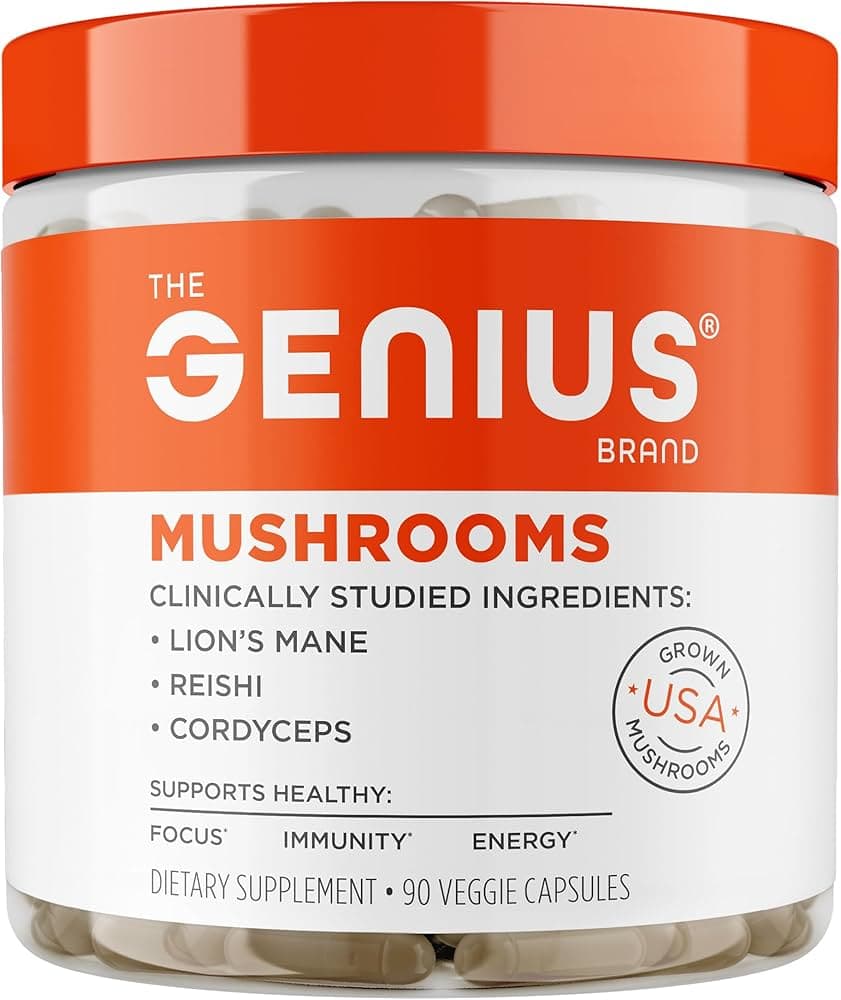
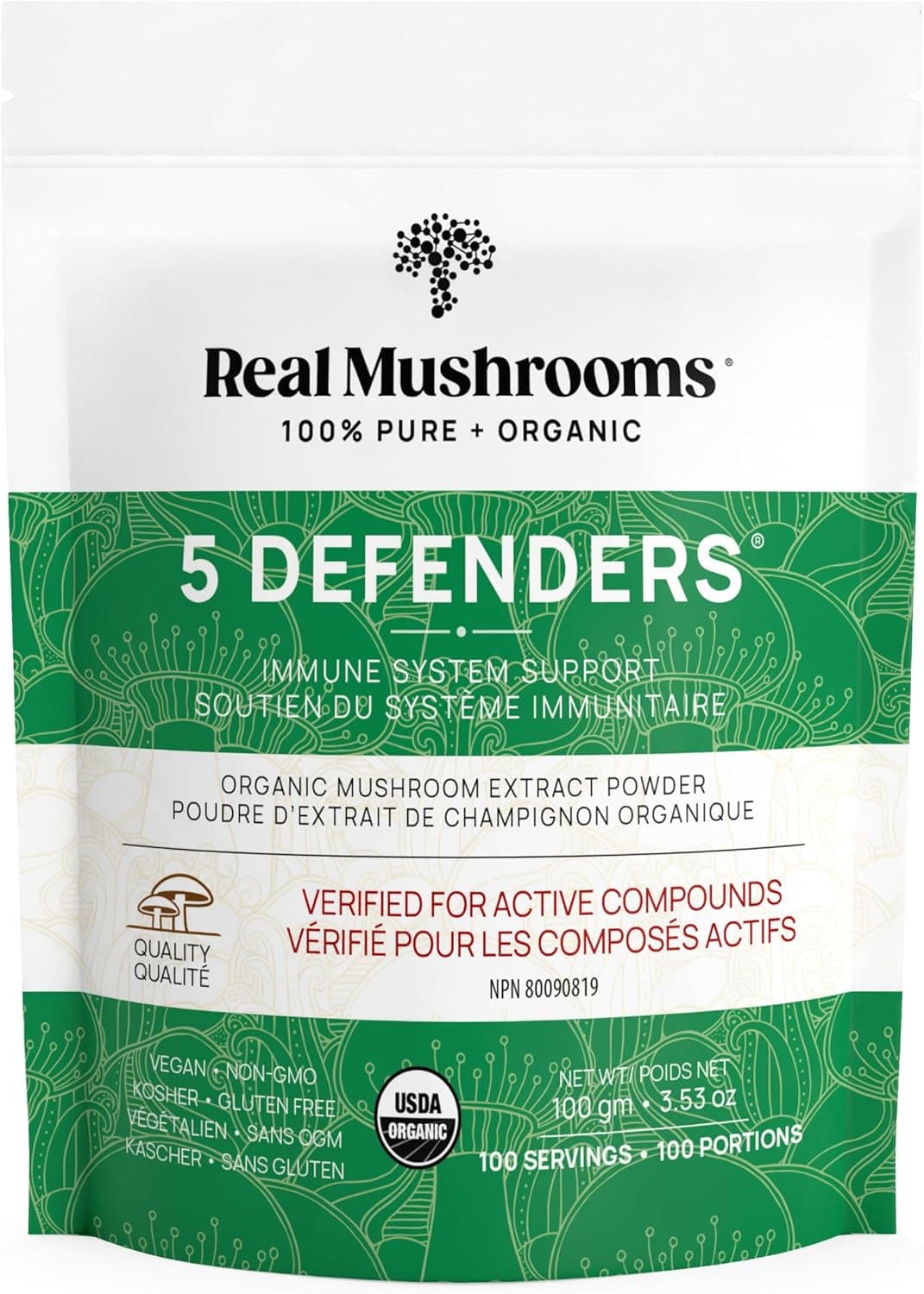
Reishi Mushroom.
May subtly reduce stress and support immune function. Traditionally used to reduce stress and support the immune system. The active compounds, polysaccharides and triterpenes, are thought to be responsible.
Reviewed March 2026
- Category
- Herb
- Also filed under
- Stress reductionImmune supportSleep improvement
- Also called
- Reishi Extract, Ganoderma Lucidum
What Reishi Mushroom is, and what it does.
- Does it work
- Probably not. The scientific backing for general wellness is weak.
- How much to take
- There's no solid consensus. Most products offer 500-1000mg of a standardized extract per day. Higher doses are used in studies, but it's unclear if they're better.
- Time to feel it
- Four to eight weeks of daily use before the calm side is noticeable. The immune side shows up in lab measures rather than in anything you sense.
- The first dose
- Nothing. It needs to be taken consistently for weeks to have any potential effect.
- With regular use
- After 4-8 weeks, some people notice they feel slightly less frazzled. The effect on immunity isn't something you'd feel day-to-day.
- How well tolerated
- Generally well tolerated for healthy people. The main concerns are for those with autoimmune conditions or on blood thinners. Start with a low dose.
- How it feels
- Very subtle. If it works for you, it's like turning the volume on your stress down from a 2 to a 1. Not a sedative, just a mild calming background effect.
- The overlooked benefit
- The glucans your enzymes can't cut reach the colon and get fermented into short chain fatty acids, so part of what reishi does is feed your gut bacteria.
300 to 1,000mg a day is where Reishi Mushroom works.
Source: Jin et al. 2012 Cochrane Review; Tang et al. 2012 J Ethnopharmacol
The proof, claim by claim.
These words describe the research, not the molecule's worth. Research strength is how much work stands behind one claim, and it is never a product score.
While some studies show potential benefits, particularly in immune function and stress reduction, the overall evidence is mixed. Many studies are small or have methodological limitations. More high-quality research is needed to confirm these effects, especially at realistic supplement doses.
- Enhances tumor response and immunity (as adjuvant)Cochrane Meta-analysis of 5 RCTs
- Reduces fatigue and improves well-being (Neurasthenia)Randomized Double-Blind Trial (n=132)
- Improves cardiovascular risk factors (Glucose/Cholesterol)Meta-analysis of 5 RCTs (Inconclusive results)
Questions people ask about Reishi Mushroom.
- Is Reishi a 'magic' mushroom?
- No. It's a medicinal mushroom, not a psychedelic. It won't make you hallucinate.
- Will it make me sleepy?
- Not directly like a sedative. Some people find it improves sleep quality over time by reducing stress, but don't expect it to knock you out.
- What's better: powder or extract?
- Extract, every time. The raw powder is hard to digest and the good stuff isn't bioavailable. Look for standardized extracts in capsules.
- Can I take it every day?
- Yes, it's designed for daily use. Some people like to cycle off for a week or two every couple of months.
- How long until it works?
- At least 4 weeks of consistent use. If you don't notice anything by 8 weeks, it's probably not for you.
Why these belong in the same formula. Each row says what the basis is, from settled biochemistry through to a trial that measured the pair.
Reishi triterpenes slow platelet aggregation, the normal clumping that starts clot formation, and ginkgo blunts that same clumping by a separate route, blocking platelet-activating factor. Because the two effects add together, keep a clinician in the loop if you combine them, already take a blood thinner, or bruise and bleed easily.
EPA and DHA make platelets less sticky by shifting eicosanoid production away from thromboxane A2, and reishi triterpenes ease that same platelet clumping by their own route. The effect on normal clotting adds together, so be mindful of the combined load, especially ahead of a planned surgery.
Maitake and reishi glucans both engage dectin-1 and complement receptor 3 on innate immune cells, and their different branching patterns mean each reaches a somewhat different receptor population.
Yeast beta-1,3/1,6-glucan binds the same dectin-1 receptor as the fungal glucans in reishi, so receptor availability sets the ceiling when both are present.
Garlic organosulfur compounds and reishi's adenosine fraction both damp platelet aggregation, so combining them pushes normal platelet function further in the same direction than either alone.
Both are basidiomycete fungi whose hot-water extracts carry beta-1,3/1,6-glucans recognised by the same innate immune receptors, dectin-1 and complement receptor 3. Mushroom blends pair them because the polysaccharide fractions differ in molecular weight and branching. What overlaps is the receptor pathway, not the full extract composition.
Cordyceps and reishi appear together in most commercial mushroom blends and in long-standing traditional formulas. Cordyceps contributes nucleoside constituents such as cordycepin and adenosine alongside its own glucans. Blend trials cannot separate what each fungus contributed.
Lion's mane brings hericenones and erinacines from the fruiting body and mycelium respectively, a chemistry unrelated to the triterpenes in reishi. The two are combined in blends aimed at different aspects of daily function. Any blend result belongs to the blend.
Astragalus polysaccharides and astragalosides are paired with reishi in traditional Chinese formulas and in modern immune blends. Both are water-extracted materials, so a single decoction carries them together. The pairing is documented by long use and by shared extraction chemistry rather than by a combination trial.
Both are described in the adaptogen literature as acting on the stress axis, and they appear together in blends studied for stress, fatigue and sleep measures. Because those studies used blends, the contribution of each cannot be separated. The endpoints in that literature are self-reported scales.
Rhodiola is formulated alongside reishi in stress and fatigue blends, with rosavins and salidroside as its markers. The two have different chemistry and different extraction requirements, one alcohol-leaning and one dual. The pairing is a formulation convention supported by adaptogen literature rather than by a joint trial.
Schisandra lignans are alcohol-soluble, so they suit the same dual-extraction process that pulls reishi triterpenes. Both appear in traditional tonic formulas. This is shared processing and shared tradition, not a measured interaction.
Eleuthero is a standard component of adaptogen stacks that include reishi. Its eleutherosides are a distinct chemical class from fungal glucans and triterpenes. The combination is conventional in formulation and has not been isolated in a trial.
Mushrooms exposed to ultraviolet light generate vitamin D2 from ergosterol in their cell membranes, and vitamin D receptors are present on immune cells. A UV-treated mushroom powder therefore carries a vitamin D2 contribution alongside its glucans. D2 and D3 are not interchangeable in how they raise circulating 25-hydroxyvitamin D.
Zinc is required for normal development and function of innate immune cells, the same cells that carry the receptors recognising fungal beta-glucans. A glucan signal reaching a zinc-deficient cell has less to work with. This is nutrient adequacy underneath a signalling input, not a measured combination effect.
Fungal beta-glucans and chitin are not digested by human enzymes and reach the colon, where bacteria ferment part of the polysaccharide fraction to short-chain fatty acids. Mushroom material is described in the fermentation literature as a prebiotic substrate. The measurement there is microbial and metabolite composition.
The active polysaccharide fraction of reishi is itself a beta-1,3/1,6-glucan, so an added glucan from yeast or oat sits on the same receptor pathway. Branching pattern and molecular weight differ by source and change receptor binding. Adding two glucan sources gives more of the same class of signal, not a new one.
Reishi constituents including adenosine have reported effects on platelet aggregation in laboratory work, and nattokinase is taken for its fibrinolytic activity. Two agents touching clot formation are worth flagging together. Anyone on medication affecting clotting should discuss the combination with their clinician.
Salicylates reduce platelet thromboxane production, and reishi has reported antiplatelet activity in preclinical work. The combination has not been studied in people. It is a caution rather than a demonstrated interaction.
Reishi polysaccharides have been reported to lower blood glucose measures in animal and small human work, and berberine acts on glucose handling through AMP-activated protein kinase. Stacking two agents that move the same marker can push it further than either alone. Anyone monitoring blood sugar should watch the numbers when combining them.
Gymnema is used for glucose handling and reishi has reported effects on the same marker. Two agents acting on one measurement is worth flagging even without a joint study. This is an additive-effect caution, not a claim of benefit.
Silymarin is formulated alongside reishi in products aimed at supporting normal liver function. Reishi triterpenes and silymarin flavonolignans are both alcohol-soluble, so they share extraction behaviour. The pairing rests on convention and shared chemistry, with no combination study cited here.
Both materials are polyphenol-rich or triterpene-rich extracts used together in antioxidant blends. High-dose concentrated botanical extracts taken together increase the total load the liver processes. The pairing is a formulation choice rather than a measured synergy.
Licorice is the harmonising herb in a large share of traditional Chinese formulas that also contain reishi. Its glycyrrhizin content raises its own considerations around blood pressure and potassium at sustained doses. The pairing is documented by long formulary use.
Talk to a doctor before taking Reishi Mushroom if any of these apply to you: Autoimmune conditions (potential immune modulation), Pregnancy and breastfeeding (limited safety data), Bleeding disorders (potential antiplatelet effects), Low blood pressure. These are flags to check first, not effects Reishi Mushroom is known to cause.
Not medical advice. Show the label to your pharmacist.What Reishi Mushroom actually does.
The polysaccharide fraction is mostly beta-1,3-glucan with beta-1,6 side branches, and innate immune cells pick these up through receptors called dectin-1 and complement receptor 3. That receptor interaction has been characterised in cell and animal work.
The triterpenes, the ganoderic acids, dissolve in alcohol and barely come out in water, while the beta-glucans dissolve in water and barely come out in alcohol. That's the whole reason dual extraction exists.
Fungal cell walls are built on chitin, and human enzymes can't digest it, so plain unextracted powder releases its polysaccharides less completely than an extract does.
Fruiting body and grain-grown mycelium aren't the same thing. The fruiting body has the mature cell wall glucans and triterpenes, while a mycelium-on-grain product carries leftover starch from the grain, so a stated polysaccharide percentage can include that starch unless the assay is glucan-specific.
Where Reishi Mushroom comes from.
It is farmed, usually on logs or on sawdust blocks, then dried and boiled. Boiling gets the sugar-like immune compounds out, alcohol gets the bitter resin compounds out, and a dual extract does both. Which part of the fungus was used, and what it was grown on, matters more to the finished powder than most labels admit.
Made from a plant. What ends up in the capsule tracks the harvest, so batch testing and a stated marker matter more here than with a made molecule.
Hardwood logs, sawdust blocks or agricultural waste such as date palm residue are sterilised and inoculated with a characterised Ganoderma lucidum culture
The mycelium runs through the substrate over weeks, then temperature, humidity and carbon dioxide are shifted to trigger the antler or conk fruiting body
Fruiting bodies are cut, dried to a low moisture content and milled. Drying temperature affects the surviving compound profile
Extended boiling breaks open the chitin wall and pulls the water-soluble beta-glucan fraction into solution
A separate alcohol pass recovers the triterpene fraction that water leaves behind. The two liquids are then combined for a dual extract
The combined liquid is concentrated under vacuum and spray-dried onto a carrier or dried to a neat powder
Beta-glucan is measured by an enzymatic glucan-specific method rather than a generic polysaccharide precipitation, and triterpene content by chromatography
Many finished products do not state whether the material is fruiting body or mycelium grown on grain, nor which extraction was used, and both change the compound profile.
The forms it comes in.
The essence, in one line each.
- In a pooled analysis of five randomized trials, reishi taken alongside standard care raised the measured share of CD3, CD4 and CD8 immune cells by about 3.9, 3.1 and 2.0 percentage points.Meta-analysis. Jin et al., 2016 (Cochrane Database of Systematic Reviews). PMID 27045603 ↗
- Over eight weeks, a reishi polysaccharide extract lowered self-rated fatigue by about 28 percent from baseline versus 20 percent on placebo and raised the sense of well-being.Randomised trial. Tang et al., 2005 (Journal of Medicinal Food). PMID 15857210 ↗
- In older women, a Ganoderma lucidum dry extract changed how T lymphocytes, a type of white blood cell, responded in laboratory testing, a laboratory measure rather than a health outcome.Randomised trial. Iser-Bem et al., 2024 (British Journal of Nutrition). PMID 38800991 ↗
- Reishi supplementation was tested against placebo for self-reported psychological wellbeing, with modest changes on the questionnaire scores used.Randomised trial. Mitra et al., 2024 (International Journal of Medicinal Mushrooms). PMID 39241163 ↗
- A randomised, double-blind trial of a multi-mushroom blend reported changes in self-rated stress, fatigue and sleep measures. Because the product was a blend, no result can be assigned to reishi alone.Randomised trial. Hisamuddin et al., 2026 (Brain and Behavior). PMID 41540766 ↗
- A review cataloguing the bioactive compound classes of medicinal mushrooms, including the beta-glucan polysaccharides and triterpenes of Ganoderma, and describing where the human evidence remains preliminary.Narrative review. Sadowska et al., 2026 (Molecules). PMID 42197308 ↗
- A review of edible mushrooms as prebiotic substrates, describing fermentation of fungal polysaccharides to short-chain fatty acids and shifts in microbial composition. These are measured microbial endpoints, not clinical outcomes.Narrative review. Mattioli et al., 2026 (Foods). PMID 42121482 ↗
- A nutritional and functional characterisation of mushrooms as protein sources, describing amino acid profile, fibre content and processing behaviour.Narrative review. Pawde et al., 2026 (Foods). PMID 42073187 ↗
- Ganoderma lucidum was cultivated on date palm agricultural waste as substrate, with yield and quality measures reported. This describes how the raw material is produced rather than any effect in people.In vitro study. Rashwan et al., 2025 (Journal of the Air and Waste Management Association). PMID 40828968 ↗
- A review of routes for converting spent mushroom substrate into biochar and other materials, relevant to the waste stream left behind by cultivation.Narrative review. Sunil et al., 2026 (Frontiers in Chemistry). PMID 42058621 ↗
- A single case report describing acute neurological symptoms in a child after a multi-component medicinal fungi supplement. With several fungi in one product and one patient reported, the event cannot be attributed to any single ingredient.Case report. Melek Arsoy et al., 2026 (BMC Complementary Medicine and Therapies). PMID 42063068 ↗
These are the studies our verdict leans on, chosen from the 1,830 we read for Reishi Mushroom. The full linked list is below.
The studies, linked.
3 sources behind our Reishi Mushroom verdict: peer-reviewed studies and registered clinical trials. Every one links straight to PubMed, the journal, or ClinicalTrials.gov. Read them yourself.
- Clinical trialA Comparison Study to Assess the Value of Naturopathic Medicine Given Immediately and Continuously or Delayed Until Cycle 3 in Combination With Neo-Adjuvant Chemotherapy for Breast CancerClinicalTrials.gov ↗Phase 1, 5 participants, Terminated
- ClinicalTrials.gov ↗
- Clinical trialReishi Mushroom Extract for Fatigue and/or Arthralgias in Patients With Breast Cancer on Aromatase Inhibitors: A Randomized Phase II MNCCTN TrialClinicalTrials.gov ↗Phase 2, 80 participants, Recruiting
Evidence surfaced via Semantic Scholar (Allen Institute for AI) and ClinicalTrials.gov. Ranked by study type and citation weight, not cherry-picked.
Problems people have reported.
Read this carefully. These are 116 voluntary, unverified reactions reported to the FDA (openFDA). The number mostly reflects how popular Reishi Mushroom is, not how risky it is. A report is not proof Reishi Mushroom caused anything. It is a signal of what to watch for, nothing more.
Source: openFDA adverse-event reports. Voluntary reporting, not an incidence rate.
FDA Disclaimer: These statements have not been evaluated by the Food and Drug Administration. This information is for educational purposes only and is not intended to diagnose, treat, cure, or prevent any disease. Consult your healthcare provider before starting any supplement regimen.