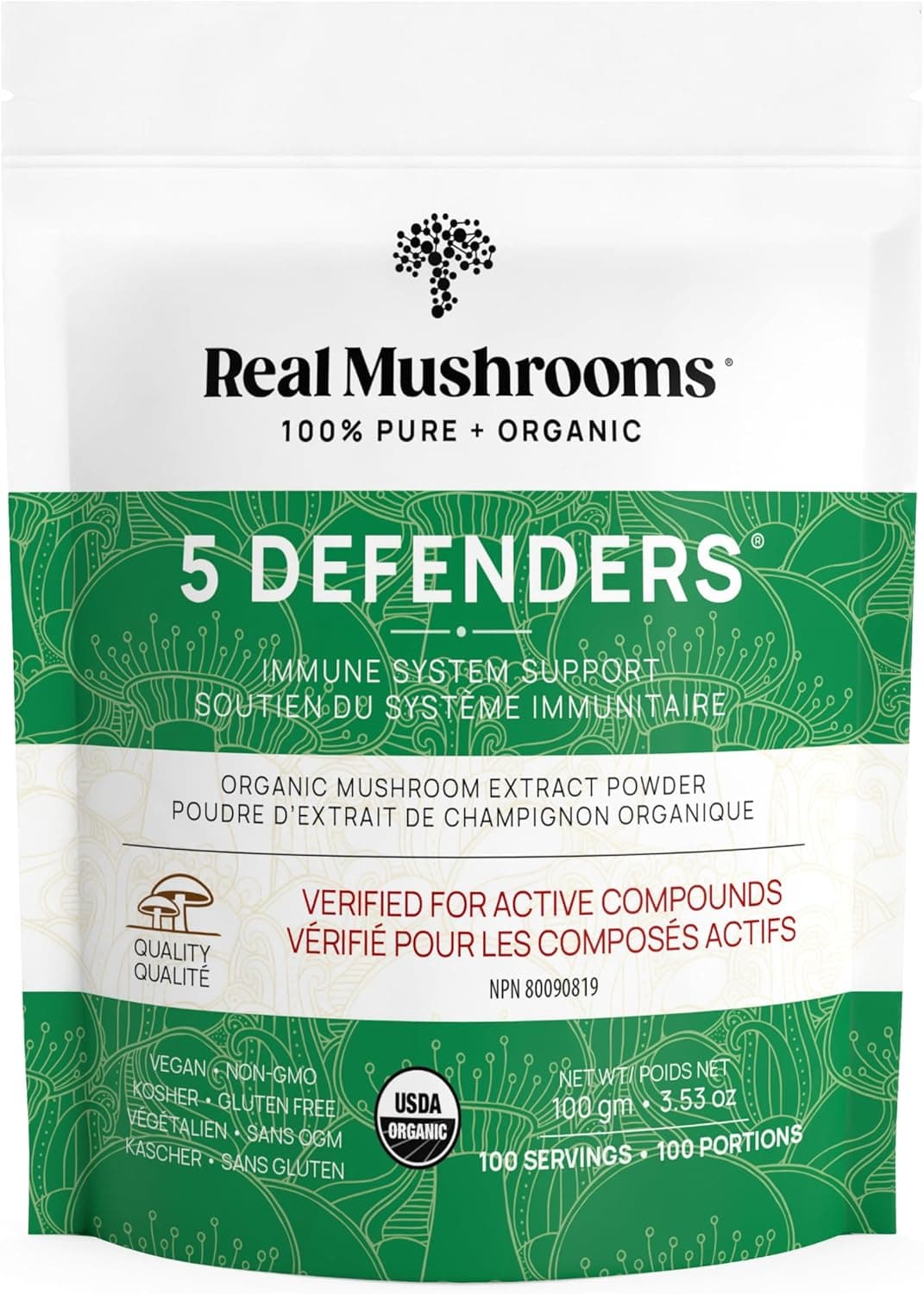
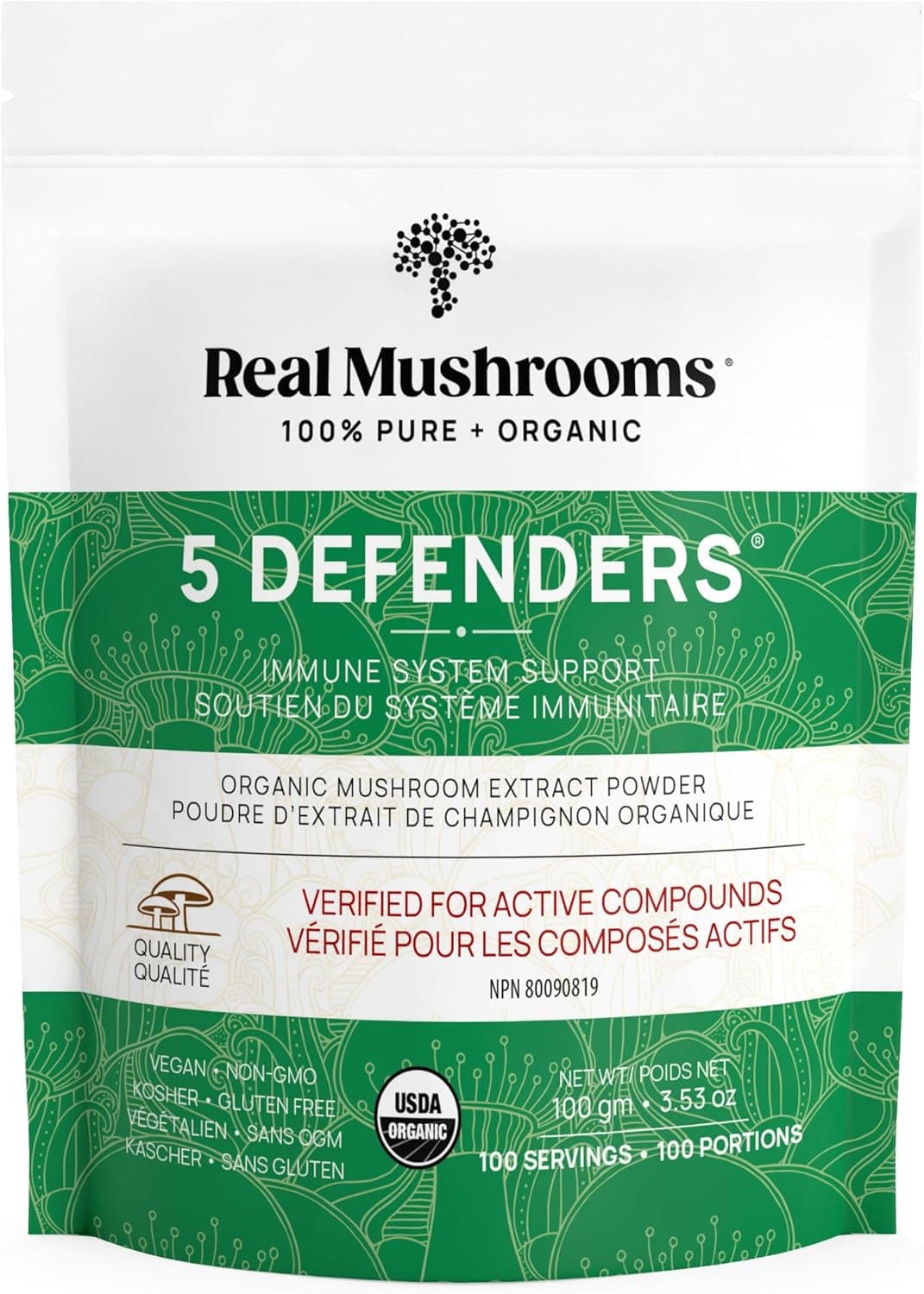
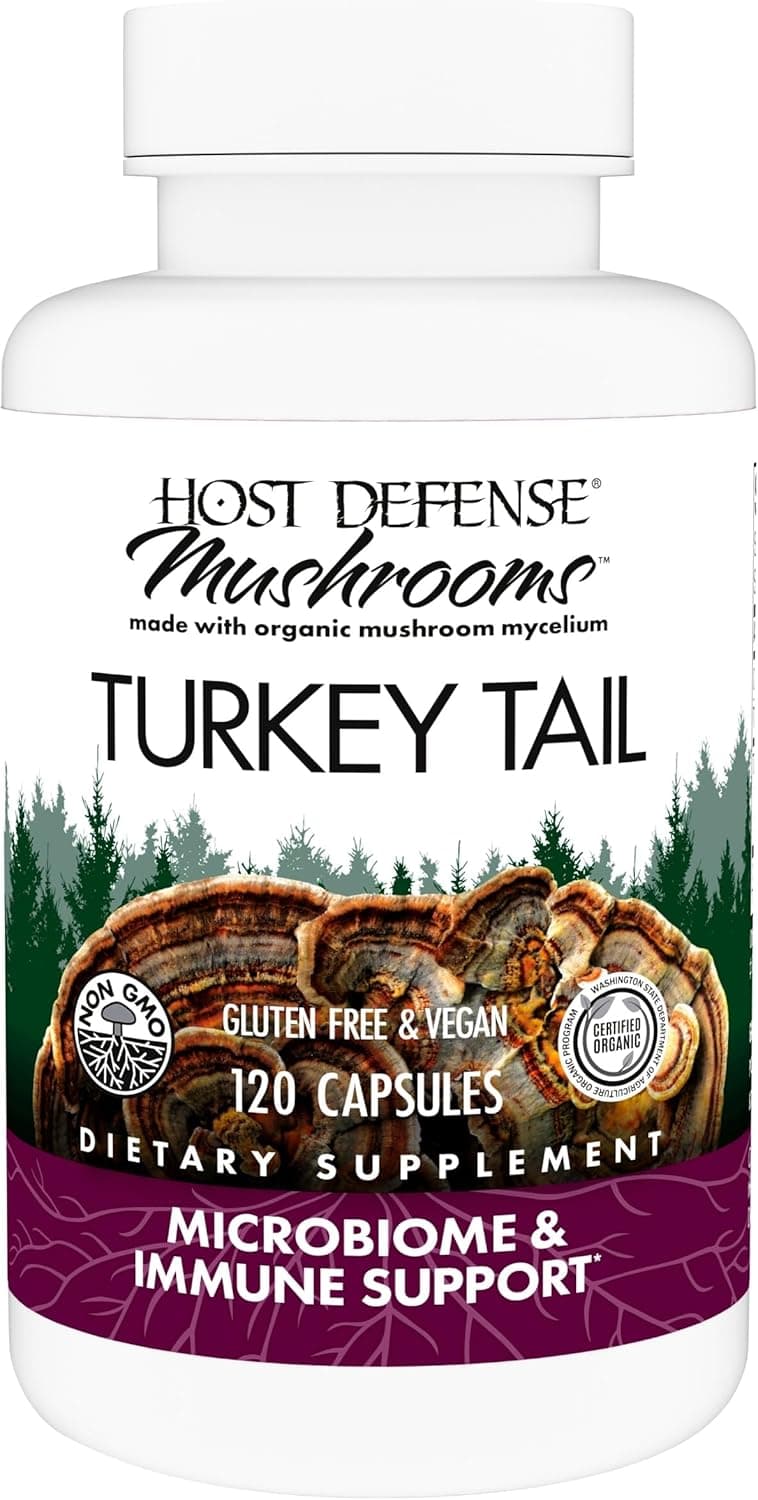
Turkey Tail (Trametes versicolor).
The gut-immune mushroom. Prebiotic powerhouse. Feeds your gut bacteria with fungal beta-glucans that human enzymes can't break, and those same glucans are read by receptors on innate immune cells.
Reviewed March 2026
- Category
- Mushroom
- Also filed under
- ImmuneGut healthPrebiotic
What Turkey Tail (Trametes versicolor) is, and what it does.
- Does it work
- Suits people building a gut and immune routine, particularly through the darker months. It works in the background, so give it weeks rather than expecting a sensation.
- How much to take
- Start with 1g to 3g a day of a hot-water extract that states its beta-glucan content. The larger amounts used in studies are a research condition.
- Time to feel it
- Digestive changes tend to show in the first two to four weeks. Immune measures are a laboratory readout across a longer stretch rather than a feeling.
- The first dose
- The extract passes your small intestine untouched and reaches the colon the same day, where fermentation starts. A little extra gas is common while bacteria adjust.
- With regular use
- Most effects take 2-8 weeks. Be patient.
- How well tolerated
- Generally well tolerated. Check with your doctor if on medications.
- How it feels
- Improved digestion for many. Immune effects not felt directly.
- The overlooked benefit
- Ask for the beta-glucan figure rather than total polysaccharide. Mycelium grown on grain carries starch that registers on a crude polysaccharide test.
1 to 3g a day is where Turkey Tail (Trametes versicolor) works.
Source: Eliza et al. 2012 Evid Based Complement Alternat Med review; Torkelson et al. 2012 ISRN Oncol (n=11).
The proof, claim by claim.
These words describe the research, not the molecule's worth. Research strength is how much work stands behind one claim, and it is never a product score.
Based on 25 human trials with 70% consistency.
- Gut microbiome balanceRandomised trial
- Innate immune cell signalling through dectin-1In vitro study
- Short-chain fatty acid production in the colonRandomised trial
- Immune marker changes with daily dosingRandomised trial
Questions people ask about Turkey Tail (Trametes versicolor).
- When should I take it?
- Timing matters less than consistency. Pick a time that works for you and take it daily.
- Can I take it with other supplements?
- Usually fine. The main thing to watch is not doubling up on the same ingredient from different products. If you're on prescription meds, check with your pharmacist first.
- Any side effects to watch for?
- Most people tolerate it well at recommended doses. GI upset is the most common complaint with any supplement. Start with a lower dose and work up. If something feels off, stop and reassess.
Why these belong in the same formula. Each row says what the basis is, from settled biochemistry through to a trial that measured the pair.
Both mushrooms supply beta-glucan polysaccharides that engage the same innate-immune receptors (dectin-1, complement receptor 3) on macrophages and natural killer cells, so they are traditionally combined so their overlapping but complementary polysaccharide profiles support the body's normal immune surveillance activity.
Maitake contributes a branched beta-1,3/1,6-glucan (the D-fraction) that engages the same dectin-1 pathway Turkey Tail's PSK and PSP act on, so pairing them broadens the range of glucan structures presented to immune cells that support normal defensive function.
Turkey Tail's polysaccharopeptide fraction is fermented by resident gut bacteria and has been reported to shift the community toward Lactobacillus and Bifidobacterium, so it can act as a prebiotic substrate that feeds a co-supplemented probiotic and supports a normal microbial balance.
Turkey tail polysaccharide peptide is a beta glucan protein complex recognised by dectin-1 and complement receptor 3 on innate immune cells. Yeast beta glucan engages the same receptors with a different branching pattern.
The active fraction of turkey tail is itself a beta glucan bound to protein, so added beta glucan feeds the same innate recognition pathway. Blending sources widens the range of linkages presented.
Chaga contributes melanin and triterpene fractions alongside its polysaccharides, a different profile from the turkey tail glucan protein complex. A blend presents both fraction types rather than one.
Astragalus polysaccharides and saponins act on innate signalling through routes that overlap only partly with dectin-1. The pairing has long standing in traditional immune formulas.
Vitamin D receptors are expressed on monocytes and T cells and support normal antimicrobial peptide expression. That is a different lever from the glucan receptor route turkey tail uses.
Zinc is required for thymulin activity and normal T cell maturation. Stimulating innate recognition without adequate zinc leaves the adaptive side under-resourced.
Neutrophils accumulate ascorbate and use it during chemotaxis and the oxidative burst. It supports the cells that glucan recognition activates.
Turkey tail polysaccharides are fermented in the colon and shift microbial composition, much as inulin does. Both act on the gut associated lymphoid tissue rather than being absorbed intact.
Selenoproteins guard immune cells against the oxidants they generate during activation. That keeps activated cells functional for longer.
Lion's mane and turkey tail are the two most common members of a multi-mushroom capsule, chosen because their described targets differ. Turkey tail is used for its protein-bound beta-glucans, lion's mane for its hericenones and erinacines. No combination study of the pair has been identified. The formulation logic is non-overlap, not synergy.
Cordyceps appears beside turkey tail in stamina and daily-mushroom products. Both contribute beta-glucans, so a blend label listing total beta-glucan cannot be attributed to either species alone. That is worth knowing when reading a blend specification. No study of the specific pair has been identified.
Human digestive enzymes cannot cleave either fructan or fungal glucan linkages, so both arrive in the colon intact and become substrate for resident bacteria. Combining two fermentable fibres broadens the substrate pool. It also raises the gas and bloating load, which is the practical trade-off when starting.
GOS is selectively fermented by bifidobacteria and reaches the colon undigested, as does the polysaccharide fraction of turkey tail. The two provide different sugar backbones for different bacterial groups. Pairing them widens which organisms find something to eat. Start low if fermentable fibre is new to the diet.
FOS is a short-chain fructan fermented rapidly in the proximal colon, while fungal polysaccharides ferment more slowly and further along. The combination spreads fermentation across more of the large bowel. Rapid proximal fermentation is also what drives early gas, so the ramp matters.
Resistant starch escapes small intestinal amylase and is fermented to short-chain fatty acids, principally butyrate. Turkey tail polysaccharides are fermented on a different schedule and by different organisms. Both add to the total fermentable load reaching the colon.
Butyrate is the end product that colonocytes use as their preferred fuel, and it is also what bacteria make from fermentable polysaccharides. Supplying butyrate directly and supplying substrate for its production are two routes to the same molecule. They are not redundant, since fermentation happens where the bacteria are and a supplement delivers where its coating releases.
A polysaccharide only does anything in the colon if organisms are present that carry the enzymes to break it down. Pairing a fermentable fungal polysaccharide with a live strain is the standard synbiotic rationale. Whether this particular strain degrades this particular polysaccharide has not been shown. Label the pairing as a rationale rather than a measured match.
Bifidobacteria carry broad glycoside hydrolase repertoires and are the usual partner strains in synbiotic products. Fungal polysaccharide from turkey tail is a candidate substrate on that basis. The strain-substrate match has not been demonstrated for this pair specifically. It is a mechanistically sound pairing at that confidence.
Lactobacillus plantarum has an unusually large carbohydrate utilisation gene set for its genus, which is why it appears in synbiotic pairings with less common fibres. Turkey tail polysaccharides could serve as substrate on that basis. No study has confirmed degradation of this substrate by this species.
Saccharomyces boulardii is a yeast rather than a bacterium and survives passage without needing prebiotic substrate. It is combined with mushroom extracts in gut-support products. The two act independently. No combination study has been identified.
L-glutamine is the main respiratory fuel of the enterocyte, taken up directly from the lumen. Turkey tail polysaccharide instead feeds bacteria that produce short-chain fatty acids for the colonocyte. Two different cell populations, two different fuels, one gut. That non-overlap is why they are combined.
Lactoferrin is an iron-binding milk glycoprotein used in immune formulas, and turkey tail extract appears in the same category. Their described routes do not overlap. No combination study of the pair has been identified, so this sits at the bottom confidence band.
Elderberry anthocyanins and fungal beta-glucans are stacked in seasonal wellness products. The pairing is a category convention. Nothing describes an interaction between anthocyanins and fungal polysaccharides. Regard any combined claim as the sum of the parts at their own evidence levels.
Quercetin is a flavonol with its own literature on immune signalling markers and is commonly formulated alongside mushroom extracts. No shared pathway with fungal polysaccharides has been described. This is a shelf pairing rather than a mechanistic one.
EGCG is a catechin with strong protein-binding behaviour, and turkey tail extracts carry protein-bound polysaccharides. Whether catechin binding changes the presentation of a protein-bound glucan has not been studied. Note the open question rather than assuming either direction.
Propolis is a resin blend rich in flavonoids and phenolic acids, used traditionally in the same seasonal products as mushroom extracts. There is no described mechanistic link to fungal polysaccharides. The pairing is traditional and formulation-driven.
Nothing specific on file for Turkey Tail (Trametes versicolor). Match the label to the daily amount above, and tell your doctor what you take.
Not medical advice. Show the label to your pharmacist.What Turkey Tail (Trametes versicolor) actually does.
Turkey tail makes beta-glucans with a 1,3 linked glucose backbone carrying 1,6 linked branches. Your digestive enzymes can't cut either kind of link, so the polysaccharide reaches your colon intact.
The two characterised preparations from this fungus are polysaccharide-K and polysaccharopeptide, both polysaccharides bound to protein. The protein is part of the molecule, so hot water extraction conditions change what a product actually contains.
Innate immune cells recognise fungal 1,3/1,6 beta-glucans through pattern recognition receptors, mainly dectin-1 and complement receptor 3. That recognition is why fungal and cereal beta-glucans behave differently even though both are glucose chains.
Beta-glucan content is the specification that means something on a mushroom product. Alpha-glucan is starch and still registers on a crude polysaccharide test, so a grain-grown product can show a high polysaccharide figure that's mostly leftover grain starch.
Where Turkey Tail (Trametes versicolor) comes from.
Turkey tail is a bracket fungus that grows in fans on dead hardwood. Growers either collect it or farm it on sawdust or grain, then dry it and simmer it in hot water, because the useful part sits inside tough cell walls that water and heat open up. The liquid is concentrated, dried and tested so the label can state how much beta-glucan is in it.
Produced by a cultured organism rather than harvested. The strain is selected and the conditions are controlled, so batches sit closer together than a field crop.
Trametes versicolor is a wood-decay fungus. It is either wild-harvested from hardwood logs and stumps or cultivated on supplemented sawdust blocks or sterilised grain.
Fruiting body production runs on wood-based blocks over weeks. Mycelial biomass production runs in shorter indoor cycles on grain or in liquid fermentation.
Dried material is extracted in hot water to break chitinous cell walls and pull the protein-bound beta-glucans into solution. An ethanol step is added for dual extracts.
The extract is filtered clear of insoluble cell wall debris and concentrated under vacuum.
The concentrate is assayed for beta-glucan specifically, separating it from alpha-glucan starch, and blended to a declared percentage.
Dried onto a carrier and encapsulated or tableted.
Getting Turkey Tail (Trametes versicolor) from food.
The whole-food sources on file. A supplement closes the gap, it does not replace dinner.
A gram-for-gram figure (how much of each you would eat to match a dose) will appear here once it is sourced and reviewed. This page will not print a number it cannot cite.
The forms it comes in.
The essence, in one line each.
- In 24 healthy volunteers, eight weeks of polysaccharopeptide from Trametes versicolor produced consistent shifts in gut bacterial composition in the pattern expected of a prebiotic, while an antibiotic comparator changed the microbiome far more substantially.Randomised trial. Pallav et al., 2014 (Gut Microbes). PMID 25006989 ↗
- In a crossover trial in 100 healthy adults, four months of Yun Zhi (Coriolus versicolor) taken together with Danshen raised helper T cell counts, the CD4 to CD8 ratio and interferon-gamma production from stimulated blood cells, so the effect cannot be attributed to turkey tail alone.Randomised trial. Wong et al., 2004 (International Immunopharmacology). PMID 14996412 ↗
- A randomized trial gave polypore mushroom mycelium, Trametes versicolor included, alongside vaccination and compared antibody and immune cell responses against placebo.Randomised trial. Saxe et al., 2026 (BMC immunology). PMID 41620671 ↗
- A review of medicinal mushrooms and their bioactive compounds that names Trametes versicolor among the species discussed and describes the polysaccharide and polysaccharopeptide chemistry the genus is studied for.Narrative review. Sadowska et al., 2026 (Molecules). PMID 42197308 ↗
- A review of white-rot fungi that covers the laccase and peroxidase enzyme systems Trametes versicolor produces. Relevant to how the organism is grown and what it makes, not to any human effect.Narrative review. Ferreira et al., 2026 (Molecules). PMID 41976128 ↗
These are the studies our verdict leans on, chosen from the 1,780 we read for Turkey Tail (Trametes versicolor). The full linked list is below.
FDA Disclaimer: These statements have not been evaluated by the Food and Drug Administration. This information is for educational purposes only and is not intended to diagnose, treat, cure, or prevent any disease. Consult your healthcare provider before starting any supplement regimen.