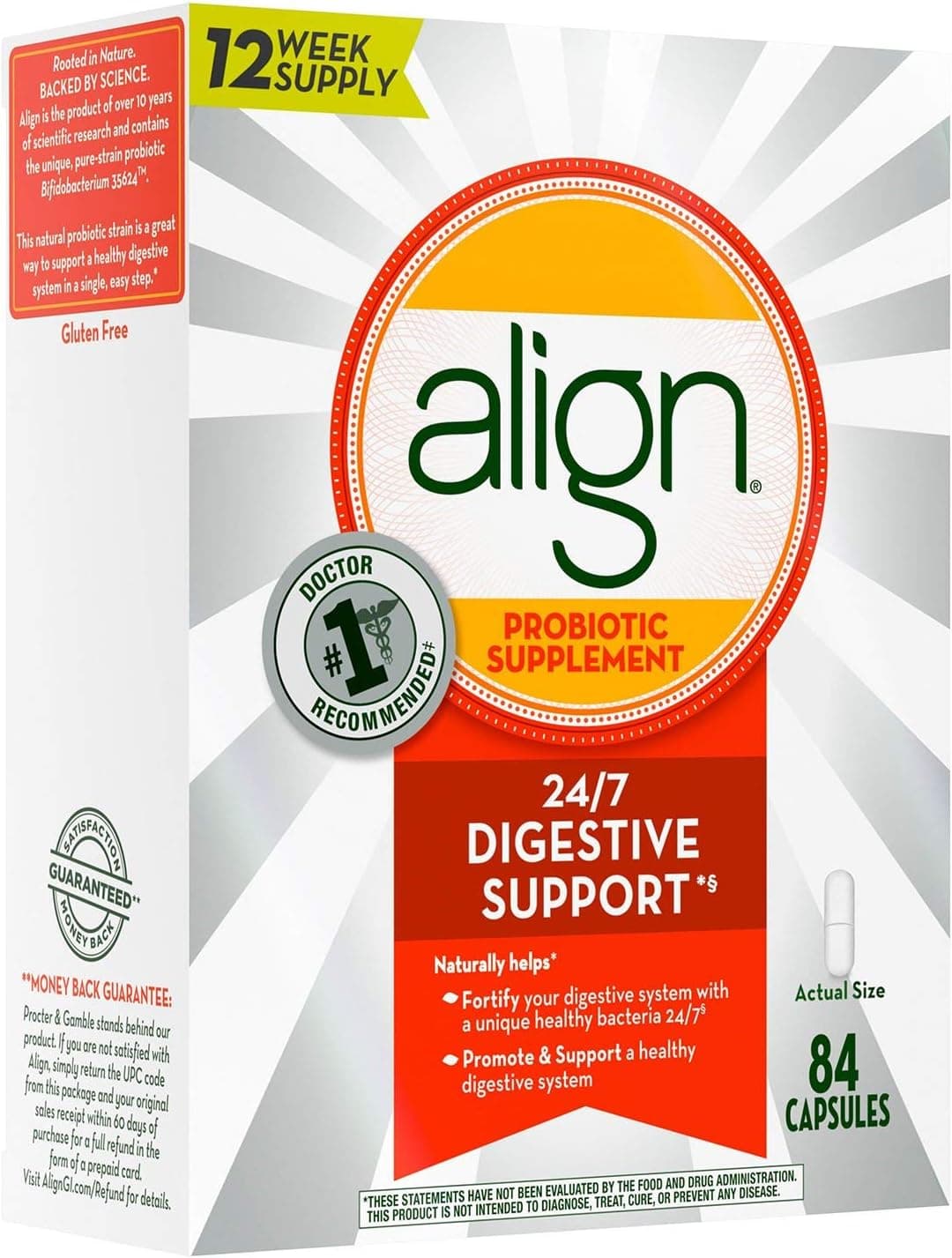
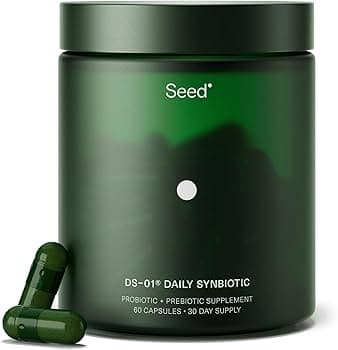
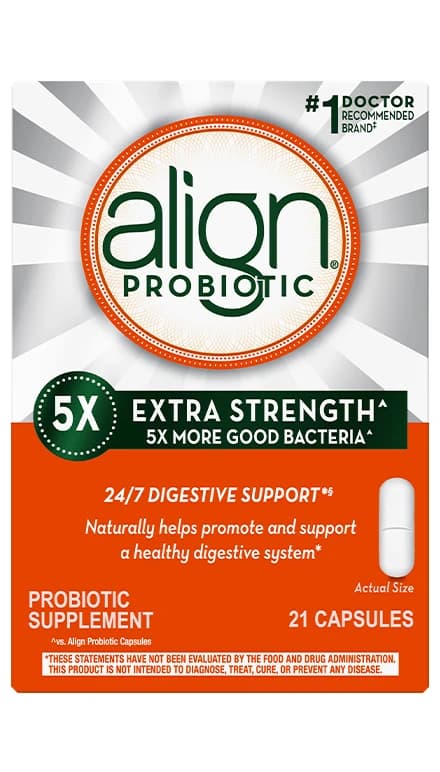
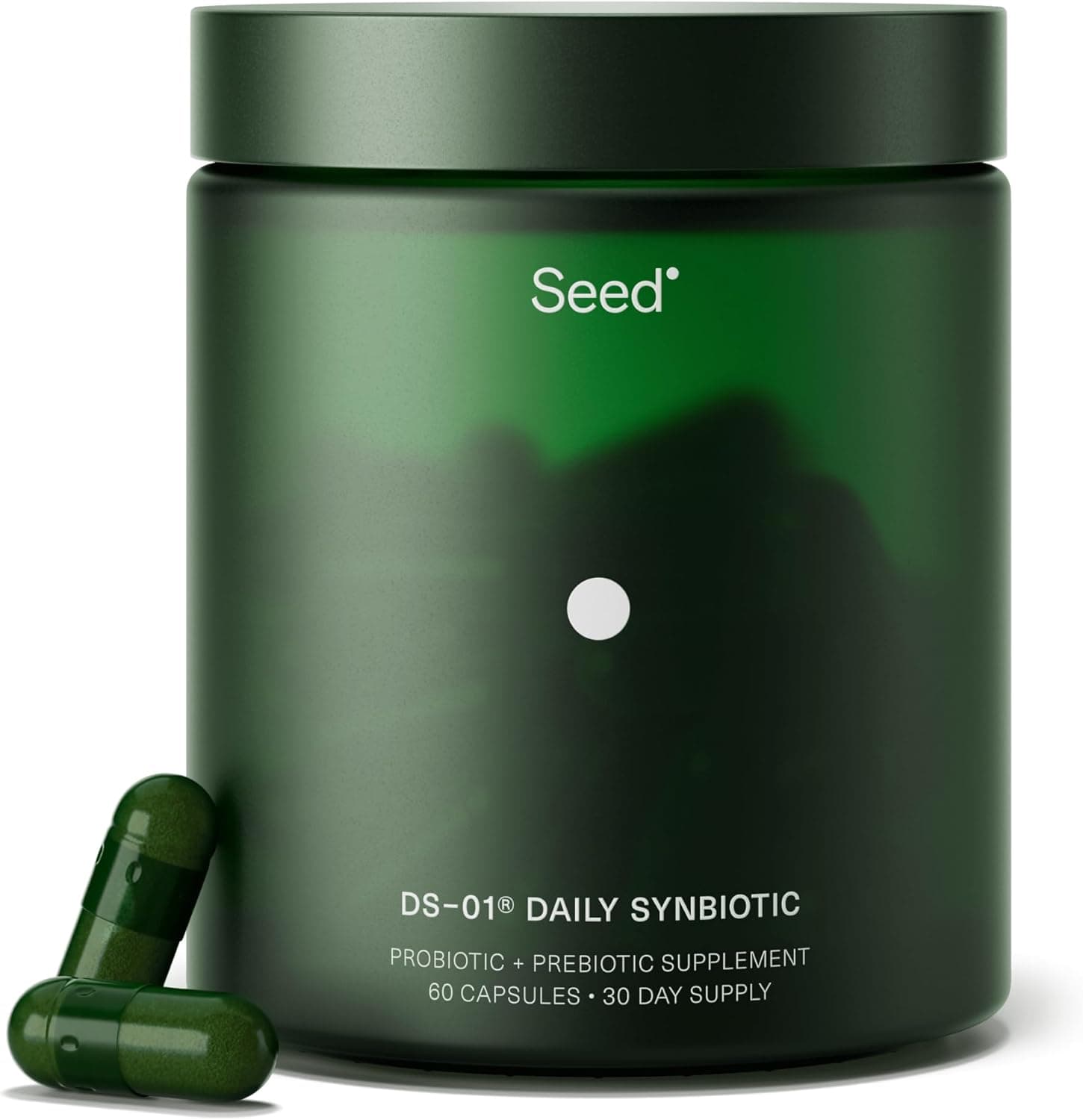
Bifidobacterium longum.
The anxiety probiotic. Gut-brain axis modulator. Helps balance the good bacteria in your gut. This can lead to smoother digestion, less bloating, and may give your immune system some backup.
Reviewed March 2026
- Category
- Probiotic
- Also filed under
- Gut healthAnxietyImmune
What Bifidobacterium longum is, and what it does.
- Does it work
- Suits people whose digestion is unsettled, who've just finished a course of antibiotics, or who want gut-brain support. If your digestion is already steady, it's maintenance rather than repair.
- How much to take
- 1 to 10 billion CFUs a day. Start on the lower end to see how you feel. Most products land right in the middle of that range.
- Time to feel it
- Digestive changes usually show up somewhere between one and four weeks of daily use. Trials that looked at stress and mood measures read them at four weeks or later.
- The first dose
- Nothing. Probiotics need time to set up shop and multiply in your gut. Be patient.
- With regular use
- After a few weeks of consistent use, you might notice more regular digestion and less bloating. The benefits are usually steady and subtle.
- How well tolerated
- Well tolerated for most healthy people. If you're severely immunocompromised, check with a doctor. Standard procedure for any live bacteria supplement.
- How it feels
- Like your digestive system is just working a bit better. Less drama, less bloating. It's not a stimulant or a relaxant, you just feel more normal.
- The overlooked benefit
- It doesn't make butyrate itself, but it releases acetate that butyrate-producing bacteria feed on. That cross-feeding step is how a bifidobacterium can raise colonic butyrate.
1 to 10 CFU a day is where Bifidobacterium longum works.
Source: ISAPP consensus statement 2019 + Ford 2014 meta-analysis
The proof, claim by claim.
These words describe the research, not the molecule's worth. Research strength is how much work stands behind one claim, and it is never a product score.
Based on 50 human trials with 70% consistency.
- digestive comfort and regularityMeta-analysis
- gut microbial composition after a course of antibioticsRandomised trial
- everyday stress and mood measures in healthy adultsRandomised trial
- immune markers in adultsRandomised trial
- colonic acetate output and cross-feeding to butyrate producersNarrative review
- selective use of galactooligosaccharides and milk oligosaccharidesIn vitro study
Questions people ask about Bifidobacterium longum.
- Do I need to keep this in the fridge?
- Depends on the product. Look for 'shelf-stable' on the label if you don't want to. Otherwise, the fridge is its friend.
- Can I take this with antibiotics?
- Yes, but space them out. Take the probiotic at least 2-3 hours before or after the antibiotic so it doesn't get wiped out.
- Is a higher CFU count always better?
- Not really. 5-10 billion is a solid dose for B. longum. Megadoses aren't proven to be better for general health.
- Will this make me gassy?
- It can, for the first few days. It's usually just your gut microbiome adjusting to the new residents. It should calm down.
- Can I get this from food?
- Yes, it's in yogurt, kefir, and other fermented foods. But a supplement gives you a concentrated, guaranteed dose you can't get from food alone.
- Does the specific strain of B. longum matter?
- For researchers, yes. For most people, a reputable brand's general B. longum is perfectly fine. Don't get lost in the weeds.
Why these belong in the same formula. Each row says what the basis is, from settled biochemistry through to a trial that measured the pair.
Bifidobacterium longum carries the fructofuranosidase machinery to split inulin-type fructans, the property behind the word bifidogenic. Delivering strain and substrate together is the standard synbiotic build.
PHGG ferments slowly and evenly along the colon, so it reaches distal segments where B. longum resides with carbohydrate still intact.
Colonic degradation of pectin yields short-chain fatty acids that lower luminal pH, conditions bifidobacteria handle better than many competing genera.
B. longum expresses beta-galactosidase and hydrolyses lactose in the lumen, the same reaction a lactase supplement performs, so the two add to one activity.
Bifidobacterial fermentation yields acetate and lactate that butyrate-producing bacteria convert onward into butyrate. Supplemental butyrate supplies the colonocyte fuel at the end of that chain.
Lactobacilli occupy mainly the small intestine and bifidobacteria the colon, so a blend of both covers the length of the gut rather than one segment.
B. longum strains carry folate biosynthesis genes and release folate into the colon, adding to dietary intake.
Certain bifidobacterial strains overproduce and export riboflavin, contributing flavin to the colonic lumen.
Short-chain fatty acids from bifidobacterial fermentation acidify the colon, and calcium remains soluble and absorbable at lower pH.
Colonic bacteria convert tea catechins into smaller absorbable phenolic metabolites, and those catechins shift the community in a direction bifidobacteria tolerate.
Phenolic terpenes disrupt bacterial membranes without selectivity, so co-formulating them with a live strain lowers viable counts.
Charcoal adsorbs fermentable sugars and short-chain fatty acids broadly, stripping both substrate and product from the lumen.
Bifidobacteria carry beta-galactosidases and dedicated oligosaccharide transporters, which is why galactooligosaccharides are selectively fermented by this genus. Supplying the substrate alongside the organism gives it a carbon source that competing genera use less well. This is settled microbiology rather than an outcome claim.
Short-chain fructans are fermented by bifidobacteria to acetate and lactate, lowering colonic pH as they go. Pairing the strain with a fructan is the classic synbiotic construction. Gas and bloating scale with the fermentable dose, so the substrate amount is the variable to watch.
Resistant starch reaches the colon intact and is fermented by a consortium in which bifidobacteria participate, often as primary degraders of the more accessible fractions. The acetate they release is taken up by butyrate producers downstream. The cross-feeding step is well characterised in fermentation systems.
Oat beta-glucan is a viscous soluble fibre that arrives in the colon largely unfermented in the upper gut. It supports saccharolytic fermentation generally rather than bifidobacteria specifically. The selectivity is weaker than for GOS or FOS, hence the lower confidence.
Lactoferrin binds iron tightly and withholds it from iron-requiring competitors, while bifidobacteria have a low iron requirement. Growth-promotion of bifidobacteria by lactoferrin is repeatedly reported in culture and in infant feeding work. The direction is consistent even though effect sizes differ by preparation.
Bovine colostrum carries oligosaccharides plus immunoglobulins and lactoferrin, so it supplies both fermentable substrate and binding proteins. That combination is used alongside bifidobacteria in gut-support formulas. Human combination data for this specific pairing is thin.
Both species ferment carbohydrate through the bifid shunt and tolerate bile, so they occupy overlapping niches without antagonism. Multi-strain products routinely combine them because strain effects are strain-specific and coverage widens with more than one. Combining does not multiply any single strain's measured effect.
Lactobacilli produce lactate that bifidobacteria and other colonic bacteria use, and both lower luminal pH. Their combination is the oldest and most widely used probiotic construction in supplements and fermented dairy. Any given clinical result belongs to the specific strains tested, not to the pairing in general.
L. plantarum is acid and bile tolerant and colonises transiently alongside bifidobacteria without displacing them. Products pair them to cover both small intestinal and colonic niches. The rationale is ecological. Measured combination outcomes vary by product.
S. boulardii is a yeast, so it is unaffected by conditions that suppress bacteria and it occupies a separate niche. Co-dosing is common where bacterial persistence is uncertain. The two are not interchangeable and their mechanisms differ.
Most oral iron is not absorbed and the remainder reaches the colon, where iron-requiring genera are favoured. Bifidobacteria have an unusually low iron requirement, so iron fortification studies commonly report a relative fall in bifidobacteria. Separating an iron dose from a probiotic dose is the practical response.
The cited work reported higher circulating choline plasmalogen concentrations with BB536 supplementation in a non-human model, which is a lipid marker rather than an outcome. It suggests the strain sits somewhere on choline-containing lipid handling. Nothing human is established here, and the direction should not be assumed to carry across species.
Large proanthocyanidins are barely absorbed and depend on colonic bacteria to release smaller phenolic metabolites. Bifidobacteria contribute to that degradation step. Which metabolites appear depends on the person's microbial makeup, which is why polyphenol responses vary so widely.
Psyllium is mostly a gel-forming bulk fibre with a modest fermentable fraction, so it supports transit while contributing some substrate. It is a gentler pairing than a rapidly fermented oligosaccharide. Expect less gas and less selective bifidogenic effect.
Glutamine is the preferred respiratory fuel of small intestinal enterocytes, a settled point of metabolism. Bifidobacteria act further down, in the colon, via fermentation products. The two support the barrier from different segments, and the combination itself is not well studied.
Gut bacteria divert a share of dietary tryptophan into indole derivatives that act on host receptors. Bifidobacteria participate in that metabolism to a strain-dependent degree. This is an early mechanistic link, not a dosing recommendation.
Nothing specific on file for Bifidobacterium longum. Match the label to the daily amount above, and tell your doctor what you take.
Not medical advice. Show the label to your pharmacist.What Bifidobacterium longum actually does.
These bacteria break down carbs by their own route, the bifid shunt. What comes out the other end is acetate and lactate, not butyrate.
Butyrate-making gut bacteria feed on the acetate bifidobacteria release. That handoff is how a bifidobacterium supplement can raise butyrate it never makes itself.
Those fermentation acids make the gut a little more acidic, which is harder going for acid-sensitive bacteria and changes how soluble minerals are down there.
This genus carries the enzyme and the transporters to use galactooligosaccharides and human milk oligosaccharides, which is why those fibres feed these organisms fairly selectively.
Where Bifidobacterium longum comes from.
One specific bacterial strain is grown in large oxygen-free tanks, then spun out of the liquid, mixed with sugars that help it survive drying, and freeze-dried into a powder. The powder is counted so the label can state how many live organisms are in a dose. Heat and damp lower that count, which is why storage matters.
Built by fermentation, the same way vitamin B12 and many amino acids are made at scale. Controlled conditions, consistent output.
A single characterised strain is drawn from a culture bank and grown on a medium of sugars, nitrogen sources and growth factors. Dairy-derived media are common, which matters for allergen declarations
Scaled up through seed stages into large anaerobic fermenters with pH control, since this genus is oxygen-intolerant and acid-sensitive to its own output
Cells are concentrated by centrifugation or membrane filtration and washed away from spent medium
The concentrate is mixed with protectants such as trehalose, sucrose or skim milk solids so cells survive drying
Live count is plated and the powder blended with a carrier to a declared colony forming unit figure per gram, usually with an overage to cover shelf-life decline
Lyophilised and packed under low moisture, then encapsulated, sachetted or, for a postbiotic route, heat-inactivated before packing
Getting Bifidobacterium longum from food.
The whole-food sources on file. A supplement closes the gap, it does not replace dinner.
A gram-for-gram figure (how much of each you would eat to match a dose) will appear here once it is sourced and reviewed. This page will not print a number it cannot cite.
The forms it comes in.
The essence, in one line each.
- Pooling randomised controlled trials of Bifidobacterium longum supplementation in infants, the authors reported measurable effects on the pooled endpoints along with acceptable tolerability.Meta-analysis. Guo H et al., 2023 (Foods). PMID 38137255 ↗
- A 12-week double-blind placebo-controlled exploratory pilot of a heat-treated Bifidobacterium preparation reported pilot-scale findings the authors describe as exploratory and needing confirmation.Randomised trial. Chai H et al., 2026 (BMC Nutrition). PMID 42436590 ↗
- Supplementation with Lactobacillus helveticus plus Bifidobacterium longum was reported to change hormonal and related laboratory measures relative to control. These are markers, not clinical outcomes.Randomised trial. Shirani M et al., 2025 (Nutrition Journal). PMID 41254712 ↗
- School-age follow-up of a single-strain versus triple-strain probiotic trial reported neurodevelopmental and atopy measures years after the original supplementation period.Randomised trial. Athalye-Jape G et al., 2026 (Nutrients). PMID 41515257 ↗
- Strain BB536 intake was associated with improvements in gastrointestinal symptom scores and odour-related metabolite measures. This is an association, not a demonstrated cause.Cohort study. Miyamoto S et al., 2026 (Journal of the International Society of Sports Nutrition). PMID 42046285 ↗
- Bifidobacterium supplementation was reported to maintain gut microbiota stability and self-reported well-being measures across the supplementation period.Open-label trial. Wang L et al., 2026 (Frontiers in Nutrition). PMID 41769651 ↗
- A single-blind randomised study reported changes in cognitive test scores and in microbiota composition with Bifidobacterium longum supplementation.Randomised trial. Lin ST et al., 2026 (International Journal of Medical Sciences). PMID 41799757 ↗
- Bifidobacterium longum supplementation was reported to shorten age-related delays in fracture repair in an ageing animal model.Animal study. Roberts JL et al., 2023 (Aging Cell). PMID 36704918 ↗
- Combining IgE neutralisation with Bifidobacterium longum supplementation reduced the measured allergic response in preclinical models of food-protein sensitisation.Animal study. An SB et al., 2022 (Nature Communications). PMID 36167830 ↗
- Strain B8762 of the infantis subspecies was reported to modulate gut and lung microbial and metabolic profiles in an early-life model.Animal study. Ma R et al., 2026 (Microbial Pathogenesis). PMID 41802657 ↗
- 2'-Fucosyllactose combined with strain BB536 lessened measured signs in a loperamide-induced model of slowed intestinal transit.Animal study. Tan Z et al., 2026 (Food and Function). PMID 42300939 ↗
- Oral Bifidobacterium longum supplementation was reported to change metabolic parameters and tissue gene expression in an animal model.Animal study. Machado AS et al., 2021 (Biological Research for Nursing). PMID 32700545 ↗
- Strain BB536 supplementation was associated with higher circulating choline plasmalogen concentrations in a non-human study. A lipid marker, not an outcome.Animal study. Asato Y et al., 2026 (Reproduction, Fertility and Development). PMID 42402985 ↗
- The review concluded that early-life probiotic effects on respiratory infection measures are strain-specific and cannot be generalised across products.Systematic review. Carnazzo SM et al., 2026 (Nutrients). PMID 42451071 ↗
These are the studies our verdict leans on, chosen from the 14 we read for Bifidobacterium longum. The full linked list is below.
The studies, linked.
7 sources behind our Bifidobacterium longum verdict: peer-reviewed studies and registered clinical trials. Every one links straight to PubMed, the journal, or ClinicalTrials.gov. Read them yourself.
- Clinical trialEffect of a Mixture of Probiotics ( Lactobacillus Gasseri PA16/8,Bifidobacterium Longum SP07/3, Bifidobacterium Bifidum MF 20/5) on the Antigen Specific Antibody Response in a Influenza Vaccination Model of Healthy AdultClinicalTrials.gov ↗430 participants, Completed
- Clinical trialSafety and Efficacy of Probiotics in Bangladeshi InfantsClinicalTrials.gov ↗Phase 1, 160 participants, Completed
- Clinical trialDigestive and Nutritional Effects of Probiotics (Bifidobacterium Longum and Lactobacillus GG) Supplementation in Premature NewbornsClinicalTrials.gov ↗127 participants, Completed
- Clinical trialEfficacy of Red Yeast Rice Based Nutraceutical (Monacolin K 10 mg/Dose) Plus Probiotic (Bifidobacterium Longum BB536 ®) in Patients With Moderate Hypercholesterolemia.ClinicalTrials.gov ↗33 participants, Completed
- Clinical trialUse of Probiotics Bifidobacterium Longum, Bifidobacterium Breve and Bifidobacterium Infantis in Treating Pediatric Food Allergy to Milk or Egg.ClinicalTrials.gov ↗33 participants, Completed
- Clinical trialThe Beneficial Effects of a Novel Formulation of Bifidobacterium Longum BB536 and Lactobacillus Rhamnosus HN001 With Vitamin B6 on Gut Microbiota and Intestinal Permeability in IBS Patients.ClinicalTrials.gov ↗Phase 3, 25 participants, Completed
- Clinical trialInfant Supplementation With Probiotic Bifidobacterium Longum Subsp. Infantis StudyClinicalTrials.gov ↗120 participants, Active not recruiting
Evidence surfaced via Semantic Scholar (Allen Institute for AI) and ClinicalTrials.gov. Ranked by study type and citation weight, not cherry-picked.
Problems people have reported.
Read this carefully. These are 3,984 voluntary, unverified reactions reported to the FDA (openFDA). The number mostly reflects how popular Bifidobacterium longum is, not how risky it is. A report is not proof Bifidobacterium longum caused anything. It is a signal of what to watch for, nothing more.
Source: openFDA adverse-event reports. Voluntary reporting, not an incidence rate.
FDA Disclaimer: These statements have not been evaluated by the Food and Drug Administration. This information is for educational purposes only and is not intended to diagnose, treat, cure, or prevent any disease. Consult your healthcare provider before starting any supplement regimen.