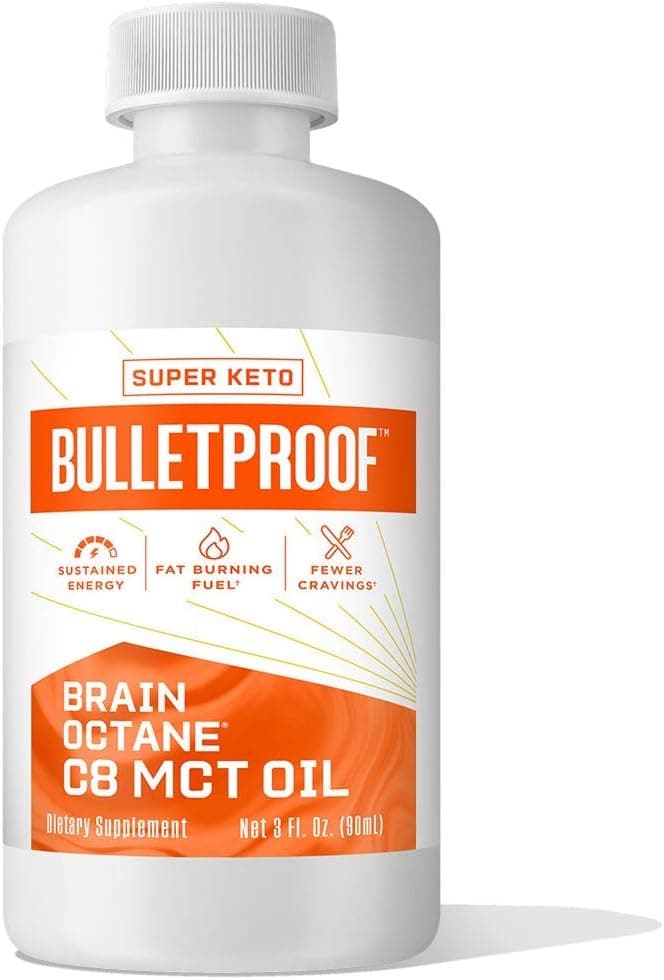
Caprylic Acid.
May support gut health and energy levels. Kills Candida and other fungi, supports gut health, provides ketone energy, may help with bacterial imbalances.
Reviewed March 2026
- Category
- Fatty acid
- Also filed under
- May support gut healthPossible energy boostAntimicrobial properties (in vitro)
What Caprylic Acid is, and what it does.
- Does it work
- Good choice for Candida issues with solid antimicrobial research. Also useful for ketone energy. Not needed if gut is healthy.
- How much to take
- 500-2000mg daily for antifungal effects. Higher doses (5-15g) for ketone energy (as MCT C8 oil).
- Time to feel it
- Within about 30 minutes to 3 hours of a single dose.
- The first dose
- Possible GI upset or die-off symptoms if starting strong. Energy effects quick.
- With regular use
- Improved gut flora balance, reduced yeast overgrowth symptoms.
- How well tolerated
- Generally well tolerated. May cause GI upset, especially at higher doses. Start low.
- How it feels
- Cleaner gut feeling if dealing with yeast. Quick energy that feels different from sugar/caffeine.
- The overlooked benefit
- It skips the carnitine shuttle that long chain fats depend on, so it reaches the mitochondria for fuel even when carnitine is running low.
500mg a day is where Caprylic Acid works.
Source: MCT oil studies; Omura et al. (2011) antimicrobial data
On an 8-hour metabolic study day, healthy adults took a single 20 mL dose of tricaprylin (C8), tricaprin (C10), trilaurin (C12) or a mixed C8/C10 oil with breakfast, with a second dose four hours later. The rise in plasma acetoacetate, beta-hydroxybutyrate and total ketones was largest after C8 and occurred 0.5 to 3 hours after the dose. In a separate study, 10 healthy adults given single 10, 20 or 30 g doses with breakfast and sampled every 30 minutes for four hours showed roughly a two-fold rise in ketogenesis over the no-treatment control. In a randomised crossover in 8 lean adults and 8 adults with obesity, ketogenesis and metabolic rate rose and blood glucose fell over five hours, and the same response was present after eight days of daily intake. Blood ketones were measured, not alertness.
The proof, claim by claim.
These words describe the research, not the molecule's worth. Research strength is how much work stands behind one claim, and it is never a product score.
Some in vitro and animal studies show promising antimicrobial effects. Human studies are limited, and the effects at typical supplement doses are not well-established. Research is ongoing.
- Raising circulating ketone bodiesRandomised trial
- Fuel availability during low carbohydrate eatingRandomised trial
- Antimicrobial activity in laboratory conditionsIn vitro study
- Balance of gut microbesAnimal study
Questions people ask about Caprylic Acid.
- When should I take it?
- Timing matters less than consistency. Pick a time that works for you and take it daily.
- Can I take it with other supplements?
- Usually fine. The main thing to watch is not doubling up on the same ingredient from different products. If you're on prescription meds, check with your pharmacist first.
- Any side effects to watch for?
- Most people tolerate it well at recommended doses. GI upset is the most common complaint with any supplement. Start with a lower dose and work up. If something feels off, stop and reassess.
- Who benefits most from this?
- People who've already covered the basics (diet, sleep, exercise) and want to fine-tune. It's not essential, but could be worthwhile for the right person.
Why these belong in the same formula. Each row says what the basis is, from settled biochemistry through to a trial that measured the pair.
Caprylic acid is the C8 medium-chain fat that makes up much of MCT oil and the most ketogenic of them. Both bypass the bile-dependent route long-chain fats take and reach the liver directly through the portal vein, so they feed the same fast pathway to the ketone bodies the body can burn for energy.
Caprylic acid (C8) and the monoglyceride of lauric acid (C12) both partition into microbial lipid membranes and disturb their integrity, differing in chain length and therefore in which organisms they reach. Blends carry both to widen coverage while supporting normal microbial balance.
Carvacrol and thymol are phenolic membrane-permeabilising agents, a different chemistry from a medium-chain fatty acid reaching the same lipid bilayer target. Gut-balance protocols have paired them for years.
Berberine is a cationic alkaloid that interferes with microbial cell division and efflux, while caprylic acid acts physically on the membrane lipid. The mechanisms are independent, which is why gut-balance formulas combine them.
Caprylic acid is oxidised rapidly in the liver into ketone bodies while caffeine raises catecholamine-driven lipolysis and alertness. Fuel and signal come from different places.
Caprylic acid is a liquid medium-chain fatty acid used as the oil phase that dissolves CoQ10 for softgel delivery. The carrier raises dispersion of an otherwise nearly insoluble quinone.
Carotenoid uptake depends on long-chain fat forming chylomicrons, and medium-chain fatty acids take the portal route instead. Caprylic acid alone is a weak vehicle for carotenoid absorption.
Long-chain fatty acids need the carnitine shuttle to cross the inner mitochondrial membrane, while medium-chain fatty acids such as caprylic acid enter largely without it. That is the reason the two behave differently in energy handling. Adding carnitine does not change how caprylic acid gets in. The relationship is a contrast worth stating rather than a boost.
Medium-chain fatty acids are more water-soluble than long-chain ones and are absorbed with less dependence on bile salt micelles, moving largely into the portal circulation. Bile supplementation matters far more for long-chain oils sharing the same capsule. The distinction is useful when caprylic acid is formulated with fat-soluble actives that do need bile.
When caprylic acid is supplied as a triglyceride, pancreatic and gastric lipases release the free fatty acid before absorption. Lipases hydrolyse medium-chain triglycerides more rapidly than long-chain ones. A free fatty acid or salt form bypasses part of this step.
Caprylic acid and its triglyceride are common carriers for fat-soluble actives in softgels. A lipid vehicle keeps the vitamin dissolved and presents it to the intestine already in an absorbable state. Medium-chain lipids are less bile-dependent than long-chain oils, which is the practical reason formulators pick them.
Retinyl esters are dissolved in a lipid carrier for dosing accuracy and stability, and medium-chain triglyceride based on caprylic acid is one of the standard choices. The carrier does not change what the vitamin does. It changes whether the dose stays uniform in the capsule.
MK-7 is fat-soluble and is routinely dispersed in a medium-chain lipid for softgel and liquid dosing. The lipid keeps the small active dose evenly distributed. This is a formulation relationship rather than a metabolic one.
Carotenoids are lipid-soluble and are dosed dissolved or dispersed in oil. Caprylic-based medium-chain oil is used as that vehicle because it stays liquid and resists oxidation better than polyunsaturated oils. The carotenoid's own behaviour is unchanged.
Lutein is presented in an oil suspension for softgel filling, and medium-chain triglyceride is a frequent choice. Carotenoid uptake in general is higher when the meal or capsule carries fat. That statement is about carotenoids as a class, not a measured caprylic acid result.
Curcuminoids dissolve poorly in water and are commonly formulated in a lipid vehicle, medium-chain triglyceride among them. The vehicle addresses dissolution, which is one of several factors limiting curcumin uptake. Vehicle choice is not the same thing as a measured absorption comparison.
Tocopherols are added to oils as an antioxidant to slow rancidity during shelf life. Caprylic acid is saturated and less prone to oxidation than polyunsaturated oils, so the need is lower but not absent, particularly in blends. This concerns the ingredient in the bottle, not anything happening in the body.
Lecithin emulsifies medium-chain lipids into powders and beverages that would otherwise separate. It is what allows a liquid oil to be sold as a free-flowing powder. The emulsifier changes handling and mouthfeel rather than metabolism.
Free medium-chain fatty acids disturb microbial membranes in culture, and that activity is not selective between wanted and unwanted organisms. Taking a live yeast preparation in the same mouthful as a free fatty acid is worth flagging on those grounds. Whether viability is actually reduced in the human gut at supplement doses has not been shown here.
Low concentrations of fatty acids changed growth of Escherichia coli in culture, and the direction depended on the medium used. Live bacterial supplements sit in the same lumen as a free medium-chain fatty acid. The prudent formulation note is separation in time. The culture work is not a human result.
Caprylic acid is oxidised in the liver with a portion converted to ketone bodies, and leucine is a ketogenic amino acid that also yields acetyl-CoA and acetoacetate. The two feed the same output from different directions. No combination measurement supports a specific added effect.
Free caprylic acid is an acid with a sharp taste and is neutralised to the caprylate salt when alkalinity is present. That is exactly how sodium caprylate is made. In a co-formulated powder the pairing changes the chemical species present rather than adding an effect.
Talk to a doctor before taking Caprylic Acid if any of these apply to you: May cause digestive upset in some individuals, Those with fat malabsorption issues should use with caution. These are flags to check first, not effects Caprylic Acid is known to cause.
Not medical advice. Show the label to your pharmacist.What Caprylic Acid actually does.
Caprylic acid is a saturated fatty acid eight carbons long, which puts it in the medium-chain group. Chain length drives how your body handles it, not any special reactivity.
Medium-chain fatty acids go largely into the portal vein riding on albumin, instead of being packed into chylomicrons for the lymphatic route that long-chain fatty acids take.
Getting into the mitochondrion to be burned barely depends on carnitine palmitoyltransferase 1, the step that paces long-chain fatty acid oxidation.
The liver burning medium-chain fatty acids turns out acetyl-CoA, and part of that gets routed into making ketone bodies, which is why eating these fats raises circulating ketones.
Where Caprylic Acid comes from.
It starts as ordinary coconut or palm kernel oil. The oil is broken into its individual fats and the eight-carbon one is distilled out, then either bottled as is or rebuilt into an oil that tastes of nothing.
The same molecule is reached more than one way. Which route a given product used is a manufacturing choice, and the finished compound is the same either way.
Both are natural sources of C8 and C10 chains. Which one is used is a commercial and supply decision and is often not stated on the label.
The triglycerides are hydrolysed, usually by high-pressure steam, into free fatty acids and glycerol.
The mixed fatty acids are separated by chain length. The C8 cut is collected and the C10 and C12 cuts go to other uses.
Repeated distillation removes residual shorter and longer chains and reduces odour-carrying impurities.
Material is assayed by gas chromatography to state a C8 percentage, which is what separates a pure C8 grade from a C8 and C10 blend.
The acid is neutralised to a salt, re-esterified with glycerol to a triglyceride or monoglyceride, or filled as the free acid.
Whether the starting oil is coconut or palm kernel is frequently absent from labels, and a product described as MCT oil may be a C8 and C10 blend rather than pure C8.
Getting Caprylic Acid from food.
The whole-food sources on file. A supplement closes the gap, it does not replace dinner.
A gram-for-gram figure (how much of each you would eat to match a dose) will appear here once it is sourced and reviewed. This page will not print a number it cannot cite.
The forms it comes in.
The essence, in one line each.
- Pooling 13 trials in 749 adults, replacing long-chain fats with C8 and C10 medium-chain triglycerides lowered body weight by about 0.5 kg and waist circumference by about 1.5 cm, with no change in blood lipids.Meta-analysis. Mumme and Stonehouse, 2015 (Journal of the Academy of Nutrition and Dietetics). PMID 25636220 ↗
- Across randomised trials, diets enriched with pure medium-chain triglycerides lowered body weight by about 1.6% more than diets built on long-chain fats in adults carrying excess weight.Meta-analysis. He et al., 2024 (Clinical Nutrition). PMID 38936302 ↗
- Over 12 weeks in sedentary middle-aged and older adults who also walked, knee extension strength rose more in every group taking medium-chain triglycerides made of octanoic and decanoic acid than in the control group, and grip strength rose from baseline at 6 g a day.Randomised trial. Kojima et al., 2023 (Nutrients). PMID 37513691 ↗
- Four of six randomised trials in older adults without cognitive impairment reported better memory scores, mostly working memory, after medium-chain triglyceride intake, and the authors judged the trials too few and too varied to pool.Systematic review. Giannos et al., 2022 (BMC Geriatrics). PMID 36273115 ↗
- Across trials of exogenous ketone sources, raising blood ketones was linked with small improvements on some cognitive measures, varying by group and task.Meta-analysis. Bonnechère et al., 2026 (Frontiers in nutrition). PMID 42063954 ↗
- In healthy adults, adding glucose alongside medium-chain triglycerides reduced the rise in blood ketones compared with the triglycerides taken alone.Randomised trial. Frenser et al., 2026 (Scientific reports). PMID 41957196 ↗
- Older adults taking a medium-chain triglyceride supplement showed lower glucose uptake in walking-related skeletal muscle, a marker consistent with a shift in fuel use.Randomised trial. Mutoh et al., 2025 (Nutrients). PMID 40431447 ↗
- A review of medium-chain triglycerides comparing the scientific literature with the regulatory positions taken in Germany, Japan and the United States. Caprylic acid is named as a principal component of these triglycerides.Narrative review. Heidt C et al., 2026 (Nutrients). PMID 41978079 ↗
- The authors report that the effect of low concentrations of fatty acids on Escherichia coli depended on the kind of culture medium used, so growth responses were not consistent across conditions.In vitro study. Stencel B et al., 2025 (Acta Biochimica Polonica). PMID 41334069 ↗
- Coconut oil, a dietary source of medium-chain fatty acids that includes caprylic acid, reduced intestinal injury and inflammation markers via necroptosis signalling in a lipopolysaccharide-challenged animal model. These are tissue markers in animals, not human outcomes.Animal study. Wang D et al., 2025 (British Journal of Nutrition). PMID 41457251 ↗
- The authors measured growth performance and gut health indicators in broilers fed two graded levels of a monoglyceride blend that supplies medium-chain fatty acids. Caprylic acid appears as a component of the blend rather than as the tested ingredient on its own.Animal study. Sacakli P et al., 2023 (Poultry Science). PMID 36512871 ↗
These are the studies our verdict leans on, chosen from the 3,401 we read for Caprylic Acid. The full linked list is below.
The studies, linked.
1 source behind our Caprylic Acid verdict: peer-reviewed studies and registered clinical trials. Every one links straight to PubMed, the journal, or ClinicalTrials.gov. Read them yourself.
- Clinical trialThe Role of a Nutritional Formulation Containing Caprylic Acid and Omega 3 Fatty Acids in Promoting Skeletal Muscle Function Recovery to Damaging Exercise in Healthy, Young VolunteersClinicalTrials.gov ↗28 participants, Recruiting
Evidence surfaced via Semantic Scholar (Allen Institute for AI) and ClinicalTrials.gov. Ranked by study type and citation weight, not cherry-picked.
Problems people have reported.
Read this carefully. These are 1,146 voluntary, unverified reactions reported to the FDA (openFDA). The number mostly reflects how popular Caprylic Acid is, not how risky it is. A report is not proof Caprylic Acid caused anything. It is a signal of what to watch for, nothing more.
Source: openFDA adverse-event reports. Voluntary reporting, not an incidence rate.
FDA Disclaimer: These statements have not been evaluated by the Food and Drug Administration. This information is for educational purposes only and is not intended to diagnose, treat, cure, or prevent any disease. Consult your healthcare provider before starting any supplement regimen.