Phosphoric Acid.
A mineral acid that sets the tartness and pH of a drink or capsule, and adds readily absorbed phosphorus, which your bones and cellular energy chemistry both run on.
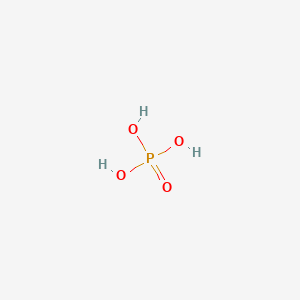 Compound
- Category
- Compound
What Phosphoric Acid is, and what it does.
- Does it work
- Matters most to people watching total phosphorus intake, since additive phosphate absorbs more readily than the phosphorus locked in plant foods. Otherwise it's a formulation detail.
- How much to take
- No daily amount is on record for phosphoric acid itself. It's used in small amounts as an acidity regulator, and the phosphorus it carries counts toward your daily total.
- Time to feel it
- There's no waiting period. Its job is tartness and pH in the product, and the phosphorus it adds joins a pool your kidneys regulate hour by hour.
- The first dose
- Day one is a sharper, more acidic taste in whatever it's in. The phosphorus it contributes is absorbed and handled the same day.
- With regular use
- Over weeks, the part worth tracking is total phosphorus from additives, and that shows up on a blood panel rather than in how you feel.
- How well tolerated
- Well tolerated at food levels. Sipping acidic drinks all day erodes tooth enamel by direct contact. Anyone with reduced kidney function should ask a doctor about phosphate load.
- How it feels
- Sharp and sour on the tongue, the tang in a cola. Past taste there's no sensation to it, and phosphorus status is read from a blood test.
- The overlooked benefit
- Phosphate is one of the body's main buffers and the route urine uses to carry acid out. That quiet job runs all day without anyone noticing.
The proof, claim by claim.
What these words mean
These words describe the research, not the molecule's worth. Research strength is how much work stands behind one claim, and it is never a product score.
- Acidulant and pH adjustment in beverages and supplementsNarrative review
- Contribution of highly absorbable phosphorus to total intakeCohort study
3 more claims
- Enamel surface erosion from acidic drink contactIn vitro study
- Urinary acid buffering by the phosphate pairNarrative review
- Metal ion binding in the gut by phosphate saltsNarrative review
Why these belong in the same formula, 10 pairings
Why these belong in the same formula. Each row says what the basis is, from settled biochemistry through to a trial that measured the pair.
Phosphate binds calcium directly in the gut lumen to form poorly soluble calcium phosphate, which reduces absorption of both. Systemically, calcium and phosphate are regulated together by parathyroid hormone and vitamin D, so a high phosphate load shifts that system. A high dietary phosphate-to-calcium ratio is a recognised concern in nutrition science, and its practical consequence in people with normal kidney function is still debated. This is a mechanism and a ratio, not a demonstrated outcome.
Calcium carbonate binds phosphate in the intestinal lumen so tightly that it is used for exactly that purpose in clinical practice. Taking the two together therefore lowers absorption of both. The carbonate also neutralises the acid, which is a separate chemical effect on the same pairing. Anyone taking calcium carbonate for its calcium content should keep it away from a phosphate load.
Calcitriol upregulates the intestinal transporters for calcium and for phosphate. Running the other way, a rising phosphate load stimulates FGF23 from bone, which suppresses calcitriol production and increases phosphate excretion. The two are locked in a feedback loop rather than acting independently. This is core mineral endocrinology and is why phosphate intake cannot be considered in isolation from vitamin D status.
Like calcium, magnesium is a divalent cation that precipitates with phosphate at intestinal pH. Magnesium-based phosphate binders exist for that reason. A concentrated phosphate source taken with a magnesium supplement gives less of both than either alone. Spacing them apart is the straightforward answer.
Zinc is a divalent cation and precipitates with phosphate in the same way calcium and magnesium do. The interaction is weaker than the calcium one but goes in the same direction. Products carrying phosphoric acid as an acidulant alongside a mineral blend are working against themselves to some degree. Practical significance depends on the amount of phosphate actually present.
Betaine hydrochloride is taken specifically to lower stomach pH, and phosphoric acid is an acidulant that does the same thing incidentally. Stacking two acid sources increases the chance of gastric discomfort or reflux in susceptible people. The interaction is chemical and predictable rather than studied. Anyone with reflux should be aware of the combined load.
Bicarbonate and phosphoric acid react on contact, neutralising the acid and generating carbon dioxide gas. Anyone taking sodium bicarbonate as a buffering agent before exercise will have it partly consumed by an acidified drink. The reaction is immediate and unavoidable in the same glass. Keeping them separate preserves what each was taken for.
Phosphoric acid used as an acidulant is a source of phosphorus, and it is absorbed more efficiently than the phytate-bound phosphorus in plant foods. Anyone tracking total phosphorus intake needs to count it. This matters most for people with reduced kidney function, where phosphate handling is impaired. It is the same element by a different route, not a separate nutrient.
Acid treatment is part of degumming and refining steps in producing lecithin from crude oil. Phosphoric acid appears in that context as a processing aid rather than as an ingredient with its own action. Residual amounts in finished lecithin are minimal. This is manufacturing chemistry, not a nutritional interaction.
Pepsinogen is converted to active pepsin only under acidic conditions, and pepsin's activity optimum sits at low pH. An acidulant lowers gastric pH and therefore supports that step. Pancreatic enzymes, by contrast, need the alkaline environment of the small intestine and are unaffected. The relevance depends entirely on which enzyme is in the product.
Nothing specific on file for Phosphoric Acid. Match the label to the daily amount above, and tell your doctor what you take.
Not medical advice. Show the label to your pharmacist.What Phosphoric Acid actually does.
Phosphoric acid is a mineral acid that splits into hydrogen ions and phosphate in water. in drinks and supplements it's there to adjust acidity, and it also adds to your total phosphorus intake.
3 more mechanisms
The phosphate pair it forms is one of the body's main buffering systems, especially inside cells and in urine, where it's a major way the body gets rid of excess acid.
Phosphate from phosphoric acid and other inorganic additives is absorbed far more efficiently than the phytate-bound phosphorus in whole plant foods, so additive phosphate contributes disproportionately to absorbed phosphorus relative to what a food composition table suggests.
Your blood phosphate level is controlled by hormones acting on gut absorption, bone and the kidneys, with the kidney doing most of the regulating. that's why how much phosphate you take in matters a lot more if kidney function is already reduced.
Getting Phosphoric Acid from food.
The whole-food sources on file. A supplement closes the gap, it does not replace dinner.
A gram-for-gram figure (how much of each you would eat to match a dose) will appear here once it is sourced and reviewed. This page will not print a number it cannot cite.
The forms it comes in.
4 more forms
The essence, in one line each.
- Phosphoric acid exposure was associated with developmental abnormalities in the chick embryo model used.Animal study. Yücel M et al., 2026 (Medical Science Monitor). PMID 41797225 ↗
3 more findings
- Drinking water supplemented with complex acidifiers affected production performance, egg quality and physiological measures in the birds studied.Animal study. Zhang B et al., 2025 (Life). PMID 41302124 ↗
- Phosphoric acid supplementation altered performance and microbial community structure in the anaerobic digestion reactors studied.In vitro study. Belostotskiy DE et al., 2015 (Bioresource Technology). PMID 26117234 ↗
- A reference monograph on lecithin in which phosphoric acid appears in the context of processing and refining.Narrative review. Anonymous, 2006 (monograph entry, Lecithin). PMID 30000831 ↗
Chosen from the 4 we read for Phosphoric Acid.
The studies, linked.
3 sources behind our Phosphoric Acid verdict, every one linked to PubMed, the journal or ClinicalTrials.gov.
- Clinical trialAdhesive Performance of Glass Ionomer Versus Resin Based Adhesive SystemsClinicalTrials.gov ↗60 participants, Completed
2 more linked trials
- Clinical trialEffectiveness of One- and Two-step Self-etching Adhesives Applied With or Without Selective Enamel Etching: a 2-year Randomized Controlled Clinical TrialClinicalTrials.gov ↗25 participants, Completed
- Clinical trialClinical Efficacy of Antivet Versus Phosphoric Acid and Hydrochloric Acid in Microabrasion Technique for Treatment of Stained Teeth: Randomized Clinical TrialClinicalTrials.gov ↗Phase 1, 60 participants, Recruiting
From clinical trials and PubMed, ranked by study type and citation weight, not cherry-picked.
Problems people have reported.
Read this carefully. These are 18,759 voluntary, unverified reactions reported to the FDA (openFDA). The number mostly reflects how popular Phosphoric Acid is, not how risky it is. A report is not proof Phosphoric Acid caused anything. It is a signal of what to watch for, nothing more.
3 more reported effects
Source: openFDA adverse-event reports. Voluntary reporting, not an incidence rate.
FDA Disclaimer: These statements have not been evaluated by the Food and Drug Administration. This information is for educational purposes only and is not intended to diagnose, treat, cure, or prevent any disease. Consult your healthcare provider before starting any supplement regimen.