Thymidine.
Thymidine is one of the four building blocks your cells use to build DNA. Your body makes its own, and can also recycle preformed thymidine straight into the pool.
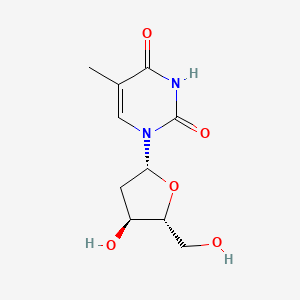 Compound
- Category
- Compound
What Thymidine is, and what it does.
- Does it work
- This suits people who follow nucleotide biochemistry and want the salvage route in their stack. Human supplement trials have not been run, so it stays a mechanism-led choice.
- How much to take
- No daily amount is on record for thymidine as a supplement. Start with what the label states and keep it steady, since no maintenance band has been established in people.
- Time to feel it
- Nobody has measured a timeline. Nucleoside pools turn over within hours, so any effect sits in cell biochemistry rather than in something you notice.
- The first dose
- Day one is quiet. Thymidine phosphorylase clears it from blood quickly, so the action is in nucleotide pools rather than in how you feel.
- With regular use
- Weeks of daily use have not been studied in people. What is established is biochemical: it feeds the salvage route to DNA building blocks.
- How well tolerated
- Human data at supplement amounts is thin. If you take any medicine that acts on nucleotide pathways, check with your doctor before starting.
- How it feels
- There is no sensation attached to it. The effect lives in cell biochemistry, which is where it would be measured rather than felt.
- The overlooked benefit
- The salvage route skips folate entirely. Preformed thymidine reaches the DNA building block without the methylfolate step the de novo route depends on.
The proof, claim by claim.
What these words mean
These words describe the research, not the molecule's worth. Research strength is how much work stands behind one claim, and it is never a product score.
- supply of DNA building blocksNarrative review
- holding cultured cells at one point in the cell cycleIn vitro study
1 more claim
- a folate-independent route to thymidine nucleotidesNarrative review
Why these belong in the same formula, 4 pairings
Why these belong in the same formula. Each row says what the basis is, from settled biochemistry through to a trial that measured the pair.
De novo dTMP synthesis needs thymidylate synthase and 5,10-methylenetetrahydrofolate as the methyl donor. Salvaged thymidine enters downstream of that step through thymidine kinase, so it does not consume folate. The two therefore fill the same pool by different routes, and heavy salvage masks a folate shortfall in the thymidylate arm without correcting folate status anywhere else.
Low B12 traps folate as 5-methyltetrahydrofolate and leaves less of the methylene form available for de novo dTMP production. Salvage from thymidine is independent of that bottleneck. Reading a normal-looking thymidylate supply as evidence of adequate B12 is the error to avoid here.
Folate supports the de novo route to dTMP while thymidine supplies the salvage route to the same nucleotide. Both raise the same downstream pool, which is why classical rescue protocols in cell work use one or the other. The overlap is biochemical and says nothing about whether either changes an outcome in a person.
Human thymidine kinase 1 binds structural zinc, and the salvage step that converts thymidine to dTMP depends on that enzyme working. Adequate zinc status is therefore a precondition for salvage rather than a booster of it. Nothing here suggests extra zinc speeds the reaction in a person with normal status.
Nothing specific on file for Thymidine. Match the label to the daily amount above, and tell your doctor what you take.
Not medical advice. Show the label to your pharmacist.What Thymidine actually does.
Thymidine is a building block of DNA. An enzyme adds phosphate groups to it in steps until it becomes one of the four raw materials DNA-copying enzymes use.
3 more mechanisms
There are two ways cells make this building block. One route runs through an enzyme called thymidylate synthase and uses a folate-derived compound as a helper. The other route starts from ready-made thymidine and skips the folate step entirely.
A big excess of the fully built compound slows down another enzyme and throws off the balance of the four DNA building blocks. That imbalance slows down copying rather than speeding it up, which is why thymidine at high concentration is used on purpose in lab work to pause cells at one point in their cycle.
Cells take up thymidine through shared transport channels that also carry other similar building blocks. So uptake is limited and shared, not unlimited.
Getting Thymidine from food.
The whole-food sources on file. A supplement closes the gap, it does not replace dinner.
A gram-for-gram figure (how much of each you would eat to match a dose) will appear here once it is sourced and reviewed. This page will not print a number it cannot cite.
The forms it comes in.
2 more forms
The essence, in one line each.
- Growth arrest caused by polyamine synthesis blockade was reversed by adding polyamines back, while added thymidine did not produce that reversal, which is a failure to detect an effect rather than evidence that none exists.In vitro study. Hyvönen MT et al., 2021 (Biomolecules). PMID 34068700 ↗
3 more findings
- Manipulating cellular nucleotide supply changed which repair route a glycosylase-based editing system took, with thymidine metabolism named as one of the levers.In vitro study. Tao R et al., 2026 (Theranostics). PMID 41695474 ↗
- A bacterial signalling nucleotide blocked the death that follows thymine starvation, showing how tightly bacterial survival tracks thymidine supply.In vitro study. Leeming JP et al., 2026 (mBio). PMID 41378874 ↗
- Serum-free medium development for transformed cell lines compared component sets, with thymidine appearing among the nucleoside additions assessed.In vitro study. Liu P et al., 2026 (Acta Parasitologica). PMID 42113358 ↗
Chosen from the 7 we read for Thymidine.
Problems people have reported.
Read this carefully. These are 32 voluntary, unverified reactions reported to the FDA (openFDA). The number mostly reflects how popular Thymidine is, not how risky it is. A report is not proof Thymidine caused anything. It is a signal of what to watch for, nothing more.
3 more reported effects
Source: openFDA adverse-event reports. Voluntary reporting, not an incidence rate.
FDA Disclaimer: These statements have not been evaluated by the Food and Drug Administration. This information is for educational purposes only and is not intended to diagnose, treat, cure, or prevent any disease. Consult your healthcare provider before starting any supplement regimen.